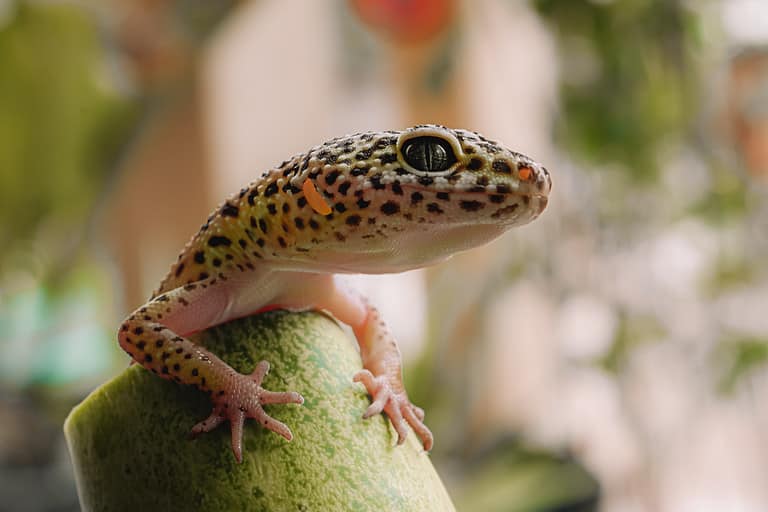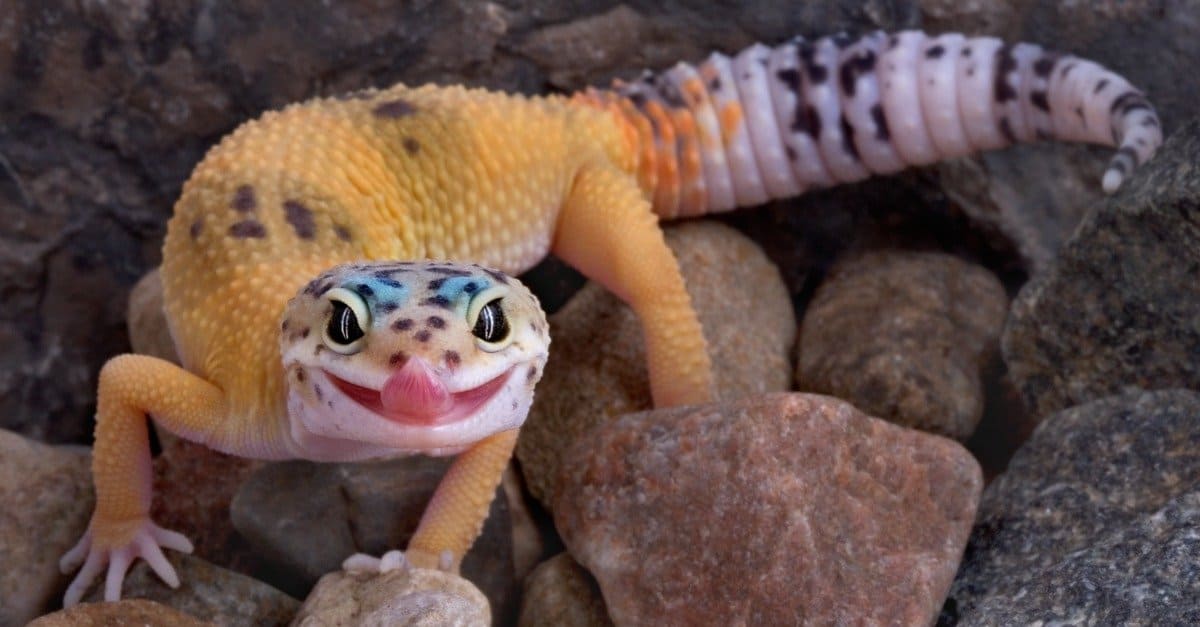

One of the many reasons why the leopard gecko is so well-loved is its delightfully goofy, ever-present grin. Here are 10 happy, smiling leopard geckos, along with some incredible facts about one of the most popular pet reptiles on the planet.
1. Leopard Geckos Can Drop and Regrow Their Tails!
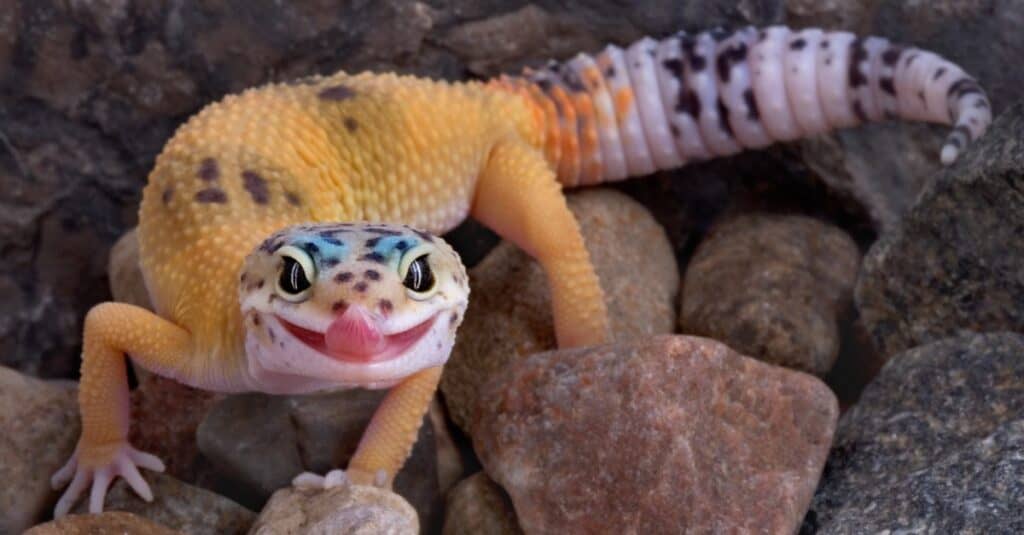
Leopard geckos drop their big, bulky tails to distract predators long enough to escape.
©iStock.com/CathyKeifer
Many lizard species are capable of severing their own tails. This is a process known as caudal autotomy, and it is a common defense mechanism for lizards such as leopard geckos. In the wild, if a leopard gecko is trying to make a quick getaway from a predator, it will drop its own tail before scuttling off. The dropped tail serves as a distraction, as the muscles and nerve endings in the severed tail cause it to twitch and move on its own for several hours. The regeneration process takes about 30 days, but the new tail will not look the same as the old one. There will be some variation in color, shape, size, and pattern.
2. Leopard Geckos Are Strict Insectivores
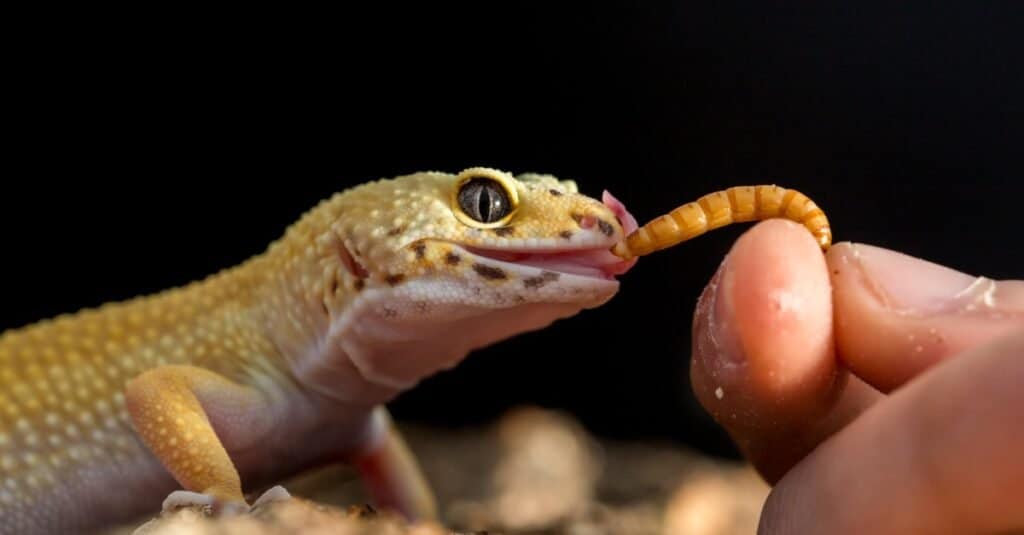
This happy leopard gecko is excited to munch on a mealworm.
©iStock.com/MattiaATH
While many reptiles are omnivores or herbivores, leopard geckos are insectivores. Both in the wild and in captivity, leopard geckos prefer to eat small insects, though they will also occasionally eat other small invertebrates like spiders and scorpions in their native desert and grassland habitats. As pets, leopard geckos mostly eat feeder insects. These feeder insects are born, bred, and raised in captivity under strictly controlled conditions. This lowers the transmission of parasites and illnesses, leading to longer lifespans among captive geckos compared to their wild cousins.
3. There Are Now More Than 100 Unique Color Morphs Available
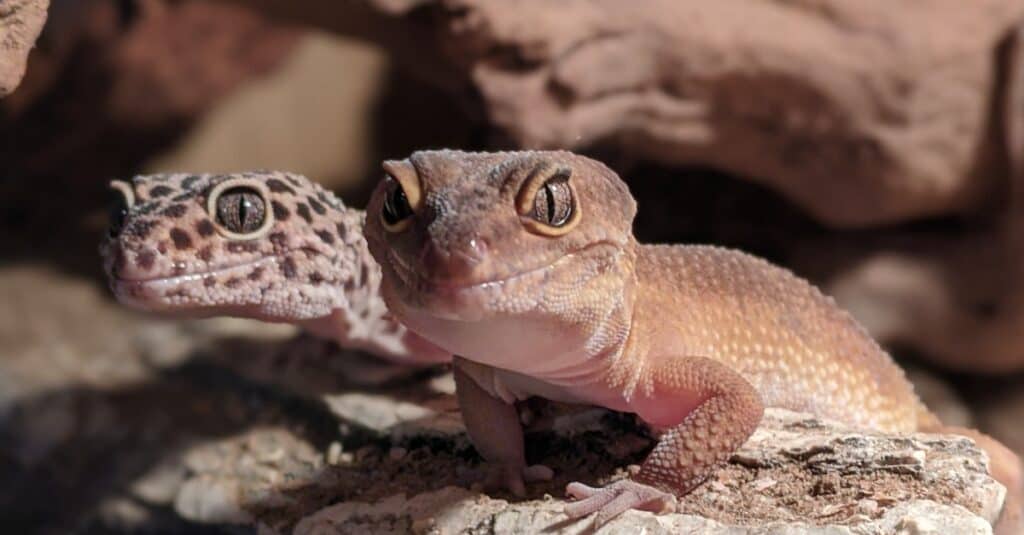
These grinning geckos are showing off their unique colors and patterns made possible by selective breeding.
©iStock.com/Dejae ODell
Since the mid-1960s, reptile breeders have collected leopard geckos from their native habitats to breed and sell them worldwide. Their small size, adorable appearance, and friendly, curious personalities make them popular pets. Due to decades of selective breeding, there are now more than 100 different color and pattern variations, known as morphs. They range in color from yellow, orange, brown, and red to less common colors like white, grey, and black. Their patterns vary significantly as well, from the typical uniform black spots to stripes, swirls, or no spots at all.
4. Leopard Geckos Sometimes Eat Their Shed Skin
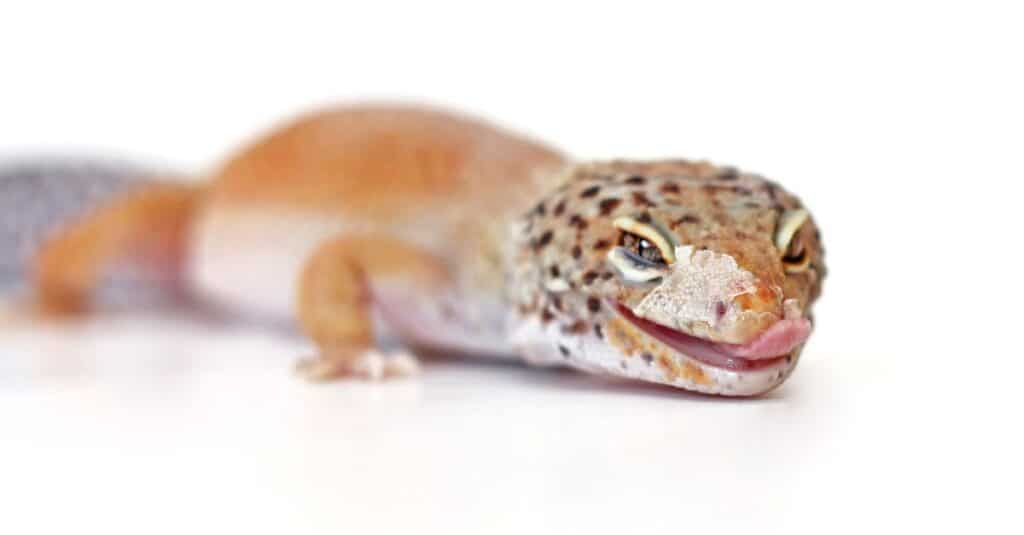
This little leopard gecko seems to have missed a spot of shed skin stuck to its nose.
©iStock.com/LivingThroughTheLens
All reptiles shed their skin in some way, including leopard geckos. They typically shed their skin all in one piece, which they slowly peel off by rubbing themselves against rough surfaces or pulling it off with their mouths. The whole process usually only takes around 10 to 30 minutes. Although the idea of eating dead skin doesn’t sound particularly appetizing, it’s a great way for a leopard gecko to reabsorb essential vitamins and minerals. Many leopard geckos will often munch on their shed skin, both as a survival instinct to prevent predators from picking up their scent and to avoid wasting a rich supply of nutrients.
5. Leopard Geckos Don’t Have Sticky Pads on Their Feet
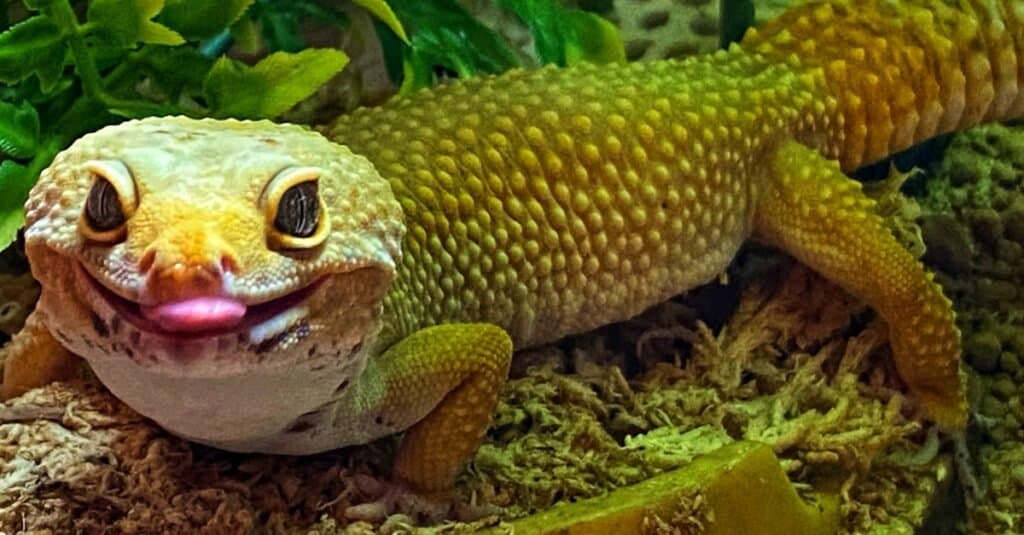
Ground-dwelling leopard geckos have little need to climb, so sticky feet are unnecessary.
©iStock.com/Samantha Dunn
The vast majority of gecko species can climb up flat surfaces and stick to them with ease. This is thanks to the millions of tiny, sticky hairs known as setae on their toe pads. Leopard geckos have claws rather than sticky toe pads. The reason for this is mostly evolutionary. Because they are terrestrial, leopard geckos have little need to climb in the wild. Instead, their little claws help them traverse the rocky terrain common in their dry, desert habitats in southern Asia.
6. Leopard Geckos Have Movable Eyelids
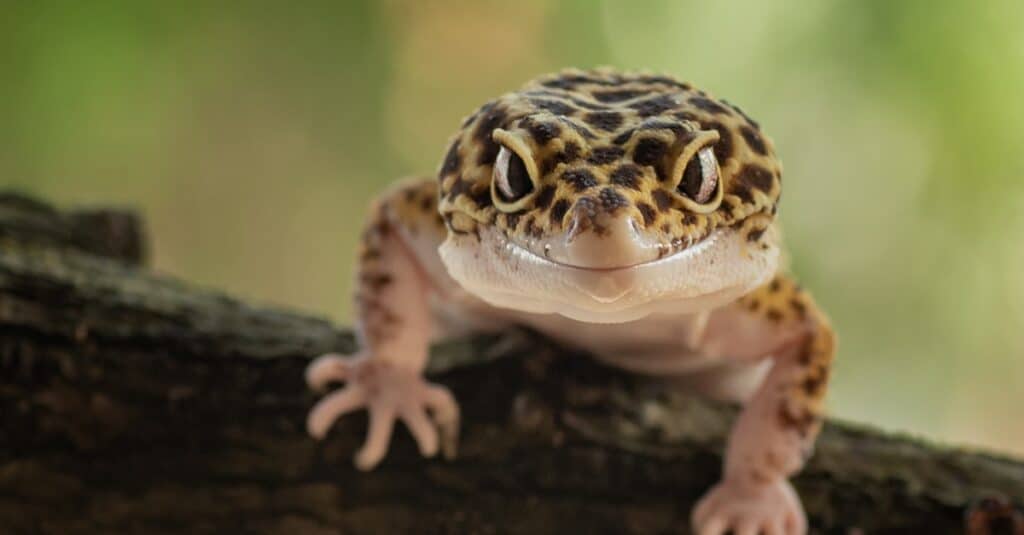
Leopard geckos are one of the few lizard species that can blink and wink.
©iStock.com/DikkyOesin
Another feature that sets leopard geckos apart from most other gecko species is their movable eyelids. While most geckos have a single clear scale that covers each eye and shields them from debris, leopard geckos have fully functional eyelids that they can close while blinking or sleeping. These eyelids help to keep sand and other debris out of their eyes while on the move. Their scientific name, Eublepharis macularius, reflects this unique adaptation, as “eublepharis” translates to “real/true eyelids,” while “macularius” translates to “spotted,” referring to the leopard gecko’s distinctive spots.
7. Leopard Geckos Can Live Into Their Twenties
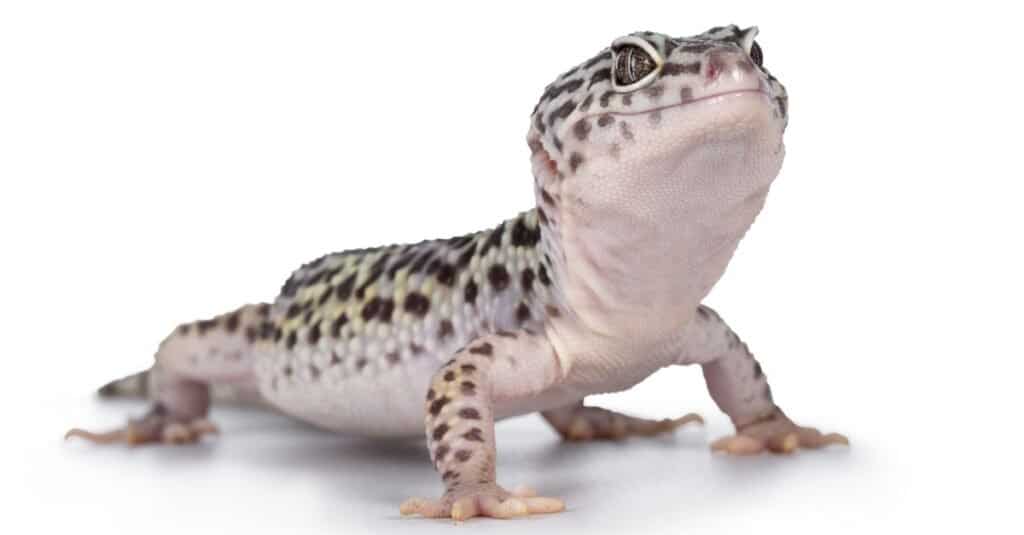
This smiling gecko could live up to 20 years, possibly longer.
©iStock.com/Nynke van Holten
Despite their small size, leopard geckos have surprisingly long lifespans. If you’re thinking of adopting one, be aware that they typically live for around 10 to 15 years. However, with optimal care, some captive leopard geckos have been known to live 20 years or more.
8. A Leopard Gecko’s Sex Is Determined by the Incubation Temperature
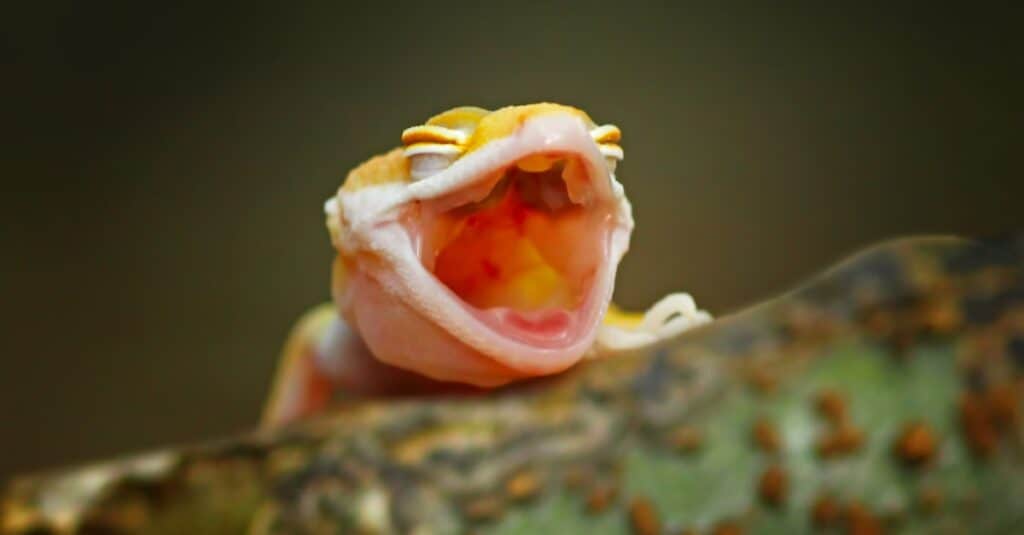
This happy baby leopard gecko’s sex was determined by how warm its egg was during incubation.
©iStock.com/agus fitriyanto
Many reptile species’ sexes are determined by the temperature of their eggs during incubation. This includes leopard geckos. Breeders discovered that eggs incubated at lower temperatures, around 80°F (26°C), typically produce females, while eggs incubated at higher temperatures, around 88°F (31°C), result in males. This unique adaptation makes it easy for breeders to produce entire clutches of solely male or solely female lizards.
9. Leopard Geckos Have a Wide Range of Vocalizations
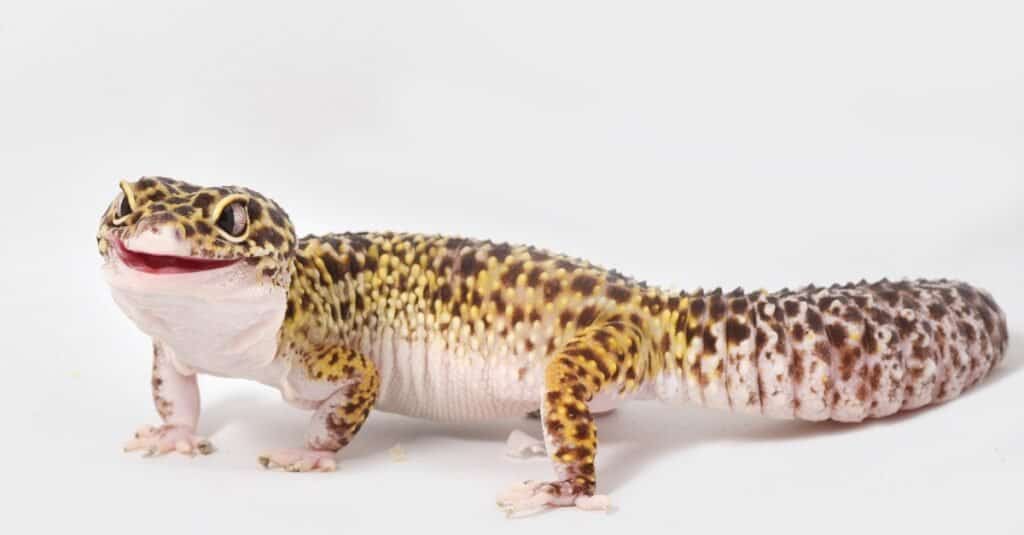
Leopard geckos can produce all kinds of adorable vocalizations from chirps to squeaks.
©iStock.com/DikkyOesin
Although leopard geckos are usually fairly quiet animals, they are able to produce an array of interesting vocalizations. Chirping and squeaking generally indicate happiness or contentment. They may make a clicking sound if they feel annoyed or irritated. Barking is a hoarser sound than clicking and indicates that your pet is very stressed and feels threatened. Screaming indicates that your pet is scared. This behavior is more common in juveniles, but as they become accustomed to you, it becomes less frequent.
10. Leopard Geckos Have Great Night Vision
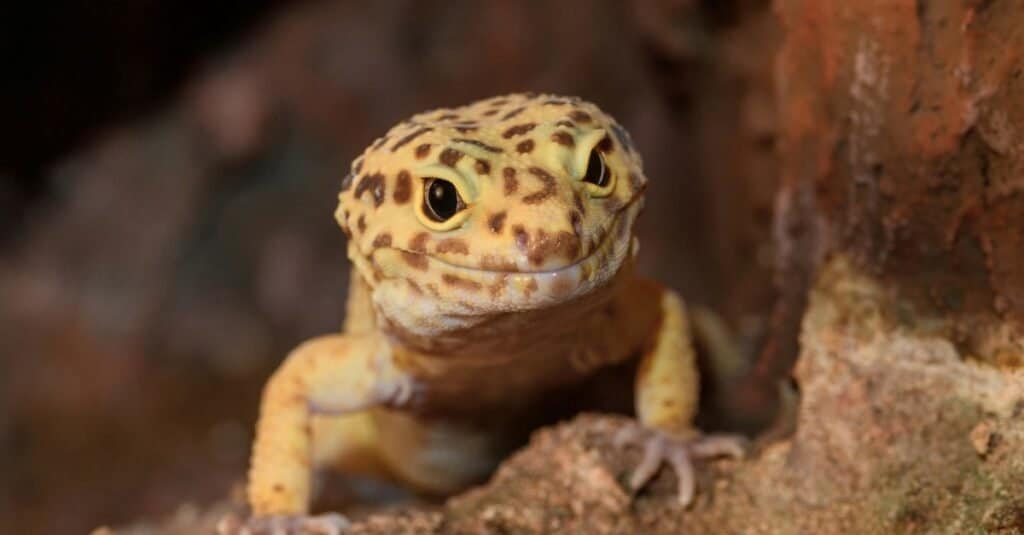
This leopard gecko’s large, striking eyes allow it to see perfectly at night.
©Dr.Pixel/Shutterstock.com
Leopard geckos may be active at night, in the early morning, or at dusk. As a result, they have evolved to have excellent eyesight, especially in low-light conditions. Amazingly, these unique geckos can see distinct colors and a surprising amount of detail in poorly-lit conditions. Some believe their vision is comparable to cats, thanks to their highly sensitive retinas. Their extraordinary eyesight helps them to locate prey and evade predators in the wild.