
Quick Take
- New Mexico whiptail lizards, official state reptiles, are all female and reproduce via parthenogenesis.
- The greater roadrunner became the official state bird of New Mexico on March 16, 1949.
- Smokey Bear, the famous icon of fire prevention was actually a real bear found in the Capitan Mountains of New Mexico in 1950.
- The tarantula hawk wasp became the official state insect in 1989 due to an initiative from Edgewood schoolchildren.
From the rugged mountains of the Sangre de Cristo to the arid southern deserts, New Mexico is a state of breathtaking landscapes, deep roots, and unique cultural traditions. This state is home to a number of national parks and monuments, including Carlsbad Caverns, White Sands, and Bandelier National Monument. The official state animals of New Mexico embody its natural splendor and rich cultural heritage. Let’s take a closer look at these impressive animals.
1. State Mammal: American Black Bear (Ursus americanus)
Did you know that one of the most famous black bears in the entire world was actually born in New Mexico? Smokey Bear, the famous icon of fire prevention in the United States, was actually a real bear found in the Capitan Mountains of New Mexico. Rescuers found him in 1950 when he was just three months old, trying to escape a massive forest fire in the Lincoln National Forest. Smokey spent much of his life as a living mascot for the U.S. Forest Service. After his death, he was buried in New Mexico’s Smokey Bear Historical Park.
The American black bear became the official state mammal of New Mexico on February 8, 1963. Black bears can also have cinnamon, brown, or blonde coloring. They reach 5 to 6 feet in length and measure 2 to 3 feet at the shoulder. Large males can weigh upwards of 400 pounds. These bears live in woodland habitats at high elevations in the mountains. They are omnivores that eat many types of plants as well as insects, small rodents, and sometimes carrion. In New Mexico, American black bears are protected game animals, and you can only hunt them with a license in specific areas at certain times of the year.
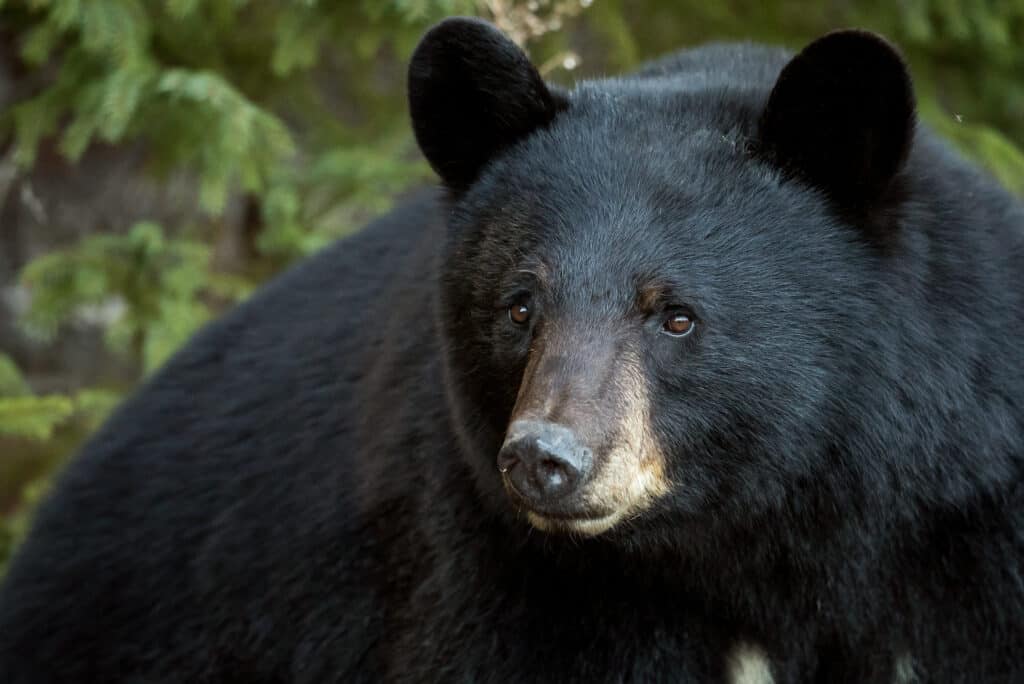
The American black bear became the official state mammal of New Mexico on February 8, 1963.
©iStock.com/Brittany Crossman
2. State Bird: Greater Roadrunner (Geococcyx californianus)
The greater roadrunner became the official state bird of New Mexico on March 16, 1949. The people of New Mexico have a strong connection and cultural history with the greater roadrunner. Early settlers were often told that a roadrunner could help them find their way if lost. Many Native Americans also honored the spirit of the roadrunner and used it as a symbol to ward off evil spirits. These ground cuckoos inhabit much of the state, favoring lower elevation areas under 7,000 feet. They are often seen running alongside trails and roads. These ground birds can run at speeds of 15 to 25 miles per hour. They can fly but do not do so often, preferring to run to escape predators.
Greater roadrunners are relatively large birds that measure 20 to 24 inches long, with wingspans up to 24 inches. They stand about 10 to 12 inches tall. These birds have brown upper bodies with black streaks and sometimes pink spots. Their necks and the upper part of their breasts are usually white or light brown with darker brown streaks, while their bellies are white. Their most distinctive features are their long tails and the crest of brown feathers on top of their heads. Greater roadrunners also have a bald spot behind each eye that is blue and red.
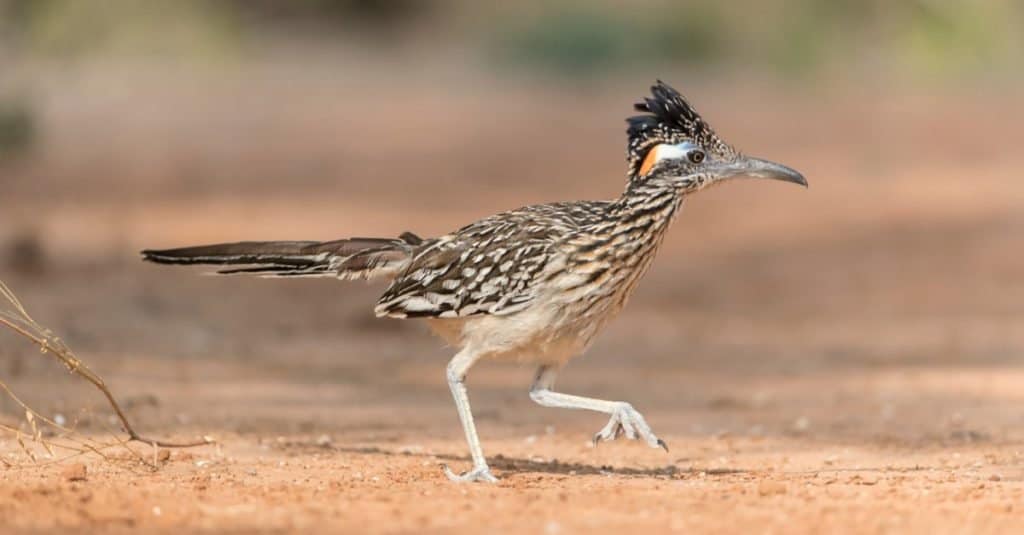
New Mexico’s state bird is the greater roadrunner.
©Dennis W Donohue/Shutterstock.com
3. State Fish: Rio Grande Cutthroat Trout (Oncorhynchus clarkii virginalis)
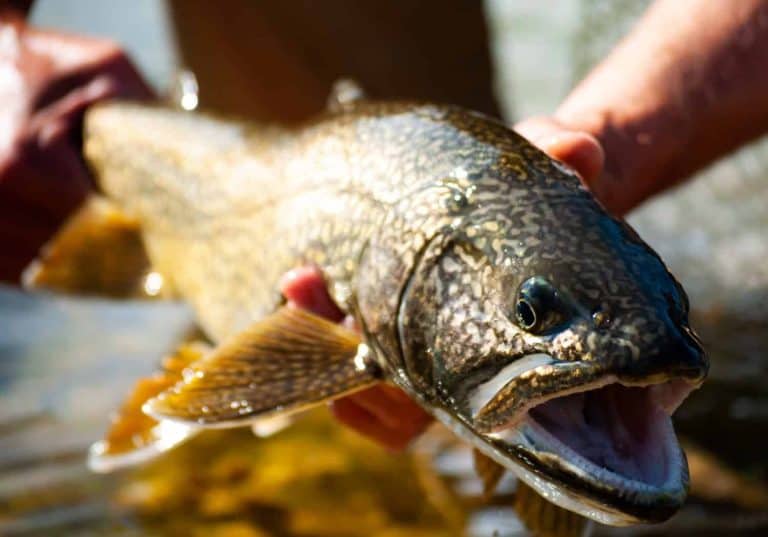
In 1955, the Rio Grande cutthroat trout became the official state fish of New Mexico. Also known as the New Mexico cutthroat trout, this fish can be found in many of the cold mountain lakes and streams in the northern parts of the state. Rio Grande cutthroat trout have brown, gray, green, or yellow bodies scattered with lots of bold black spots. These spots become more numerous toward the end of the fish, especially on its tail. They are usually around 10 inches long and get their name from the red streaks under the fish’s throats. The largest cutthroat trout ever caught in New Mexico was 10 pounds and 2 ounces, measuring approximately 24.63 inches long.
Rio Grande cutthroat trout need cold, flowing water that is clean and clear in order to survive. They eat many different types of aquatic invertebrates, such as zooplankton, insects, and crustaceans. Unfortunately, in recent years, the populations of these fish have declined in New Mexico due to human activities and the introduction of rainbow trout to their habitats. However, the New Mexico Department of Game and Fish has instituted restoration programs that will hopefully continue to increase the numbers of Rio Grande cutthroat trout in the state.
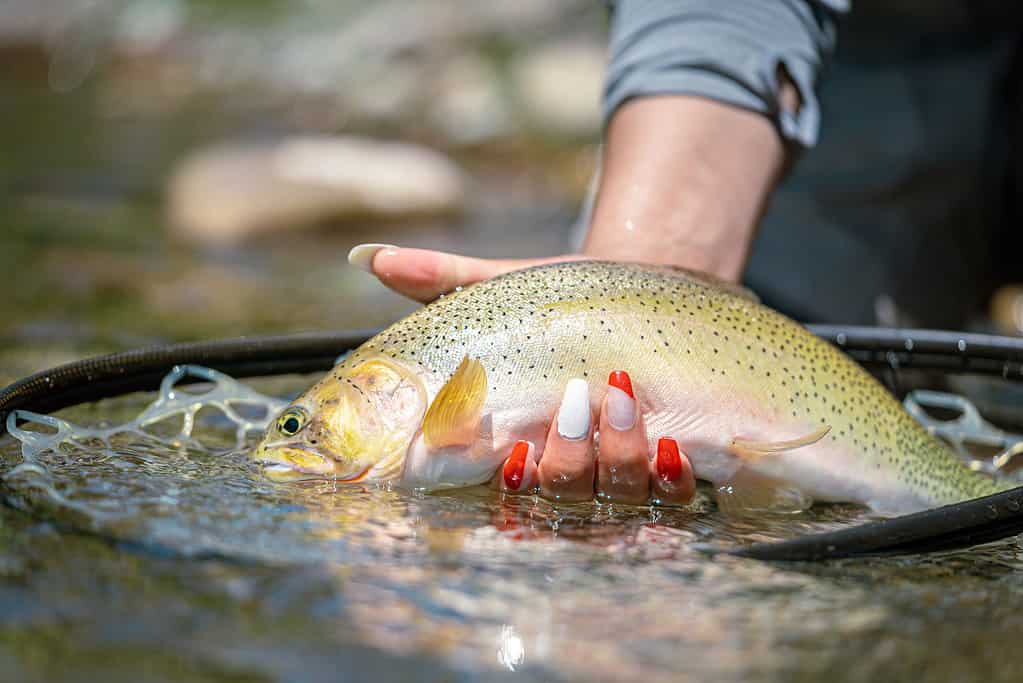
New Mexico’s state fish is the Rio Grande cutthroat trout, which has distinctive black spots.
©iStock.com/Wirestock
4. State Reptile: New Mexico Whiptail Lizard (Cnemidophorus neomexianus)
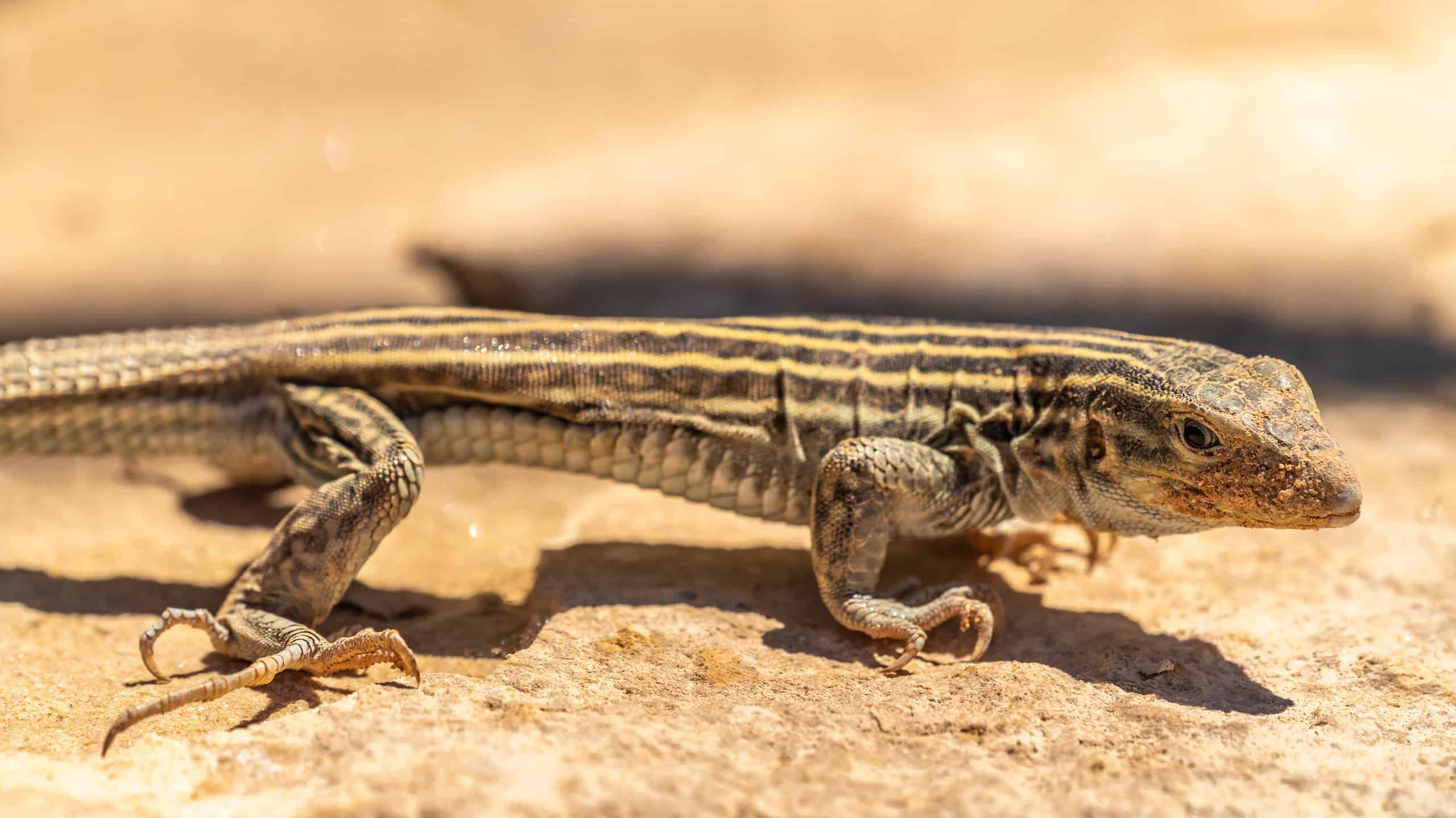
The New Mexico whiptail lizard became the official state reptile in 2003. One of the things that makes this lizard so special is that all New Mexico whiptails are female. Certain whiptail lizard species, including the New Mexico whiptail, are asexual and reproduce via parthenogenesis. Females lay unfertilized eggs, and the baby whiptails hatch into clones of the mother.
As their name suggests, New Mexico whiptails have long tails like a whip, with dark gray, black, or brown bodies patterned with light yellow stripes and spots. They grow to around 6.5 to 9 inches long and can run up to 15 miles per hour. When they run, they sometimes stand upright on their hind legs, making them look like speedy little dinosaurs. New Mexico whiptail lizards typically live in central and southwest New Mexico. They prefer desert grassland areas, shrublands, disturbed riverside habitats, rocky areas, and mountainside woodlands.
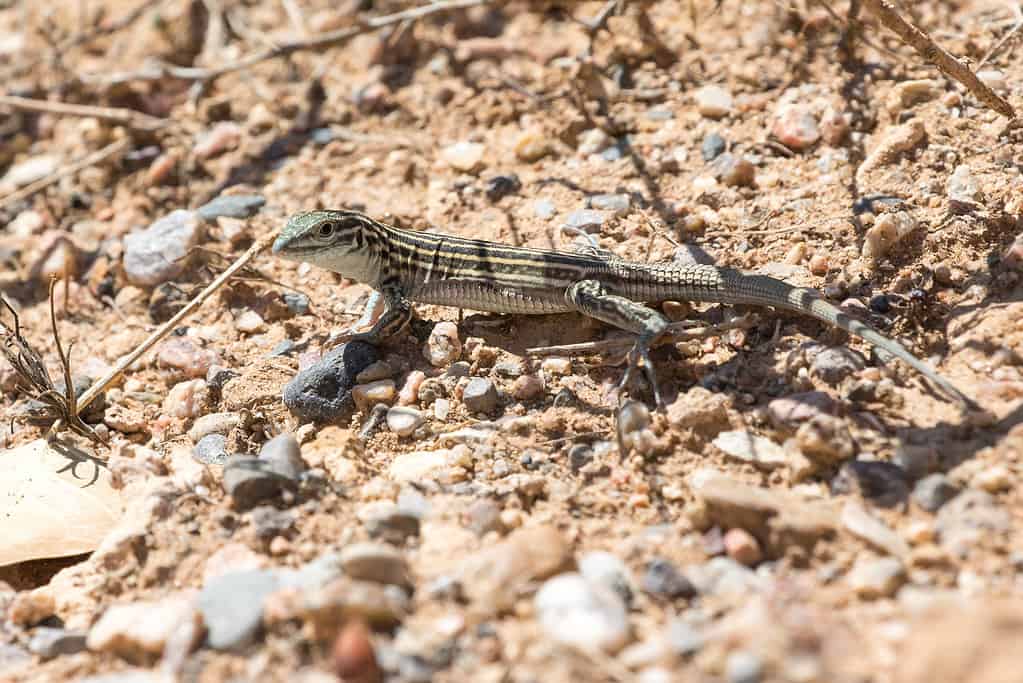
All New Mexico whiptail lizards are female, with the ability to produce eggs that do not require any fertilization.
©Elliotte Rusty Harold/Shutterstock.com
5. State Amphibian: New Mexico Spadefoot Toad (Spea multiplicata)
Found in nearly every county of the state, the New Mexico spadefoot toad became the official state amphibian in 2003. These small toads are usually just 1.5 to 2.5 inches long. Their small, round bodies come in various colors that usually match the soil where they live. New Mexico spadefoot toads are often brown, gray, or dusky green, with pale bellies. They sometimes have tiny orange and black speckles on their backs. On top of their heads, they have large eyes with vertical pupils.
New Mexico spadefoot toads are secretive animals that usually only come out at night. If they are threatened or handled, these little toads will emit a unique odor that smells kind of like roasted peanuts. They dig burrows into moist soil and usually only come out during summer rains. The male toads emerge from their underground burrows first and use their unique vocalizations to call for females. Their calls are very distinct, and many say they sound like someone running a fingernail across the teeth of a comb.
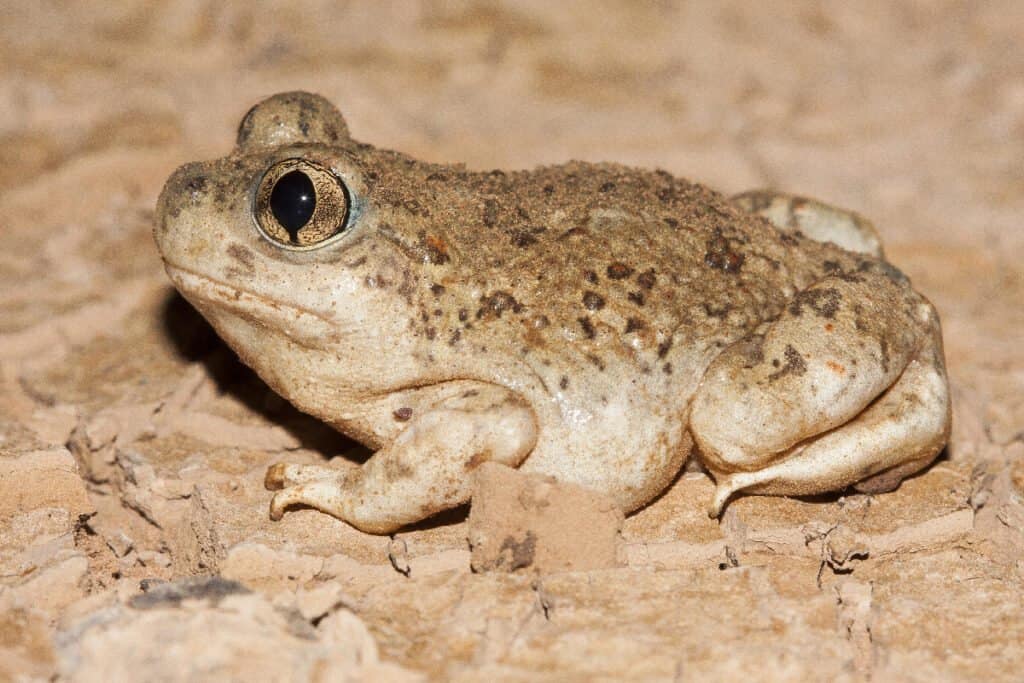
New Mexico spadefoot toads are often brown, gray, or dusky green.
©Viktor Loki/Shutterstock.com
6. State Butterfly: Sandia Hairstreak Butterfly (Callophrys mcfarlandi)
The Sandia hairstreak butterfly was chosen as the official state butterfly of New Mexico in 2003. These delicate little butterflies live in at least 24 counties in New Mexico, typically in dry hillside habitats. During some years, Sandia hairstreak butterflies are the most numerous butterflies in the area. They were first discovered in Albuquerque, New Mexico, in 1960.
Sandia hairstreak butterflies are active insects that are well-adapted to dry conditions. Their wingspan measures between 1 and 1.25 inches, and the underside of their wings is a beautiful golden green with an iridescent shimmer. Female butterflies showcase striking reddish-brown wings on the top side, while the males’ wings are more of an earthy shade of brown. Both have delicate black and white border stripes. Sandia hairstreak larvae (caterpillars) can be many different colors, including green, maroon, and pink.
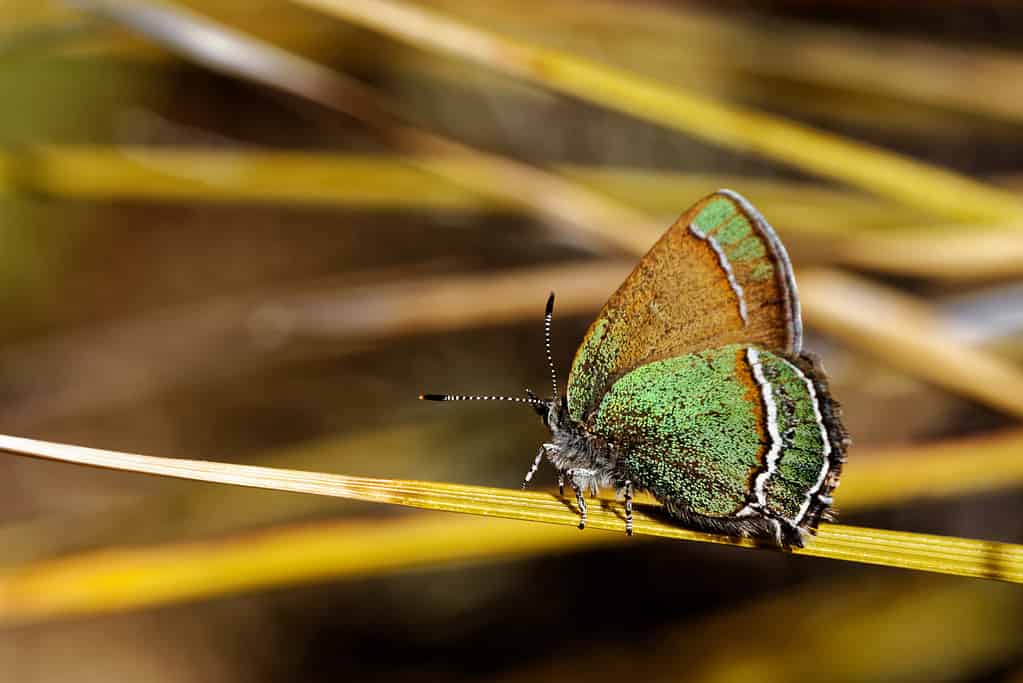
New Mexico’s state butterfly, the Sandia hairstreak, inhabits at least 24 counties in the state.
©D. Longenbaugh/Shutterstock.com
7. State Insect: Tarantula Hawk Wasp (Pepsis formosa)
The tarantula hawk wasp became the official state insect of New Mexico in 1989 due to an initiative from schoolchildren in the city of Edgewood. The tarantula hawk wasp is one of the largest species of wasps found in the United States, measuring up to 2 inches long. These massive wasps have a very distinctive appearance, with jet-black bodies, bold orange wings, and long legs.
These wasps feed on flower nectar, but as their name indicates, tarantula hawk wasps hunt tarantulas. They are “parasitoid” wasps, which means that they lay their eggs on other living creatures. Using their venomous stings to paralyze tarantulas, female tarantula hawks then lay a single egg on the paralyzed tarantula, which will become dinner for her newly hatched larva. They make nests in the ground or they make take over the tarantula’s own burrow. There are very few predators that hunt and eat tarantula hawk wasps, as they have one of the most painful insect stings on earth. However, the state bird of New Mexico, the greater roadrunner, is one of the few animals that can eat these massive wasps.
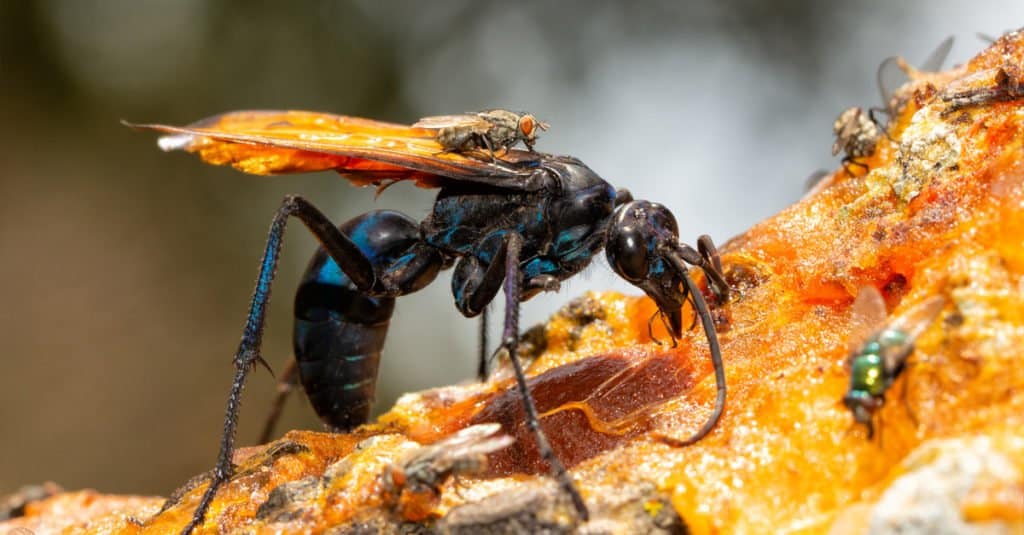
Tarantula hawk wasps are one the largest species of wasps in the U.S. and are known to have one of the most painful stings.
©Sari ONeal/Shutterstock.com