
When most people think of the world’s largest animals, we don’t often think of the ones specifically with the largest heads specifically. However, a big head can be a significant advantage in the animal kingdom. It can mean a larger brain, larger teeth, or even a thicker skull, all of which can be incredibly helpful adaptations for survival. So, which animals have the largest heads of all, and what are their actual measurements? Read on to learn all about the world’s top 10 below.
10. Musk Ox
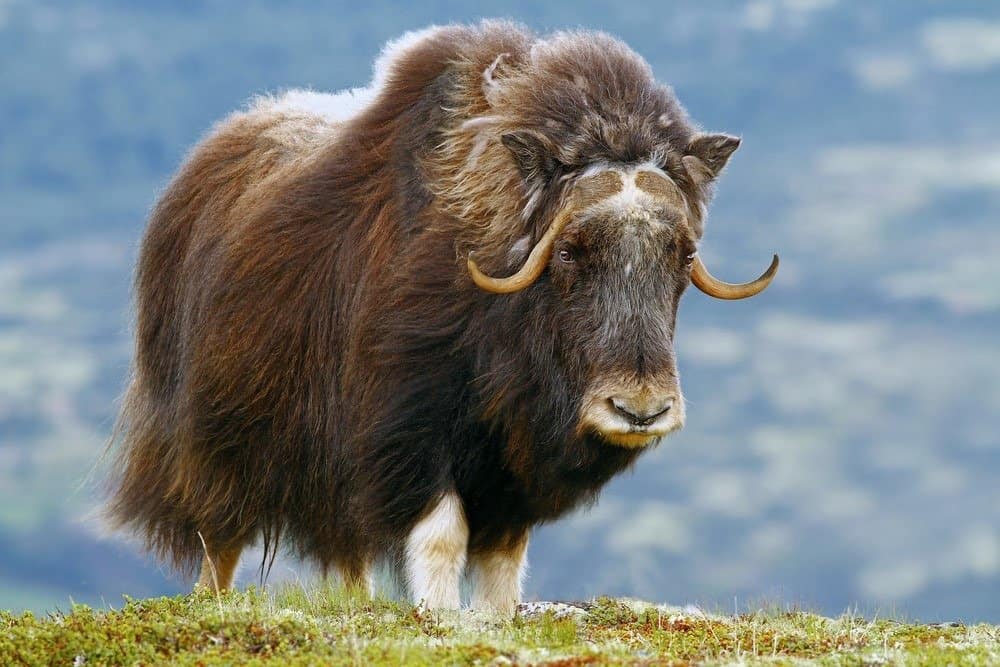
The male musk ox’s skull can reach up to 8 inches thick at the center of its horns.
©Martin Hejzlar/Shutterstock.com
A musk ox (Ovibos moschatus) is a stocky, hooved mammal with long hair, horns, and a shoulder hump. Mature bulls can reach about 8 feet in length, stand 5 feet tall at the shoulder, and weigh up to 800 pounds. During the breeding season, males emit a strong scent to attract females, which is the basis for their common name.
Males compete for mating rights by charging full speed at their opponents and ramming their heads together. To protect their skulls from the shock of the collision, males have a forehead skull plate, known as a boss, making their skulls up to 8 inches thick in that area. A musk ox skull can reach 2.3 feet long, and the horns alone can weigh up to 46 pounds.
9. Saltwater Crocodile
©Susan Flashman/Shutterstock.com
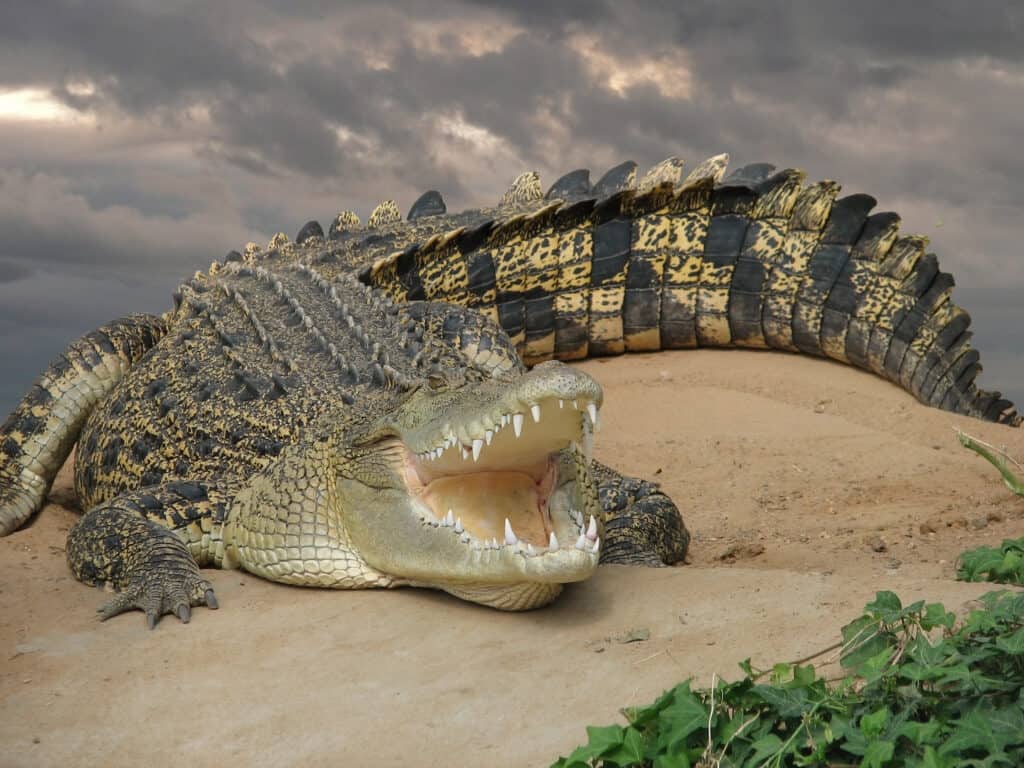
Saltwater crocodiles (Crocodylus porosus) are the largest crocodilian species. They can reach up to 23 feet long and weigh 2,200 pounds. The largest recorded head length for a saltwater crocodile is believed to be 2.5 feet, found in an individual measuring about 23 feet long. Scientists have determined that the total length of a crocodile is about seven times the length of its head. The head of a saltwater croc is believed to weigh around 440 pounds.
The saltwater crocodile is believed to have the strongest bite force of any living animal at 3,700psi. These crocodiles not only have strong jaw muscles, but also possess two jaw joints that enhance the force of their bite. One jaw joint is positioned at the back of the skull. The other, located halfway down the snout, diffuses the bite force through the skull. It also keeps the crocodile’s long jaws stable so they do not get twisted during feeding.
8. Hippopotamus

A hippo’s enormous mouth can open so wide it can create a four-foot opening.
©Sergey Uryadnikov/Shutterstock.com
As one of the world’s largest land mammals, hippos (Hippopotamus amphibius) also have pretty huge heads. A wild adult hippo weighs between 2,200 and 4,552 pounds, although captive hippos can grow much larger. They stand over 5 feet tall at the shoulder and can grow to a length of up to 16.5 feet. A hippo’s skull alone typically measures around 2 feet long and over a foot wide. Some sources suggest a hippo’s head can weigh up to 1,000 pounds.
In addition to having massive heads, hippos have incredibly large mouths that can widen to over 150°, creating a gape of up to 4 feet. Furthermore, their bite force is said to be stronger than any other land animal at 1,800psi. However, hippos are almost entirely herbivorous. They mainly use their powerful jaws to establish dominance and as a defense mechanism against potential predators.
7. White Rhinoceros
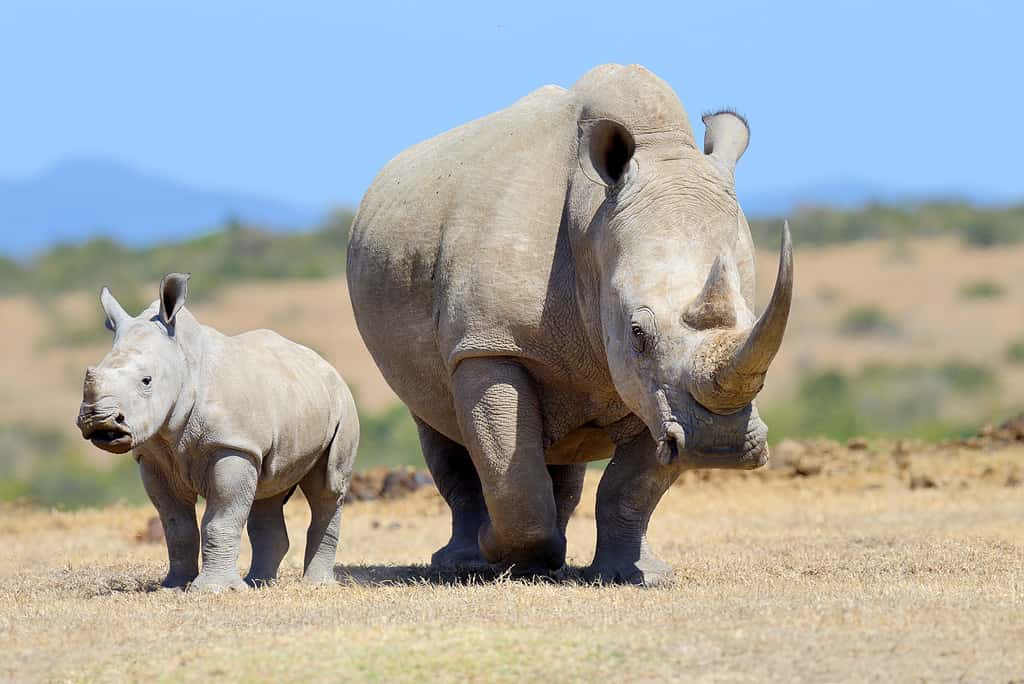
A white rhino’s head can weigh up to 1,000 pounds.
©Volodymyr Burdiak/Shutterstock.com
The white rhinoceros (Ceratotherium simum) is the biggest of all five rhino species. It is among the largest land animals, weighing up to 6,000 pounds when fully mature. They reach up to 6 feet tall at the shoulder and approximately 16 feet in length. Their heads are said to weigh up to 1,000 pounds and measure about 2.4 feet long.
White rhinos have two horns on their heads. The front horn is longer and thicker, reaching up to 5 feet in length, while the back horn can grow up to 22 inches. Rhinos are often killed for their horns, despite the fact that they are made of keratin, like our fingernails, and grow continually throughout the rhino’s life. A single horn is said to weigh nearly 9 pounds.
6. American Bison
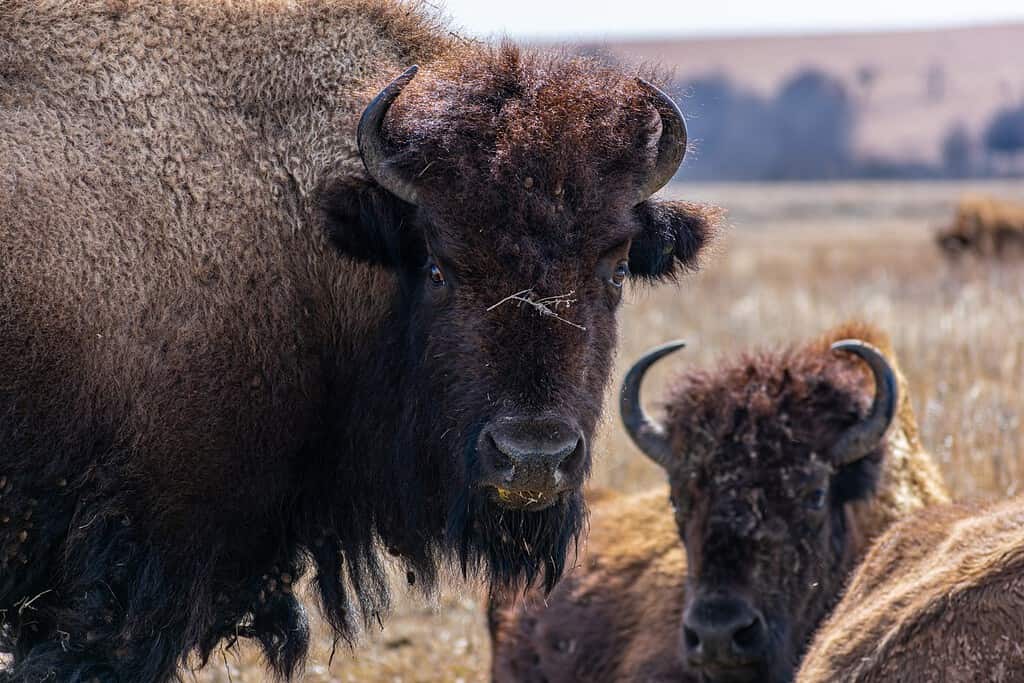
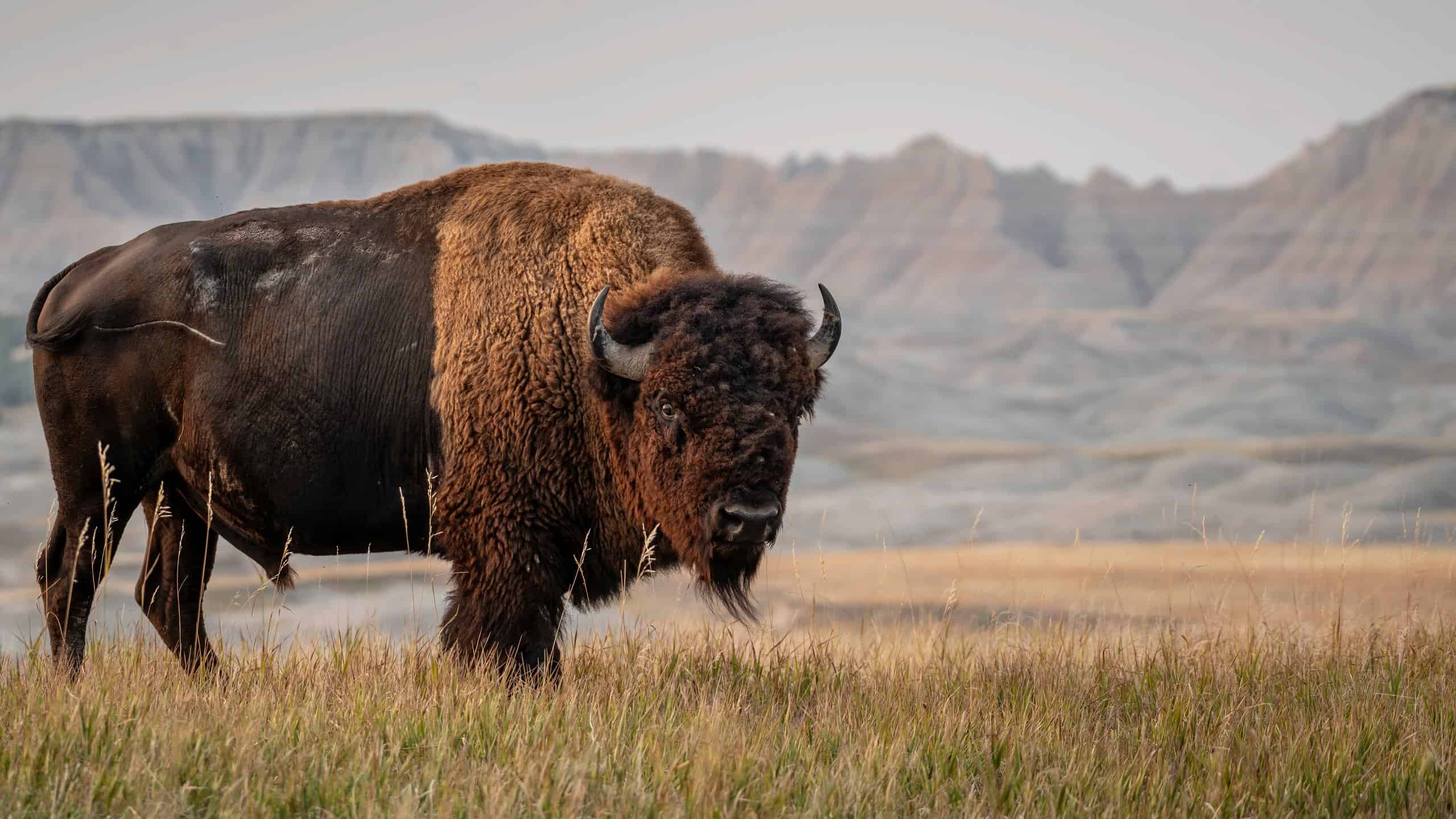
An American bison’s head can measure 2.5 feet long from horns to chin.
©Joel Irvine/Shutterstock.com
The American bison (Bison bison) is the largest land animal native to North America. A mature bull can weigh up to around 2,000 pounds. They can stand 6.5 feet tall at the hump and 12 feet in length. A fully-grown bison’s skull is said to weigh over 20 pounds and measure up to 2.5 feet long from horns to chin.
In addition to having large heads, both male and female American bison also have sharp, curved horns that can measure two feet long. Male bison primarily use their horns to fight for status within their herds. However, all bison use their horns in self-defense against predators such as bears, wolves, and mountain lions.
5. Asian Elephant
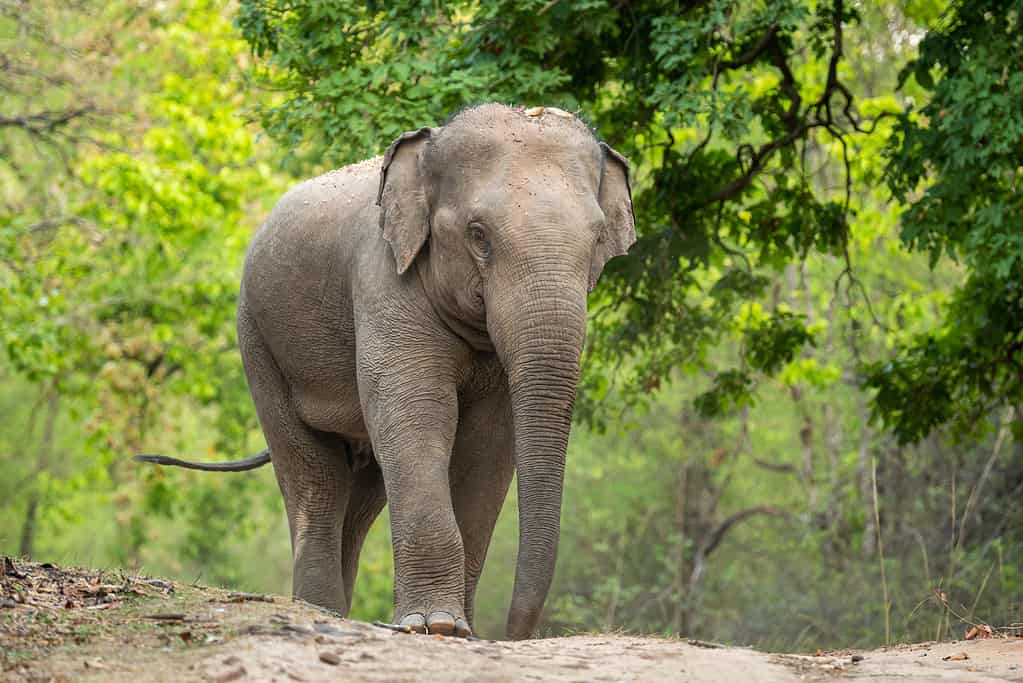
An Asian elephant’s head is believed to exceed 880 pounds.
©Sourabh Bharti/iStock via Getty Images
Asian elephants (Elephas maximus) are the second-largest species of elephant and the largest land animals in Asia. Asian elephants can stand about 10 feet tall and weigh around 11,000 pounds. These elephants typically have straighter and more slender tusks than African elephants. However, Asian elephants’ tusks can still reach lengths of around 10 feet and weights of over 150 pounds.
Although the cranium of the Asian elephant is generally smaller than that of the African elephant, researchers believe modern elephants’ heads can exceed weights of 880 pounds, including the tusks, ears, trunk, and internal organs. Elephants have a honeycomb pattern of air-filled cavities in the skull that reduces the head’s overall weight. This structure distributes stress and makes it possible for the neck to support the head’s weight.
4. African Bush Elephant
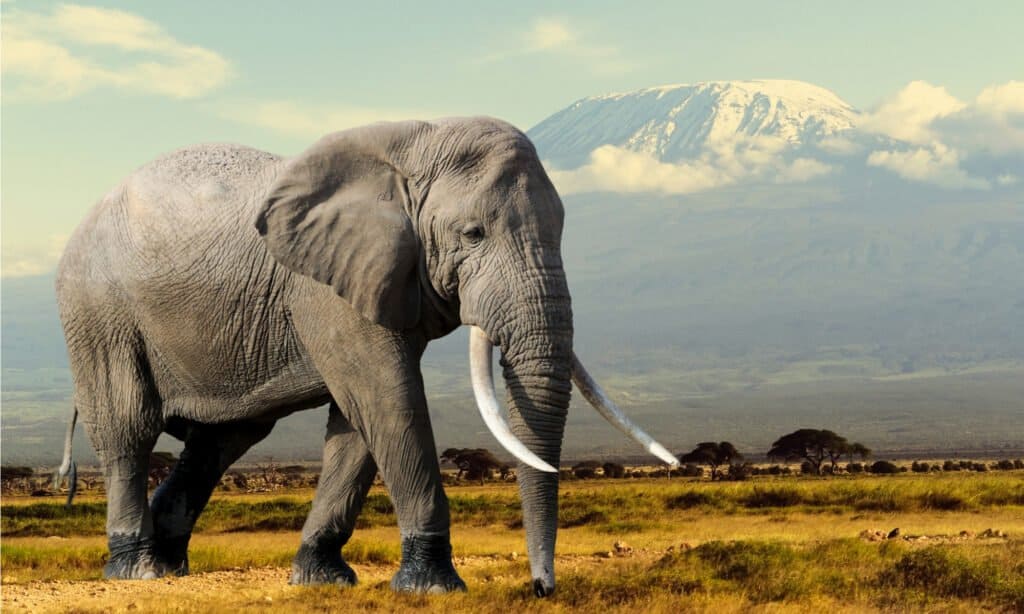
As the largest and heaviest land animal at up to 13 feet tall and up to 14,000 pounds, it makes sense that the African bush elephant (Loxodonta africana) has a massive head. Its tusks alone can reach over 11.5 feet long and weigh over 200 pounds. An elephant’s skull can weigh as much as 115 pounds, while its entire head can weigh up to 940 pounds. The skull is also structured like a honeycomb filled with air cavities, which reduces the weight.
Complementing the African bush elephant’s enormous head are its large, wide ears, which can reach 6 feet in height and 4 feet in width. Elephants flap their ears to cool down their bodies or extend them to make themselves look larger to intimidate predators. Fortunately, due to their huge size and their tendency to travel in groups, few predators attempt to prey on them.
3. Sperm Whale
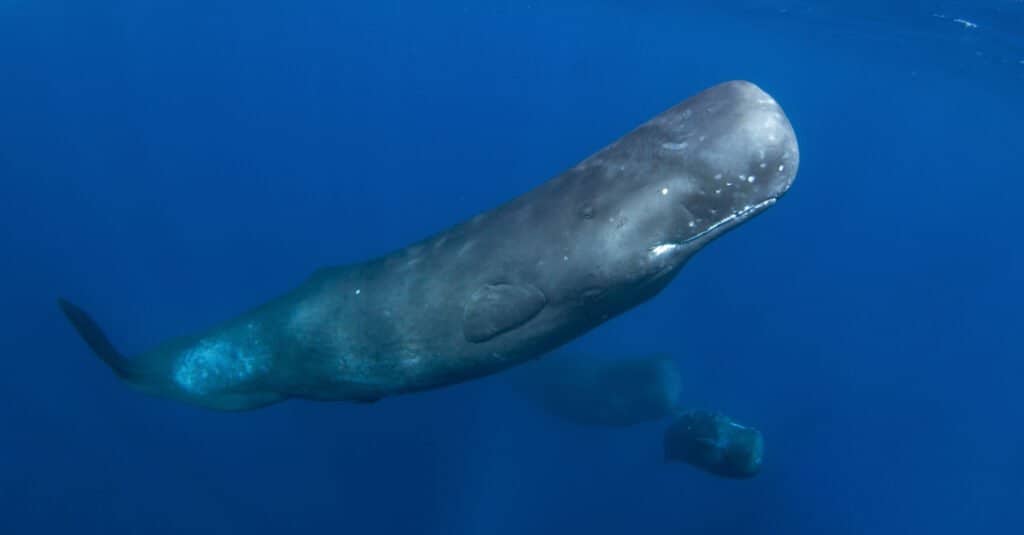
A sperm whale’s head makes up about a third of its total body length.
©Martin Prochazkacz/Shutterstock.com
Sperm whales (Physeter macrocephalus) are the largest of the toothed whales. They can reach up to 50 feet long and weigh up to 125,000 pounds. A sperm whale’s head is around one-third of its total length, making its head around 16.7 feet long in a 50 foot whale.
Sperm whales’ heads are so large because of the oil found in their heads, called spermaceti. The organ containing the oil can weigh as much as 15 tons, yielding as much as 4 tons of oil. This oil was not only used as fuel, but could also be made into candles and soap. U.S. whalers hunted sperm whales from the 1800s until whaling was outlawed in 1971.
2. Bowhead Whale
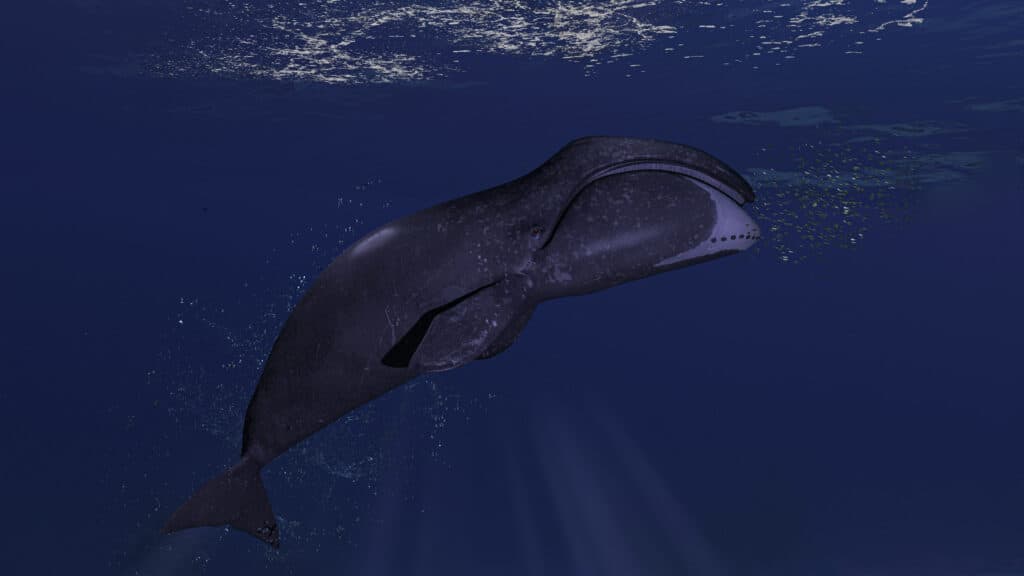
Bowhead whale skulls can reach over 16 feet long.
©iStock.com/bbevren
The bowhead whale (Balaena mysticetus) has the largest mouth of any animal on the planet, as well as the second-largest head. It has an enormous skull that can measure over 16.5 feet long, or about one third of the average whale’s total body length. These whales can reach as long as 60 feet and weigh up to 200,000 pounds.
The bowhead whale’s common name is a reference to its bulky, bow-shaped skull. It uses its thick, powerful skull to smash breathing holes in the ice in the Arctic waters in which it resides. The bowhead whale can break through ice sheets more than eight inches thick.
1. Blue Whale
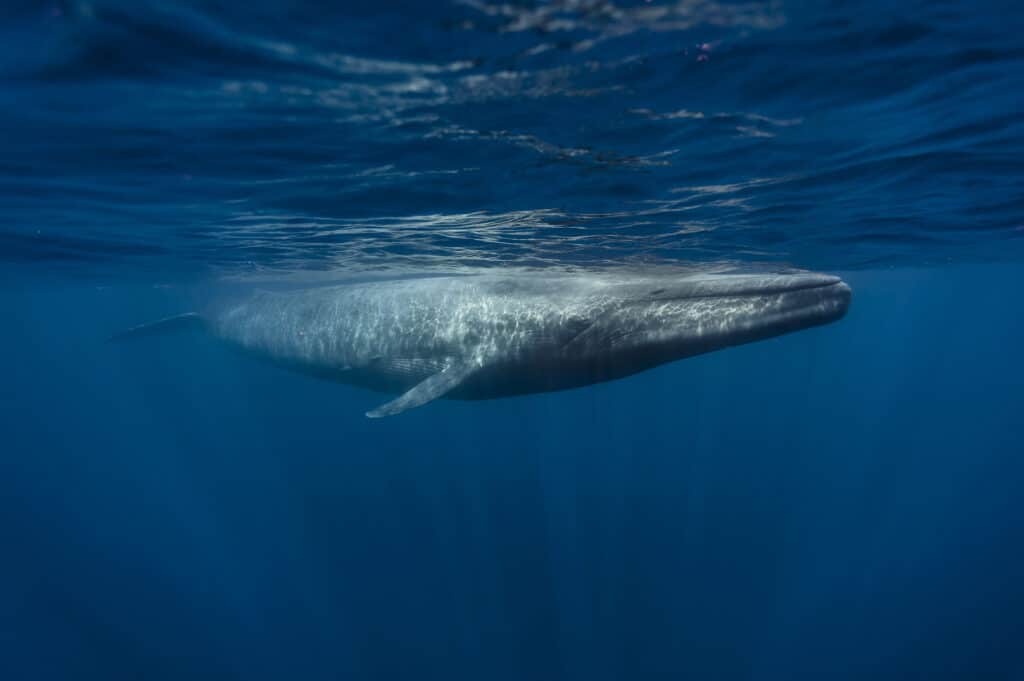
The blue whale also has the largest head of any animal, which can reach 19 feet in length.
©Andrew Sutton/Shutterstock.com
The blue whale (Balaenoptera musculus) is unfathomably huge, with a similarly massive skull that can measure up to 19 feet long. Its head makes up nearly one quarter of the average blue whale’s body length. The largest animals on Earth, blue whales typically reach from 80 to 110 feet long and can weigh up to 330,000 pounds.
Scientists believe the blue whale, as well as other filter-feeding whales, may have evolved large heads and mouths so they can quickly eat large amounts of food. Baleen whales are lunge-feeders, which means they swim forward with their mouths open to swallow as much water and prey as possible. Blue whales are so large that they have high energy needs, requiring significant caloric intake of over 17 tons of food per day.