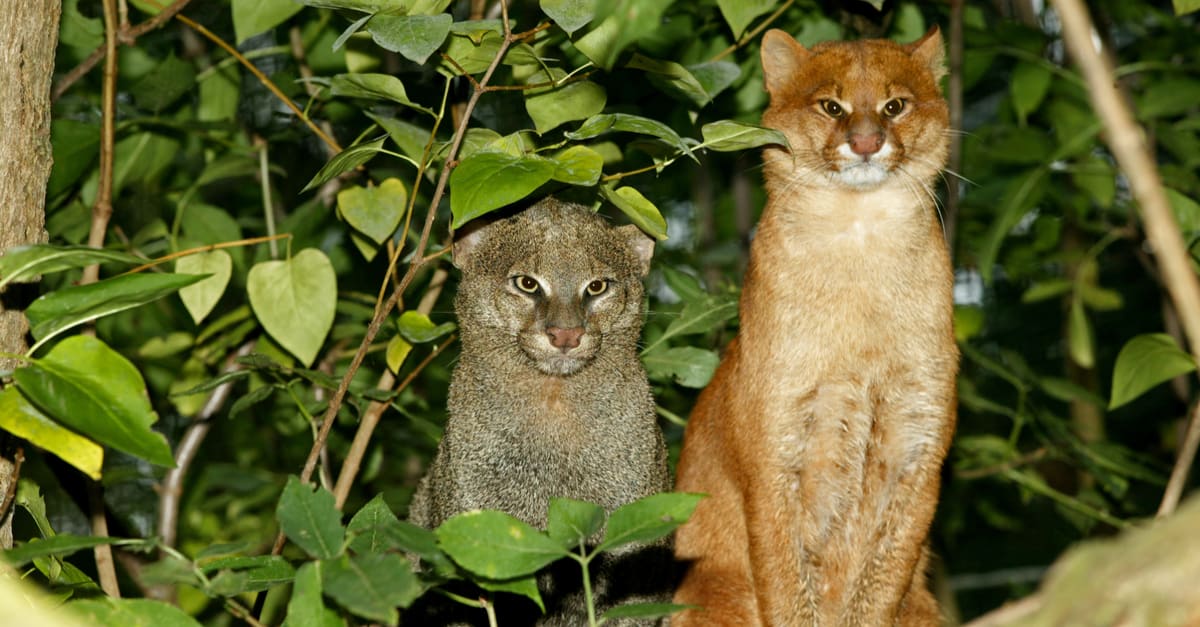

While North America might have the largest population of pet cats, it’s home to only six native species of wild cats. Unfortunately, deforestation and human interference have caused a decline in North America’s wild cats. We’re here to show off these gorgeous felines that make their homes in the U.S., Canada, and Mexico. North America is home to six native species of wild cats. Only four species (bobcat, lynx, mountain lion, and jaguar) are widespread or historically well-documented, with ocelots and jaguarundis surviving on the continent only in very limited numbers.
This post was updated on August 31, 2025 to clarify exact range pertaining to U.S. populations of wild cats, as well as conservation status of particular species.
About Wild Cats
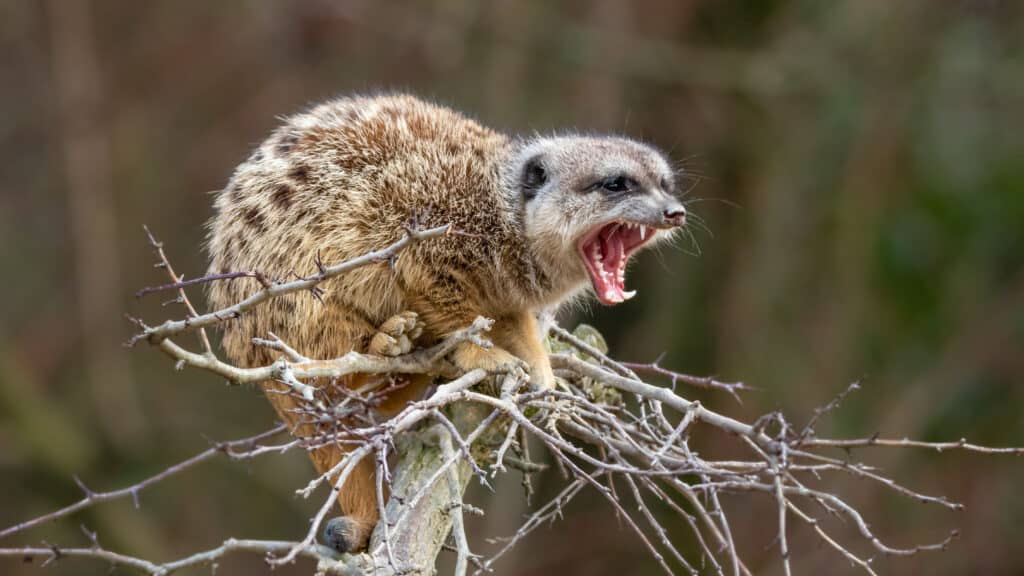
Wild cats are in the same suborder as mongooses!
©MartinJGruber/Shutterstock.com
All of the wild cat species are part of the family Felidae, which they share with domestic cats. The Felidae family is part of the Carnivora order along with the Canidae (dog) and Ursidae (bear) families. The Carnivora order is divided into two main suborders: the Feliformia, which includes cats, hyenas, mongooses, and other feline-like animals, and the Caniformia, which contains dogs, bears, sea lions, raccoons, and other animals that are closely related to dogs.
In fact, all families in the Carnivora order share a common ancestor that lived around 60 million years ago. Scientists call the animal Dormaalocyon and say it looked like a mix between a squirrel and a small cougar. It was only 1 to 2 pounds and had a diet of insects and small game. As time progressed, the early Carnivora species spread and adapted to different regions. As a result, they changed in size, color, and much more.
Bobcats
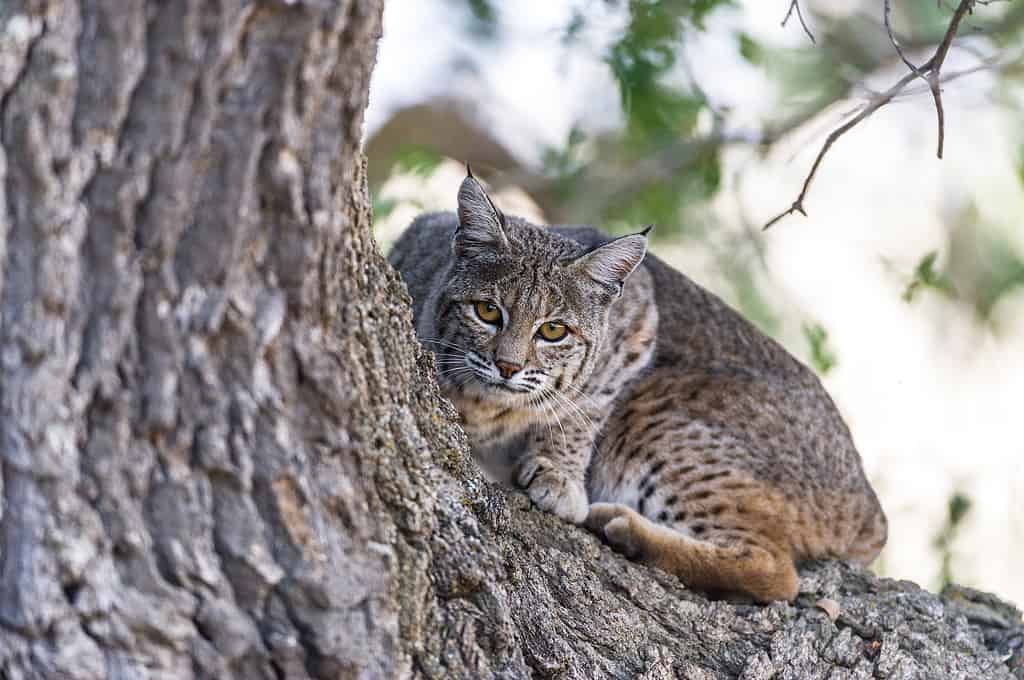
While they may look fierce, bobcats usually don’t pose any threat to humans.
©iStock.com/brentawp
Bobcats live in every U.S. state, but they are mainly present in Florida, Georgia, North Carolina, and Washington. They also live in most of Canada and Mexico. Despite a population of 1 to 2 million bobcats, you won’t usually see one. That’s because they are very skittish and will hide from people. Your biggest chance of catching sight of a bobcat is on a game cam or while driving on a backroad at night.
If you do spot one, don’t approach it, and don’t run from it. Bobcats rarely attack, but if you run or turn away from them, they may surprise attack from behind. While vulnerable populations are more at risk, the possibility of someone getting seriously injured or killed by these 15- to 40-pound cats is pretty low.
Mountain Lion
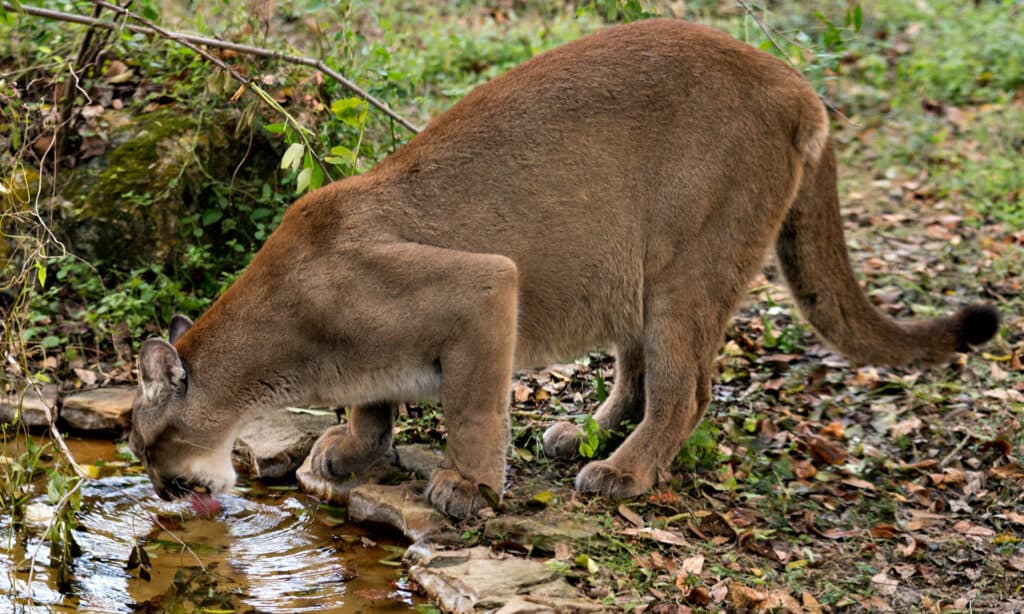
Despite how large they are, mountain lions are quite elusive.
©iStock.com/Rejean Bedard
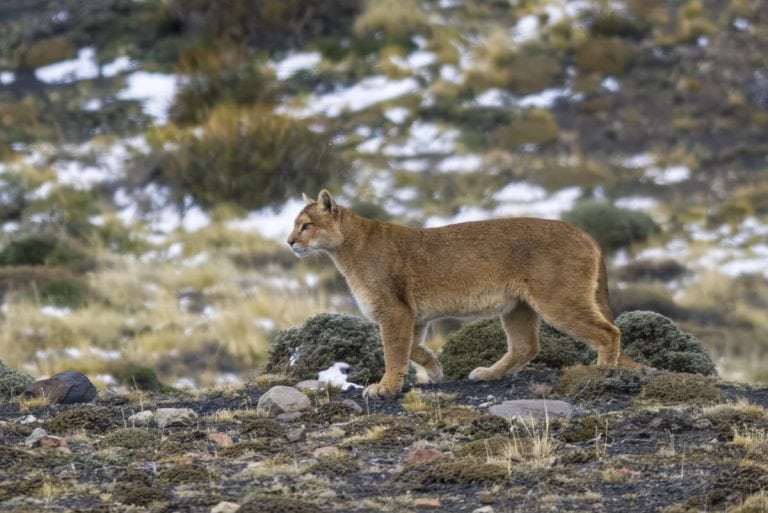
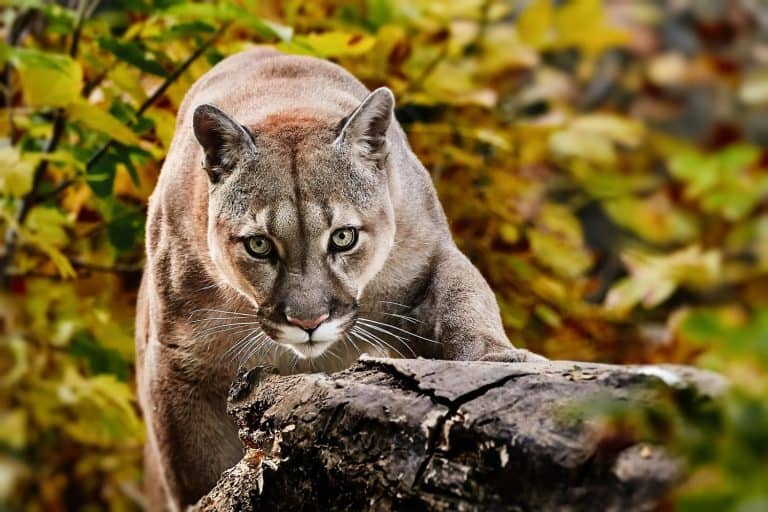
Mountain lions are some of the most unique and gorgeous wild cats. Like bobcats, they were nearly extinct at one point, but their populations are now rising. While mountain lions are not considered threatened, one subspecies, the Florida panther, is endangered.
Mountain lions are much larger than bobcats, averaging 130 to 140 pounds. While they are more of a danger than bobcats, the risk of mountain lions attacking humans is very low. In fact, you’re more likely to be struck by lightning than attacked by a mountain lion.
Ocelot
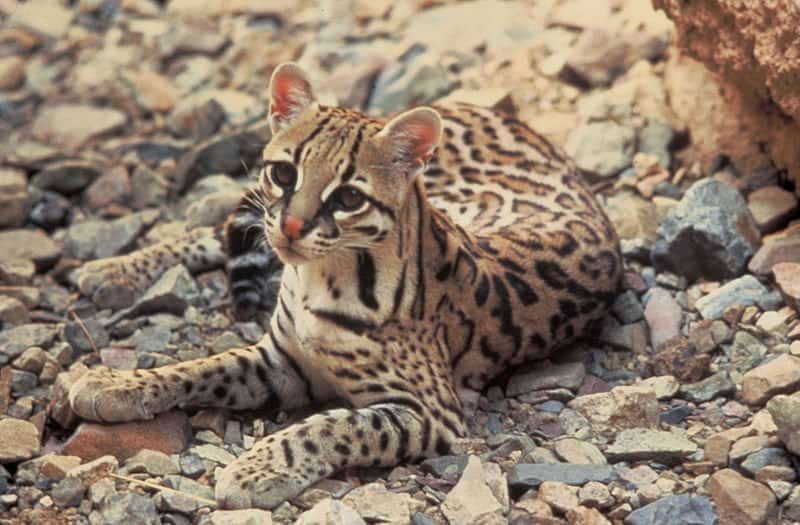
It’s easy to see why people want these gorgeous cats as pets, but they’re best left alone in the wild.
©Tom Smylie, Public domain, via Wikimedia Commons – Original / License
Ocelots, with their big, gleaming eyes and leopard-like pelts, are some of the cutest wild cats. They’re about twice the size of domestic cats and are found across Mexico. Within the U.S., their natural range is restricted to southern Texas and formerly southern Arizona. Today, only a small population (roughly 60 individuals) survives in Texas. Like bobcats and mountain lions, ocelots are nocturnal. Globally, ocelots are not threatened, with a population somewhere between 800,000 and 1.5 million. However, within the U.S. they are federally endangered under the ESA. Because of their similarity to house cats, some people keep ocelots as pets. However, ocelots can be quite a handful.
Canadian Lynx
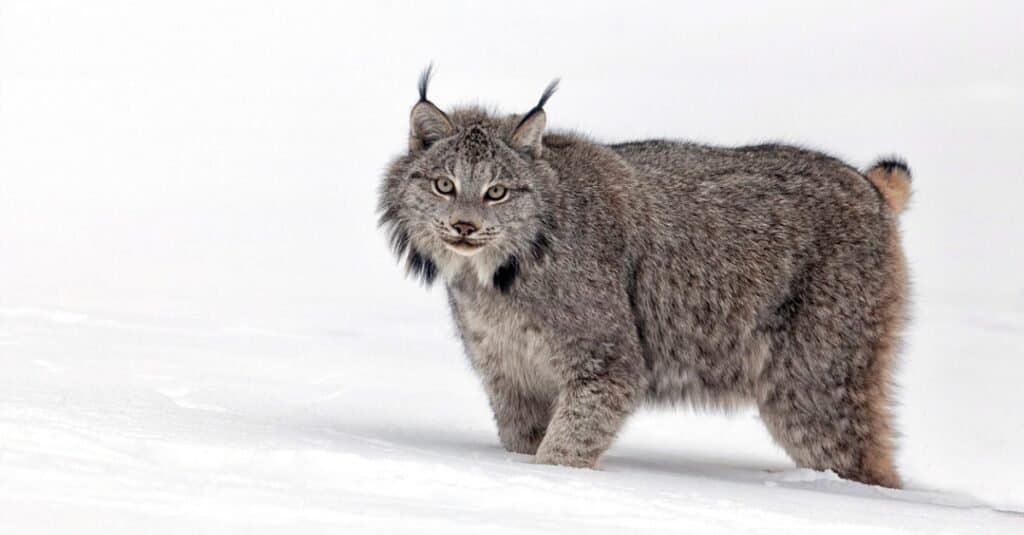
Lynx have exceptional instincts for detecting prey in the snowy conditions they live in.
©iStock.com/Lynn_Bystrom
True to their name, Canadian lynx live in Canada (as well as parts of Alaska). In the contiguous U.S., Canada lynx are found in limited, northern portions of Washington, Idaho, Montana, Minnesota, and Maine. They’re around the same size as bobcats (between 12 and 35 pounds) but have much thicker fur which makes them stand out from their relatives. Canadian lynx are best known for their stylish ear tufts — black fur that sticks out around 2 inches longer than their ears. Like bobcats, they are quite elusive and nocturnal.
Jaguar
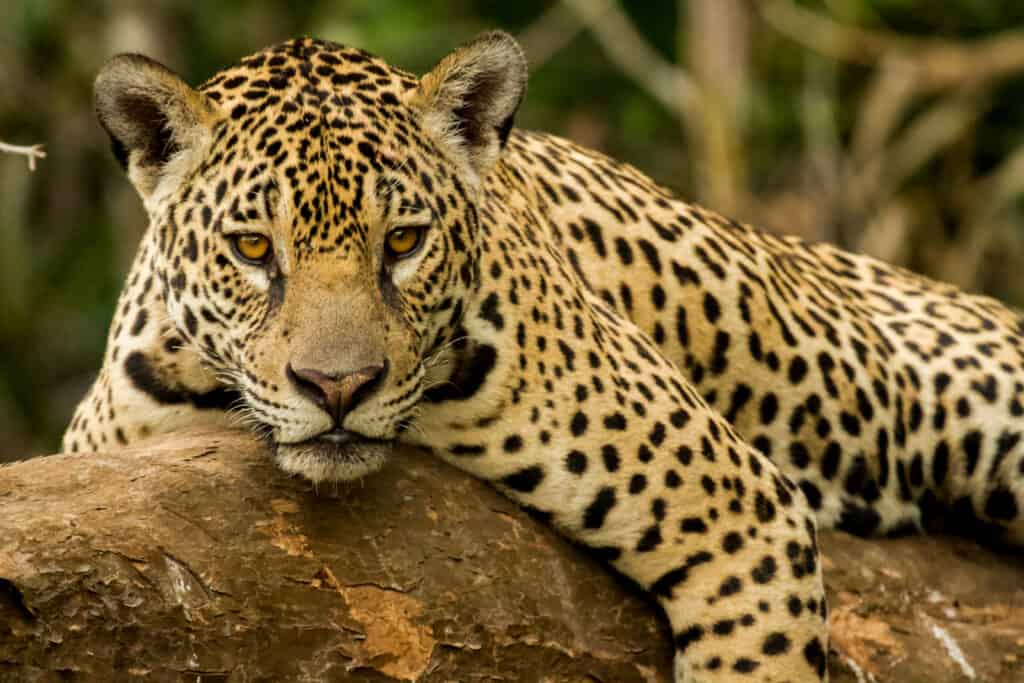
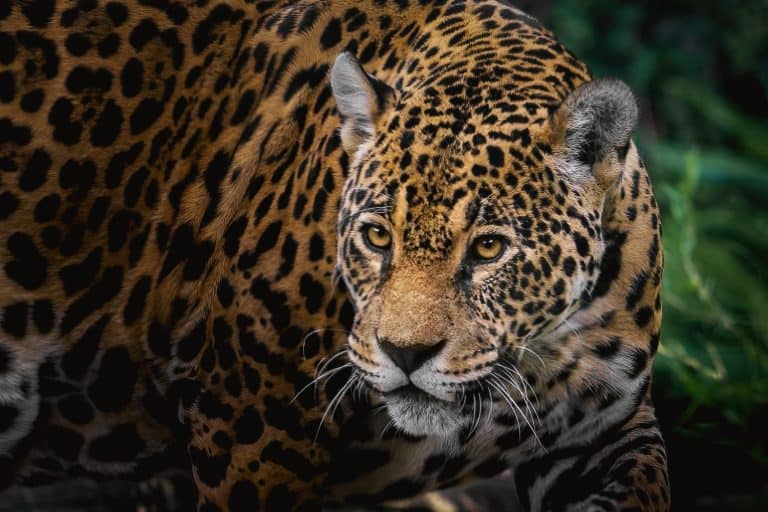
A few jaguars still live in North America in the southern regions.
©Pedro Helder Pinheiro/Shutterstock.com
When you think of jaguars, North America probably isn’t the continent that comes to mind. But jaguars actually evolved in North America and then spread to Central and South America. They’re the largest cats that are native to the continent, weighing anywhere between 150 and 300 pounds. After jaguars evolved and spread further south, their northern U.S.-based populations began to decrease. Now, these beautiful cats live primarily in Central and South America. Jaguars in the U.S. are extremely rare transient males, mostly wandering north from Mexico into Arizona and New Mexico. The last breeding population in the U.S. disappeared in the early 20th century.
Jaguarundi
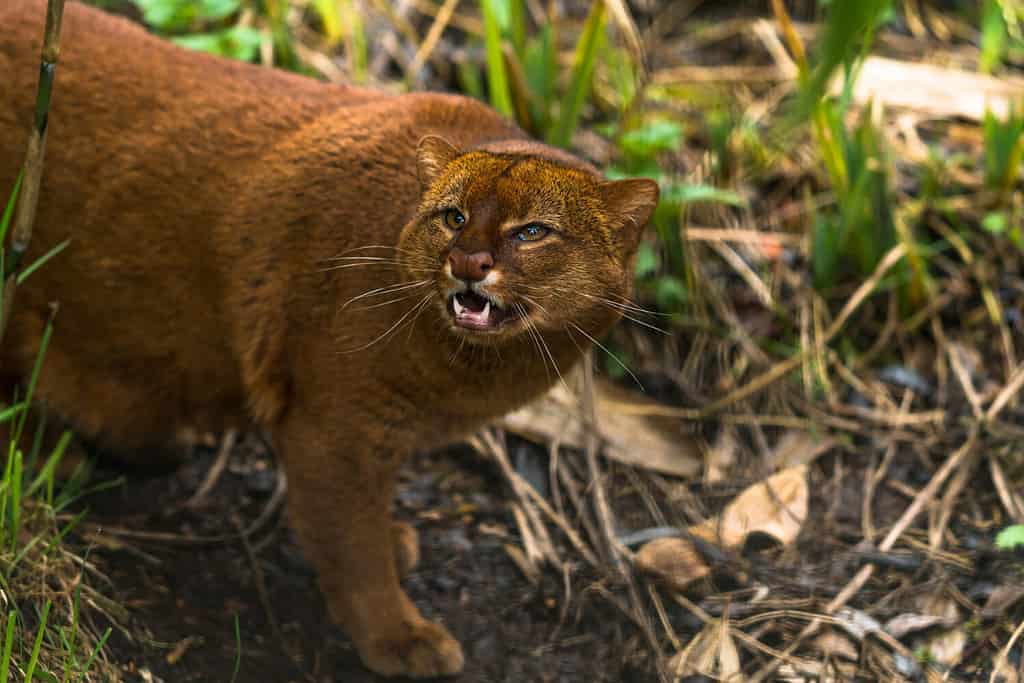
Jaguarundis are a distinct gray or red color that differentiates them from other wild cat species.
©BBA Photography/Shutterstock.com
These wild cats are nearly twice the size of domestic cats, mainly in length, weighing anywhere between 7 and 16 pounds. They’re native to the Americas, ranging between Central and South America, up to Mexico. Their presence in southern Texas is disputed, with no verified sightings since the 1980s. An endangered subspecies called the Gulf Coast jaguarundi was present in the U.S. at one time, though may now be extirpated.
Unlike most other wild cats, jaguarundis are a dark gray color, although there are some red variations. They’re also diurnal, active during the day, as opposed to their nocturnal relatives.
Summary of the Wild Cat Species in North America
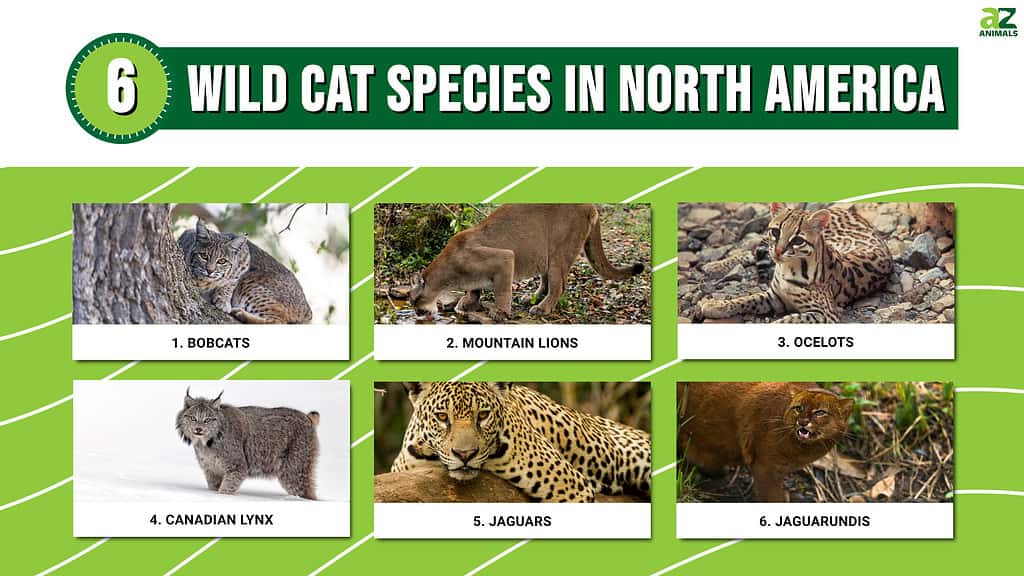
| Common Name | Scientific Name | |
|---|---|---|
| #1 | Bobcat | Lynx rufus |
| #2 | Mountain Lion | Puma concolor |
| #3 | Ocelot | Leopardus pardalis |
| #4 | Canadian Lynx | Lynx canadensis |
| #5 | Jaguar | Panthera onca |
| #6 | Jaguarundi | Herpailurus yagouaroundi |