










M
Species Profile

Meagle

Canis lupus familiaris

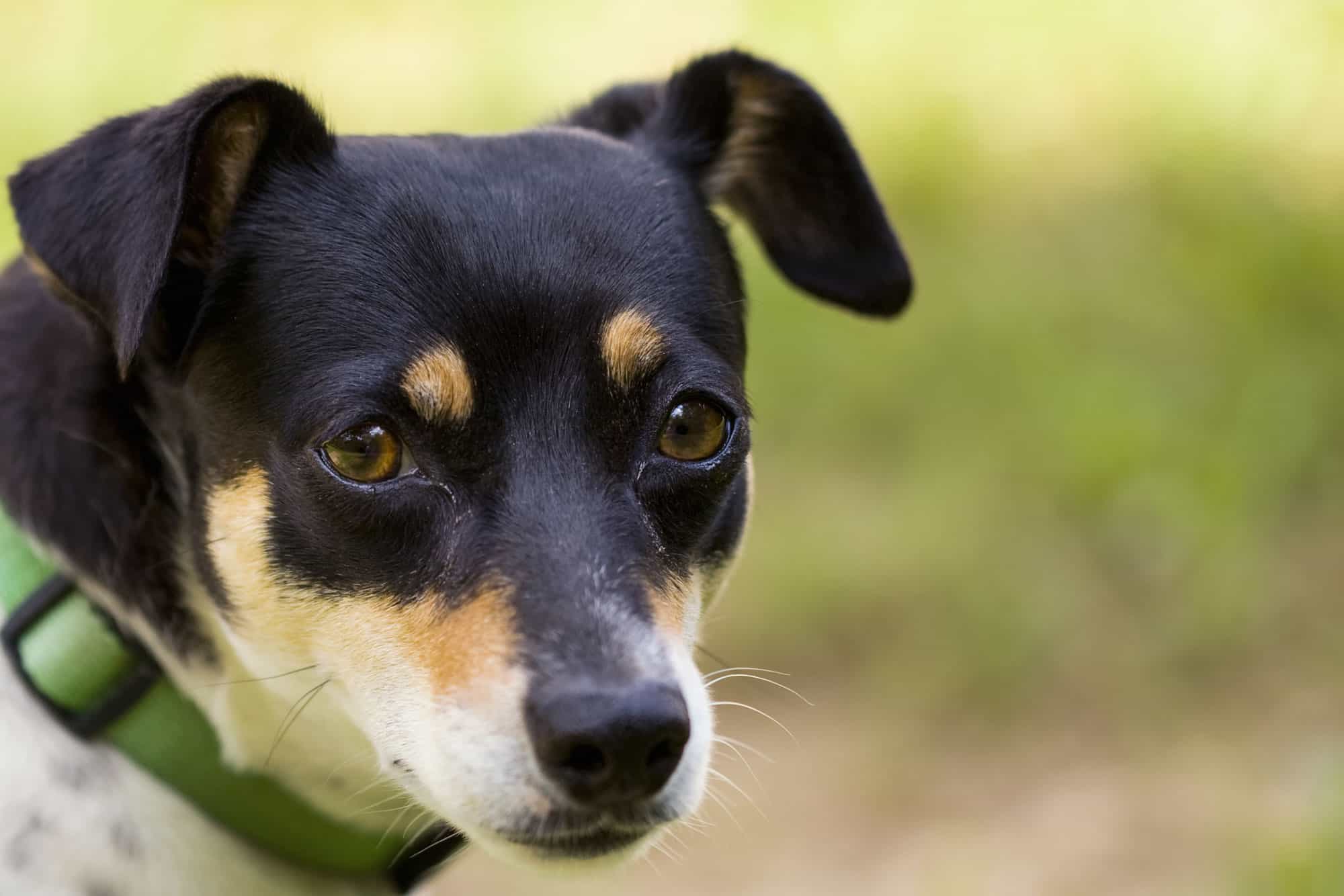
Small dog, big nose.
iStock.com/STidwell

Meagle Distribution

Click a location to explore more animals from that region

Origin Location

This map shows the native origin of the Meagle. As a domesticated species, they are now found worldwide.

Loading map...

Found in 1 state/province

Size Comparison

Human 5'8"
Meagle 12 in

Meagle stands at 17% of average human height.

Animal, Animal Body Part, Animal Ear, Animal Eye, Animal Whisker

At a Glance

Domesticated
Diet Omnivore
Activity Diurnal+
Lifespan 12 years
Weight 11 lbs
Status Not Evaluated
Did You Know?

"Meagle" is a designer cross; litters can vary widely even among siblings in coat, size, and drive.

Scientific Classification

A Meagle is a hybrid (designer) dog produced by crossing a Maltese with a Beagle, typically combining a small-to-medium body size with a companion temperament and varying degrees of scent-hound traits.

Kingdom
Animalia
Phylum
Chordata
Class
Mammalia
Order
Carnivora
Family
Canidae
Genus
Canis
Species
lupus

Distinguishing Features

  • Mixed traits of Beagle (drop ears, scent-driven behavior) and Maltese (companion-dog influence, often softer/longer coat texture)
  • Size and coat can vary widely between individuals due to being a crossbreed
  • Typically a pet/companion animal rather than a standardized, formally recognized pure breed

Physical Measurements

Males and females differ in size

Height
1 ft 1 in (10 in – 1 ft 3 in)
Length
1 ft 8 in (1 ft 4 in – 1 ft 12 in)
Weight
18 lbs (11 lbs – 24 lbs)
Tail Length
9 in (7 in – 12 in)
9 in (7 in – 11 in)
Top Speed
19 mph
running

Appearance

Primary Colors
Secondary Colors
Skin Type Domestic dog skin with pigmented nose/eyelids; coat short-to-medium, straight to slightly wavy
Distinctive Features
  • Mixed-breed domestic dog (Maltese × Beagle) under Canis lupus familiaris; not a wild canid.
  • Small-to-medium, compact body; often longer than tall with moderate bone.
  • Coat length varies from short (Beagle-like) to silky medium (Maltese-like); moderate shedding variability.
  • Ears typically drop and are longer than Maltese; may have Beagle-style ear leather.
  • Face often blends Maltese softness with Beagle muzzle; large, expressive dark eyes common.
  • Scent-hound influence: stronger nose and tracking interest than many toy companion breeds.
  • Temperament commonly affectionate and people-oriented; may be more vocal or alert than Maltese.
  • Care: regular brushing (especially longer coats) and routine ear cleaning to reduce moisture/yeast buildup.
  • Exercise needs moderate: daily walks plus sniffing games help manage hound drive and boredom.
  • Health considerations (variable): patellar luxation, dental crowding/periodontal disease, ear infections, allergies/itching, obesity risk, and occasional intervertebral/back strain in longer-bodied dogs.
  • Distinct 'designer' variability: appearance and behavior are not standardized across individuals.

Sexual Dimorphism

Sexual dimorphism is mild: males are typically slightly taller, heavier, and broader-headed. Females are often a bit lighter with finer bone, though individual variation from crossbreeding can exceed sex differences.

  • Slightly larger overall size and heavier musculature
  • Broader skull and thicker neck in some individuals
  • May show more territorial marking behaviors
  • Slightly smaller frame and finer bone structure
  • Often a narrower head and lighter build
  • Heat cycles and mammary development if unspayed

Did You Know?

"Meagle" is a designer cross; litters can vary widely even among siblings in coat, size, and drive.

Many inherit the Beagle's scent-tracking focus-sniffing can become their favorite "job."

Coats can range from low-shedding, silky Maltese-like to short Beagle-like (often moderate shedding).

Ear shape often trends floppy like a Beagle, which can increase the need for ear cleaning.

Some Meagles "talk" like Beagles (bay/howl), while others stay relatively quiet-training and genetics both matter.

They commonly thrive on food rewards, reflecting Beagle-style food motivation.

Like all dogs (Canis lupus familiaris), they read human cues unusually well compared with wild canids, making them strong companion learners.

Unique Adaptations

  • Domestic-dog sociability: as Canis lupus familiaris, Meagles are adapted for human environments-responsive to social reinforcement, routines, and cooperative training.
  • Enhanced olfactory processing (often): if the Beagle lineage is strong, many show heightened scent discrimination and persistence on trails compared with many toy companion breeds.
  • Flexible coat and thermoregulation: coat type varies; short coats may need warmth in cold weather, while longer coats require grooming to prevent mats.
  • Compact companion build: typically smaller than many scent hounds, allowing "hound-like" scenting in a more apartment-friendly size-though exercise needs can still be moderate.

Interesting Behaviors

  • Scent-first exploring: may zig-zag on walks, pause often to investigate odor trails, and "vacuum" the ground with the nose.
  • Selective hearing outdoors: when on an interesting scent, recall can degrade unless trained with high-value rewards and gradual distractions.
  • Shadowing/velcro tendencies: many follow people room-to-room (Maltese companion trait), sometimes developing separation distress if not conditioned to alone time.
  • Food scavenging and counter-surfing: common if Beagle appetite and persistence show through; manage with secure storage and impulse-control games.
  • Vocal repertoire: may include Beagle-style baying, alert barking, or quiet watchfulness-household noise tolerance is important.
  • Play style variability: some are cuddly lapdogs; others are busy explorers who prefer sniff games over fetch.

Cultural Significance

Meagles (Maltese × Beagle mix, Canis lupus familiaris) are a modern designer dog cross, mixing Maltese companion traits with Beagle friendly scent-hound nature. Not a standard breed, they are kept mainly for companionship, family life, and nose work.

Myths & Legends

In European medieval and early modern tradition, small lapdogs (ancestors of modern Maltese-type companions) were celebrated in stories and art as comforters that "warmed the lap" and symbolized devotion and status in noble households.

Classical-era accounts often associated the Maltese with the Mediterranean island culture and seafaring trade routes; lapdogs were sometimes described in anecdotes as prized gifts exchanged among elites across ports and courts.

British hunting stories long called Beagles and other scent hounds tireless "truth-followers" who could follow any trail; their baying was the music of the hunt, carrying over hedgerows and fields to guide hunters.

In many cultures, household dogs were seen as alert guards of the home's threshold; sudden barking at night was thought to mean they sensed an unseen visitor or danger, reinforcing their role as protectors.

Conservation Status

NE Not Evaluated

Has not yet been evaluated against the criteria.

Population Stable

Life Cycle

Birth 4 pups
Lifespan 12 years

Lifespan

In the Wild
10–15 years
In Captivity
10–15 years

Reproduction

Mating System Polygynandry
Social Structure Managed Domestic
Breeding Pattern Transient
Fertilization Managed Selective
Birth Type Internal_fertilization

Meagles follow domestic-dog reproduction: pairings are typically human-managed rather than bonded, with no lasting pair relationship. When unmanaged, both sexes can mate with multiple partners; females provide nearly all parental care to pups.

Behavior & Ecology

Social Pack Group: 3
Activity Diurnal, Crepuscular
Diet Omnivore Meat-forward foods (e.g., poultry such as chicken or turkey; often best delivered as a complete, small-breed kibble or balanced wet food)

Temperament

Species context (domestic dog): highly social, human-oriented, cooperative, and adaptable to household routines.
Distinguishing from base species/wolf: far less territorial and coordinated; more dependent on humans for structure and enrichment.
Most Meagles are affectionate companion dogs; individual variation ranges from calm lap dog to scent-driven explorer.
Friendly and people-seeking; typically good with children when socialized and handled gently.
Often sociable with other dogs; can be submissive or "big-dog bold" depending on Beagle influence.
Scent-hound tendency: may follow odors, ignore recalls, and pull; leash skills are important.
Trainability: eager but can be distractible/stubborn; best with short sessions, food rewards, and scent games.
Vocal tendency varies: some inherit Beagle baying/howling; others are primarily small-dog barkers.
Separation sensitivity can occur; benefits from gradual alone-time training and enrichment.
Prey/chase drive may be moderate; supervise around small pets and use secure fencing.
Care requirements: daily exercise plus sniffing opportunities; mental enrichment reduces nuisance barking.
Care requirements: coat can vary; brush routinely, manage mats, and schedule regular grooming as needed.
Care requirements: strong dental care needs (toy-breed influence); daily brushing recommended.
Care requirements: ear care important (drop ears common); clean/dry ears to reduce infections.
Health concerns (common possibilities): patellar luxation, dental disease, ear infections, allergies, obesity.
Health concerns (breed-line risks): Beagle-associated epilepsy/hypothyroidism; Maltese-associated tracheal collapse or liver shunt-screen if symptomatic.

Communication

barking Alert or demand
baying/howling Scent excitement; Beagle influence
whining Attention, frustration, separation
yips/high-pitched barks Arousal during play
low grumbles Boundary-setting or discomfort
scent investigation and trail-following Nose-led exploration
urine marking and ground sniffing to read social information
tail carriage/wag patterns to signal arousal and friendliness
play bows, bouncy approaches, and pawing to solicit interaction
licking and close contact to reinforce affiliative bonds
averted gaze, lip-licking, and freezing as stress signals needing space

Habitat

Biomes:
Temperate Forest Temperate Grassland Mediterranean Boreal Forest (Taiga) Tundra Alpine Desert Hot Desert Cold Savanna Tropical Dry Forest Tropical Rainforest Temperate Rainforest Freshwater Wetland Marine +9
Terrain:
Plains Hilly Valley Coastal Island
Elevation: Up to 16404 ft 3 in

Ecological Role

Domestic companion omnivore (human-associated generalist feeder)

Occasional opportunistic pest control (deterring/rarely catching small rodents) Scavenging of human food waste/leftovers (can be beneficial but increases poisoning/obesity risk if unmanaged) Human social/working roles (companionship, alert barking, enrichment through scent-based activities)

Diet Details

Main Prey:
Other Foods:
Cooked grains and starches Vegetables Fruit Grasses and plant material

Human Interaction

Domestication Status

Domesticated

Canis lupus familiaris (domestic dog) was shaped by humans for thousands of years for friendliness, easy to train, and jobs like hunting, guarding, herding, and companionship. The Meagle (Maltese × Beagle) is a designer mix for small-to-medium companionship, often people-oriented with Beagle scent interest. Lives mainly as a family pet and uses services like grooming, training, vet care, boarding, adoption.

Danger Level

Low
  • defensive or fear-based biting if poorly socialized, mishandled, or in pain (risk increases with untreated dental/orthopedic issues)
  • nipping/rough play with small children if boundaries are not taught on both sides
  • escape/following scents leading to traffic incidents or lost-dog scenarios (indirect harm risk)
  • noise/baying may contribute to neighborhood conflicts (non-physical but common human-impact issue)

As a Pet

Suitable as Pet

Legality: Meagles (Maltese × Beagle mix, Canis lupus familiaris) are usually legal as pets. Rules are general: licenses, leashes, vaccinations, noise limits (Beagle baying), and housing or homeowners' rules. Check local laws.

Care Level: Moderate

Purchase Cost: $50 - $1,500
Lifetime Cost: $15,000 - $35,000

Economic Value

Uses:
Companion animal market (sale/adoption/rehoming) Veterinary and preventive healthcare Professional grooming Training/behavior services Pet retail (food, dental products, enrichment toys) Boarding/daycare and pet sitting Pet insurance
Products:
  • designer-hybrid puppies from breeders (variable ethical quality)
  • adoption placements via shelters/rescues
  • routine veterinary services (vaccines, parasite control, spay/neuter)
  • dental cleanings and dental-care products (often higher need from small-breed influence)
  • ear-care products and treatments (common in drop-eared dogs)
  • grooming services (coat/skin maintenance depending on coat type)
  • training classes and scent-enrichment activities

Relationships

The Meagle, a crossbreed between Miniature Pinscher and a Beagle, is a compact-sized hound that is fun to be around and makes a good pet for families. Their inquisitive nature is one of their most interesting characteristics, leading them to inspect everything they come across with their advanced sense of smell. However, they can sometimes be stubborn and would need early socialization to avoid behavioral issues. You should check with the breeders for information about your Meagle to learn more about the parents before selecting one.

3 Pros and Cons of Owning a Meagle

Before owning any pet, you should make sure that you know the pros and cons of having it in your house. This would not only better prepare you for their arrival into your family but would also make sure that you can create accommodating and comfortable conditions for them. Here are some pros and cons of owning Meagles:

Pros!Cons!
Active: The Meagle is very active and energetic, keeping any owner entertained and up and running on their feet.Shedding: Tend to shed moderately, which could be a problem for the owner.
Independent: If you love an independent dog, this would be a perfect choice for you.Interaction with children: Meagles might not be very good around children, especially if they have not grown up with them.
Friendly: These dogs are friendly in nature and make great family pets.Stubborn: These dogs can sometimes be very stubborn, which can be a problem for the owner in the long run.
Portrait of meagle pet at home

The Meagle is friendly in nature, independent, and will keep any owner entertained and busy.

Evolution and Origins

As the Meagle is a hybrid and relatively rare, there is not much known about its origins. However, looking at its parent breeds’ histories can help to show the Meagle’s lineage.

While the exact origins of the Meagle’s parent breed, the Beagle, are not known, it’s thought that the ancestors can date back to 5th-century Greece, where they were used to hunt rabbits and small game. Beagles are believed to be descended from Talbot Hounds, scenthounds that William the Conqueror brought to Britain in the 11th century. By the 16th century, English nobility commonly used smaller hounds referred to as Beagles to hunt deer, rabbits, and foxes in packs. Modern-day Beagles were developed in the 1830s by crossing breeds including the Talbot Hound, Southern Hound, and North Country Beagle. Due to their keen sense of smell, tracking abilities, and intelligence, Beagles are the most popular breed to use as detection dogs to sniff out prohibited items in quarantine around the world.

Meagle’s parent, the Miniature Pinscher’s precise origins are also uncertain, but it is known that this breed, also called the Zwergpinscher and the Min Pin, originates from Germany, where it was used to hunt rats and vermin in homes and stables. Due to similarities in name and appearance, some mistakenly think these dogs are mini Doberman Pinschers, but breed historians believe them to be a cross of the Dachshund and Italian Greyhound, possibly with the German Pinscher. Min Pins, known as “the King of Toys,” are popular pets, particularly in Europe and the U.S.
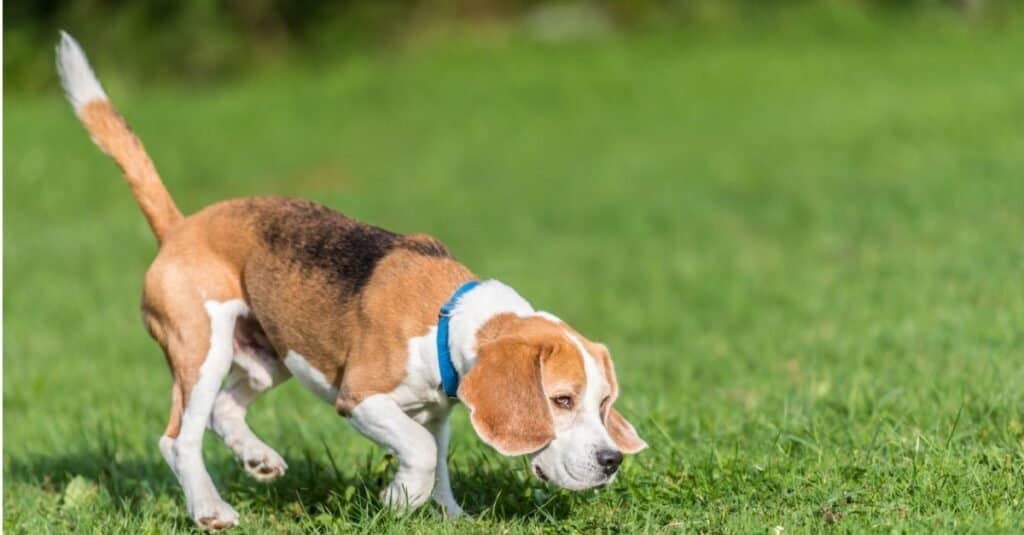
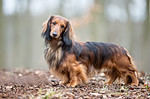
Types of Hunting Dogs

Meagle parent the Beagle was developed to be a hunting dog and is one of the best tracking breeds in the world.

Size and Weight

These dogs are compact in size, following the same build as the Beagle and Miniature Pinscher that precedes them. The males are generally 12 to 16 inches in size and weigh about 10 to 20 pounds, depending on the individual dog. The females, on the other hand, seem to be similar, reaching 12 to 16 inches in size and weighing the same as well.
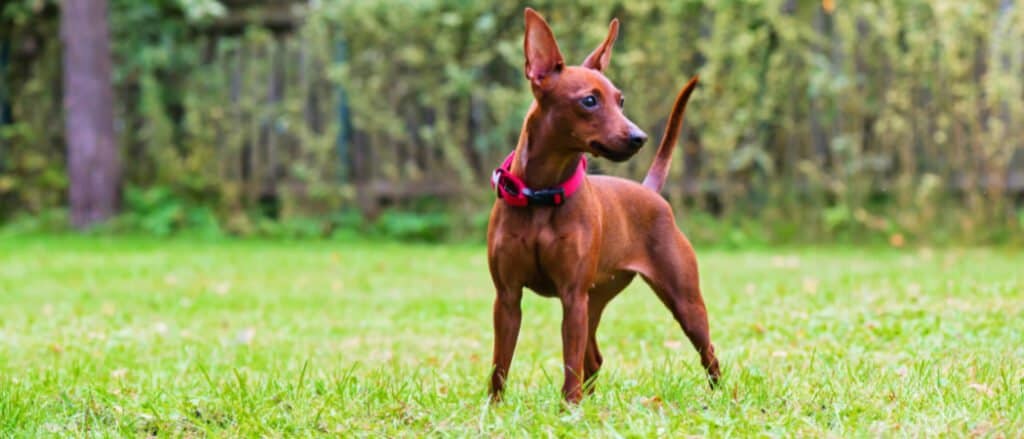
Miniature pinscher - red min-pin portrait

The Meagle is of a similar compact build to its parent breed, the Miniature Pinscher.

Common Health Issues

Whenever a new breed is developed, there are health risks that the pet inherits from both parents. With the Meagle, the health risks that it often faces come from the Miniature Pinscher and the Beagle.

Hip dysplasia is one of the most common issues that this dog faces. The condition presents as a misalignment of the hip bone.

The Meagle is also at risk for hypothyroidism, which can impact their hormones. Make sure to bring your pet to the veterinarian if you notice issues with their weight. You may also have to bring them to treat their allergies. The breeders of your particular puppy can bring more attention to any other health concerns that your pet might have or might be prone to.
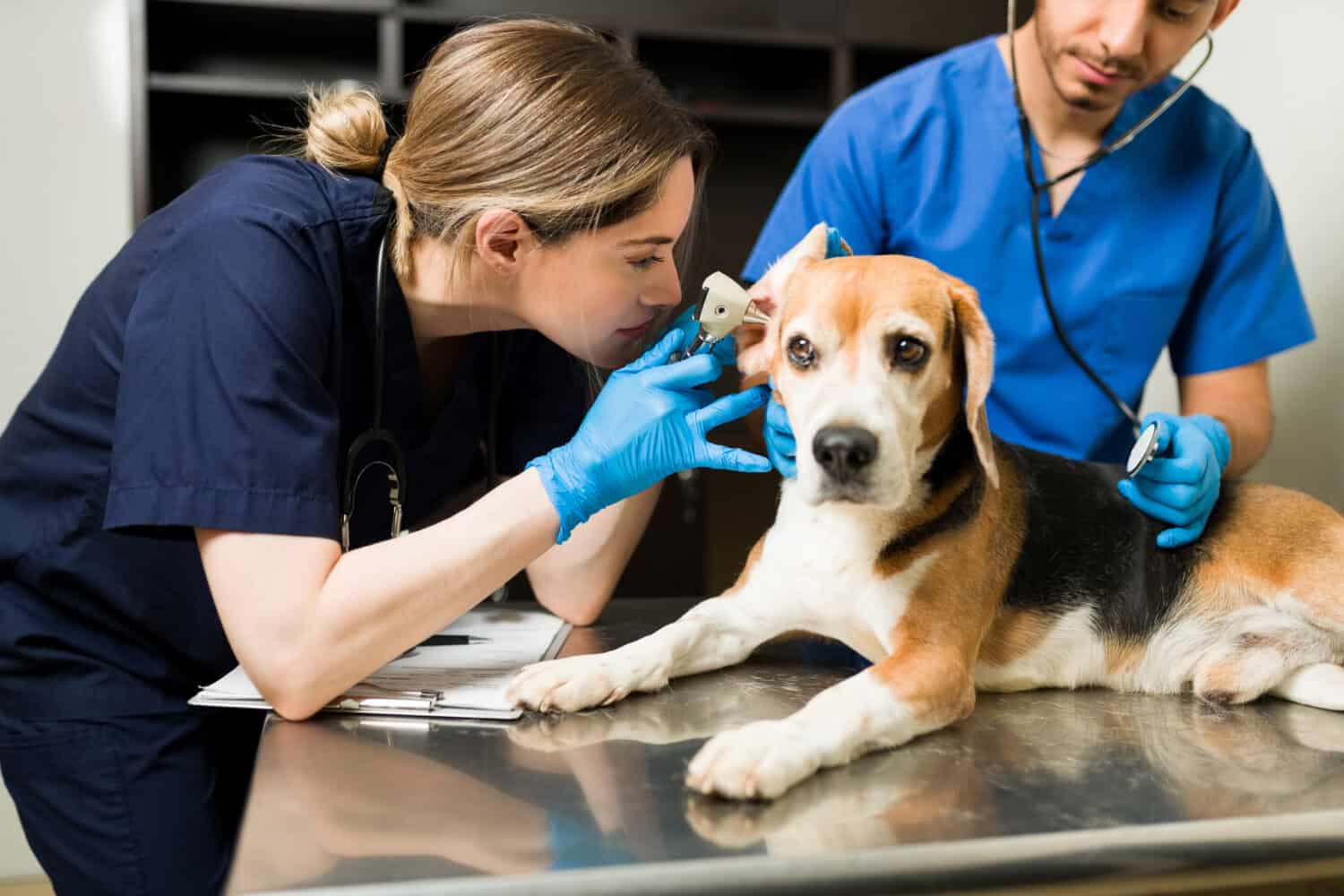
Female vet using an otoscope to examine the ear of a beautiful beagle dog. Sick cute pet sitting at the examination table at the animal clinic

Female vet using an otoscope to examine the ear of a beautiful beagle dog.

Temperament

These dogs have a fun personality, are naturally curious, and make great family dogs. Their parents can give them rather mischievous and inquisitive characteristics within their families. While this dog may be rather good with children, their disposition will primarily depend on which of the breeds it inherits more of its personality traits from. Socializing the pet early would be the best way to promote bonding with younger children and adults alike, reducing the risk of depression and aggression.

One of their prominent characteristics is their tendency to engage with strangers. Socialization can greatly help them, furthering this positive interaction with time. The Meagle is incredibly active and energetic, though it will need to have a way to express that energy.

Sometimes they can also be stubborn during training sessions.
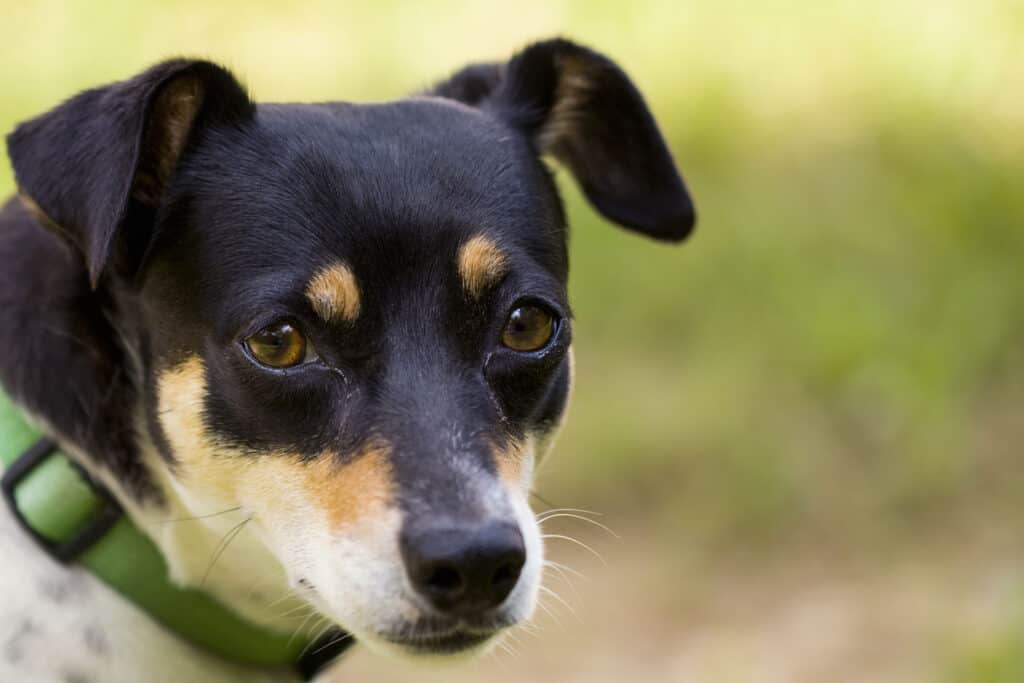
Animal, Animal Body Part, Animal Ear, Animal Eye, Animal Whisker

Meagles are naturally curious, fun, and active.

How to Take Care of a Meagle

Before you adopt a Meagle from a rescue shelter, you must know how to take care of one. You would also need to contact breeders to understand what kind of issues your dog could face. Here are a few tips on how to take care of the Meagle:

The Best Dog Food for Meagles

You would need to feed these dogs 1.5 cups of high-quality dog food per day. This would ideally be split into two meals across the day. The only foods that you need to avoid are the same that other dogs cannot digest, like onions, garlic, and chocolate.

This breed can suffer from allergies, but luckily, there’s a broad range of allergy-alleviating and limited-ingredient dog foods.

Maintenance and Grooming

Even though these dogs have short coats, they can shed moderately. Brush their coat weekly to remove loose and dead hair from their body. You can use a hound mitt to brush their fur, helping you to bond deeply with your pet.

You would also need to brush their teeth two to three times weekly to avoid any dental problems. Also, check your Meagle’s ears for any possible infection.

Beagle looking up

Like parent breed Beagles, Meagles need their ears checked regularly for signs of infection.

Training

It is moderately easy to train these dogs. They might not be the quickest to learn, but they are also not the slowest. Sometimes, training these dogs could be difficult for first-time owners, since they tend to have independent personalities.

Consistency is key with these dogs. Use positive reinforcement in the process of training them (as scolding could be detrimental to their mental health).
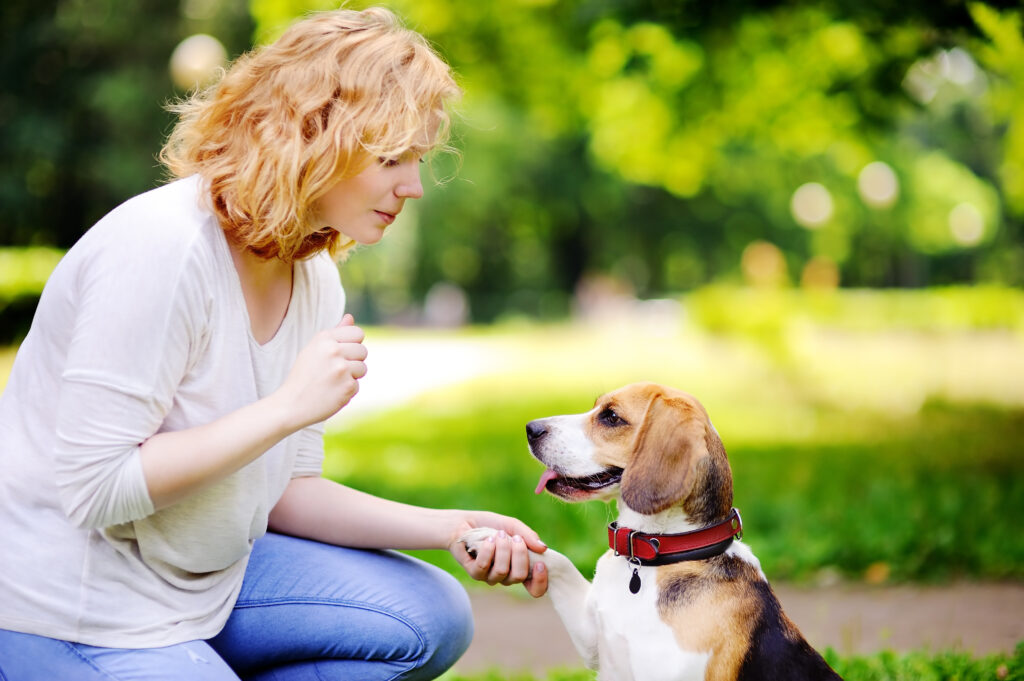
Young woman with Beagle dog in the summer park. Obedient pet with his owner practicing paw command

Using positive reinforcement when training your Meagle is as beneficial as it is with the parent breed, the Beagle.

Exercise

Even though these dogs are small and compact, they have a lot of energy stored in them. It requires a lot of exercise and mental stimulation daily to keep them content. They can easily be left for hours in a backyard, enjoying the excitement of free play. Make sure your fence is strong and secure to prevent them from escaping during this playtime.
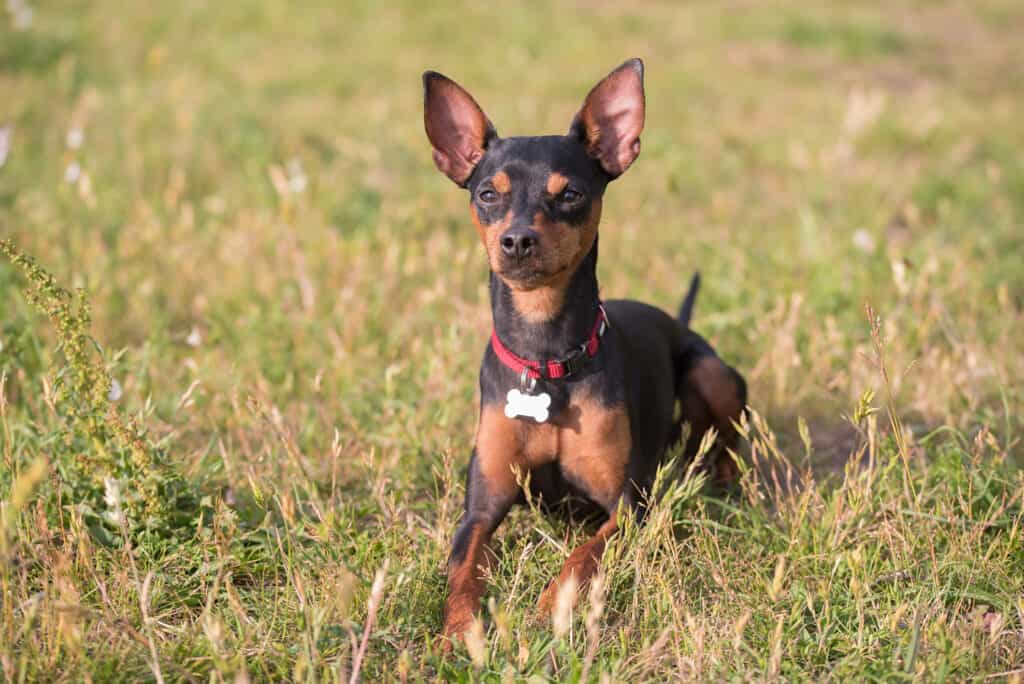
miniature pinscher laying on grass

Like their parent breed, Miniature Pinschers, Meagles are energetic dogs that enjoy exercise and playtime.

Puppies

Taking care of the puppy is essentially the same as taking care of the adult dogs. However, the puppy’s meals would be divided into smaller and more portions throughout the day since their little stomachs are not used to digesting so much food at once.

Miniature pinscher puppy

A Meagle puppy, like this Pinscher puppy, may be small but has a mighty personality.

Meagles and Children

If these dogs are properly socialized early on in life, they will likely be good with the children of the family. As a responsible pet owner, you should teach the children how to safely play with these dogs. Every dog requires supervision with any young children to ensure that their playful impulses don’t get the better of them.
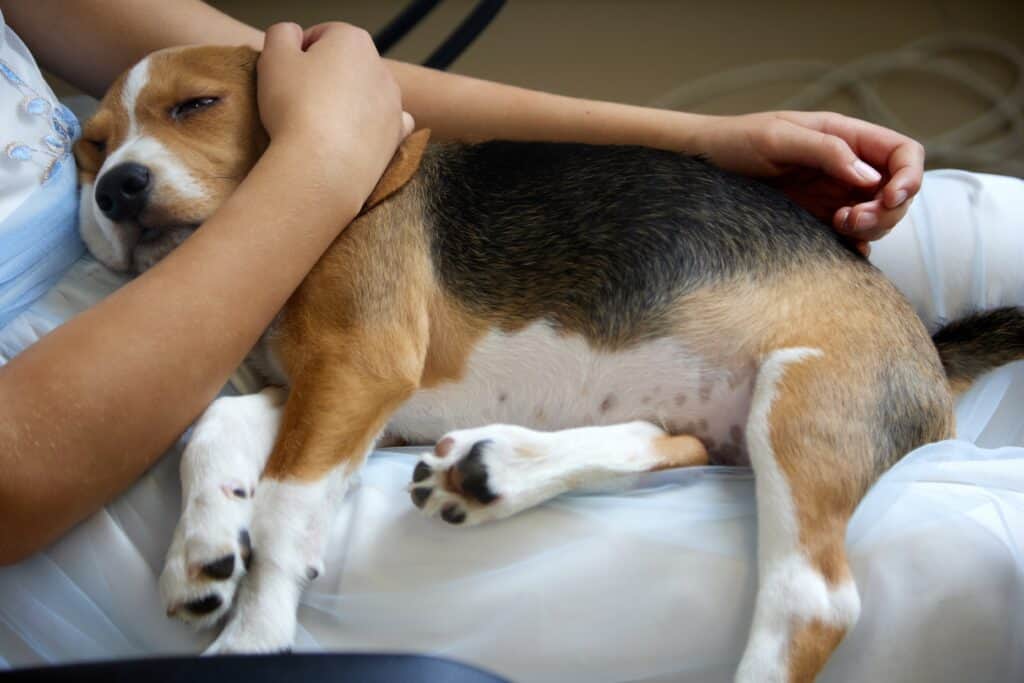
Beagle dog showing signs of an injured knee

If socialized early, Meagles, like parent breed Beagles, will likely be good with children.

Dogs Similar to a Meagle

Even with the benefits allotted to any Meagle, some owners may find that it doesn’t quite give them the new family member that they wanted. Here are a few other breeds that may be better suited to your home.

  • Beagles: These dogs are friendly and energetic. They are relatively easy to groom and very adjustable. They are also kid-friendly.
  • German Pinscher: These dogs are eager and intelligent. They do not shed and make great family pets.
  • American Foxhound: These dogs are gentle and friendly and are known to be great hunters.
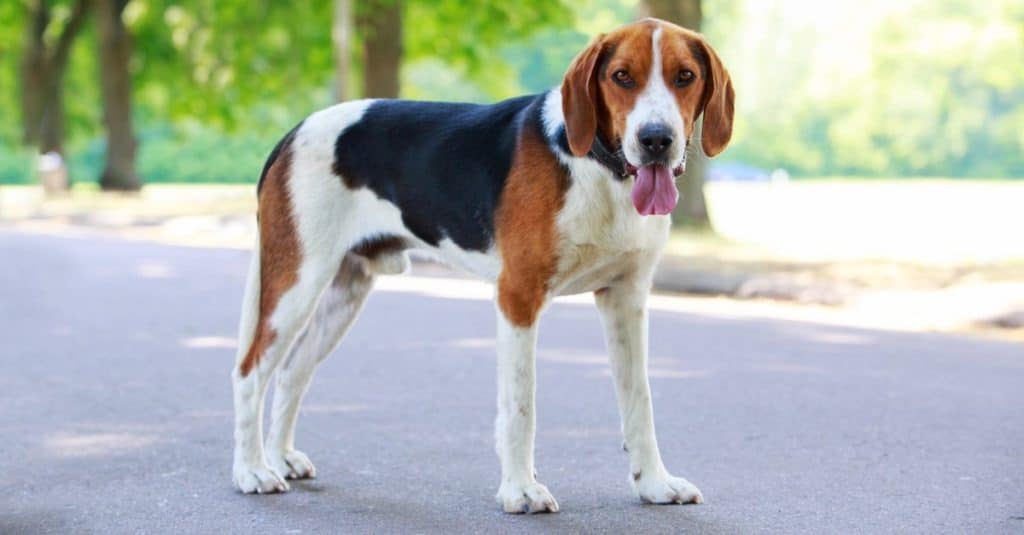
American Foxhound in a public park

The American Foxhound is similar to the Meagle in its friendly temperament.

View all 329 animals that start with M

Sources

  1. Wag Walking / Accessed April 17, 2021
  2. Petkeen / Accessed April 17, 2021
  3. Dog Breed Info / Accessed April 17, 2021
  4. The Happy Puppy Site / Accessed April 17, 2021
  5. 101 Dog Breeds / Accessed April 17, 2021
  6. Squeaks & Nibbles / Accessed April 17, 2021
Catherine Gin

About the Author

Catherine Gin

Catherine Gin has more than 15 years of experience working as an editor for digital, print and social media. She grew up in Australia with an alphabet of interesting animals, from echidnas and funnel-web spiders to kookaburras and quokkas, as well as beautiful native plants including bottlebrushes and gum trees. Being based in the U.S. for a decade has expanded Catherine's knowledge of flora and fauna, and she and her husband hope to have a hobby farm and vegetable garden in future.

Thank you for reading! Have some feedback for us?


Meagle FAQs (Frequently Asked Questions)

Meagles are hybrid hound crossbreed dogs. They are a mix of a Beagle and a Miniature Pinscher.