
Quick Take
- Octopuses can be found in every ocean in the world, including the oceans in the polar regions.
- An octopus is a predators with many different types of hunting strategies.
- Octopuses are naturally curious and often interact with divers and caregivers.
- All octopuses are venomous, but only the blue-ringed octopus has venom that is dangerous to humans.
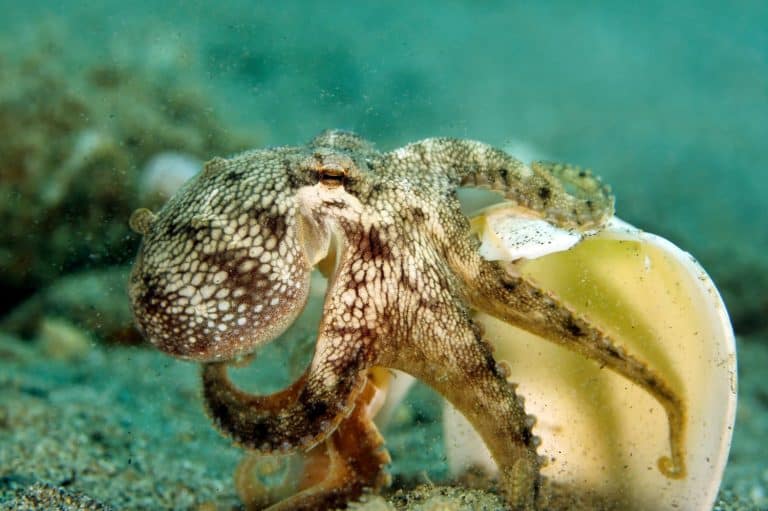
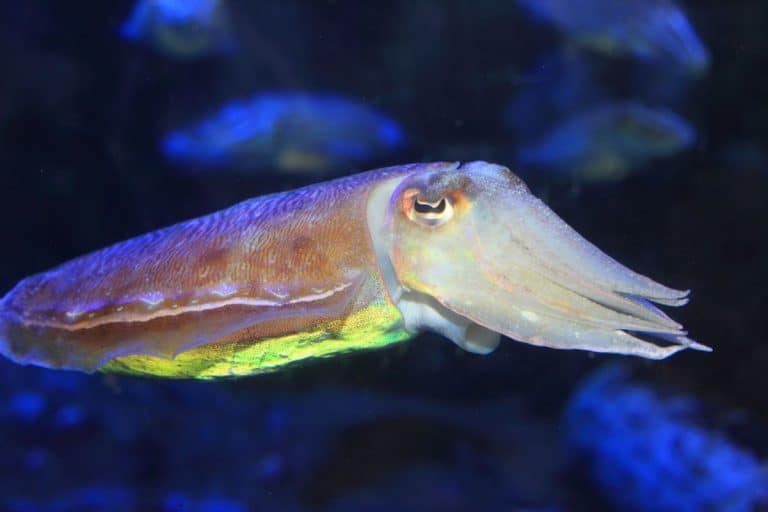
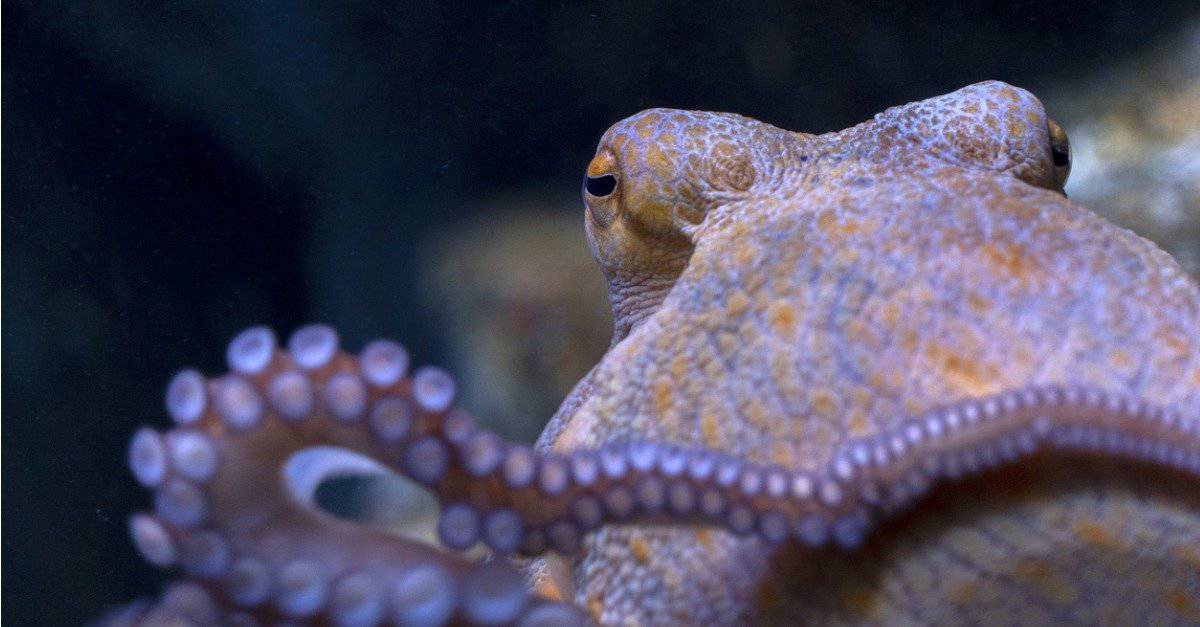
Octopuses belong to a class of marine mollusks called Cephalopods, which also includes squid and cuttlefish. They range in size from the star-sucker pygmy octopus (Octopus wolfi), which typically measures less than 1 inch, to the giant Pacific octopus (Enteroctopus dofleini) with an arm span of up to 30 feet. Octopuses can be found in every ocean in the world, including the polar seas. They have eight powerful, sucker-lined arms and large, complex nervous systems. Octopuses are strong, intelligent, and curious, but are they friendly or dangerous? Read on to find out.
Octopuses Are Predators
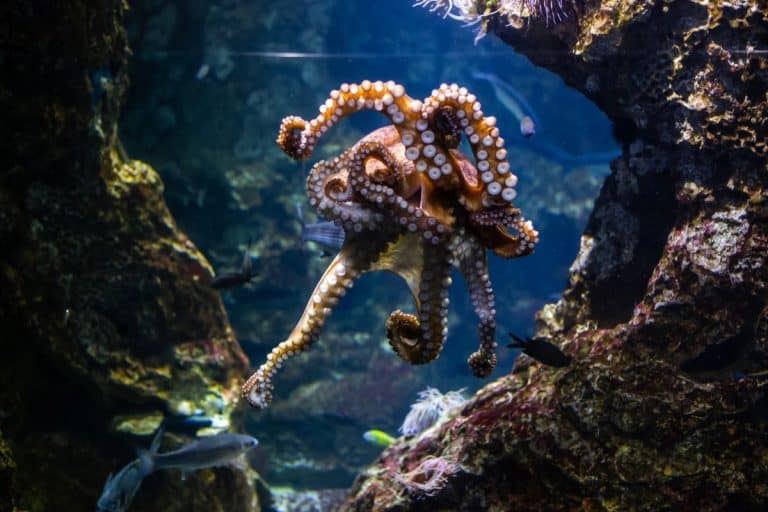
Although they do not attack boats like we see in the movies, octopuses are predators. They use their eight arms for manipulating objects and walking, but they also rely on the strength and elasticity of their arms when hunting. Their suckers can create a powerful seal, allowing them to grasp objects and taste by touching. Octopuses use various strategies to locate and capture prey, including camouflage and ambush, chasing, and stalking. More sophisticated techniques include wrapping themselves around objects to trap organisms in the membrane between their arms, tapping prey on the “shoulder” to startle it into their arms, and even collaborating with fish.
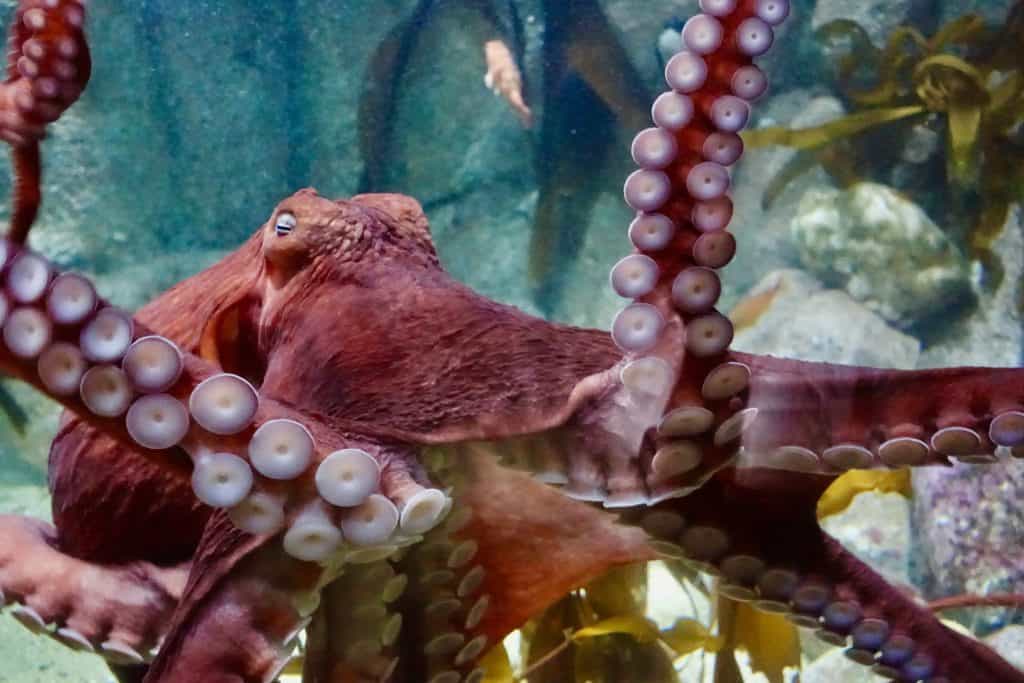
Octopus suckers allow them to taste by touching objects.
Octopuses have chitinous beaks, similar to a parrot’s, which are the only hard parts in their bodies. They use their beaks to tear softer prey, like fish, into chunks and crush the exoskeletons and shells of crustaceans and shellfish. They also rasp hard-shelled prey with their tongue-like radulae, which can have over 100 teeth made of chitin. The salivary papilla, located below the radula, is also covered with tiny, chitinous teeth. It acts as both a drill and a syringe, making holes in hard-bodied prey and injecting enzymes and toxins that paralyze the prey and loosen it from its shell.
Friend or Foe?
Octopuses are naturally curious and often interact with divers and caregivers. Most octopuses generally have a short lifespan of around 1-2 years, with even the longest-lived typically only reaching 3-5 years. Some scientists reason that this short lifespan causes octopuses to continually explore their environments to be more aware of their surroundings. Octopuses may be predators, but they also have many predators, such as sharks, large fish, and marine mammals.
Studies have shown that octopuses can even recognize individual humans. Octopuses have been observed showing more curiosity toward people with whom they have had positive interactions. They also remember individuals they seem to dislike, sometimes responding to the person’s presence on a nearby walkway by squirting a jet of water down their back. In at least two different laboratories, octopuses have learned to turn off lights by squirting water at the bulbs, short-circuiting the power. There are also many stories of octopuses escaping their tanks to raid nearby tanks in search of food.
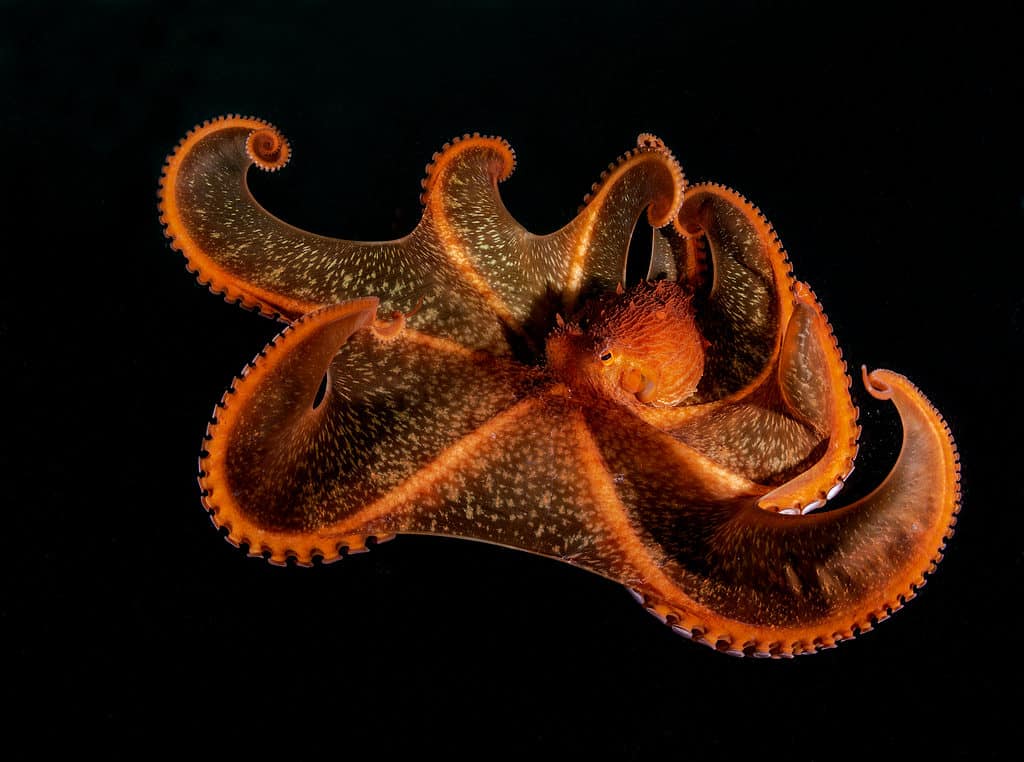
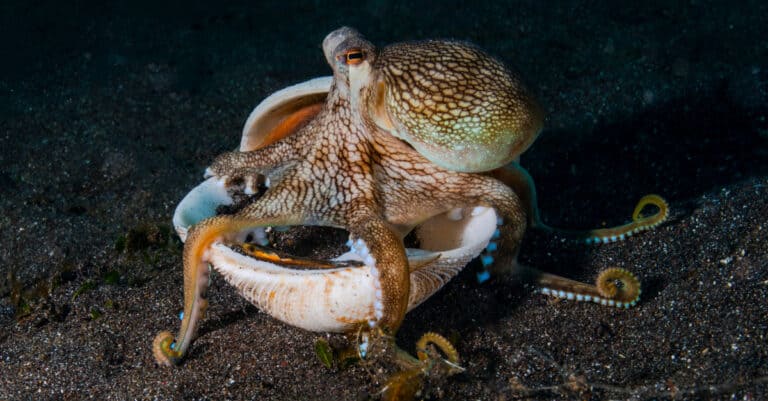
Octopuses are typically anti-social animals.
©Shpatak/Shutterstock.com
However, none of these behaviors can be described as friendly or hostile in the way humans understand them. Octopuses are typically anti-social, except during courtship and mating. Researchers believe that octopuses become habituated to the presence of humans over time. Their curiosity eventually overcomes their fear, leading to increased interactions. An octopus that feels threatened or provoked by people or external stimuli may take action to defend itself or remove threats.
The Danger to Humans
Octopuses may be skilled hunters of marine organisms, but they are not interested in hunting humans for food. Humans are not seen as prey. However, as mentioned above, a human could be considered a threat, and octopuses will defend themselves. Humans can avoid being bitten by keeping their distance and not handling octopuses while swimming or diving. Bites are rare, but octopuses may bite humans if they are startled or provoked. An octopus bite can be painful and may cause bleeding and swelling.
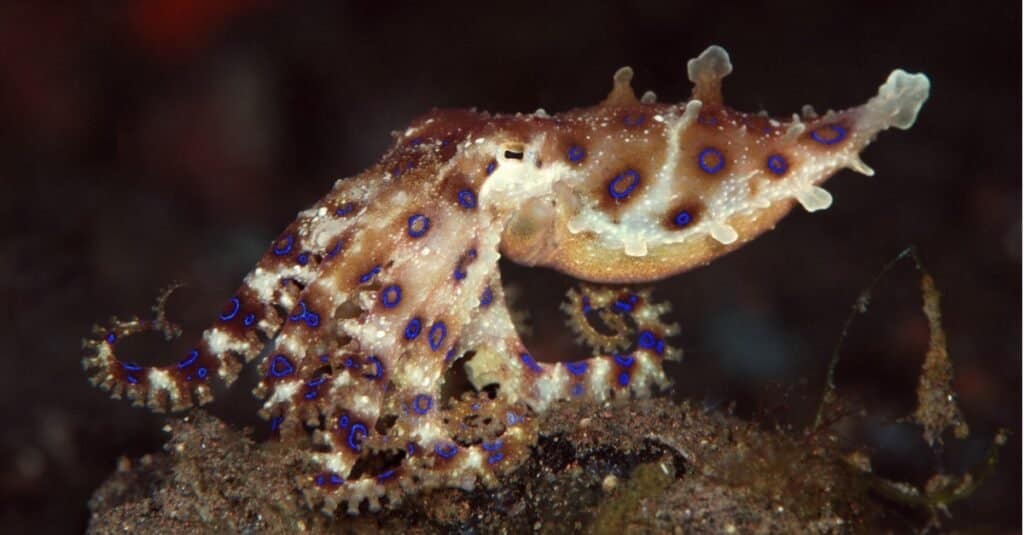
A blue-ringed octopus’ venom is strong enough to cause death.
©iStock.com/DiveIvanov
All octopuses are venomous, but most use their venom to aid in capturing and feeding on their prey. Only the blue-ringed octopus has venom that is dangerous to humans. Like pufferfish, blue-ringed octopuses produce a neurotoxic venom called tetrodotoxin (TTX), which scientists report is 1,200 times more toxic to humans than cyanide. TTX can cause respiratory and/or heart failure, and there is currently no antidote.