
Quick Take
- One surprising theory explains why sea otters die younger in the wild, and the reason has nothing to do with predators. Unique fur and body traits →
- River otter pups face a shockingly grim survival window despite their species being apex predators. River otter pup survival rates →
- Sea otters carry a built-in tool kit on their bodies, though it is not their paws. Built-in skin pockets explained →
- When a sea otter mother needs to find food, she solves the problem of her helpless pup in an unexpected way. How mothers protect nursing pups →
The two otters that reside in North America are the North American river otter and the sea otter. These two cuddly-looking critters have earned a reputation for being clever and playful. However, what do we really know about them? Let’s take a look at the otter lifespan, appearance, life cycle, and habitat, and get to know these adorable North American mammals better.
North American River Otter (Lontra canadensis)
Lifespan
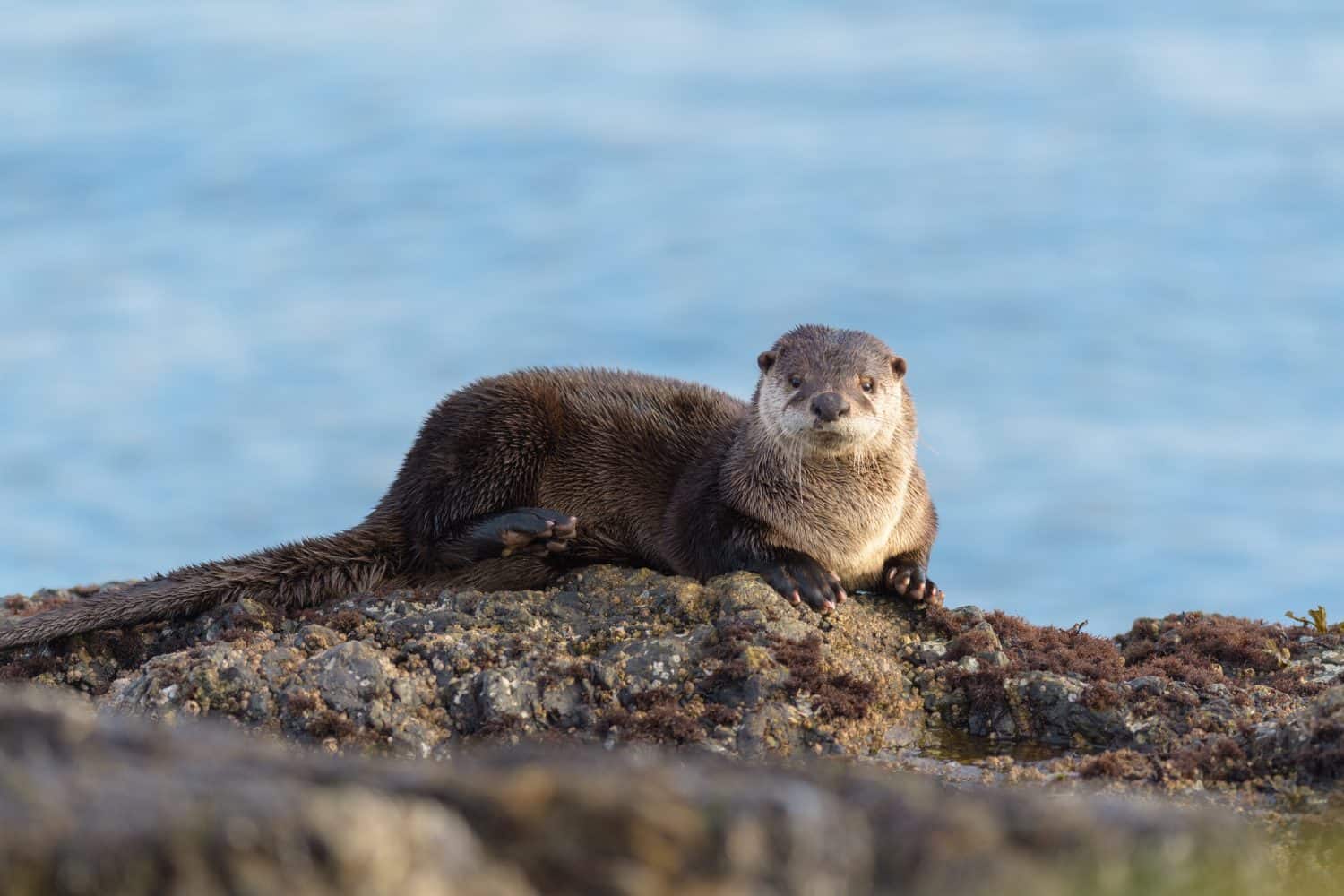
Overall, North American river otters can live up to 15 years in the wild. In captivity, North American river otters can live up to 25 years. The longest-living otter was known to reach 27 years of age. Mortality rates for river otter pups have been estimated at about 32% within the first year of life and 54% in their second year. After this time, wild otters are more likely to live full lives, as they are apex predators in their ecosystems. Otters are typically too quick and agile to catch in the water, and they are vicious fighters on land. Healthy, readily available food, unpolluted water, safe shelter, and distance from busy urban areas all affect the lifespan of wild otters. These otters are classified by the IUCN as Least Concern.
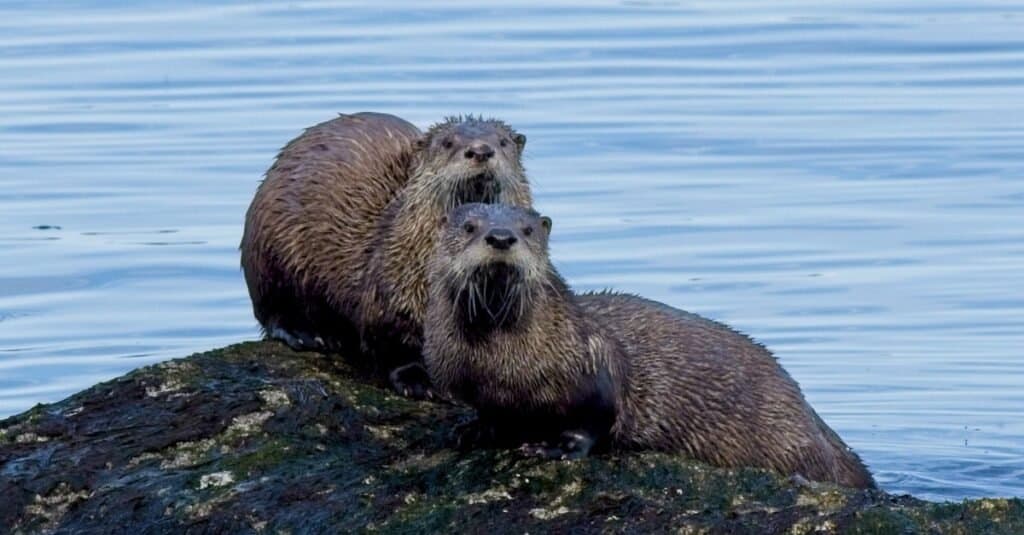
North American river otters can live up to 15 years in the wild.
©iStock.com/pr2is
Appearance
North American river otters grow between 30 and 60 inches in length, weighing between 10 and 33 pounds. Their long, slender bodies have short, muscular legs, small heads, and long necks. Their tails are also muscular but flattened, while their feet are fully webbed with sharp nails that don’t retract. They have sharp canines and strong molars for crushing hard-shelled prey. The fur of river otters is short and dense to keep them warm in cold water and during winter, with brown to gray coloring and light cream or silver on their undersides.
Life Cycle
Studies in the wild are challenging for river otters, so most of the information we have on them is from captive animals in rescues, sanctuaries, and zoos. Some studies suggest the otters will mate for life, while others suggest they pair off for only a few months at a time before the otters find new mates.
Breeding season in the wild isn’t well established, with some studies showing mating occurs in winter, summer, or spring. However, delayed implantation is well established. After mating, gestation begins 9 to 11 months later and lasts for 60 days. Pups are usually born between March and April. After the pups mature for about a month, the mother otter tends to chase away the male otter. Some instances have shown the males come back after the pups are weaned and help to raise them at that point.
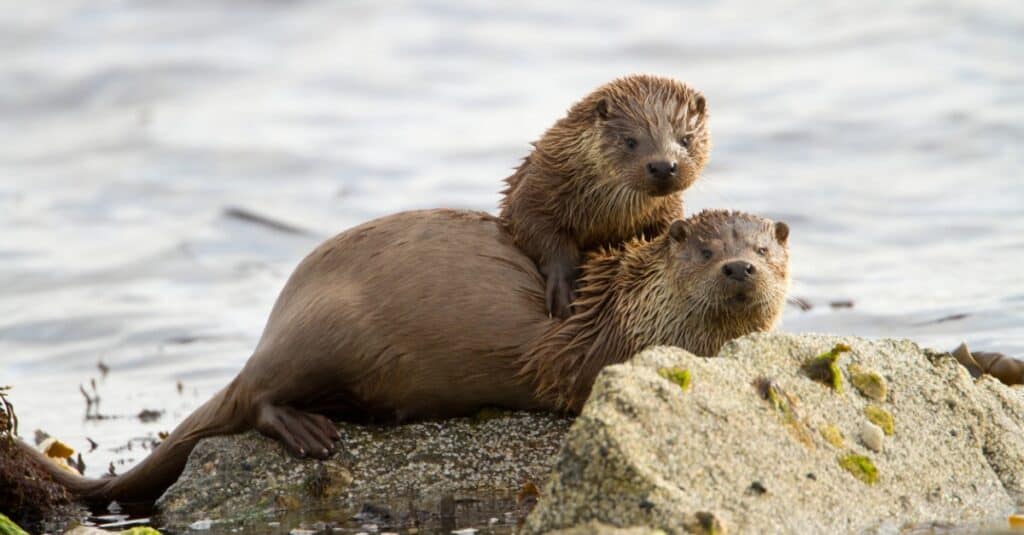
Pups may stay with their mothers until they disperse at around 12 months of age.
©iStock.com/Dgwildlife
Family groups stay together through the summer into early autumn, with pups first appearing outside of dens at about 2 months of age. This is when they can start swimming safely, though it may take one to two more months before weaning is complete. The young may stay with their mothers until they disperse at around 1 year old.
Habitat and Distribution
North American river otters range from the Rio Grande into Canada and as far north as Alaska. Rivers, marshes, freshwater streams, lakes, ponds, and the occasional estuarine environment provide their habitat. They will not be found in arid or barren arctic regions. Generally speaking, they prefer homes away from human life where they can catch fish, crayfish, frogs, insects, turtles, and smaller mammals.
Sea Otter (Enhydra lutris)
In the wild, sea otters live an average of 10 to 15 years. Captive sea otters are likely to live even longer, with females often reaching into their twenties and males into their early twenties. The oldest recorded male reached 22 years and 8 months, and the oldest female reached 28 years old, both in captivity. One theory on shorter lifespans in the wild is the lack of dental care, resulting in worn teeth which can lead to health issues and the inability to eat. They have been deemed Endangered by the IUCN Red List.
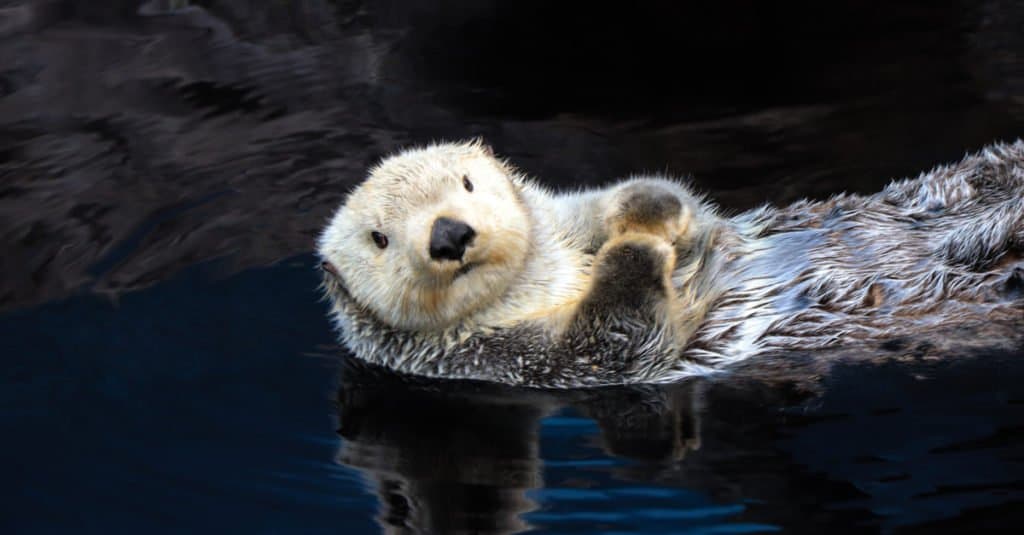
Sea otters are almost fully aquatic, spending the vast majority of their lives in marine environments.
©nvphoto/Shutterstock.com
Appearance
Sea otters have round faces with short noses, round eyes, and ears. The mammals grow to between 47 and 59 inches in length, weighing between 35 and 85 pounds. Their back legs are longer and flipper-like, with large, flat, webbed paws, while their front legs are shorter and have retractable claws. They use these long arms and smaller paws for grooming and eating, which contributes to their famously adorable appearance.
One distinction sea otters have from river otters is their large flaps of skin under their forearms. These flaps function like storage pockets for them, where they keep rocks they use as tools to open their hard-shelled prey. This means they can swim around easily while carrying their tools. Sea otters also have the thickest fur in the world. They may have up to one million hair follicles per square inch of fur.
Life Cycle
Sea otter females reach sexual maturity between three and four years of age, while males reach maturity at five years. It often takes males a few more years to breed successfully, though. Males are polygamous, yet they do defend their territories against other males. Sea otters mate year-round, with pairs bonding for three days only during this time. Males hold their female mates by the head or nose with their jaws, sometimes leaving behind scars.
This species also undergoes delayed implantation, meaning a significant amount of time may pass between mating and birth. The total gestation period (including delays) could be anything from 4 to 12 months. Female sea otters can give birth every year, but many only do so every other year because of the toll it takes on the mother. This species is only capable of bearing one pup at a time, with a 2% chance of two pups at once.
Sea otter pups remain with their mothers for 5 to 6 months, with the fathers taking no part in the raising of the babies. If the mother needs to search for food while the pup is nursing, she will wrap it in kelp to prevent it from drifting away.
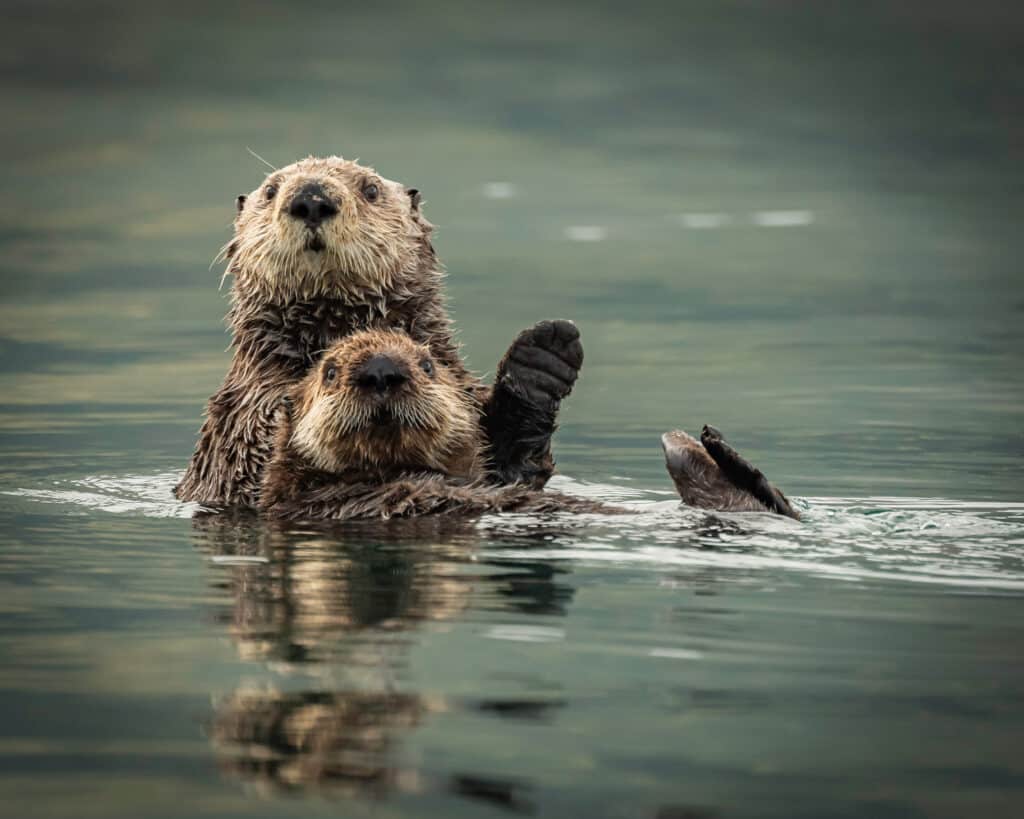
Sea otters rear their young in the water, wrapping them in kelp to keep them safe when the mother needs to find food.
©Laura Hedien/Shutterstock.com
Habitat and Distribution
Sea otters live along the Pacific Coast from the Kuril and Commander islands off the coast of Russia to the Aleutian Islands near the Bering Sea. They also live along the Alaska Peninsula down to Vancouver Island in Canada, and down the Pacific Coast to Central California. Natural barriers keep the otters within these ranges among temperate coastal waters with giant kelp forests. Nearshore habitats include areas with rocky and soft sediment in waters no deeper than 98 feet. Sea otters occasionally “haul out” onto beaches to rest while avoiding marine predators and wait out severe storms.