Quick Take
- One state holds more rattlesnake species than anywhere else in the country, and the number may shock you.
- Four states have zero rattlesnakes, though one of them used to have them and lost them entirely.
- Some states you'd never suspect as snake country harbor venomous rattlers, with just one species standing between residents and a rattlesnake-free state.
- The timber rattlesnake is so widespread that it's even a state's official reptile. Can you guess which one?
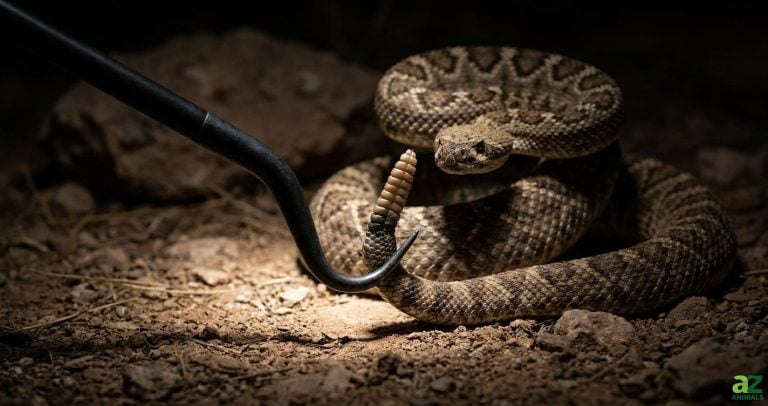
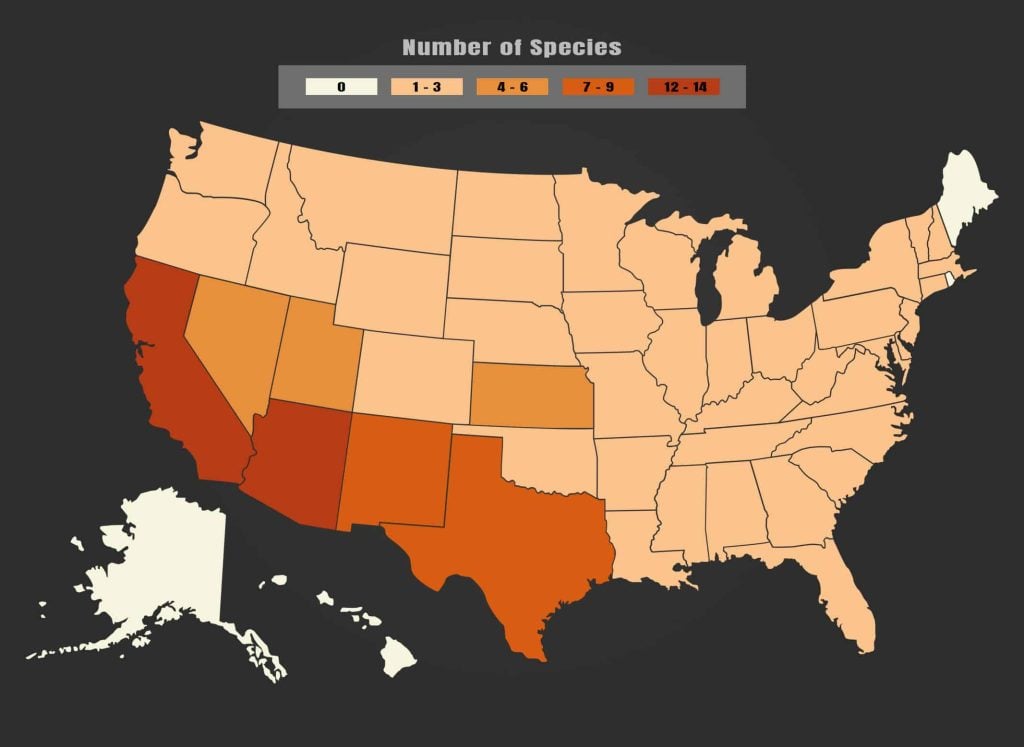
Rattlesnakes comprise approximately 37 species of venomous pit vipers (subfamily Crotalinae) native to the Americas. The United States is home to between 17 and 21 species (depending on taxonomic classification) of rattlesnakes with a wide geographic distribution. Rattlesnakes are found in 46 US states, absent only from Alaska, Hawaii, Maine, and Rhode Island. The majority of rattlesnake species are found in the desert Southwest, which provides the ideal climate and rocky terrain for these dangerous reptiles. Continue reading to discover the number of rattlesnake species present in each of the 50 United States.
Alabama: 3
Alabama is home to three rattler species:
- Eastern diamondback rattlesnake
- Pygmy
- Timber Rattlesnake
Alaska: 0
Alaska has no rattlesnakes. In fact, Alaska has no snake species.
Arizona: 15
With up to 15 species, Arizona has more types of rattlesnakes than any other state. They are:
- Arizona black rattlesnake
- Arizona ridge-nosed
- Banded rock rattlesnake
- Desert massasauga rattlesnake
- Grand Canyon rattlesnake
- Great Basin rattlesnake
- Midget Faded Rattlesnake
- Mojave desert rattlesnake
- Northern black-tailed
- Prairie rattlesnake
- Sidewinder rattlesnake
- Southwestern speckled
- Tiger rattlesnake
- Twin-spotted rattlesnake
- Western diamondback rattlesnake
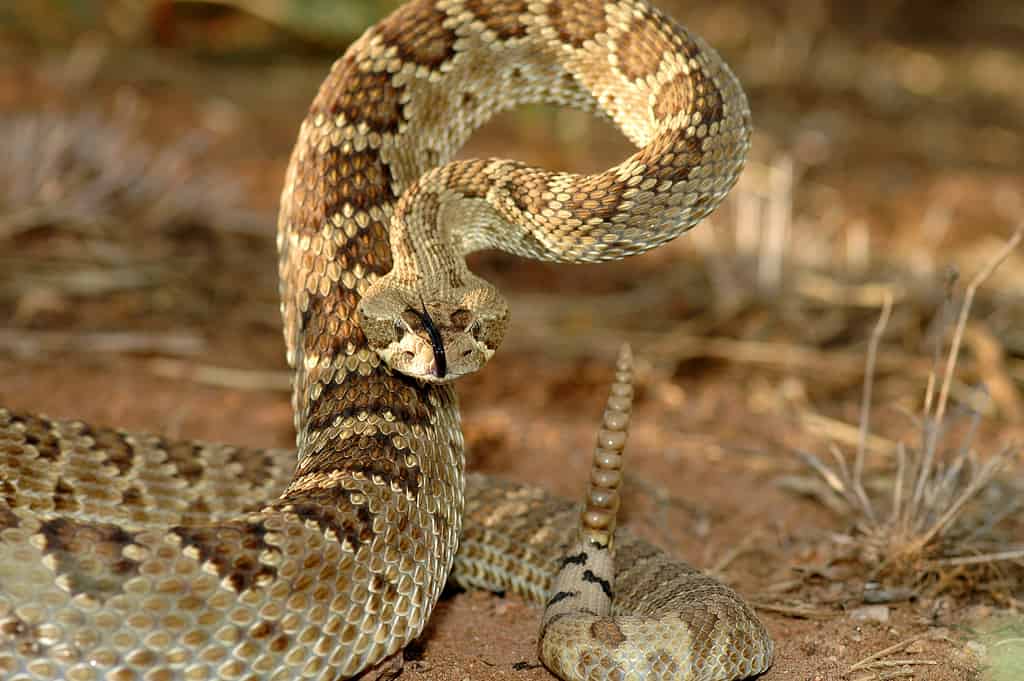
An adult Mojave rattlesnake in a defensive stance.
©Shoemcfly/iStock via Getty Images
Arkansas: 2
- Timber rattlesnake
- Western diamondback rattlesnake
California: 12
California’s native rattlesnakes are the:
- Colorado desert sidewinder rattlesnake
- Great basin rattlesnake
- Mojave Desert rattlesnake
- Mojave green rattlesnake
- Northern Mojave rattlesnake
- Northern Pacific rattlesnake
- Panamint rattlesnake
- Red diamond rattlesnake
- Southern Pacific rattlesnake
- Southwestern speckled rattlesnake
- Sidewinder rattlesnake
- Western diamondback rattlesnake

The sidewinder rattlesnake gets its name from the way it moves across the hot sand.
©Creeping Things/Shutterstock.com
Colorado: 3
- Midget-faced rattlesnake
- Prairie rattlesnake
- Western massasauga rattlesnake
Connecticut: 1
The state’s only rattler is the timber rattlesnake, which is considered endangered in the state.
Delaware: 1
The timber rattlesnake is the only rattlesnake in Delaware.
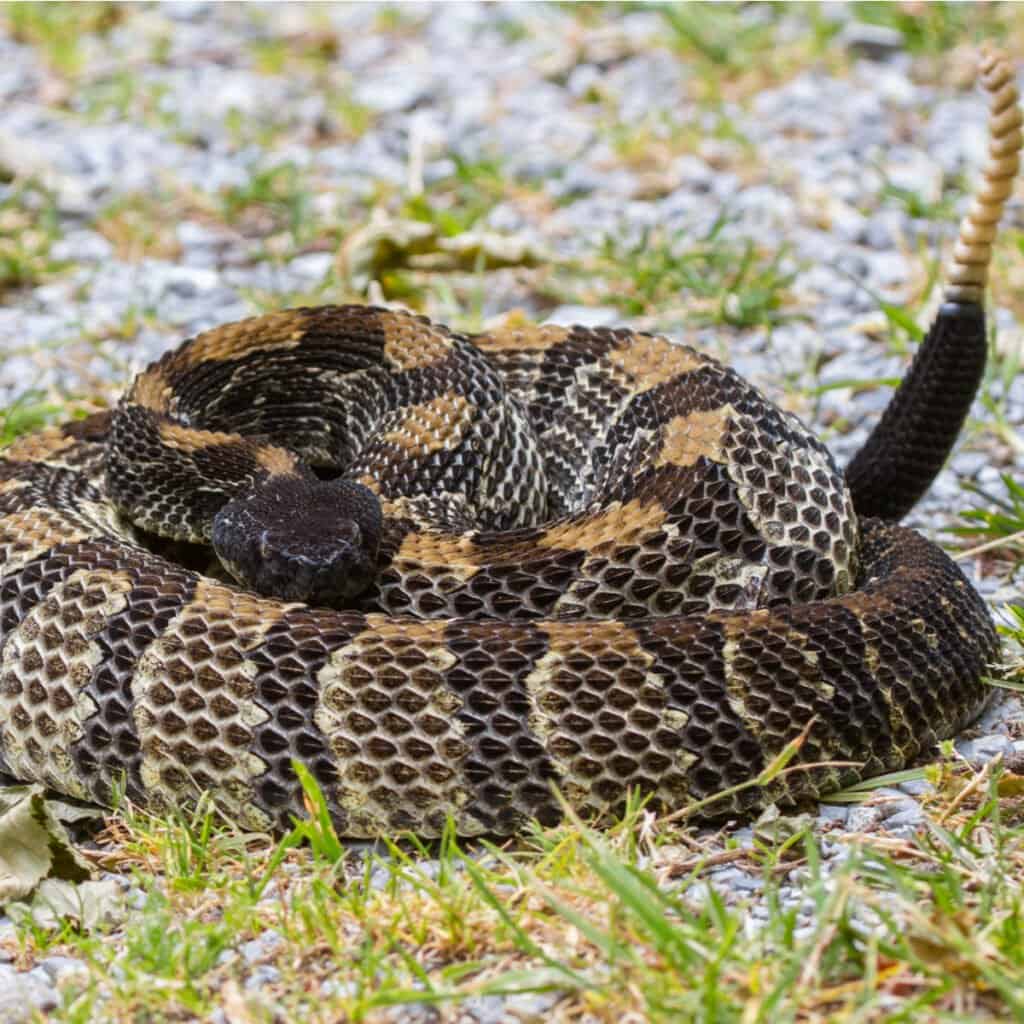
The timber rattlesnake is native to the eastern half of the United States.
©Frode Jacobsen/Shutterstock.com
Florida: 3
Florida has many snakes, but only three of its species are rattlesnakes:
- Eastern diamondback rattlesnake
- Pygmy rattlesnake
- Timber rattlesnake
Georgia: 3
- Eastern diamondback rattlesnake
- Pygmy rattlesnake
- Timber rattlesnake
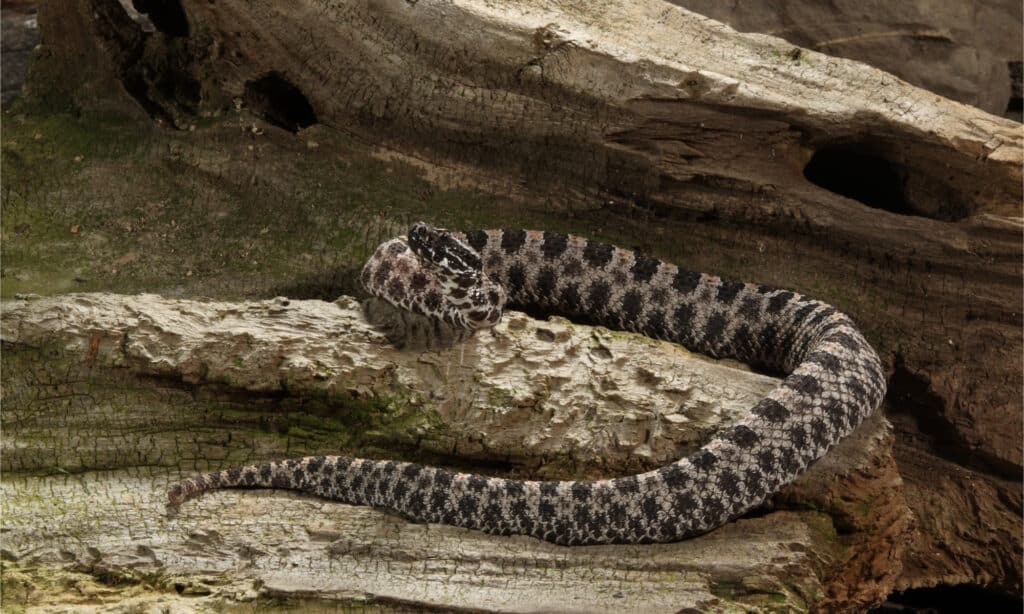
Pygmy rattlesnakes are the smallest rattlesnake species in North America, usually growing no longer than 24 inches.
©Dennis W Donohue/Shutterstock.com
Hawaii: 0
Hawaii has no rattlesnakes.
Idaho: 2
- Pacific rattlesnake
- Prairie rattlesnake
Illinois: 2
- Massasauga rattlesnake
- Timber rattlesnake
Indiana: 2
- Eastern massasauga rattlesnake
- Timber rattlesnake
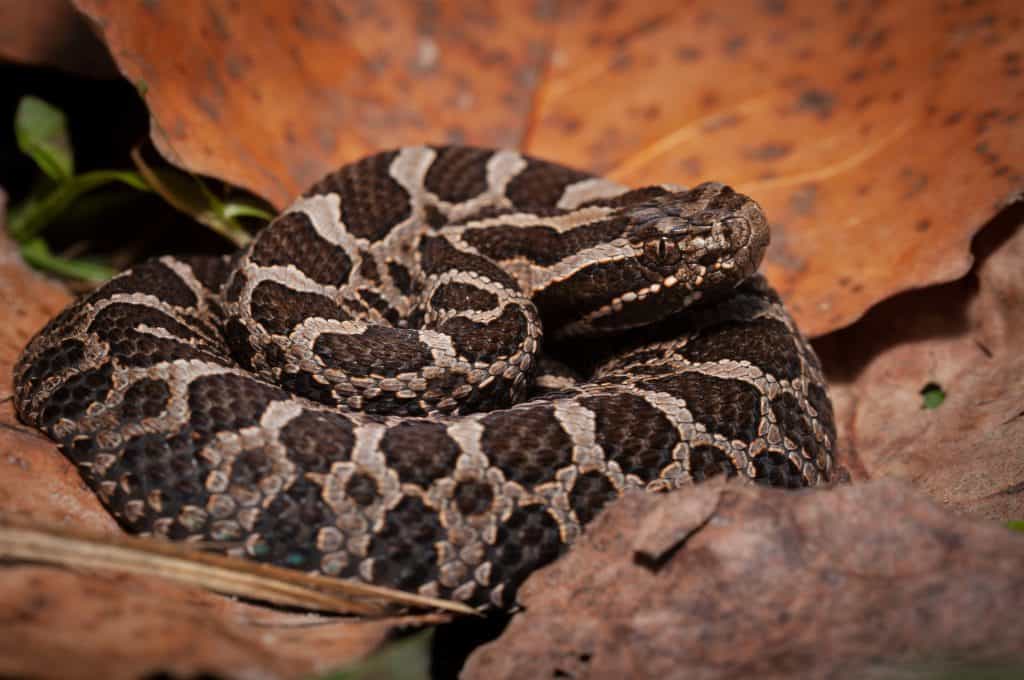
Eastern massasauga rattlesnakes are found primarily in the Great Lakes and Midwestern regions of the United States.
©Mike Wilhelm/Shutterstock.com
Iowa: 3
- Eastern massasauga rattlesnake
- Prairie rattlesnake
- Timber rattlesnake
Kansas: 4
- Prairie rattlesnake
- Pygmy rattlesnake
- Timber rattlesnake
- Western diamondback rattlesnake
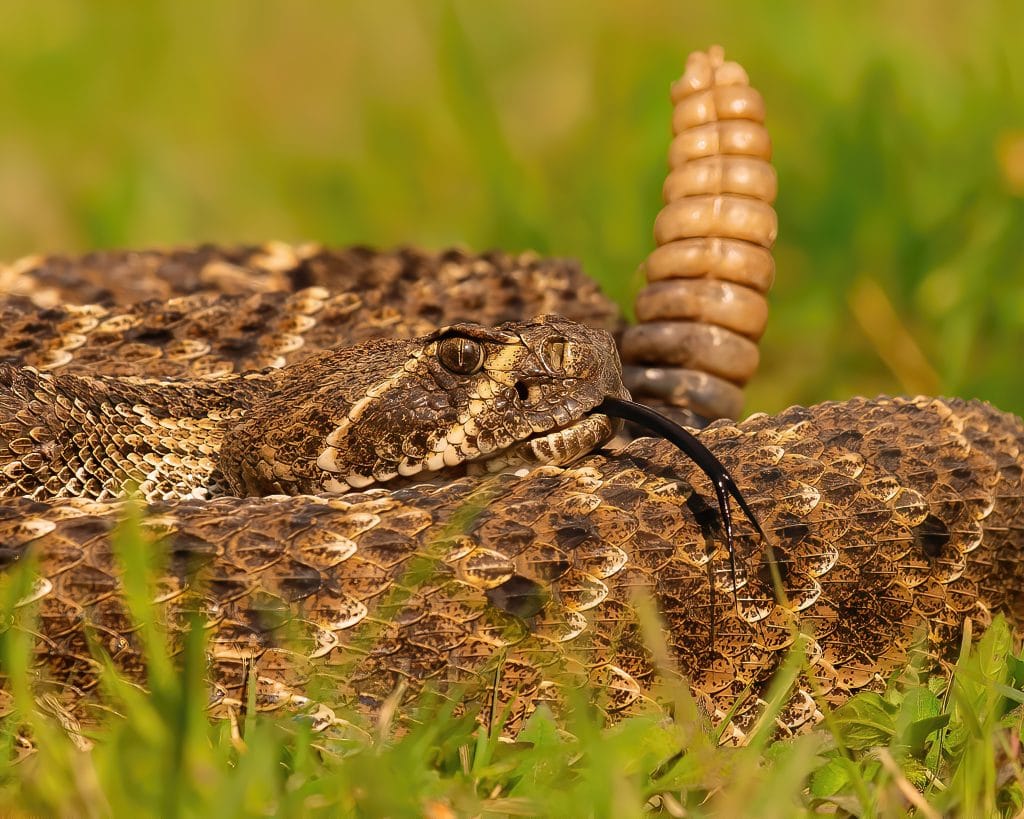
Western diamondback rattlesnake coiled to strike
©Thomas Torget/Shutterstock.com
Kentucky: 2
The state has more than 30 snake species, but only two are rattlesnakes:
- Pygmy rattlesnake
- Timber rattlesnake
Louisiana: 3
Of Louisiana’s three rattlesnake species, the canebrake is the most common and the most dangerous. Canebrake rattlesnakes typically grow 3 to 5 feet long, with the largest on record exceeding 6 feet, and are extremely venomous.
- Canebrake rattlesnake
- Eastern diamondback rattlesnake
- Pygmy rattlesnake
Maine: 0
Maine once had timber rattlesnakes, but it no longer does.
Maryland: 1
Along with the copperhead, the timber rattlesnake is one of only two Maryland snakes whose venom is dangerous to humans.
Massachusetts: 1
The timber rattlesnake is the only rattlesnake in the state. It is classified as endangered in Massachusetts.
Michigan: 1
The Eastern massasauga rattlesnake is not only Michigan’s only rattlesnake species, but it’s also Michigan’s only venomous snake.
Minnesota: 1
- Timber rattlesnake
Mississippi: 3
- Canebrake rattlesnake
- Eastern diamondback rattlesnake
- Pygmy rattlesnake

Canebrake rattlesnakes are easily identified by a prominent rust-orange or reddish-brown stripe running straight down the centerline of their back.
©tornado98/iStock via Getty Images
Missouri: 3
- Eastern massasauga rattlesnake
- Timber rattlesnake
- Western pygmy rattlesnake
Montana: 1
The Western rattlesnake or prairie rattlesnake is the only venomous snake in Montana.
Nebraska: 3
- Prairie rattlesnake
- Timber rattlesnake
- Western massasauga rattlesnake
Nevada: 5
- Great Basin rattlesnake
- Mojave Desert rattlesnake
- Sidewinder rattlesnake
- Speckled Southwestern rattlesnake
- Western diamondback rattlesnake
New Hampshire: 1
- Timber rattlesnake
New Jersey: 1
- Timber rattlesnake
New Mexico: 7
- Animas ridge-nosed rattlesnake
- Banded rock rattlesnake
- Mojave Desert rattlesnake
- Mottled rock rattlesnake
- Northern black-tailed rattlesnake
- Prairie rattlesnake
- Western diamondback rattlesnake

Unlike larger rattlesnakes that focus on rodents, rock rattlesnakes primarily hunt lizards.
©Nathan A Shepard/Shutterstock.com
New York: 2
- Massasauga rattlesnake
- Timber rattlesnake
North Carolina: 3
- Eastern diamondback rattlesnake
- Pygmy rattlesnake
- Timber rattlesnake
North Dakota: 1
- Prairie rattlesnake
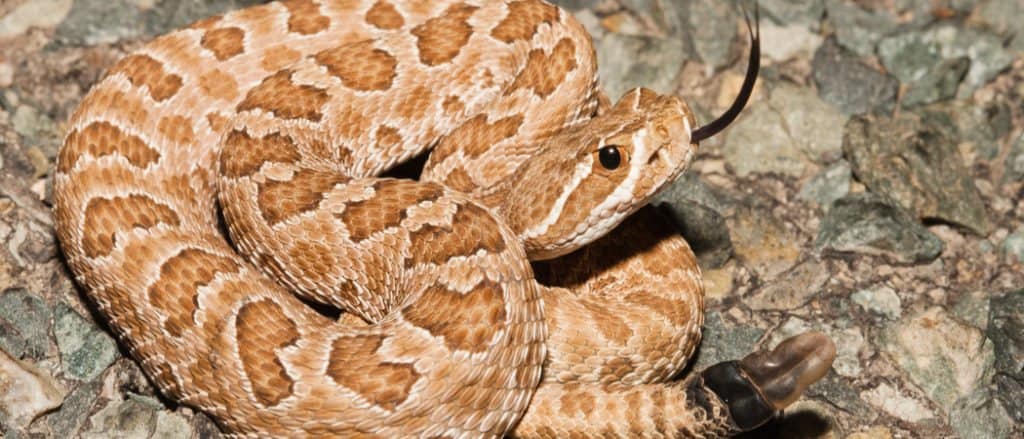
The prairie rattlesnake is the only rattlesnake species inhabiting the state of North Dakota.
©Nathan A Shepard/Shutterstock.com
Ohio: 2
- Massasauga rattlesnake
- Timber rattlesnake
Oklahoma: 3
- Prairie rattlesnake
- Western massasauga rattlesnake
- Western pygmy rattlesnake
Oregon: 3
- Great Basin rattlesnake
- Northern Pacific rattlesnake
- Western rattlesnake
Pennsylvania: 2
- Eastern massasauga rattlesnake
- Timber rattlesnake
Rhode Island: 0
There are no rattlesnakes in Rhode Island.
South Carolina: 2
- Canebrake rattlesnake
- Timber rattlesnake
South Dakota: 1
- Prairie rattlesnake
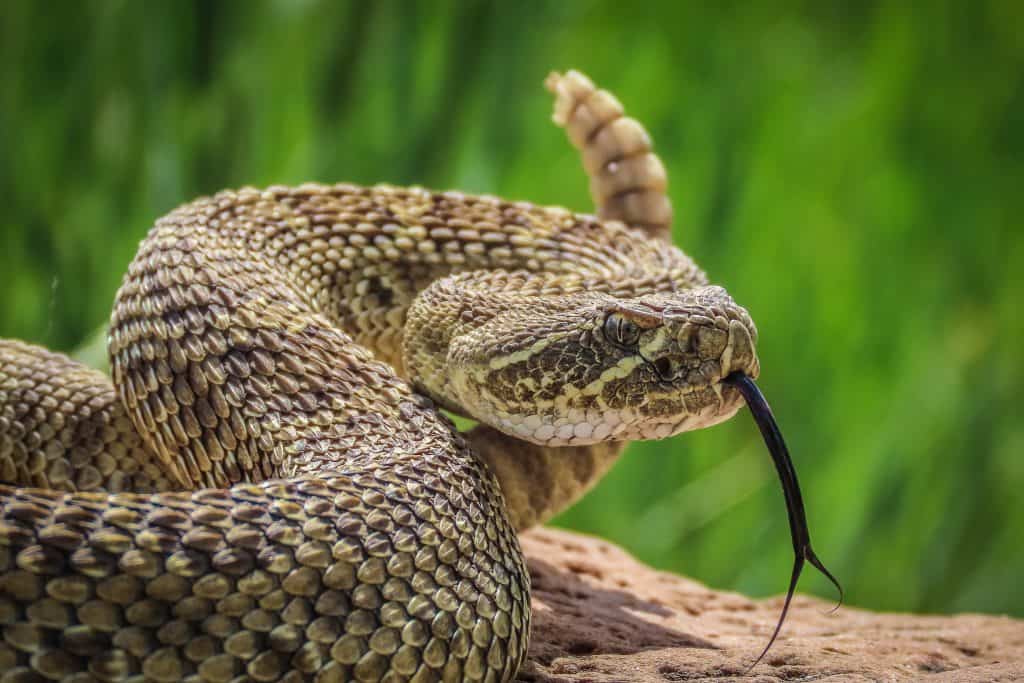
The prairie rattlesnake is widely distributed in the United States.
©Bee798/Shutterstock.com
Tennessee: 2
- Pygmy rattlesnake
- Timber rattlesnake
Texas: 9
With its vast land area and diverse ecosystems, it is no surprise that Texas hosts a wide variety of rattlesnakes. Its nine are:
- Banded rock rattlesnake
- Blacktail rattlesnake
- Desert massasauga rattlesnake
- Mojave Desert rattlesnake
- Mottled rock rattlesnake
- Prairie rattlesnake
- Timber rattlesnake
- Western massasauga rattlesnake
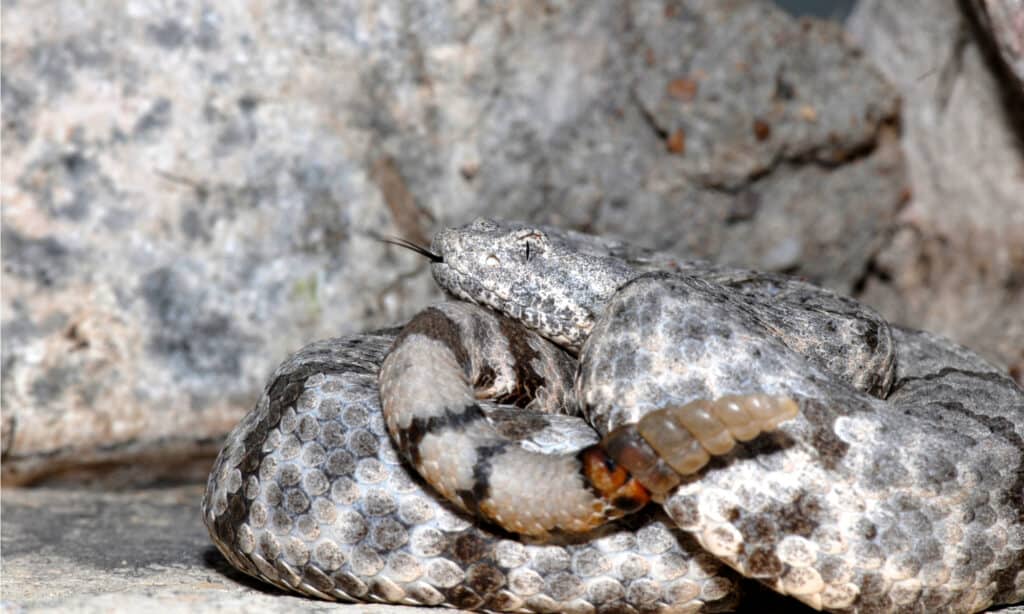
The mottled rock rattlesnake is one of nine different species found in the state of Texas.
©Rusty Dodson/Shutterstock.com
Utah: 6
Utah has six of them are rattlesnakes. Utah’s six rattlesnake species include the Hopi rattlesnake, which was traditionally considered a subspecies of the prairie rattlesnake. However, genetic studies classify it as a dwarf, localized color variant of the prairie rattlesnake rather than a separate subspecies.
- Great Basin rattlesnake
- Hopi (prairie) rattlesnake
- Midget-faced rattlesnake
- Mojave Desert rattlesnake
- Mojave Desert sidewinder rattlesnake
- Speckled Southwestern rattlesnake
Vermont: 1
The timber rattlesnake is the state’s only venomous snake and is critically endangered. It is listed as a Species of Greatest Conservation Need in the state’s Wildlife Action Plan.
Virginia: 1
Along with the cottonmouth and copperhead, the timber rattlesnake is one of three venomous snakes native to Virginia.
Washington: 1
The only rattlesnake in this state is the western rattlesnake.
West Virginia: 1
The timber rattlesnake is West Virginia’s official state reptile. It is listed as a species deserving special protection under state law.
Wisconsin: 2
- Eastern massasauga rattlesnake
- Timber rattlesnake
Wyoming: 2
Wyoming’s two rattler species are the state’s only venomous snakes:
- Midget-faced rattlesnake
- Prairie rattlesnake