
N S W E
Wildlife Expeditions

Wildlife of
Greenland

Greenland is an Arctic wildlife powerhouse where visitors come for iconic ice-edge species-polar bears, musk oxen, Arctic foxes-and some of the planet's best chances to watch whales and seals against a backdrop of glaciers and sea ice.
63 Species
2,166,086 km² Land Area
Overview

About Greenland

Greenland's wildlife character is defined by extreme seasonality, vast open spaces, and the dominance of ice: the Greenland Ice Sheet, drifting pack ice, and glacier-carved fjords shape where life can thrive. On land, hardy Arctic mammals such as musk oxen, Arctic foxes, and reindeer (in parts of West Greenland) endure short, intense summers and long winters, while seabirds and migratory species surge in abundance when daylight and productivity peak. The country's natural heritage is inseparable from Inuit culture and subsistence traditions, and many wildlife encounters happen in remote coastal settlements or along dramatic fjord systems where animals, people, and sea ice intersect.

Key ecosystems include the High Arctic tundra of the far north, the low-Arctic coastal tundra and valleys of the west, and-most importantly-the surrounding seas. Greenland's marine environment is extraordinarily significant: nutrient-rich currents and seasonal ice edges support seals, walrus in some areas, and large whales such as humpback, fin, minke, and bowhead, as well as globally important seabird colonies on cliffs and offshore islands. For global conservation, Greenland matters as a bellwether for climate change impacts on Arctic food webs and as habitat for wide-ranging species tied to sea-ice dynamics; its extensive, sparsely populated coastline and protected areas contribute to safeguarding intact Arctic ecosystems.

What makes the wildlife experience unique here is the sense of scale and immediacy-watching whales feed in iceberg-littered bays, scanning the ice edge for polar bears, or encountering musk oxen in broad tundra landscapes where human presence is minimal. Wildlife viewing is often expedition-style by boat, small aircraft, or over snow and sea ice, with encounters closely tied to weather, ice conditions, and seasonal migrations-offering a raw, immersive Arctic experience unlike anywhere else.

Physical Features

Geography

Greenland's wildlife is concentrated in the ice-free coastal fringe and adjacent seas rather than the interior, because the Greenland Ice Sheet covers most of the island and creates a cold, high-elevation barrier to terrestrial habitats. North-south and west-east climate gradients (milder, more productive coasts in the south and west; colder, drier High Arctic in the north and northeast) shape tundra types and determine where musk oxen, Arctic foxes, seabird colonies, and migratory birds can persist. Extensive fjords, sea-ice edges, and recurring polynyas strongly influence marine productivity and the distribution of seals and whales, which in turn support polar bears along coasts and pack-ice margins.

2,166,086 km² Land Area
World's largest island; roughly comparable in area to Mexico; often cited around the 12th largest country/territory by total area Size Rank

Key Landscapes

  • Greenland Ice Sheet (interior ice cap, outlet glaciers, nunataks)
  • Ice-free coastal fringe with Arctic tundra (primary terrestrial habitat zone)
  • Deep fjord systems and glaciated valleys (key for seabirds, marine mammals, and coastal productivity)
  • Extensive coastline and nearshore shelf waters (feeding/migration corridors for whales; seal haul-outs)
  • Sea-ice edge, seasonal pack ice, and recurrent polynyas (high marine productivity; critical hunting/foraging areas)
  • Mountain ranges and coastal highlands (habitat partitioning, snow conditions affecting musk ox and Arctic fox)
  • Arctic deserts and polar semi-desert areas in the far north/northeast (sparser vegetation, lower terrestrial biomass)
  • Large protected wilderness areas (e.g., Northeast Greenland National Park) maintaining intact predator-prey systems

Ecoregions

  • Greenland High Arctic tundra (WWF)
  • Greenland Low Arctic tundra (WWF)
Parks & Reserves

Protected Areas

Greenland's protected-area network is dominated by one exceptionally large, strictly protected unit-Northeast Greenland National Park-which covers vast High Arctic deserts, fjords, and coastal/marine habitats. Outside the national park, Greenland uses a mix of targeted nature reserves, bird sanctuaries, and internationally recognized sites (notably Ramsar wetlands) to protect key breeding areas for seabirds and waterbirds, plus sensitive marine mammal habitats along parts of the coast. Management is shaped by Greenland's autonomy within the Kingdom of Denmark and focuses heavily on safeguarding Arctic wilderness values and globally important populations of polar wildlife.

Protected Coverage

Approximately ~45% of Greenland's land area is under formal protection, largely due to the very large Northeast Greenland National Park (~972,000 km²). Additional smaller protected areas and Ramsar sites add modest coverage beyond this figure.

Notable Parks & Reserves

Northeast Greenland National Park

National Park

The world's largest national park protects immense, mostly roadless Arctic ecosystems-critical denning and foraging areas for polar bears and an important stronghold for High Arctic species in a rapidly warming region.

Ilulissat Icefjord

UNESCO World Heritage Site (Natural) / Protected area (local regulations)

A globally significant icefjord where calving glaciers drive rich marine productivity; the adjacent coastal waters are among Greenland's best places to see whales and seals near a major settlement.

Melville Bay Nature Reserve

Nature Reserve

A remote northwest Greenland reserve recognized for its importance to marine mammals-especially narwhals-and as a key habitat for polar bears and walruses along the drifting pack ice edge.

Kitsissunnguit (Green Islands) Bird Sanctuary

Bird Sanctuary / Ramsar Wetland

A small island group in the Disko Bay region that is exceptionally important for breeding seabirds and sea ducks, supporting dense colonies during the short Arctic summer.

Common eider
King eider
King eider
Arctic tern
Thick-billed murre
Black-legged kittiwake
Glaucous gull

Qinngua Valley Protected Area

Protected Area / Botanical reserve

One of Greenland's most botanically distinctive sheltered valleys, supporting unusually lush shrub and dwarf-tree growth for the Arctic and providing localized habitat for birds of prey and terrestrial mammals.

Arctic hare
Arctic hare
Rock ptarmigan
Arctic fox
Arctic fox
Reindeer (introduced)
Gyrfalcon

Heden (Jameson Land) Wetland Area

Ramsar Wetland

An East Greenland lowland wetland complex valued for breeding and staging waterbirds; its tundra and wetlands concentrate geese, waders, and predators in summer.

Pink-footed goose
Barnacle goose
Snowy owl
Snowy owl
Arctic fox
Arctic fox
Sanderling
Red phalarope

UNESCO World Heritage Sites

  • Ilulissat Icefjord
Animals

Wildlife

Greenland's wildlife is defined by extreme Arctic conditions: vast ice, tundra, fjords, and a long, productive coastline where sea-ice dynamics drive much of the food web. Terrestrial diversity is low but charismatic (polar bears, musk oxen, Arctic foxes, reindeer), while marine life is exceptionally important-seals and whales concentrate along ice edges, polynyas, and fjord systems, and towering seabird cliffs host internationally significant colonies. Seasonal light (midnight sun/winter darkness) and sea-ice variability strongly influence when and where wildlife is seen.

~35-45 (including ~20+ marine mammals; terrestrial mammals are relatively few) Mammals
~220-250 recorded; ~60-80 regular breeders Birds
0 (no native reptiles) Reptiles
0 (no native amphibians) Amphibians

Iconic Species

Polar Bear
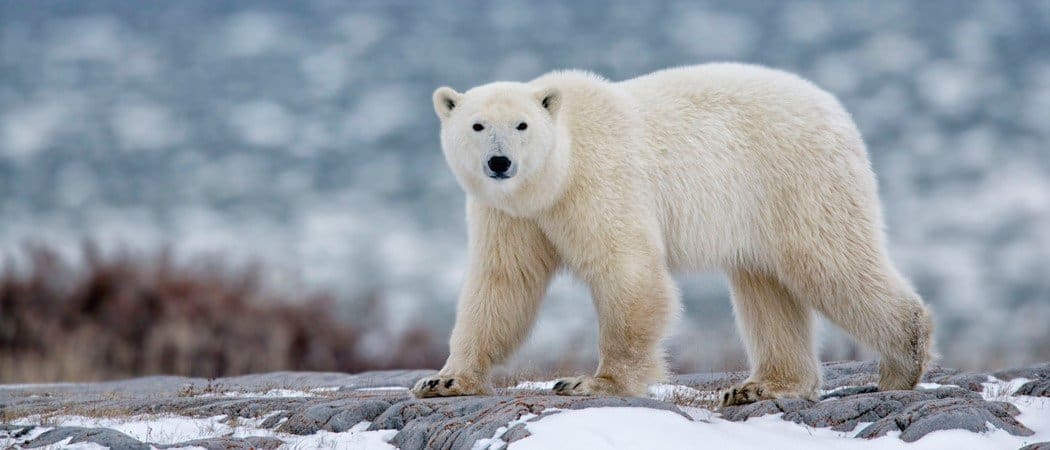
Polar Bear Greenland is one of the best places in the world to see polar bears, especially along the remote east coast and in the far north where sea ice persists. Encounters are typically coastal/sea-ice associated and often linked to seal hunting areas.
Musk Ox
Musk Ox A hallmark tundra species in Greenland, particularly in Northeast Greenland National Park and parts of West Greenland where populations are well established. Often seen in open valleys and plains during summer.
Arctic Fox
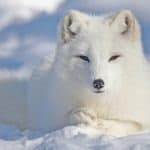
Arctic Fox Widespread across Greenland's tundra; notable for seasonal coat changes (white in winter, darker in summer) and for being one of the few resident terrestrial predators. Common around bird colonies and coastal hunting areas.
Reindeer (Caribou) A key large herbivore shaping tundra ecosystems, most often encountered in West and Southwest Greenland where accessible valleys and uplands support herds. Viewing is best in summer and early autumn.
Walrus
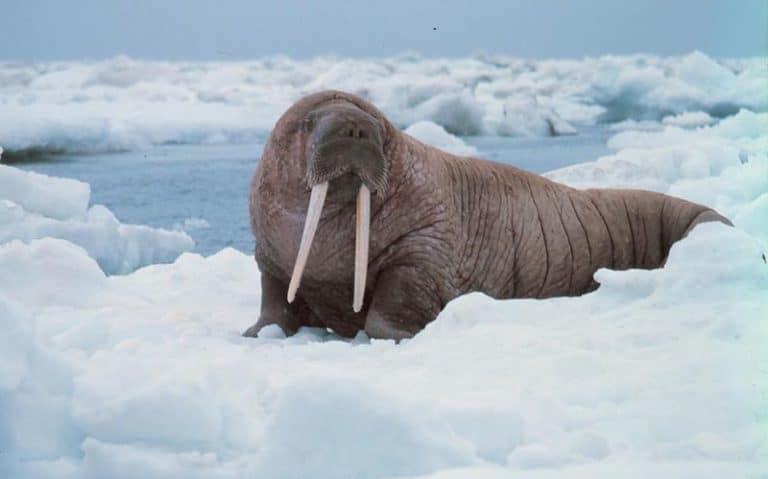
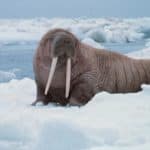
Walrus Seen hauled out on ice or rocky shores in parts of West and Northwest Greenland; notable for large tusks and social haul-outs. Polynyas and ice-edge areas can be productive for sightings.
Narwhal
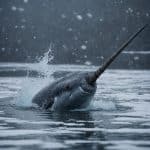
Narwhal Greenland is a premier destination for narwhal, especially in high-Arctic fjords and coastal waters of Northwest and East Greenland in summer. The species' stronghold status and iconic tusked males make it a major draw.
Bowhead Whale
Bowhead Whale A classic ice-associated whale that can be seen in high-Arctic waters where sea ice remains; Greenland is within the range of recovering bowhead populations, and sightings are especially notable near persistent ice and polynyas.
Humpback Whale
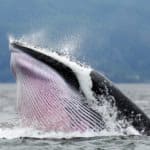
Humpback Whale A flagship summer visitor to Greenland's fjords, especially along the west coast where feeding conditions are strong. Frequently observed from boats near fjord mouths and coastal feeding areas.
Little Auk (Dovekie) One of Greenland's most characteristic seabirds, forming immense breeding colonies on northwest and northeast coasts. Visitors come to witness huge, noisy cliff and scree-slope colonies and mass flight activity in summer.
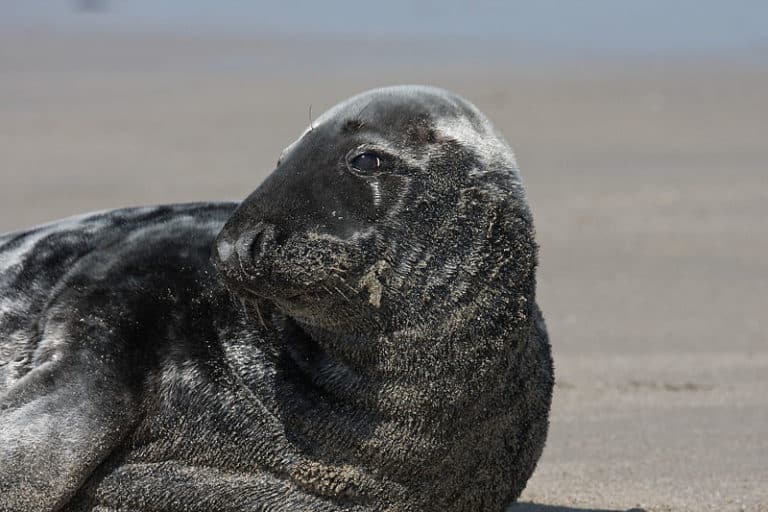
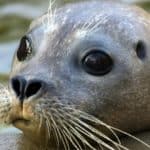
Ringed Seal The most ice-associated and widespread seal in Greenland, crucial prey for polar bears. Often observed near sea-ice edges, breathing holes, and fjords with seasonal ice.

Notable Populations

  • One of the world's most important strongholds for polar bears, particularly in remote east and northern regions tied to persistent sea ice.
  • Globally significant narwhal populations use Greenland's high-Arctic fjords and coastal waters seasonally, making the territory a key range state for the species.
  • Major seabird concentrations, including some of the world's largest little auk colonies, especially in northwest Greenland.
  • Critical breeding stronghold for the Greenland white-fronted goose population, which has a relatively small global total and a concentrated breeding range in Greenland.
  • Internationally important marine-mammal habitat along ice edges and polynyas supporting ringed seals, walrus, and multiple whale species during summer feeding seasons.
Protection

Conservation

Primary Threats

  • Arctic warming is reducing sea ice extent/duration and altering ice phenology that many species rely on. Polar bears face reduced access to seal prey and longer fasting periods; walrus and some seals lose resting/haul-out habitat; and shifts in ocean temperature and currents change plankton and fish distributions, affecting seabirds, whales, and fisheries. Thawing permafrost increases coastal erosion and landslide risk in settlements and can degrade tundra habitats.
  • Greenland's economy depends heavily on marine harvests (notably shrimp and Greenland halibut). Climate-driven shifts in stock distribution and productivity increase uncertainty, while high dependence on a few stocks can intensify pressure. Localized depletion risks are greatest near accessible coastal fishing grounds and where bycatch or unreported catches undermine stock assessments.
  • Subsistence and regulated commercial hunting of marine mammals and terrestrial species (e.g., seals, some whales under quota frameworks, musk ox in certain areas) can become a conservation pressure if quotas are misaligned with population trends or if climate stress reduces recruitment. Enforcement and monitoring are logistically difficult across remote coasts and seasonal ice.
  • Long-range transported contaminants (e.g., persistent organic pollutants and mercury) accumulate in Arctic food webs and top predators such as polar bears and some marine mammals, with potential reproductive and immune effects. Local sources include waste handling challenges in small communities, marine litter and lost fishing gear along coasts, and spill risks from shipping and fuel storage.
  • Interest in critical minerals and other resources can cause localized habitat loss and fragmentation in rare ice-free areas, increase road/port development, and elevate risks of sedimentation, dust, and contamination in fjords and rivers. Projects can overlap with caribou/musk ox ranges, seabird colonies, and coastal ecosystems used for hunting and fishing.
  • New or expanded airports, harbors, roads, and coastal facilities-often concentrated near towns-can disturb breeding seabirds, fragment tundra habitats, and increase noise and vessel traffic in fjords. As sea ice declines, longer shipping seasons increase cumulative impacts and accident/spill risk in remote waters with limited response capacity.
  • Tourism growth (cruise ships, wildlife viewing, hiking near settlements and iconic fjords) can disturb nesting seabirds, haul-out sites, and sensitive tundra vegetation that recovers slowly. Disturbance is particularly impactful in short breeding seasons and in narrow fjord systems where boats concentrate.
  • Polar bears increasingly approach settlements when sea ice conditions reduce hunting opportunities or when bears are displaced by changing ice. This raises safety risks and can lead to lethal control. Conflicts can also involve sled dogs and attractants around waste or food storage.
  • Direct habitat conversion is limited by Greenland's large ice-covered area, but it is concentrated in biologically important ice-free coastal zones and valleys near towns and project sites. Industrial footprints, gravel extraction, and port construction can remove tundra and shore habitats; glacier retreat also transforms freshwater and fjord habitats, effectively changing (and sometimes eliminating) established ecological conditions.
  • Hydropower development and water diversions near some towns can alter river flow regimes and downstream fjord sediment/nutrient dynamics. Additionally, intensified vessel traffic can modify acoustic environments in key whale habitats, altering behavior and habitat use.
Visit

Wildlife Tourism

Wildlife tourism in Greenland is a quintessential Arctic, coast-and-ice experience built around marine mammals (whales, seals), iconic predators (polar bears, mostly in remote NE Greenland), and tundra species (musk ox, Arctic fox, migratory birds). Economically, it's a meaningful part of Greenland's visitor economy alongside iceberg/ice-sheet travel-supporting local guides, boat operators, hunters' associations offering cultural interpretation, lodging, and transport in small settlements. Historically, wildlife viewing has grown from expedition-style travel and community-led guiding into more structured whale-watching, fjord cruises, and musk-ox excursions, with increasing emphasis on responsible encounters and safety in polar bear country. Accessibility is improving but still logistically "expedition-lite": most trips route through Nuuk, Ilulissat (Disko Bay), Sisimiut, or South Greenland; travel between regions often requires flights, boats, or helicopters, and weather/sea ice can reshape plans. Visitors should plan extra buffer days, book reputable local operators, and expect experiences to be boat-based, hiking-based, or snowmobile/dogsled-based rather than classic road safaris.

Top Wildlife Experiences

  • Join a guided whale-watching RIB or boat trip in Disko Bay (Ilulissat) or Nuuk fjords to look for humpbacks, minkes, and sometimes fin whales-often with icebergs as a backdrop.
  • Take a full-day boat safari through iceberg-filled fjords (e.g., Ilulissat Icefjord region) specifically timed for marine mammals: scan ice edges for seals and watch seabird feeding frenzies.
  • Do a guided musk ox hike/safari on West Greenland tundra (often from Kangerlussuaq area when conditions allow) with a wildlife-focused guide using spotting scopes and wind/approach strategy.
  • Book a multi-day coastal cruise or expedition-style sailing trip to combine whale watching, seal sightings, seabird cliffs, and shore landings for tundra wildlife photography.
  • Experience a winter dogsled journey with local mushers where you learn to read animal tracks and winter ecology (Arctic fox, hare, ptarmigan signs), paired with respectful distance viewing when possible.
  • Take a guided seabird and cliff-nesting bird outing by boat (summer) to observe colonies (auks, kittiwakes, gulls) and learn about Arctic marine food webs.
  • Join a responsible community-led cultural-and-wildlife day that includes traditional knowledge of Arctic species, safe wildlife behavior, and how hunting and conservation coexist in Greenlandic life (no staged encounters).
  • Plan a remote expedition cruise (advanced, high cost, limited departures) toward Northeast Greenland National Park for true polar bear country-expect low encounter rates but the best odds within Greenland, plus walrus/ice-edge ecology when conditions permit.
  • Combine hiking with wildlife spotting on day treks near Sisimiut or South Greenland: look for Arctic fox, reindeer in some areas, and rich birdlife during summer and early autumn.
  • Do a photography-focused midnight-sun wildlife outing (July) where long daylight hours maximize time on the water and along tundra trails for whales, seals, and birds.

Safari Types Available

  • Boat safaris (fjord cruises, whale-watching boats, RIB safaris)
  • Expedition cruises (multi-day, remote coasts/NE Greenland, ice-edge wildlife)
  • Guided hiking wildlife walks (tundra spotting for musk ox/fox/birds)
  • Winter safaris by dogsled (ecology, tracks, winter landscapes; occasional wildlife sightings)
  • Snowmobile safaris (winter travel corridors; track-and-sign and occasional wildlife)
  • Seabird colony and coastal ecology tours (boat-based, summer)
  • Photography-focused wildlife tours (specialized guides, long-light itineraries)
  • Community-led cultural nature experiences (traditional knowledge + wildlife interpretation)
Fun Facts

Did You Know?

A group of polar bears in Southeast Greenland was reported (2022) to hunt from a glacier-ice mixture (a jumbled mix of icebergs and sea ice) when seasonal sea ice is scarce-an unusual strategy compared with most polar-bear populations.

Many of the musk ox you see in West Greenland (notably near Kangerlussuaq) descend from a small translocation in the 1960s from Northeast Greenland-so a "classic Arctic" animal there is, in that region, effectively reintroduced by people.

Greenland has no native reptiles or amphibians at all-its cold climate and glacial history prevent them from establishing wild populations.

Greenland sharks cruise extremely slowly (on the order of ~0.3 m/s), yet seals have been found in their stomachs; researchers think they may ambush sleeping seals or scavenge efficiently in the cold, dark Arctic.

Greenland's "blue" Arctic fox color morph can stay dark (bluish/charcoal) through winter instead of turning white-an eye-catching adaptation that's especially associated with coastal environments.

Northeast Greenland National Park is the world's largest national park (~972,000 km²), protecting vast habitat for polar bears, musk oxen, Arctic foxes, walruses, and major seabird colonies.

Greenland's waters are home to the Greenland shark-one of the longest-lived vertebrates on Earth, with age estimates commonly ~272-512 years based on radiocarbon dating of eye tissue.

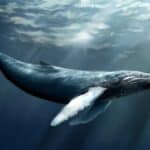
The largest animal ever to live, the blue whale (often 25-30+ m long), regularly feeds in summer off Greenland's coasts (especially West and Southwest Greenland).

Greenland's polar bears represent the world's largest land carnivore, and the island spans multiple recognized polar-bear management/subpopulation areas (e.g., Baffin Bay, Kane Basin, Davis Strait, East Greenland).

The narwhal's tusk is the longest tooth in the animal kingdom (can reach ~3 m), and Northwest Greenland is a key region for narwhal summering grounds and hunting traditions.

Greenland enjoys a unique landscape. For starters, it’s the world’s largest island, and though geographically linked to North America, the region is part of Scandinavia’s political and cultural milieu.

Greenland Wildlife Overview

Greenland is a famous misnomer as 79 percent of it is covered in ice. Yet, despite its lack of arable land, the region has more biodiversity than many people might assume. About 700 insects inhabit the island, and its waters are teeming with marine life.

However, due to a frigid climate and challenging topography, Greenland doesn’t have many terrestrial mammals. But the ones that survive on the glacial stronghold are memorable and unique, including polar bears, reindeer, muskox, Arctic foxes, Arctic wolves, collared lemmings, and lest we forget to mention, Greenlandic sled dogs, the hometown canines.

In the surrounding waters, whales are still relatively plentiful, and Inuit communities can sustenance-hunt the ocean behemoths, in addition to walruses, seals, and porpoises. Moreover, commercial fishing is a vital spoke in Greenland’s economic wheel. Shrimp, cod, halibut, and salmon are the most common catch.

Approximately 230 avian species spend part of the year in Greenland, but only 30 live regionally year-round. Sea eagles and sparrows are both plentiful, as are fulmars.

The Official National Animal of Greenland

Greenland is an autonomous territory under the Kingdom of Denmark. As such, it doesn’t have an official national animal. But polar bears are a prominent part of Greenland’s wildlife, so the iconic bears are the territory’s unofficial national animal.

Where To Find Wild Animals in Greenland

The Northeast Greenland National Park is the best place to spot wild animals on the island. At 375,000 square miles, it’s the world’s largest national park. Established in the 1970s and expanded in the 1980s, the Northeast is larger than 166 countries! It’s also the northernmost national park on the planet.

The Most Dangerous Animals in Greenland Today

Greenland is unique in that it has very few dangerous animals. By far, polar bears are the most lethal, and everyone should avoid confrontations at all costs. The giant bears have been known to kill humans with a single paw swipe. Rabid foxes are also a problem in the summer, and walruses have been known to attack humans under certain circumstances.

Other than the three species cited, Greenland is relatively free of dangerous animals.

Endangered and Extinct Animals in Greenland

Several of Greenland’s animal species are on the IUCN’s Red List and in danger of becoming extinct, including:

Extinct Arctic animals, like the great auk, a prehistoric precursor to the penguin, and woolly mammoths once occupied Greenland.

Animals Found in Greenland

63 species documented in our encyclopedia

Thank you for reading! Have some feedback for us?