
S
Species Profile

Shetland Sheepdog

Canis lupus familiaris

Small shepherd, giant heart
scigelova/Shutterstock.com

Shetland Sheepdog Distribution

Click a location to explore more animals from that region

Origin Location

This map shows the native origin of the Shetland Sheepdog. As a domesticated species, they are now found worldwide.

Loading map...

Size Comparison

Human 5'8"
Shetland Sheepdog 1 ft 3 in

Shetland Sheepdog stands at 21% of average human height.

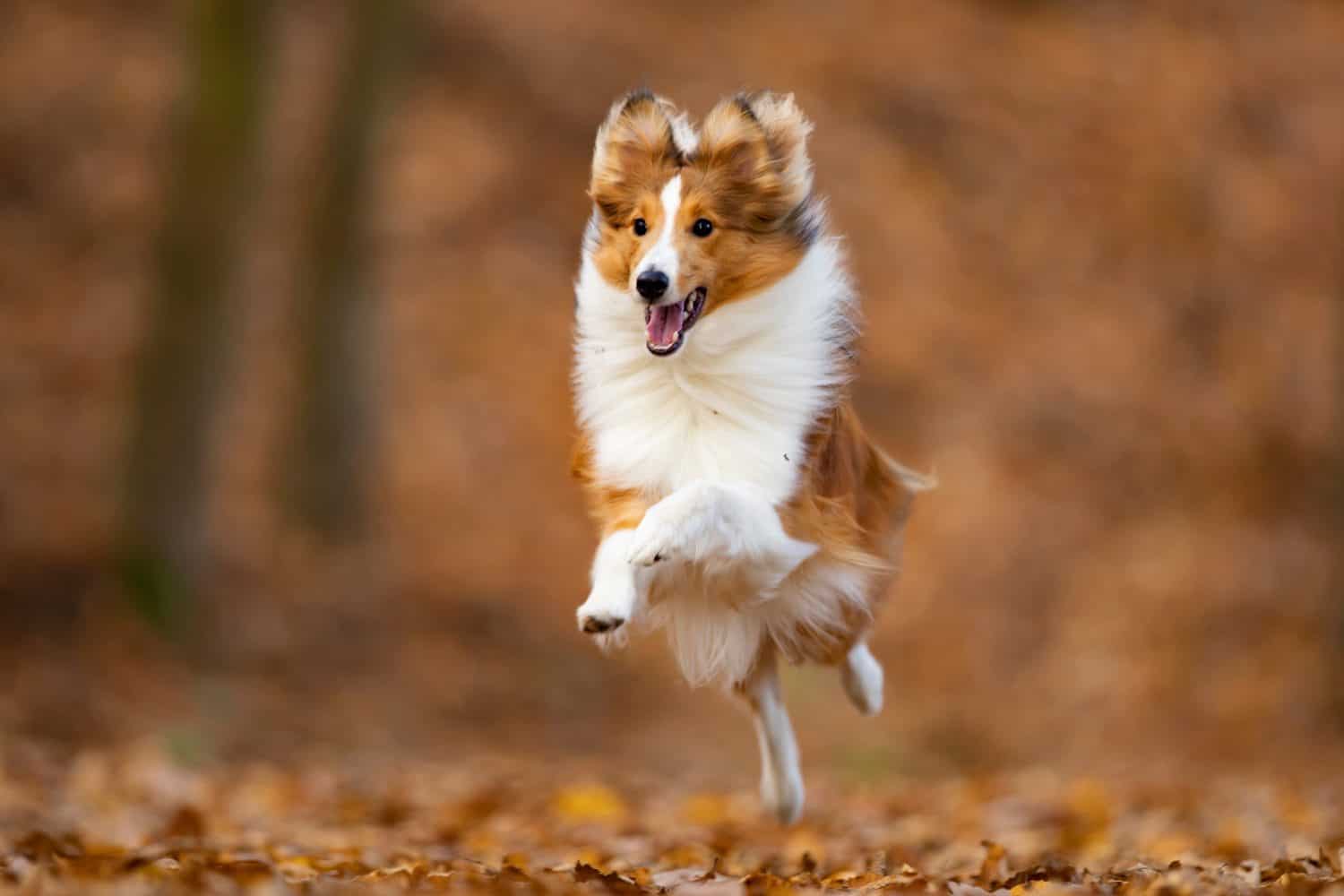
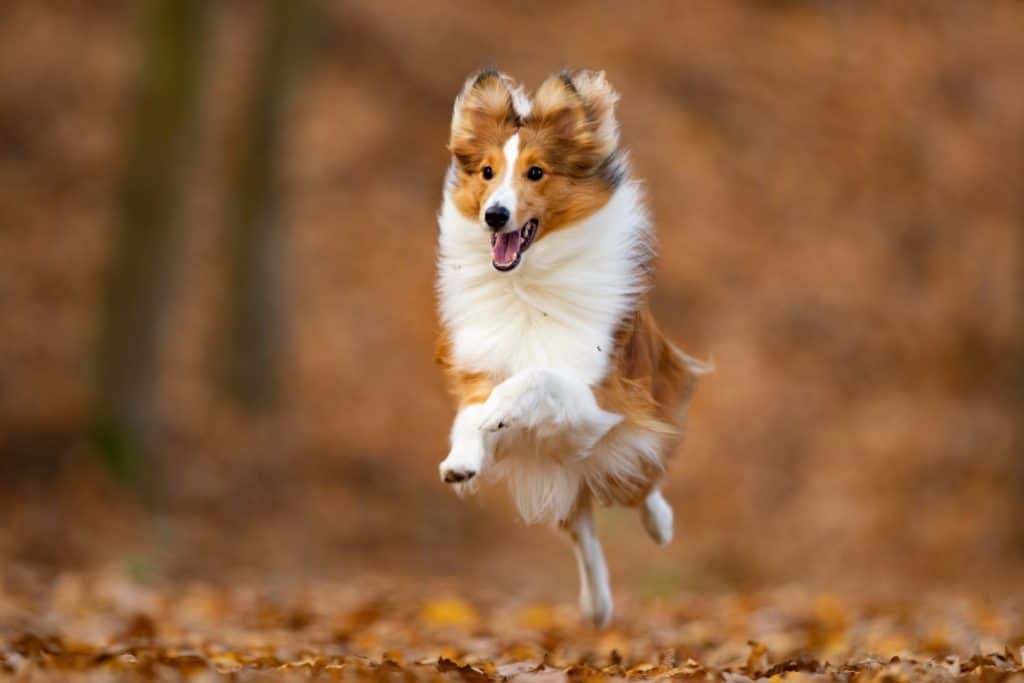
Reddish shetland sheepdog puppy is running on the autumn forest. Shetland collie or sheltie. Cute animal. Purebreed dog.

At a Glance

Domesticated
Also Known As Sheltie, Shetland Collie, Toy Collie, Shetland
Diet Omnivore
Activity Diurnal+
Lifespan 4 years
Weight 14 lbs
Status Not Evaluated
Did You Know?

Developed on Scotland's remote Shetland Islands to herd and guard small livestock in harsh, windy conditions.

Scientific Classification

The Shetland Sheepdog is a small-to-medium herding dog breed developed in Scotland’s Shetland Islands, known for a long double coat, high trainability, and strong herding/alerting instincts.

Kingdom
Animalia
Phylum
Chordata
Class
Mammalia
Order
Carnivora
Family
Canidae
Genus
Canis
Species
Canis lupus

Distinguishing Features

  • Small collie-type herding dog (often called a “Sheltie”)
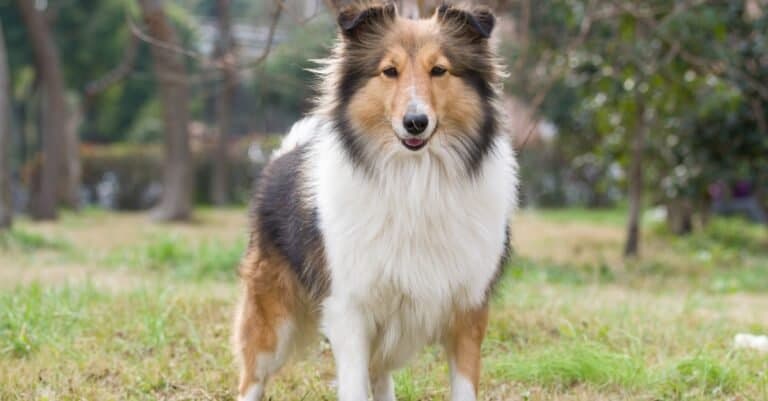
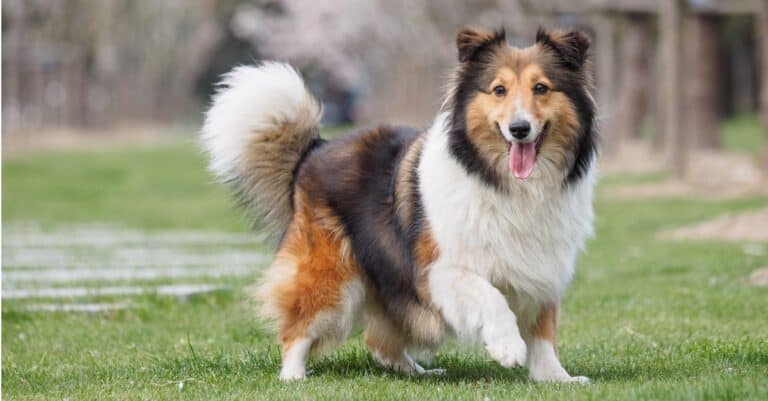
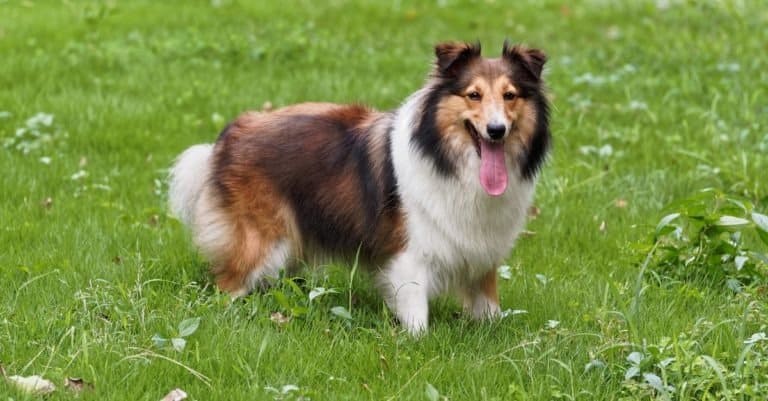
  • Long, dense double coat with mane/ruff; typically sable, tricolor, or blue merle patterns
  • Wedge-shaped head, alert expression, semi-erect ears with tipped ends
  • Highly intelligent, responsive, and vocal/alert; strong herding drive

Physical Measurements

Males and females differ in size

Height
♂ 1 ft 3 in (1 ft 2 in – 1 ft 4 in)
♀ 1 ft 2 in (1 ft 1 in – 1 ft 3 in)
Length
♂ 2 ft 5 in (2 ft 2 in – 2 ft 9 in)
Weight
♂ 20 lbs (13 lbs – 26 lbs)
♀ 17 lbs (11 lbs – 22 lbs)
Tail Length
♂ 11 in (10 in – 1 ft 1 in)
♀ 10 in (9 in – 12 in)
Top Speed
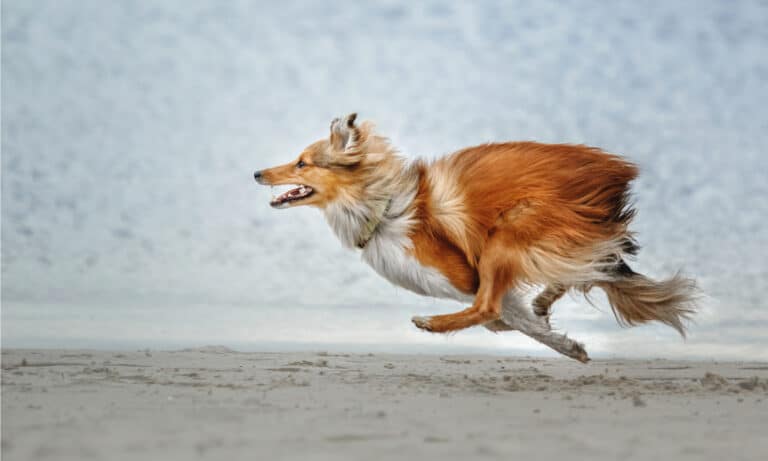
28 mph
running

Appearance

Primary Colors
Secondary Colors
Skin Type Pigmented canine skin under a dense double coat (harsh outer coat, soft insulating undercoat); skin generally protected but prone to hotspots if coat stays damp.
Distinctive Features
  • Domestic dog (Canis lupus familiaris) selectively bred for herding/alerting; not a wild canid.
  • Origin: Scotland's Shetland Islands; developed as a small, agile farm herder and companion.
  • Smaller than Rough Collie with a refined head, pronounced neck ruff, and abundant feathering.
  • Double coat sheds heavily seasonally; requires thorough brushing 2-3 times weekly (more during blow).
  • High trainability and sensitivity; benefits from positive-reinforcement work and daily mental enrichment.
  • Exercise needs: moderate-brisk walks plus play/training; strong herding/chasing and watchdog barking tendencies.
  • Health concerns: Collie Eye Anomaly (CEA) and other inherited eye diseases; regular ophthalmic screening recommended.
  • Health concerns: MDR1 (ABCB1) drug sensitivity in some lines; medication caution/testing advised.
  • Health concerns: hip dysplasia, hypothyroidism, dermatomyositis, and epilepsy reported; maintain healthy weight and routine vet monitoring.
  • Care: dense coat can trap moisture; dry after baths/swims to reduce hot spots and skin irritation.

Sexual Dimorphism

Males are typically slightly taller and heavier with a fuller ruff and overall coat volume. Females are usually more refined in build with a somewhat less profuse mane, though both share the same coat types and color patterns.

♂
  • Slightly larger frame and heavier bone
  • Often more prominent neck ruff and mane
  • Broader head and chest on average
♀
  • Slightly smaller, more refined silhouette
  • Ruff and feathering often less profuse
  • Narrower head and lighter build on average

Did You Know?

Developed on Scotland's remote Shetland Islands to herd and guard small livestock in harsh, windy conditions.

Often mistaken for a Rough Collie, but Shelties are smaller with their own breed history and a typically sharper "watchdog" bark.

Coat colors commonly include sable, tricolor, and blue merle-patterns shaped by collie-type heritage and selective breeding.

Renowned for trainability; Shelties frequently excel in obedience, agility, rally, and herding trials.

Many Shelties are "shadow dogs," sticking close to their person and monitoring the household for changes.

The breed's thick ruff and feathering are functional insulation, not just decoration.

Unique Adaptations

  • Island-hardy double coat: dense undercoat plus longer guard hairs help shed wind and moisture-useful in Shetland's maritime climate.
  • Efficient, agile frame: smaller size than many herders supports quick turns and stamina for tending stock on uneven ground.
  • High biddability: strong human-focus and responsiveness reflect generations of selection for cooperative herding work.
  • Keen motion detection: herding dogs are selected to react to movement; Shelties often track fast changes exceptionally well.
  • Color/pattern diversity typical of collie-type dogs, including merle; responsible breeding avoids high-risk pairings (merle-to-merle).

Interesting Behaviors

  • Intense "eye" and circling: may stare, flank, and arc around moving people/animals-classic herding motor patterns.
  • Alert vocalizing: quick to announce visitors, novel sounds, or movement outside; can become habitual without training.
  • Heel-nipping tendencies: some try to control motion (kids running, bikes) by darting in close-manageable with redirection.
  • Environmental sensitivity: often notice subtle cues (tone, routine changes) and respond quickly to training signals.
  • Toy/ball "management": some will herd other pets or even toys into a "collected" pile as if gathering stock.
  • Startle-and-recover: may be cautious with sudden noise but can rebound quickly when well-socialized.

Cultural Significance

The Shetland Sheepdog (Canis lupus familiaris) stands as an emblem of Shetland crofting life. Bred as a small, tough herder and farm guard, it became a beloved companion and top performance dog in agility and obedience, still known for watchfulness and being careful with resources.

Myths & Legends

Shetland Sheepdog (Canis lupus familiaris) is tied to croft life in Shetland as a small farm dog that herded animals and warned the town — a practical folk legend from rural memory, not one written source.

The 'miniature collie' story says early breeders shaped the Shetland Sheepdog to look like a small Rough Collie, causing long kennel-club debates over the name 'Shetland Collie' versus 'Shetland Sheepdog'.

Shetland folk tradition of troll hills: while not about Shelties specifically, local storytelling about trolls and guarded homesteads helped elevate the cultural value of sharp-eyed, quick-alert farm dogs that watched yards and barns.

Crofter's companion stories tell of small Shetland Sheepdogs (Canis lupus familiaris) herding sheep and chickens on windy crofts, showing the Sheltie as a hardworking little dog doing a big dog's job.

Conservation Status

NE Not Evaluated

Has not yet been evaluated against the criteria.

Population Stable

Life Cycle

Birth 4 pups
Lifespan 4 years

Lifespan

In the Wild
1–8 years
In Captivity
11–16 years

Reproduction

Mating System Polygynandry
Social Structure Managed Domestic
Breeding Pattern Serial
Fertilization Managed Selective
Birth Type Internal_fertilization

In Shetland Sheepdogs, mating is typically planned by humans, with selected pairs allowed to copulate via internal fertilization; across the broader domestic dog context, both sexes can mate with multiple partners. Pair bonds are temporary and tied to breeding cycles.

Behavior & Ecology

Social Pack Group: 4
Activity Diurnal, Crepuscular, Cathemeral
Diet Omnivore Meat-forward foods (commonly chicken or salmon-based diets and high-value meat treats)

Temperament

Species context (domestic dog): highly social, cooperative, human-attuned; behavior strongly shaped by training and environment.
Breed distinction (Shetland Sheepdog): pronounced herding/alerting drive; quick pattern-learning and handler focus.
Typically sensitive and responsive; thrives on gentle, consistent handling rather than harsh corrections.
Often reserved with unfamiliar people; early socialization reduces shyness and reactive barking.
High trainability and impulse to work; excels in obedience, agility, rally, and herding-style games.
Most show strong bonding and vigilance; variation from outgoing to cautious lines.
Health concerns (breed-leaning): MDR1 drug sensitivity risk; check before certain antiparasitics/medications.
Health concerns: hip dysplasia and patellar issues can affect mobility; maintain healthy weight and conditioning.
Health concerns: eye diseases (e.g., collie eye anomaly, PRA); routine ophthalmic screening recommended.
Care requirements: heavy-shedding double coat; frequent brushing, seasonal undercoat blow management.
Care requirements: needs daily mental work and structured exercise; under-stimulated dogs may bark or herd ankles.
Care requirements: noise sensitivity common; provide calm recovery time and predictable routines.

Communication

High-frequency alert barking; often triggered by novelty, movement, or perimeter sounds.
Whines and short yips for attention, excitement, or frustration during training.
Low growls and barks as distance-increasing signals when uncomfortable.
Occasional howl-like vocalizations, especially with sirens or group excitement.
Erect ears, intense stare, and body-blocking to control movement Herding-derived
Play bow, pawing, and quick darting movements to initiate interaction.
Tail carriage and posture changes signaling arousal, uncertainty, or friendliness.
Muzzle licks and head turns as calming/appeasement signals around people and dogs.
Scent marking and investigation; less prominent than in wild canids but still used.
Nipping at heels or circling behaviors when excited; managed via training and outlets.

Habitat

Biomes:
Temperate Forest Boreal Forest (Taiga) Tundra Temperate Grassland Mediterranean Desert Hot Desert Cold Savanna Alpine Freshwater Marine Wetland +6
Terrain:
Island Coastal Hilly Plains
Elevation: Up to 16404 ft 3 in

Ecological Role

Domestic companion and working herding dog; an anthropogenic omnivore whose feeding ecology is shaped by humans rather than wild predation.

Livestock herding/management support (reduces labor and can improve flock control) Pest deterrence and alerting behavior around homesteads/farms Human companionship and assistance roles (training-based work) Participation in nutrient cycling indirectly via consumption of human-provided foods and production of waste managed by humans

Diet Details

Main Prey:
Small mammals Small birds and eggs Invertebrates
Other Foods:
Cooked grains and starches Vegetables Fruits Grasses and plant matter

Human Interaction

Domestication Status

Domesticated

The Shetland Sheepdog (Sheltie) is a small-to-medium herding breed of Canis lupus familiaris. Bred on Scotland’s Shetland Islands from smaller collie-type farm dogs, it has a long double coat for cold, strong herding instincts, high focus on handlers, a habit of barking, and is used for herding, companionship, and dog sports.

Danger Level

Low
  • Bites/scratches are possible, typically linked to fear, pain, poor socialization, resource guarding, or rough handling; severe injury is uncommon given typical breed size.
  • High alert barking may create conflict with neighbors and can contribute to stress in noise-sensitive households.
  • Herding behaviors (chasing, heel-nipping) may startle children or visitors if not trained and managed.
  • Zoonotic and public-health risks typical of domestic dogs if preventive care is neglected (e.g., parasites, rabies vaccination noncompliance).
  • Allergy considerations: heavy shedding and dander can aggravate allergies.

As a Pet

Suitable as Pet

Legality: Generally legal as a pet in the U.S. and most jurisdictions; subject to local dog licensing, vaccination (e.g., rabies), leash laws, and in some areas noise ordinances due to alert barking. Breed-specific bans are uncommon for Shetland Sheepdogs.

Care Level: Moderate

Purchase Cost: $800 - $2,500
Lifetime Cost: $18,000 - $45,000

Economic Value

Uses:
Companion animal Herding/working dog Dog sports and competition Therapy and community programs Breeding and kennel operations Pet services economy (grooming, training, boarding, veterinary care)
Products:
  • companion and performance puppies
  • training services (obedience, agility, behavior modification)
  • grooming services (deshedding, coat maintenance)
  • herding trial participation and related instruction
  • stud services and breeding rights (where applicable)

Relationships

Ecological Equivalents 6

Animals that fill a similar ecological role in their ecosystem

Rough Collie
Rough Collie Canis lupus familiaris Closely related; both occupy a herding and alerting niche. The Shetland Sheepdog is a smaller, faster-reacting, busier herding companion with a dense double coat adapted to harsher weather. Compared with the Rough Collie, Shelties typically have higher activity and drive per pound and can be more vocal and alert.
Border Collie
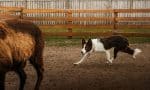
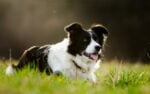
Border Collie Canis lupus familiaris Similar working niche: livestock herding and high trainability. Shetland Sheepdogs (Shelties) are smaller, more companion- and watchdog-oriented, require more coat care and daily mental stimulation, and may bark more or be shy.
Pembroke Welsh Corgi
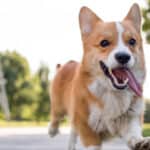
Pembroke Welsh Corgi Canis lupus familiaris Small-to-medium herder bred for close control of livestock, representing an ecological parallel in human-managed farm settings. Shelties differ by being long-coated, more 'eye'-and-movement herders rather than heelers, and are typically lighter-framed with a greater emphasis on agility.
Australian Shepherd
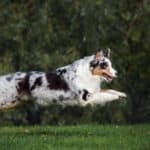
Australian Shepherd Canis lupus familiaris Very smart, high-drive herding dog. The Shetland Sheepdog (Sheltie; Canis lupus familiaris) requires daily training games and clear rules. Shelties need less intense exercise than many working-line Australian Shepherds but still require activity to prevent nuisance barking.
Gray wolf
Gray wolf Canis lupus Shetland Sheepdog (Canis lupus familiaris) is a human-bred herding dog, not a wild pack predator. It is smaller, friendlier, easier to train, and less likely to hunt; it requires grooming, veterinary care, and planned exercise and play.
Arctic spitz-type small working dog Canis lupus familiaris Niche overlap as hardy, climate-adapted herding/watch dogs in northern island and rural environments. Shelties share a weather-resistant double coat and an alert temperament; they require regular brushing to prevent matting and management of seasonal shedding.

Quick Take

  • Achieving a 95% first-time obedience rate is the ultimate achievement for Shetland Sheepdog owners.
  • Dermatomyositis initially triggers hair loss and eventual fatal damage to the nervous system.
  • The breed’s stature represents an adaptation to Spartan island conditions and resource scarcity.
  • Completing Puppy Kindergarten is a vital scouting process to address critical social skill gaps.

The Shetland Sheepdog is a lovable bundle of energy. This tiny member of the herding group was bred in the Shetland Islands off the coast of Scotland to herd sheep, ponies, and poultry. They bred it to be small due to the Spartan conditions of the island and the cost of feeding a larger dog. The stock used to breed the dog is unknown, and the breed is somewhat shrouded in mystery, but there was a reference to the little bundles of fur in the early 19th century.

Vocal, full of energy, and playfulness, this dog is an excellent breed for a family pet, especially if energetic children are around to play with the dog. This dog wants and needs your attention! The Sheltie, as it is affectionately called, is smart and obedient and excels at competitive dog activities, too. This dog learns commands quickly and is fun to train.

An educational infographic about Shetland Sheepdogs detailing their origin in Scotland, 95% obedience rate, and common health risks with illustrations of the dog and its environment.
Forged by survival on rugged islands, this 95% obedience master is the ultimate loyal shadow—but hidden genetic risks await. © A-Z Animals

3 Pros and Cons of Owning a Shetland Sheepdog

ProsCons
Shetland Sheepdogs are incredibly smart. By the time they hear a command five times, they are likely to have learned it.They are very vocal dogs, barking at everything for any reason, and while this makes them good watchdogs, it can be a bit like the boy who cried wolf.
Shelties are obedient dogs. After they learn a command, it has been determined that they obey it the first time over 95% of the time.The Shetland Sheepdog is wary of strangers. Again, this can be useful in a watchdog, but it means they take some time to warm up to a visitor.
There are very few dogs around that are as affectionate as the Sheltie. They are known to shadow owners and family members from room to room, always looking to see what you are doing.Their affectionate and herding natures make them prone to separation anxiety. It is not good to leave them alone for long stretches of time.

Size and Weight

A Shetland Sheepdog is a small herding dog, with males reaching a height of 13 to 16 inches at the shoulder and weighing 15 to 25 pounds. The females are slightly smaller.

Common Health Issues

While the Shetland Sheepdog is a generally healthy dog, there are some issues that a potential owner should check with the breeder about. Dogs may sometimes be at risk for a variety of conditions.

Shelties have been known to suffer from some eye disorders, namely Collie eye anomaly (CEA), which is specific to collies and related dogs, and progressive retinal atrophy (PRA).

CEA is a hereditary disorder. It is present at birth but may not be diagnosed until later. Physical indicators include small, deep-set eyes. There is no cure, but the disease is not progressive and will not worsen over time. This disease can be screened for, as a recently developed DNA test exists.

The other disorder, PRA, is also hereditary. This doesn’t typically show up until the age of 2 years. PRA is progressive. After the onset, the result is total blindness. There is also a DNA test for this disorder.

Dermatomyositis is a rare genetic disorder that sometimes affects Shelties at around 4 to 6 months of age. It initially shows as hair loss on the top of the head, around the eyes, along the forearms, and at the tip of the tail. If it progresses without treatment, it can result in fatal damage to the nervous system. Although it is a genetic disorder, there is currently no test, only an extensive analysis of bloodlines.

Another potential hazard is Von Willebrand disease. This is a bleeding disorder for which a DNA test is available.

Shelties are also prone to a certain type of bladder cancer and hip dysplasia.

Temperament

The Shetland Sheepdog is known for its energetic, lovable, happy-go-lucky personality. Its herding traits give it a lot of energy and a personality that just wants to please its master. It wants to be with its owner all of the time and can be like a “shadow”, going from task to task. It’s usually on its best behavior unless it is ignored or bored, and it is great with kids.

How To Take Care of a Shetland Sheepdog 
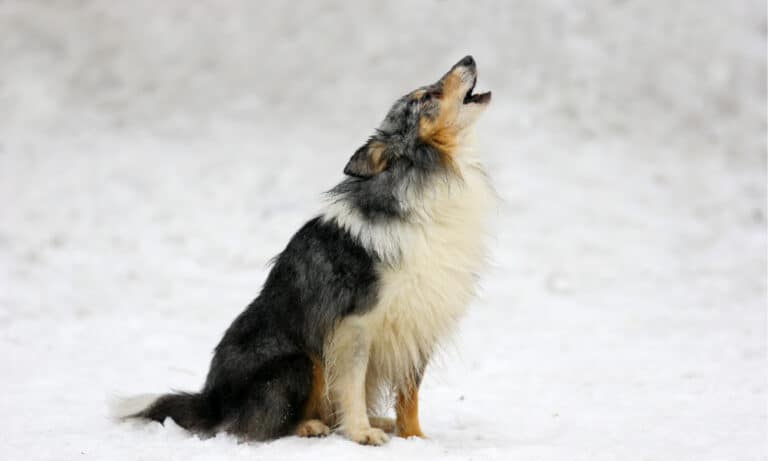
why do dogs howl

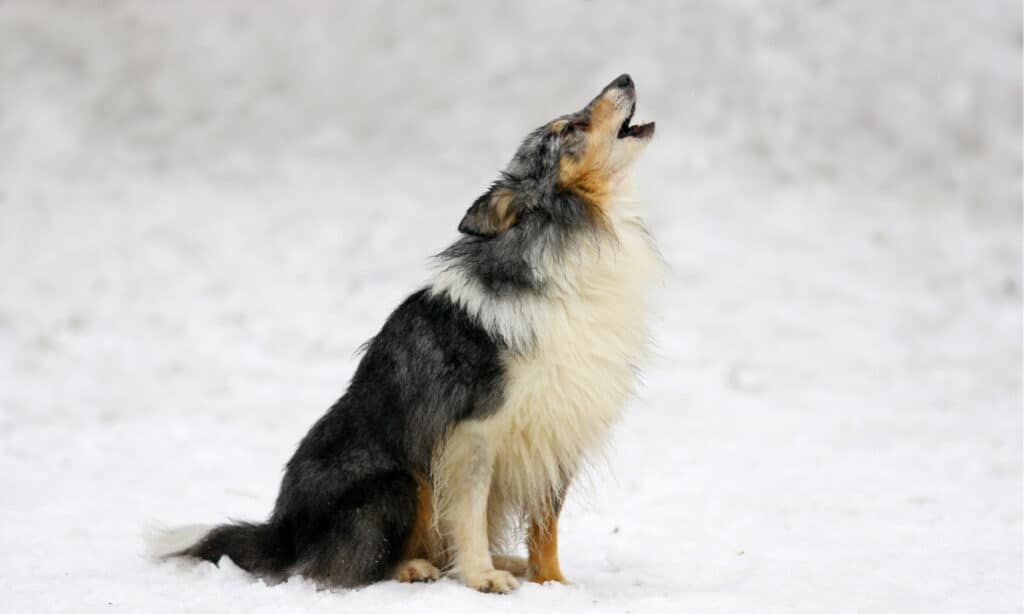
Shetland Sheepdog sitting and howling.

The Best Dog Food

The Shetland Sheepdog has high energy needs and should have a high-protein diet. Dry dog food should have meat as the number one ingredient.

Maintenance And Grooming 

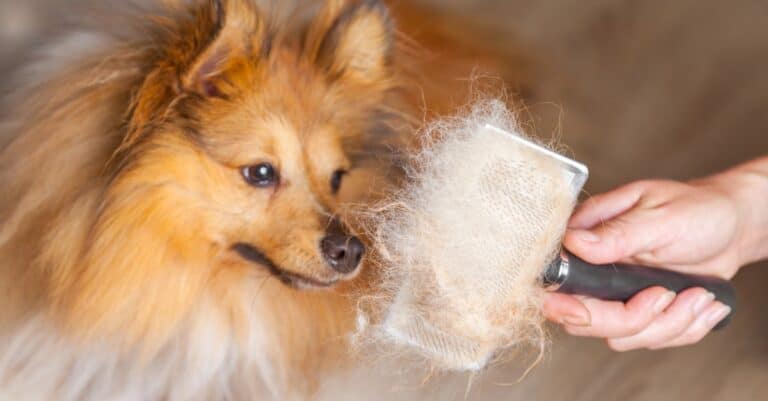
The Sheltie has a long, double coat of hair. This coat serves two functions: it is water-repellent, and it can regulate the dog’s body temperature. This long coat sheds all of the time, in clumps, mostly, and should be brushed regularly, but not shaved. Check for mats of fur behind the ears, elbows, and hindquarters below the tail. Only bathe this dog occasionally.

Besides coat care, check the dog’s ears for buildup, brush its teeth, and clip its nails regularly.

Training 

Begin training and socialization early with the puppies. The Sheltie loves learning new tasks, and a consistent and organized training regimen will help get the dog acclimated and keep it mentally challenged. These dogs love agility training and excel at it. They are very quick to learn and will do well with short, positive training sessions. They really love to bark, and spending the time to train them to stop barking on command is well worth it.

Exercise 

They are high-energy dogs and benefit from a lot of activity and playtime. Just including them in daily activities can sometimes be enough to meet these energy needs. They also love to be engaged in doggy sports, which provides an effective outlet.

Puppies 

The puppy stage is a good time to screen for certain genetic disorders. It is also an excellent time to housebreak, obedience train, and socialize your Sheltie. Puppy Kindergarten is an excellent way to work on some of those social skills.

Shetland Sheepdog And Children

Shetland Sheepdogs are excellent with children. They are gentle and can play for hours, using their energy and the kids’. They are not aggressive and bond very closely with their children.

Dogs Similar to the Shetland Sheepdog

  • Australian Shepherd: A somewhat larger herding dog than the Shetland Sheepdog, the Australian Shepherd is also fun-loving and affectionate.
  • Border Collie: The Border Collie is an excellent herder and is one of the few dogs that can boast a higher intelligence than the Sheltie.
  • Collie: This sweet and loyal dog comes from the same part of the world as the Sheltie and may even be a part of its ancestry. The Collie is great with kids and also very intelligent.

Famous Shetland Sheepdogs

The Shetland Sheepdog has made a few television and movie appearances:

  • Mickey’s Farm, a Canadian children’s show, follows the adventures of Mickey, a Shetland Sheepdog.
  • A Sheltie named Forrest plays Lady in the 2011 movie Kill the Irishman.
  • Finally, in the Lethal Weapon film series, the character “Riggs” owns a Shetland Sheepdog named Sam.
View all 391 animals that start with S

Sources

  1. Animal Kennel Club / Accessed October 18, 2022
  2. Animal Kennel Club / Accessed October 18, 2022
  3. Wikipedia / Accessed October 18, 2022
  4. American Shetland Sheepdog Association / Accessed October 18, 2022
  5. Dog Pregnancy Calendar / Accessed October 18, 2022
  6. Wag! / Accessed October 18, 2022
  7. Pet Educate / Pete / Accessed October 18, 2022
  8. Sheltie Planet / Becky Casale / Accessed October 18, 2022
Rob Amend

About the Author

Rob Amend

Rob Amend is a writer at A-Z Animals, primarily covering meteorology, geology, geography, and animal oddities. He attained a Master's Degree in Library Science in 2000 and served as reference librarian in an urban public library for 22 years. Rob lives in Cincinnati, Ohio, and enjoys spending time with his family, hiking, photography, woodworking, listening to classic rock, and watching classic films—his favorite animal is a six-foot-tall rabbit named Harvey.

Thank you for reading! Have some feedback for us?


Shetland Sheepdog FAQs (Frequently Asked Questions)

Shetland Sheepdogs are very trainable and affectionate with the family, making excellent house dogs.