
If you love the great outdoors, Nebraska offers many outdoor attractions. From its iconic prairie landscapes and Scotts Bluff National Monument to the famous sandhill crane migration and extensive trail systems for hiking and biking, the state is well-known among hikers, campers, fishermen, and hunters for its gorgeous scenery. However, the hidden danger of venomous snakes lurks in Nebraska’s natural splendor. Continue reading to discover four of the largest and most dangerous snakes in Nebraska.
4. Western Massasauga Rattlesnake
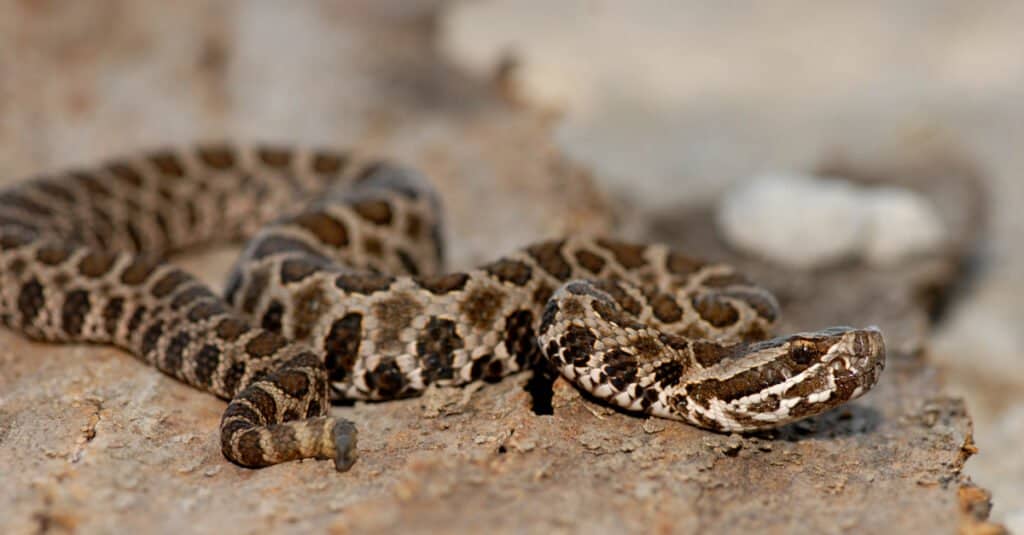
The smallest venomous snakes in Nebraska, Western massasauga rattlesnakes, rarely exceed 2 feet in length.
©Rusty Dodson/Shutterstock.com
| Size | 18 to 26 inches long |
| Habitat | Prairies, grasslands, and marshlands |
| Behavior | Moderately aggressive but will strike if provoked. Most bites occur through accidental contact. |
Western massasauga rattlesnakes (Sistrurus catenatus) are approximately 18 to 26 inches long. They are pale brown or tan overall with darker mottling that appears blurred or muted. Unlike other rattlesnake species, the Western massasauga rattlesnake has nine distinctive large scales on the top of its head. Western massasauga rattlesnakes are highly venomous but don’t have a particularly high venom yield. However, their bite is still highly dangerous, and medical attention should be sought immediately if bitten.
The Western massasauga rattlesnake inhabits prairies, grasslands, and marshlands, and in the tallgrass prairies of Nebraska, mainly in Jefferson, Gage, Thayer, and Pawnee counties. The Western massasauga rattlesnake is classified as threatened in the state.
3. Prairie Rattlesnake
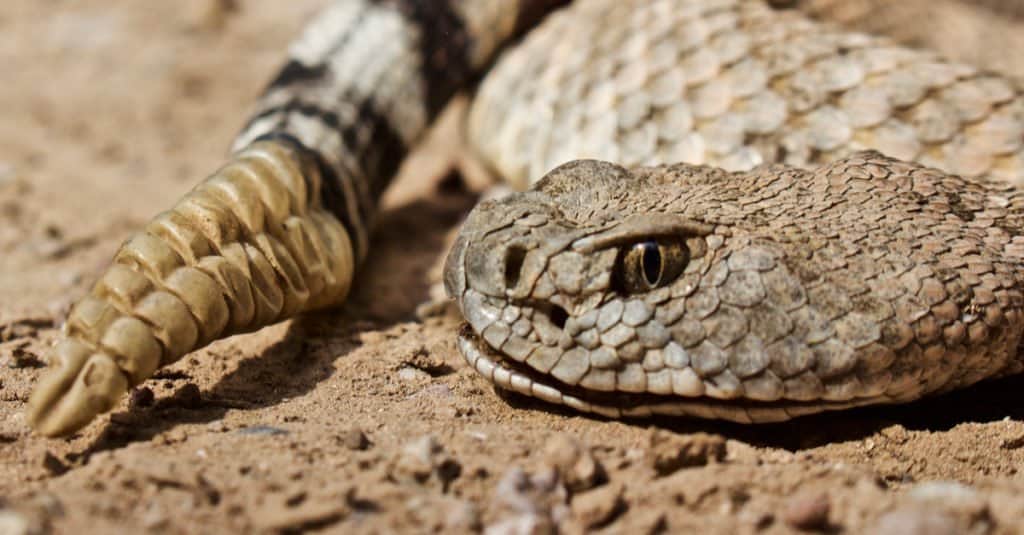
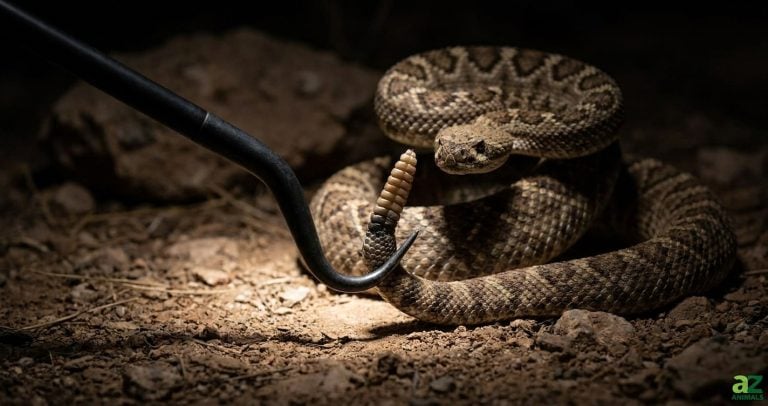
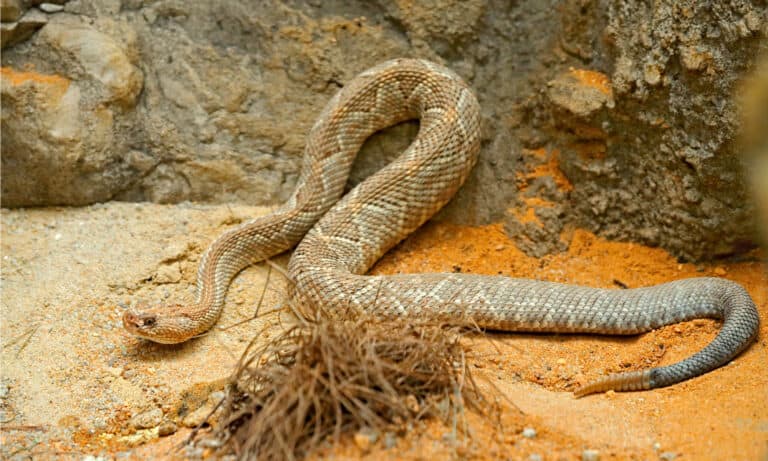
The prairie rattlesnake is the third-largest venomous snake in Nebraska.
©DMartin09/Shutterstock.com
| Size | 35-45 inches long |
| Habitat | Grasslands, plains, foothills, and mountains |
| Behavior | Moderately aggressive. Bites occur due to accidental contact or provocation. |
Prairie rattlesnakes (Crotalus viridis) are approximately 35 to 45 inches long. They are light brown, grey, or green overall, with darker mottled markings. Prairie rattlesnakes are found in the Western and Central regions of Nebraska, where they inhabit grasslands, plains, foothills, and rocky areas. They prey on a variety of animals, but mainly small mammals. Prairie rattlesnakes have primarily hemotoxic venom, which can be extremely dangerous. However, most bites occur due to accidental contact or when the snake is provoked.
2. Copperhead
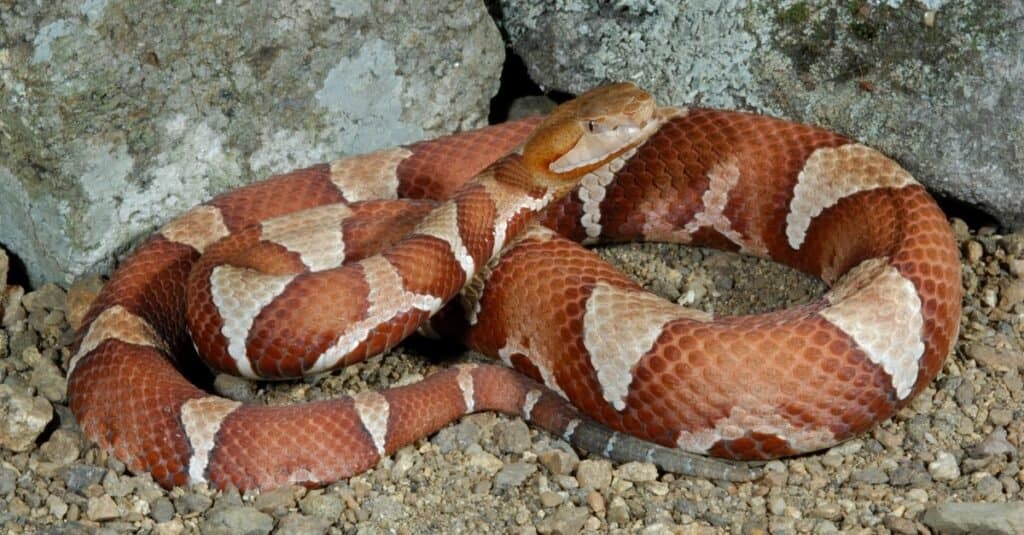
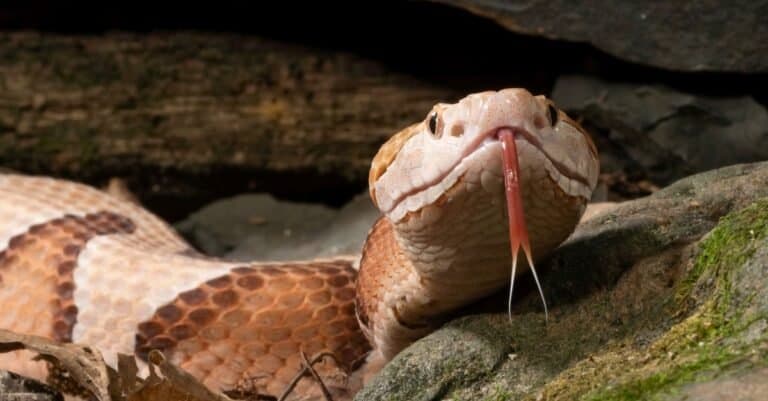
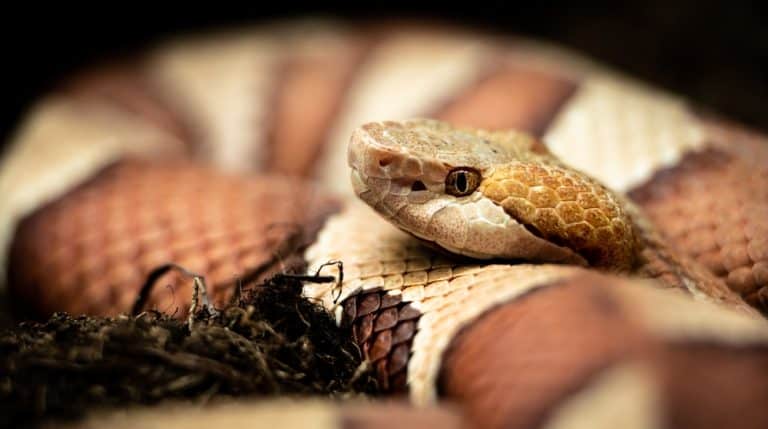
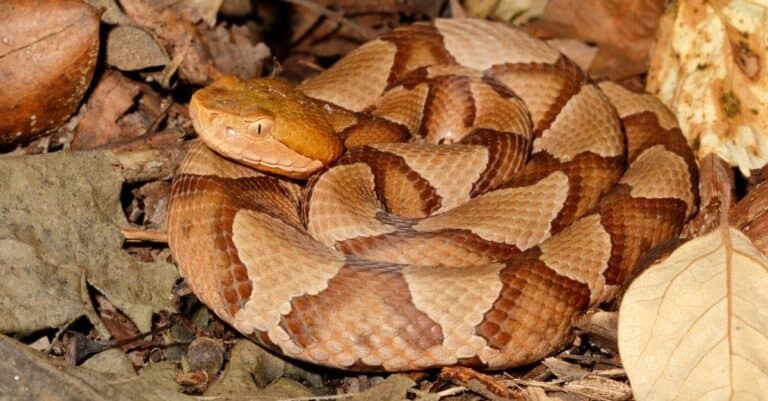
The copperhead is the second largest and most dangerous snake in Nebraska.
©Breck P. Kent/Shutterstock.com
| Size | 24-36 inches long |
| Habitat | Woodlands, forests, rocky elevations |
| Behavior | Blends well with surrounding habitat and is known to strike with little or no warning. However, this species is not known to be overly aggressive, and most bites occur through accidental contact. |
Copperheads (Agkistrodon contortrix) are 24 to 36 inches long and are identified by their distinctive reddish-brown overall coloring and brown hourglass-shaped markings. Like most species of pit viper, the copperhead has a narrow, triangular-shaped head and cat-like eyes with slitted pupils. They are not overly aggressive snakes, and most bites occur when the snake is disturbed or provoked.
Copperheads live in a variety of habitats, including woodlands, forests, and rocky elevations. In Nebraska, copperheads are confirmed only in the far Southeastern corner of the state, specifically in Southern Gage County and Northeastern Richardson County.
1. Timber Rattlesnake
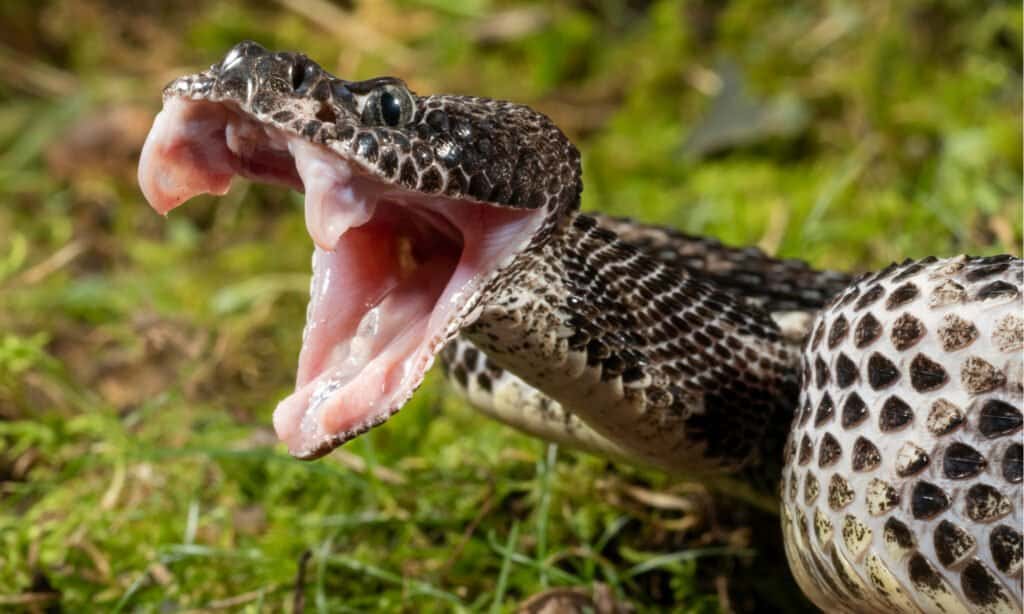
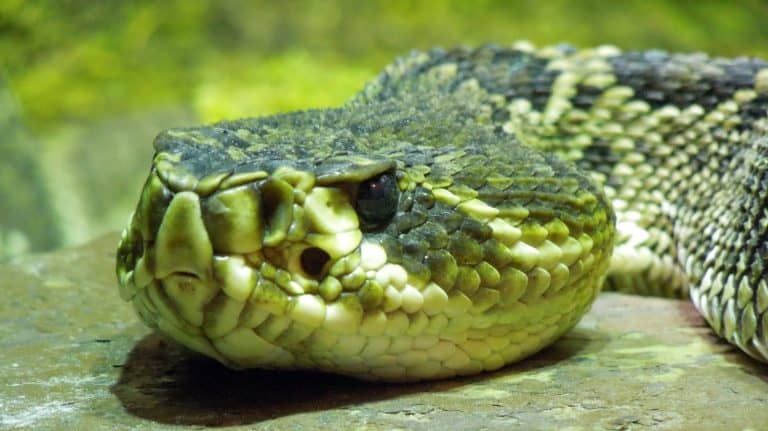
Timber rattlesnakes are the largest and most dangerous snakes in Nebraska.
©Joe McDonald/Shutterstock.com
| Size | 36-60 inches long |
| Habitat | Forests, floodplains, prairies, rocky outcrops |
| Behavior | An aggressive ambush hunter that gives little warning before striking. |
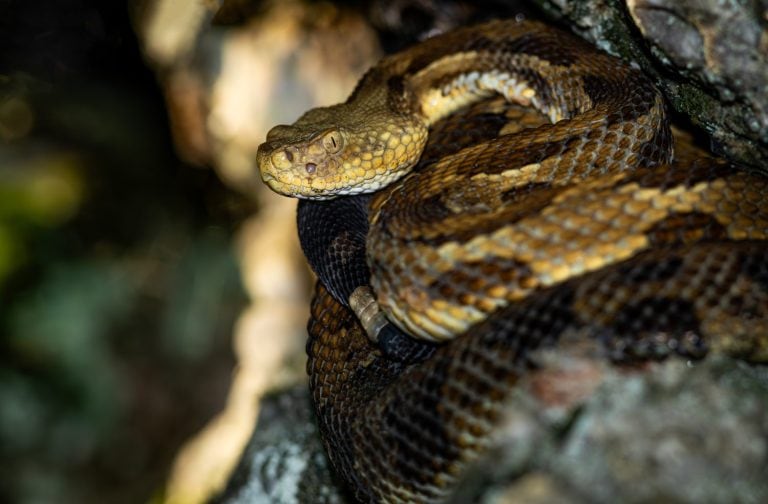
The timber rattlesnake (Crotalus horridus) is the largest venomous snake in Nebraska, at 36 to 60 inches long. It is among the largest rattlesnakes in the United States and has highly potent venom. This species can be identified by its reddish-brown banded coloring and yellow-grey or black markings. These markings progress down the back and end in V-shaped crossbands at the tail.
Timber rattlesnakes are extremely venomous, and immediate medical help is essential. Experts recommend moving away from this snake immediately, as it is known for its aggression and gives little warning before striking. Timber rattlesnakes are found in the far Southeast portions of Nebraska, specifically in Southern Gage County and Northeastern Richardson County, and are classified as threatened in the state. They are capable of living in a variety of habitats, including forests, floodplains, and prairies. However, they may also be observed on rocky outcrops, which are particularly favored by pregnant females and are known as basking knolls.
How To Determine If A Snake Is Venomous
When encountering a snake, the priority should always be retreating a safe distance away. The safest course of action is to assume any snake is a venomous snake.
However, in situations where you need to report a venomous snake in a populated area, it is important to know what to look for. Identifying a specific species may be difficult, especially during a stressful situation. Common key features of venomous snakes include:
- Blotching or Banded Patterns: Most of Nebraska’s venomous snakes have these types of markings. Non-venomous snakes in the state all have lengthwise striped markings. However, the timber rattlesnake may have a single rust-red stripe.
- Triangular Head Shapes: Nebraska’s venomous snakes have this head shape, which is significantly wider at the neck and narrower at the mouth. However, some species, such as garters, hognoses, and bull snakes may also display this shape as well.
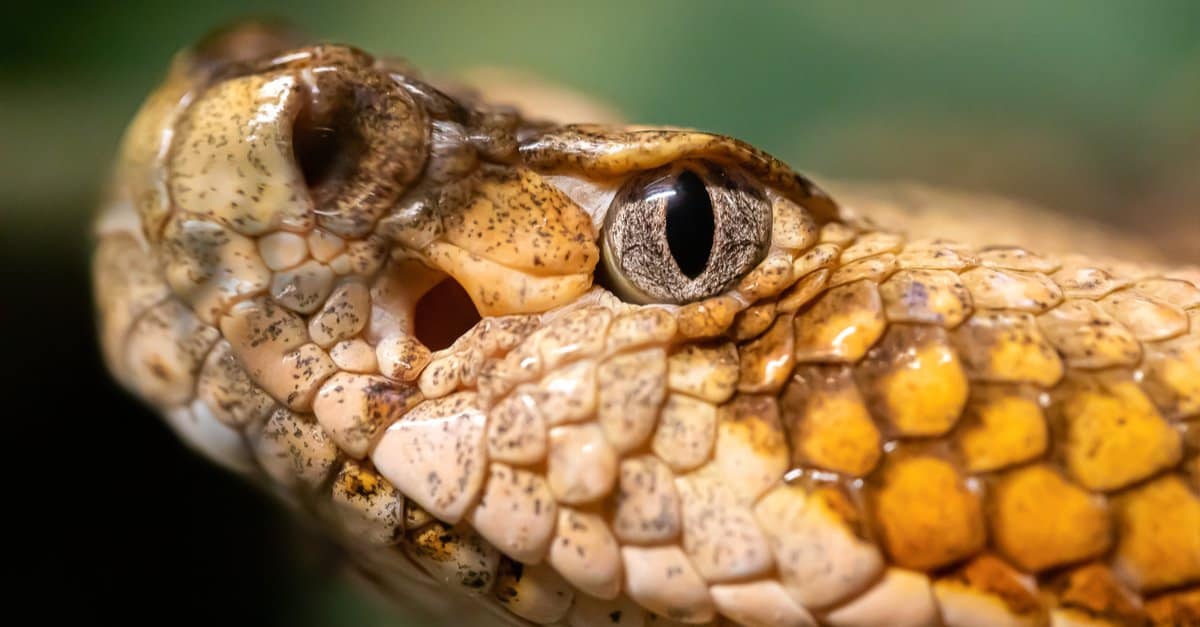
- Slitted, “Catlike” Pupils: Nebraska’s venomous snakes all have slitted pupils, whereas non-venomous snakes have rounded eyes and pupils.
- Pit Markings Near The Nostrils: All four of Nebraska’s venomous snakes are pit vipers. The pit looks like a larger nostril on both sides of the head.
- The Warning Rattle: Except for the copperhead, Nebraska’s venomous snakes are all rattlesnakes. But remember, the timber species only gives a brief warning before striking.