
Quick Take
- Some non-venomous snakes on this list have a secret weapon that makes them just as dangerous to predators as any viper, and they achieve this without a single drop of venom. Toxic defense without venom →
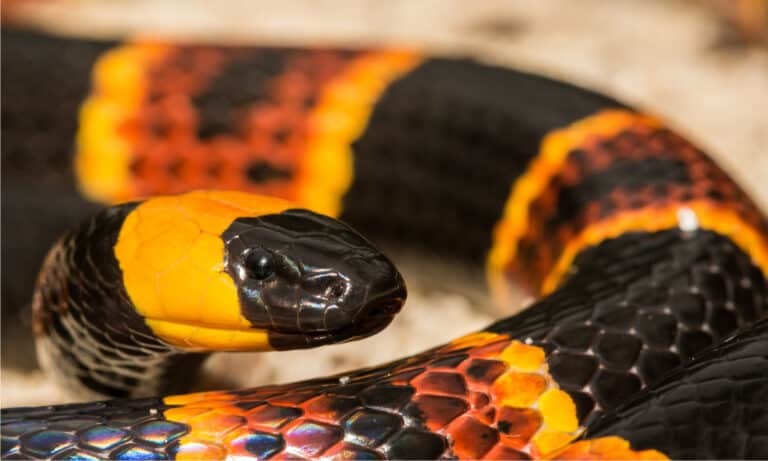
- Knowing one simple color-pattern trick could mean the difference between a harmless encounter and a life-threatening bite. Coral snake color pattern →
- Several snakes on this list are so secretive you could share their habitat for years and never once spot them, though you would recognize the dangerous ones if you did. Rare secretive aquatic snake →
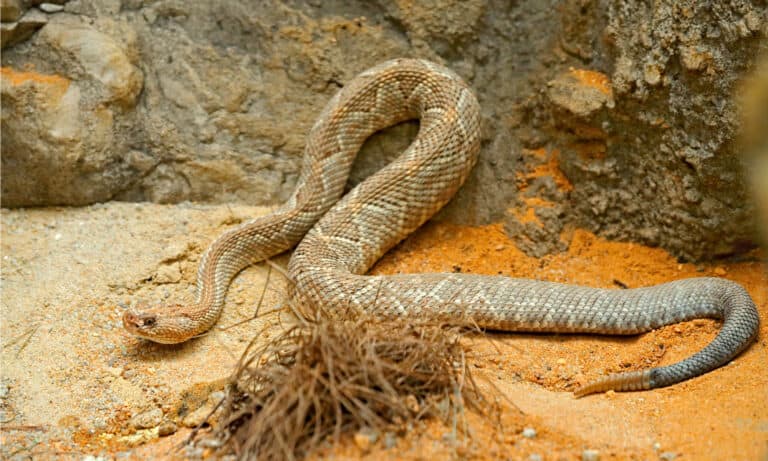
- One small rattlesnake on this list gets consistently underestimated because of its size, which is a mistake that could land you in serious trouble. Underestimated small rattlesnake →
There are over 150 species of snakes in North America. They come in a variety of colors, shapes, and sizes, which can make identifying a snake you’ve seen difficult, especially because there are many species of snakes that look similar. Some are venomous, and some aren’t. Fortunately, around 120 of native North American snakes are non-venomous, but that leaves 30 that are, and some of the black and red snakes on our list are venomous.
Our guide to will help you learn about many species that share this color pattern. Learning to distinguish black and red snakes can not only help you learn more about the snakes in your area, but it could also save your life. Read on to learn about black and red snakes in North America.
1. Black Swamp Snake
The black swamp snake (Liodytes pygaea) is a common snake in the southeastern United States. However, you may never see one. This is because these secretive snakes are almost entirely aquatic. They spend their lives in swampy freshwater habitats, hiding in the vegetation and avoiding threats. This species is non-venomous.
The black swamp snake is a small- to medium-sized reptile, measuring 10 to 15 inches long. The longest black swamp snake ever recorded was 24.5 inches long. Their dorsal sides, or backs, are black, while they have bright red or orange bellies. The black swamp snake is also known as the red-bellied mud snake. There are three different subspecies of this snake, including the North Florida swamp snake (L. p. pygaea), South Florida swamp snake (L. p. cyclas), and the Carolina swamp snake (L. p. paludis).
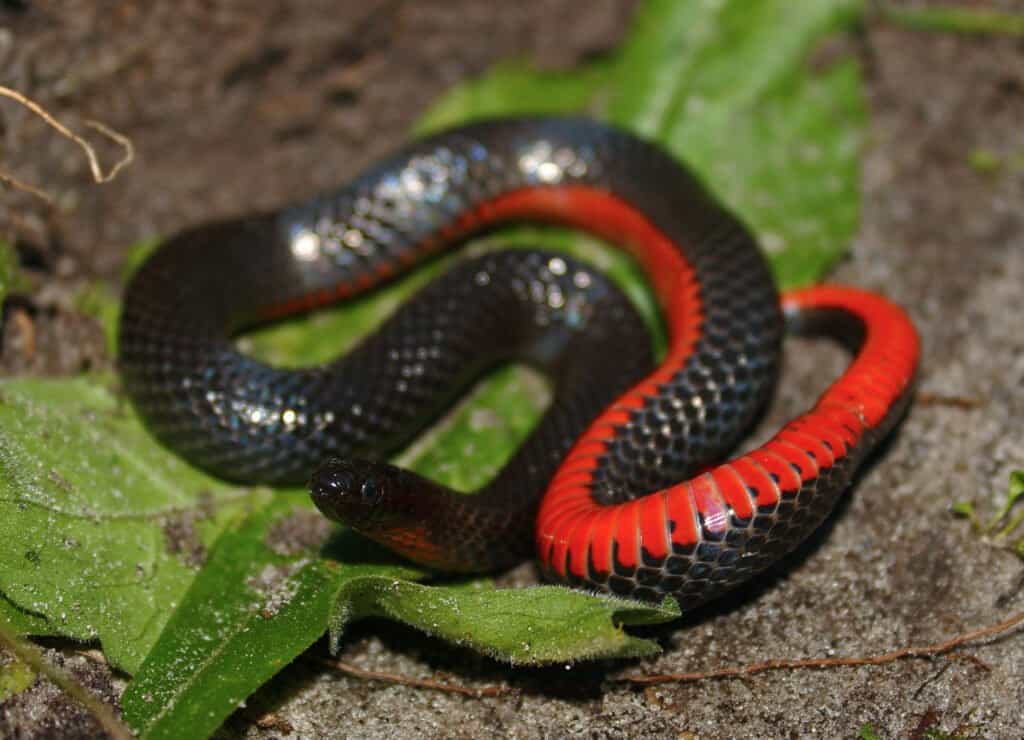
The black swamp snake is very secretive and fully aquatic.
2. California Red-Sided Garter Snake
The California red-sided garter snake (Thamnophis sirtalis infernalis) is a subspecies of the common garter snake. These beautiful snakes boast a bright red and black checkerboard on their dorsal side; however, their bellies are much paler, usually white or yellow. You can also find a thin white or yellow stripe running down the center of their dorsal side, from their head to their tail. This is a telltale trait for many species of garter snakes.
This red and black garter snake is found only in California. They can typically be found near marshes, streams, ponds, grasslands, and forests along the coast. They are non-venomous snakes, but they are not without defenses. These snakes can safely consume toxic Pacific newts and store the newt’s neurotoxins, deterring predators.
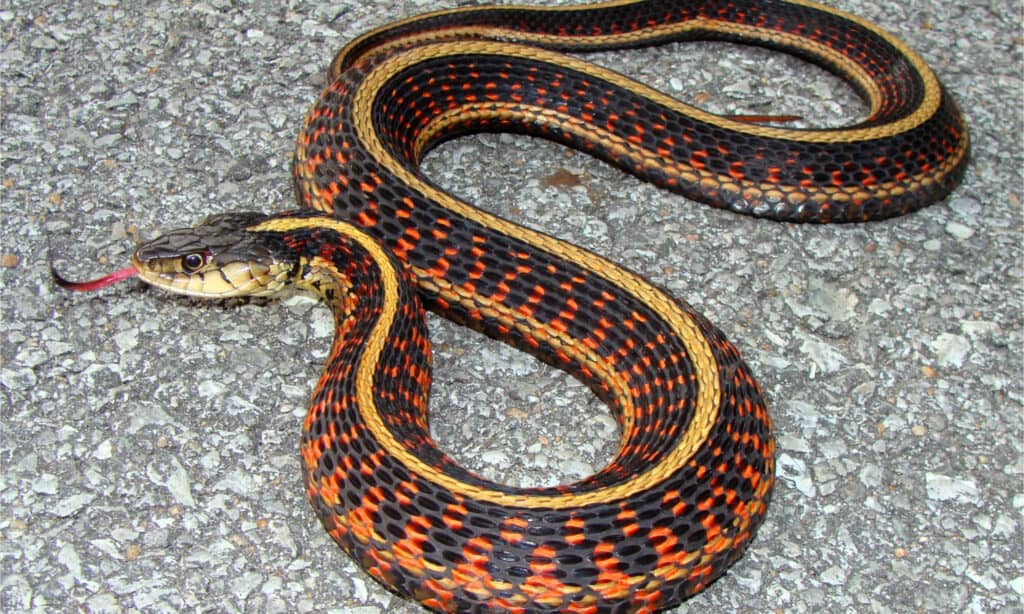
Red-sided garter snakes are found in California’s coastal regions.
©Matt Jeppson/Shutterstock.com
3. Eastern Coral Snake
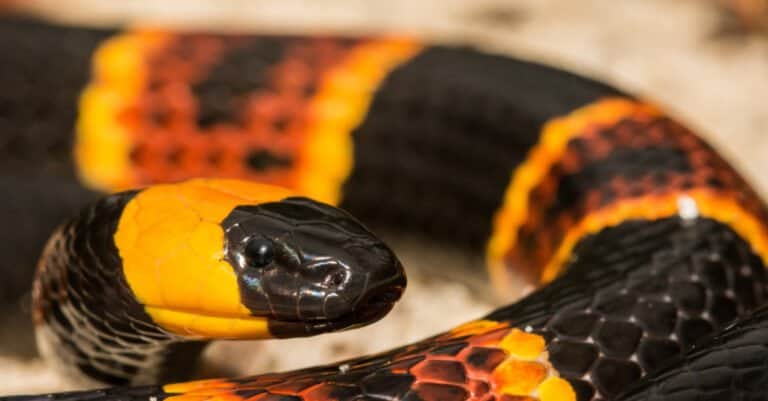
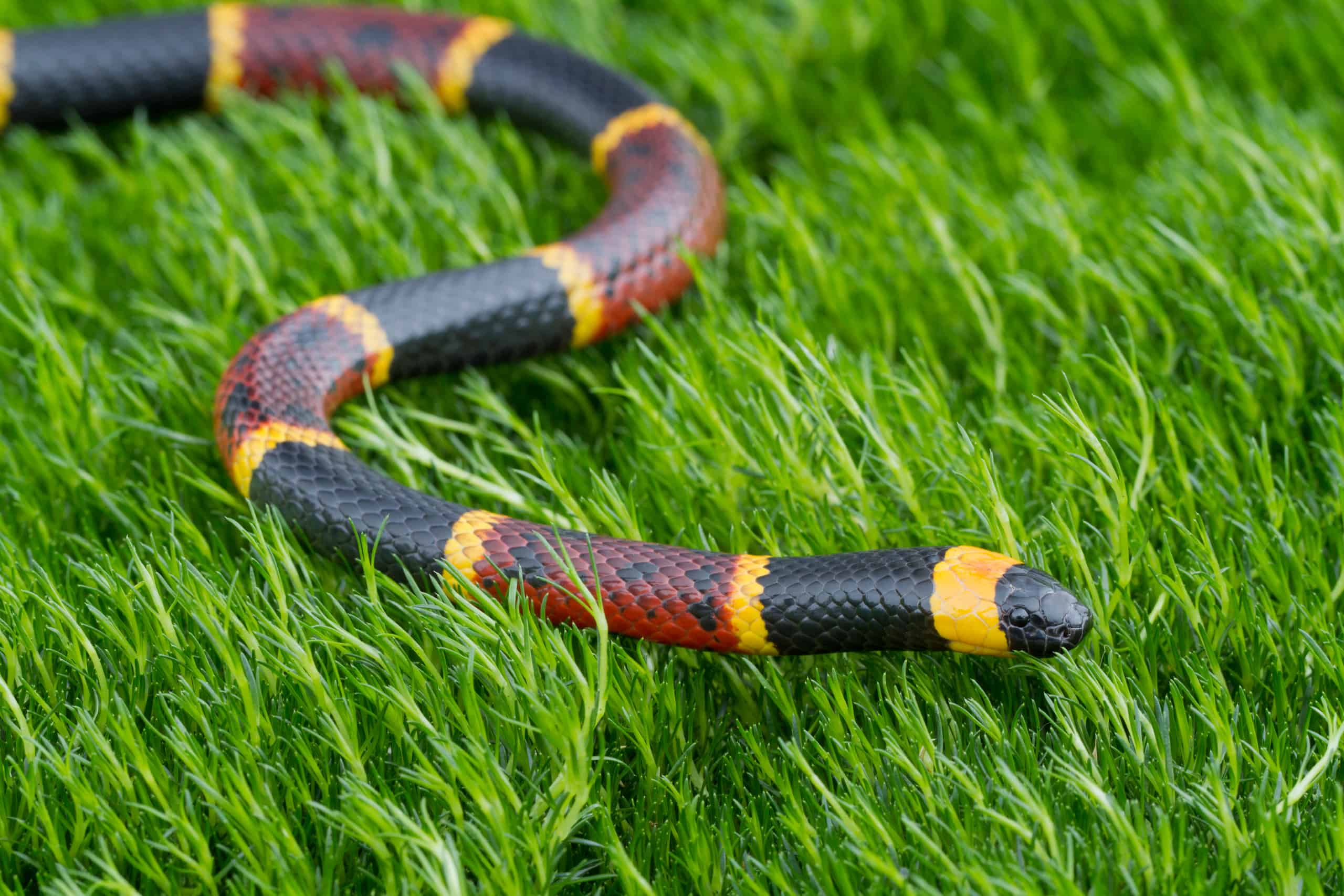
Few red and black snakes are as well known as the coral snake, which is a member of the family Elapidae. The eastern coral snake (Micrurus fulvius), also known as the common coral snake, is a highly venomous snake species found only in the southeastern United States. They’re known for delivering painful bites that could result in neurological damage.
The eastern coral snake can grow to be around 31 inches long. This maximum length includes their tail. However, the largest ever recorded was around 48 inches. Their scales have an eye-catching pattern of rings. They have a thick yellow band at their head and then a series of red and black bands with thin yellow rings in between each color. Many snakes have evolved to mimic the red, black, and yellow coloration of this venomous snake for protection from predators.
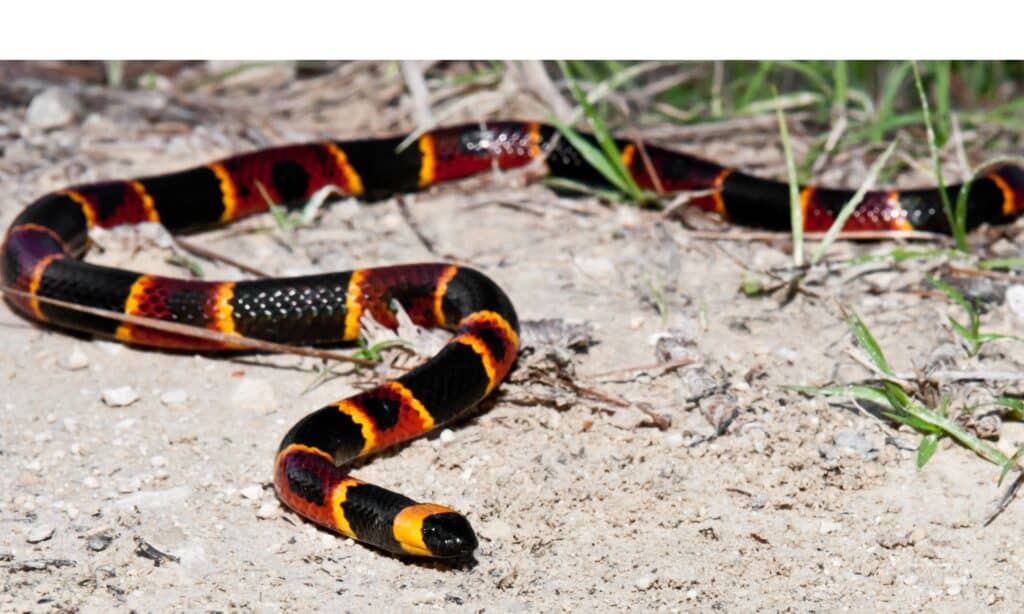
The largest coral snake ever recorded was 51 inches long.
©iStock.com/JasonOndreicka
4. Eastern Hognose Snake
The eastern hognose snake (Heterodon platirhinos), or spreading adder, is a mildly venomous species of snake found only in North America. Their diet primarily consists of toads, so the venom in their back fangs is only strong enough to subdue amphibians. They can be found from Ontario, Canada to southern Florida. Their colors are highly variable. Some snakes are shades of grey, brown, black, green, orange, yellow, or reddish with dark blotches.
Eastern hognose snakes prefer dry areas with loose soil because they like to burrow. Habitats can include sparse forests and old agricultural fields. Areas with loose soil are the perfect places to create nests and lay eggs. On average, the eastern hognose snake grows to be around 20–33 inches long. However, the largest individual ever recorded grew to be nearly 50 inches long.
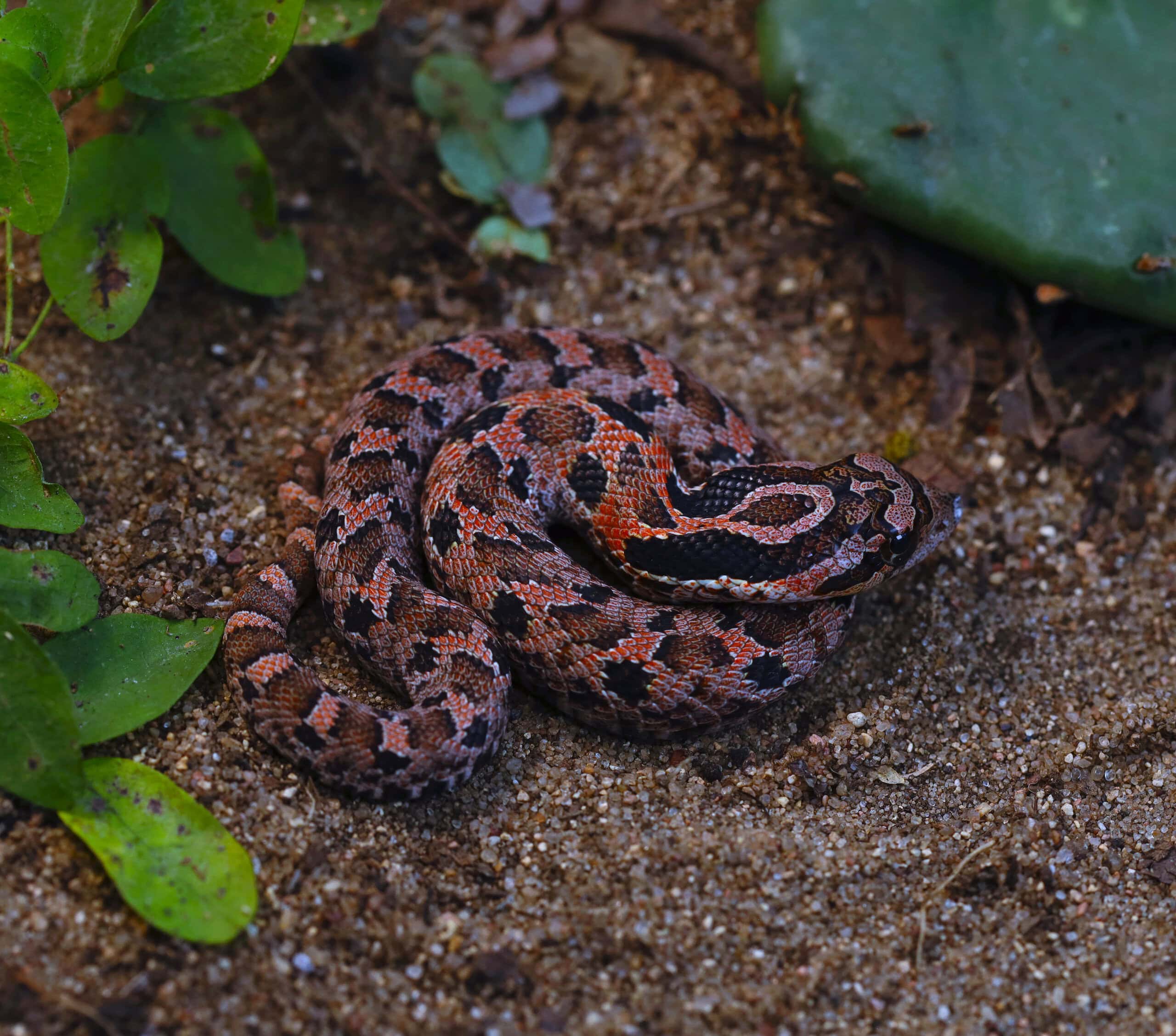
Eastern hognose colors are highly variable, with some snakes being shades of red with black blotches.
5. Grey-Banded Kingsnake
Because they have adapted and evolved to resemble coral snakes, many species of the non-venomous kingsnake are red and black. That includes the grey-banded kingsnake (Lampropeltis alterna), which you may also know as the alterna or the Davis Mountain king snake. The grey-banded kingsnake is a medium-to-large-sized snake. They can grow up to 48 inches. Their body is mainly grey with wide patches of red and thin black bands.
While most snakes on this list so far have been found in the southeast, the grey-banded kingsnake favors rocky desert areas. These snakes inhabit the canyons and limestone ridges of the Chihuahuan Desert in Texas, New Mexico, and northern Mexico. Although these snakes are common in the region, you may never see one due to their secretive, nocturnal lifestyle.
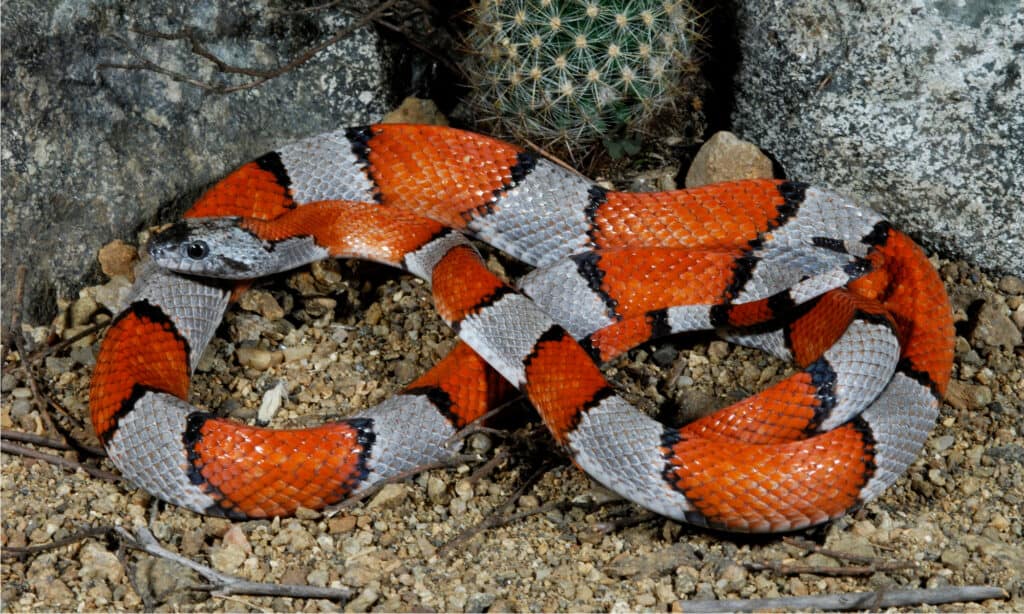
The grey-banded kingsnake is found in the southwestern U.S. and northern Mexico.
©Breck P. Kent/Shutterstock.com
6. Ground Snake
Did you know one of the most common nicknames for the western ground snake (Sonora semiannulata) is “variable ground snake?” This is due to this snake’s ability to develop a variety of different morphs. They can be grey, brown, red, orange, olive, or light tan. They can be solid colors or have stripes or black bands. However, one of the most common morphs is a light tan with black bands and red blotches on top.
The western ground snake is found in the western U.S. and northern Mexico. Because they are relatively small, only measuring between 8 and 19 inches, their diet mainly consists of small arthropods. This includes crickets, centipedes, and spiders, among others. They favor arid and semiarid habitats such as scrublands, deserts, grasslands, and rocky hills. They live most of their lives in underground burrows.
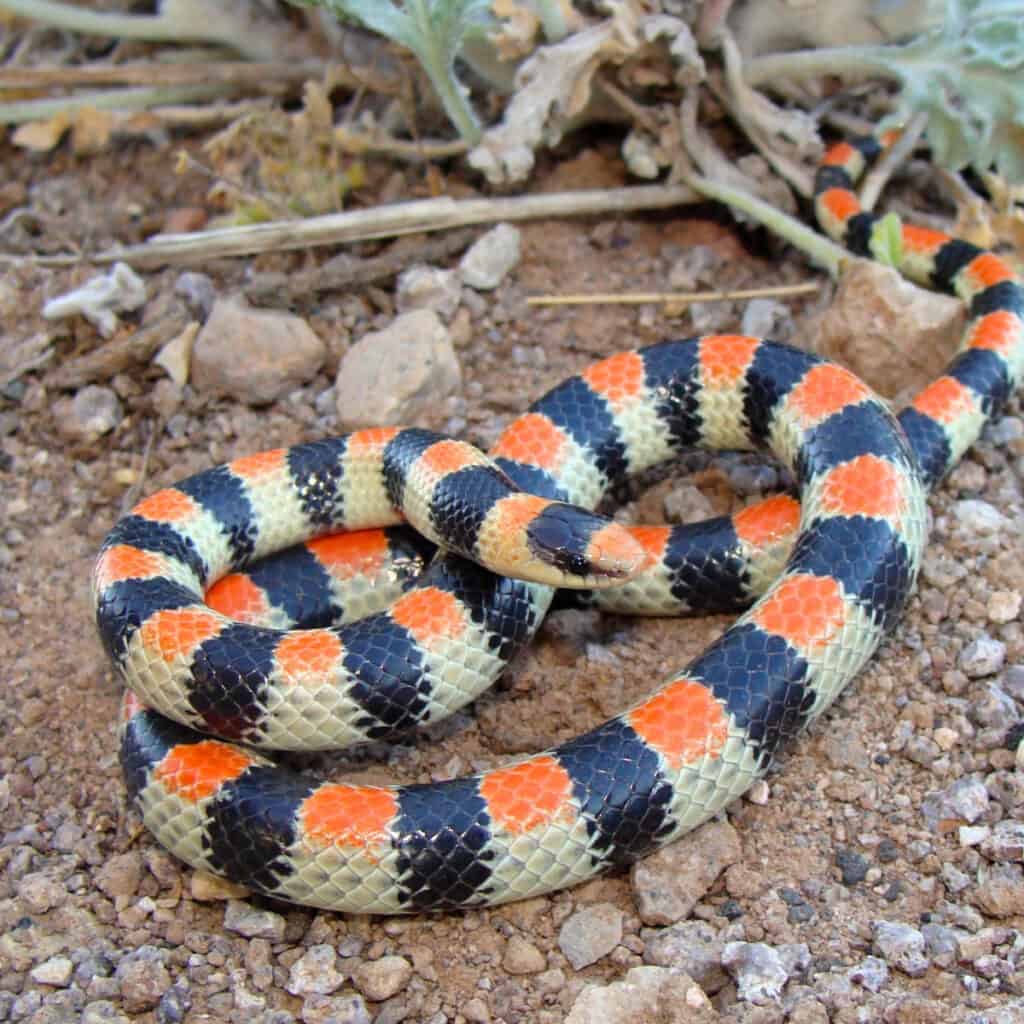
The western ground snake is a small light tan, black, and red snake that lives in burrows underground.
©Matt Jeppson/Shutterstock.com
7. Mud Snake
The mud snake (Farancia abacura) is a large, semi-aquatic snake that calls the southeastern U.S. home. Adults typically range from 40 to 54 inches in length, with female mud snakes being larger than males. The largest mud snake on record is around 80 inches in length. The dorsal side of the mud snake is completely black and glossy. Its underside, however, is a striking red with black accents. This black and red snake can also be identified by the short spine on its tail.
As a semi-aquatic snake, you won’t find the mud snake too far from a freshwater source. They prefer to live in the mud near streams, rivers, and swamps. Some scientists even consider this snake to be almost fully aquatic because of its tendency to be found in or on the edge of the water. The only time you’ll find it on land is during hibernation, the breeding season, and droughts.
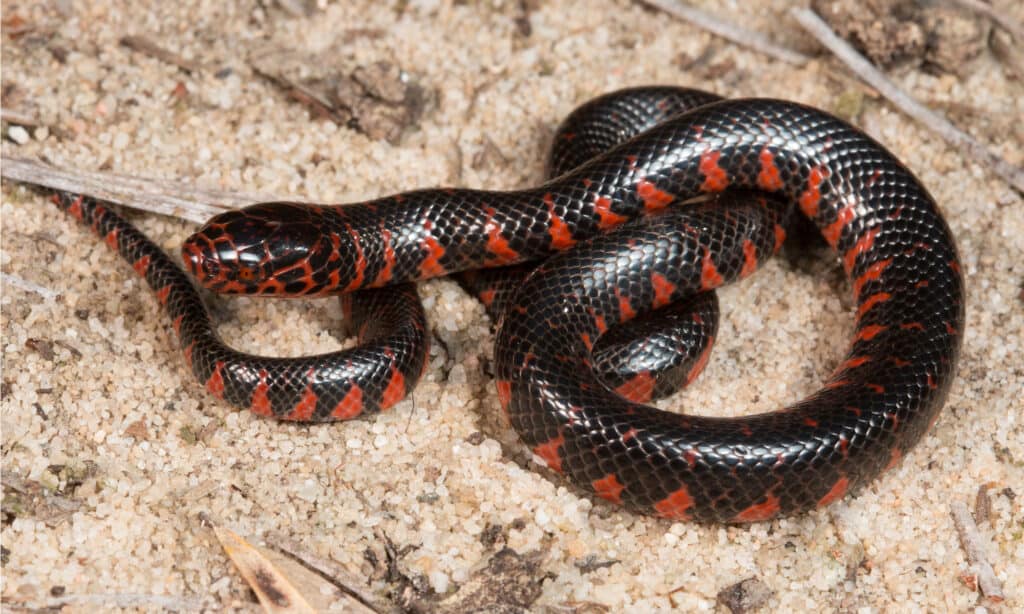
The black and red mud snake is semi-aquatic and can grow up to 54 inches long.
©Nathan A Shepard/Shutterstock.com
8. Pygmy Rattlesnake
The pygmy rattlesnake (Sistrurus miliarius) is a species of pit viper found primarily in the southeastern United States. There are three subspecies, including the dusky pygmy rattlesnake (S. m. barbouri), Carolina pygmy rattlesnake (S. m. miliarius), and the western pygmy rattlesnake (S. m. streckeri). They prefer areas near swamps or marshes, as well as sandhills, flatwoods, and mixed scrub oak forests.
The pygmy rattlesnake is a fairly small species, especially for such a venomous snake. Adults grow to be anywhere from 16 to 24 inches long, with the longest on record being around 31 inches long. Their bodies are mainly white or grey. However, they have a striking pattern of black and red spots on their dorsal side.
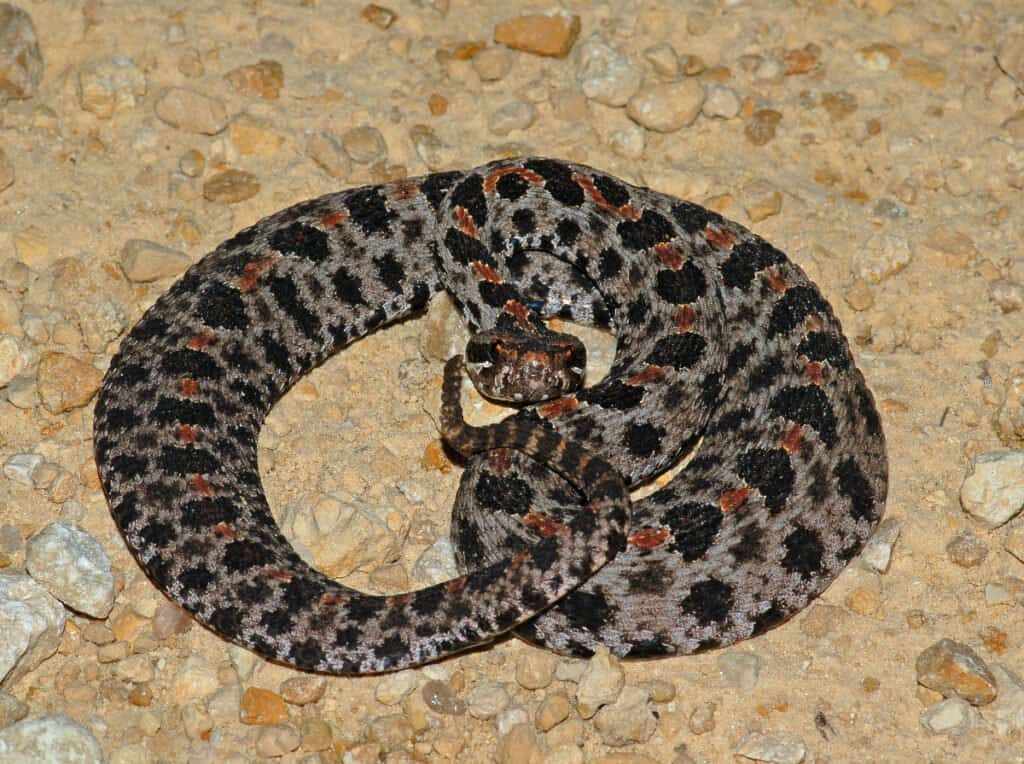
The pygmy rattlesnake is one of the smaller black and red snakes but it has dangerous venom.
©Gerald A. DeBoer/Shutterstock.com
9. Rainbow Snake
The rainbow snake, or eel moccasin (Farancia erytrogramma), is a beautiful species of aquatic snake. They’re fairly rare and can only be found in the coastal plains of the southeastern United States. While there were two different subspecies, the common rainbow snake (F. e. erytrogramma) and the southern Florida rainbow snake (F. e. seminola), the latter is considered extinct as of 2011.
Between their rarity, aquatic nature, and secretive behaviors, you may never see a rainbow snake, even if you share their habitat. However, if you happen to see one, you’ll notice that it boasts a beautiful scale pattern. Their body is mainly black, with a red and yellow stripe running down the length of their body. These snakes measure 36-66 inches long, with some individuals reaching up to 6 feet.
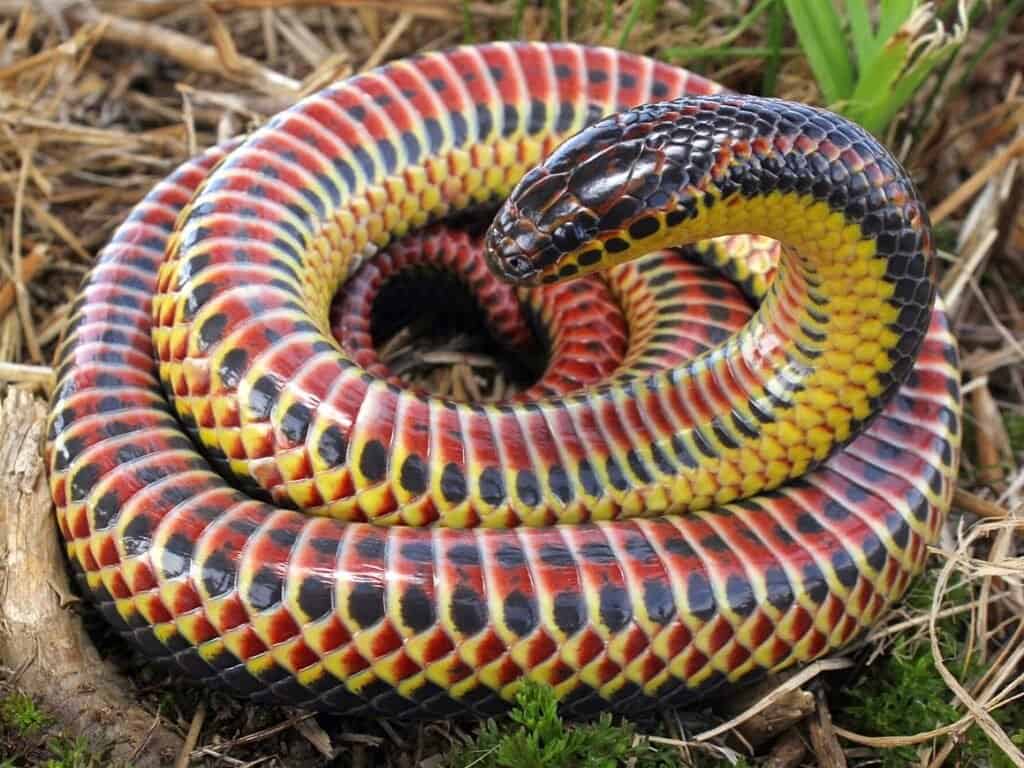
The rainbow snake is a beautiful aquatic snake that has a black, red, and yellow color pattern.
10. Red-Bellied Snake
Red-bellied snakes (Storeria occipitomaculata), also called redbelly snakes, are a common black and red snake species in the eastern half of the U.S. and southeastern Canada. There are three different subspecies, including the Florida redbelly snake (S. o. obscura), Northern redbelly snake (S. o. occipitomaculata), and the Black Hills redbelly snake (S. o. pahasapae).
This species is almost completely harmless to humans. They’re non-venomous as well as quite small, only growing to be between 4 and 10 inches long as adults. They have brown or black dorsal sides with bright red bellies. In warmer climates, the shy red-bellied snake prefers to live in woodland areas, either under leaves or fallen logs. Because they are non-venomous and small, their diet is made up of relatively easy prey like insects, slugs and snails, and salamanders.
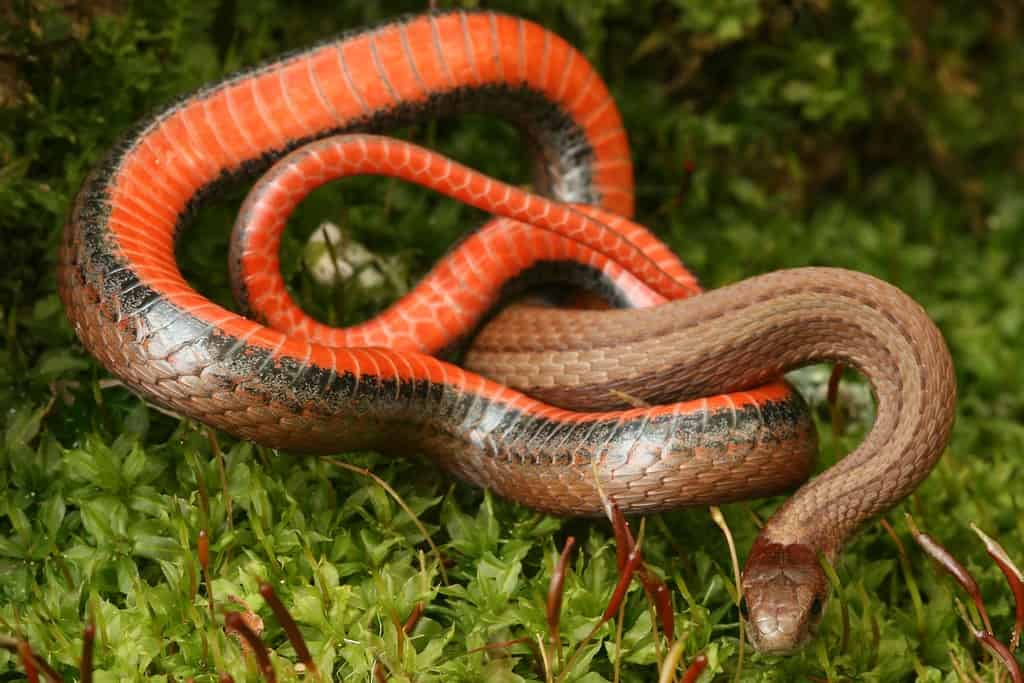
Red-bellied snakes are related to Dekay’s brown snakes.
©Kevin Collison/Shutterstock.com
11. Ring-Necked Snake
The ring-necked snake (Diadophis punctatus) is a harmless snake to humans. While they do have rear-facing fangs and a mild venom, it is specifically for hunting small animals and protection. These snakes measure 10 to 15 inches in length. They favor damp woodlands, grasslands, and rocky hillsides. They can be found hiding beneath loose tree bark, rotting logs, or flat rocks.
Ring-necked snakes derive their name from the ring of yellowish-orange around their neck. This can be an open or closed ring, depending on the subspecies. Typically, they have dark brown to black bodies and red, yellow, or orange bellies.
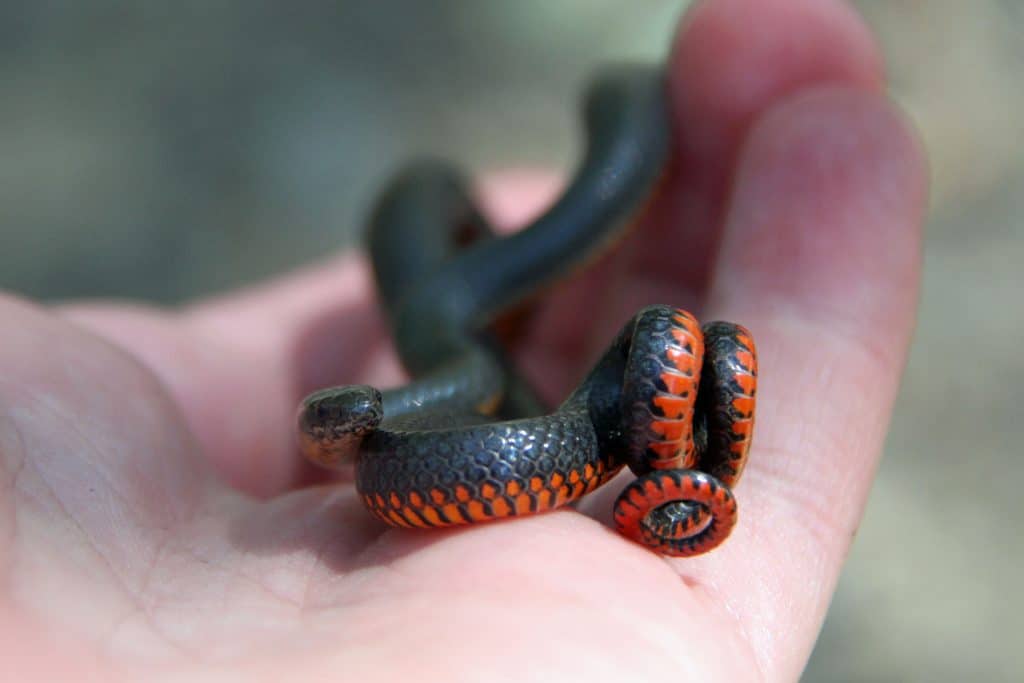
Ring-necked snakes have yellowish rings around their necks and red, yellow, or orange bellies.
12. Sharp-Tailed Snake
The sharp-tailed snake (Contia tenuis) gets its name from the sharp spine on its tail, which is the tip of its last vertebra. While there is no venom in this spine, the sharp-tailed snake can use it to help hold its prey steady when hunting. It can seem intimidating, but it’s harmless to humans.
The sharp-tailed snake is common along the western coast of California up to British Columbia, Canada. As an adult, they measure between 12 and 18 inches long. Their backs are usually greyish-brown or brick-red, while their bellies have black and white or cream-colored bars. They favor habitats near water, including damp forests, woodlands, and grasslands.
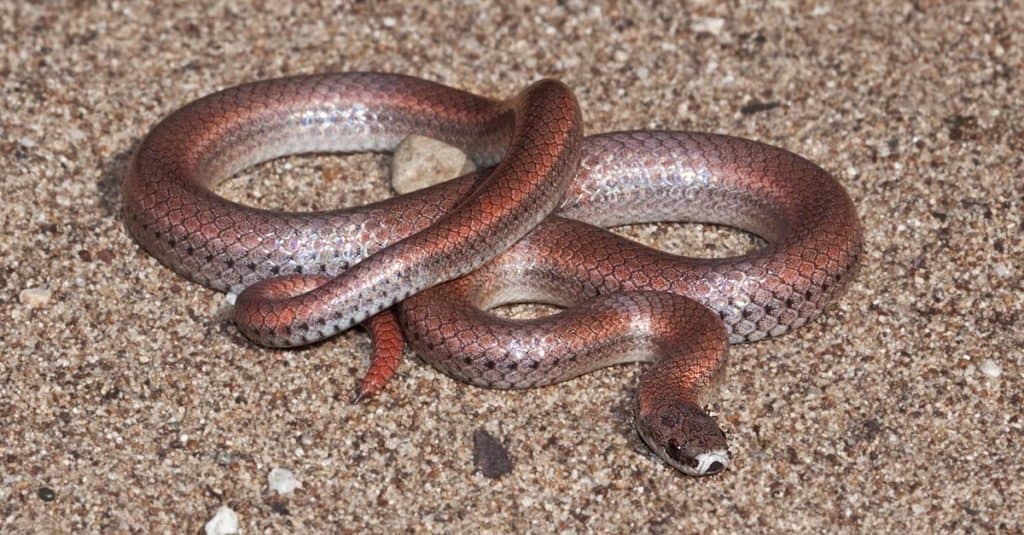
Sharp-tailed snakes have sharp spines on the tips of their tails.
13. Sonoran Coral Snake
Also known as the western or Arizona coral snake, the Sonoran coral snake (Micruroides euryxanthus) is a venomous species found in central and southern Arizona, parts of New Mexico, and northwestern Mexico. Like other species of the coral snake, this small- to medium-sized snake has black, red, and yellow rings. The black and red rings are of equal size, while the yellow rings are smaller. However, the yellow rings of this species are larger and paler than those of the eastern coral snake.
The Sonoran coral snake is nocturnal and spends much of its time underground. This makes encounters uncommon compared to other venomous species, such as rattlesnakes or even other types of coral snakes. They grow up to 24 inches long. These snakes favor dry deserts, rocky hillsides, and grasslands.
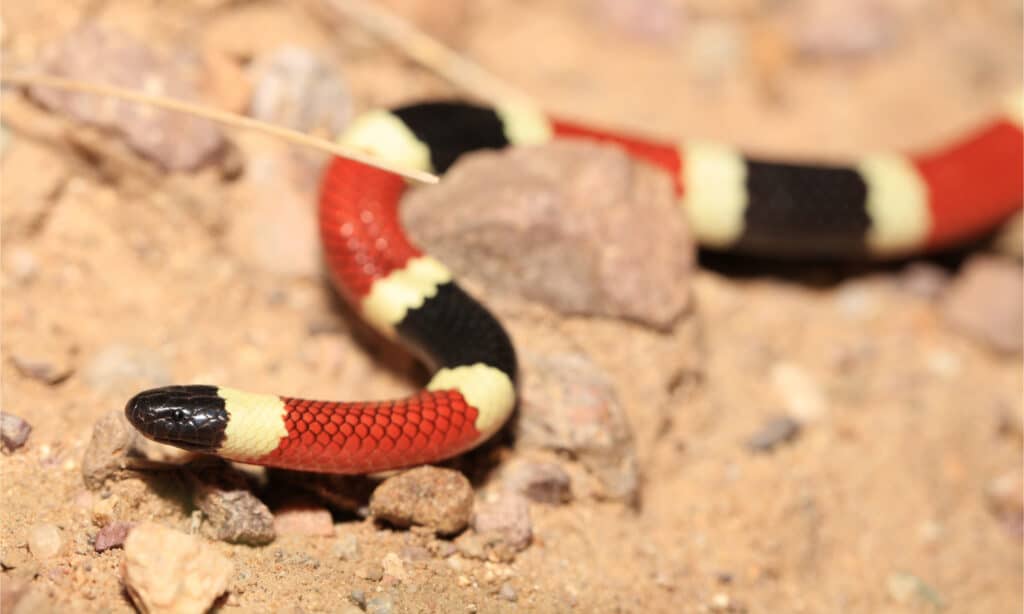
The extremely venomous Sonoran coral snake is a black and red snake that prefers to be underground.
©Alexander Wong/Shutterstock.com
14. Tamaulipan Milk Snake
The Tamaulipan milk snake, or Mexican milk snake (Lampropeltis annulata), is a species of kingsnake. Although they closely resemble venomous coral snakes for protection, they are completely non-venomous. Tamaulipan milk snakes are found in southeastern Texas and northern Mexico. These snakes are red with black and light yellow or cream-colored bands.
Adults measure about 24 to 30 inches in length. They prefer semi-arid brushlands, open prairies, and rocky fields where they hide in underground burrows, in rock crevices, or under logs and other debris. They are nocturnal, so they are rarely seen. Due to their docile temperaments, these snakes are a popular beginner pet.
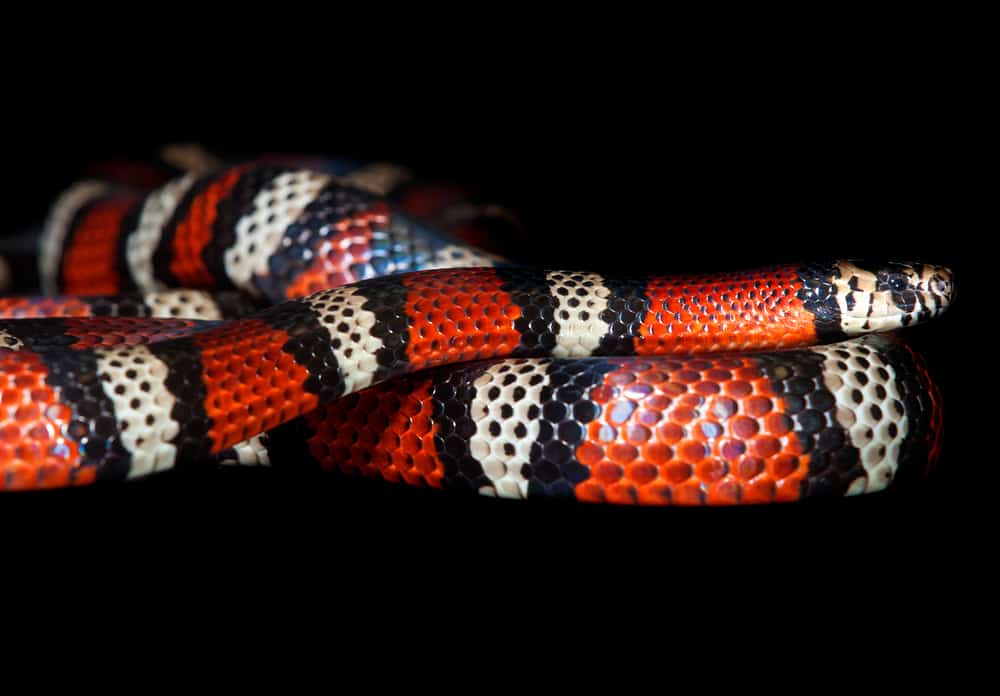
The milk snake is a non-venomous black and red snake related to the kingsnake.
©Guillermo Ossa/Shutterstock.com