Quick Take
- One California rattlesnake can reach 18 mph, and that is not even the most alarming thing about it. Sidewinder speed facts →
- Not all of California's venomous rattlesnakes look alike, and knowing the difference could matter more than you think. Species differences explained →
- California reports hundreds of rattlesnake bites a year, yet experts say fear of being bitten is largely misplaced, and the reasons why may surprise you. Bite statistics and safety →
- One species was only recently proven to be its own snake entirely, and it lives somewhere you might not expect. Meet the Panamint rattlesnake →
Of the nearly 50 different species of snakes in California, nine of them (including subspecies) are dangerously venomous. All nine venomous snakes in California are rattlesnakes. Rattlesnakes are pit vipers in the subfamily (Crotalinae), which is defined by heat-sensing pits located between their eyes and nostrils. They all have triangular heads, vertical, cat-like eyes, and a rattle at the end of their tails to warn both predators and humans to stay away. Learn more about the rattlesnakes of California, including how to identify them and where they live in the state.
Western Rattlesnake Subspecies
Modern DNA testing has determined that the western rattlesnake (Crotalus oreganus) has three subspecies in California: the northern Pacific rattlesnake (C. o. oreganus), Great Basin rattlesnake (C. o. lutosus), and southern Pacific rattlesnake (C. o. helleri). The northern Pacific rattlesnake has the largest range of all the rattlesnakes in California, occurring from the northern border of the state down to the Los Padres National Forest area. The Great Basin rattlesnake is found in the northern Sierra Nevada, while the Southern Pacific rattlesnake is found along the coast of Southern California.
These heavy-bodied rattlesnakes are between 1.5 to 4 feet long, depending on subspecies. Their colors tend to match their environment and range, so they are shades of brown, reddish-brown, or tan with rounded, darker brown blotches down their backs. Their venom is more potent than most rattlesnakes, but they are not aggressive. They can be found in a variety of desert habitats, but are also common near water.
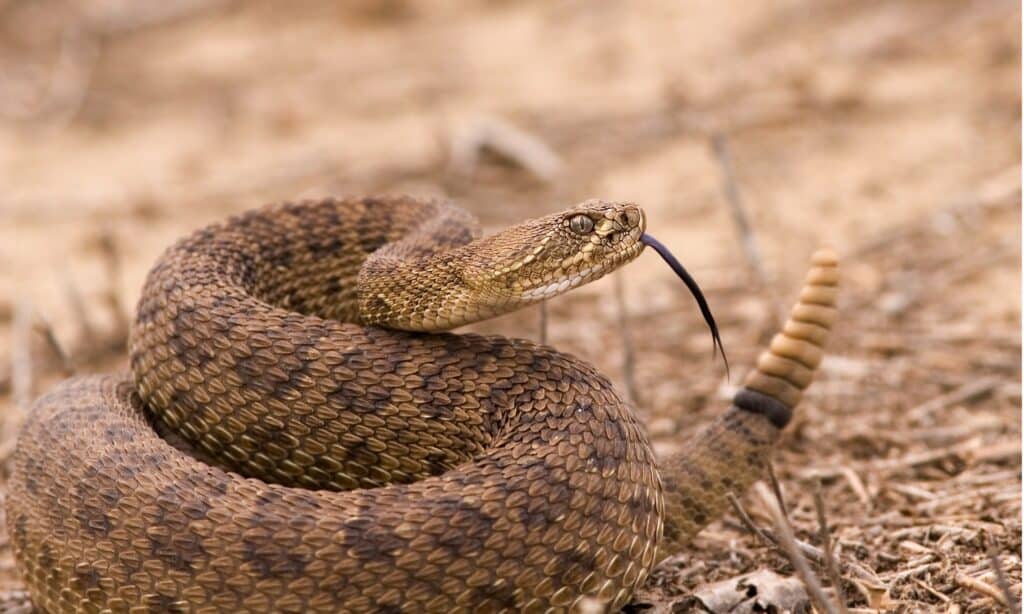
The western rattlesnake is one of the few rattlesnakes you can find throughout the state.
©iStock.com/SteveMcsweeny
2) Western Diamondback Rattlesnake
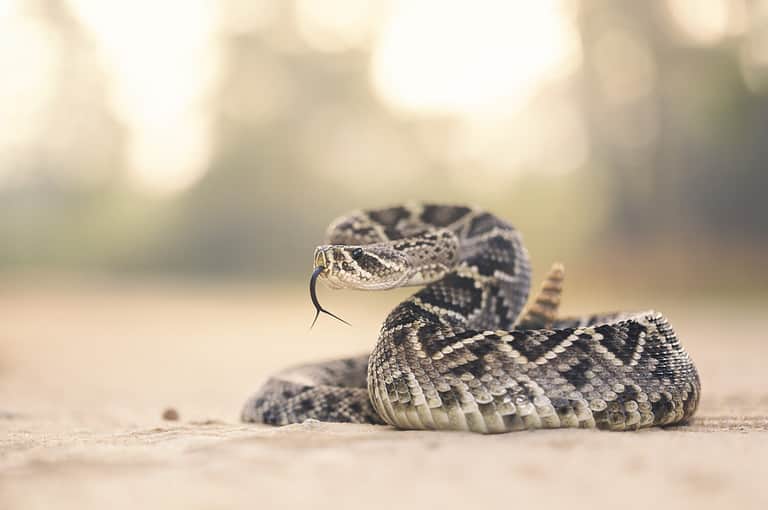
The western diamondback (Crotalus atrox) has a diamond design along the length of its body. It delivers one of the most potent bites because it can inject more venom with its large fangs. This snake is relatively rare in the state. It favors a variety of desert habitats, but it is only seen in the far southeastern part of California. These stocky snakes are around 3-5 feet long. They can be white, grey-brown, yellowish, brownish-pink, or reddish, with dark diamond or oval-shaped blotches down the center of the back and black-and-white bands at the tail. The western diamondback is considered one of the most dangerous snakes in North America.
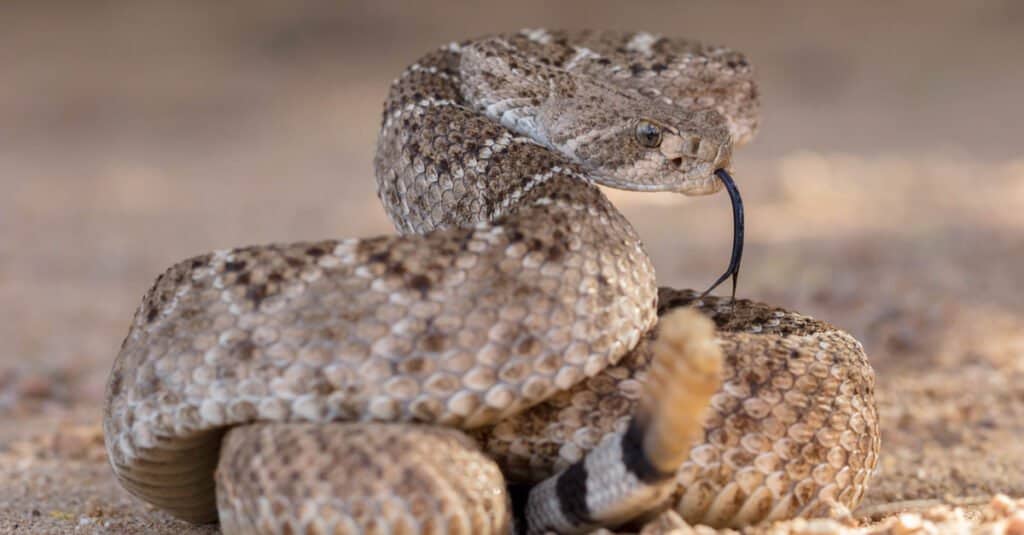
The western diamondback rattlesnake is one of the most dangerous snakes in North America.
©Alexander Wong/Shutterstock.com
3) Red Diamond Rattlesnake
The red diamond rattlesnake (Crotalus ruber) can be found in rocky areas with dense vegetation in the far southwestern corner of the state and Baja California. Their pattern looks similar to the western diamondback, but these snakes are a reddish-brown or pinkish-tan color. White lines form the diamond pattern, with the diamonds being slightly darker than their background color. Like the western diamondback, the last few inches of their tail before the rattle have zebra-like black and white stripes. Most snakes are 2.5 to 3.5 feet long, but some large specimens have measured over 5 feet in length.
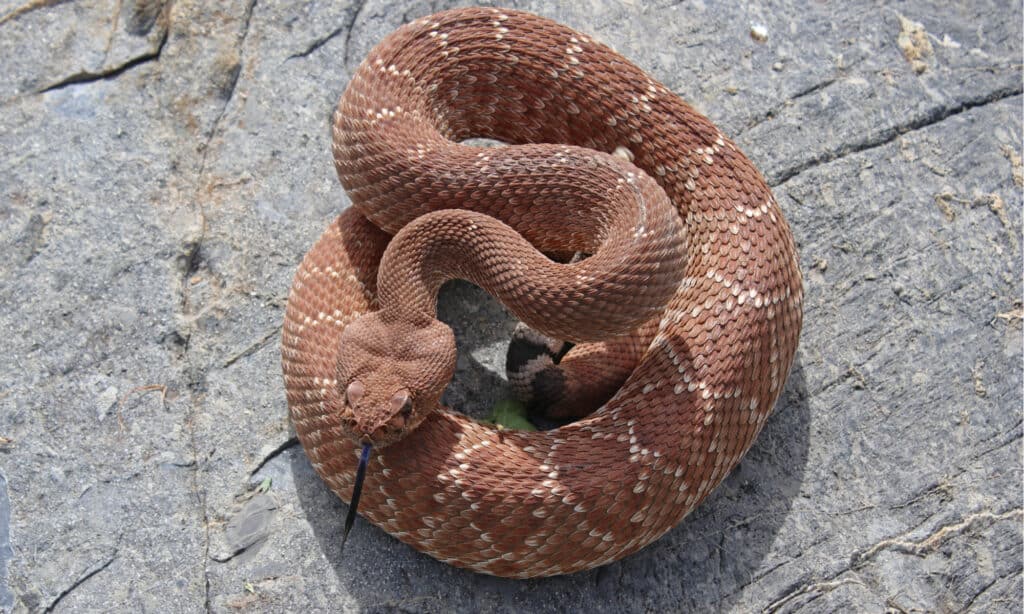
Red diamond rattlesnakes are a reddish-brown color with a black and white striped tail.
©Creeping Things/Shutterstock.com
4) Southwestern Speckled Rattlesnake
The southwestern speckled rattlesnake (Crotalus pyrrhus) is a heavy-bodied snake that can reach 2-3.5 feet long. It is widely distributed throughout the Colorado, Mojave, and Sonoran deserts. This snake prefers higher elevations and can be found in canyons, on steep hillsides, or near other rocky areas with abundant vegetation. They can have a wide variety of background colors, including shades of brown, pink, orange, yellow, grey, and off-white. They get their name from the dark and light speckles that form indistinct patterns on their bodies. This species also has sharply contrasting dark-and-white tail bands with a black band just above its rattle.
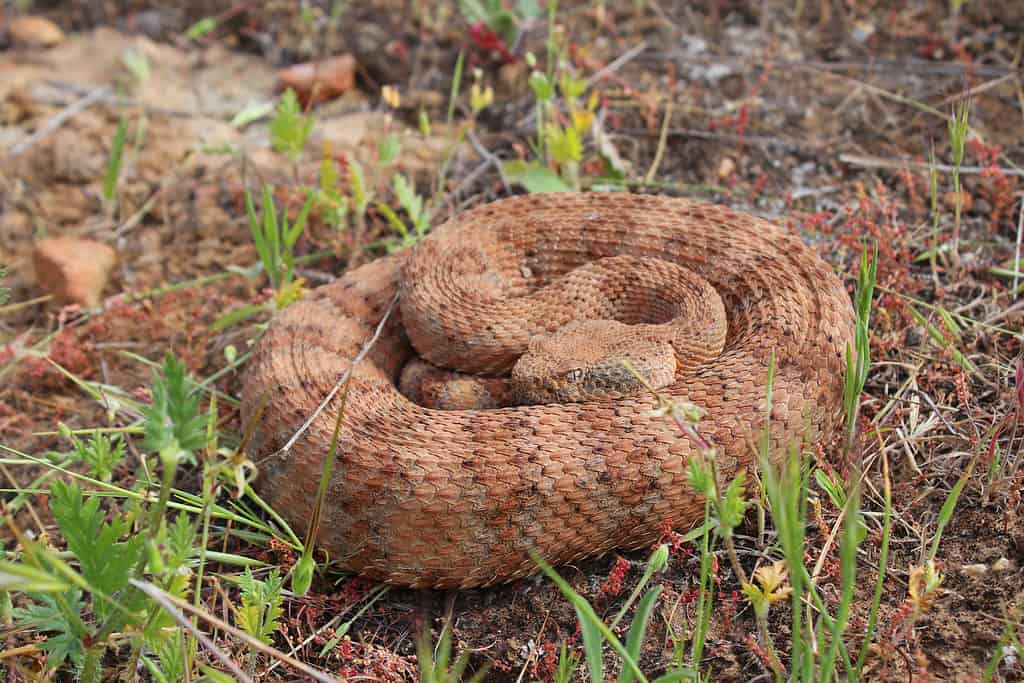
The southwestern speckled rattlesnake inhabits the Colorado, Mojave, and Sonoran deserts.
©Creeping Things/Shutterstock.com
5) Mojave Rattlesnake
Mojave rattlesnakes (Crotalus scutulatus) are robust snakes that average around 2 to 4 feet in length. In California, they are only in the Mojave Desert in the southeastern part of the state. They occur throughout the desert, but they favor flat, scrub habitats with few rocks. Mojave rattlesnakes tend to be olive-green or greenish-grey, often referred to as Mojave green, but they may also be yellowish, grey, or tan, depending on their specific habitat. They have dark, diamond or oval-shaped blotches down their backs and black and white bands at the tail just before the rattle. Since fewer people live in or visit the desert, there are fewer human-Mojave rattlesnake conflicts.
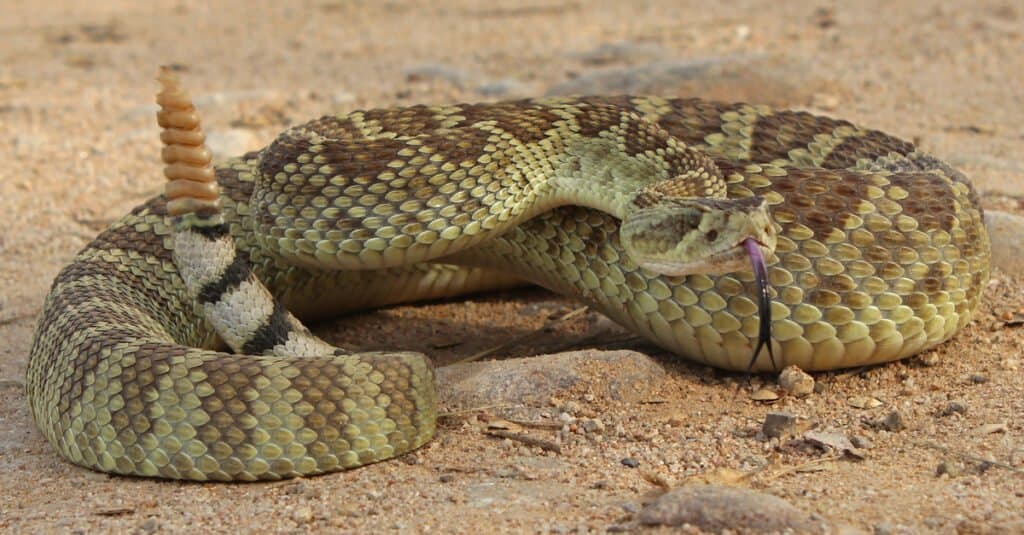
Mojave rattlesnakes are typically 2-4 feet long and are large-bodied snakes.
©Creeping Things/Shutterstock.com
6) Panamint Rattlesnake
Panamint rattlesnakes (Crotalus stephensi) were once thought to be a subspecies of speckled rattlesnake, but DNA evidence proved that these snakes are a different species. They are typically brown, yellowish, pink, orange, grey, off-white, or tan with buff, brown, grey, or reddish-brown blotches and crossbands. These snakes prefer rocky areas and slopes in inland desert areas of Southern California. They grow to be 2-4.5 feet long. The snakes get their name from Panamint City, an old town that is now a ghost town in the Panamint Mountains of Death Valley.
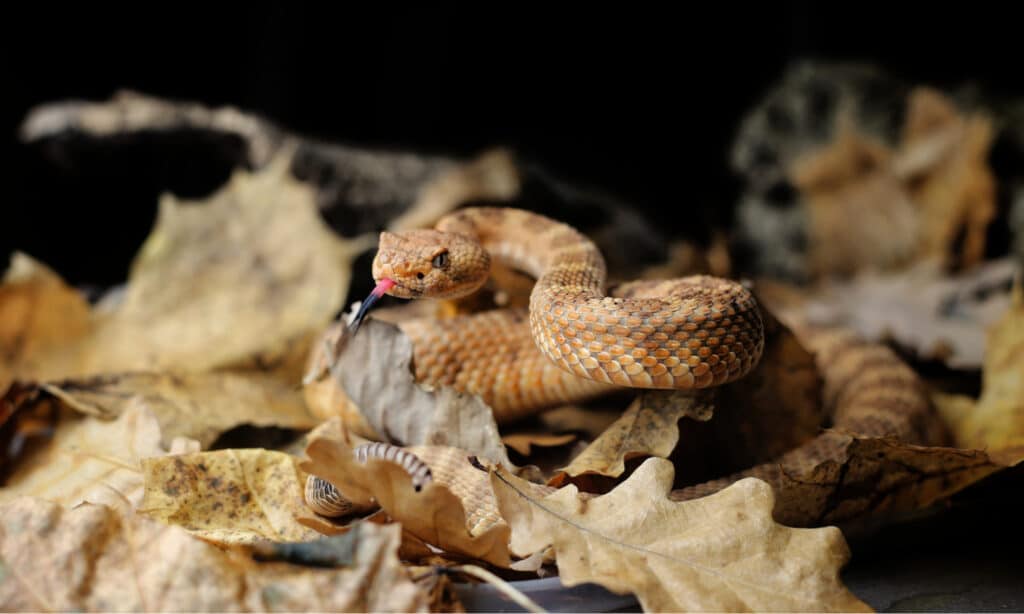
Panamint rattlesnakes get their name from Panamint City, now a ghost town in the Panamint Mountains.
©Marina Kehl/Shutterstock.com
7) Sidewinder
The sidewinder (Crotalus cerastes) slithers from side to side in an S-motion, and it can move very quickly. Its unique propulsion allows it to reach speeds of up to 18 miles per hour. Fortunately, sidewinders are not aggressive and do not chase people. They are a bit smaller than other rattlesnakes at around 2-2.5 feet, and although they are venomous, their bites only deliver a small amount of venom. Depending on the surrounding soil, these snakes may be buff, yellowish-brown, cream, pink, or an ashy grey covered in dark blotches along the back. In California, you will find them in flat, sandy habitats in the Colorado and Mojave deserts and the southern Great Basin.
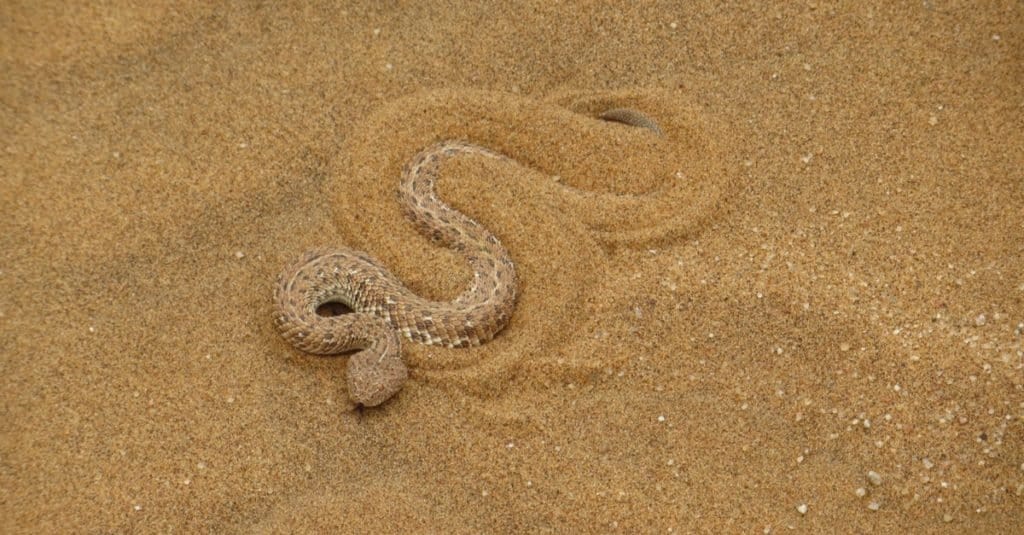
Sidewinders move through the sand in an S-motion and can slither up to 18 mph.
©Roger de Montfort/Shutterstock.com
Snake Bites in California
The California Poison Control System reports an average of 300 cases in a year, with more incidents being reported by emergency rooms and medical facilities. In the U.S., there is an average of 7,000-8,000 venomous snake bites per year.
As noted above, most of the rattlesnakes live in remote areas such as deserts and mountains, so the number of human-rattlesnake encounters is relatively small. An article from the Natural History Museum of Los Angeles stated that fear of being bitten by snakes is misplaced when we look at the statistics. North Carolina actually has the highest snake-bite rate in the country.
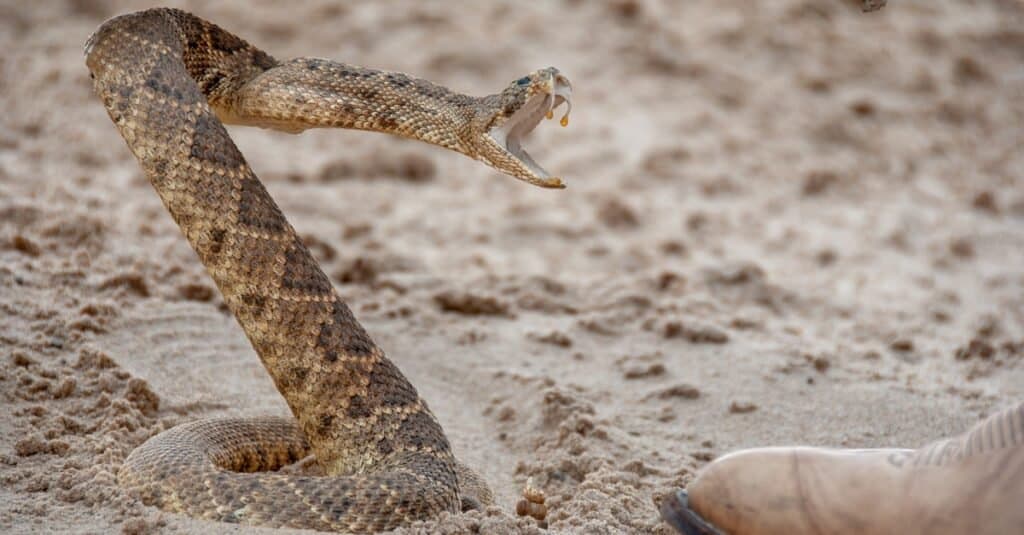
With proper medical treatment, including antivenom, bites are usually not serious.
©Maria Dryfhout/Shutterstock.com
Here are a few tips to keep safe if you are in an area with venomous snakes:
- Wear boots and long pants.
- Stay on marked trails.
- If you come across a snake, do not handle it. Walk away slowly.
- Don’t hike alone, and stay on the trails.
- Don’t pick up rocks, logs, or firewood without looking for snakes first. Remember, they can be camouflaged.
- Teach children to leave snakes alone and not to pick them up.
If you are bitten by a snake, you should seek immediate medical attention. You may not know what kind of snake it was, and it is safest to get help. Do not try to catch the snake to help identify it. If possible, take a photo or memorize the snake’s color and pattern to help medical staff identify it. Just leave the area and find the closest medical facility.