Quick Take
- One snake's strike is over before you can blink, and its name says it all.
- A fight between a tiny mammal and a giant venomous snake could go either way, and the article explains why.
- A bird of prey and a snake once settled a fight in the most tragic way possible.
- The scientific name of one racer is misleading, and its real hunting method may surprise you.
Throughout their evolution, snakes adapted to diverse ecological niches by developing specialized trade-offs between rapid locomotion and explosive strike speeds. Active hunters that roam open terrain developed slender, lightweight bodies and powerful musculature to achieve high speeds for pursuing prey and escaping predators. Ambush predators like vipers and pythons evolved heavy, camouflaged bodies that sacrifice swift travel in favor of extraordinary reflexes and spring-loaded musculature capable of launching a strike in a fraction of a second. Continue reading to learn about six snakes that are fast in one way or the other.
Black Mamba — Africa’s Fastest-Moving Snake
Ground Speed: 12 Miles Per Hour
If a speed of 12 miles per hour doesn’t sound too fast, imagine a 14-foot-long black mamba (Dendroaspis polylepis) barreling toward you at that speed. Being large and highly venomous leaves these snakes with few natural predators, despite inhabiting environments ranging from grasslands to forests.
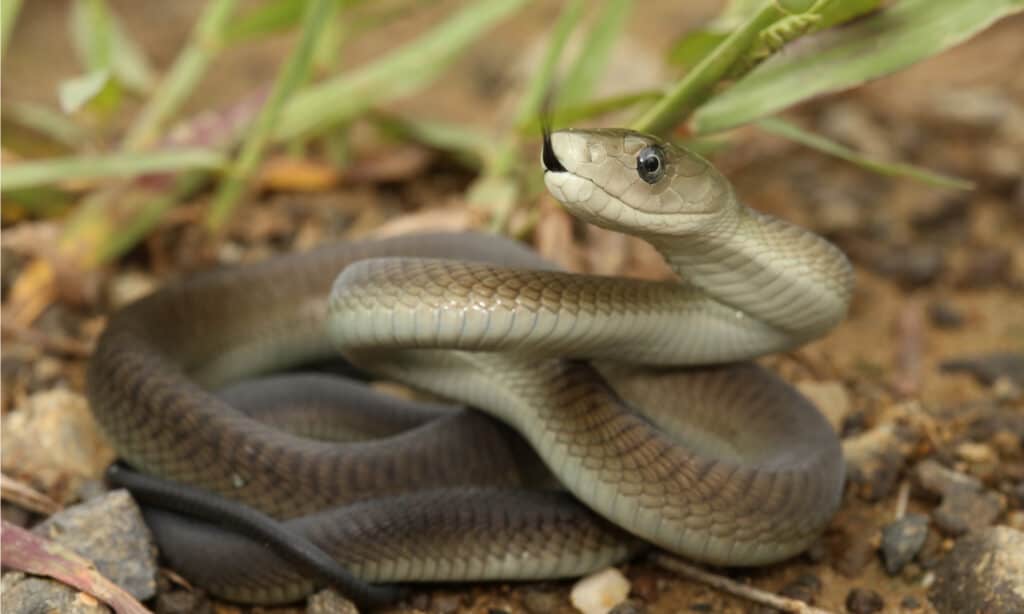
Black mamba venom can kill an adult human in as little as 30 minutes.
©NickEvansKZN/Shutterstock.com
As long as a black mamba can sneak up on it, prey like squirrels and mice rarely stand a chance. That’s because the black mamba combines that exceptional ground speed with a venom poisonous enough to kill a human with just two drops.
Common Death Adder — Australia’s Fastest-Striking Snake
Strike Speed: Under 150 milliseconds
The death adder (Acanthophis antarcticus) earned its name because it combines adept camouflage, highly toxic venom, and an incredibly fast bite. In just 0.15 seconds, the common death adder can inject its venom and return its jaw to the active attack position.
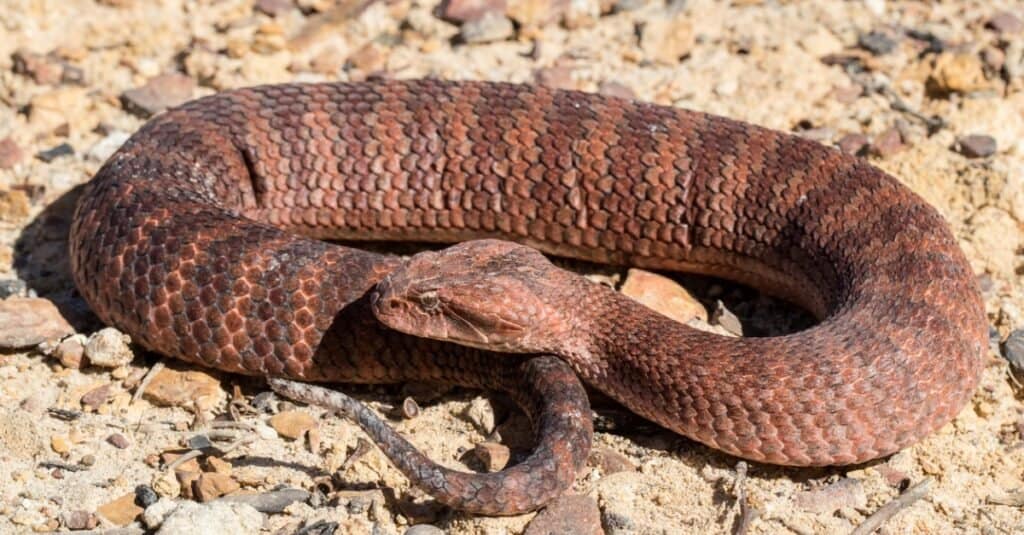
The common death adder is found across eastern and southern Australia.
©iStock.com/Ken Griffiths
Over half of venomous attacks on humans will lead to death if left untreated. Death adder habitats stretch across much of eastern and southern Australia, where their ambush tactics make them a serious threat to prey like rodents.
Ironically, it could also contribute to the low incidence of common death adder attacks on humans. Death adders have no interest in humans, and their capable skills as hunters mean people will rarely ever sneak upon them.
Coachwhip — One of the Fastest Non-Venomous Snakes
Ground Speed: Up to 4 Miles Per Hour in Bursts
The coachwhip (Masticophis flagellum) is widely recognized as the fastest non-venomous snake on land. While snake speeds are notoriously difficult to clock in the wild, coachwhips have been clocked at about 3.6 miles per hour and can reach bursts of around 4 miles per hour.
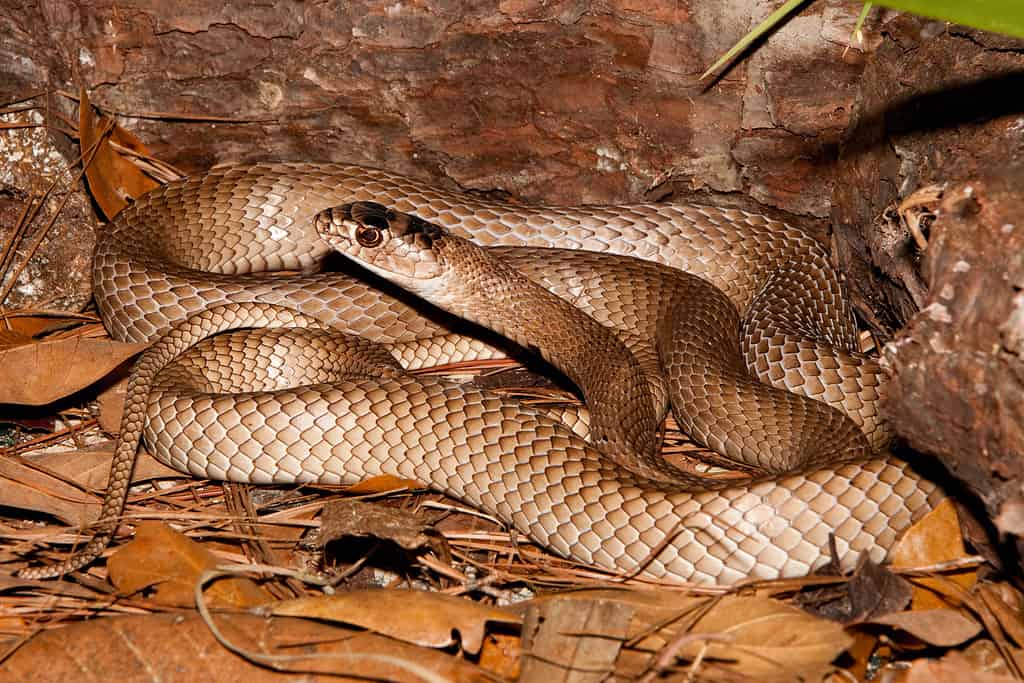
Coachwhips are distributed throughout the Southern United States.
©Jay Ondreicka/Shutterstock.com
Yellow-bellied Sea Snake — The Fastest Snake In The Water
Speed on Water: Up to 2.2 Miles Per Hour
All snakes can swim, but the yellow-bellied sea snake (Hydrophis platurus) is one of several species that have adapted to live their lives in the water. Its yellow and black pattern ensures it will stand out distinctly in the waves, but that seems to be of little consequence to this snake, which has few known predators. Yellow-bellied sea snakes are among the most widely distributed snake species, with habitats expanding across both the Pacific and the Indian Ocean.
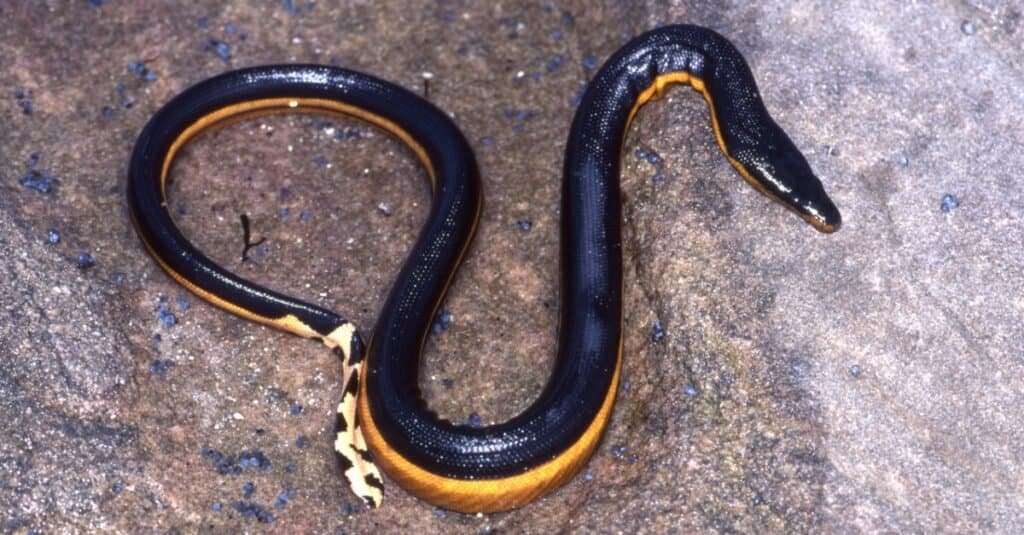
The yellow-bellied sea snake is found in all tropical oceanic waters except for the Atlantic Ocean.
©Ken Griffiths/Shutterstock.com
Still, it’s rare for humans to encounter one thanks to the deeper waters in which they prefer to swim. That’s a good thing, as sea snake poison is highly venomous. The yellow-bellied sea snake ambushes prey consisting almost entirely of fish, and they’ve adjusted to the briny waters they inhabit by drinking from lenses of freshwater that form on the ocean surface after heavy rain.
King Cobra — The Snake With The Fastest Killing Venom
Time to Kill a Human: 30 Minutes
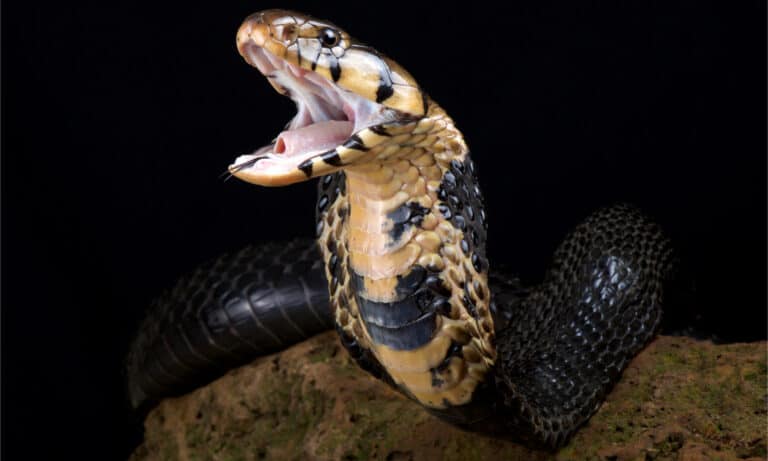
The longest venomous snake in the world, the king cobra (Ophiophagus hannah) is such a lethal killer that it’s taken to making other cobras its prey. Its venom is a unique blend of different toxins, and few animals have immunity, meaning that the king cobra has few natural enemies.
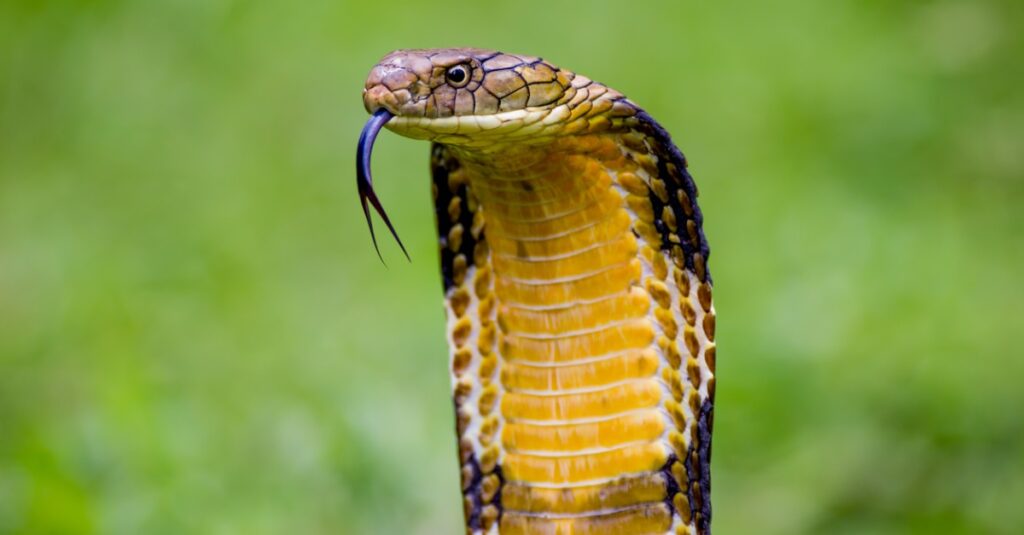
The king cobra is the longest venomous snake.
©iStock.com/takeo1775
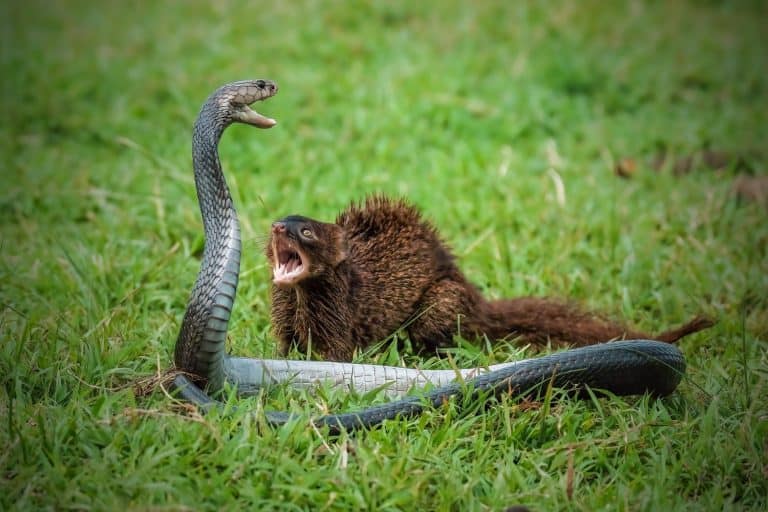
One exception is the mongoose, a feisty little mammal that’s known for facing down the king cobra. The average mongoose is typically under three feet long, tail included, while king cobras can reach a staggering length of 18 feet. The mongoose isn’t immune to cobra toxins, but it do have a resistance that allows it to stay in the fight even if it’s bitten.
Both animals are lightning-quick, and a fight on land could go either way.
Cottonmouth — One of the Fastest Strike Speeds In North America
Strike Speed: 2.98 Meters Per Second
The cottonmouth (Agkistrodon piscivorus) is an ambush predator, so being able to reach high movement speeds on land isn’t always a necessity, but a fraction of a millisecond can mean the difference between eating and not eating, or even life and death. But a fight isn’t what this snake is looking for.
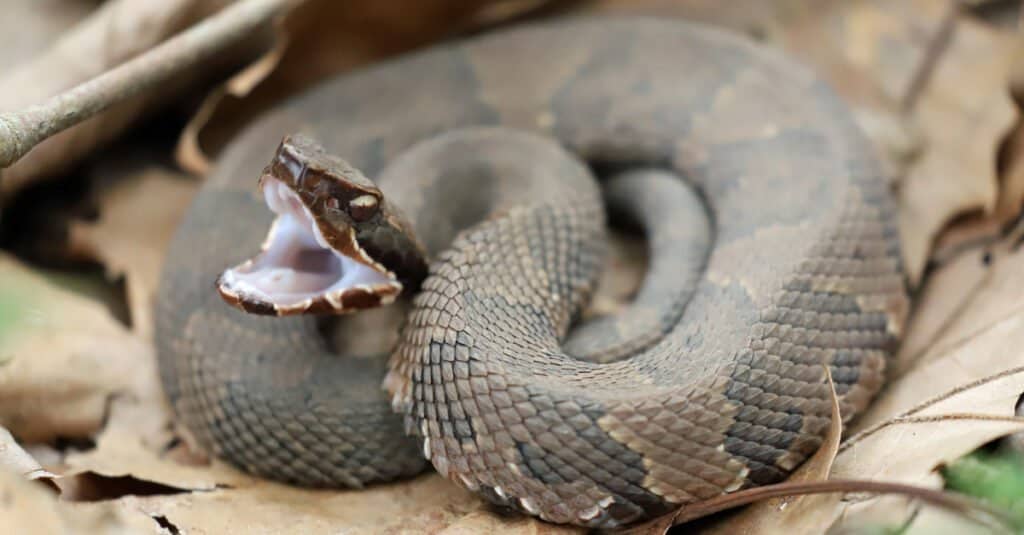
Side view of a Cottonmouth snake, ready to strike. The snake has a large spade-shaped head.
©KF2017/Shutterstock.com
Once its prey has been injected with venom, the snake will let it wander off to die and follow at its leisure. Mammalian prey can range in size from mice to rabbits.
It may have contradicted common beliefs about how venomous and nonvenomous snakes developed in tandem, but it makes sense when you consider that the constriction process can kill prey in just a matter of seconds. It’s a reminder that predators and prey are in a constant evolutionary race, often measured in fractions of a second.