
Quick Take
- Dominating Yellowstone as the largest reptile requires reaching lengths up to 72 inches without using venom.
- Relying solely on labial bars for identification creates a dangerous risk because the method is not foolproof.
- The presence of venomous predators is linked to only 2 documented bites in park history.
- Scouting the Mammoth region is necessary to locate the specific habitats where giant bullsnakes hunt.
Yellowstone National Park is one of the most famous parks in the United States, but it isn’t usually known for its reptiles. Nevertheless, there are plenty of snakes that live in the park, with some of them being quite dangerous. Today, we will take a look at the largest snake found in Yellowstone National Park and learn a little about it. Additionally, we will learn about the largest (and only) venomous snake in the park. Let’s get started!

The Largest Snake Found in Yellowstone National Park: Bullsnake (Pituophis catenifer sayi)
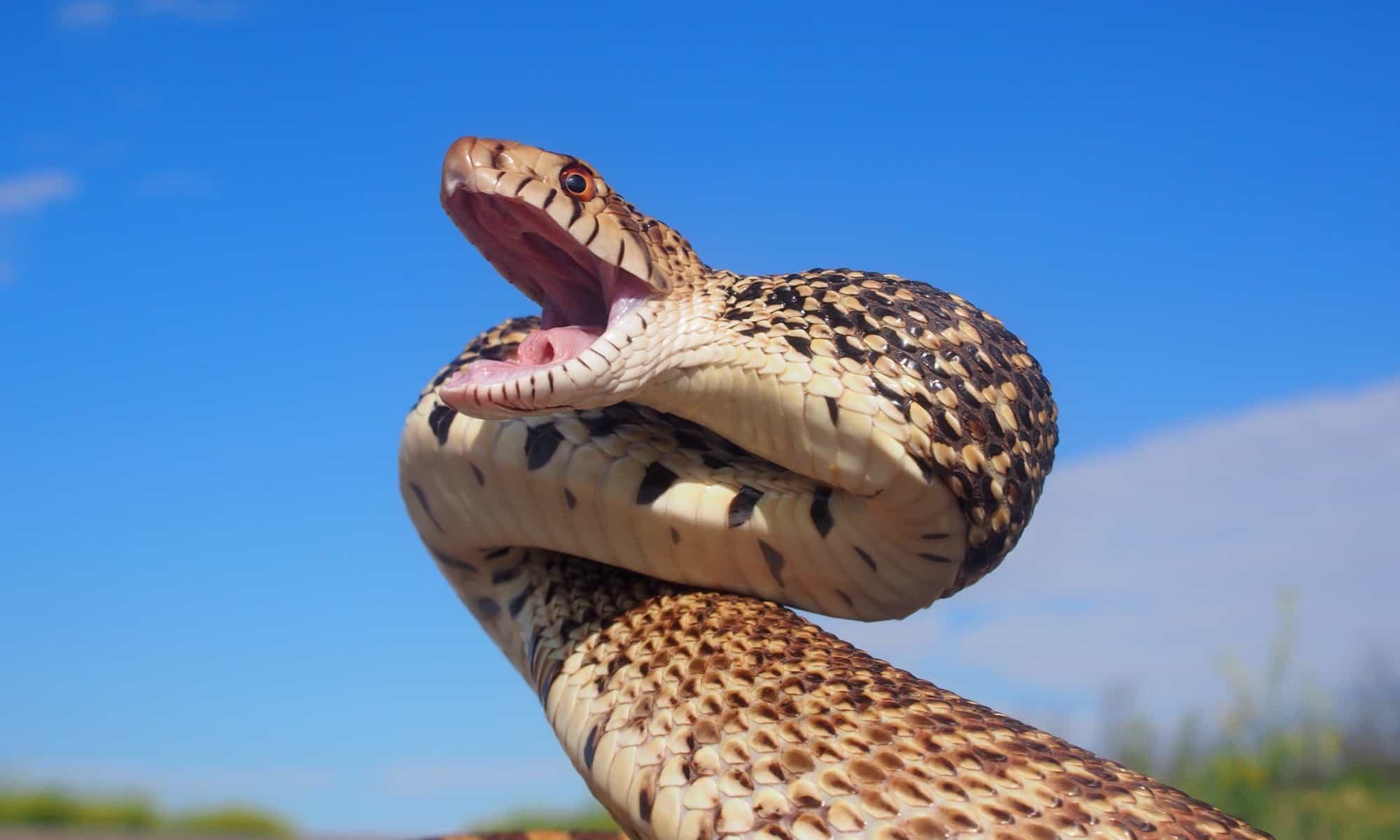
The largest snake in Yellowstone National Park is the bullsnake. They are unique in that they look similar to rattlesnakes and even mimic them in some instances. Bullsnakes are a gopher snake subspecies, a group of snakes that can be found across most of the United States. Let’s learn a bit about them.
A Complete Breakdown of the Bullsnake
Bullsnakes are the largest snakes that can be found in Yellowstone. Most individuals measure between 50-72 inches long, or nearly 6 feet. In addition to their length, bullsnakes are relatively large-bodied, around 1.5–2.5 inches in diameter at their thickest (occasionally 3 inches for very large adults).
Bullsnakes are a gopher snake subspecies but look similar to rattlesnakes.
©Greg Birkett/Shutterstock.com
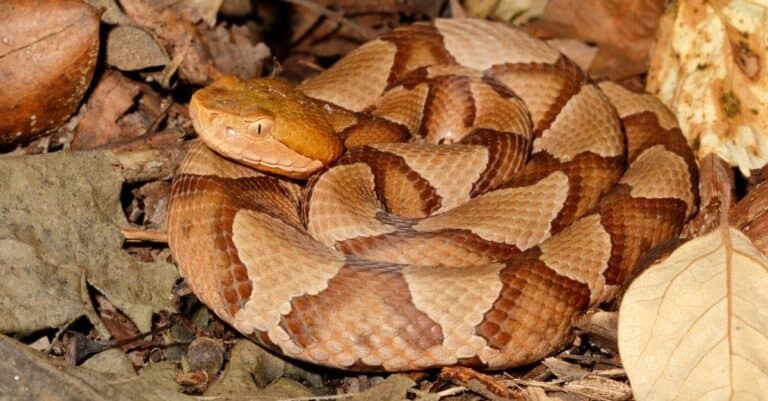
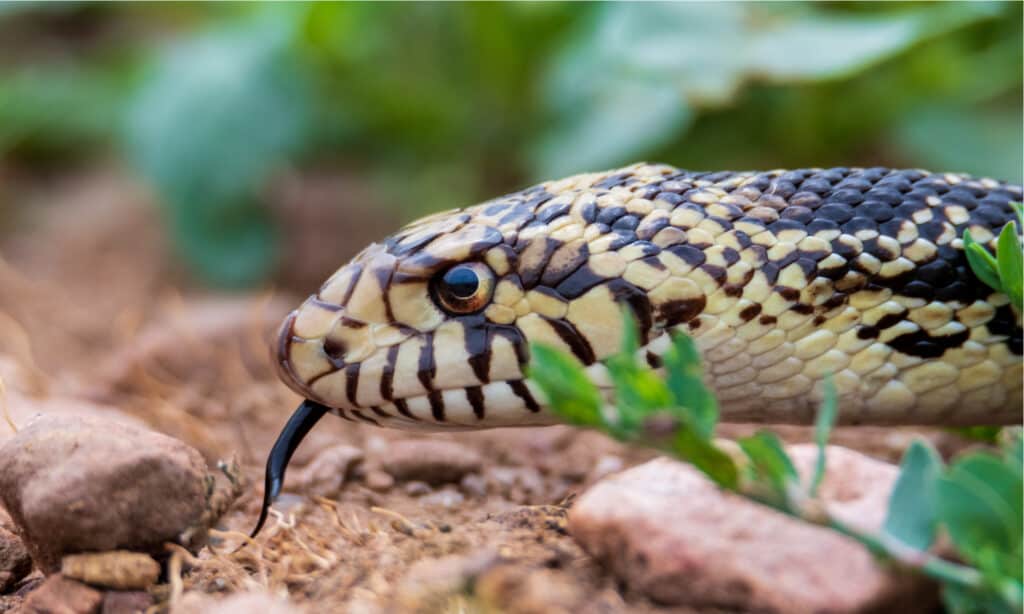
When it comes to appearance, people often confuse them with rattlesnakes, even though they aren’t venomous. They generally have black, brown, or reddish-brown blotches down their backs, usually in a square shape. The squares are usually darker near the head and tail, and the snake’s base color is yellow, making a striking pattern. These snakes have small heads and round pupils, which they flatten when threatened. These key features distinguish them from rattlesnakes (which have triangular heads and elliptical pupils). Bullsnakes have vertical bars that extend from their lower lip through their upper lip called labial bars. These bars can indicate that the snake is nonvenomous, though this method of ID isn’t fool proof. Additionally, they will shake their tails in a defensive behavior to mimic a rattlesnake, although, like other colubrids, they don’t have a true rattle.
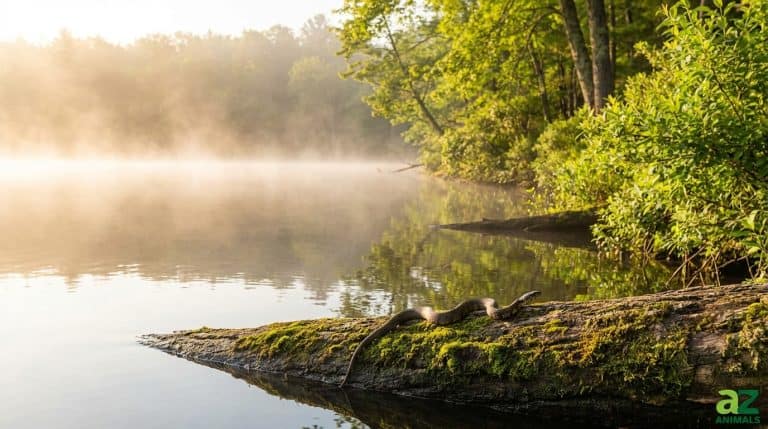
Bullsnakes are generally found in the lower elevations of the park, at up to about 6,500–7,000 ft, mainly in dry grasslands and sagebrush zones. They mostly prefer warmer areas with a dry climate, especially near open ground. An example of their prime habitat is the park’s Mammoth region. They live in small burrows, which is also where they hunt prey, hence the name “gopher snakes.”
Bullsnakes eat small mammals and subdue them using constriction, not venom. Once they bite prey, they slowly squeeze it until it dies of asphyxiation. They eat a variety of prey, including mice, moles, rats, gophers, squirrels, eggs, birds, and other reptiles and snakes.
The Largest Venomous Snake in Yellowstone National Park: Prairie Rattlesnake (Crotalus viridis)
Although the bullsnake is the largest reptile in Yellowstone, it isn’t the most dangerous. The largest and only venomous snake within the park is the prairie rattlesnake. The prairie rattlesnake is a venomous pit viper related to other rattlesnakes, copperheads, and cottonmouths. Using venom and heat-sensing pits on their snouts, pit vipers effectively hunt prey and defend themselves from predators.
A Complete Breakdown of the Prairie Rattlesnake
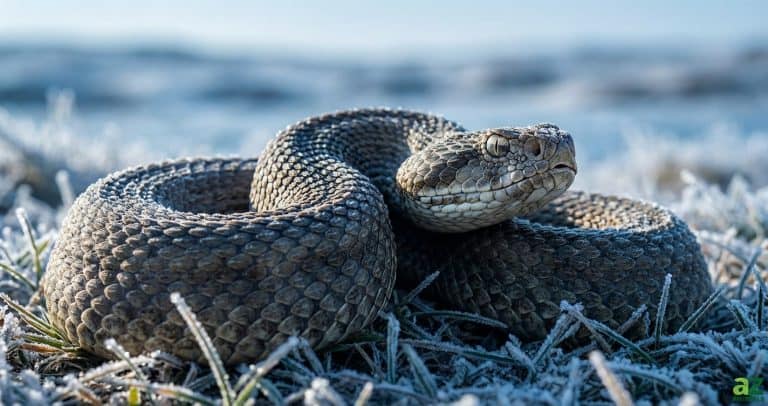
Prairie rattlesnakes are the second-largest snakes in Yellowstone and the largest (and only) venomous snakes in the park. They generally grow to 48 inches long and are extremely thick-bodied snakes.
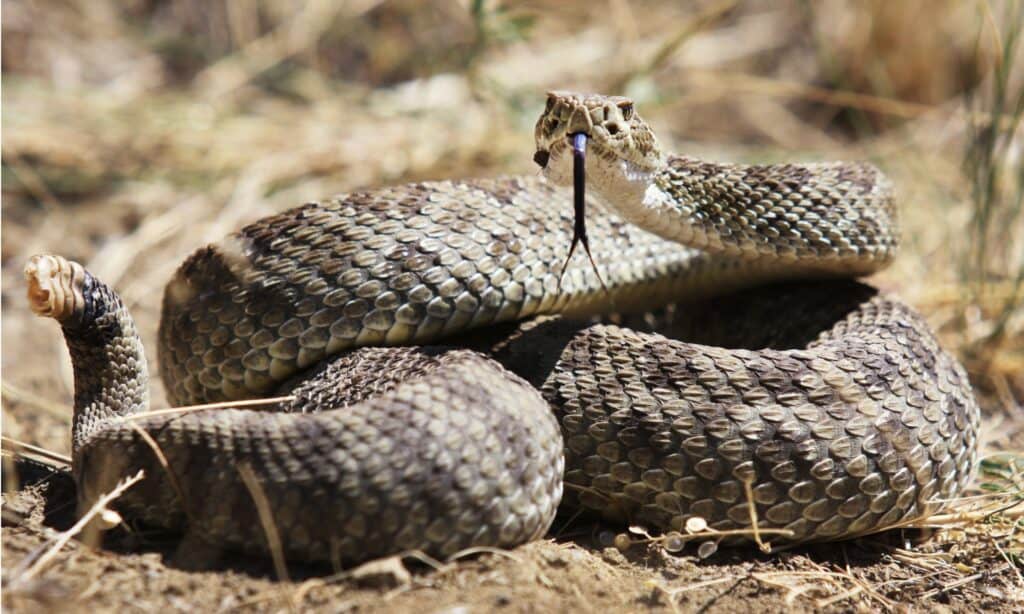
Prairie rattlesnakes, also called western rattlesnakes, are the only venomous snake in Yellowstone.
©iStock.com/HRossD
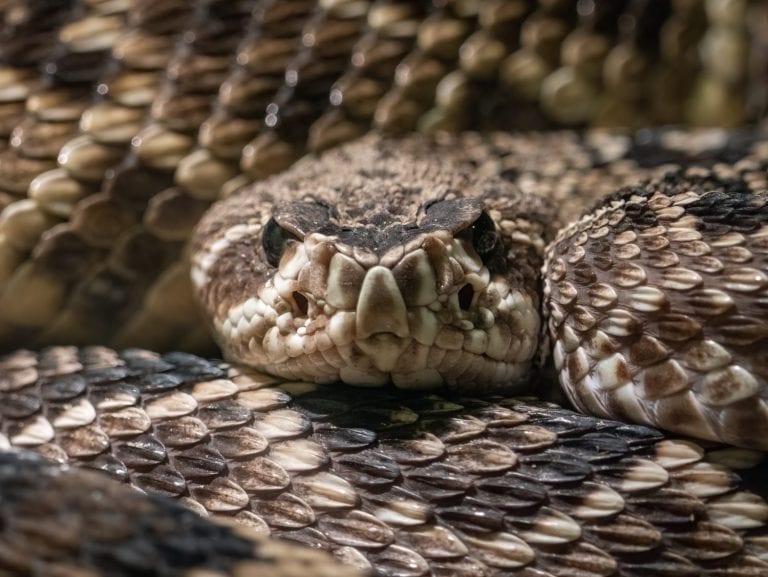
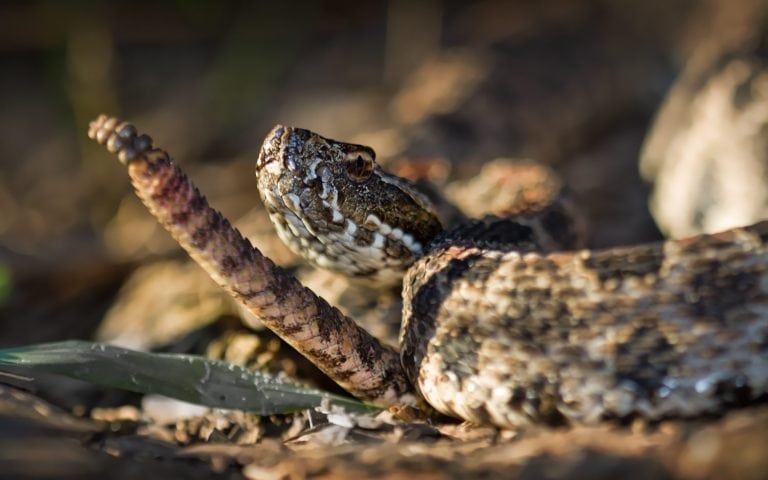
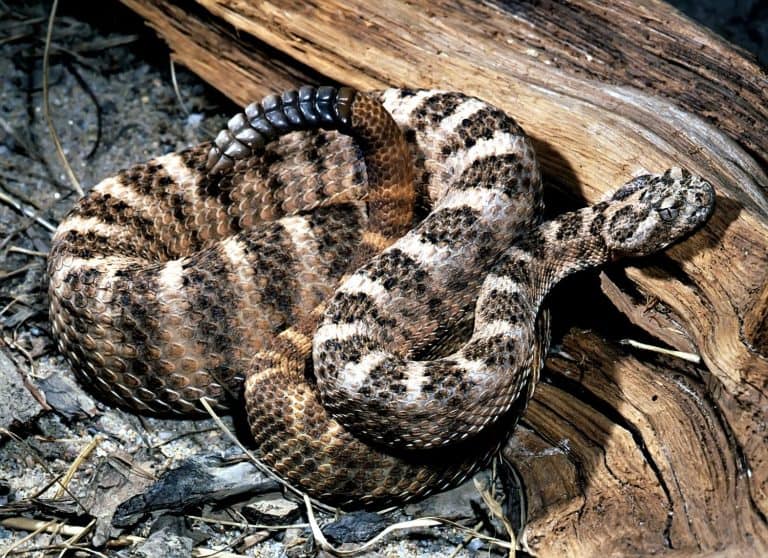
Like all rattlesnakes, the prairie rattler can be identified through the heat-sensing pits between its nostril and eye, and the distinct rattle on its tail. Dorsally, prairie rattlesnakes have large, dark, roughly oval, white-edged blotches over a lighter color; usually shades of tan or brown. Additionally, prairie rattlesnakes usually have light-colored head stripes — two on each side. Like other rattlesnakes, prairie rattlesnakes have heavily keeled scales that have a ridge in the center of each. Keeled scales make their skin look rough to the touch.
Prairie rattlesnakes live in the lower elevation areas of the park, namely in places like Reese Creek, Stephens Creek, and Rattlesnake Butte. They prefer warm, dry areas, and these locations are the warmest and driest in the park.
Prairie rattlesnakes use powerful venom to hunt prey and defend themselves. They generally prefer small mammals but will also eat birds and reptiles. Common prey includes squirrels, mice, rats, prairie dogs, rabbits, and other snakes.
Despite their powerful venom, rattlesnakes are much more defensive than offensive and prefer to avoid humans at all costs. In fact, the park has only two documented cases of bites throughout its entire history. If you encounter a snake, just leave it be!
What Other Snakes Live in Yellowstone National Park?
Besides the two listed, there are a few other reptiles you could encounter in the park.
Rubber boas are cute burrowing snakes that are closely related to boa constrictors. These snakes are becoming more popular as pets due to their unique appearance and great temperaments. They generally grow to 28 inches long at a maximum and spend most of their day buried under the soil.
There are two species of garter snake that live within the park: the common garter snake and the terrestrial garter snake. Both species are harmless to humans and grow to be 2-3 feet long. They are extremely common across the country and are the most common snakes found in the park. Common garter snakes have black bodies with three yellow stripes running down their bodies, one along the spine and two on the sides. Additionally, they have red spots between the spine stripe and side stripes on either side. The terrestrial garter snake is brown or tan in color and has the same style of stripes, only in white or cream.
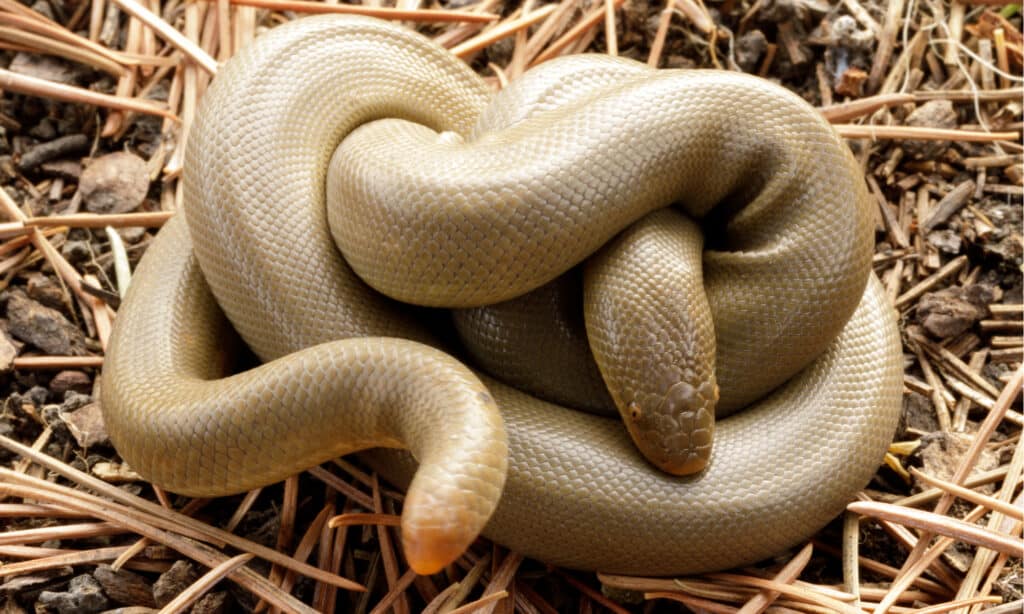
Rubber boas, which can grow to 28 inches long, can be found in Yellowstone National Park.
©yhelfman/Shutterstock.com
What Are the Venomous Snakes in Yellowstone National Park?
Prairie rattlesnakes are the only dangerously venomous snakes in Yellowstone. Prairie rattlesnakes use powerful venom to hunt prey and defend themselves. They generally prefer small mammals but will also eat birds and reptiles. Common prey includes squirrels, mice, rats, prairie dogs, rabbits, and other snakes.
This post was updated on October 30, 2025, to clarify the following regarding bullsnakes: specific elevations and habitat, features distinguishing them from rattlesnakes, labial bars as helpful but not foolproof in determining toxicity, and average diameter.