
Quick Take
- The snake Dallas residents fear most is probably the one actively protecting their home, and they're killing it on sight. Meet the misidentified snake →
- Most cottonmouth sightings near Dallas aren't actually cottonmouths, which raises the question of what people are really seeing. See how rare cottonmouths are →
- Dallas sits on a geographic boundary that puts two venomous subspecies in direct overlap, a fact that most locals have no idea about. Discover the overlapping subspecies →
- Knowing the temperature outside can tell you more about snake risk than knowing the species, and understanding why that is the case turns out to matter quite a bit. Check temperature-driven activity →
Texas is home to the highest number of snake species in the United States, with between 68 and 76 distinct species, which expands to between 105 and 115 unique varieties when including subspecies. The city of Dallas and its surrounding Northeast Texas region support at least 30 snake species, of which the overwhelming majority are completely harmless and non-venomous. Continue reading to learn about six of the more common snake species found in and around Dallas, Texas.
When Are Snakes Most Active in Dallas?
Snakes near Dallas are most active during the spring, summer, and early fall months. During the cold winter season, most go into a state of brumation. Brumation is the cold-blooded equivalent of hibernation, in which the snake’s metabolism slows, and they become lethargic.

Unlike humans and other warm-blooded animals, snakes can’t self-regulate their body temperature.
©Silent Shoot/Shutterstock.com
Snakes near Dallas are most active in the daytime when they come out to warm their bodies and to hunt. As the summer turns hot, they become more crepuscular (active at dawn and dusk), and even nocturnal, to avoid the intense heat. So, if you’re watching out for snakes, keep the temperature and time of year in mind.
Texas Rat Snake
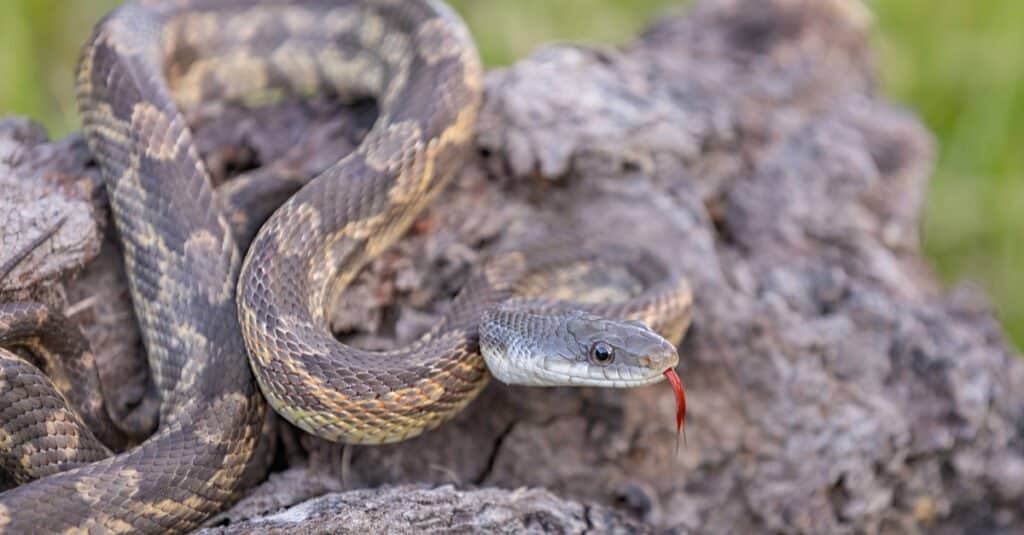
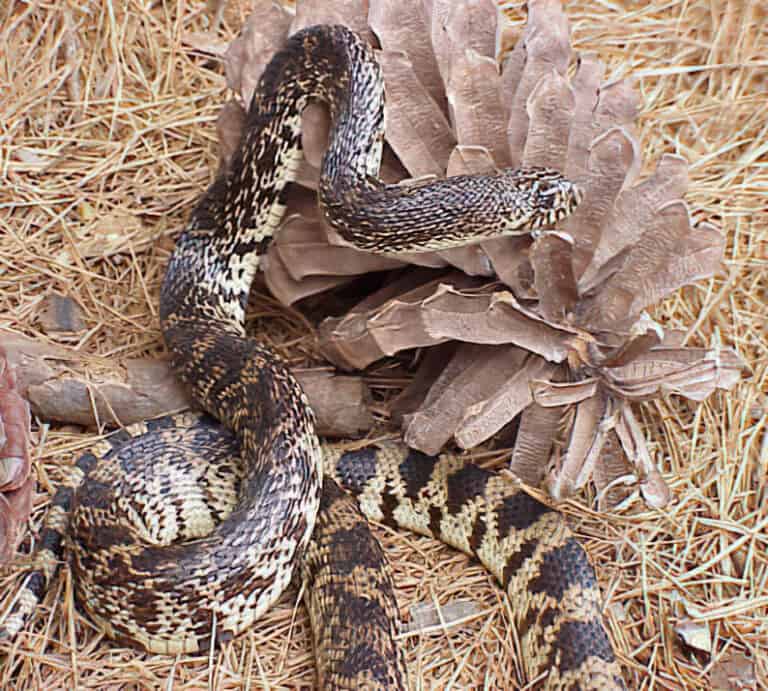
Texas rat snake bears a superficial resemblance to the deadly western diamondback rattlesnake.
©Silent Shoot/Shutterstock.com
The most common snake near Dallas is the Texas rat snake, a color variation of the Western rat snake (Pantherophis obsoletus). Texas rat snakes are usually brown to black with darker blotches. They can reach lengths of over five feet and prey primarily on rodents.
Unfortunately, despite their non-aggressive nature, they’re often killed by fearful humans who mistake them for venomous snakes. In fact, Texas rat snakes are essential for rodent control, and can be found wherever rodent populations are large.
Western Ribbon Snake
Western ribbon snakes (Thamnophis proximus) are small, slender reptiles native to North Texas. They typically grow to a maximum length of around 42 inches (about 3.5 feet), with exceptional individuals reaching over four feet. They are semi-aquatic and primarily eat frogs, tadpoles, and small fish. Western ribbon snakes are easy to recognize by the black and yellow stripes that run from head to tail. These snakes are easygoing and very unlikely to bite humans.
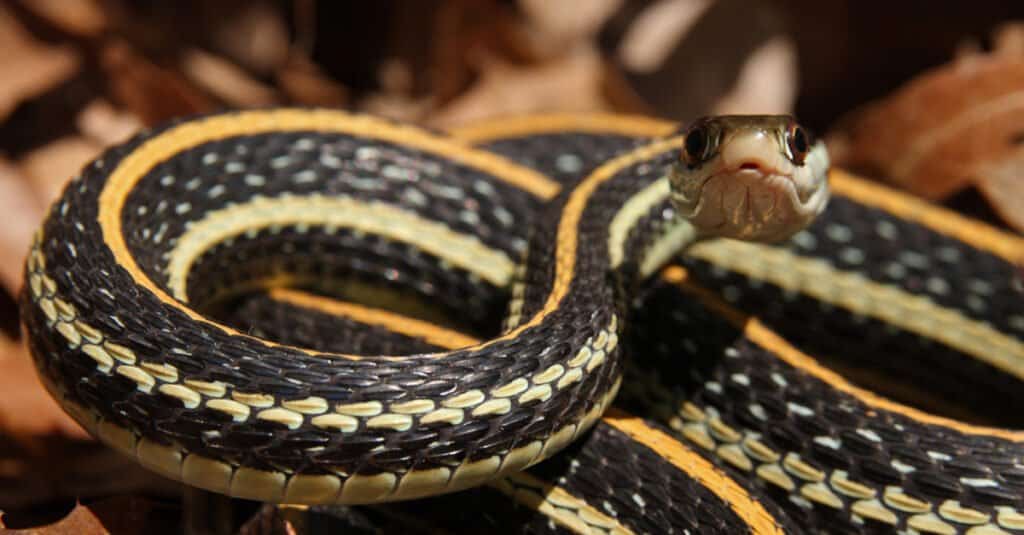
They might be small, but western ribbon snakes are one of the most common snakes near Dallas.
©Ryan M. Bolton/Shutterstock.com
Texas Brown Snake
The Texas Brown Snake (Storeria dekayi texana) can be found anywhere it can find slugs, snails, earthworms, and insect larvae to eat. They are rarely thicker than a pencil and rarely exceed 12 inches in length, though record specimens have reached just over 20 inches.

Like the Western ribbon snake, the Texas brown snake is very small and slender-bodied.
©Matt Jeppson/Shutterstock.com
Texas brown snakes have light brown bodies with regular dark brown markings and a dark brown head. Like the western ribbon snake, they’re very gentle and pose no threat to humans.
Cottonmouth (Water Moccasin)
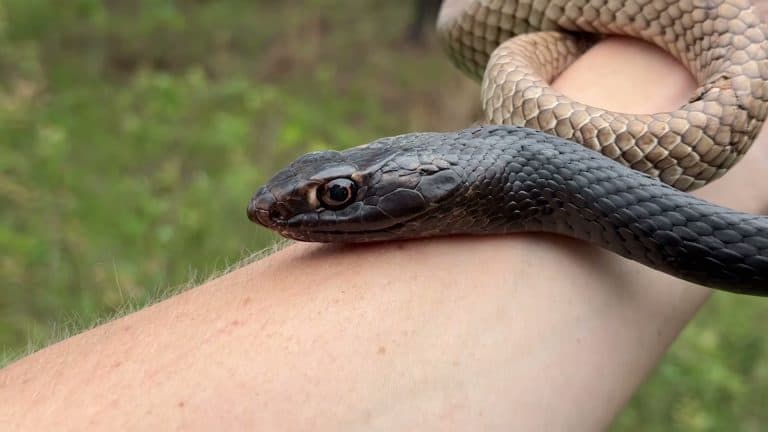
Cottonmouths (Agkistrodon piscivorus) do occur in Northeast Texas, but in the Dallas area proper they are quite rare. Many supposed cottonmouth sightings are actually non-venomous water snakes. These snakes are most likely to be encountered in or near a source of water.
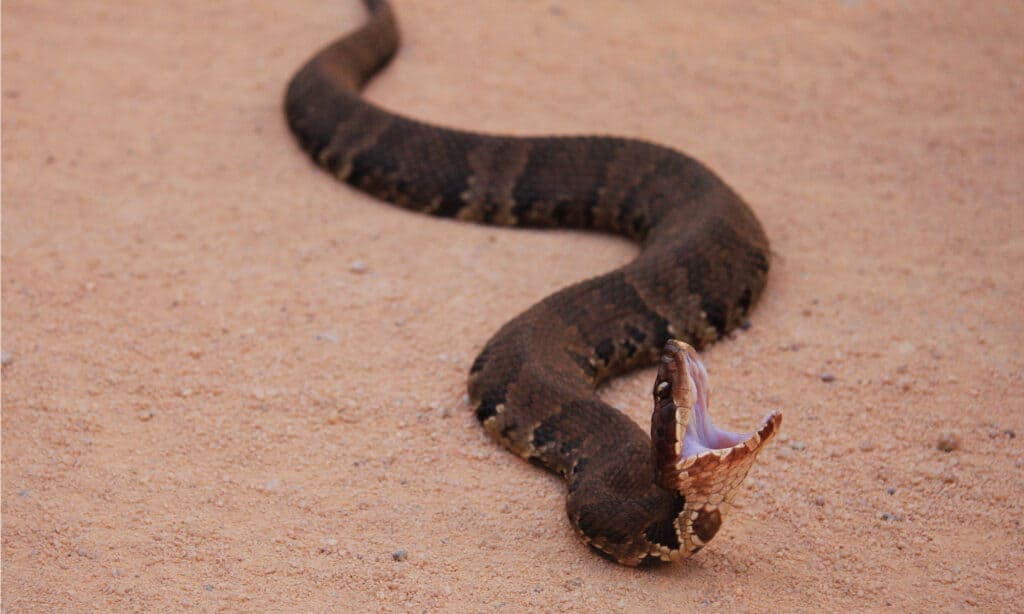
Famous for the cotton-colored insides of their mouths, it’s easy to see where cottonmouths get their name.
©Nathan A Shepard/Shutterstock.com
Cottonmouths are usually dark olive, brown, or nearly black, often with faint banding that fades as they age. Many adults appear solid-colored and can grow up to four feet long, though most average between two and a half to three and a half feet. Cottonmouths have a highly venomous bite and are known to stand their ground when threatened, rather than fleeing. If you encounter a cottonmouth in the wild, leave it alone.
Western Diamondback Rattlesnake
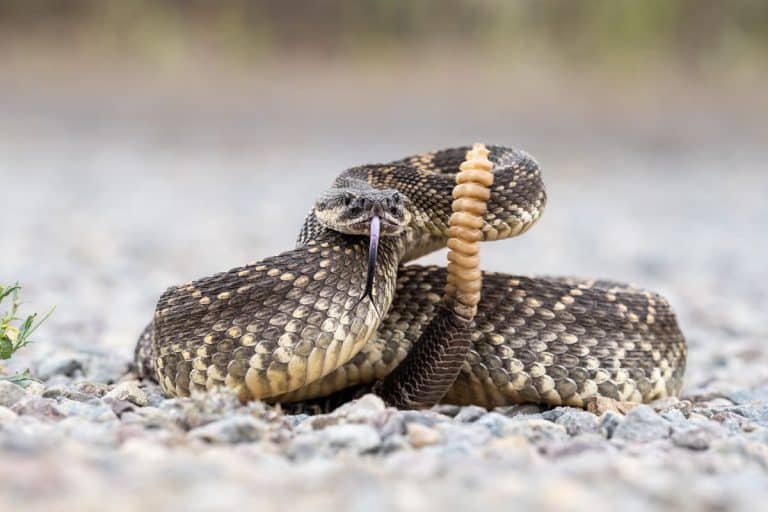
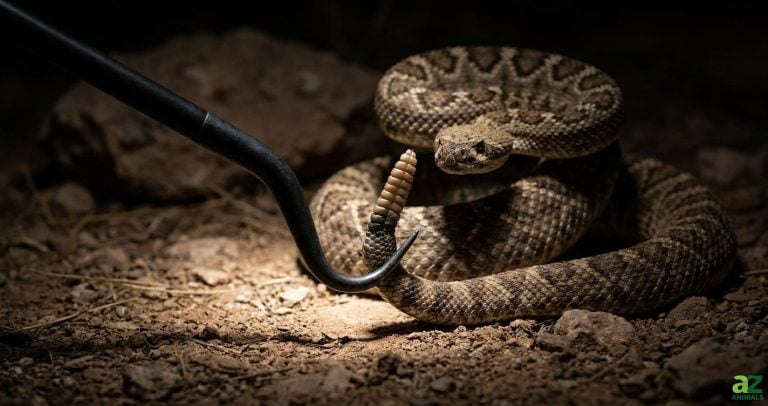
Western diamondback rattlesnakes (Crotalus atrox) are found in hot, dry areas with plenty of brush or rocky outcroppings. They can grow up to six feet long and have their famous rattle. They eat mostly rodents and only bite when threatened. As with the other species of venomous snakes near Dallas, it’s best to leave these impressive creatures alone.

Perhaps the most famous of the venomous snakes near Dallas is the western diamondback rattlesnake.
©Audrey Snider-Bell/Shutterstock.com
Copperhead
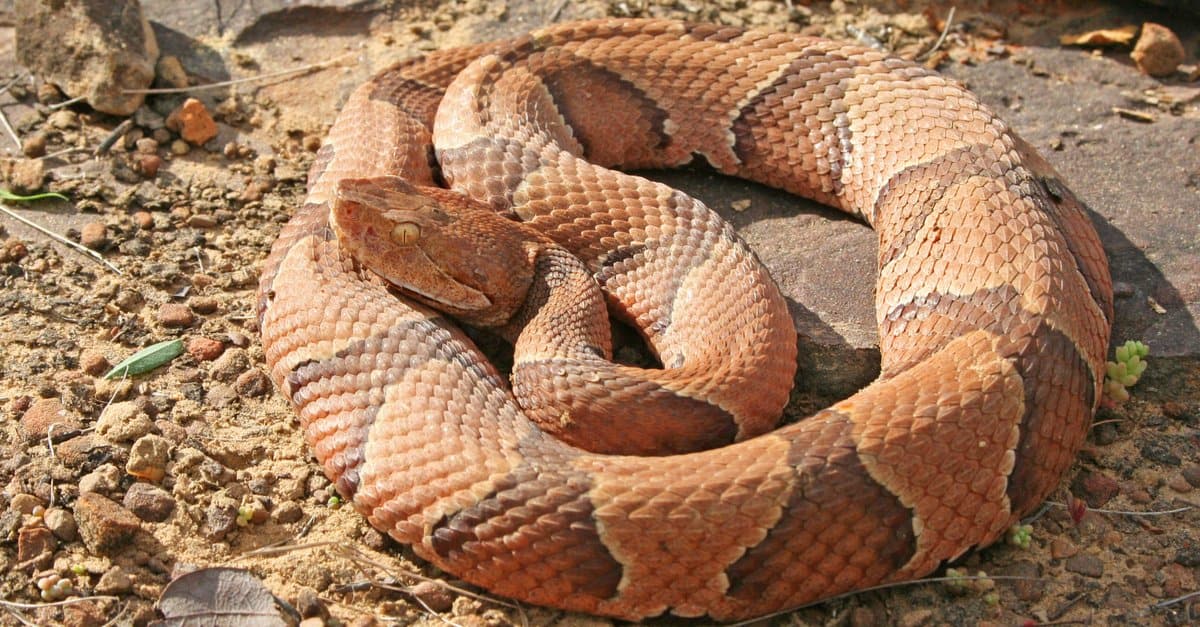
There are two subspecies of copperheads found in this region, and Northeast Texas, including the Dallas–Ft. Worth metroplex, sits right along the geographic boundary where the ranges of the Eastern copperhead (Agkistrodon contortrix) and the Broad-banded copperhead (Agkistrodon laticinctus) meet and overlap.
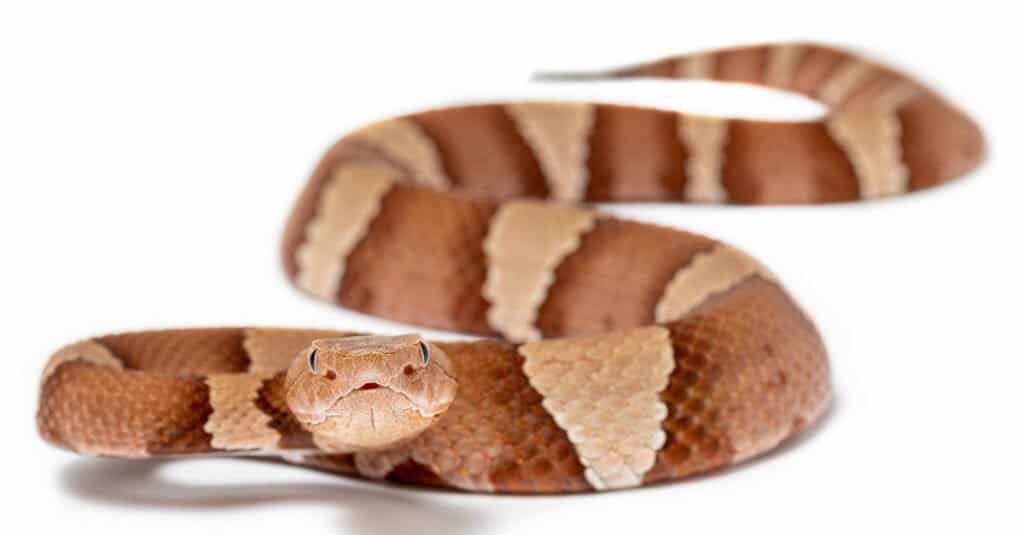
Copperheads carry a distinctive red-brown color with variegated dark blotches.
©Scott Delony/Shutterstock.com
Copperheads grow to around three feet long and can deliver a painful, venom-filled bite. Most bites occur either when the snake is accidentally stepped on or when people try to handle or kill it. If you encounter a copperhead, remember that it’s a dangerous wild animal and should not be approached or touched.