
From Minute Man National Historic Park and Old Sturbridge Village to the Cape Cod National Seashore, Massachusetts offers a variety of scenic attractions and a bounty of pesky insects. Although some insects are beneficial, like bees, others are not so helpful, like beetles and aphids. That’s why Massachusetts farmers don’t mind when spiders show up: many arachnids eat destructive insects, and larger spiders can consume even more. Continue reading to learn about the five biggest spiders in Massachusetts.
5. Black and Yellow Garden Spider
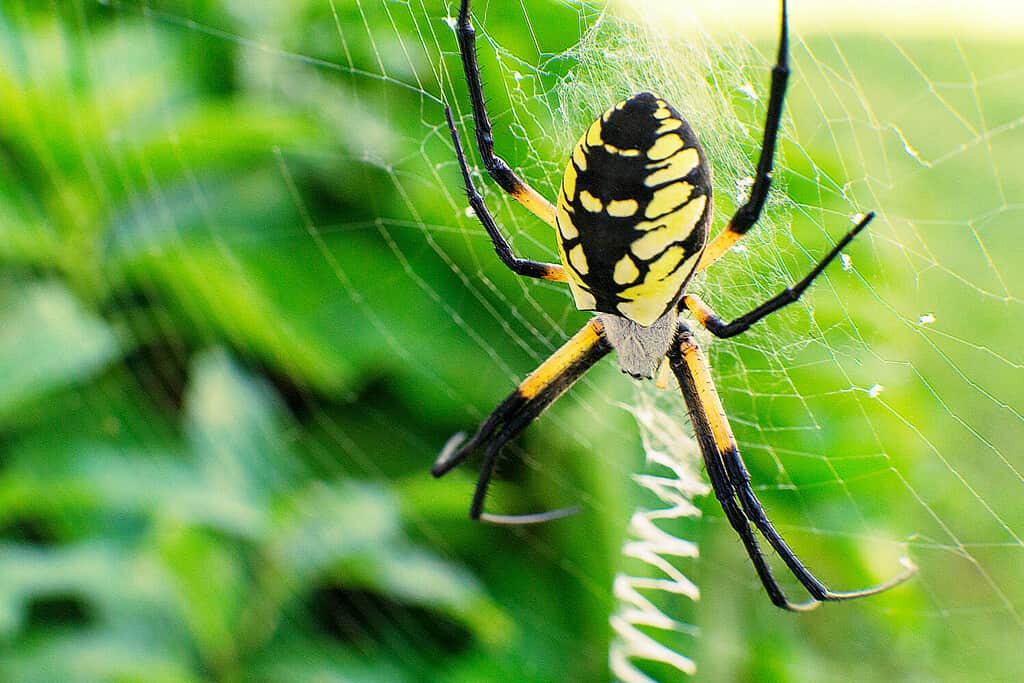
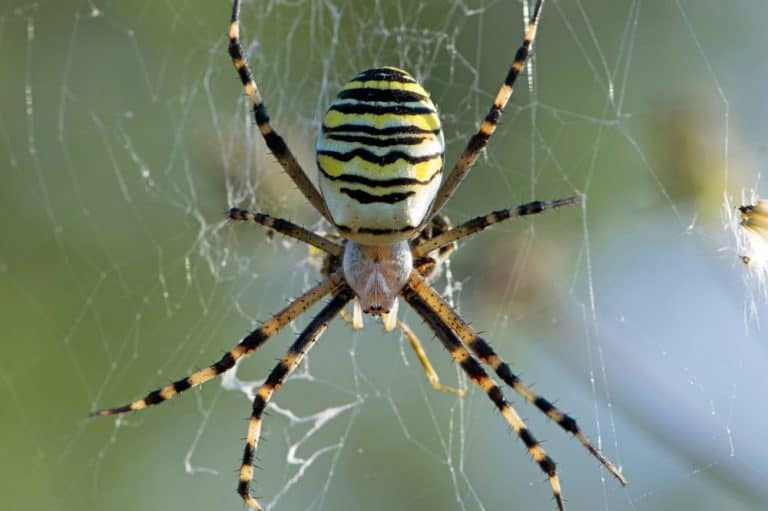
These large garden spiders weave a zig-zag pattern into their webs.
©Theodore P. Webb/Shutterstock.com
| Scientific Name | Size | Danger to Humans |
|---|---|---|
| Argiope aurantia | 0.25-1.125 inches | bite is similar to a bee sting. |
A striking spider with a black and yellow patterned abdomen, the black and yellow garden spider has long, spindly legs that are black, often with yellow or orange bands. This species has a small cephalothorax (head) covered with silvery hairs. Female black and yellow garden spiders, which are markedly larger than the males, construct large, circular orb webs that often reach 2 feet in diameter. A distinctive zigzag pattern, called a stabilimentum, is often present in the center of the web.
Often found in backyard gardens, the black and yellow garden spider feeds on a variety of insects, especially flying or jumping insects like grasshoppers, katydids, and other garden pests.
Despite their intimidating appearance, black and yellow garden spiders are not considered dangerous to humans. Their venom is not harmful to healthy adults, and a bite feels similar to a bee sting.
4. Long-bodied Cellar Spider
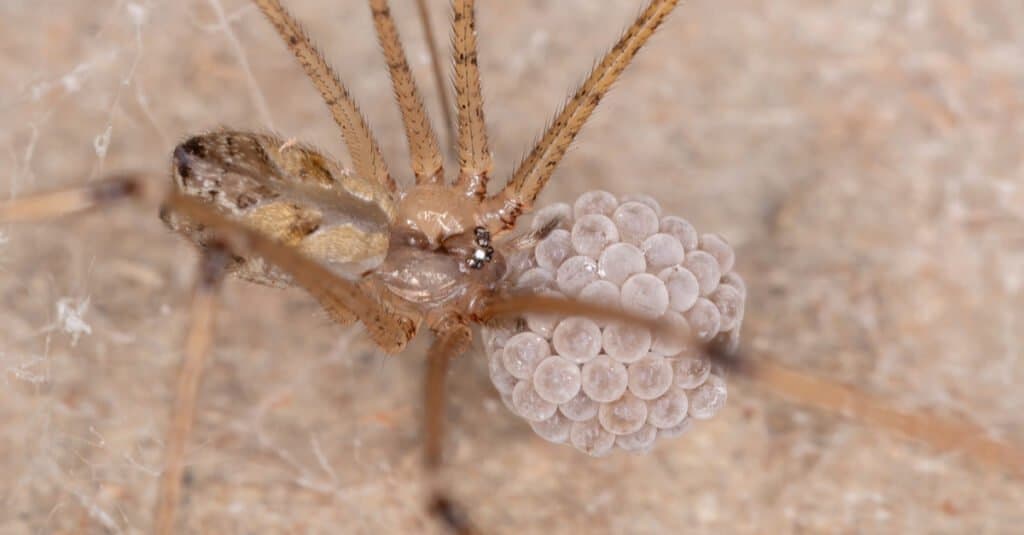
Cellar spiders have translucent bodies.
©iStock.com/ViniSouza128
| Scientific Name | Size | Danger to Humans |
|---|---|---|
| Pholcus phalangioides | 1-2 inches | A bite may cause a mild burning sensation. |
Long-bodied cellar spiders are commonly found in dark places in homes and outbuildings, like basements and garages. This species is easy to spot because it has disproportionately long legs for its body as well as a translucent, grayish-brown body. They have dark markings on their cephalothorax that are thought to resemble a human skull. The long-bodied cellar spider is often confused with harvestman spiders. Both harvestman (Opiliones) and long-bodied cellar spiders are known for their long legs, though they belong to different arachnid groups.
Long-bodied cellar spiders do not bite frequently, and when they do, their bite produces a mild, momentary burning sensation.
3. American Nursery Web Spider
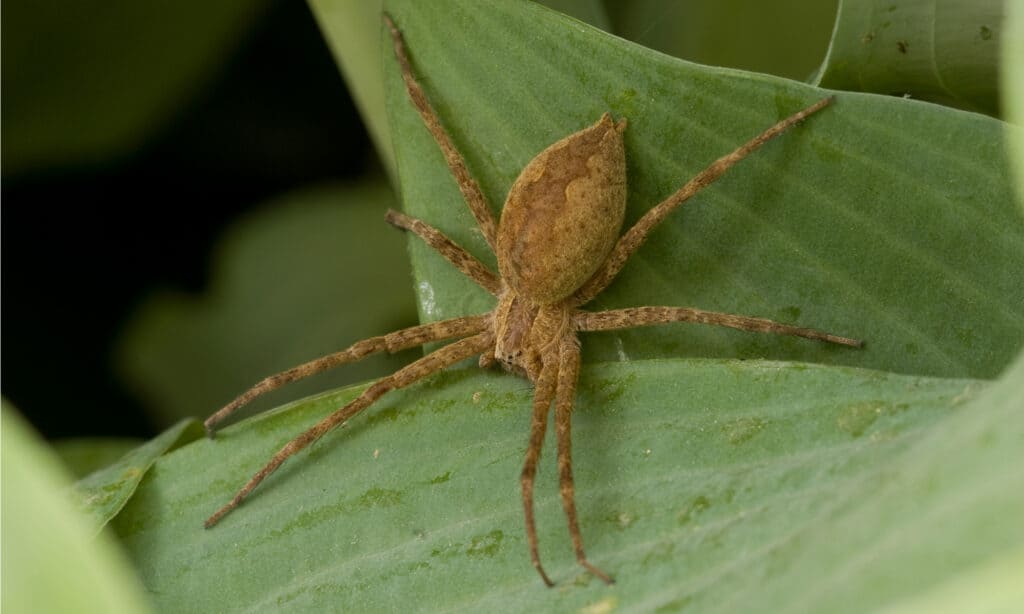
Male American nursery web spiders will tie females’ legs during mating to avoid being eaten afterward.
©SDeming/Shutterstock.com
| Scientific Name | Size | Danger to Humans |
|---|---|---|
| Pisaurina mira | 1-3 inches | Has a bite that is mostly harmless to humans, with pain and swelling common. |
The American nursery web spider is a common arachnid found throughout Massachusetts. They are ambush predators that wait for prey to get close and then attack.
These spiders range in color from reddish brown to brown. Most of their body is a light reddish brown, with a darker brown stripe running down the middle. Their legs are hairy and brown.
Although it is rare, female nursery web spiders may cannibalize their mates, usually before or during mating. To reduce this risk, males have developed strategies such as presenting gifts (like wrapped insects) and using silk to restrain the female.
When a mother American nursery web spider realizes the eggs in her clutch are about to hatch, she makes a large silk pouch for them, guarding it until the young are born.
American nursery web spiders are not considered harmful to humans.
2. Carolina Wolf Spider
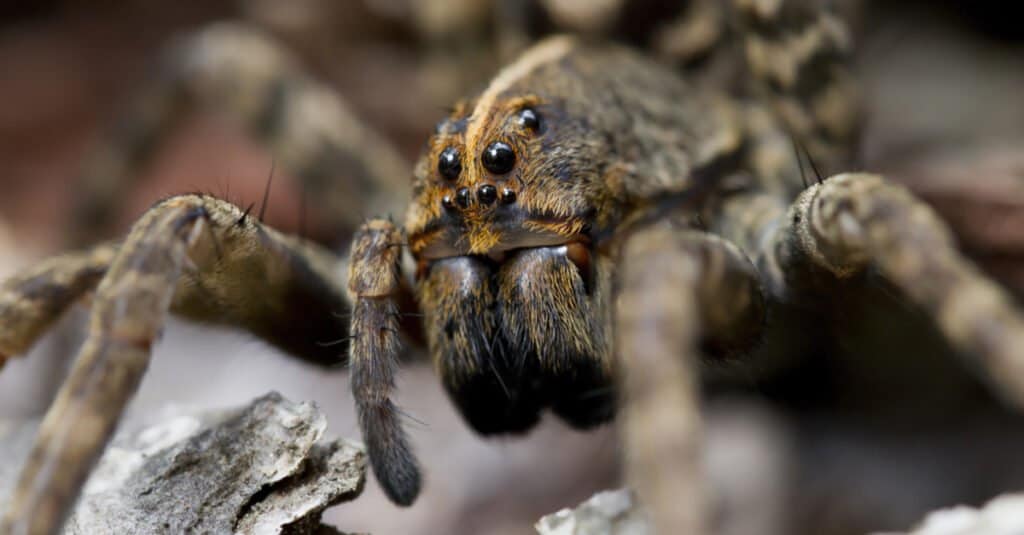
The Carolina wolf spider can reach nearly 4 inches long.
©Will E. Davis/Shutterstock.com
| Scientific Name | Size | Danger to Humans |
|---|---|---|
| Hogna carolinensis | 2-4 inches | The bite causes local pain and swelling. |
The Carolina wolf spider is the largest of all the wolf spiders in North America. Female Carolina wolf spiders can have abdomens that measure over one inch long and have a leg span of four inches.
The Carolina wolf spider has a brown body that integrates light brown, gray, and black markings. They have light markings behind their uppermost eyes, too. These spiders are often found in burrows in tall grassy areas, woodlands, and flat, open areas.
The Carolina wolf spider’s bite causes local pain and swelling.
1. Dark Fishing Spider
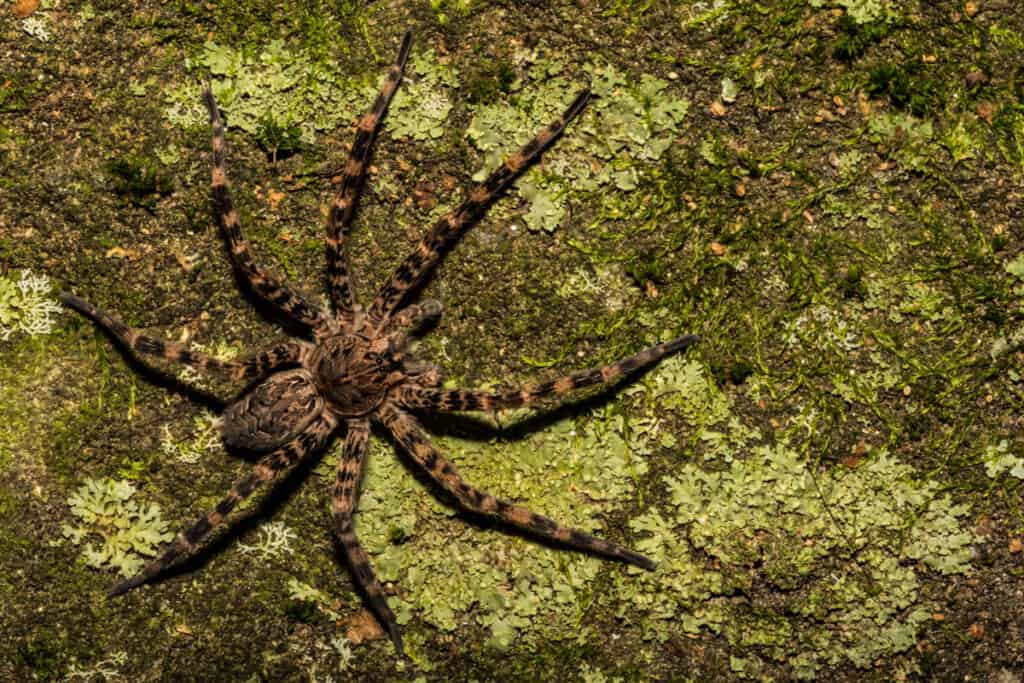
Unlike other members of its genus, the dark fishing spider is less frequently found near water.
©iStock.com/JasonOndreicka
| Scientific Name | Size | Danger to Humans |
|---|---|---|
| Dolomedes tenebrosus | 3.5-4.5 inches | Can bite humans and cause a reaction similar to a bee sting. |
The dark fishing spider is the biggest spider in Massachusetts. Although its name suggests an association with water, the dark fishing spider is arboreal and is found in trees and other vegetation near water sources.
Dark fishing spiders have brown bodies that can range from light to dark brown. They are known for having a series of chevrons of alternating light and dark colors along their legs, as well as various patterns on their bodies, especially on their abdomens.
In most cases, these spiders will flee if they encounter humans. Nevertheless, they can bite a person. If they do, you’ll probably have pain and swelling that is similar to that of a bee sting. Otherwise, these spiders pose no significant threat to humans.