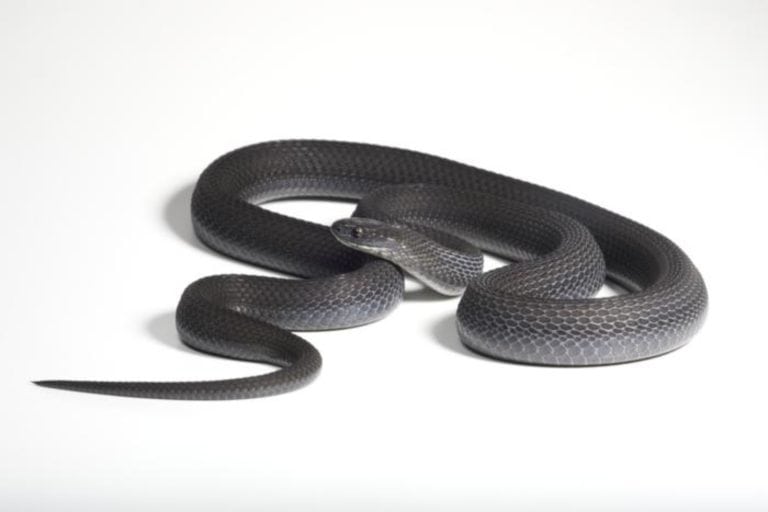

The largest glossy snake ever discovered is far longer than most members of its species. Glossy snakes, like all snakes, are ectothermic, which means they cannot regulate their body temperature. Instead, they rely on the sun’s heat to warm them up.
It’s no surprise, then that they live in some of the hottest, driest parts of North America. These snakes are members of the Colubrid family of snakes, which includes thousands of distinct species, most of which are non-venomous. Glossy snakes may only live in the United States and Mexico, but colubrid snakes live on every continent except Antarctica.
Here, we’ll learn all about the glossy snake, also known as the faded snake, and discover just how big the biggest specimens get.
Glossy Snake Profile
Faded snakes are fossorial, meaning their heads are specially adapted for burrowing in loose, sandy, or gravelly soil.
©worldswildlifewonders/Shutterstock.com
The glossy snake is one of the least well-known snakes in the southwest desert. The largest faded snake ever recorded was well beyond the average length for the species, which is between 3 and 4 feet. Glossy snakes eat mainly lizards and some small birds, snakes, and mammals. They hunt at night and lay eggs rather than give birth to live young.
Range and Habitat
There are nine subspecies of glossy snakes, with each inhabiting a distinct region. Glossy snakes live in southern California, the Baja Peninsula, and the extreme southern tips of Nevada and Utah. They’re also found in parts of eastern Colorado, western Kansas, and Oklahoma, and even the extreme southwestern part of Nebraska. Glossy snakes also live throughout much of Arizona, New Mexico, Texas, and Mexico.
Glossy snakes are uniquely designed to blend in with sandy, grassy, and rocky areas. They prefer places with loose soil for burrowing and some scrub or grass for cover. They’re found primarily in dry, arid regions and on dry mountain slopes.
Appearance and Size

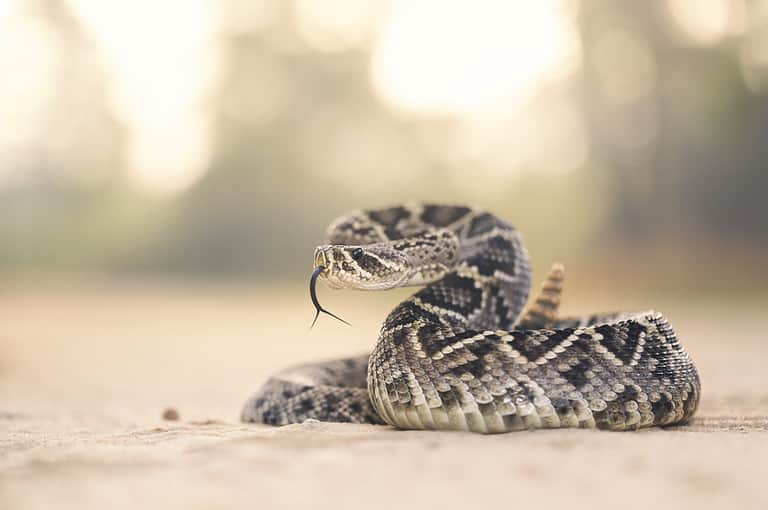
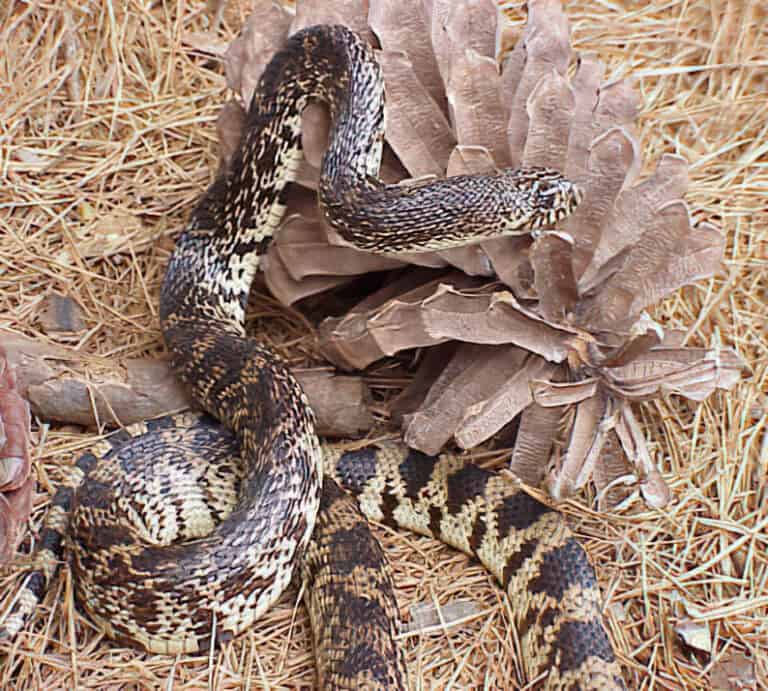
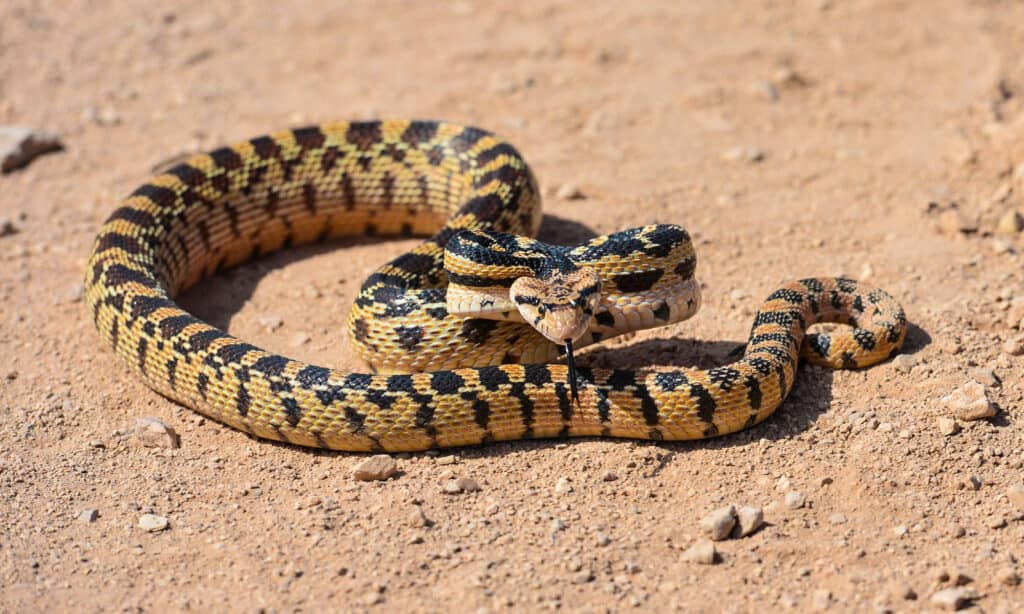
Glossy snakes bear a superficial resemblance to their much deadlier cousin, the rattlesnake.
©Jason Mintzer/Shutterstock.com
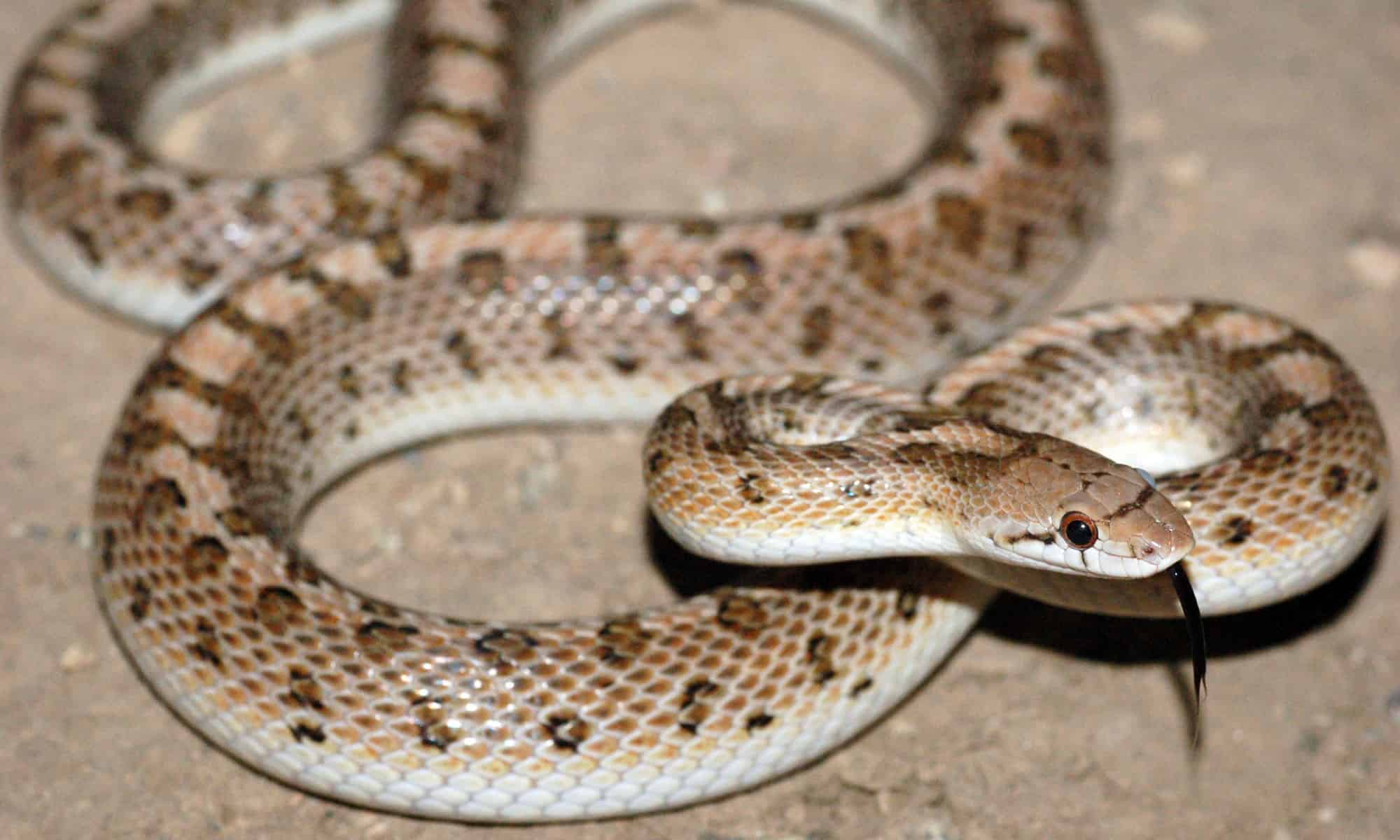
Often called the faded snake, the glossy snake has a glossy but washed-out appearance. Their base color is a light tan, with a cream-colored belly. Their sides and backs are dominated by darker blotches that superficially resemble the diamondback pattern of rattlesnakes. However, faded snakes lack both rattles and large fangs.
Glossy snakes have black tongues, square noses, and round pupils. Their heads are no wider than their bodies, which aids them in burrowing. Some specimens appear bright yellow, orange, red, or dusky brown. Their most distinctive feature is their narrow head and square nose. They’re often confused with rat snakes or gopher snakes.
Behavior and Diet
Glossy snakes are nocturnal. These snakes escape the sun’s heat by burrowing underground or hiding in unused rodent burrows during the day. They’re most active between February and November and often go into brumation during winter. Females are oviparous (egg-laying) and lay up to 23 eggs per clutch. Snakelings hatch in the late summer.
Glossy snakes aren’t venomous, and they don’t hunt big game. Instead, they come out at night to prey on sluggish diurnal lizards. They also eat small rodents, mice, jerboas, small birds, and snakes. However, because of their size and light bodies, they’re limited in the size of the prey they can constrict. Glossy snakes kill by constricting their prey or grabbing it head first and suffocating it as they swallow it.
Glossy snakes are good at hiding, but that doesn’t mean they never fall prey to other predators in the desert. Where they live determines what types of creatures eat them. Roadrunners, eagles, hawks, and kingsnakes in the desert southwest eat faded snakes. In higher elevation zones, bobcats and foxes also eat glossy snakes, and coyotes and larger snakes in all areas also prey on faded snakes.
The Largest Glossy Snake Ever
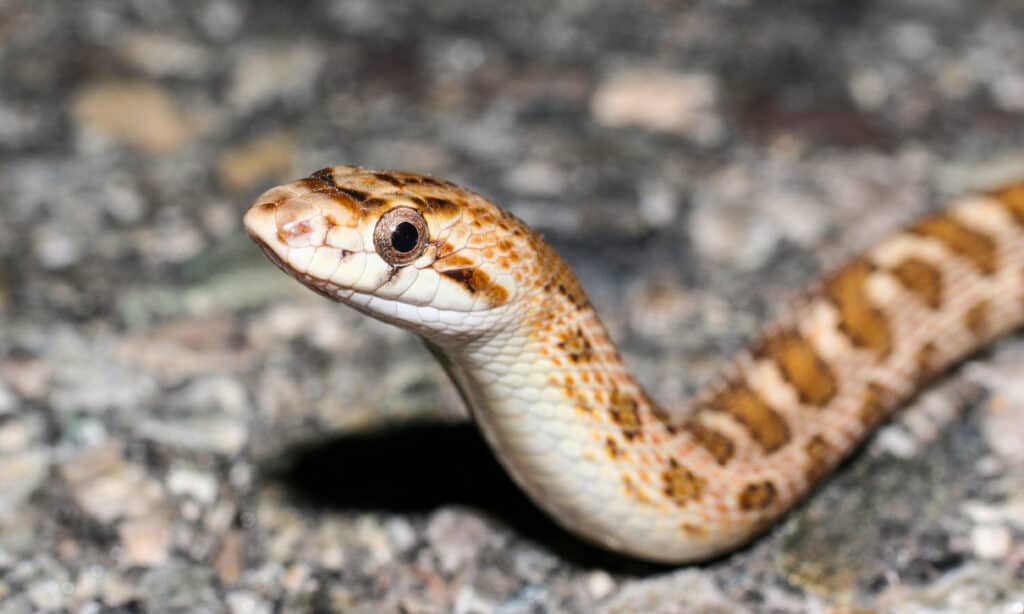
Average glossy snakes grow to around three feet long, though some have been recorded at nearly five feet long.
©Casey K. Bishop/Shutterstock.com
Most glossy snakes grow to around three feet long, with some growing up to four feet long. However, the largest glossy snake ever discovered measured 56 inches long, nearly five feet. This is abnormally large for these slender, ground-dwelling snakes. Even the largest adults are light, weighing under two pounds on average.
Are Glossy Snakes Aggressive?
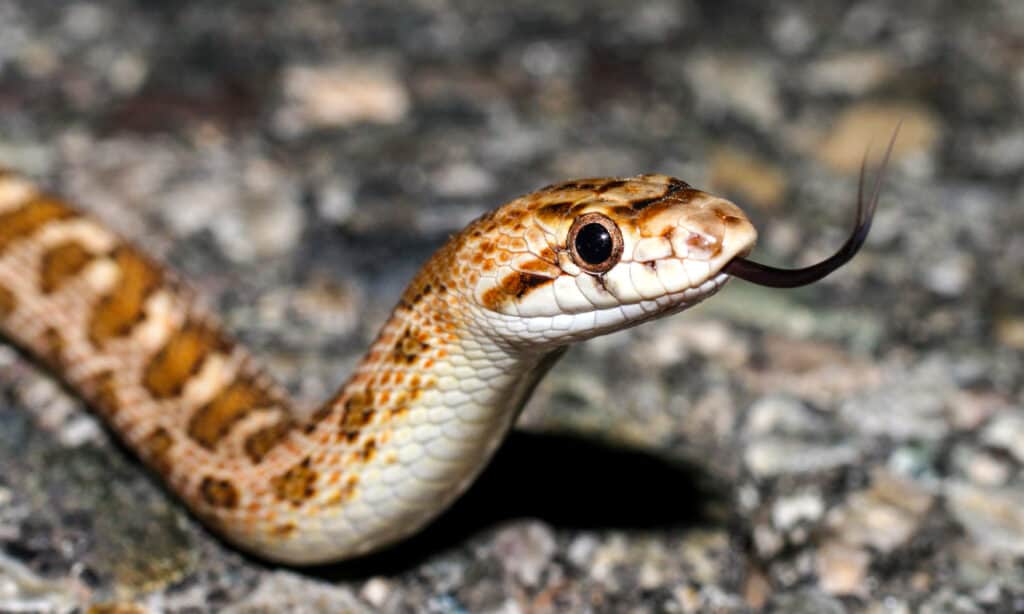
Unlike king cobras, gaboon vipers, and cottonmouths, glossy snakes lack venom and rely on ambush attacks to kill prey.
©Casey K. Bishop/Shutterstock.com
Because of their secretive nature and nocturnal habits, humans rarely see glossy snakes. The glossy snake is not aggressive; it only bites under dire circumstances. They are much more likely to flee when confronted with danger.
Glossy snakes may allow you to approach them, but that does not mean you should attempt to handle or harass them. Like all wild animals, glossy snakes deserve to be treated with respect and caution. Even a gentle glossy snake can inflict damage with its bite. So, if you encounter a glossy snake on a moonlit hike, leave it to hunt in peace.
Other Record-Breaking Snakes
Shovelnose snakes are a diminutive species with an average length of just 11.8 inches. However, some individuals can grow to be as long as 17 inches from nose to tail, as evidenced by the largest specimen ever recorded.
Most adult shovelnose snakes fall within the range of 10 to 17 inches in length, although there can be some variation within this range depending on factors such as age, diet, and environmental conditions.
Despite their small size, shovelnose snakes are fascinating creatures that play an important role in their respective ecosystems, where they help to control insect populations and serve as prey for larger predators. Furthermore, shovelnose snakes are a type of non-poisonous snake that does not possess venom that can pose a significant threat to humans or pets.