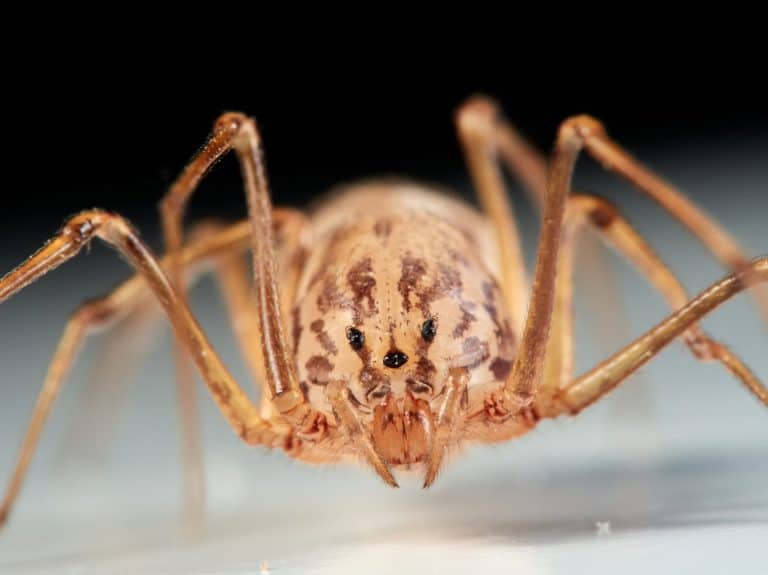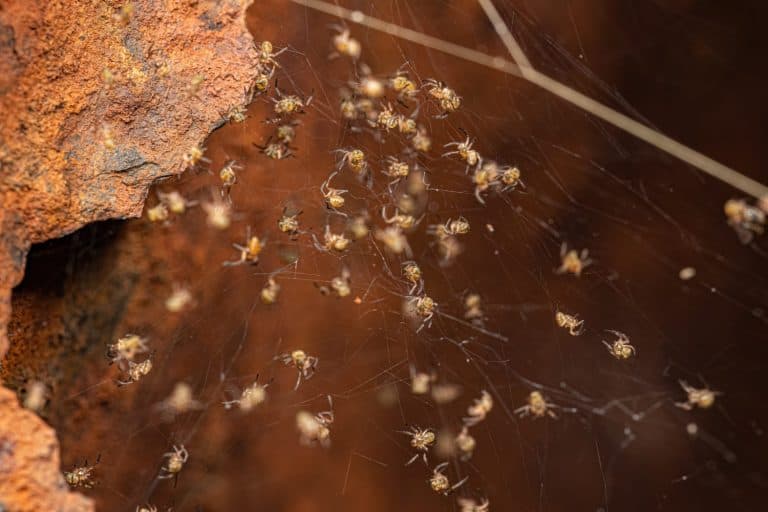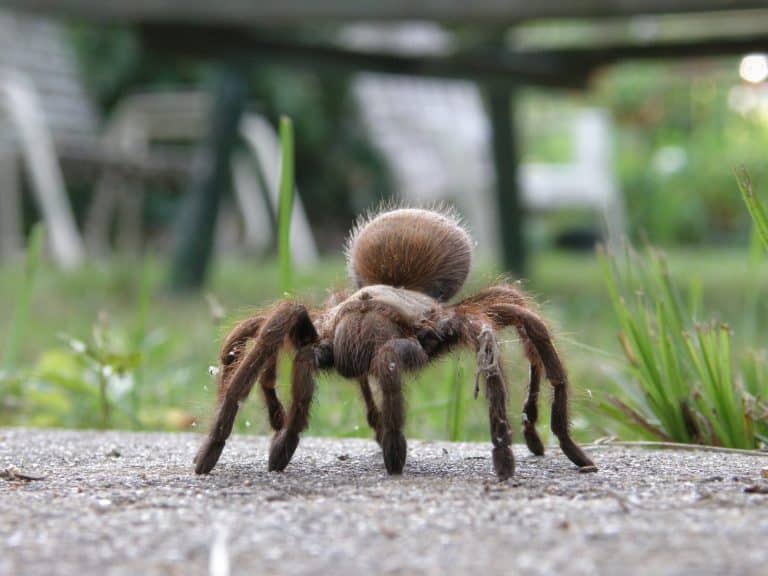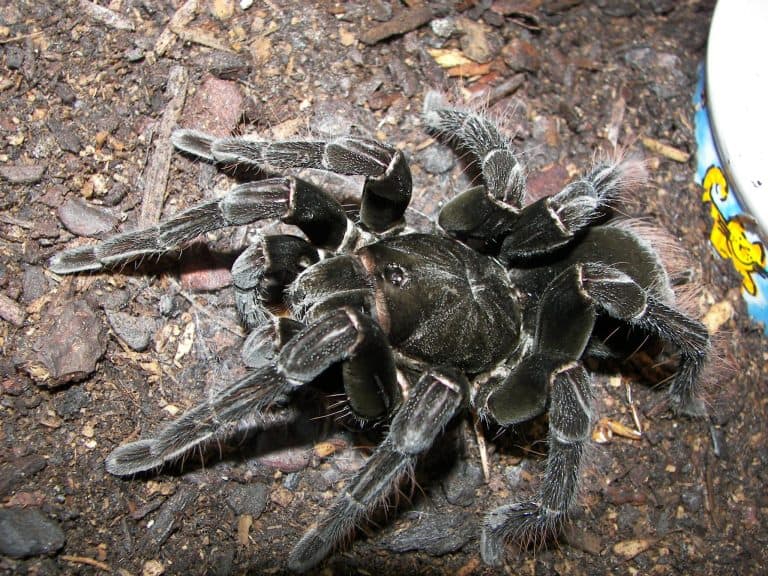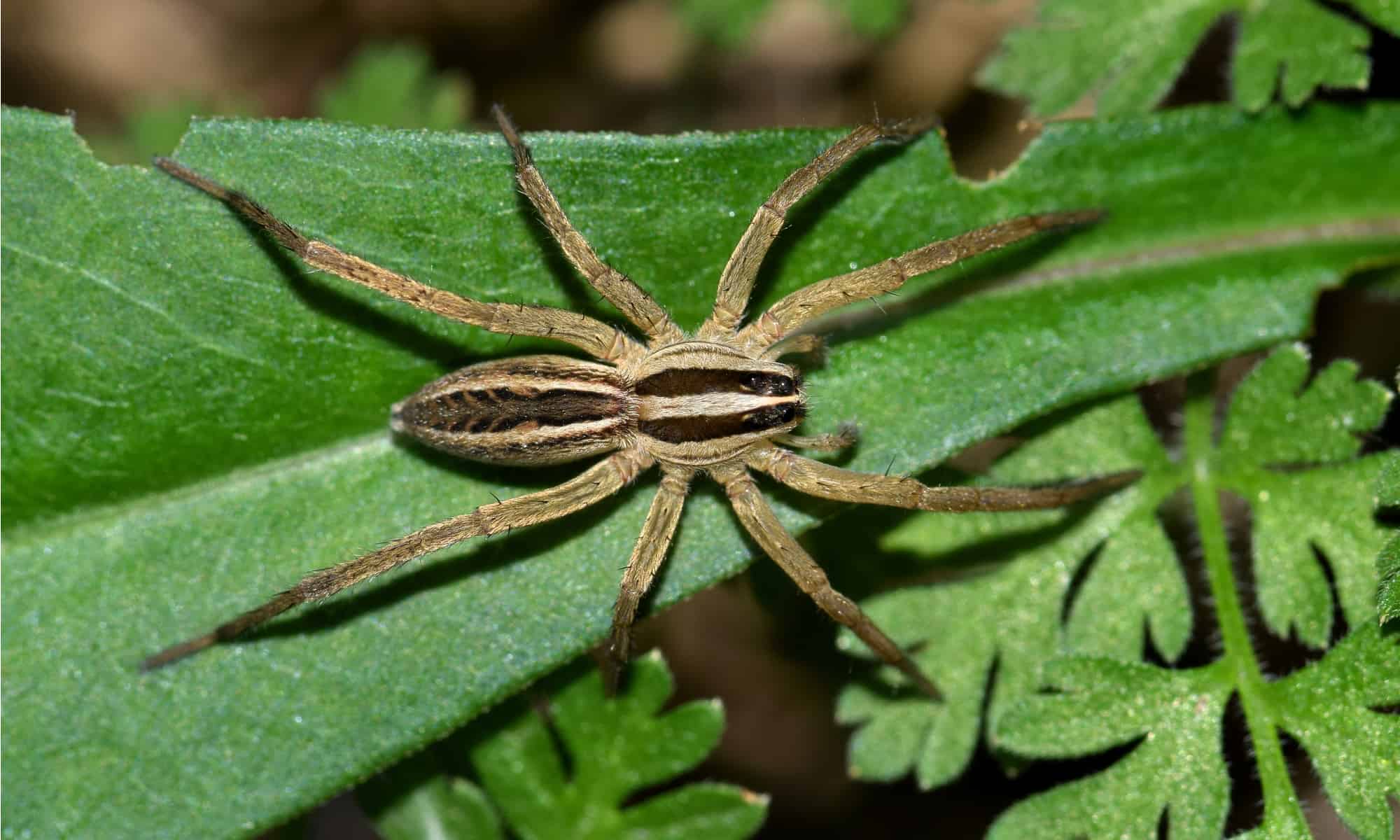

The state of Utah boasts gorgeous natural formations, including the Great Salt Lake and Arches National Park. Utah is also home to some of the largest and most dangerous spiders in the United States. Of the 50,000 recognized spider species worldwide, approximtely 600 are found in Utah. These spiders vary in size, from dwarf orb weavers (Linyphiidae), which are tiny spiders that measure less than 0.02 inches, to the much larger species. Continue reading to discover the five biggest spiders in Utah.
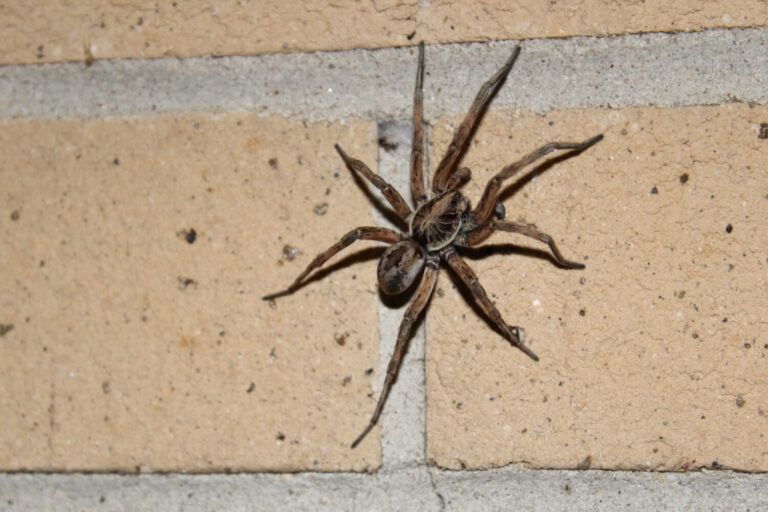
5. Hobo Spider
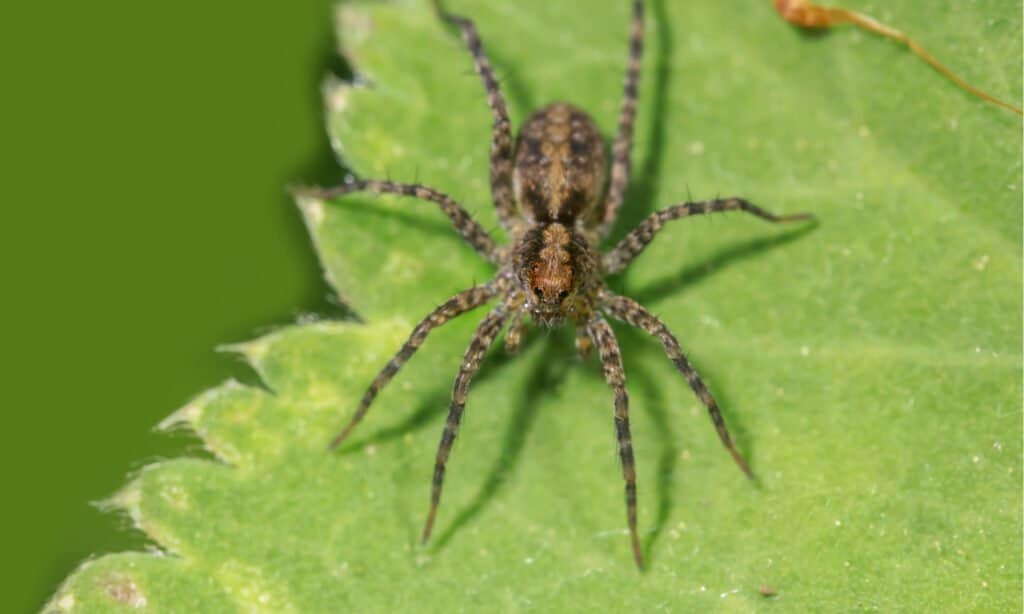
Found in grassy fields and around outbuildings, hobo spiders have leg spans of 1-2 inches.
©SNEHIT PHOTO/Shutterstock.com
| Scientific Name | Size | Danger to Humans |
|---|---|---|
| Eratigena agrestis | 1-2 inches | A bite can cause moderate pain and some redness at the site, but they’re not deadly. |
Hobo spiders are often found in grassy fields with tall vegetation and outside buildings where they can spin their funnel-like webs in cracks and crevices. Hobo spiders are sometimes misidentified as brown recluses, though brown recluses are not native to Utah and the two species differ in size and coloration.
Make no mistake, these spiders can bite humans. However, their bites do not cause necrosis as previously thought.
4. Desert Recluse Spider
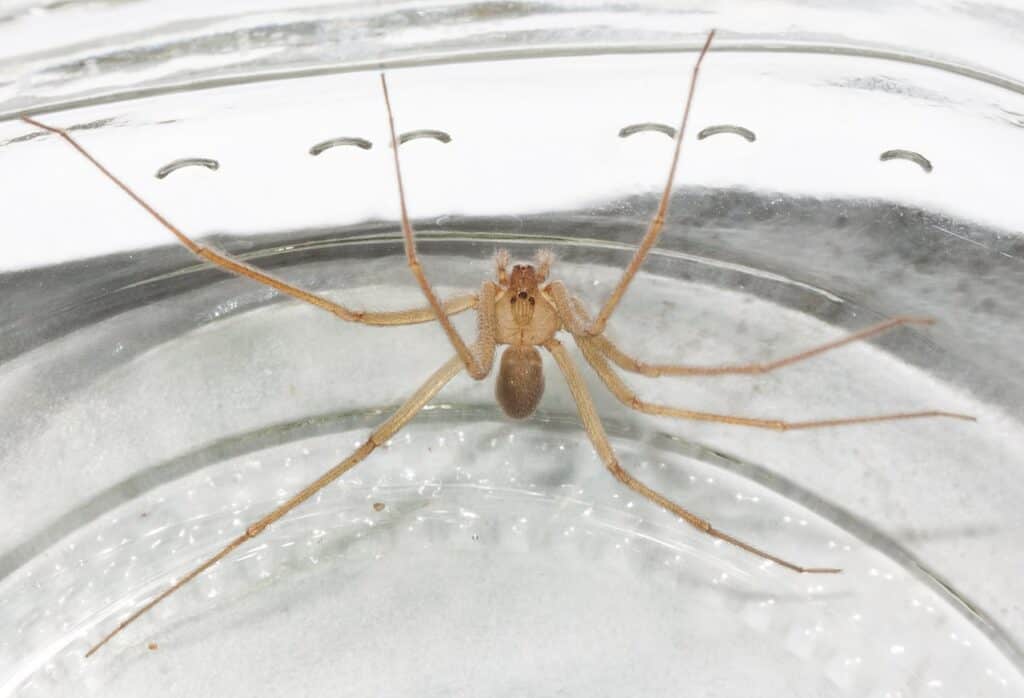
Desert recluse spiders have a 2-inch leg span and a short body
©DesertTrip / CC BY-SA 4.0, via Wikimedia Commons – Original / License
| Scientific Name | Size | Danger to Humans |
|---|---|---|
| Loxosceles deserta | 1.5-2 inches | Inflicts a painful necrotic bite that can result in severe damage at the afflicted area and may require medical aid. |
The desert recluse is a spider with a leg span that measures up to 2 inches long despite having a relatively small body. They are also easily confused with the brown recluse and the hobo spider. The desert recluse is a brown spider that may have a faint violin-shaped marking on its cephalothorax.
Desert recluse spiders are usually found in dry, undisturbed areas such as deserts, under rocks, or in debris.
The bite of a desert recluse can leave a painful lesion that may take weeks to heal. The bite is prone to infection, which may result in necrosis, requiring medical intervention.
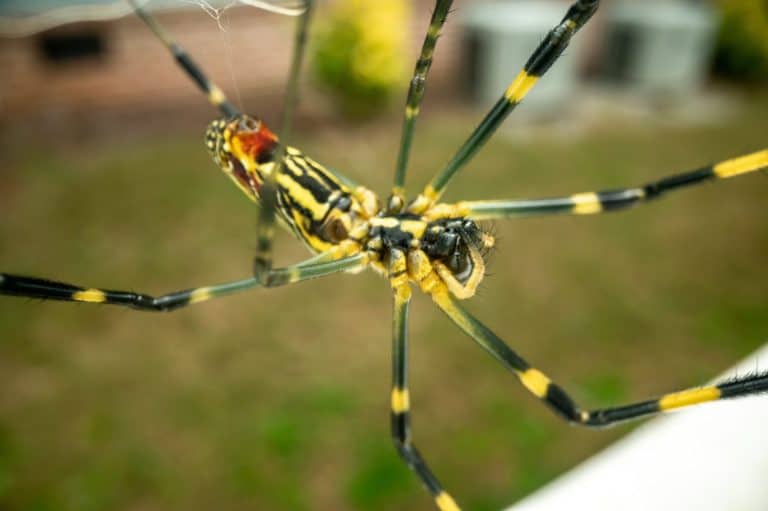
3. Golden Huntsman Spider
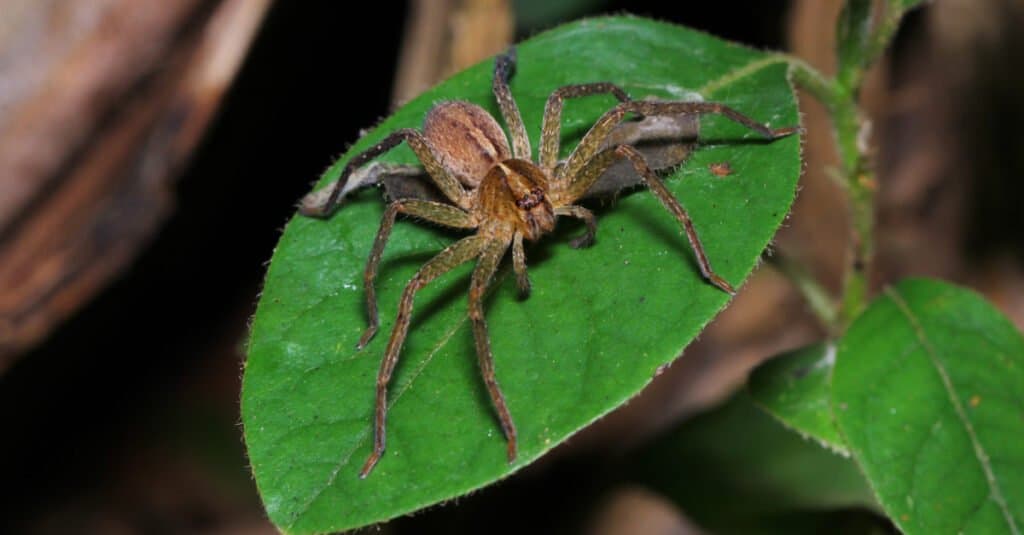
Golden huntsman spiders are typically found in arid and semi-arid habitats, such as deserts and scrublands.
©Pong Wira/Shutterstock.com
| Scientific Name | Size | Danger to Humans |
|---|---|---|
| Olios giganteus | 1.5-3inches | May cause a seriously painful bite, and foreign species can cause serious health complications. |
The golden huntsman spider is a member of the Sparassidae family, and it’s sometimes called the giant crab spider for its unusual shape. Golden huntsman spiders are found in arid and semi-arid regions, as well as in piles of chopped wood and sometimes in wooden structures.
These spiders can be golden brown, brown, tan, or orange, with a dark mark running the length of their abdomen. Their legs are often light brown with black near the ends. The orientation of their legs and tarsals gives them the appearance of a crab, hence their common name.
A golden huntsman spider bite typically results in mild symptoms, such as pain, redness, and swelling at the bite site, with occasional nausea or headaches. Rare individuals may experience an allergic reaction that requires medical attention.
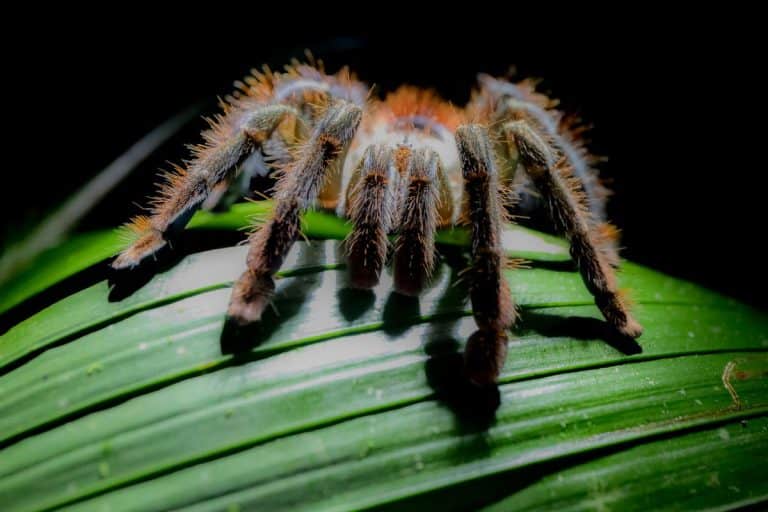
2. Carolina Wolf Spider
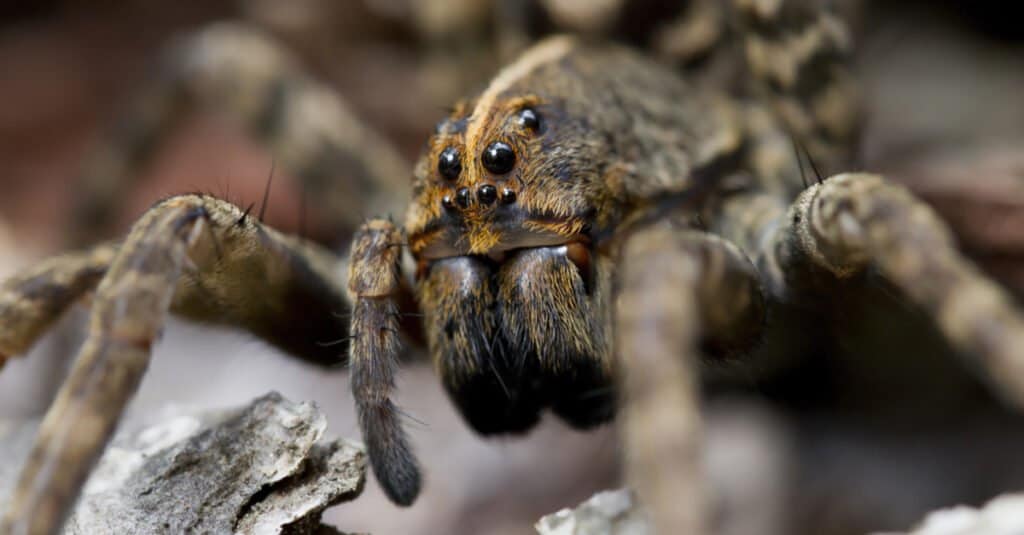
The Carolina wolf spider has a 4 inch leg span and a large body
©Will E. Davis/Shutterstock.com
| Scientific Name | Size | Danger to Humans |
|---|---|---|
| Hogna carolinensis | 2-4 inches | The bite from this spider causes local pain and swelling that can get worse if the person is allergic. |
The Carolina wolf spider is one of the biggest spiders in Utah as well as the largest wolf spider species in the United States. These spiders can have a four-inch leg span and a large body.
Carolina wolf spiders occur in a variety of colors, including black, gray, white, and tan.Typically, their bodies are brown or light brown with a light medial stripe on the carapace and two dark marks on either side. Their abdomen has a dark cardiac mark surrounded by light-colored stripes.
Carolina wolf spider bites are painful, although bites from this species are rare. These spiders usually have to be provoked to bite. Their bites result in moderate pain, swelling and itching.
Individuals who are allergic to their venom may experience cramps, rashes, sweating, and difficulty breathing, which may require medical treatment.
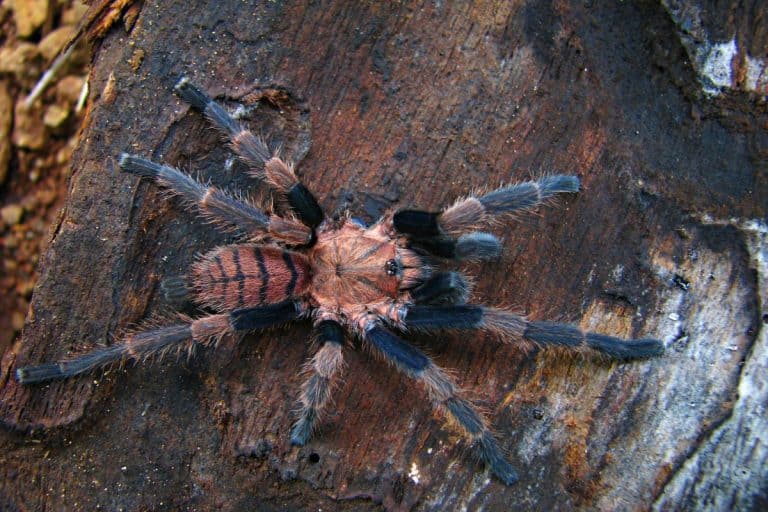
1. Desert Tarantula
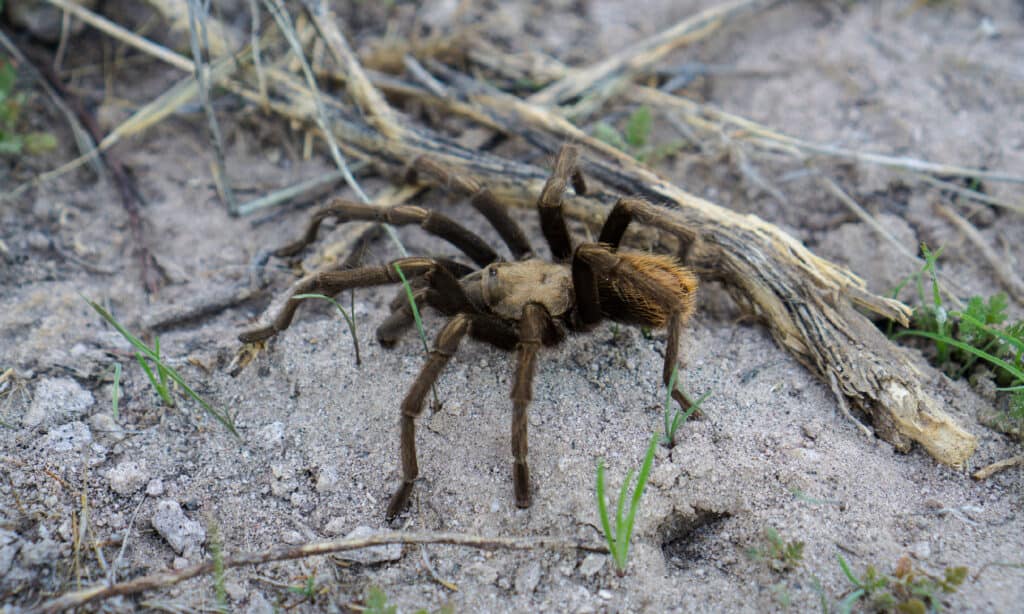
Desert tarantulas have large hairy bodies and a leg span of approximately 5 inches.
©iStock.com/Stephen Couch
| Scientific Name | Size | Danger to Humans |
|---|---|---|
| Aphonopelma iodius | 4 to 5.5 inches | Delivers a painful bite that will cause swelling, redness, and itchiness and leave puncture wounds. May require medical assistance. |
A desert tarantula can have a leg span of over 5.5 inches, making it the largest spider species in Utah
Female desert tarantulas are typically tan, while males have a reddish-brown cephalothorax, reddish hairs on their brown abdomen, and black legs. These large spiders often dig burrows to keep themselves hidden while they wait for prey. These spiders are large and highly effective hunters. While they are venomous, their venom is not considered medically significant to humans
The biggest spider in Utah also happens to deliver one of the most significant bites. This species has large fangs, and as a result, its bite can cause moderate to severe pain, swelling, redness, and itchiness.The resulting puncture wounds must be monitored for signs of infection.
While not among the largest spiders in Utah, the most dangerous spider in the state is the black widow. This spider can cause serious health effects and even death in rare cases.