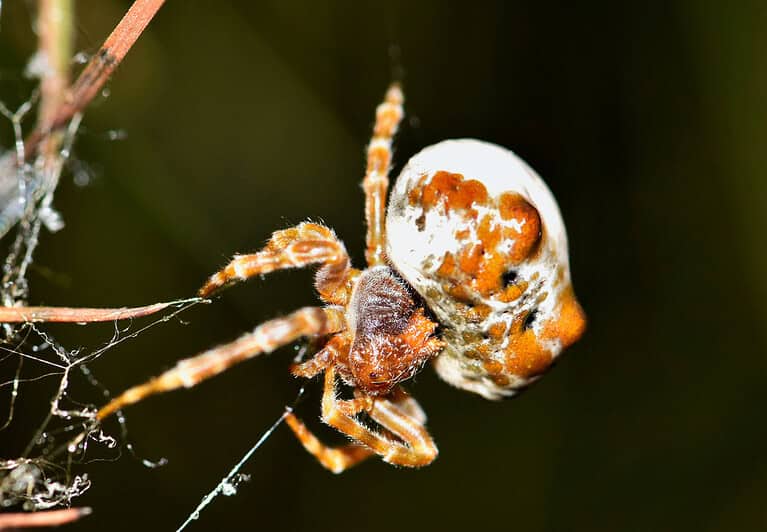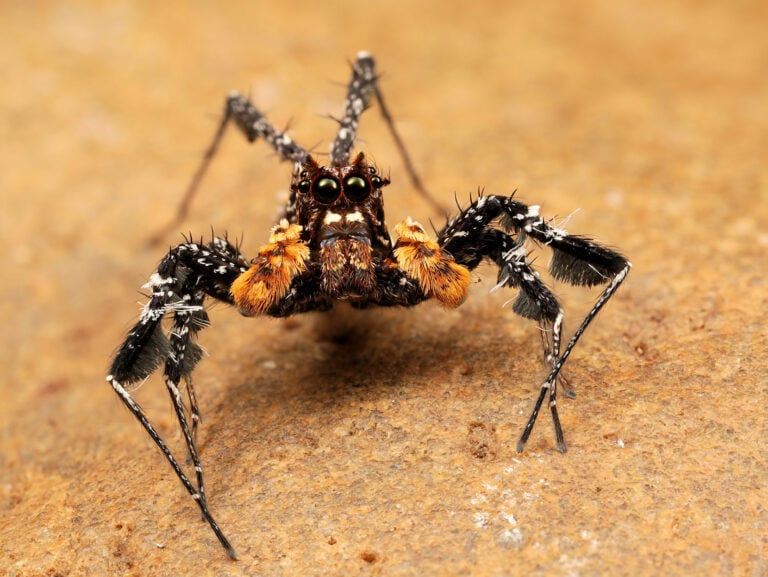

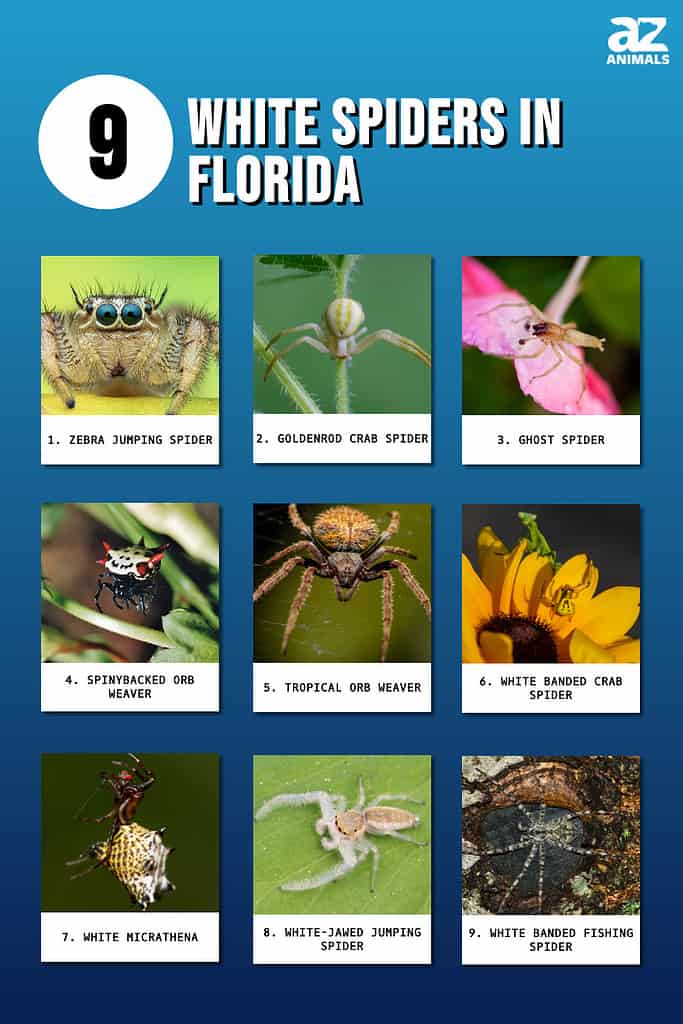
Florida’s habitats and environment are perfect for a wide variety of wildlife. It is estimated that there are now more than 50,000 different spider species inhabiting the earth, with around 3,500 of them living in the United States. Spiders are abundant animals you will see in the months of spring to fall, with many of them showcasing a myriad of colors. White is a unique color for a spider, as most species are found in colors like yellow, tan, black, or dark brown. In this article, you will learn about nine white spiders in Florida.
1. Zebra Jumping Spider (Salticus scenicus)
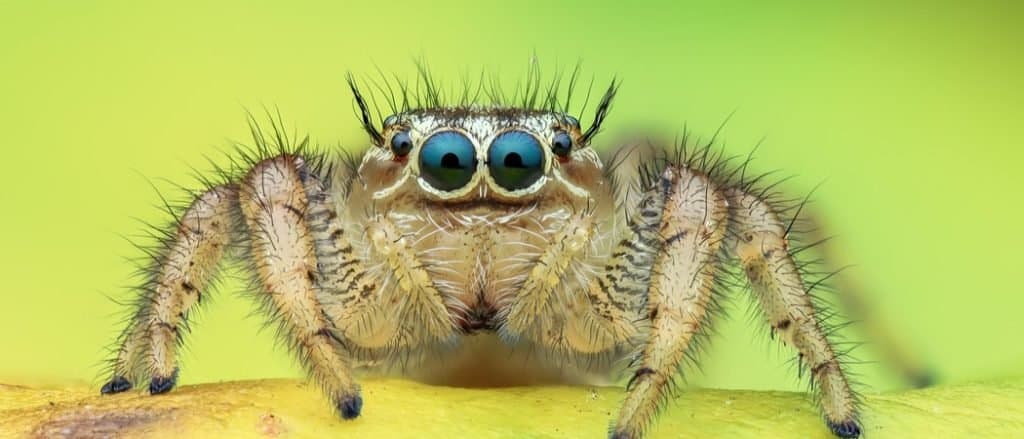
The zebra jumping spider looks very similar to other members of its family and is identifiable by its white and black coloring.
©Tran The Ngoc/Shutterstock.com
A member of the Salticidae family, the zebra jumping spider is named after its white and black pigment. This spider is covered in small white hairs, with white markings and stripes covering them. It also has black and tannish colors, similar to a zebra’s pattern. Both sexes are of similar size, ranging between 0.19 and 0.35 inches. Like other jumping spiders, they can leap very quickly to navigate, sometimes jumping more than two feet away.
The zebra jumping spider is a very common white spider in Florida and is also found in other parts of North America. This species lives in an open habitat with vertical surfaces for them to climb on. In residential areas, the sides of houses and fences are also places where this species is seen. They hunt small insects like flies and other spiders. Jumping spiders are often seen circling their prey, stalking them like a cat, then striking at the most fitting moment. Mostly active and hunting during the day, spring is when this spider is seen most.
2. Goldenrod Crab Spider (Misumena vatia)

A large portion of the goldenrod crab spiders’ lives is spent sitting on vegetation waiting for food.
©Ihor Hvozdetskyi/Shutterstock.com
The ability to change colors, their crab-like appearance, and their hunting ability makes the goldenrod crab spider a unique species. Females of this species have large round abdomens and two long crab-like front legs. Males are small in size, never growing past 0.19 inches, while females can reach up to 0.39 inches.
Living across North America and Europe, females of this species spend their lives sitting on flowering plants, while males wander around looking for a mate. Goldenrod crab spiders sit on flowers like goldenrod or daisies, where they can best camouflage themselves. These spiders have a pearl white coloring but are able to change their pigment to yellow if the host flower is yellow.
Late summer and fall are when this species is active in Florida. They are common in grasslands, prairies, and other similar habitats. A diurnal species, they hunt during the day, preying on pollinator insects. Butterflies, flies, and bees that visit flowers are quickly grabbed, then eaten by this spider. Goldenrod crab spiders have extremely strong front legs with small pincers, helping them to grasp their prey firmly.
3. Ghost Spider (Wulfila saltabundus)
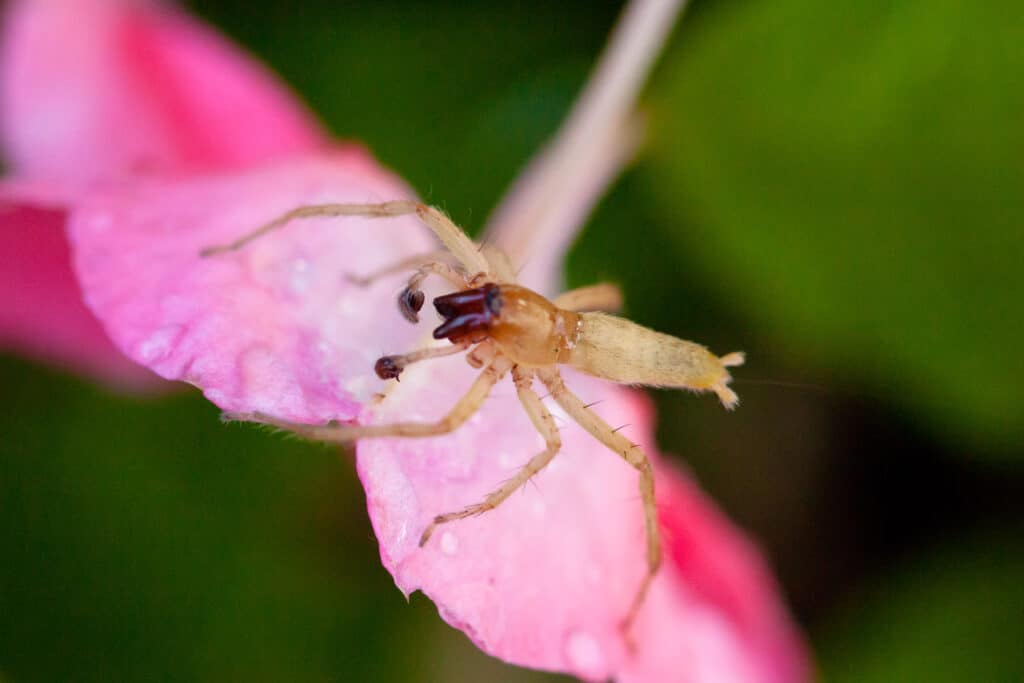
Florida is home to a variety of ghost spider species, most of which are white.
Wulfila saltabundus is a member of the Anyphaenidae spider family, also called by some the ghost spider family. It is one of the many white spiders you may come across in Florida. This ghost spider species is also found in other parts of the United States and Canada. It has an all-white coloring and grows between 0.15 and 0.27 inches. Along with its white coloring, this spider is known for its long legs and plump, round abdomen.
Ghost spiders are seen most often in the summer and are active at night. This species will build a silk retreat to live and rest in. They also use these sacs to lay their eggs and guard them until the spiderlings are ready to fend for themselves.
This white spider is often seen near plant life and highly vegetated areas. Fields, farms, grasslands, forests, and gardens are areas where this spider lives. This species is one of 500 ghost spider (Anyphaenidae) species living on the globe, many of which are white.
4. Spinybacked Orb Weaver (Gasteracantha cancriformis)
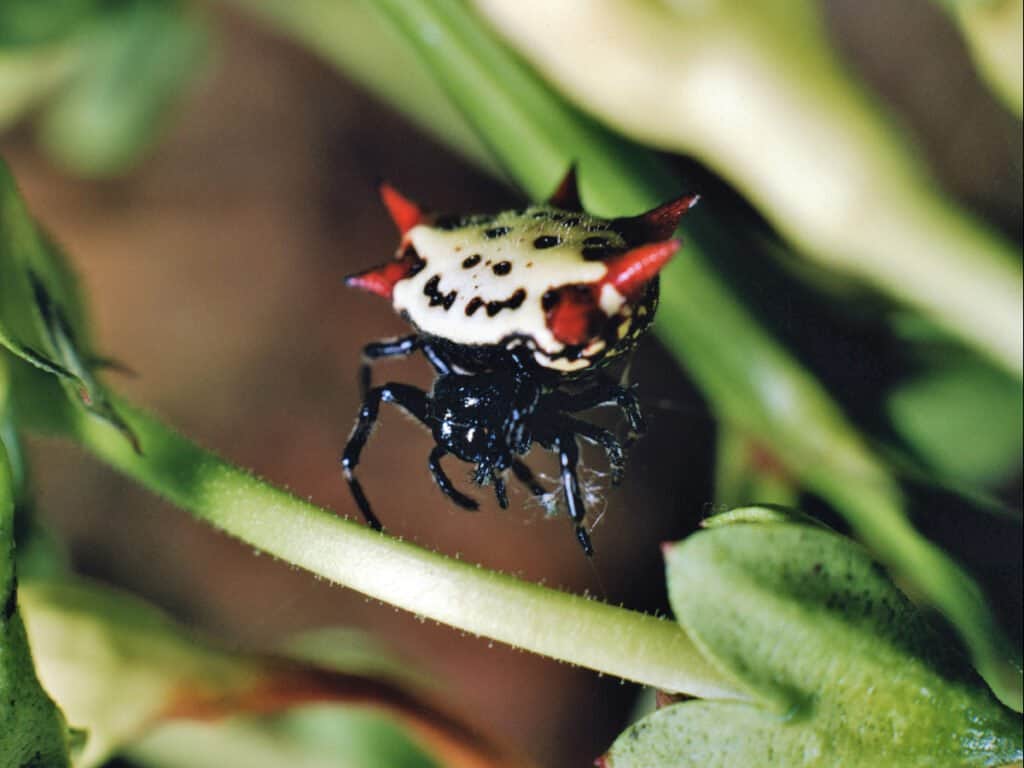
The spinybacked orb weaver is also called the star spider due to its spiky appearance.
©iStock.com/Weber
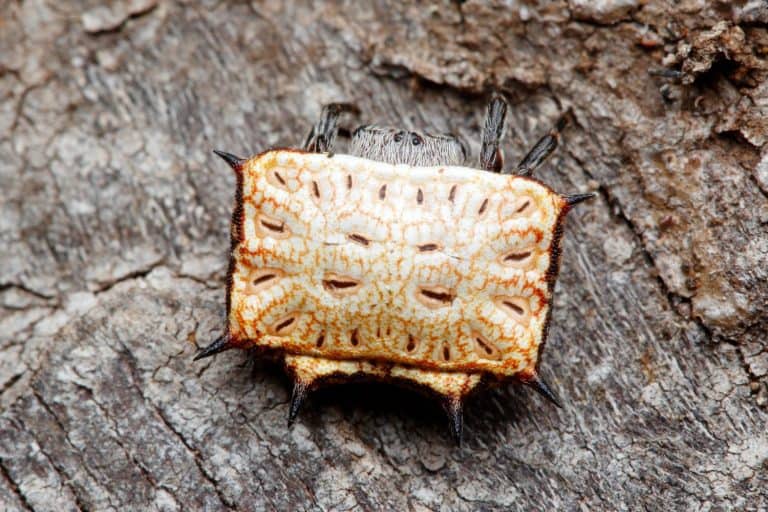
White is one of the most common colors in which the spiny-backed orb weaver is seen. It is one of many white spiders in Florida, but may also appear in yellow, red, orange, and ivory coloring. The abdomen of this species differs drastically from most other spiders in the state, as it is covered in black dimples and has large spikes protruding outward. Around six spikes protrude from its oval-shaped body. However, only females have large spikes on their abdomen, and males are much smaller than females. Summer and early fall are when the spiny-backed orb weaver is most active. It is usually seen sitting in the center of its large circular web during the day.
Mostly female spinybacked orb weavers create a web up to 24 inches in diameter. Males are not seen as often and spend their lives looking for a mate. Habitats with an abundance of plant life are where this spider prefers to live. Woodlands and gardens are where this species makes its web, using the surrounding vegetation to support its webs.
This spider feeds on small insects like flies, mosquitoes, and butterflies that get trapped in its web. Parasites, wasps, and birds are their main predators, and it is said that the large spines on this spider help it ward off predators.
5. Tropical Orb Weaver (Eriophora ravilla)
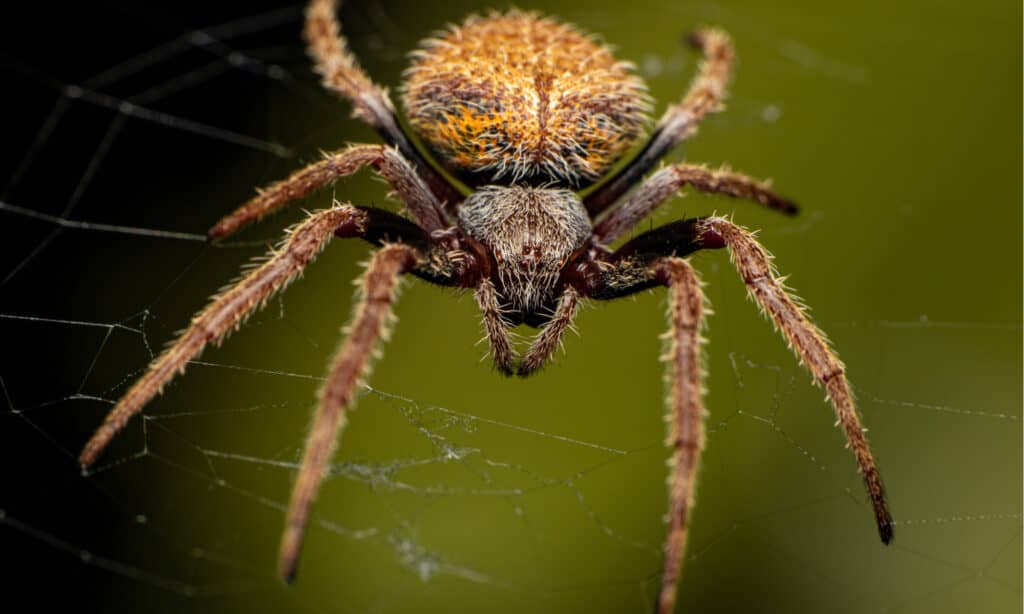
While the tropical orb weaver comes in various colors, all are covered in small white hairs called setae.
©Tommy Daynjer/Shutterstock.com
Another type of orb weaver found in Florida is the tropical orb weaver. Like the spinybacked orb weaver, this spider comes in a variety of colors, as well as different patterns. Female tropical orb weavers’ coloring can range from nearly all white to close to all black; those in Florida typically have reddish-brown bodies and legs and often have white spots or a vertical white stripe on their abdomens. Male tropical orb weavers have similar coloring to females but are usually more gray. All tropical orb weavers’ bodies and legs are covered in small white hairs called setae.
The female tropical orb weaver can grow from 0.47 inches to 0.94 inches in body length. Males are smaller than females, growing to 0.5 inches in body length and having a smaller abdomen.
Tropical orb weavers hide during daylight hours and come out once the sun sets to build their large spiral-shaped webs between trees, plants, or man-made structures. The tropical orb weaver will spend the night in the middle of the web, waiting for moths and small insects to be caught in it and cause vibrations that alert the spider, which will bite the prey to immobilize it and wrap it in silk. Then, before dawn, the spider will remove its web.
6. White Banded Crab Spider (Misumenoides formosipes)
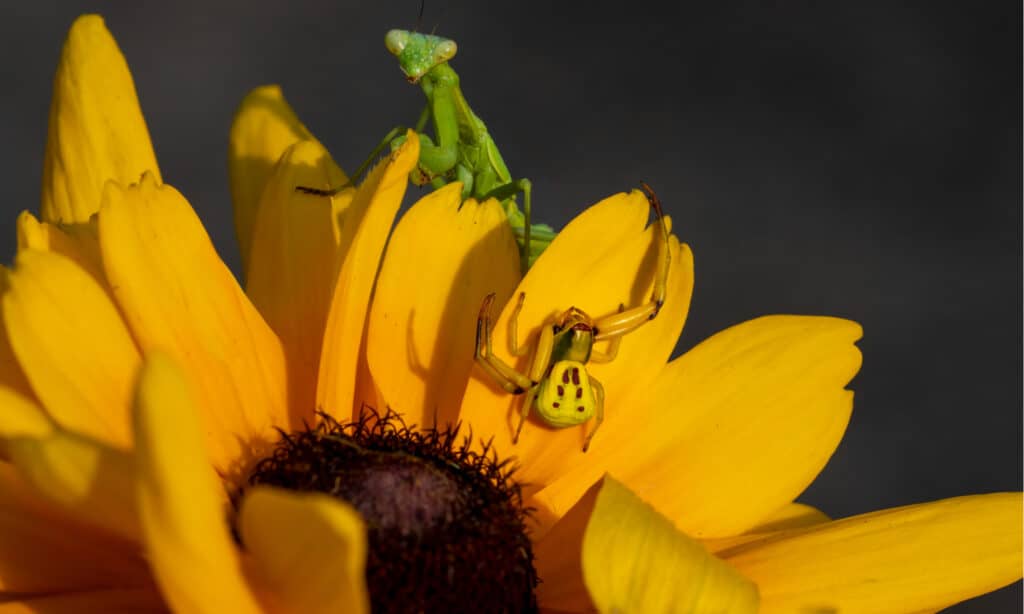
The white-banded crab spider can change its color, switching between white and yellow.
©Georgi Baird/Shutterstock.com
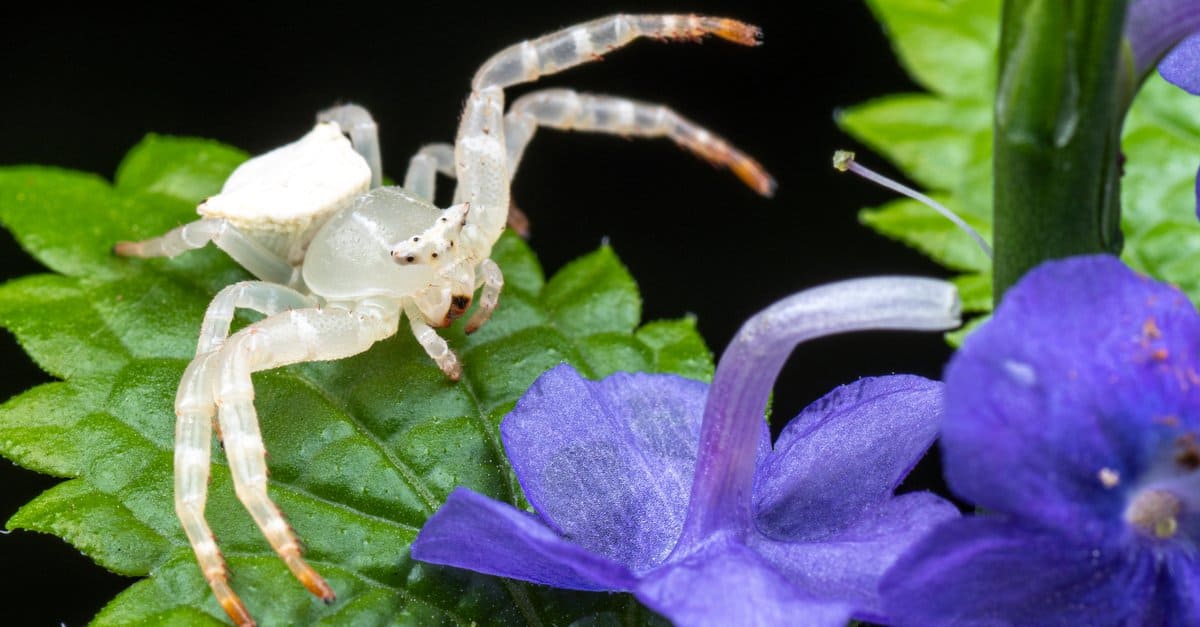
The white-banded crab spider is a member of the Thomisidae crab spider family. Like the goldenrod crab spider, this species has a white or yellow coloring. The white-banded crab spider is named and identifiable from other crab spider species due to the bold white stripes on the back of their carapace. Females are much larger than males, measuring around 0.2 to 0.4 inches. Male white-banded crab spiders have long, dark brown legs and small heads. They have a small, rounded white abdomen and are around 0.11 inches.
Like other crab spiders, this species lives on flowering plants. Meadows, grasslands, woodlands, and gardens are habitats of this species in Florida. The late summer and early fall seasons are when white-banded crab spiders are active. Their front two legs are crab-like and are used to snatch prey when it gets too close. They feed on bees, flies, and other small animals that get near flowers. While their coloring is white or yellow, white-banded crab spiders may have additional markings on their rounded abdomens to better blend them into the environment.
7. White Micrathena (Micrathena mitrata)
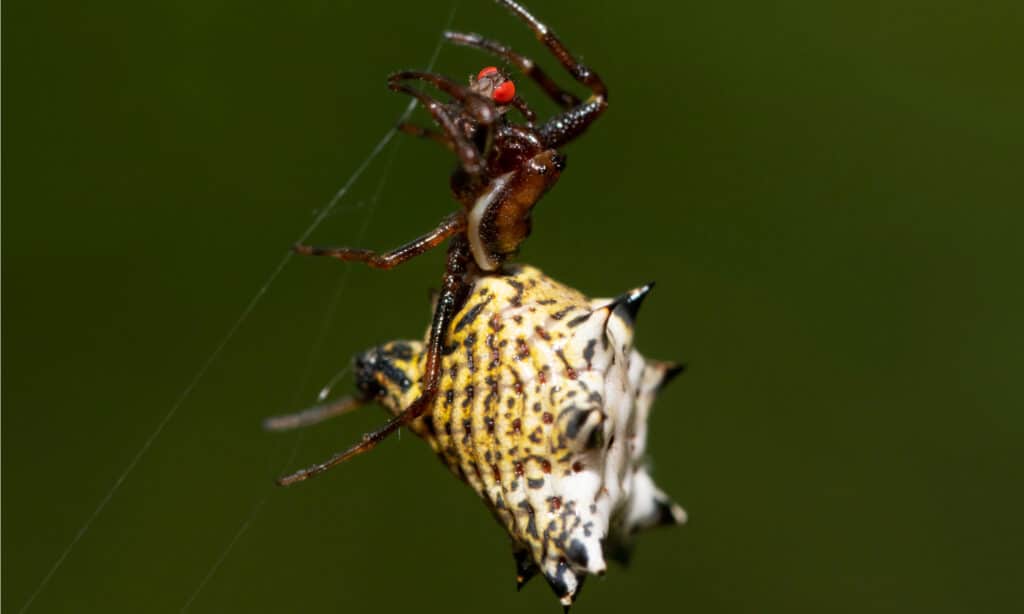
White micrathena are small and have a large bulbous abdomen with spikes.
©Sari ONeal/Shutterstock.com
In Florida, the white micrathena spider is a small orb-weaving spider living in forested and residential areas. The adult white micrathena ranges between 0.15 to 0.23 inches in size. As its name suggests, this spider has a white abdomen, which has a similar shape to a head wrap. The top of its abdomen has small spikes, and the cephalothorax is reddish-brown.
White micrathena live in highly vegetated areas, and females build orb-shaped webs to live in. Gardens and the edges of woodlands are where this spider is regularly found in Florida. Many see this spider as a benefit since its webs catch various plant-eating pest insects. The white micrathena uses its venom to neutralize its prey along with its silk. This spider is harmless to humans and only dangerous to the flies, mosquitoes, gnats, and other flying insects that it feeds on.
8. White-Jawed Jumping Spider (Hentzia mitrata)
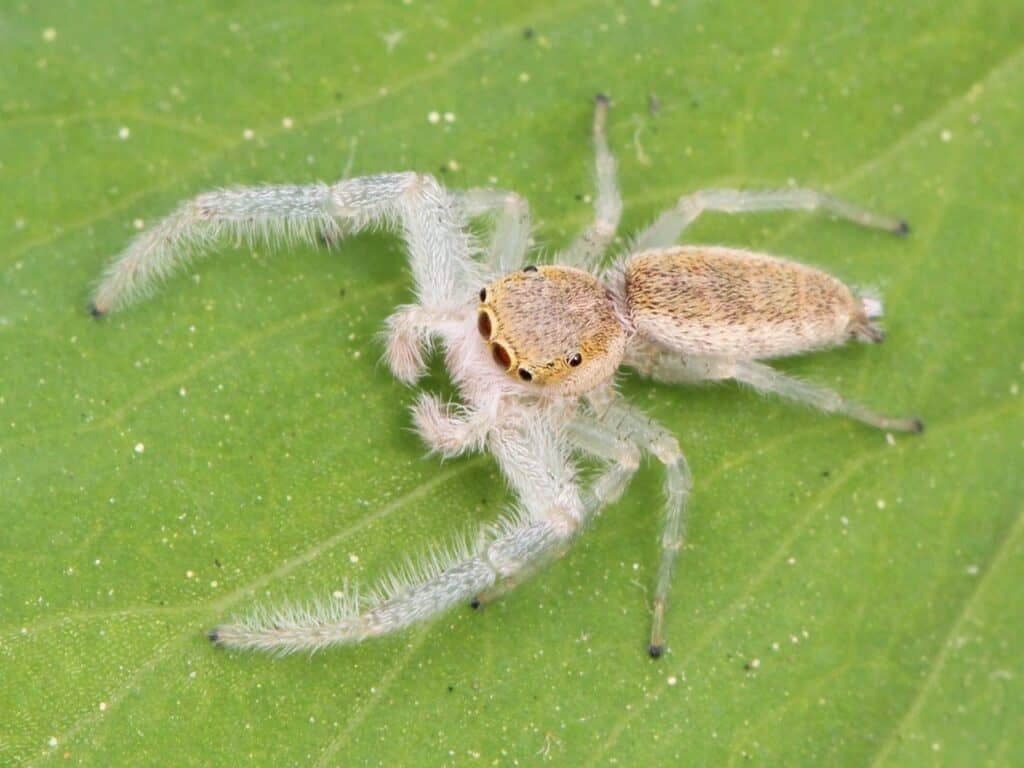
The white-jawed jumping spider possesses characteristic white legs and jaws, hence its name.
White jawed jumping spiders are one of the few members of the Salticidae jumping spider family that have mostly white coloring. Along with other spiders on this list, they are unique due to their white coloring. Adults of this species are between 0.11 and 0.19 inches. Their body and legs are covered in snow-white fur, and orange and tan markings appear on their back. Male white-jawed jumpers are easily identifiable by their long front legs and enlarged pedipalps.
These white spiders live statewide in Florida. They are sometimes found in residential areas and jump on vertical surfaces. Jumping spiders prefer to move around on structures like walls and trees since it gives them a chance to use their excellent eyesight to spot prey. White-jawed jumping spiders are active most in spring. Daylight is the best time to spot them, when they can be seen hunting.
9. White Banded Fishing Spider (Dolomedes albineus)
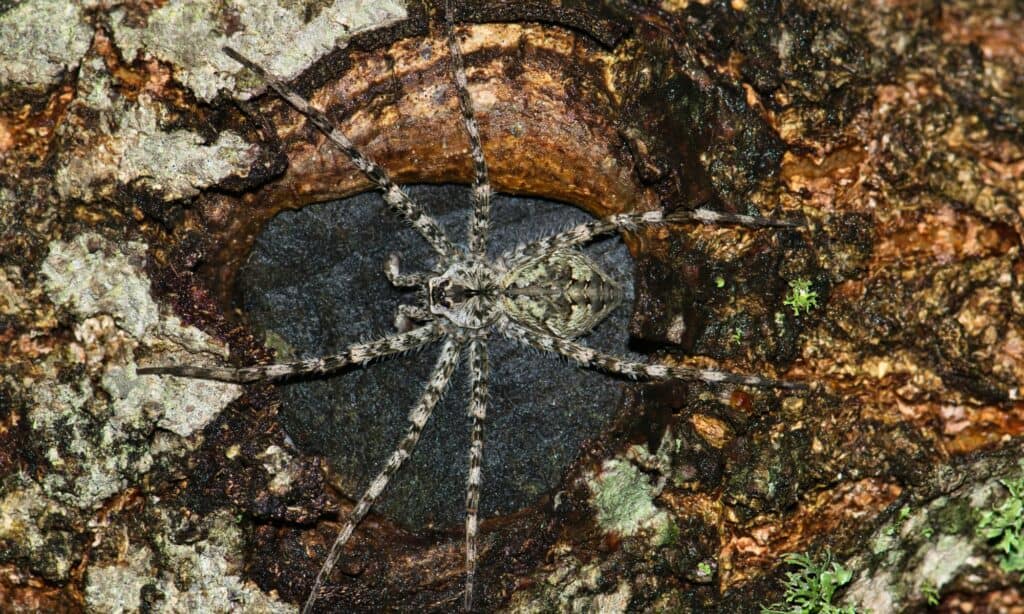
White banded fishing spider is active at night.
©iStock.com/Brett_Hondow
The white-banded fishing spider is a species of nursery web spider found in Florida. This spider is seen most active in the spring months but may be seen year-round. Unlike other fishing spiders, this species has a white or grayish coloring. They have dark bands and a black mottled pattern that covers their body. White-banded fishing spiders range between 0.7 to 0.9 inches in body size.
Swamps are the habitat this spider is found most often, which is why this species is often seen in Florida, since the state holds around 20% of wetland areas in the United States. Like other members of the nursery web spider family, this species can walk on water. Their fur is hydrophobic, and their legs put little surface pressure on the water, allowing them to walk on it.
White-banded fishing spiders are active at night and spend this period hunting. They feed on both aquatic and terrestrial animals. Their diet consists of smaller animals like tadpoles, small fish, and water insects. The white coloring also makes it easy for this species to blend into various rocky areas and sneak up on prey. Their camouflage helps them hide from predators like lizards or larger spiders. White-banded fishing spiders may also dive into the water when approached or threatened.
Bonus: What Keeps Spiders Away

Essential oil scents like lavender are repugnant to spiders.
©botamochi/iStock via Getty Images
One of a person’s worst nightmares is having spiders wind up in their home, especially the venomous kind! The best way to avoid getting bitten by a spider is to try and prevent them from entering your house in the first place. As spiders can get into your home through holes and cracks, you can check for possible entryways with a flashlight. If the light gets through from the inside to the outside, you should fill that hole or crevice with an appropriate product.
Keeping your yard free of debris and overgrown vegetation helps cut down on areas that spiders would gravitate to. Caulking doors and windows is also a good strategy to keep them out.
Spiders hate certain scents, so scented essential oils can help deter them, like peppermint, tea tree, lavender, and rose. You can add 15 to 20 drops of a particular oil in a water bottle mixed with water and spritz it around your house. They also hate the smell of cinnamon and vinegar, so these scents can be used similarly.
Rubbing lemon or orange peels on the baseboards along your walls, on window sills, and on other surfaces can also repel spiders, who dislike citrus smells. Furniture polish and cleaning products with lemon scent can also help.
Regular cleaning inside your home, especially in areas that are dark or less frequented, is necessary to keep spiders from setting up residence. It’s also important to keep an eye on fruit bowls, as they can attract spiders.