
Quick Take
- One spider on this list is actually celebrated as both a pet and a gladiator, a status backed by a competition that is 400 years old. Meet the gladiator spider →
- Japan's most mythologically feared spider is said to breathe fire, control minds, and devour men, yet its real-life bite tells a very different story. Explore the joro spider myth →
- One spider here is not even native to Japan, yet it has quietly colonized nearly the entire country. See Japan's invasive arrival →
- Several of these spiders look terrifying enough to clear a room, but looks and danger don't always line up the way you'd expect. See looks versus danger →
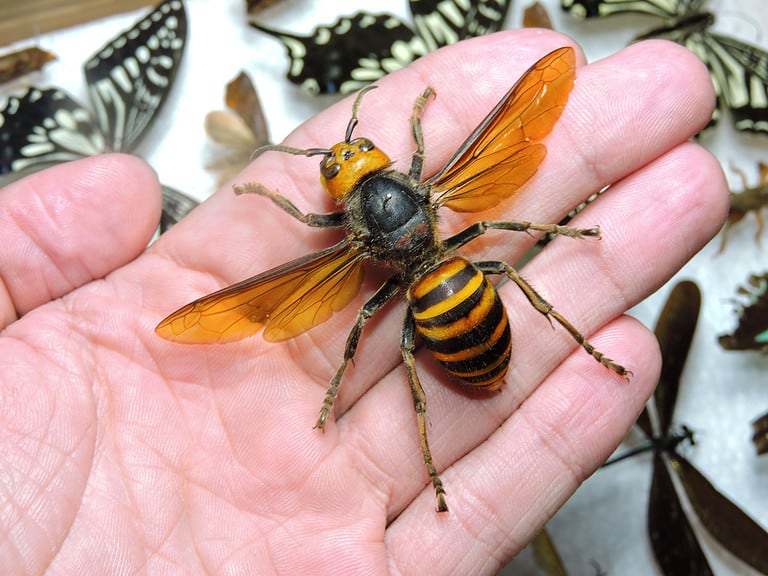
Japan is a beautiful country with something for everyone. If you love exploring the breathtaking countryside and experiencing the nightlife of one of the biggest cities in the world, Japan should be on your destination list. While Japan does have its fair share of scary insects like the Japanese hornet, will the arachnids the country give you nightmares? Read on to learn more about the most terrifying spiders of Japan.
1. Redback Spider
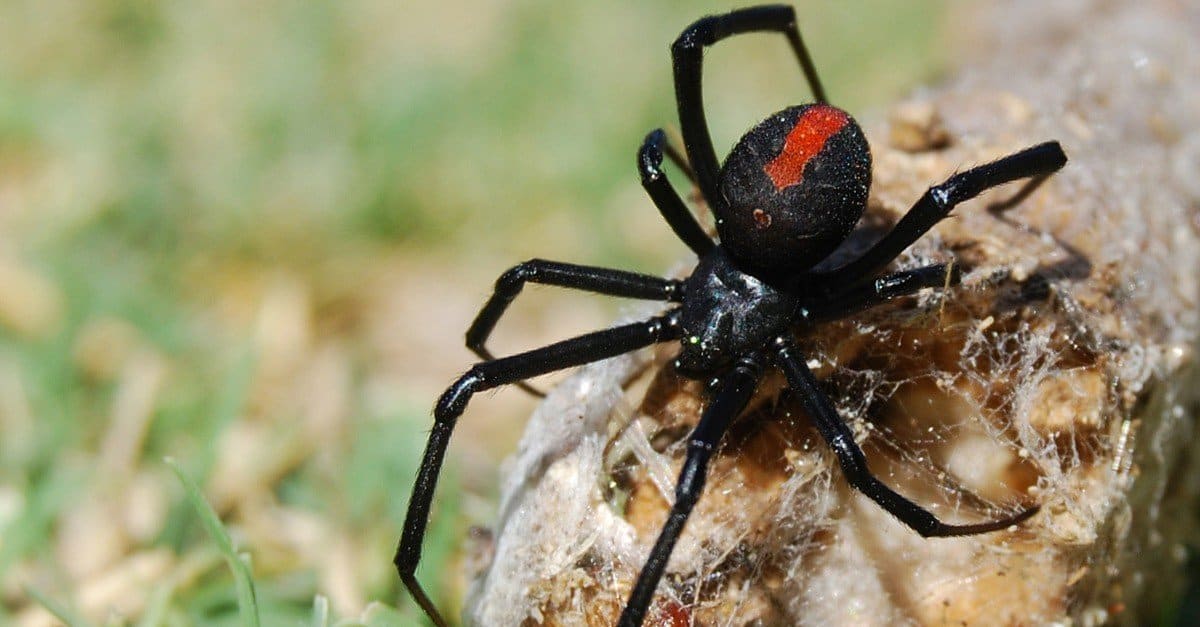
The redback spider (Latrodectus hasseltii) is native to Australia, but this tiny spider has hitchhiked all over the world and is now widespread across Japan. The commonly known and feared black widow spider is in the same family as the redback spider. Their appearances are very similar, as are their bite symptoms. These spiders have shiny, black bodies with a distinctive red stripe on the upper surface of their abdomens and an hourglass-shaped marking on the underside. Redback spider bites can be excruciating and cause swelling and joint pain. In severe cases, the bite can cause heart palpitations, blood pressure changes, difficulty breathing, and vomiting. Fatalities are extremely rare.
These pea-sized black spiders are now found in 45 of 47 of Japan’s prefectures. They build irregularly-shaped webs close to the ground. These spiders can be found in drainage ditches, planters and other garden pots, under wood piles or other building materials, in the crevices of walls, or underneath outdoor furniture. They survive Japanese winters by locating warmer areas such as in heating vents, under houses, under the roofs of homes, or even inside vending machines.
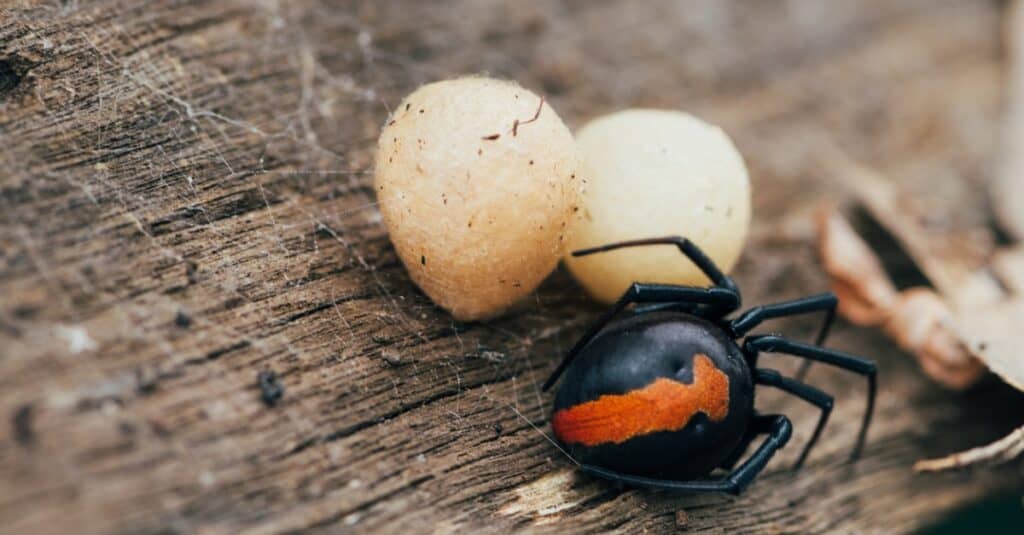
A redback spider and her eggs saks.
©anystock/Shutterstock.com
2. Joro Spider
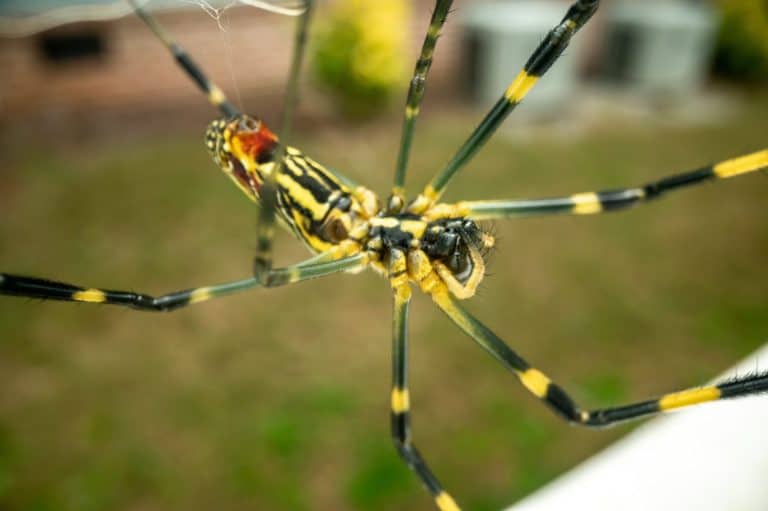
The joro spider’s (Trichonephila clavata) name is based on the Japanese yōkai “jorō-gumo,” which refers to the mythical “entangling or binding bride.” There is quite a bit of superstition surrounding these spiders and their myth. The Japanese myth says that a joro spider has mind control over other spiders, can breathe fire like a dragon, and also turn into a beautiful woman who hunts and eats unsuspecting men. The legend says that the spider/woman might collect hundreds of bodies of men she has feasted on in a condemned house or other abandoned structure.
The joro spider is actually a pretty orb weaver with yellow and blue-gray bands, yellow and black banded legs, and red markings on their underside. Its long, spindly, black-and-yellow striped legs help it quickly cross its large ornate web. Although their body length ranges from approximately 0.66 to 1 inch, the females’ leg span measures up to 3 to 4 inches. However, these spiders are timid and afraid of humans, and their bite is harmless. They are widely distributed across Japan except for Hokkaidō.
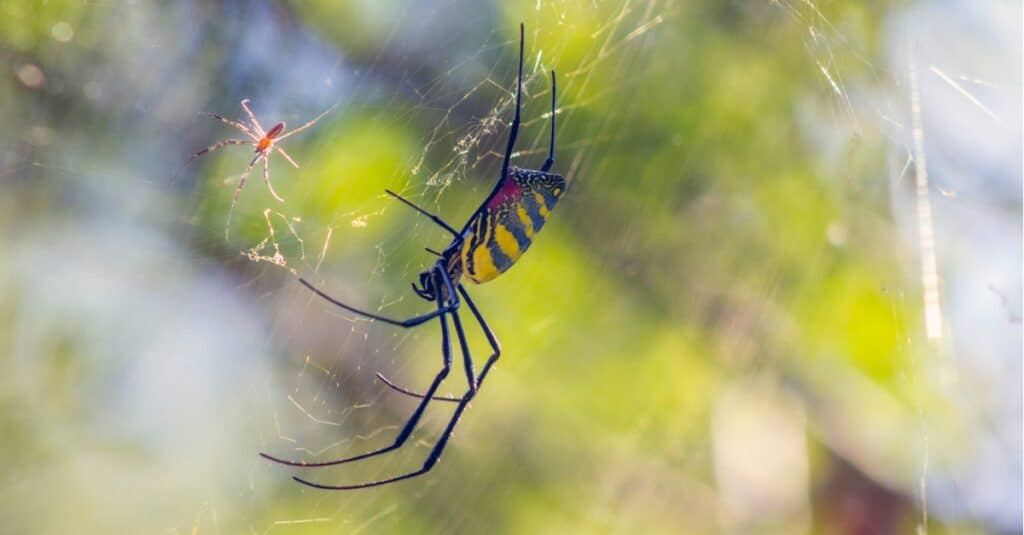
Joro spiders are surrounded by superstition.
©iStock.com/LizMinkertJohnson
3. Pantropical Huntsman Spider
Pantropical huntsman spiders (Heteropoda venatoria), known locally as ashidaka-gumo, are the largest hunting spiders in Japan. Their body length measures 0.8 to 1 inch and they have a leg span of 3 to 5 inches. They can be found in southern regions such as Okinawa and Kyushu, but they have also expanded their range to include Shikoku and Honshu due to warmer temperatures.
These spiders have flat, brownish-grey bodies with light-and-dark banded legs, dark markings on the carapace, and geometric patterns on abdomen. They do not spin webs to catch prey. As their name indicates, they are hunters, relying on speed and acute vision. As they are cold-sensitive, they are often found in human structures. However, bites are rare and they are not dangerously venomous to humans.
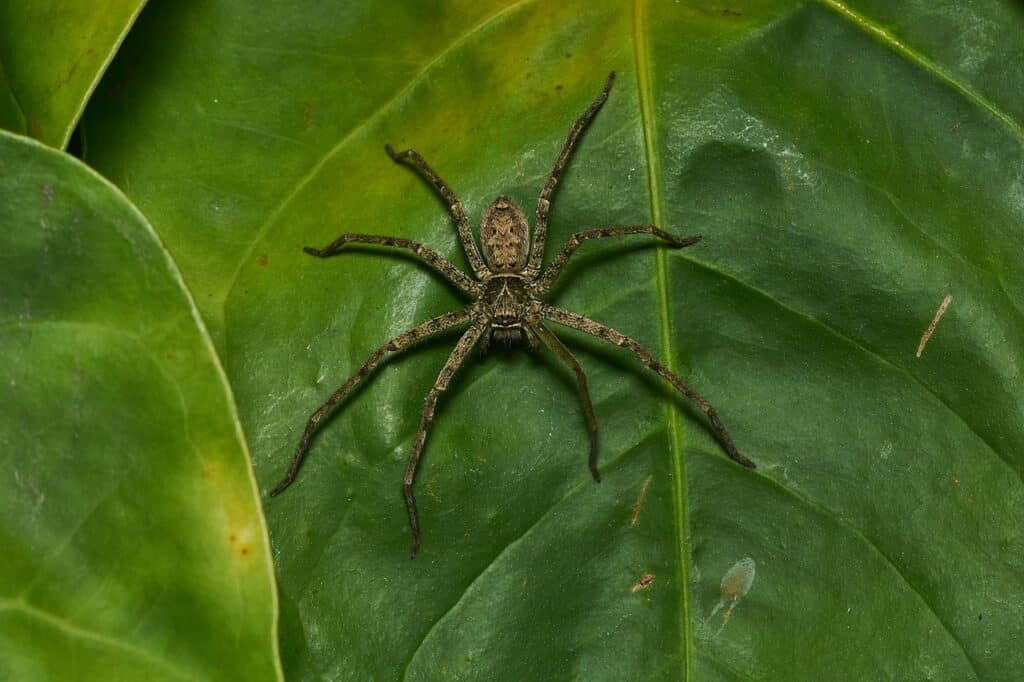
The pantropical huntsman spider has a leg span of 3 to 5 inches.
©Jee & Rani Nature Photography / CC BY-SA 4.0 – Original / License
4. Giant Golden Orb Weaver
Giant golden orb weavers (Nephila pilipes) are large black and yellow garden spiders. These harmless spiders make large symmetrical orb-shaped white webs spanning several feet between bushes and trees. Giant golden orb weavers tend to stretch their massive webs nearer to the ground than those of their cousin, the Joro spider.
Female spiders can have a body length of up to 2 inches, while males only measure 0.2 inches. The females have a leg span that measures up to 8 inches. It has an olive-green to silvery-grey cephalothorax and a dark yellow-brown to black abdomen with bright yellow stripes and dots. Its legs are a glossy black with yellow bands. This spider favors moist sheltered areas in forested areas near parks and gardens. It is primarily seen in southern and warm southwestern regions, as well as warmer parts of western Japan.
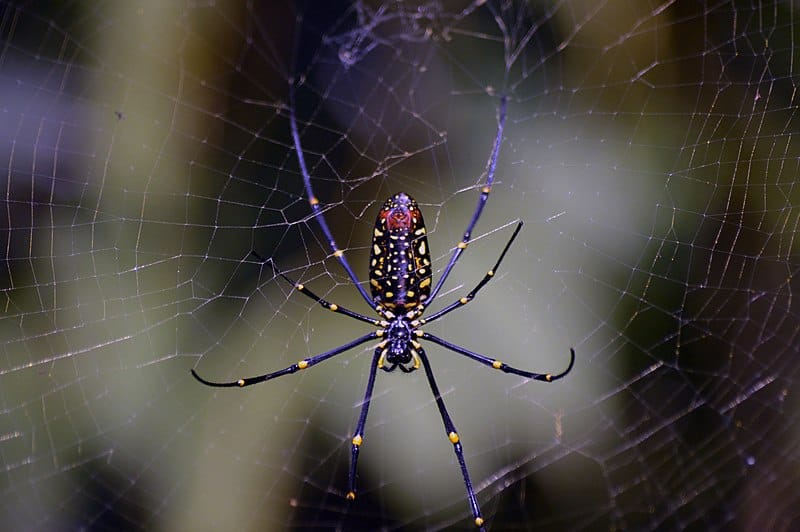
The giant golden orb weaver is often mistaken for the Joro spider but it is much larger.
5. Wasp Spider
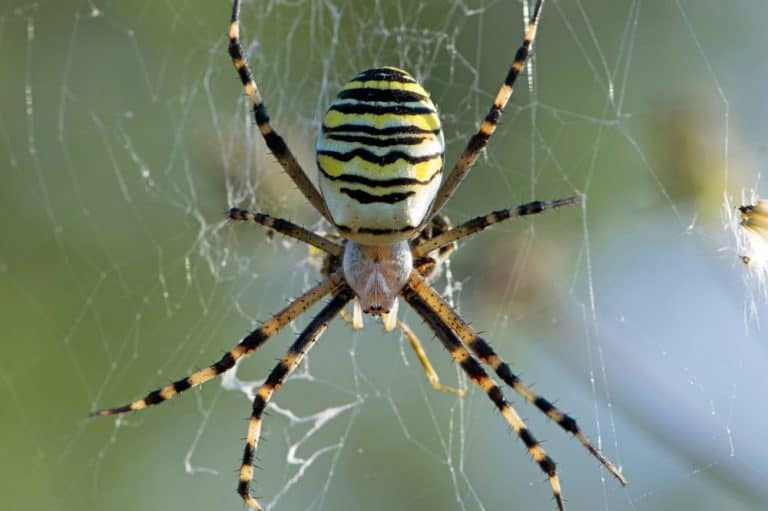
The wasp spider (Argiope bruennichi), known as nagakoganegumo, is one of Japan’s most common and recognizable spiders. They have yellow, white, and black striped abdomens and black and yellow legs that mimic the colors of a wasp. Females can reach about 0.79 inches in body length with leg spans of around 2.75 inches.
The wasp spider makes its webs builds circular orb webs in open, sunny grasslands and forest edges. They may look intimidating, but they are shy and docile spiders that only bite if directly handled. Their venom is harmless to humans. These spiders can be found across Japan.

Wasp spiders have yellow, black, and white coloring on their abdomens that mimic wasps.
©Violart/Shutterstock.com
6. Pointillist Neoscona
The pointillist neoscona (Neoscona punctigera), or monkey orb weaver spider, is a small, spiny, compact brown or yellowish spider that can frequently be seen hanging from vegetation like a minuscule monkey. They have spiky hairs covering their legs, which they neatly fold underneath them. Both females and males are under half an inch in length, but the female’s leg span can reach 2.5 to 4 inches.
They camouflage themselves against tree bark, stems, and woody plants during the day and spin large, circular webs at night. Pointillist neoscona are widely distributed across Japan. They live in a variety of different environments from rural areas to garden settings.
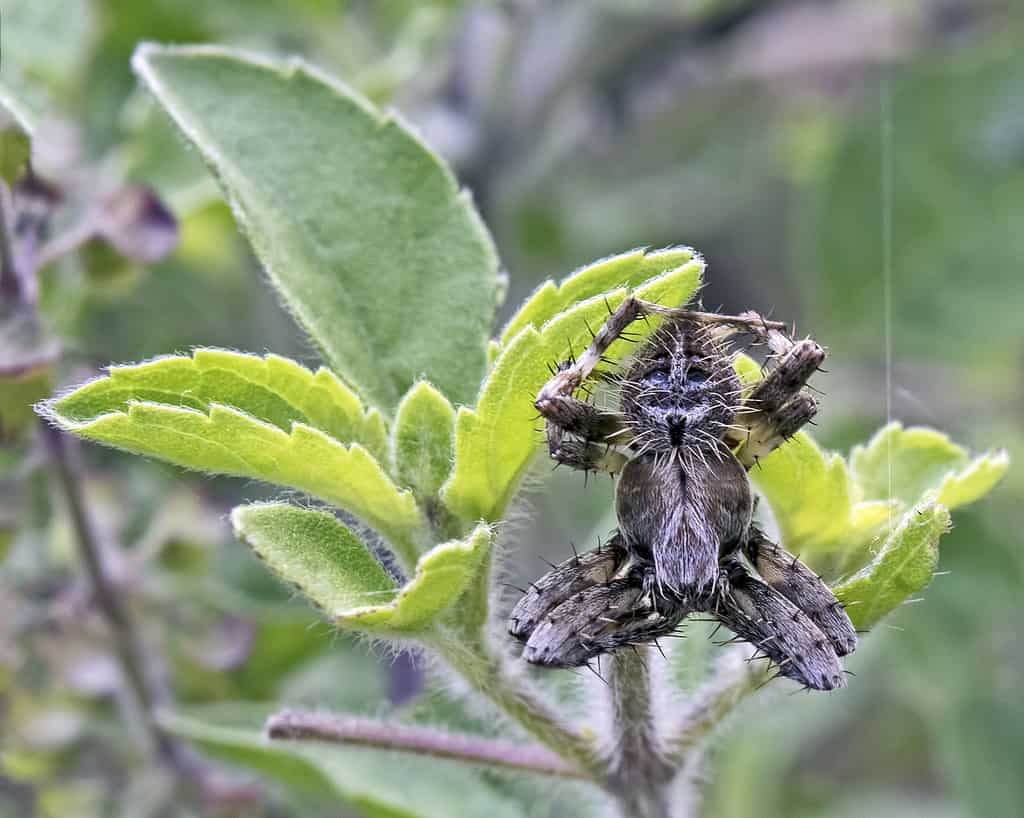
The monkey orb weaver spider looks like a tiny monkey hanging from a branch.
©arian.suresh from Chennai, India / CC BY 2.0 – Original / License
7. Kogane Spider
The kogane spider, also known as the “samurai spider,” has a strange life in Japan as a fighting competitor and pet. People in Japan raise these spiders, train them and sometimes allow them to free-roam in their homes. During the month of June in the city of Kaijiki, Japan partakes in Kumo Gassen, which translates into Spider Battles. This sport dates back 400 years. The rules for the fight between the spiders are simple. The winner has to snap the other’s web, bite first or wrap the opponent in webbing. The judges watch closely and do not let the spiders harm one another.
Since they are in the orb weaver family, these spiders create a zigzag in the center of their large webs. This helps to attract prey insects. Kogane spiders prefer to live in paddy fields, plains, and gardens They are found across the main Japanese archipelago except for Hokkaido. Female spiders are approximately one inch in body length and have a leg span of up to 4 inches. They have alternating bands of bright yellow and dark brown to black with greyish-brown and black banded legs.
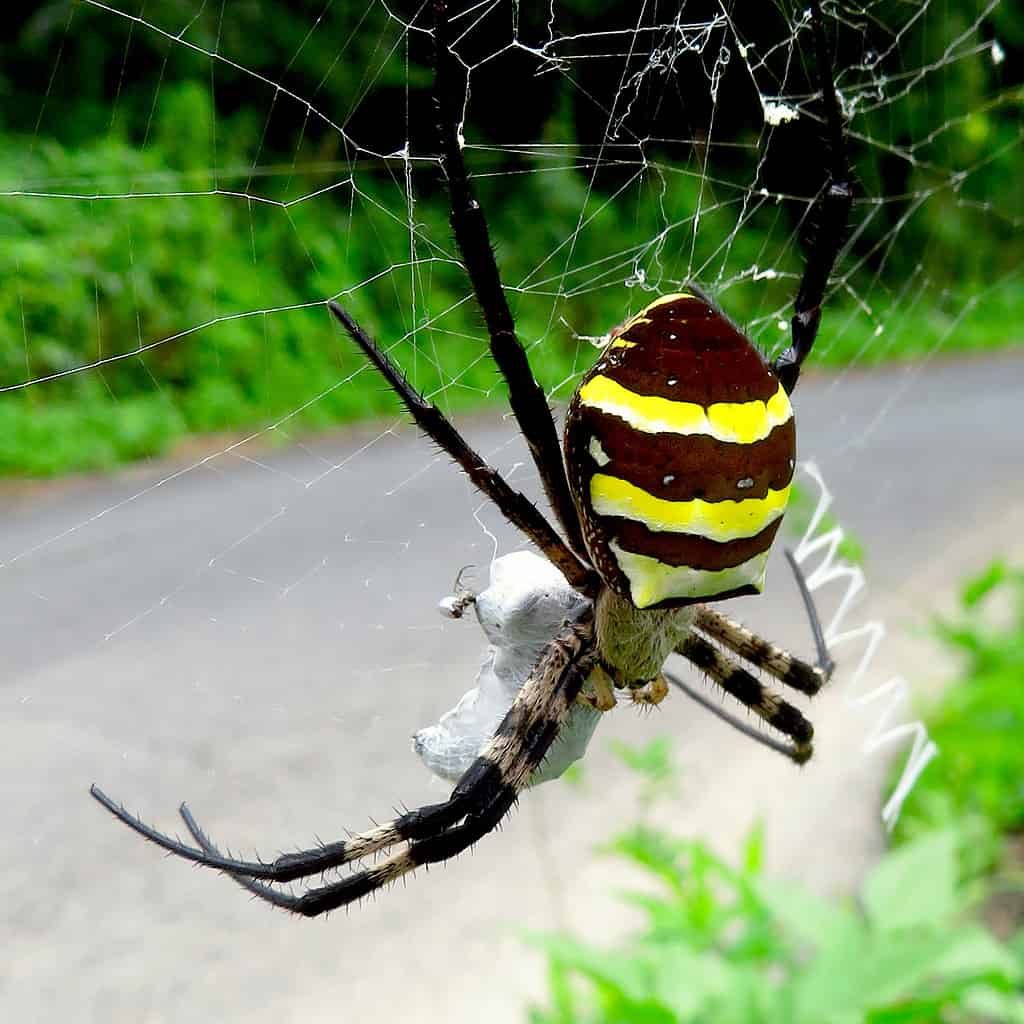
Samurai spiders are more like pets than pests.
©KKPCW / CC BY-SA 4.0 – License