
Quick Take
- One black widow look-alike has spread across multiple continents entirely through human activity, and it may already live near you. See its global spread →
- Not every spider that looks like a black widow shares its lethal reputation, though at least one surprise on this list can still send you to the hospital. Meet the false widow →
- One widow-family spider is found in only a single U.S. state, making it both rare and virtually unstudied, with little known about how dangerous its bite actually is. Discover the rare red widow →
- The classic red hourglass isn't the only warning sign. Some look-alikes use completely different color patterns that are just as easy to miss. See the brown widow's markings →
Black widow spiders belong to the genus Latrodectus, which contains more than 30 recognized species worldwide, including the North American species, the Southern black widow (Latrodectus mactans). While the iconic image of a widow spider is a shiny, jet-black female with a red hourglass marking, not all black widow spiders have this glossy black appearance. Their color varies significantly depending on age, sex, and species. However, several other spider species closely resemble the classic black widow. Continue reading to learn about six of them.
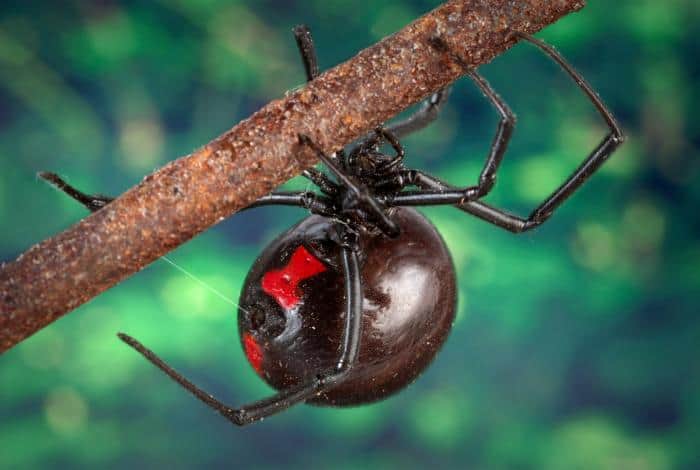
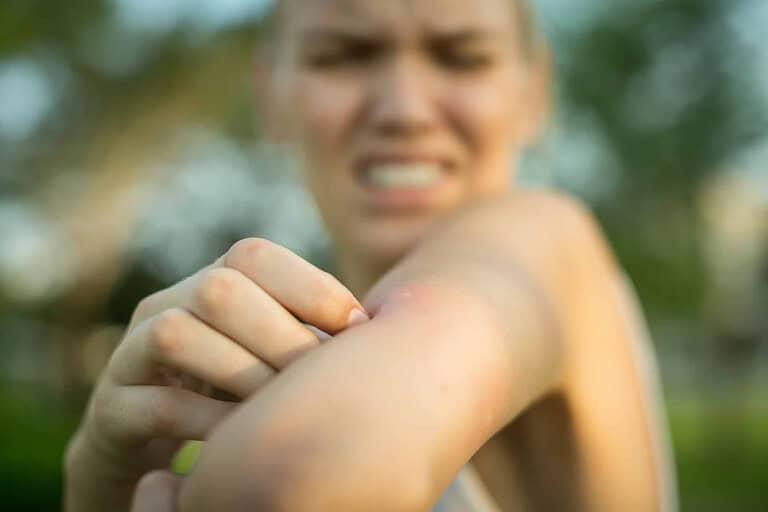
A female black widow’s bite can cause severe muscle cramps, abdominal pain, nausea, sweating, and hypertension. Although these symptoms can be intense and require supportive care or the administration of a specific antivenom, bites are rarely fatal to healthy adults.
European Black Widow
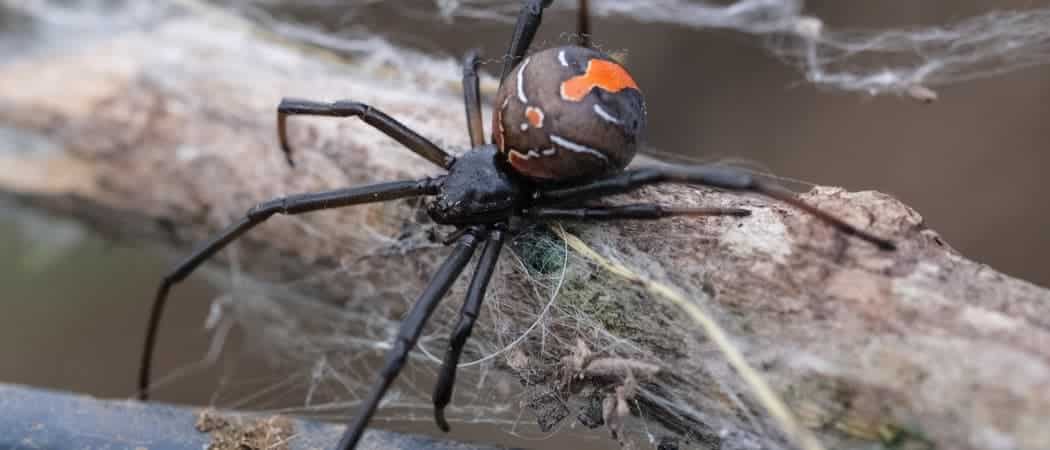
The European black widow (Latrodectus tredecimguttatus) is found in parts of Europe, North Africa, and the Middle East. Its distribution extends from the Mediterranean region into central and eastern Europe. This species closely resembles its American counterpart and features markings on its bulbous abdomen. The European black widow has 13 distinct spots on its back, which are usually red but can sometimes appear orange or yellow.
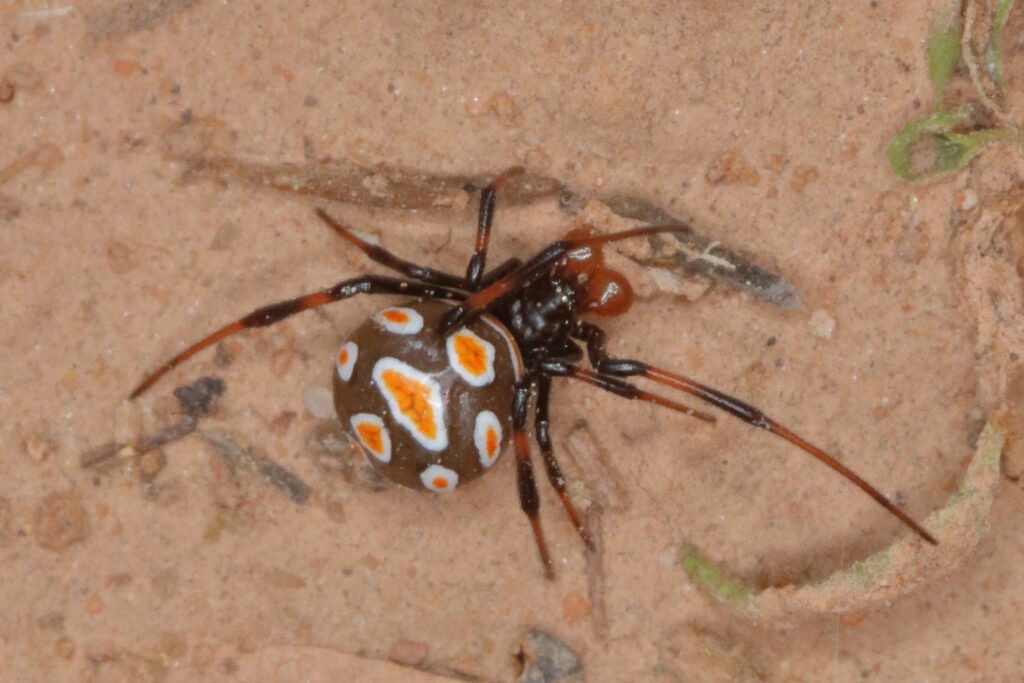
The European black widow is sometimes called the Mediterranean black widow.
©iStock.com/Frank Buchter
The female European black widow can grow slightly larger than the female Southern black widow, although the difference is not significant. Both species have a body length of approximately 0.5 inches and a leg span of 1.5 inches.
Noble False Widow
The noble false widow (Steatoda nobilis) is a medium-sized arachnid resembling the true black widow but with some distinguishing features. They are approximately the same size as the Southern black widow, with a half-inch body and a 1.5-inch leg span. Their body exhibits a dark brown to black bulbous abdomen. However, instead of being marked with red, noble false widows have cream-colored markings on their abdomen. These markings vary in shape and intensity.
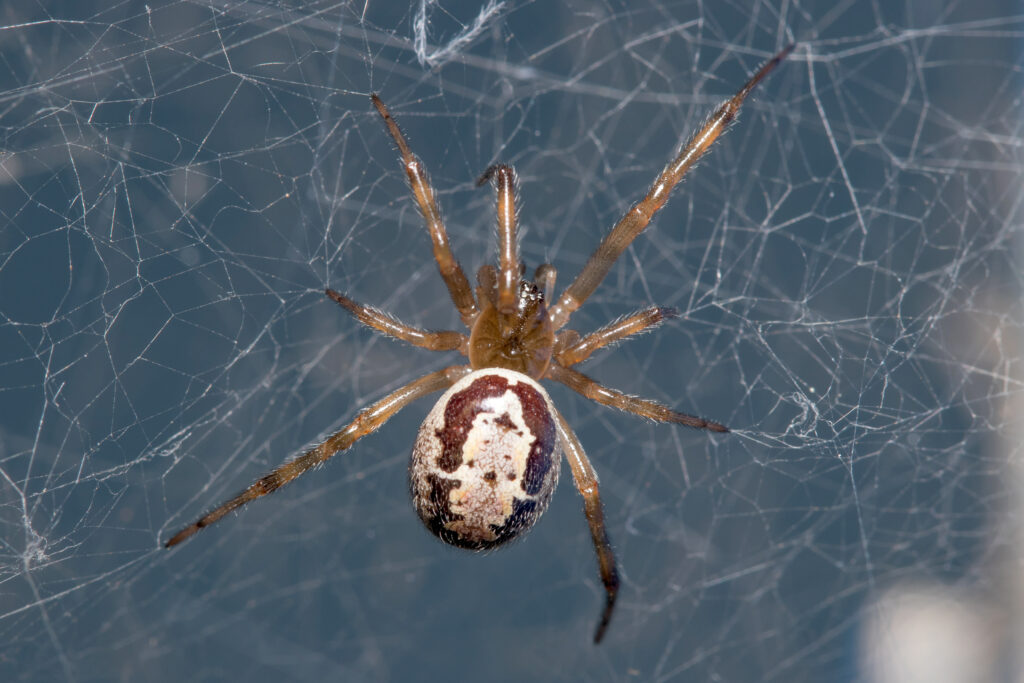
The noble false widow spider has the most potent venom of any spider in Ireland.
©JorgeOrtiz_1976/Shutterstock.com
The noble false widow spider is native to Madeira and the Canary Islands, but its range has expanded to various parts of Europe, including the United Kingdom and Ireland. In recent years, sightings have been reported in locations throughout Europe, likely due to human activities such as international trade and transportation.
This spider’s adaptability to different climates allows it to establish populations in urban and suburban areas, where it can live in and around buildings, gardens, and other human-made structures.
False Black Widow
The false black widow (Steatoda grossa), also known as the cupboard spider, is slightly smaller than the Southern black widow, measuring about 3/8 inch in body length and having a one-inch leg span. They have a dark, shiny brown or black bulbous abdomen. Like the noble false widow, the false black widow has pale, cream-colored markings on its abdomen, which can vary in shape but often resemble a faint hourglass or chevron pattern.
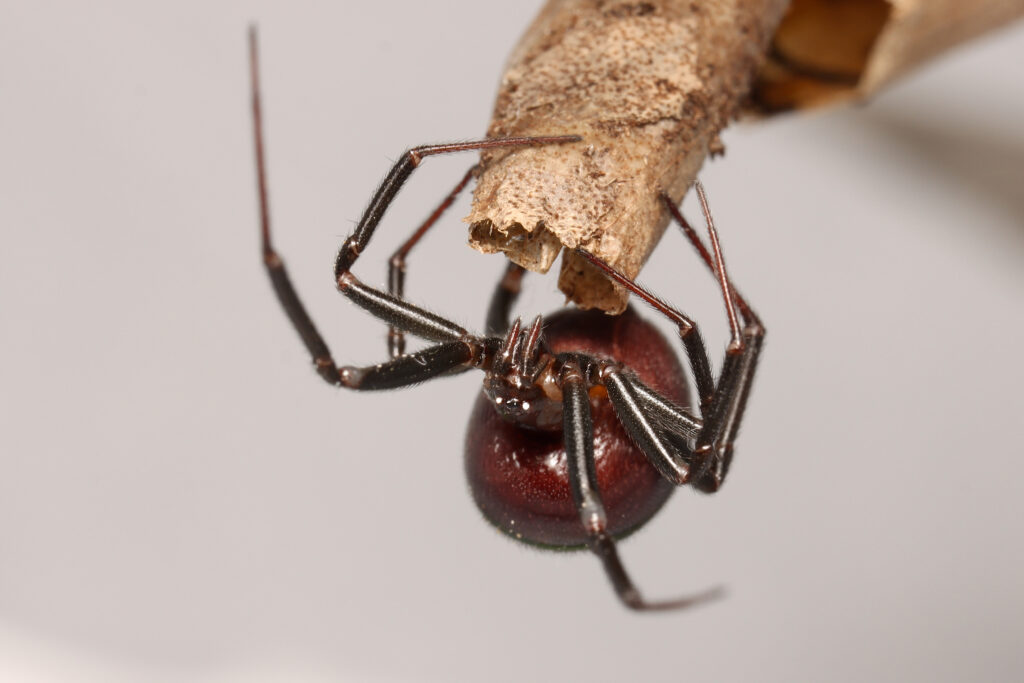
False widow spiders can be harmful to humans, but their bites are not life-threatening.
©Dan Olsen/Shutterstock.com
Although the false black widow is venomous, its bite is generally mild and not considered medically significant to humans. The symptoms of a false black widow bite typically include localized pain, redness, and swelling, which usually resolve without medical treatment. These spiders are not known for aggressive behavior and are more likely to retreat than to bite when encountered by humans.
Originally native to Europe, the false black widow has been introduced to various parts of the world through global trade and transportation. This species can now be found in North America, South America, Australia, and other temperate and subtropical regions.
Red Widow
The red widow spider (Latrodectus bishopi) is named for the striking red or reddish-orange coloration of the female’s abdomen, which often features a distinct hourglass-shaped marking.
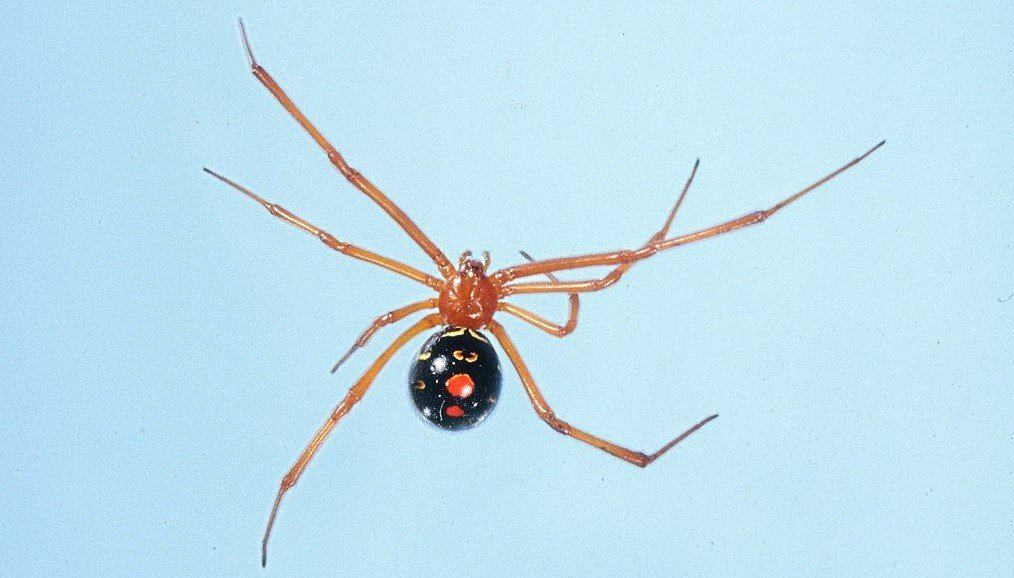
The red widow is virtually the same size as a black widow.
©Florida Division of Plant Industry Archive / CC BY 3.0 US, via Wikimedia Commons – Original / License
Like other widow spiders, the red widow possesses venomous glands and is considered venomous. However, due to its rarity and the limited research available, the potency of its venom and the effects of its bite on humans remain relatively unknown. As with any spider species, caution is advisable, and individuals should avoid handling or provoking red widow spiders if encountered in their natural habitat.
The red widow spider has an incredibly restricted range and is found only in Central and Southern Florida. This species has evolved to thrive in the distinctive ecosystems of the Florida scrub habitat, which is characterized by sandy soils and dry (xeric) conditions.
Brown Widow
The brown widow spider (Latrodectus geometricus) iis similar in size and shape to a black widow, but it is tan to light brown rather than glossy black. Female brown widows have orange to yellow markings on the underside of their abdomen.
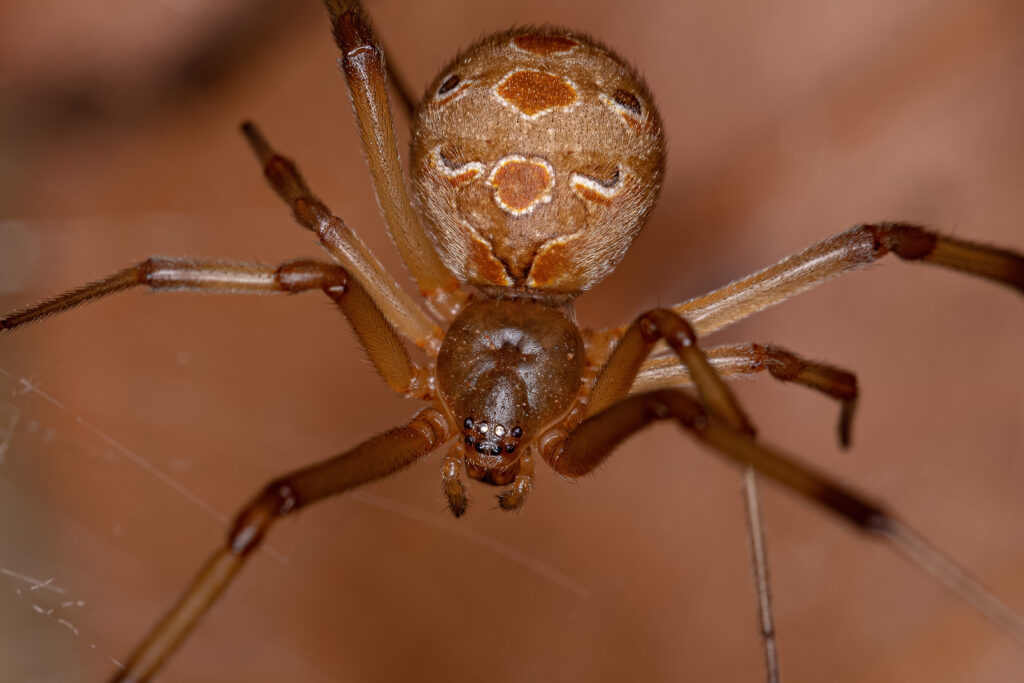
Although brown widow venom is toxic and can cause uncomfortable symptoms, it is far less dangerous than the venom of the black widow.
©iStock.com/ViniSouza128
Brown widows are approximately the same size as their black widow cousins, with a 0.5-inch body and a leg span of between 1.5 and 2 inches. Their legs have alternating dark and light segments.
The brown widow spider is venomous, like other widow spiders, but its venom is considered less potent, and bites rarely result in severe medical complications.
Brown widow spiders have a worldwide distribution. Although they are endemic to South Africa, they have established populations in regions beyond their native range. Due to global trade and human transportation, brown widows can now be found in the Southeastern United States, parts of Europe, Asia, and the Caribbean. This adaptability to a range of climates and environments has contributed to their extensive distribution and categorization as an invasive species in many regions.
Redback Spiders
Redback spiders (Latrodectus hasseltii) are members of the widow spider family and share several similarities with black widows. These spiders are slightly smaller than black widows. Female redback spiders have a body length of about 0.4 inches and a leg span of 1.1 to 1.6 inches.
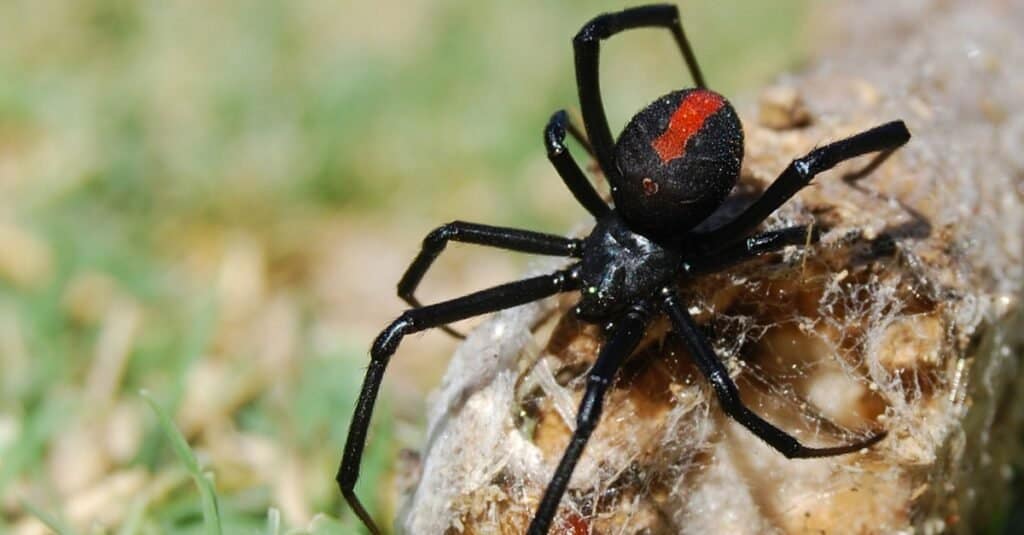
Bites from the poisonous Australian redback spider can, on rare occasions, be deadly.
©iStock.com/maria72
A female redback spider has a prominent red stripe on the dorsal (upper) side of her abdomen, as well as a distinct hourglass-shaped red or orange mark on the underside of her abdomen.
Redback spiders are venomous. Their venom contains neurotoxins that can cause severe pain, muscle cramps, nausea, and sweating. While redback spider bites can be painful and distressing, fatalities are extremely rare, thanks to the availability of antivenom and prompt medical treatment.
Unlike black widows, redback spiders spin messy, irregular webs in sheltered locations such as under rocks, in crevices, or in human-made structures, rather than the classic, organized orb-shaped webs.
Redback spiders primarily live in Australia, and their distribution spans across most of the continent. They are particularly prevalent in urban and suburban areas, where they inhabit dark, sheltered locations such as garages, sheds, and outdoor toilets. Although their native range is in Australia, redback spiders have been introduced to other countries, including New Zealand and Japan.