
Quick Take
- Spiders rarely flee to indoor spaces for warmth during the winter.
- Mature spiders must complete an overwintering relocation to secure vital food sources.
- Spiders are cold-blooded creatures.
- Spiders produce antifreeze-like compounds in their hemolymph to protect them from the cold winter.
Cold temperatures and harsh weather conditions are bad news for most animals, including spiders. But these creatures aren’t entirely helpless when faced with frigid temperatures. They have a few tricks up their spinnerets to help them survive the winter.
Naturally, spiders are cold-blooded creatures, so they rarely run to your home in search of warmth like mammals during winter. However, during this season, many spider species produce cryoprotective glycol compounds in their hemolymph (not blood) that function like the antifreeze substance you put in your car engine to protect it during winter. These compounds reduce cellular damage from freezing rather than preventing freezing entirely, even when exposed to low temperatures.
Some spiders enter a diapause-like state or cold-induced quiescence during cold seasons, which is different from hibernation, as seen in the table below:
| Diapause/Quiescence | Hibernation |
|---|---|
| Occurs primarily in insects and some arachnids | Occurs mainly in mammals |
| Can occur any time of year | Can occur at any time of year |
| Triggered by environmental cues like temperature and day length | Triggered seasonally |
| Temporary dormancy | Reduction of metabolic activity |
In this state, spiders respond to:
- Inadequate food supply
- Changes in the length of daylight
- Reduced temperatures
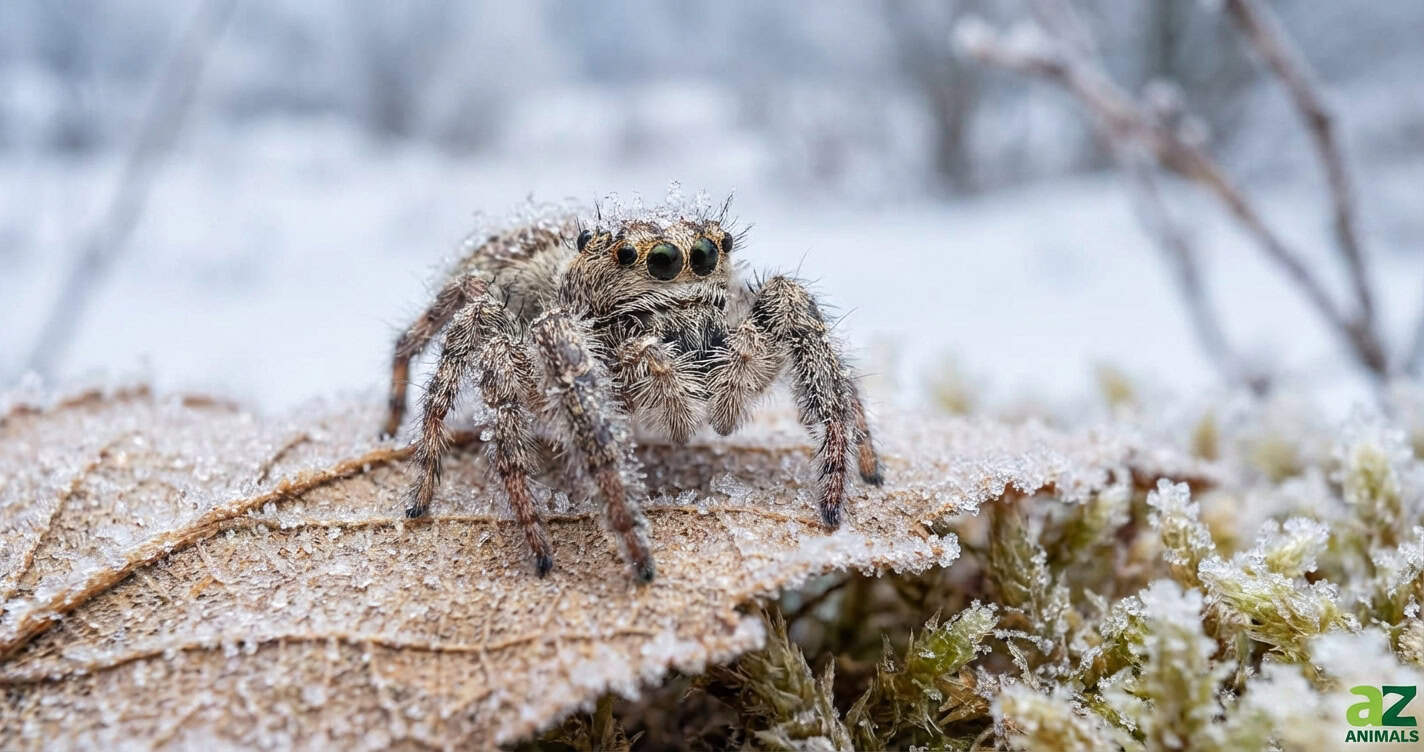
As a result, they become sluggish and seek shelter in leaves, under rocks, and in cracks of bark. You may also find some spiders in the subnivean zone (the insulated space beneath snow or leaf litter). This zone buffers extreme cold rather than keeping spiders “warm,” allowing limited movement and survival.
How Do Spiders Survive Winter?
As seen above, spiders produce antifreeze-like compounds in their hemolymph to protect them from the cold winter. They also have many other different ways to cope with the winter months. Let’s discuss them below:
Building Nests
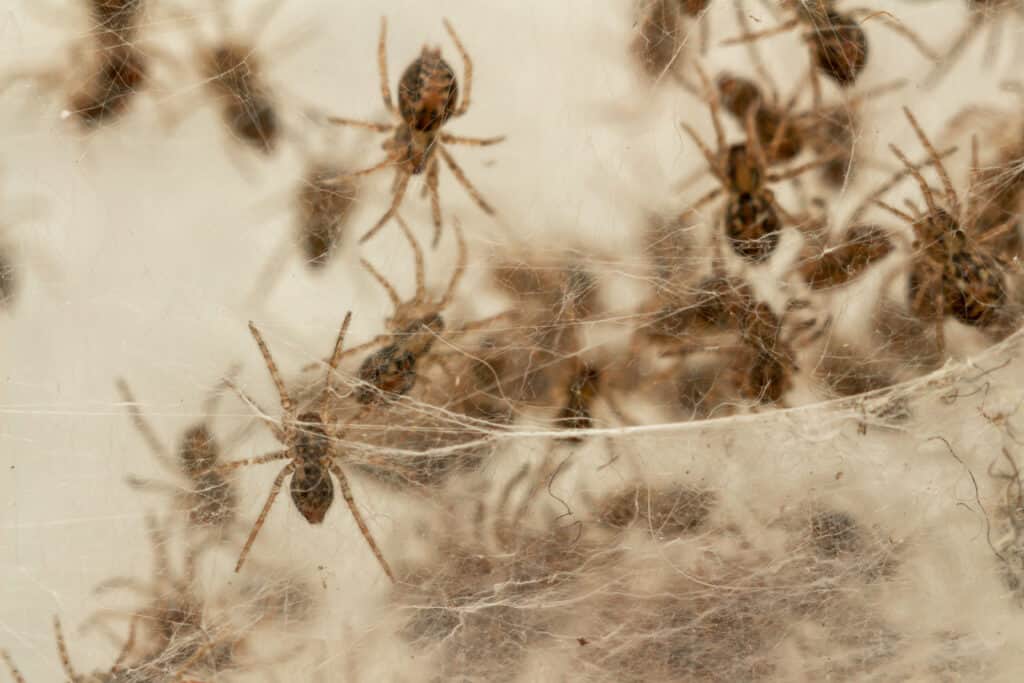
When temperatures drop, many female spiders start selecting safe places to lay their eggs.
©Ivan Semenovych/Shutterstock.com
Spiders are remarkable creatures. Most species will mate and lay eggs before the snow falls. However, frigid temperatures don’t favor their eggs, so those who wish to preserve their eggs must think strategically. When temperatures drop, many female spiders start selecting protected places to lay their eggs.
To protect their eggs until spring, spiders may choose hidden and sheltered places, like:
- Burrows
- Protected crevices in structures
- Natural cavities under bark or debris
Alternatively, other species may opt to build a nest-like web where they will lay their eggs. You’ll see most of these webs in sheltered surroundings.
For example, spiders may place a web in corners or cracks that offer protection from wind and predators. In many annual species, the female dies shortly after laying eggs, leaving the egg sac to overwinter. When the offspring are able to survive, they will leave the nest.
Laying Eggs in Egg Sacs
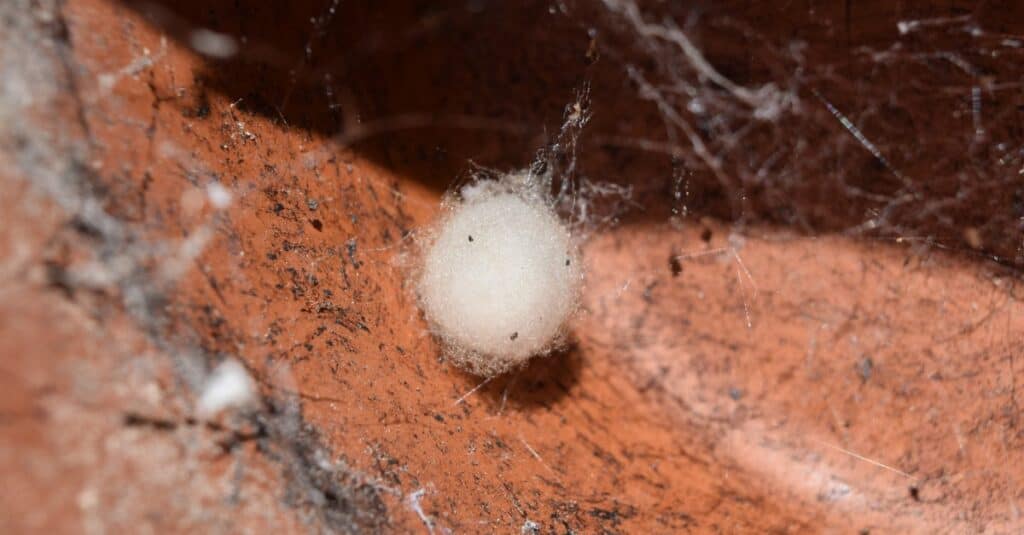
The silk used to make the egg sac also keeps it warm.
©Chloe Langton/Shutterstock.com
Spiders lay their eggs in egg sacs that protect them from extreme weather conditions. The silk used to make the egg sac also keeps it warm. The spiderlings will hatch from the eggs when spring comes around, and if there is enough food for them to eat, they will grow into adults by summertime.
Winter Spider Species in Your Home
There are many different types of spiders, but only a few are harmful to humans. So if you find a spider in your home, it’s not necessarily a sign of an infestation. It could just be an individual that entered through an open door or window.
Although spiders are often viewed as pests, some of them are beneficial. Spiders eat insects and other arthropods that are harmful to humans and animals. They can also help reduce the population of pest insects in your home.
Here are some common types of spiders that you may find in your home during winter:
The American House Spider
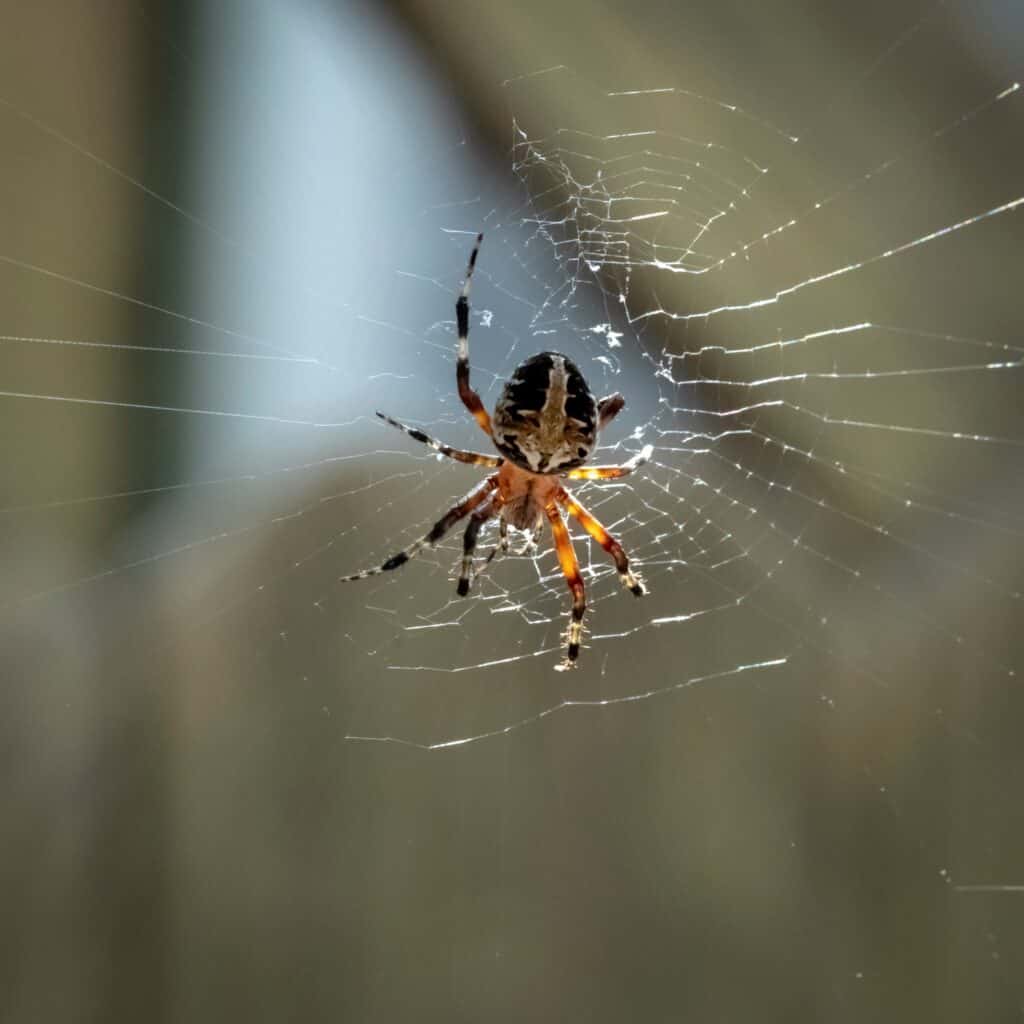
American house spiders prefer to live near human habitations, where they can find plenty of insects.
©Constantine Lukashin/Shutterstock.com
The American house spider is a small- to medium-sized spider with a brown or gray body and pale markings. It is not a giant, long-legged hunter.
American house spiders prefer to live near human habitations, where they can find plenty of insects. They are commonly found in dark, moist areas like:
- Basements
- Crawl spaces
- Garages
- Sheds
They are not dangerous, but their bites can cause mild reactions in some people.
The female builds stationary silken egg sacs that are attached near her web. Unlike hunting spiders, this species does build webs and waits for prey to become trapped.
The Brown Recluse
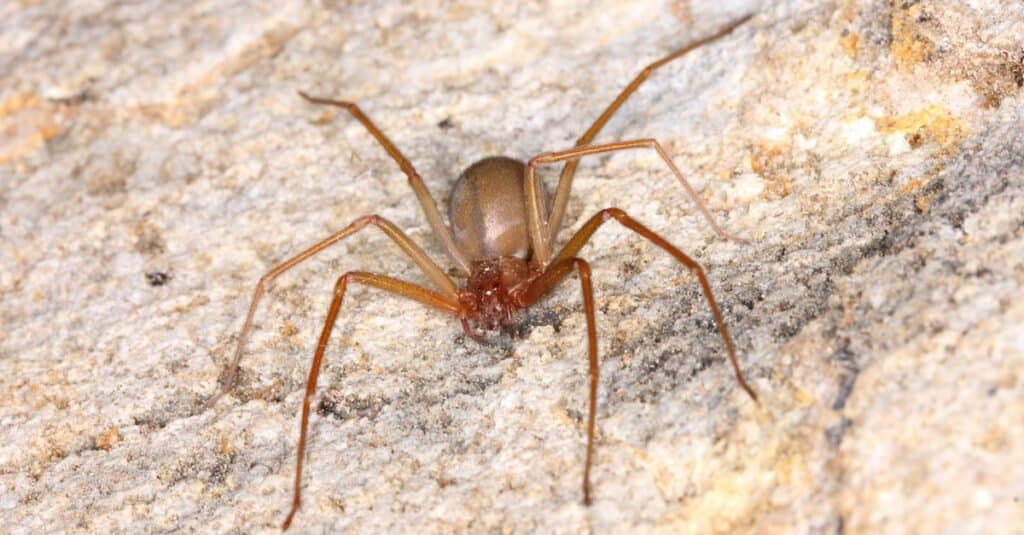
The brown recluse is not known to be aggressive and won’t bite unless threatened or provoked.
©Pong Wira/Shutterstock.com
The brown recluse spiders are tan to dark brown and have a violin-shaped marking that can be unreliable for identification. They are about an inch long with six eyes (three on each side). They prefer to make their webs in dark, dry places such as:
- Behind furniture
- Under boxes or bags
- Cellars
- Sheds
- Basements
- Undisturbed corners of your home
The brown recluse is not known to be aggressive and won’t bite unless threatened or provoked. When these species bite, they leave a small bite mark that may be surrounded by redness and swelling.
Most bites heal without medical intervention, though rare cases can lead to tissue damage.
If you think you’ve been bitten and symptoms worsen, see a doctor.
The Hobo Spider
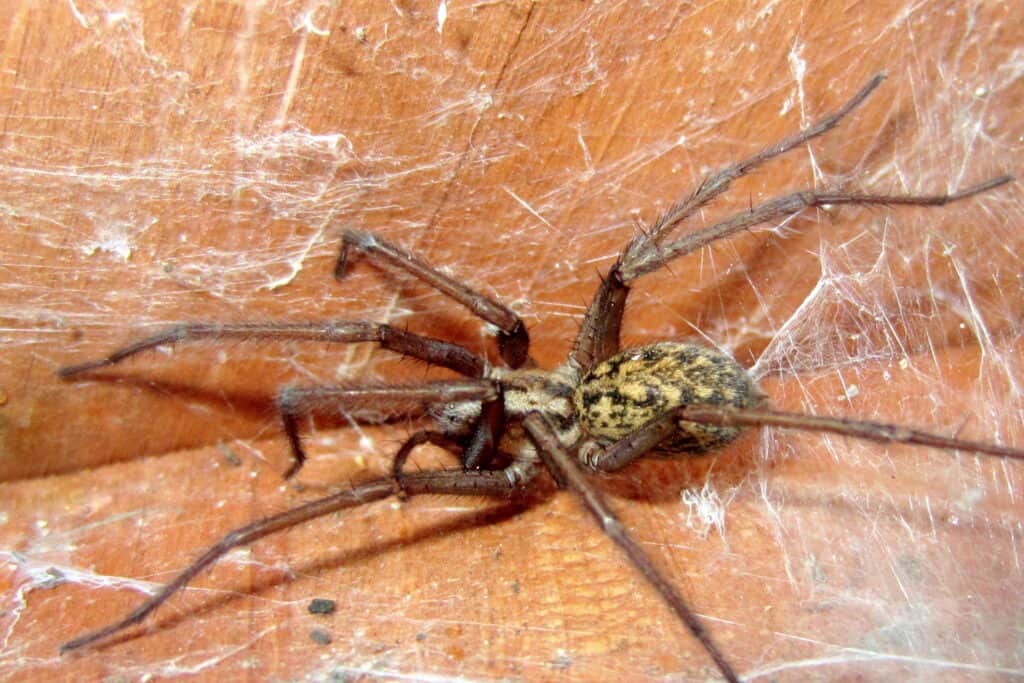
The hobo spider’s diet consists of insects and other smaller spiders.
©Randy Bjorklund/Shutterstock.com
The hobo spider is a brown spider often confused with the brown recluse. It is not considered medically significant, and earlier claims of necrotic bites have been debunked.
The hobo spider prefers areas with access to openings, such as behind furniture or in boxes. However, they may also be found under outdoor objects such as rocks or logs.
Hobo spiders build funnel-shaped webs and typically wait for prey rather than actively hunting throughout the day. They lay eggs in silk sacs attached to protected surfaces.
The Jumping Spider
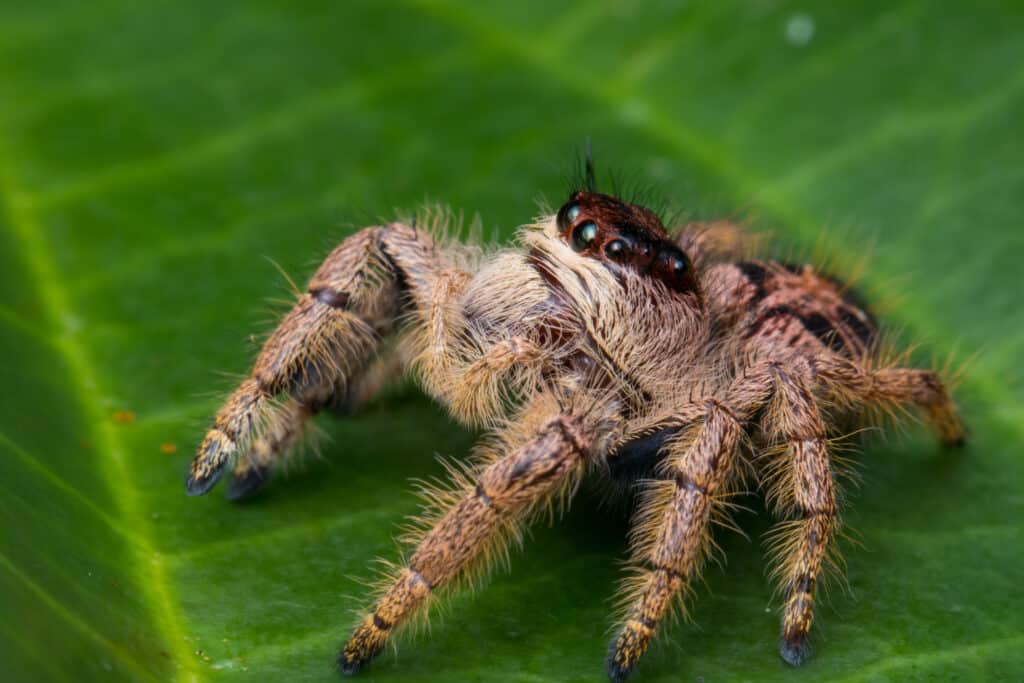
Jumping spiders are primarily active during the day, relying on their excellent vision.
©iStock.com/Thien Woei Jiing
The jumping spider is a common spider found in gardens and homes. They are called jumping spiders because they have huge eyes that face forward and a remarkably keen ability to judge distances. They can leap up to 50 times their body length.
Jumping spiders spend much time hunting insects and other small arthropods, often on flowers or walls. They sometimes enter houses in search of prey but are not dangerous to humans unless they are accidentally handled.
The most common place to find jumping spiders is on the outside walls of your house, especially near sun-exposed areas. Both males and females produce dragline silk as a safety tether while moving, which may be visible on windows or siding.
The Wolf Spider
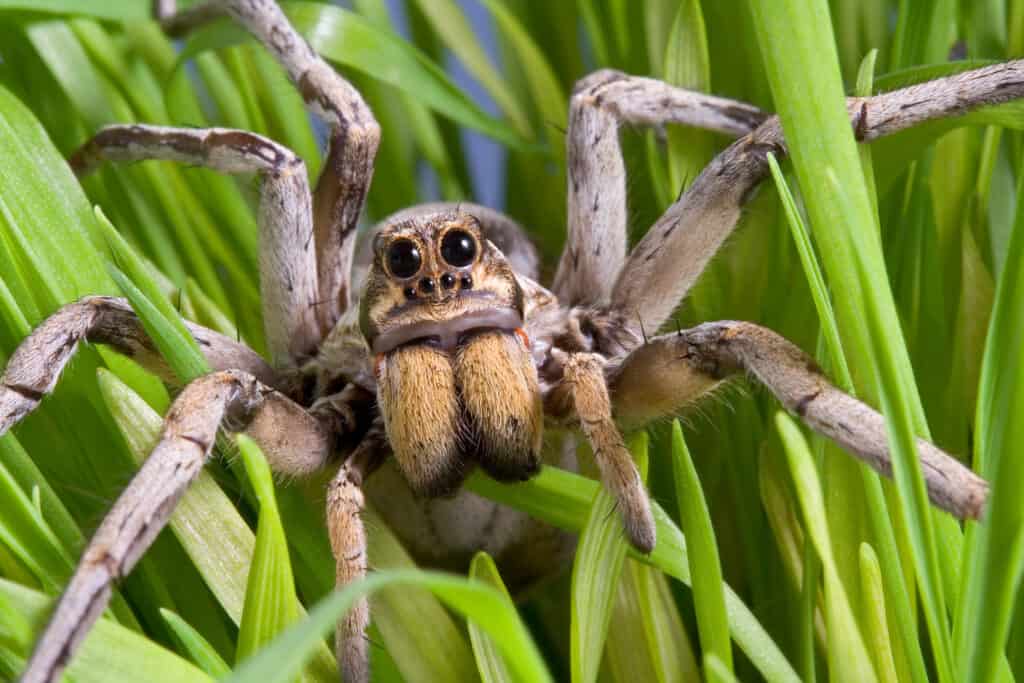
Wolf spiders make their homes in the ground or under rocks, debris, or logs.
©iStock.com/CathyKeifer
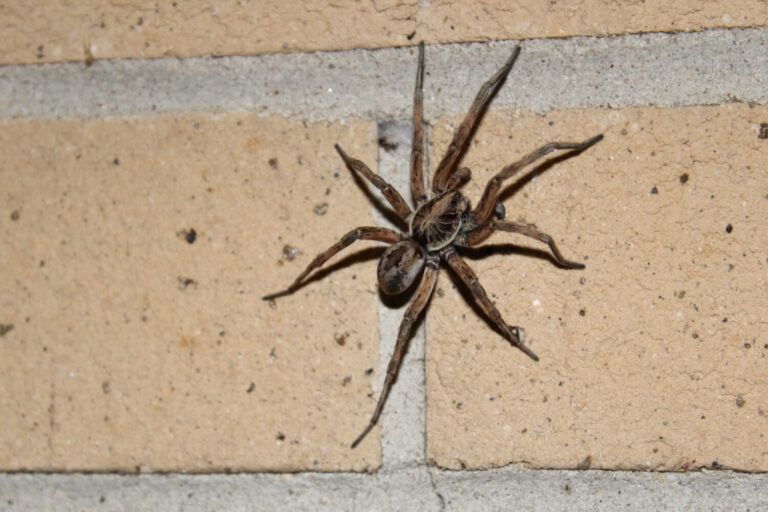
Wolf spiders are giant and hairy with round bodies and long legs. They vary in color from gray to brownish-red and have dark stripes.
They’re often mistaken for tarantulas because of their large size and hairiness. Wolf spiders are beneficial to humans because they feed on other insects such as:
- Flies
- Mosquitoes
- Crickets
- Other spiders
Wolf spiders make their homes in the ground or under rocks, debris, or logs. Some species build small burrows with several entrances that they use as hiding places during the day and as nesting sites at night.
Wolf spiders sometimes wander into houses during warmer months to escape high temperatures, but many overwinter outdoors. These spiders seldom bite people unless they are handled or stepped on by bare feet while sleeping.
The Black Widow
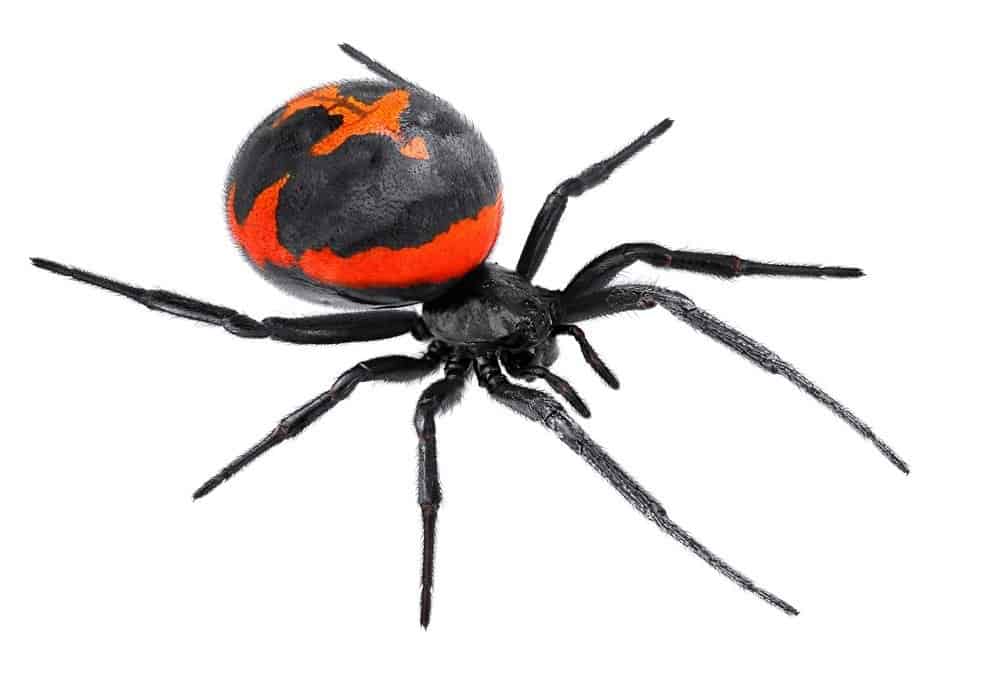
The black widow spider’s bite is excruciating but rarely fatal to humans.
©Protasov AN/Shutterstock.com
The black widow spider is one of the most venomous spiders. It is a giant, shiny black spider with a red hourglass shape on its underside.
These spiders make their webs in dark, protected areas, such as garages, sheds, or barns.
This spider’s bite is excruciating but rarely fatal to humans. The venom affects the nervous system rather than destroying muscle tissue, causing symptoms such as:
- Severe pain at the bite site
- Muscle cramps
- Nausea
- Vomiting
Serious complications are rare, especially with modern medical care.
To avoid being bitten by a black widow spider:
- Avoid dark places like woodpiles or piles of leaves where these spiders might hide during the day.
- Don’t sleep with your window open if holes in screens might let these spiders get inside your home.
- Wear gloves if you have to handle firewood or other items that these spiders might have used as shelter sites for their eggs and young spiders (spiderlings).
How Do You Deal With Spiders in Your Home?
Spiders are common in homes, and you can find them in every room, including the bedroom, bathroom, kitchen, and living room. There are many types of spiders, but only a few of them can cause severe problems for humans.
There are many ways to get rid of spiders in your home. Here are some of them:
Use Natural Oils and Vinegar
There are various kinds of natural oils and vinegar that you can use to keep spiders away from your home. These include peppermint oil, cedar oil, cloves, cinnamon bark oil, and lemon juice.
While some people report success, scientific evidence supporting essential oils and vinegar as spider repellents is limited.
Seal the Cracks in Your Home
Spiders find their way into your homes through cracks and crevices around windows and doors. Since they can be pretty small and hard to spot, seal these areas as soon as possible. You can use caulking materials or silicone sealants. Once you have closed all the cracks in your house’s exterior surface, there won’t be any other way for these pests to get inside your home.
Use Store-Bought Insecticide
Store-bought insecticides are effective against most spiders. You can find these products at any hardware store, grocery store, or online. There are many types on the market, including sprays, powders, and dust. Some of these products kill on contact, while others take longer to work. Read the label carefully before using any product.
Keep a Tidy Home
Spiders tend to like clutter and other things that provide hiding spots. So if your house is messy and cluttered, it’s more likely that spiders will hang around your home. Try keeping things organized, o there aren’t as many places for spiders to hide.
How Long Do Spiders Live?
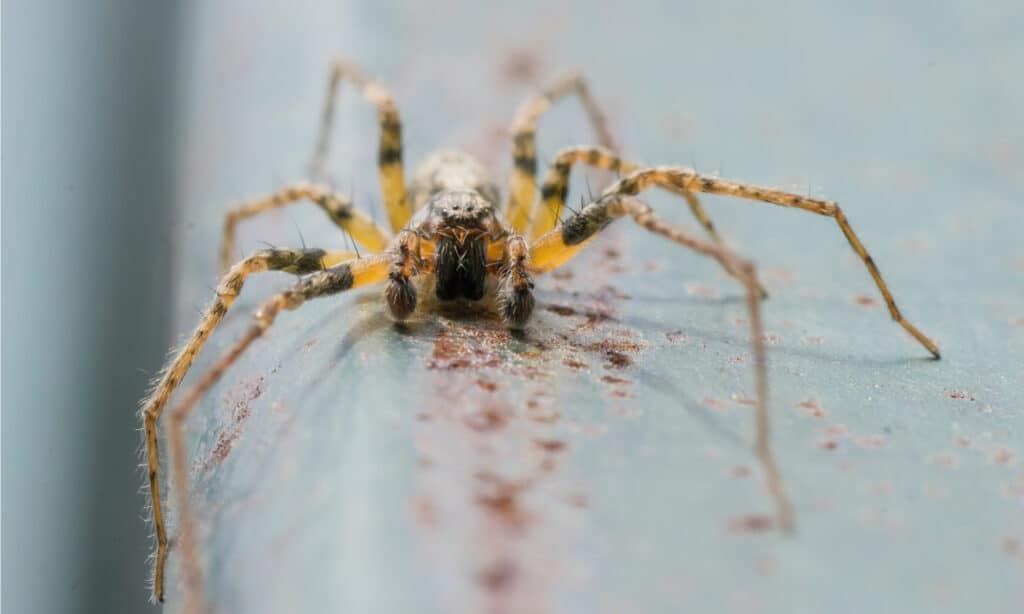
While the average lifespan of a spider is 1 year, the funnel barn weaver can live up to 7 years.
©Korovko Gleb/Shutterstock.com
While spiders have multiple creative ways to survive the winter, their lifespans are fairly short. The average lifespan varies widely based on species and sex. A black widow spider can live up to 3 years, a brown recluse up to 2, while a barn funnel weaver can live as long as 7 years. Some spiders live up to 30 years, but the longest-living ones are typically tarantulas. As in many other animal species, female spiders tend to outlive their male counterparts.
Bottom Line
Spiders are cold-blooded animals, meaning they cannot maintain a body temperature above their surroundings. To compensate, many species reduce activity through quiescence or diapause-like states, conserving energy during winter.
While some spider species go below ground, others remain under bark, leaf litter, or human structures. Eggs and juveniles are the most common overwintering stages, though some adults also survive winter without feeding. These tiny arachnids may be small, but they are highly effective survivors.
Bonus: Why Do I Have So Many Tiny Spiders in my House?
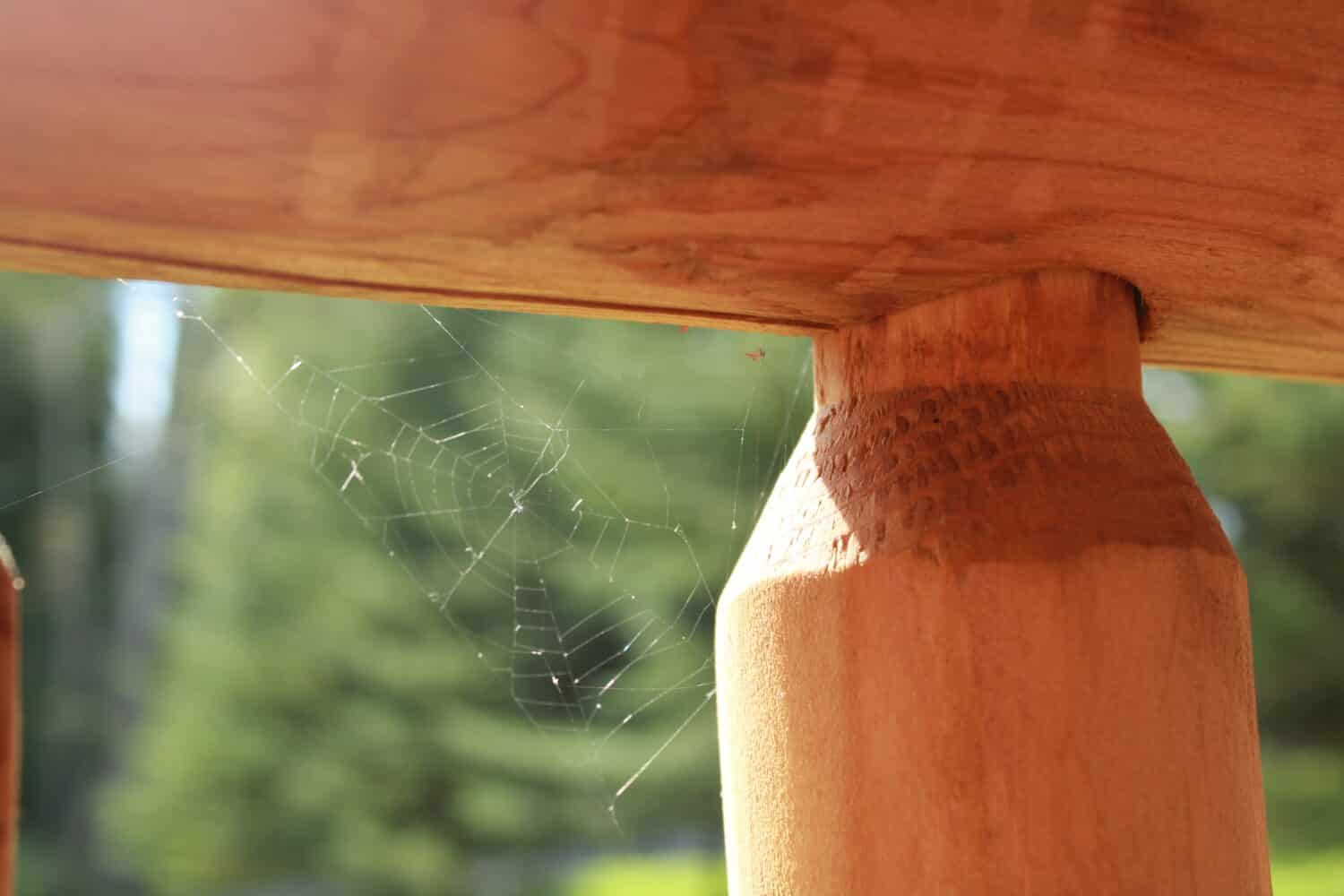
Tiny spider webs inside your house don’t always indicate infestation.
Image: BriiNotti, Shutterstock
©BriiNotti/Shutterstock.com
If you live in a wooded area, you may notice clusters of tiny spiders indoors. Often, this means an egg sac hatched nearby. Adult spiders do not congregate together.
Some spiderlings may survive briefly indoors, occasionally feeding on very small insects or mites. Most will not persist long-term, and their presence does not usually indicate a pest problem.