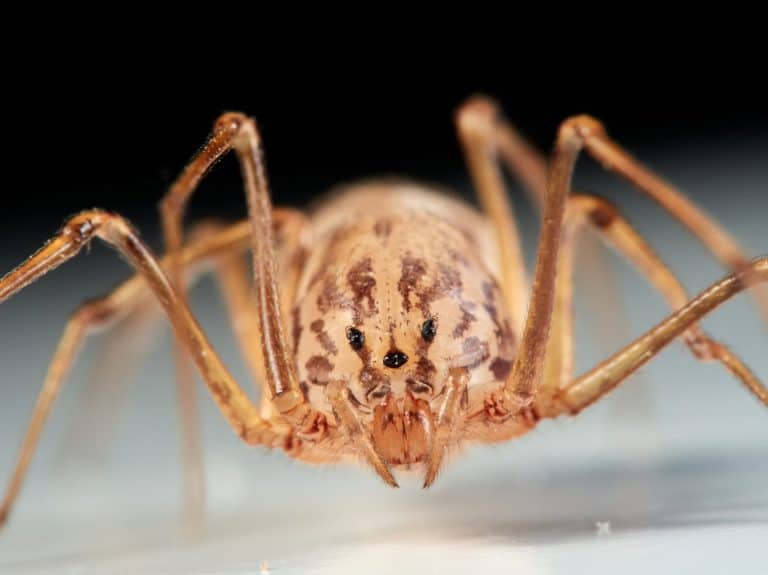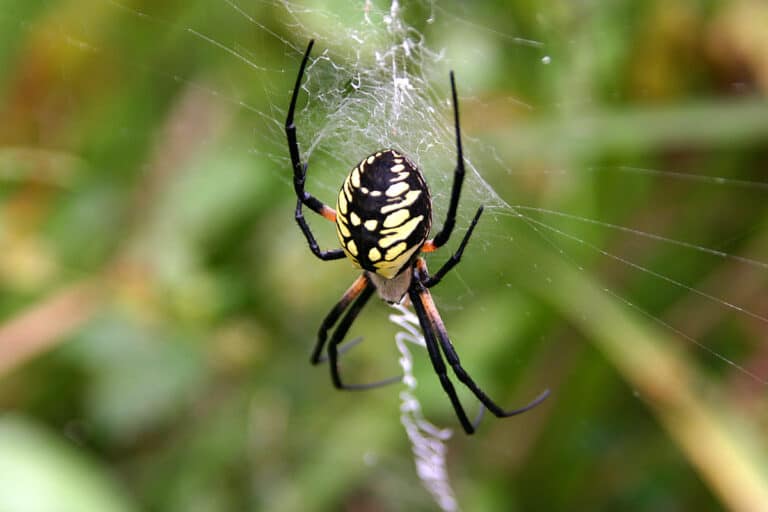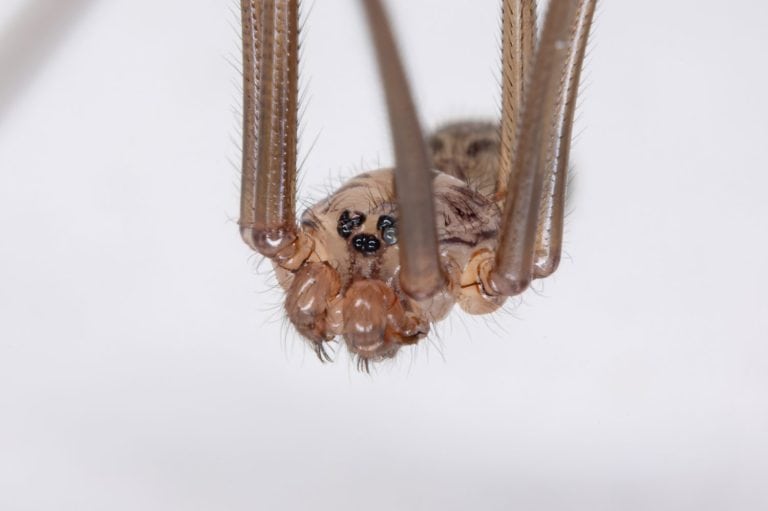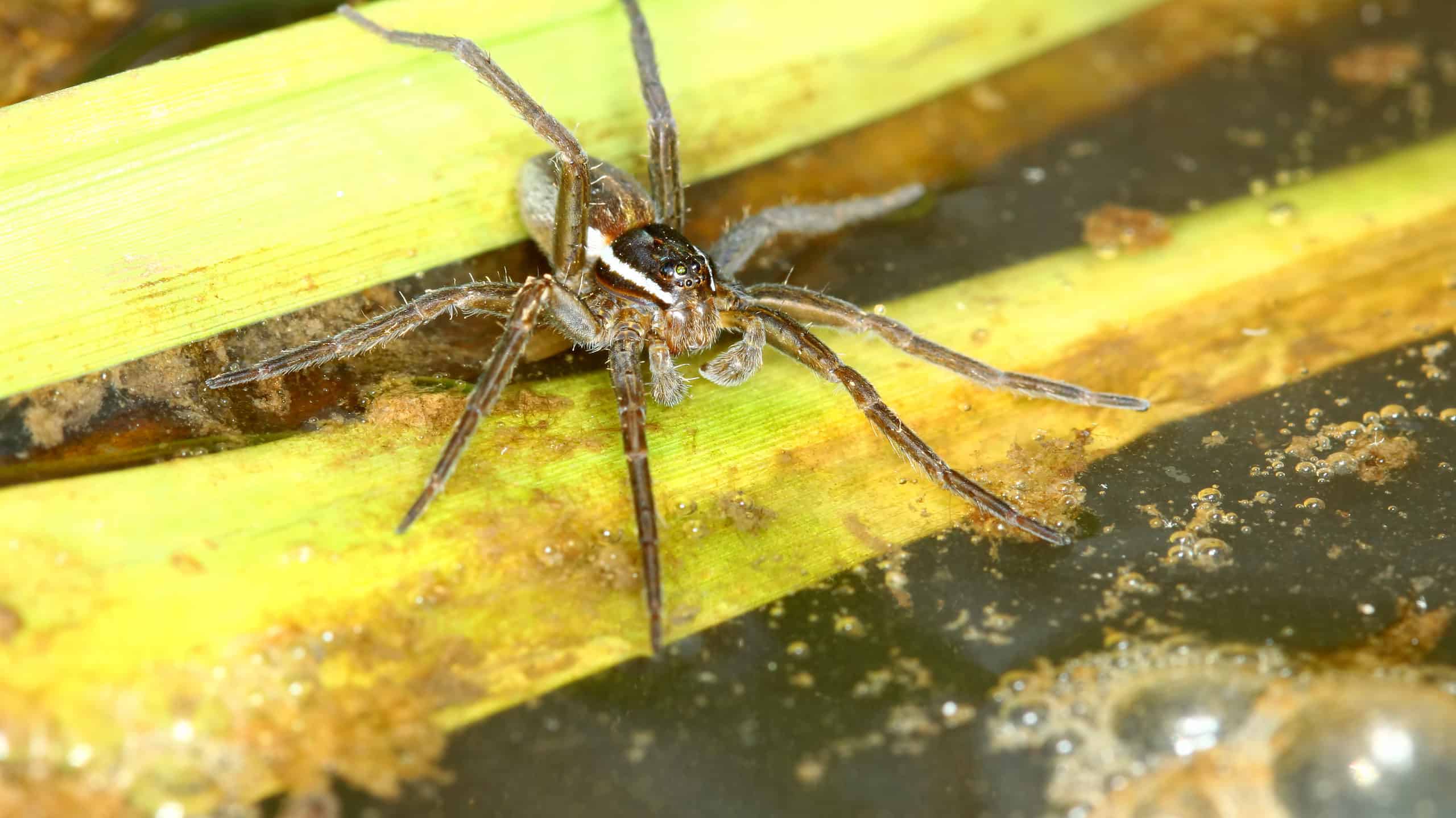

Although new species are still being discovered, there are presently over 50,000 described species of spiders worldwide, and New Jersey, the fifth smallest U.S. state by area, is home to over 500 of them. Some of New Jersey’s spiders, such as the yellow sac spider, are small with a body length of less than one inch, while others are much larger. Continue reading to learn about seven of the biggest spiders in New Jersey.
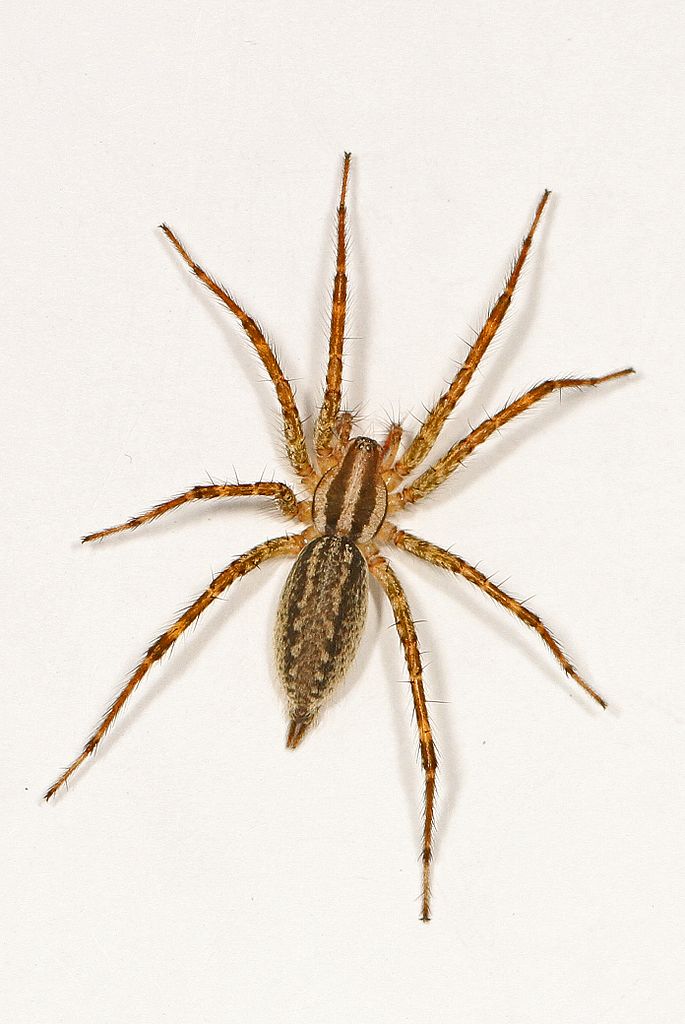
The harmless American grass spider is one of the most common spiders in the United States.
| Scientific Name | Length | Color |
|---|---|---|
| Agelenopsis genus | About ¾ inch | Brown, tan, and black with banding on the legs and thorax |
The American grass spider is a very common funnel weaver that is found throughout New Jersey. They are often confused with the wolf spider, as they have similar body markings. However, the American grass spider is much smaller. The American grass spider reaches a size of about 0.75 inches. As their name suggests, grass spiders are typically found in grassy areas.
American grass spiders have two large spinnerets on the bottom of their thorax, which are used to spin webs. Their spinnerets are quite prominent and are an identifying characteristic of the species.
While American grass spiders may bite if they feel threatened, the bite is usually not harmful, and symptoms resemble a mild insect bite.
6. American Nursery Web Spider
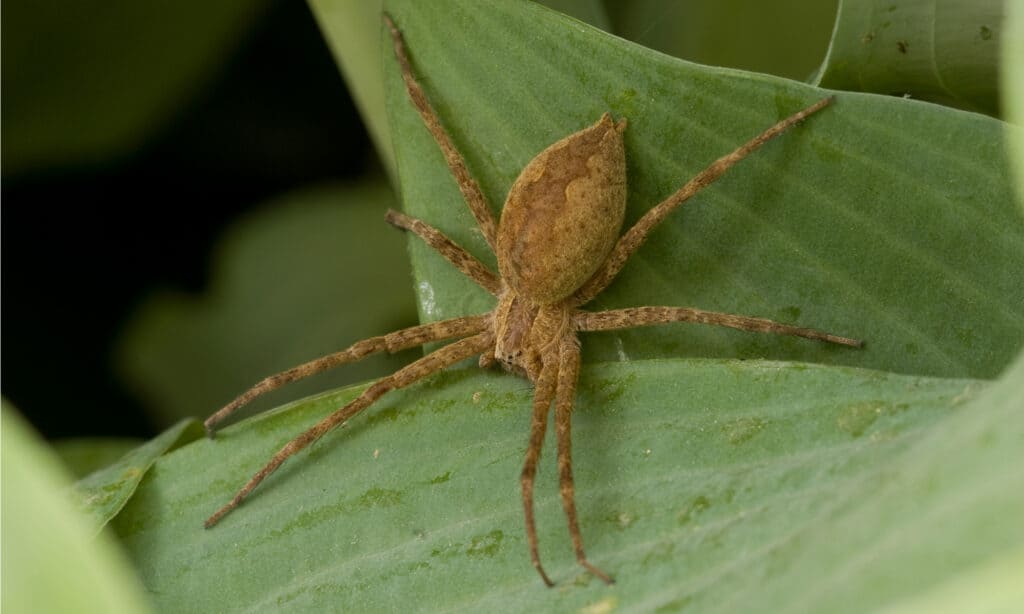
Male American nursery web spiders will tie females’ legs during mating to avoid being eaten afterward.
©SDeming/Shutterstock.com
| Scientific Name | Length | Color |
|---|---|---|
| Pisaurina mira | ¾ inch | Brown, tan, and black with a large band running down the abdomen and banded brown and tan legs |
Nursery web spiders are common in New Jersey’s tall grass and shrubs, where they hunt insects and care for their young. They are yellowish-brown and resemble wolf spiders, but have different eye arrangements. Nursery web spiders carry their egg sacs in their jaws and create a nursery web to protect the spiderlings until they hatch.
Nursery web spiders are beneficial predators of garden pests. Their bites can cause minor irritation, swelling, or redness, but should not require medical intervention.
5. Giant Lichen Orb Weaver Spider
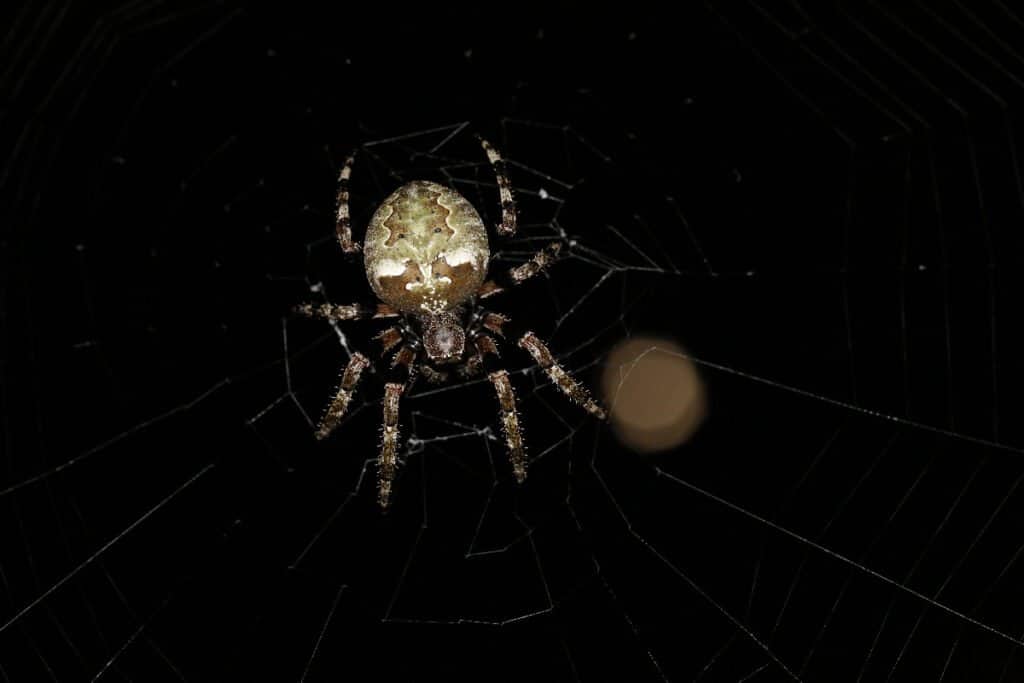
The giant lichen orb weaver creates webs nearly 8 feet wide.
©Cathleen Wake Gorbatenko/Shutterstock.com
| Scientific Name | Length | Color |
|---|---|---|
| Araneus bicentenarius | 1-1.2 inches | Reddish-brown, black, and light green on their body, and reddish-orange banding on their legs |
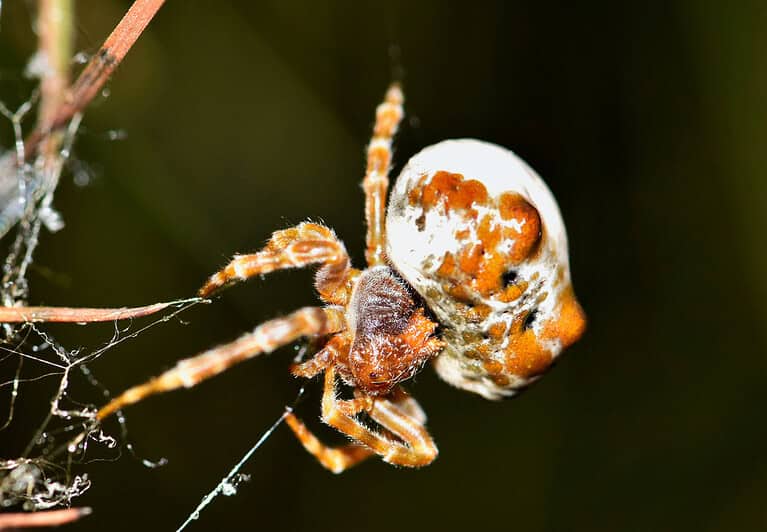
The giant lichen orb weaver spider has an intricately patterned and very bulbous abdomen. This spider is known for spinning webs that can measure several feet in diameter.
Giant lichen orb weavers are nocturnal, hunting at night after building or repairing their webs. During the day, this spider species rests in a nearby retreat that provides a hiding place from predators.
Their bite, which is rare, produces mild irritation, similar to a bee sting.
4. Trapdoor Spider
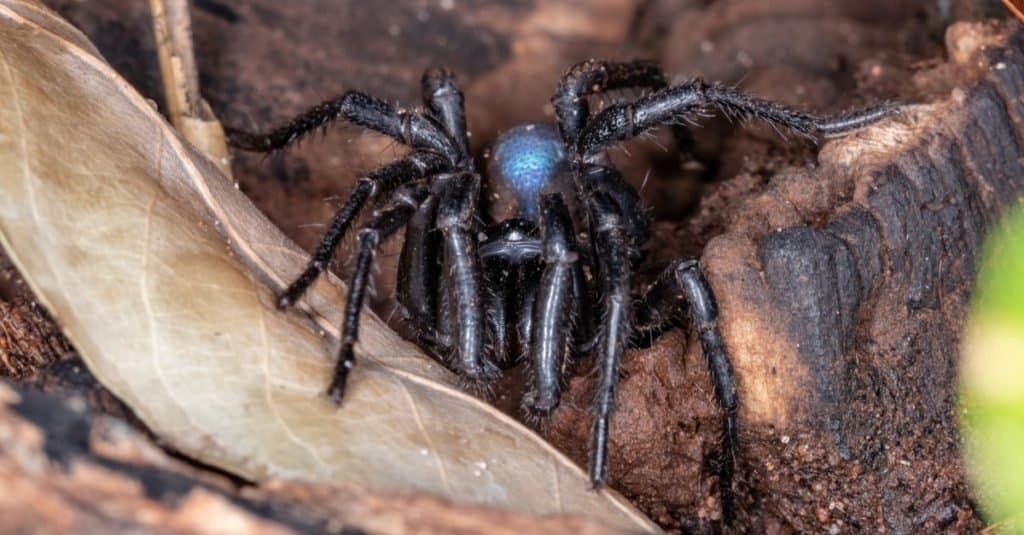
Mouse spiders are a kind of trapdoor spider and are sometimes mistaken for funnel-web spiders.
©Vinicius R. Souza/Shutterstock.com
| Scientific Name | Length | Color |
|---|---|---|
| Ummidia Genus | 1-1.5 inches | Dark brown, reddish brown |
The trapdoor spider is a burrowing spider with a hairy body and a penchant for making burrows in the ground. These spiders are not seen often since they spend so much of their time underground. A large, ground-dwelling spider, trapdoor spiders build silk-lined burrows with a trapdoor for ambushing their prey, which includes insects and small arthropods.
A trapdoor spider’s bite may leave small puncture wounds from their sharp, leg-like fangs, but their venom does not pose a threat to humans. Trapdoor spiders are timid and reclusive, only biting in self-defense.
3. Cosmopolitan Cellar Spider
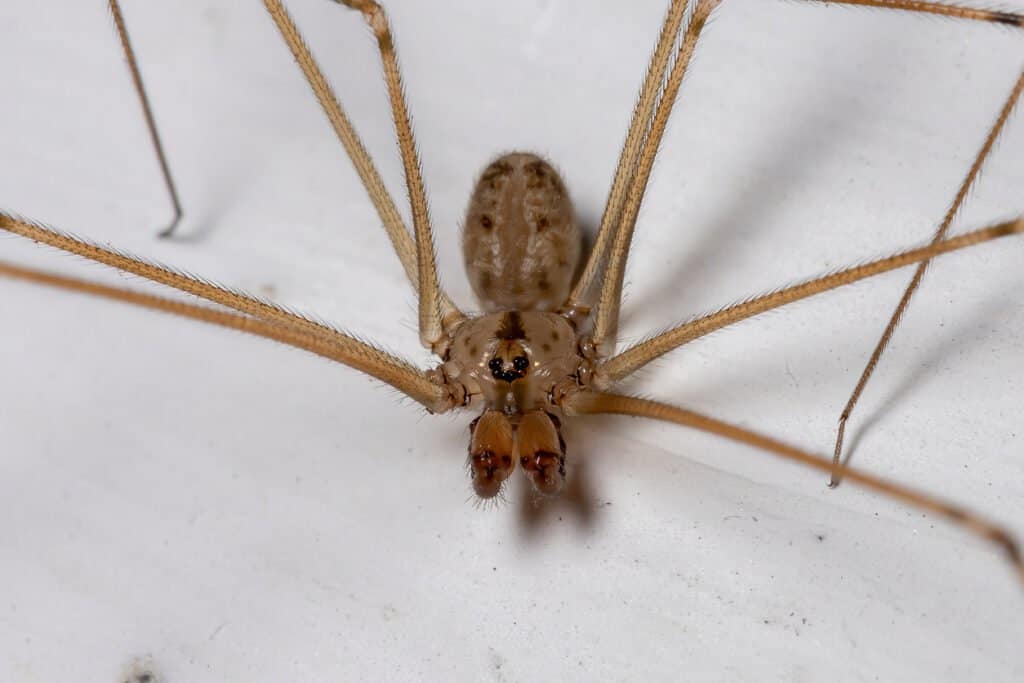
Also called Daddy long-legs, cellar spiders can be up to two inches long.
©iStock.com/ViniSouza128
| Scientific Name | Length | Color |
|---|---|---|
| Pholcus phalangioides | 1-2 inches | Grayish-brown with spots and a somewhat translucent body |
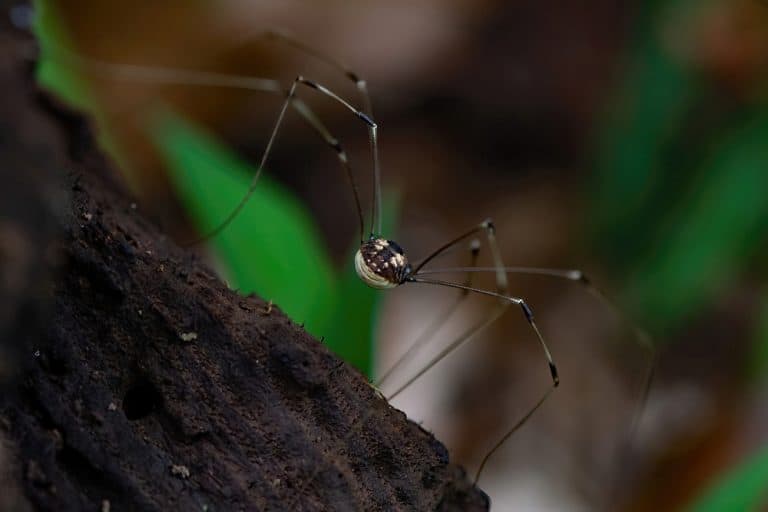
Daddy long-legs spider is a term applied to several species. In the case of New Jersey, it specifically refers to the cosmopolitan cellar spider. These spiders have small bodies with exceptionally long legs. This species is venomous, but its venom is not considered medically significant to humans.
Cosmopolitan cellar spiders are found near piles of wood, in garages, and basements. The cosmopolitan cellar spider’s bite is extremely rare and not medically significant, often causing no symptoms.
2. Wolf Spider
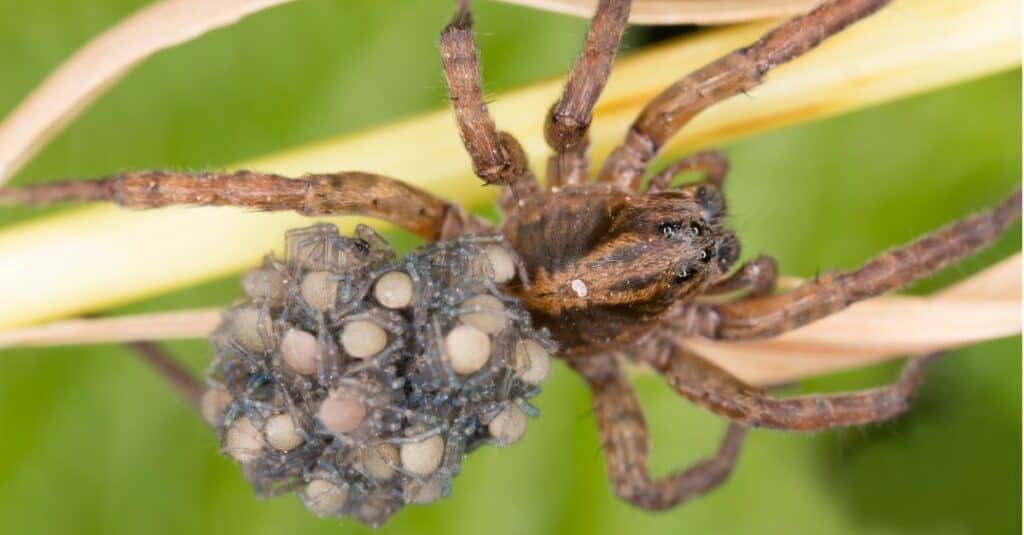
Among the largest spiders in the United States, wolf spiders resemble tiny tarantulas.
©iStock.com/Henrik_L
| Scientific Name | Length | Color |
|---|---|---|
| Lycosidae family | Up to 1.5 inches (body length), with leg spans approaching 2-2.5 inches | Brown and black are primary colors, with tan, red, and yellow colors on the body |
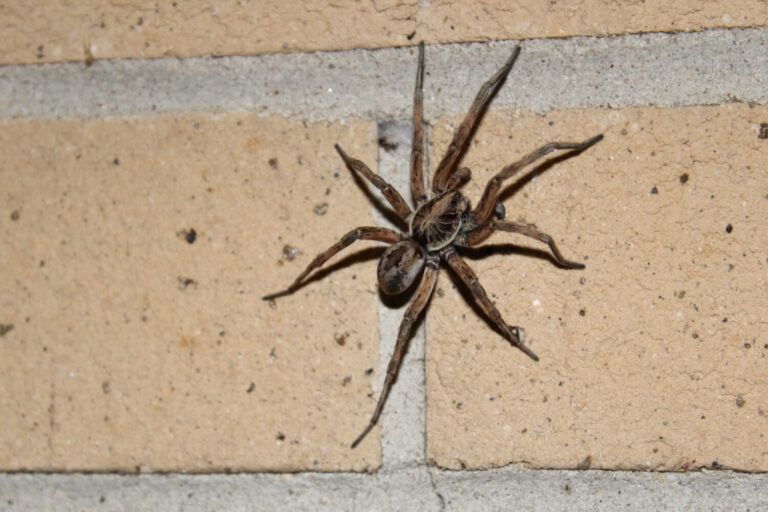
Wolf spiders are another large family of spiders that may appear frightening due to their size, speed, and resemblance to tarantulas. They are large, hairy spiders, characterized by their brown, gray, or black bodies with lighter markings or stripes. They are known for their sturdy build and long, spindly legs.
Wolf spiders are adaptable and can live in a variety of climates, both in the wild and inside homes. Wolf spiders are ground-dwelling hunters that stalk and chase prey instead of relying on a web.
A wolf spider’s bite can cause mild pain in humans.
1. Fishing Spider
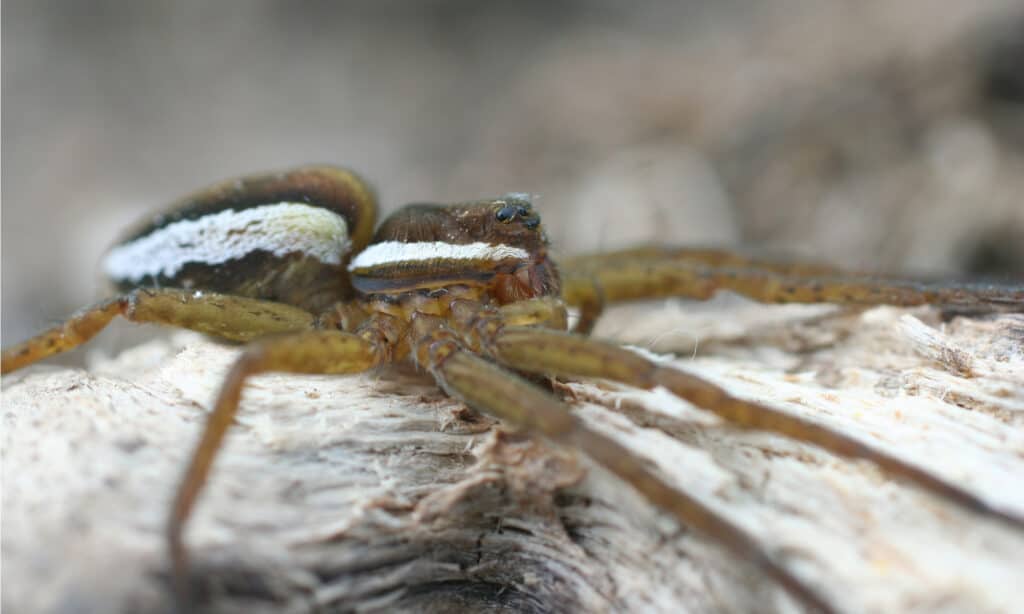
The fishing spider is a very effective hunter that lives by the water.
©Oleg Nikonov/Shutterstock.com
| Scientific Name | Length | Color |
|---|---|---|
| Dolomedes genus | 3-4 inches long | Black, brown, and light brown. Solid colors or bands on their bodies |
The fishing spider, the largest spider in New Jersey, can measure between 3 and 4 inches long. These semi-aquatic spiders have specialized hairy legs that repel water, allowing them to feel for vibrations and capture prey from both the water’s surface and below it. They are also known to build nurseries of leaves to protect their eggs and young.
Fishing spiders are ambush predators that eat insects, tadpoles, and small fish.
Although fishing spiders can bite, their bites are not considered harmful to humans.