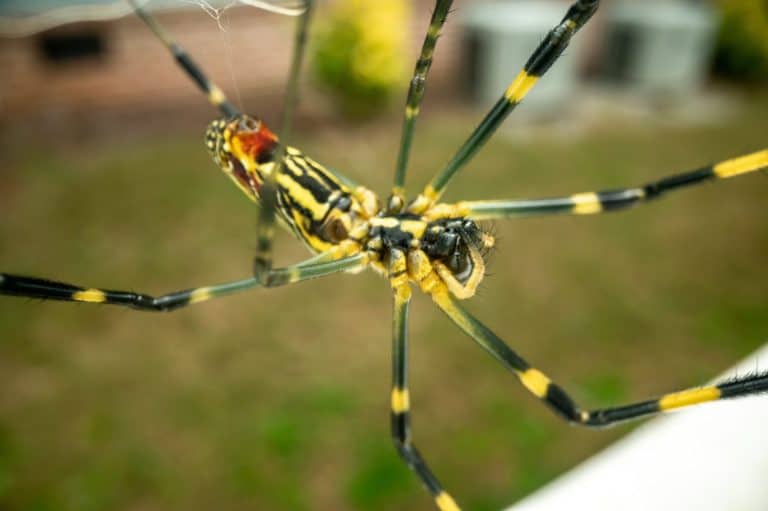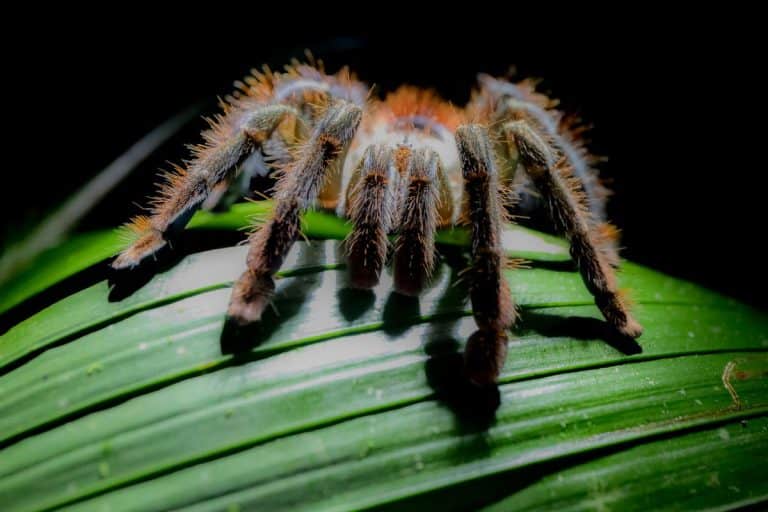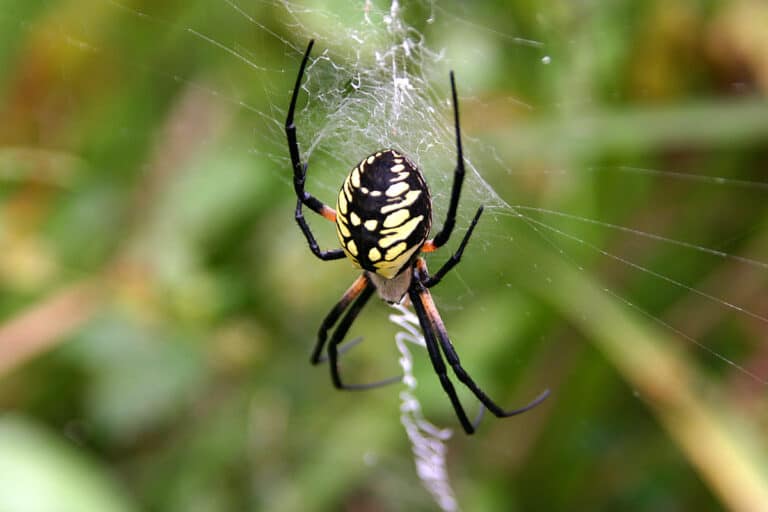

Although it is known for its potatoes, Idaho is also recognized for its vast natural areas and abundance of gemstones, including opals, topaz, quartz, and the official state gem, the star garnet. Idaho also has an abundance of spiders. From tiny jumping spiders that measure less than 0.5 inches to much larger species with legspans of up to 4 inches, Idaho is home to a diverse range of spider species, most of which are harmless to humans despite their potentially intimidating size. Continue reading to discover 5 of the biggest spiders in Idaho, where they are found, and whether their bites are medically significant to humans.
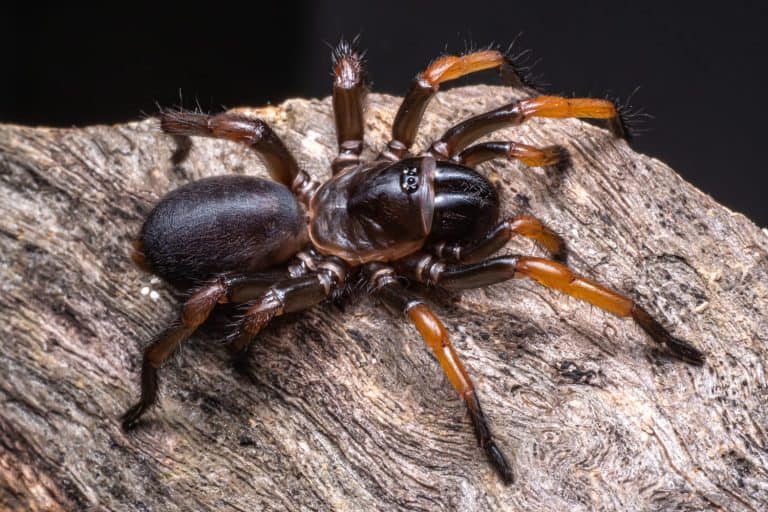
5. Trapdoor Spider
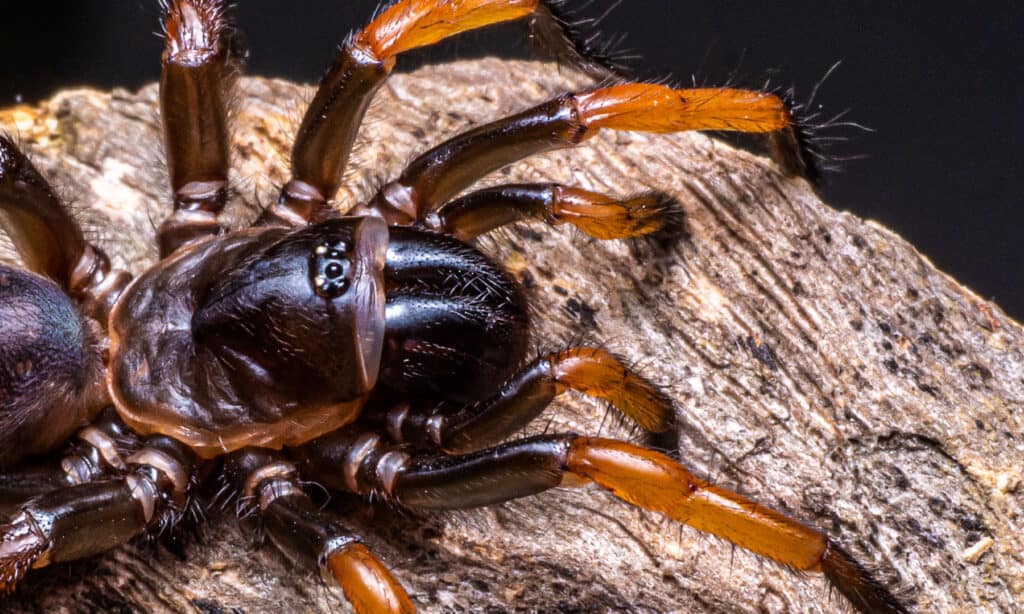
Trapdoor spiders spend their time in burrows.
©nokkaew/Shutterstock.com
| Scientific Name | Legspan | Danger to Humans |
|---|---|---|
| Ummidia Genus | 1-2 inches | Delivers a mildly painful bite. |
The trapdoor spider (Ummidia) has a brown or black carapace with a tan or brown abdomen. The legs and cephalothorax are shiny, and the abdomen is matte. These spiders get their name from the trap door present in their burrows. The burrows, constructed of soil, vegetation, and silk, serve as a protective shelter, nursery, and an ambush point for prey. The spider waits just inside the entrance, and when prey comes close enough, the spider rapidly bursts out, captures its meal, and retreats into the safety of its underground home.
Trapdoor spiders may look scary, but their intimidating appearance belies their reclusive nature. These spiders prefer to hide in their burrows and will only bite if provoked. While a bite can be painful (similar to a wasp sting) and cause mild swelling, their venom is not considered medically significant or life-threatening to humans.
4. Hobo Spider
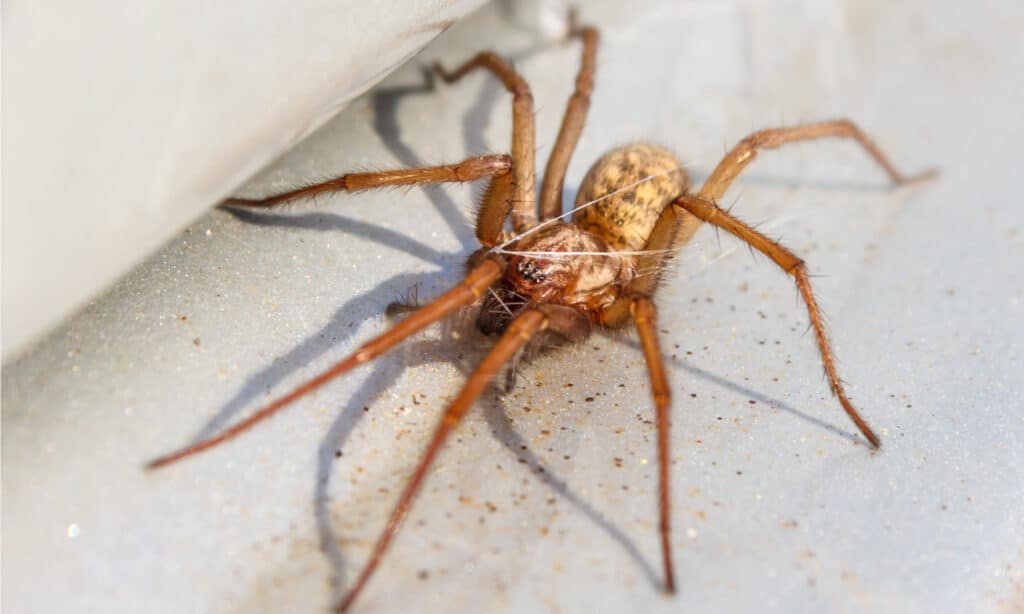
Hobo spiders were once thought to have necrotizing bites. However, this has been proven false.
©Andrew Balcombe/Shutterstock.com
| Scientific Name | Legspan | Danger to Humans |
|---|---|---|
| Eratigena agrestis | 1-2 inches | A bite can cause moderate pain and some redness at the site, but they’re not deadly. |
Hobo spiders have long legs, a brown cephalothorax, and an abdomen that is brown, tan, or yellowish, with dark marks. These spiders are often found in and around tall grass, near the foundations of buildings, in fallen trees, and in piles of debris.
Scientists once thought that the hobo spider could deliver a necrotic bite, but modern research has proven this isn’t so. Hobo spiders are not considered medically significant to humans. Their venom is not dangerous and does not cause necrosis. On the rare occasion that a hobo spider strikes, the resulting bite will inflict momentary pain, swelling, and redness at the bite site.
3. Cellar Spider
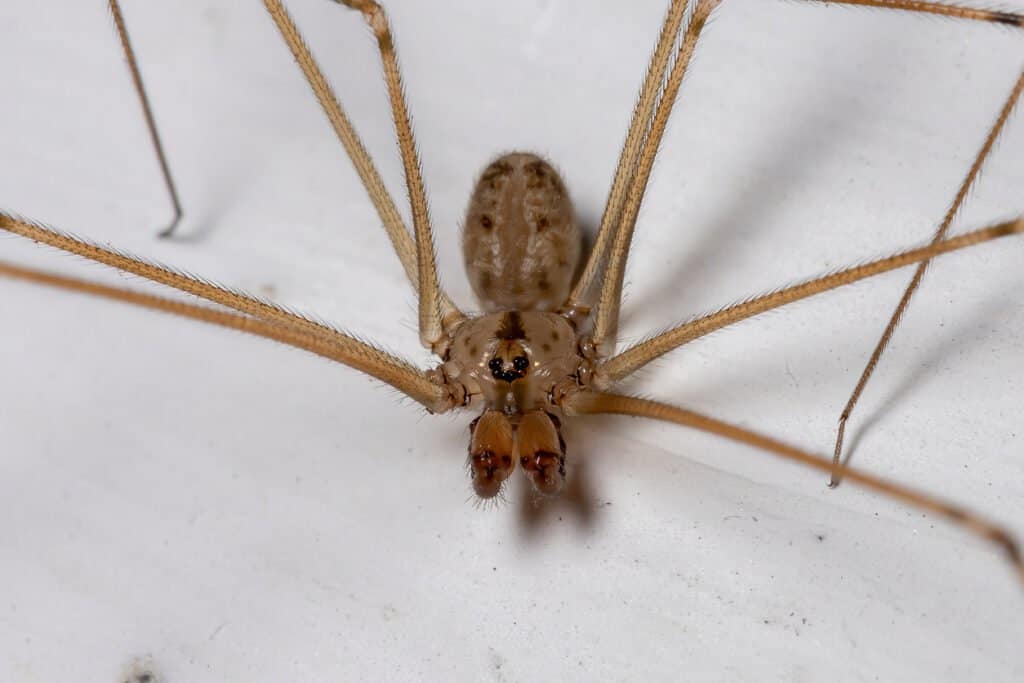
As their name suggests, cellar spiders are cellar dwellers.
©iStock.com/ViniSouza128
| Scientific Name | Legspan | Danger to Humans |
|---|---|---|
| Pholcus phalangioides | 1-2 inches | A bite may cause a mild burning sensation. |
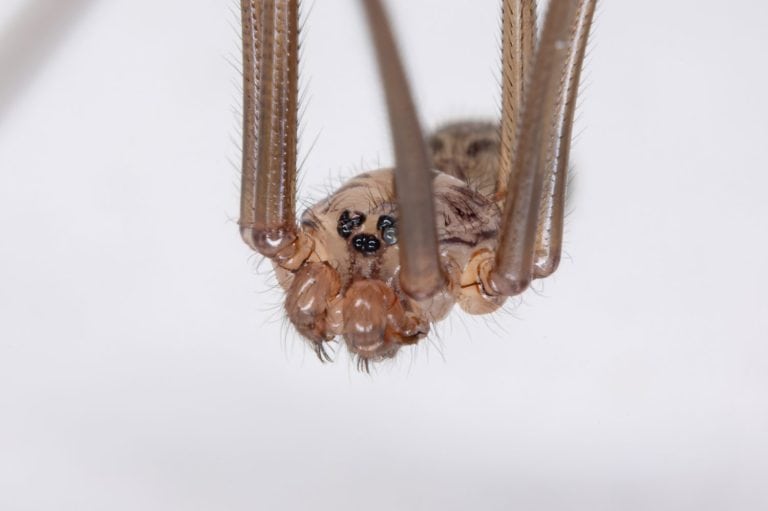
The cellar spider goes by many names. It’s called the long-bodied cellar spider, skull spider, and even the daddy longlegs. However, the term cellar spider is apt because that is where this species is generally found. They also inhabit garages, outbuildings, and other dark, dank spaces.
Cellar spiders have tan-colored translucent bodies. They often have dark marks on their carapace that are said to resemble a skull. They may look scary with their long legs, odd movements, and unique body coloration; however, they aren’t dangerous.
Cellar spiders are not deemed medically significant to humans. A bite from a cellar spider will cause some mild burning and pain.
2. Six-spotted Fishing Spider
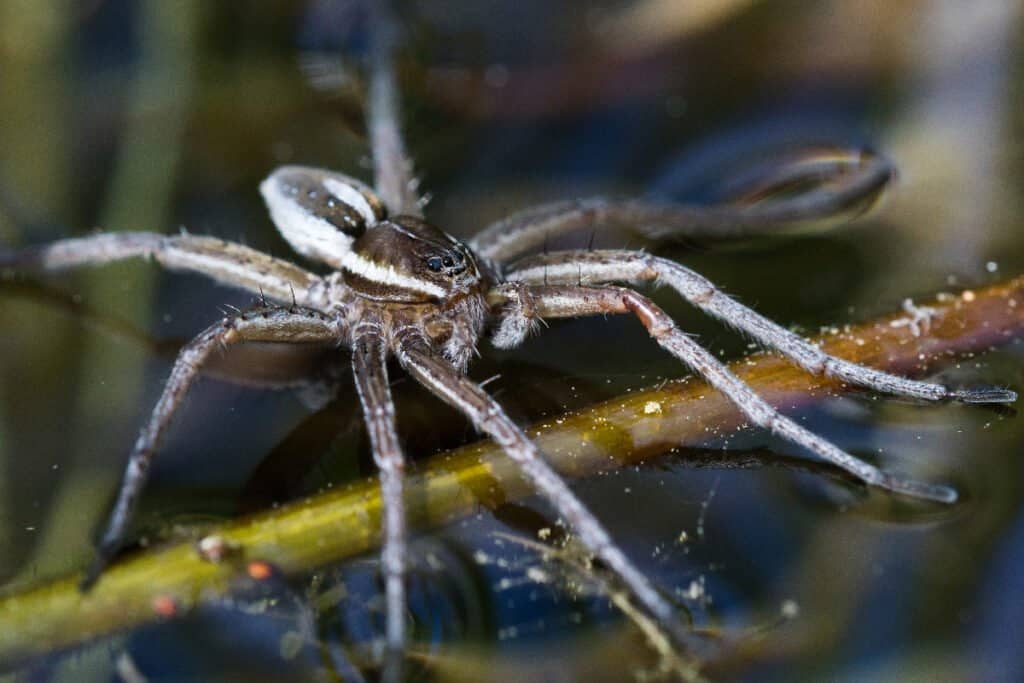
The six-spotted fishing spider’s name stems from six dark spots on its sternum. You’re not very likely to see these spots since they are on the underside of the spider.
©Jukka Jantunen/Shutterstock.com
| Scientific Name | Legspan | Danger to Humans |
|---|---|---|
| Dolomedes triton | 0.35-2.4 inches | Bites can induce swelling and moderate pain similar to a bee sting. |
Fishing spiders from the genus Dolomedes are among the biggest spiders in Idaho. The six-spotted fishing spider is a common sight in this state. It is a large, semi-aquatic spider known for walking and hunting on the water’s surface and diving underwater to catch prey.
The six-spotted fishing spider’s body is greenish-brown with a dark gray to brown cephalothorax (front part of the body) and abdomen. It has a prominent silvery-white or yellow stripe along each side of the cephalothorax, along with two rows of six small white spots on the dorsal (upper) surface of the abdomen. The spider’s name comes from six large black spots located on the underside of the cephalothorax between the bases of its legs.
The six-spotted fishing spider is often found near water, making its home on docks, wharves, boats, and other buildings nearby.
The six-spotted fishing spider’s bite is generally harmless to humans and is typically no more severe than a bee or wasp sting. The spider is shy and will only bite in self-defense.
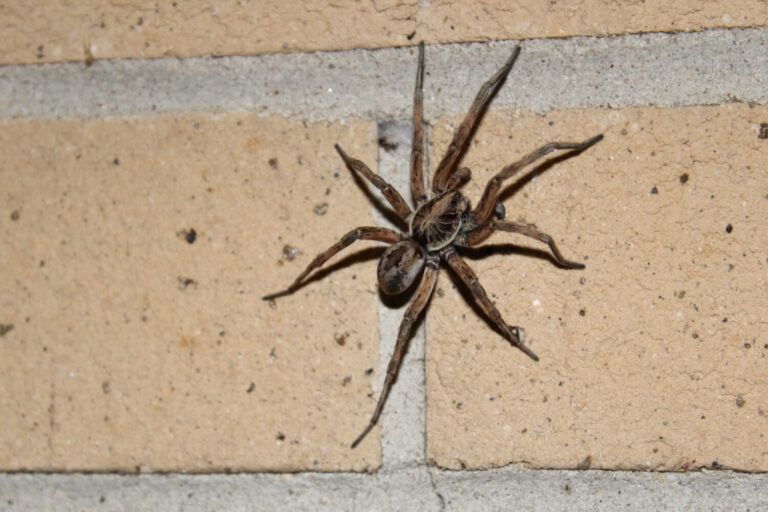
1. Carolina Wolf Spider
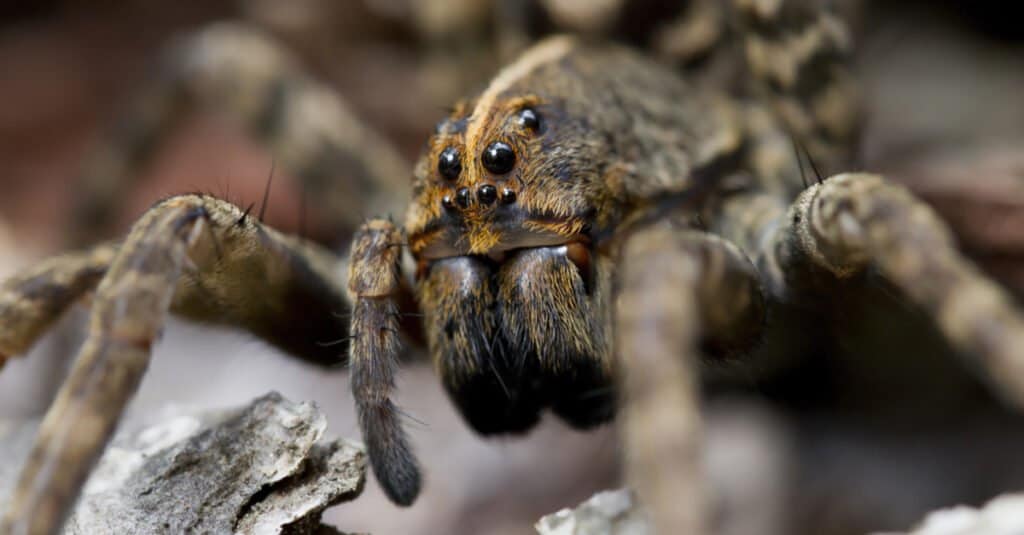
As the biggest spider in Idaho, the Carolina wolf spider can have a legspan of up to 4 inches.
©Will E. Davis/Shutterstock.com
| Scientific Name | Legspan | Danger to Humans |
|---|---|---|
| Hogna carolinensis | 2-4 inches | The bite from this spider causes local pain and swelling. |
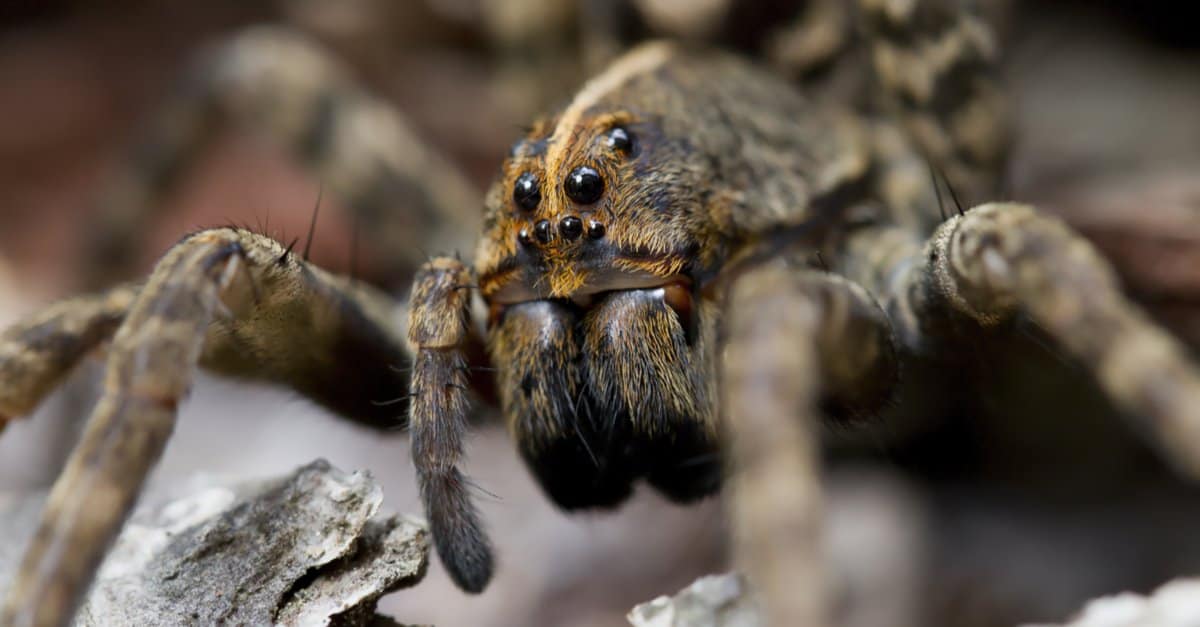
The Carolina wolf spider is the king among the biggest spiders in Idaho, with a reported legspan that measures about four inches. The Carolina wolf spider’s body can measure over one inch, making it the largest spider in Idaho.
Carolina wolf spiders are light brown, black, or gray, often with a light overall coloration. Their cephalothorax features a large light stripe in the middle with two dark marks on either side. The abdomen can be mottled black and brown, with a cardiac mark in the center in mature females.
Carolina wolf spiders live in a variety of habitats, including basements, forests, and beneath rocks and logs, where they wait in search of their prey. They are fast hunters that do not rely on a web to catch their prey.
Carolina wolf spiders are not prone to bite; however, when they do, their bite produces localized symptoms similar to a bee sting, such as mild pain, redness, swelling, and itching around the puncture marks. These effects are usually temporary and subside on their own. In rare instances, a bite may trigger an allergic reaction to the venom, which would require immediate medical attention.