
T
Species Profile

Tenterfield Terrier

Canis lupus familiaris

Small dog. Serious ratter.
Agent Wolf/Shutterstock.com

Tenterfield Terrier Distribution

Click a location to explore more animals from that region

Origin Location

This map shows the native origin of the Tenterfield Terrier. As a domesticated species, they are now found worldwide.

Loading map...

Size Comparison

Human 5'8"
Tenterfield Terrier 11 in

Tenterfield Terrier stands at 16% of average human height.

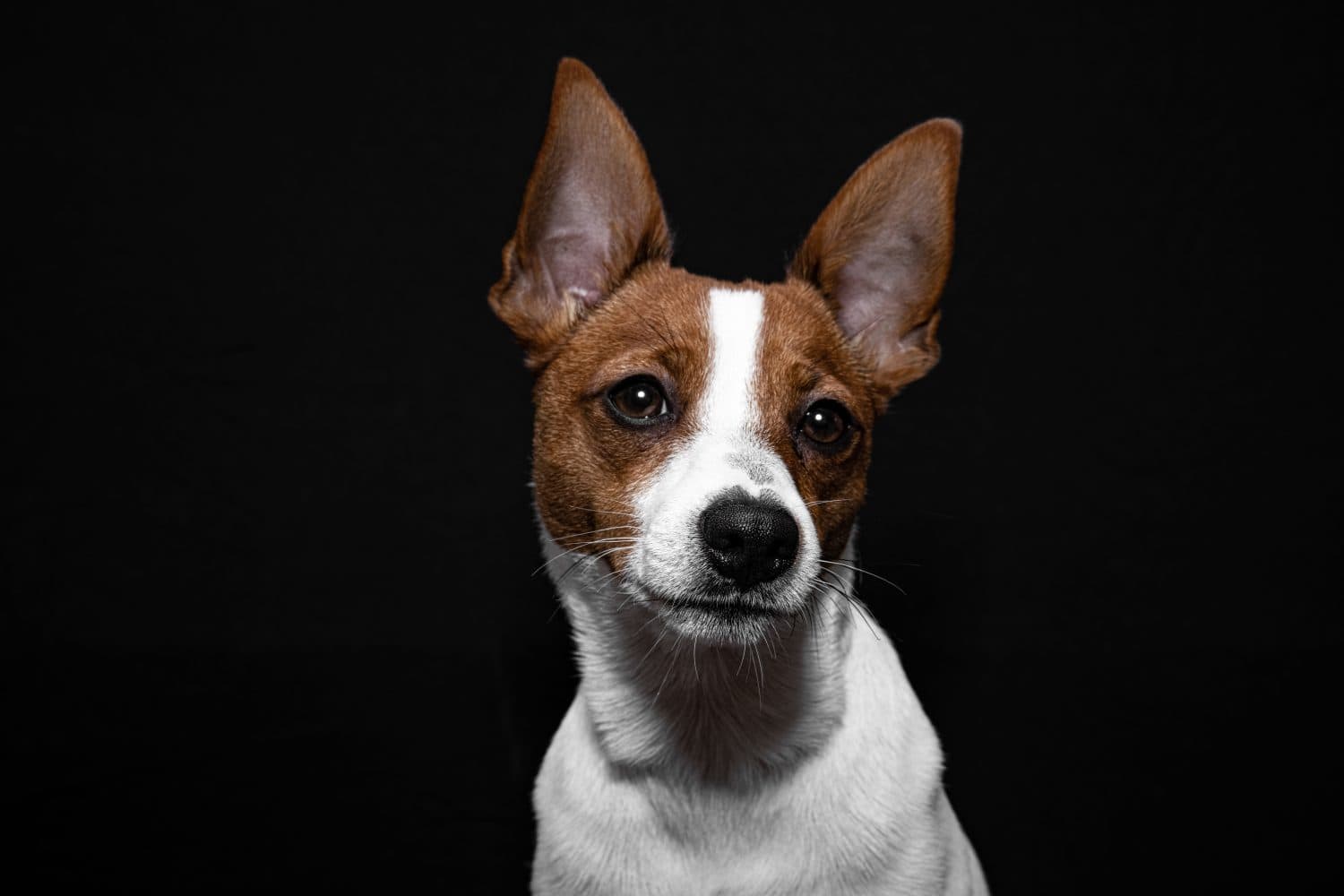
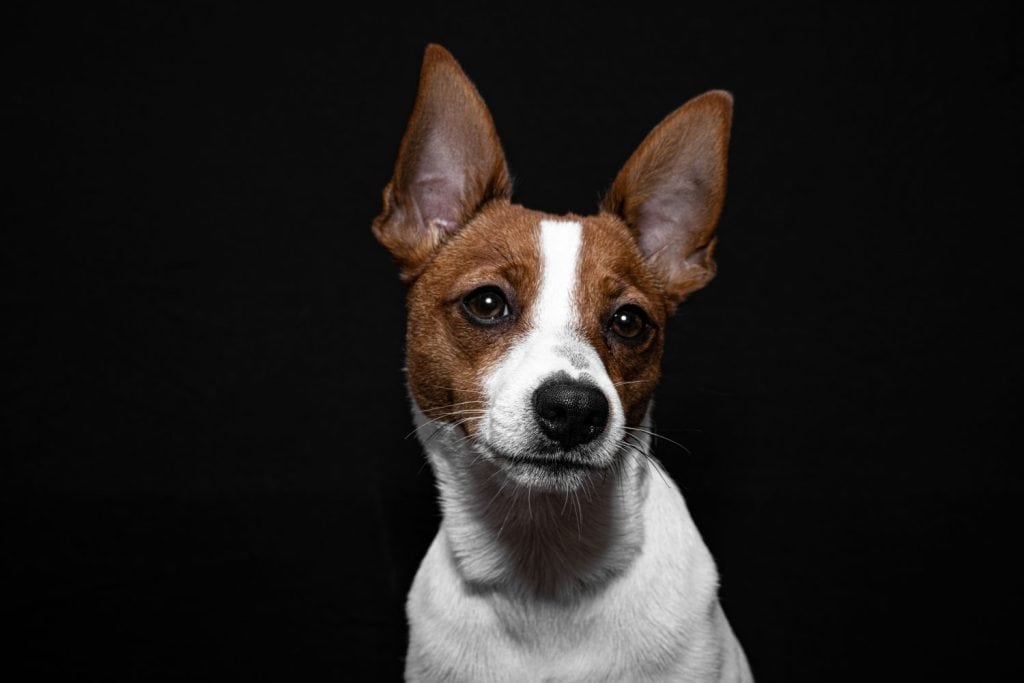
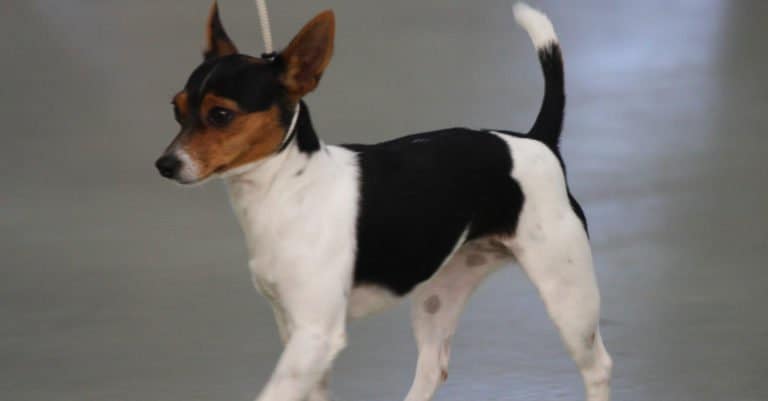
Studio portrait of Australian Tenterfield Terrier, also knows as Rat Terrier in America.

At a Glance

Domesticated
Diet Omnivore
Activity Diurnal+
Lifespan 4 years
Weight 6 lbs
Status Not Evaluated
Did You Know?

Developed in Australia from small working terriers kept on farms and in towns for vermin control.

Scientific Classification

The Tenterfield Terrier is a small domestic dog breed developed in Australia, historically used as a farm and household ratter and companion. It is a terrier-type working breed known for agility, alertness, and strong prey drive toward small pests.

Kingdom
Animalia
Phylum
Chordata
Class
Mammalia
Order
Carnivora
Family
Canidae
Genus
Canis
Species
Canis lupus

Distinguishing Features

  • Small, athletic terrier build; active and agile
  • Typically short, smooth coat; commonly white with black/tan or similar markings
  • Alert, high-energy demeanor with strong vermin-hunting instincts
  • Compact head with pronounced terrier expression; semi-erect to erect ears are common in breed standards

Physical Measurements

Males and females differ in size

Height
♂ 11 in (11 in – 12 in)
♀ 11 in (9 in – 11 in)
Length
♂ 1 ft 5 in (1 ft 3 in – 1 ft 7 in)
Weight
♂ 12 lbs (9 lbs – 15 lbs)
♀ 9 lbs (7 lbs – 12 lbs)
Tail Length
♂ 4 in (4 in – 6 in)
♀ Up to 8 in
Top Speed
28 mph
running

Appearance

Primary Colors
Secondary Colors
Skin Type Mammalian skin with short, smooth, close-lying coat; skin may be pigmented under darker patches and lighter under white areas.
Distinctive Features
  • Domestic dog (Canis lupus familiaris) selectively bred in Australia for ratting and farm companionship; markedly smaller and more compact than the ancestral wolf form.
  • Small terrier build: fine-boned but athletic, agile, and quick-turning; typically longer-legged than many toy-sized companion breeds.
  • Short, smooth coat with minimal feathering; low grooming needs compared with long-coated terriers.
  • Wedge-shaped head with defined stop; dark, alert eyes and semi-erect to erect ears contributing to an attentive expression.
  • Tail carriage often upright; tail may be naturally short or traditionally docked depending on local practice and regulations.
  • High prey drive toward small animals; benefits from secure fencing, leash reliability, and early recall training.
  • Energetic, intelligent temperament; requires daily exercise and mental work (scent games, agility, trick training) to prevent boredom behaviors.
  • Generally hardy, but small-breed risks can include patellar luxation, dental disease/periodontal issues, and occasional lens/eye conditions; routine veterinary screening is recommended.
  • Care requirements: regular tooth brushing, nail trims, and ear checks; coat needs only occasional brushing and bathing as needed.
  • Weight management is important; overfeeding quickly reduces athleticism and can worsen joint issues.

Sexual Dimorphism

Sexual dimorphism is mild. Males are typically slightly taller, heavier, and broader through the head and chest, while females are often a bit finer-boned and lighter with a more streamlined outline.

♂
  • Slightly broader head and stronger jawline
  • More robust neck and chest musculature
  • Often marginally taller/heavier within breed range
♀
  • Finer bone and narrower chest
  • Slightly lighter overall body mass
  • Often a more tapered head and muzzle

Did You Know?

Developed in Australia from small working terriers kept on farms and in towns for vermin control.

Often described historically as a distinct "mini fox-terrier type," later standardized under the name Tenterfield Terrier.

Typically predominantly white with colored markings-helpful for spotting the dog quickly around yards and sheds.

Despite its size, it's a true working terrier: fast reflexes, boldness, and a strong prey drive toward small pests.

Light, athletic build makes the breed naturally suited to agility-style activities and quick directional changes.

Short, smooth coat is low-maintenance compared with many wire-coated terriers.

Known for being very people-focused-many are "shadow dogs" that like staying close to their family.

Unique Adaptations

  • Compact, lightweight body: an adaptation of function (not wilderness survival) for getting into tight spaces where rodents hide.
  • High arousal/fast recovery: terrier-style nervous system geared toward short bursts of intense work, then quickly returning to baseline.
  • Keen hearing and visual reactivity: useful for detecting small, fast-moving pests around farms and outbuildings.
  • Short, smooth coat: practical for many Australian conditions and easy to keep clean after yard work.
  • Efficient, springy gait: favors quick acceleration and sharp turns typical of small game pursuit.

Interesting Behaviors

  • Intense "hunt mode": instantly locking onto movement (mice, lizards, toys) and pursuing with quick, darting sprints.
  • Alert barking and "patrol loops" around the home-common in a breed selected to announce intruders and pests.
  • Digging and den-making tendencies, especially in soft soil or bedding (classic terrier behavior).
  • Toy "shake" and rapid head-flicks that mimic dispatching vermin.
  • High perch preference: jumping onto chairs/sofas to watch doors and windows.
  • Close-handler checking: frequently looking back at their person during play or walks, especially when well-bonded and trained.
  • Selective chasing: strong impulse to pursue small animals outdoors, yet often gentle and affectionate with familiar people and dogs when socialized.

Cultural Significance

The Tenterfield Terrier (Canis lupus familiaris) is an Australian small working dog kept on farms, stables and in towns as a companion and ratter. Bred smaller and people-friendly, it is a lively family dog and a local working breed.

Myths & Legends

Naming lore ties the breed's identity to the Australian town of Tenterfield (New South Wales): enthusiasts favored an unmistakably Australian name to distinguish these homegrown small ratting terriers from imported terrier labels.

Old rural anecdotes describe "little white ratters" kept around stables and sheds that could clear rodent problems far beyond what their size suggested-stories that helped cement the breed's reputation for outsized grit.

Many owners of Tenterfield Terriers (Canis lupus familiaris) believe a good ratter is born, not made, thinking prey drive is inherited and only shaped by training.

In Australian family storytelling, these dogs are often remembered as the night-time 'watch and warning' companion-small enough for the house, sharp enough to raise the alarm at unusual sounds-echoing the practical folklore of farm life.

Conservation Status

NE Not Evaluated

Has not yet been evaluated against the criteria.

Population Stable

Life Cycle

Birth 3 pups
Lifespan 4 years

Lifespan

In the Wild
1–12 years
In Captivity
10–18 years

Reproduction

Mating System Polygynandry
Social Structure Managed Domestic
Breeding Pattern Not Applicable
Fertilization Managed Selective
Birth Type Internal_fertilization

In Tenterfield Terriers, mating is typically human-managed: breeders select pairings, and either sex may be bred with multiple partners across seasons. Reproduction is via internal fertilization, with no stable pair bond required.

Behavior & Ecology

Social Pack Group: 4
Activity Diurnal, Crepuscular, Cathemeral
Diet Omnivore Animal-protein-forward small-breed diet (e.g., chicken or beef-based kibble/wet food)

Temperament

Breed-distinguishing vs base species: smaller, faster-maturing ratter; less cooperative hunting, more independent pest-chasing.
Highly alert and responsive; quick to notice movement and novel sounds in the environment.
High prey drive toward small animals; may chase rodents, birds, and fast-moving toys.
Affectionate with family; can be reserved or sharp with unfamiliar people without socialization.
Bold, persistent, and problem-solving; terrier tenacity can look like stubbornness in training.
Often vocal as an alarm dog; nuisance barking increases when under-exercised or bored.
Dog tolerance varies; may be selective with unfamiliar dogs, especially same-sex adults.
Care needs: daily vigorous play/training plus scent games; secure fencing reduces roaming/chasing.
Health notes: monitor patellas/joints, maintain lean weight; dental care helps common small-breed crowding.
Like many domestic dogs, it typically bonds strongly to people and adapts its sociability through routines, training, and reinforcement.
Terrier types often show high arousal and strong prey focus; early impulse-control training can help reduce chasing and reactivity.

Communication

sharp alarm bark
rapid repetitive barking during arousal or pursuit
growl
whine
yelp
howl Infrequent
intense staring and stalking posture before chasing
play bow, bouncing movements, and rapid direction changes during play
ear and tail carriage changes signaling confidence, curiosity, or uncertainty
mouthiness and toy-shaking common in terrier play sequences
scent investigation and occasional marking; uses urine/feces cues on walks
pawing, nudging, and climbing onto people to solicit attention
lip-licking, yawning, head turns as calming/appeasement signals

Habitat

Biomes:
Temperate Forest Temperate Grassland Mediterranean Temperate Rainforest Boreal Forest (Taiga) Tundra Alpine Desert Hot Desert Cold Savanna Tropical Dry Forest Tropical Rainforest Freshwater Wetland Marine +9
Terrain:
Plains Hilly Valley Coastal Riverine
Elevation: Up to 18044 ft 8 in

Ecological Role

Human-associated mesopredator/commensal carnivore-leaning omnivore; in working contexts functions as a targeted pest-control specialist (ratter) rather than a wild apex predator.

rodent and small-pest suppression around farms/homes early warning/alert behavior that can deter intruders and wildlife pests companionship and social benefits to humans can contribute to local wildlife pressure if allowed to roam (responsible containment/recall training mitigates impacts)

Diet Details

Main Prey:
Rat Mouse Small rodents Rabbit Small birds Lizards and geckos Large insects +1
Other Foods:
Berries and other fruits Vegetable matter Grains and starches grass

Human Interaction

Domestication Status

Domesticated

Tenterfield Terrier (Canis lupus familiaris) is a small Australian terrier bred from domestic dogs for homes and farms as a ratter and alert companion. Bred from wolves by people, it has strong prey drive, reacts to motion, and needs training, secure containment, daily exercise, and early socialization to be a safe family pet.

Danger Level

Low
  • nips or bites possible if poorly socialized, fearful, in pain, or mishandled (especially around resources/toys)
  • chase behavior can cause accidental collisions/tripping in tight spaces
  • vocal alarm barking may be disruptive rather than dangerous
  • zoonotic/parasite risks common to dogs in general (e.g., fleas/ticks, intestinal parasites) without routine prevention

As a Pet

Suitable as Pet

Legality: Tenterfield Terrier (Canis lupus familiaris) is usually legal to own in the U.S. and most places and usually not banned by breed. Local rules (license, leash, rabies) and housing or rental limits may still apply. Check locally.

Care Level: Moderate

Purchase Cost: $500 - $2,500
Lifetime Cost: $12,000 - $30,000

Economic Value

Uses:
Companion animal ownership Working pest control (ratter) on farms/homesteads Dog sports and performance events (agility/obedience/rally) Breeding and kennel activities Pet services (training, grooming, boarding, veterinary care)
Products:
  • puppies from registered or purpose-bred litters
  • stud services (where legal/ethical and health-tested)
  • training services (basic manners, recall, sport foundations)
  • veterinary preventive care (vaccines, parasite control, dental cleanings)
  • pet supplies (food, crates, fencing/containment, enrichment toys)

Relationships

Quick Take

  • Reaching full maturity requires only 9 months when adhering to a strict developmental timeline.
  • Failing to meet the 60-minute daily exercise mark often results in destructive separation anxiety.
  • Using a boar’s hair tool is necessary for managing a short-haired dog’s skin health.
  • Early settlers transported these dogs to Australia to fulfill a specific farm protection requirement.

The Tenterfield Terrier is a smart, active, and friendly dog. This breed is a relative of the miniature fox terrier that originated in England in the mid-1800s. Early settlers traveled with these terriers to Australia, where they became known as Tenterfield Terriers. They were named after a town in New South Wales. They were bred to chase foxes, rats, and other unwanted small animals away from farms and homes. Tenterfield Terriers are in the Terrier group.

This terrier breed is affectionate, playful, and adapts well to its environment. They get along well with children and love to be with their family!

An infographic detailing Tenterfield Terrier facts, including their 9-month maturity rate, 60-minute daily exercise needs, and comparisons to similar breeds like the Smooth Fox Terrier.
Small dog, massive energy. Fail to meet their 60-minute daily exercise requirement and prepare for the destructive reality of separation anxiety. © A-Z Animals

3 Pros and Cons of Owning a Tenterfield Terrier

ProsCons
Easily trained
This Australian breed is easy to train due to its intelligence.
High-energy dogs
Like most terriers, Tenterfields are high-energy and need 30 to 60 minutes of exercise each day.
A simple grooming routine
This is a low-shedding dog, so it needs a minimal amount of grooming.
Separation anxiety
These terriers do not like being left alone for hours at a time. Oftentimes, they chew things to relieve their anxiety.
Good with children
Tenterfield Terriers are affectionate and playful dogs that love being around kids and adults alike.
A big barker
This breed of terrier barks a lot, but this can be addressed with obedience lessons.

Tenterfield Terrier Size and Weight

Tenterfield Terriers are small terriers with a coat of short hair. The average height of a standard male Tenterfield Terrier is 11 inches, while the average height of a female is 10 inches. Males of this breed weigh around 10 pounds, whereas standard females weigh 9 pounds. At 9 weeks of age, Tenterfield Terrier puppies weigh around 4 pounds. They are considered fully grown at 9 months.
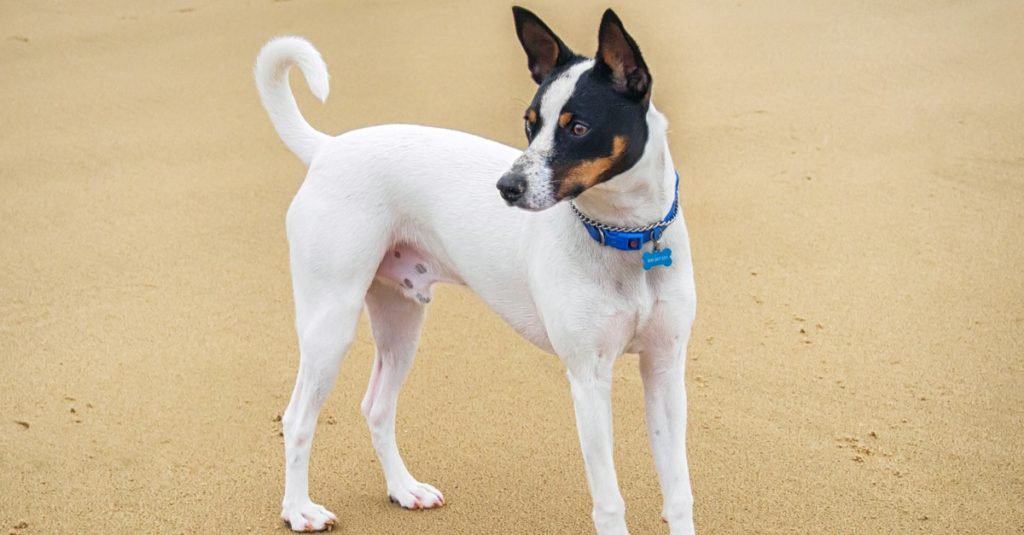
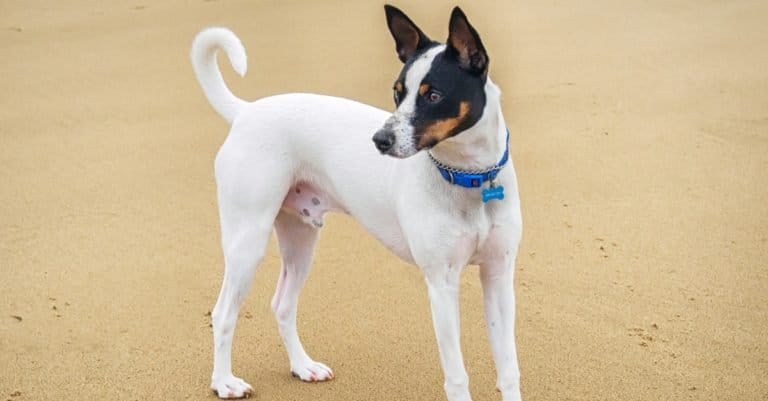
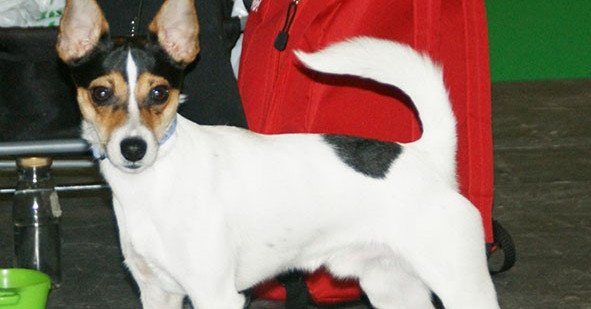
Tenterfield Terrier with a blue collar is standing on the sand

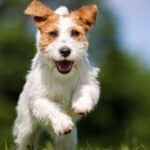
Tenterfield Terriers are small terriers with short hair.

Tenterfield Terrier vs Mini Foxie

Miniature Fox Terriers, also called the Mini Foxie, are relatives of the Tenterfield Terrier. So, it’s no surprise these two breeds have a lot in common. But there are some subtle differences to take into account.

In terms of size, these two breeds are about the same weight and height. They both have a low amount of shedding and require minimal grooming. Both of these terriers are playful, intelligent, bold, and make good watchdogs.

One of the differences between the standard Tenterfield Terrier and the Mini Foxie is in the texture of their coat. While a Tenterfield Terrier’s coat is smooth and sparse, a Mini Foxie’s coat is dense. Another difference is the cost. Breeders tend to charge a higher price for Tenterfield Terriers than for Mini Foxies. The lifespan of a Mini Foxie is generally similar to or slightly longer than that of a Tenterfield Terrier.

Common Health Issues

Tenterfield Terriers have a few common health issues for an owner to keep in mind. One of those is called Patellar luxation. This is when the dog’s kneecap moves out of place. Decreased range of movement and limping are both signs of this issue. Surgery may be required to solve this problem.

A second common health issue is allergies. Tenterfield Terriers are vulnerable to environmental and food allergies. Symptoms of allergies include an abundance of scratching, redness, dry skin, or bald patches in the dog’s coat. A dog can be tested to find various allergies. Dietary changes or medication can both help a terrier with allergies.

A third common health issue is obesity. These dogs are small in size, so giving them more food than necessary quickly adds up to unnecessary weight gain. A set amount of food and regular exercise both go a long way to preventing obesity.

Temperament and Behavior

Tenterfield Terriers have a playful, affectionate personality. This is what makes them such a great dog for active families with kids. Their high level of energy is one of their most well-known traits. This small breed of dog loves to run, jump, and breathe in the fresh air!

These smart canines are always on alert, so they are likely to bark when there’s a knock at the door or when they spot someone on the property. This barking behavior is a way for Tenterfield Terriers to protect their beloved family.

How to Take Care of a Tenterfield Terrier

Taking care of a pet Tenterfield Terrier is easier if an owner learns about its diet, exercise needs, grooming routine, and common health issues. Whether someone gets a Tenterfield Terrier puppy or an adult dog, knowing all about the breed is helpful.

The Best Dog Food

Tenterfield Terrier puppies and adult dogs have different dietary needs. Providing them with a balanced diet according to the dog’s age can help fend off common health issues. Look into limited-ingredient diet and allergy-care dog foods.

Puppy food: Protein in a Tenterfield Terrier puppy’s diet supports their developing muscles, organs, joints, and tendons. Getting enough lean protein in its diet may help this terrier to avoid Patellar luxation. Omega 3 and 6 fatty acids contribute to brain and vision development in a puppy, along with supporting healthy skin and nails. Fat gives them the energy to explore their surroundings and play. For the first six months of the puppy’s life, feed it three or four small meals per day. This helps them get the energy they need without putting on excess weight. Fiber in the diet helps with this canine’s digestion. Calcium is essential for healthy teeth and bones.

Tenterfield Terrier adult dog food: Chicken, salmon, and lean beef are all good sources of protein in an adult Tenterfield Terrier’s diet. Protein strengthens muscles and keeps organs healthy. A limited amount of fat in an adult terrier’s diet reduces the chances it will become obese. Calcium keeps an adult dog’s teeth and bones in good condition. Vitamin A is important for good vision, while vitamin C supports a healthy immune system.

Maintenance and Grooming

How much do Tenterfield Terriers shed? Though some breeders advertise their Tenterfield puppies as hypoallergenic, they do have a low amount of shedding. These dogs could be considered hypoallergenic simply because they are not likely to shed enough hair to bother an owner’s allergies.

The grooming routine for this breed is simple. This dog needs to be brushed once a week. A grooming glove is a good tool for removing the small number of short hairs this dog is shedding. A brush with soft boar’s hair bristles is great for bringing out the natural shine in its coat.

Since this breed is prone to allergies, be on the lookout for redness, rashes, dry skin, or bald patches. A veterinarian can diagnose the issue and provide a topical salve and prevention advice.

Training

Training this breed is a relatively easy process. They are intelligent and get bored easily, so short obedience training sessions are recommended.

Exercise

Tenterfield Terriers have a lot of energy they need to release. So, 30 to 60 minutes of exercise each day is essential. They like playing fetch in the backyard as long as there’s a lot of high-speed running involved.

Another idea is to take them for a walk on the leash through the neighborhood or in a park. Allowing these terriers off the leash is another great way to let them get their energy out. However, be sure the area is enclosed or that the dog is trained well enough to come back when called. Tenterfield Terriers are famous for taking off after birds and other small animals. An owner must ensure the dog is in a safe area before letting it run.

This breed can adapt to apartment living as long as they continue to get enough exercise each day.

Puppies

As puppies, Tenterfield Terriers love to run and explore just as much as adult dogs. Once again, having a fenced-in area where a puppy can exercise and sniff around safely is essential.

Tenterfield Terrier and Children

A socialized Tenterfield Terrier is a good choice for a family with children. These dogs are fun-loving and enjoy playing games. In fact, a puppy or a socialized adult dog are a good choice for a family’s first pet.

Dogs Similar to Tenterfield Terriers

Some dogs similar to Tenterfield Terriers include Smooth Fox Terriers, Lakeland Terriers, and Cairn Terriers.

  • Smooth Fox Terrier: Smooth Fox Terriers and Tenterfield Terriers are both tri-colored dogs. They are both smart and lively. However, Smooth Fox Terriers weigh more than Tenterfield Terriers.
  • Lakeland Terrier: Lakeland Terriers are intelligent and friendly, just like Tenterfield Terriers. But Lakeland Terriers tend to grow to a larger size.
  • Cairn Terrier: Like Tenterfield Terriers, Cairn Terriers are affectionate and friendly. Also, they are about the same size. But Tenterfield Terriers are usually tri-colored, while Cairns are generally a solid color.

View all 608 animals that start with T

Sources

  1. Dogs Life / Accessed March 31, 2021
  2. Wikipedia / Accessed March 31, 2021
A-Z Animals Staff

About the Author

A-Z Animals Staff

AZ Animals is a growing team of animals experts, researchers, farmers, conservationists, writers, editors, and -- of course -- pet owners who have come together to help you better understand the animal kingdom and how we interact.
Connect:

Thank you for reading! Have some feedback for us?


Tenterfield Terrier FAQs (Frequently Asked Questions)

A Tenterfield Terrier is a small breed of dog that got its name from an Australian town. It was bred to drive foxes, rats, and other small animals away from farms and homes. It is considered hypoallergenic, but it has a reputation for a low level of shedding.