
The ticks in Wisconsin can be grouped into two categories: common and not-so-common. Here, we’ll discover the three most common species of ticks in Wisconsin, then learn about the two you’re less likely to run into. Ticks are bloodsuckers, like mosquitoes, but they’re not insects. Instead, ticks are arachnids, like scorpions, spiders, and mites. They start life as one of up to 20,000 eggs. On hatching, they’re known as larvae. The larva has a quick feed, then molts into a nymph. Nymphs feed, then molt into adults. Adults feed, reproduce, and die. This process can take as little as three months or as long as two years. In fact, some ticks can go more than a year without eating.
Here, we’ll learn how to identify the ticks in Wisconsin and what diseases each carries. Then, we’ll take a closer look at Lyme disease in the state and what you can do to prevent tick bites.
The Most Common Ticks in Wisconsin
American Dog Tick
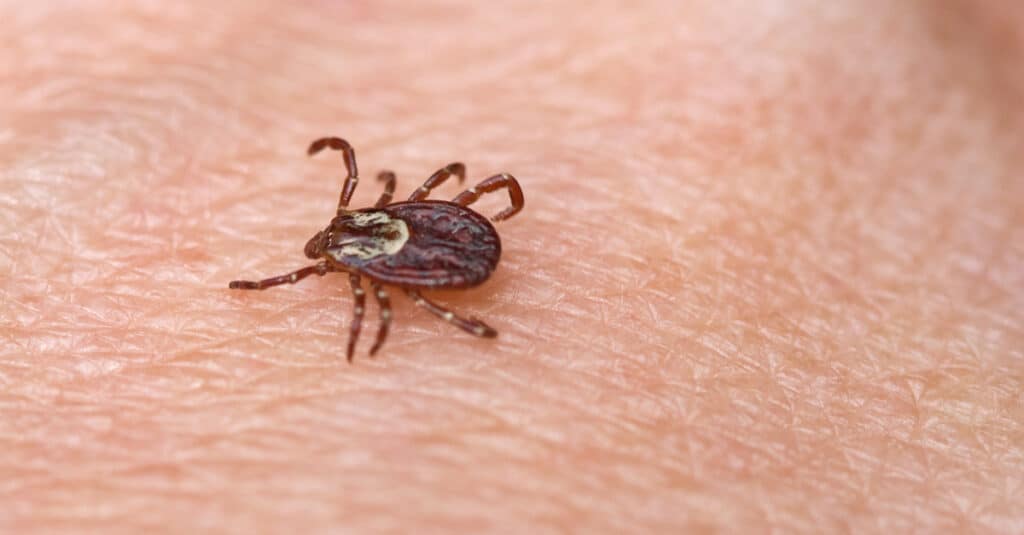
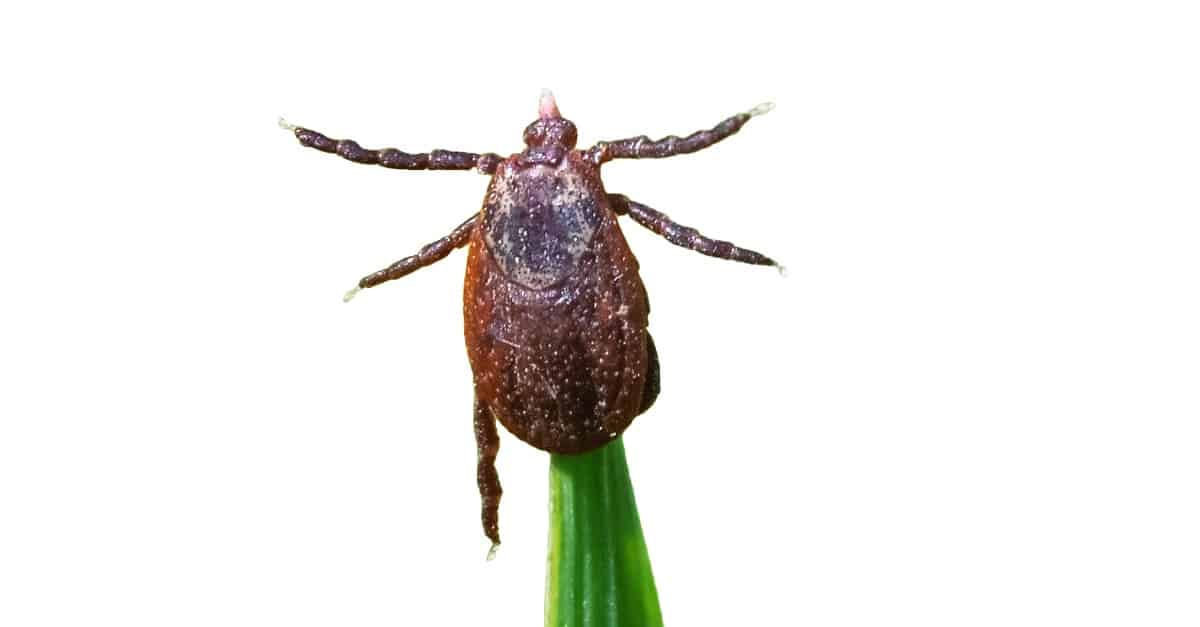
American dog ticks are the largest ticks in Wisconsin.
©Melinda Fawver/Shutterstock.com
American dog ticks are larger than any other ticks in Wisconsin. They have medium brown bodies with light brown legs. Females are larger than males and have different markings from males. Both male and female American dog ticks, also known as wood ticks, have small mouthparts and oval bodies. Females have tan scuta (the hard shields behind their heads) and brown bodies, while males have mottled brown and tan bodies.
American dog ticks cannot spread Lyme disease, as they don’t carry it. What they do carry, however, is Rocky Mountain spotted fever. They’re found primarily in fields rather than forests and are most active in the spring and summer.
Blacklegged Tick
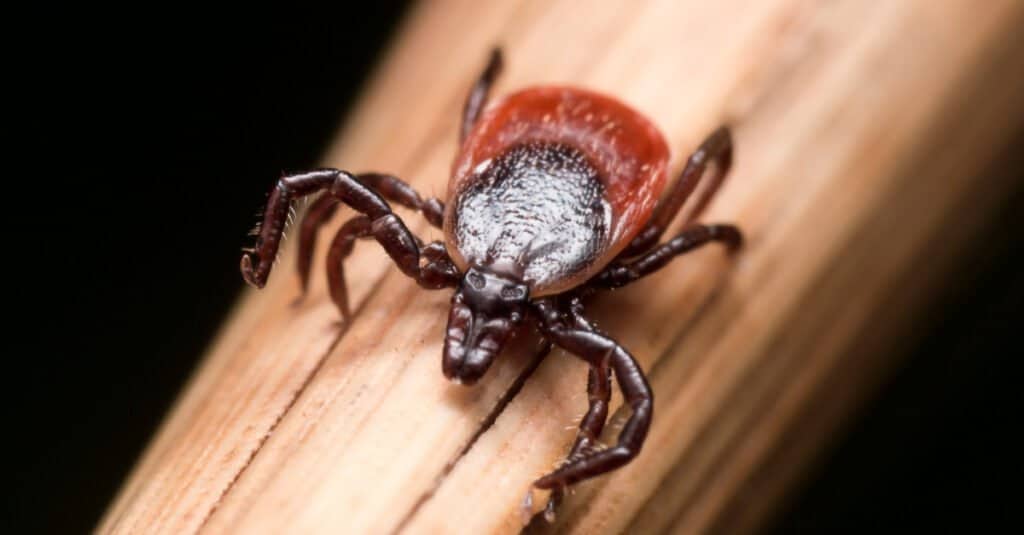
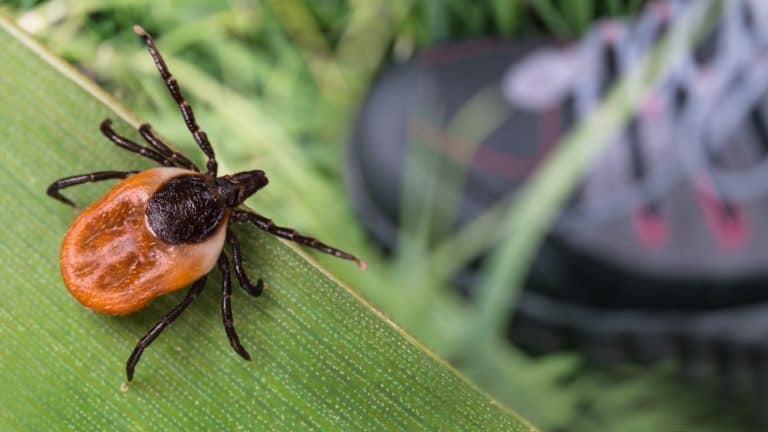
Deer ticks carry Lyme disease.
©Steven Ellingson/Shutterstock.com
Blacklegged ticks, also known as deer ticks, are the darkest of all ticks in Wisconsin. Females are larger than males. Males have black legs and dark brown to black bodies, with medium-sized mouthparts. Females have dark brown to black legs, very large mouthparts, and black scuta, with red-brown bodies.
Blacklegged ticks are the only ticks in Wisconsin that can spread Lyme disease. As larvae, they feed on mice, which carry the bacteria responsible for Lyme disease. Then, as nymphs and adults, the infected ticks pass the bacteria along to their hosts, which may include humans. Blacklegged ticks feed on white-tailed deer, badgers, raccoons, coyotes, humans, and dogs, among others.
Lone Star Tick
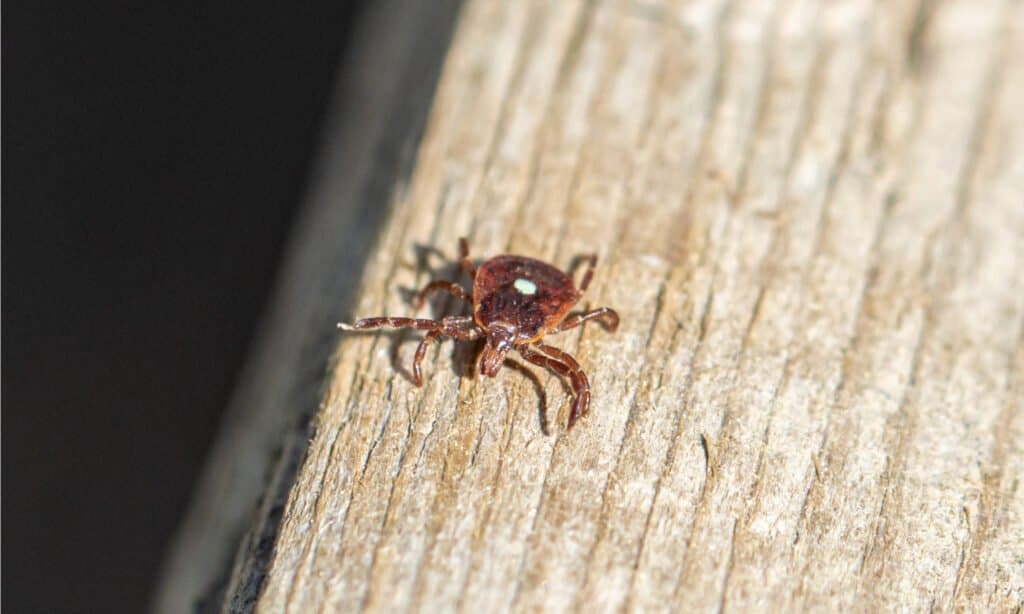
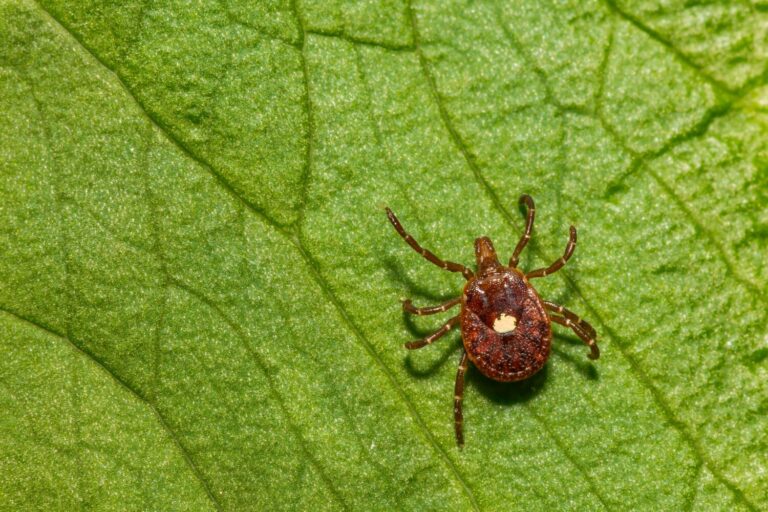
Female lone star ticks have a tan dot on their backs.
©Maria T Hoffman/Shutterstock.com
Lone star ticks have light-colored, oval bodies. Males have small mouthparts, with no tan or white markings. Females have large mouthparts and a single, tan dot in the center of their backs.
Lone star ticks do not carry Lyme disease, but they are vectors for human monocytic ehrlichiosis. Because females have such long mouthparts, their bites often become infected. Infection symptoms can occur up to one month after the bite. Lone star ticks feed on turkeys, other birds, lizards, rats, squirrels, horses, cattle, humans, dogs, and any other creature they can get their chelicerae into.
Less Common Ticks in Wisconsin
Winter Tick
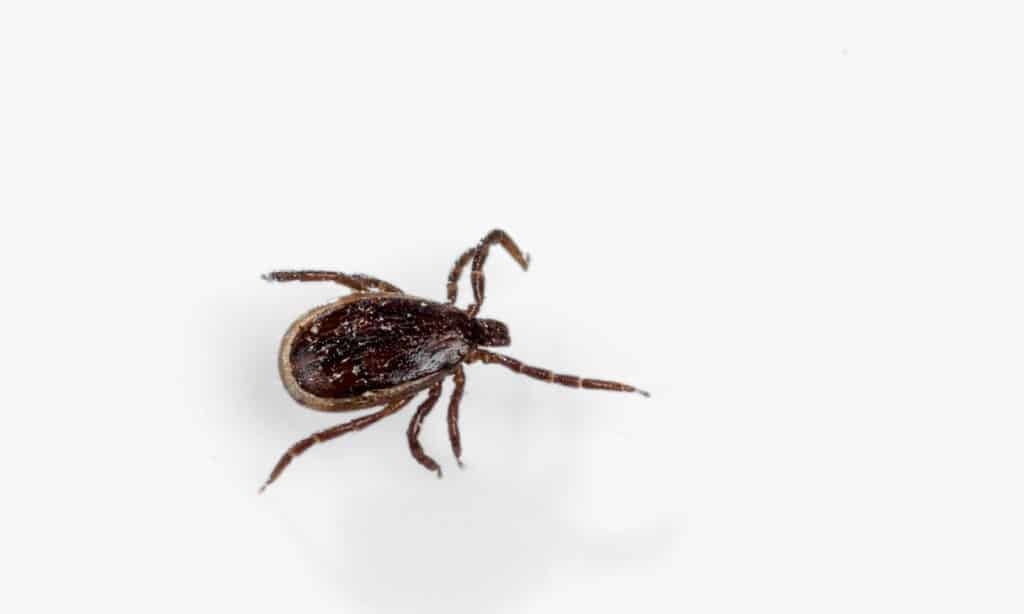
Winter ticks can feed off just one host, causing immense damage.
©iStock.com/VladK213
Winter ticks in Wisconsin are small, brown, and rarely seen by humans. Other species of ticks take a new host for each life stage, but winter ticks feed off the same host for their entire lifecycle. This means that infestations can become severe. There have even been cases of moose with over 100,000 winter ticks embedded on their bodies. Such heavy infestations can lead to anemia, interrupted feeding, and even death.
Luckily, humans don’t have much to worry about when it comes to winter ticks. These ticks prefer large game, like moose, elk, bear, and deer.
Brown Dog Tick
Brown dog ticks live indoors.
©7th Son Studio/Shutterstock.com
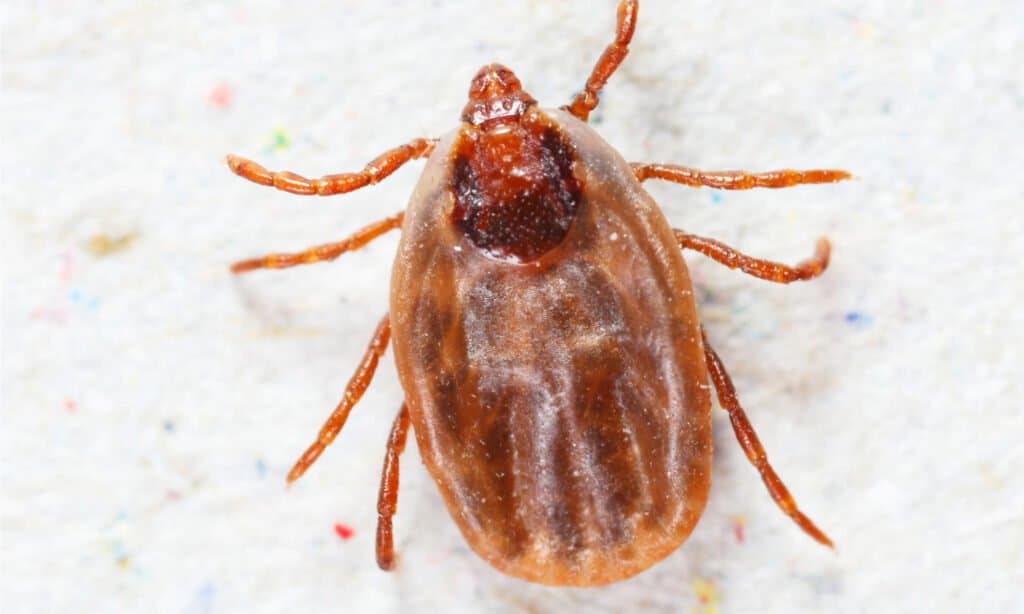
The brown dog tick typically lives indoors. That’s right — not even the indoors is safe from ticks. However, brown dog ticks rarely bite humans. Instead, they prey on domestic canines. These ticks live wherever there are both manmade structures and dogs. They can often be seen in dog beds, crates, kennels, or any other area that dogs frequent. If you find a tick embedded in your dog, remove it as soon as possible.
Do Ticks in Wisconsin Have Lyme Disease?
Lyme disease is the most common tick-borne illness in Wisconsin. Luckily, though, it is only spread by one type of tick, the blacklegged tick. So, if you find a tick embedded in your skin, try to determine what species it is. If it is a blacklegged tick, remove it and mail it to a tick testing facility to see if it carries Lyme disease. You should also consult your primary care physician and self-monitor for symptoms of Lyme disease.
How to Avoid Ticks in Wisconsin
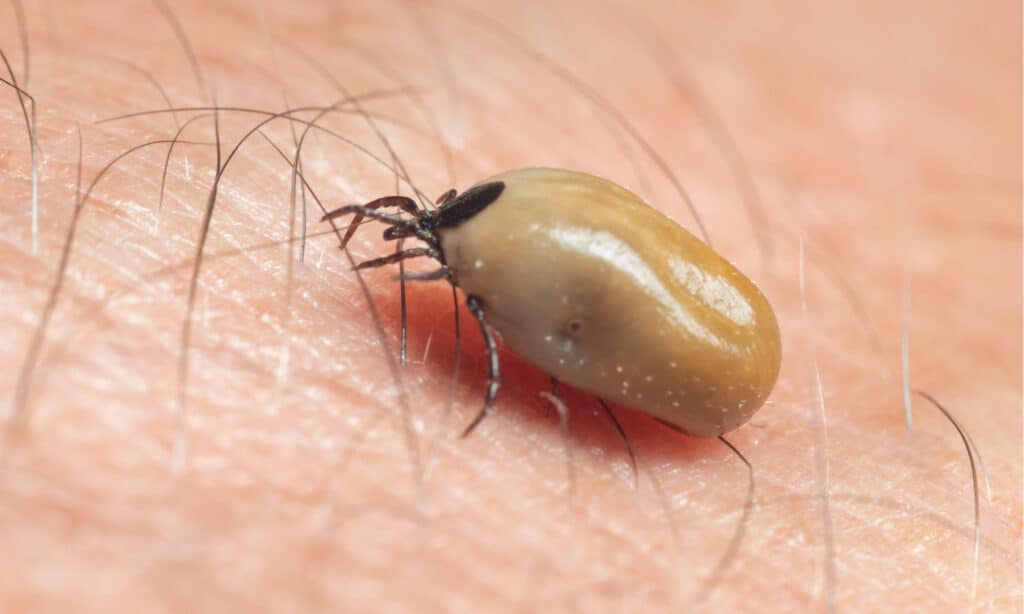
After removal, you can use rubbing alcohol to kill a tick.
©Afanasiev Andrii/Shutterstock.com
Ticks are more than a nuisance; they’re a threat to our health and well-being. But, they’re also a fact of life. And if you spend much time outdoors, then chances are, sooner or later, you’re going to have to deal with ticks in Wisconsin.
The first step in preventing a bite is to wear long pants and long-sleeved shirts when going outdoors. Ticks can’t bite through your clothes, and they can’t run or jump either. So, every barrier you put up between them and your skin will reduce your chances of a bite. Once outdoors, remember to stay out of thick underbrush and tall grasses that brush against your clothes. Finally, use insect repellent on your clothes, but avoid applying it directly to your skin.