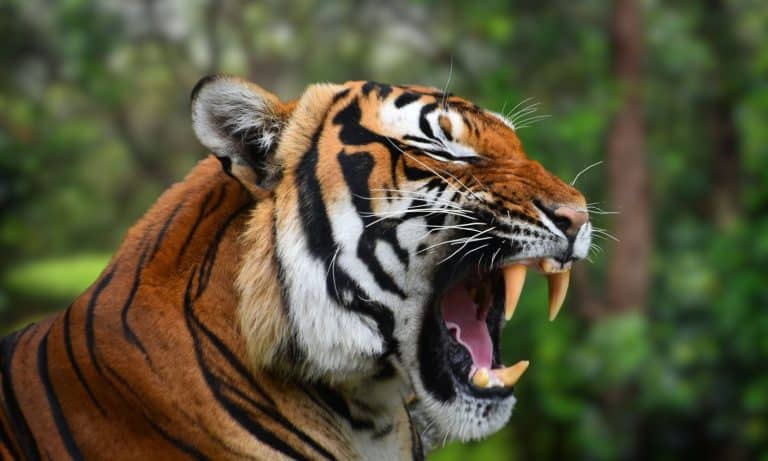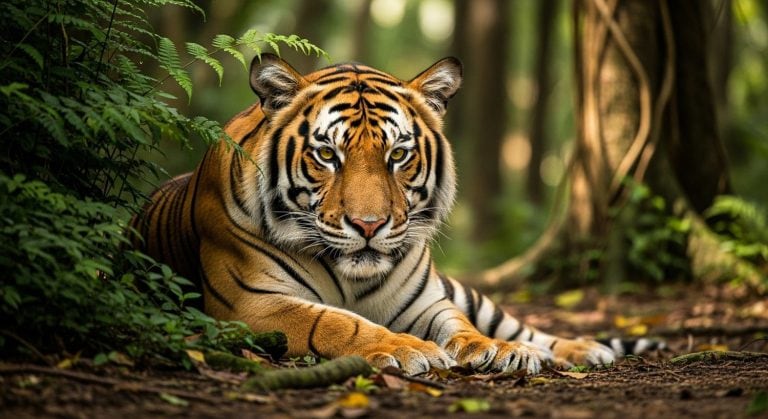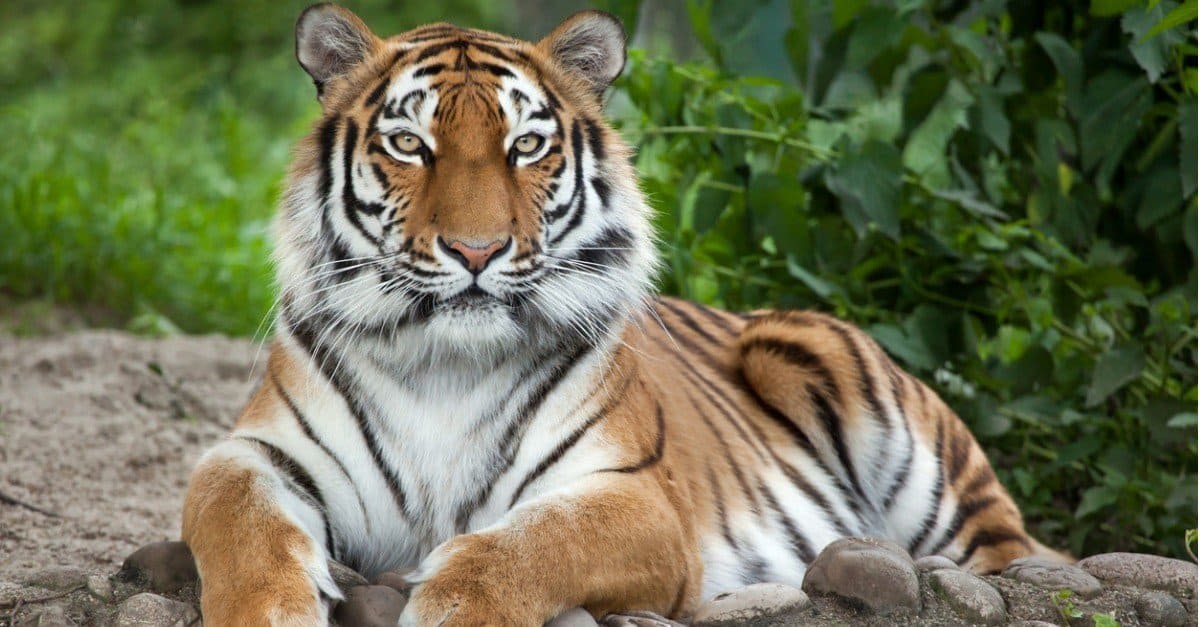

Siberian tigers, or Amur tigers, are the largest of all the subspecies of tigers found around the world. They are one of the largest carnivorous land mammals and live in mountainous regions of the Russian Far East and some areas of China. This type of tiger is remarkable, but it is also endangered. Keep reading to discover more incredible facts about Siberian tigers!
1. Siberian Tigers Are Adapted to Survive in the Snow
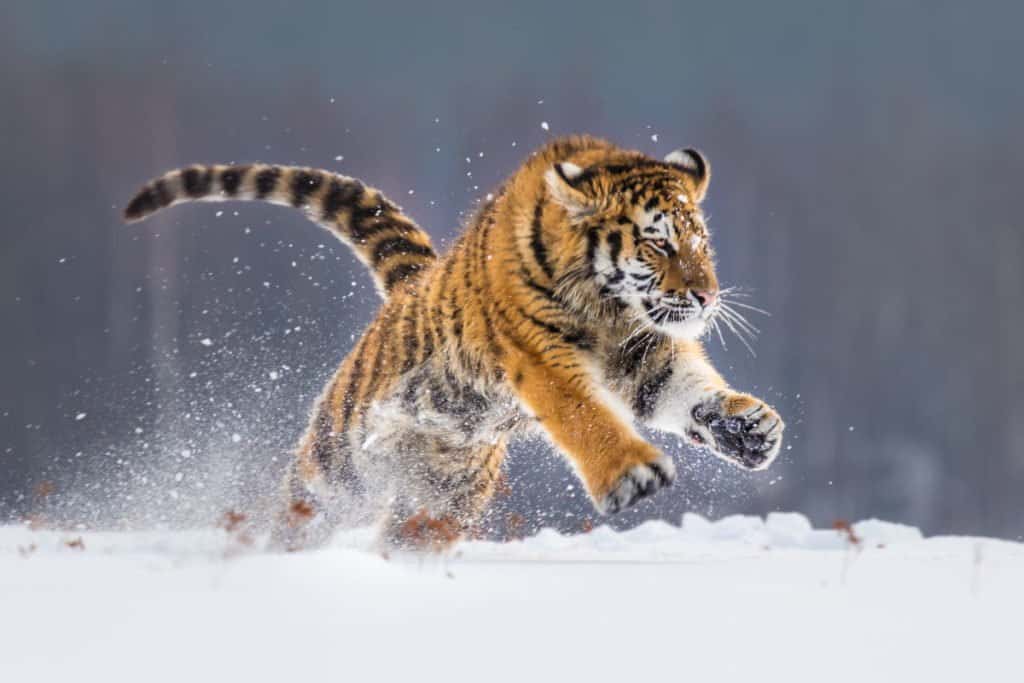
The Siberian tiger can survive in harsh conditions.
©Jan Stria/Shutterstock.com
Siberian tigers have adapted to survive in incredibly harsh and snowy conditions, so they are unique in that way. They achieve this thanks to their thick and luscious coats, which remain long throughout the extremely cold winter months. In addition, the tuft of fur around their necks acts as a scarf to keep them warm. Siberian tigers also have a layer of insulating fat around their belly that contributes to conserving heat, along with heavily furred paws.
2. Siberian Tigers Are Huge
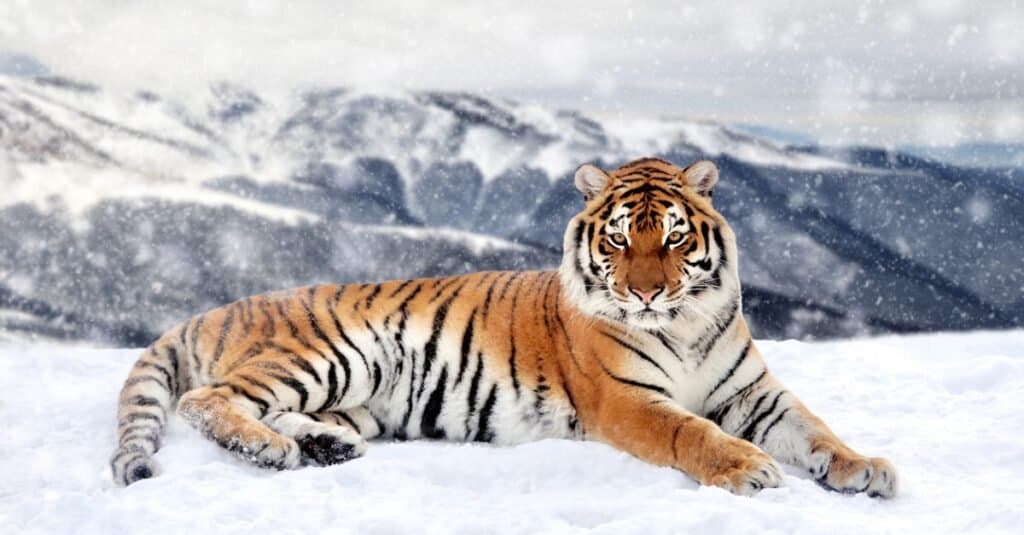
Siberian tigers are the largest of the big cats, with an average weight of around 600 pounds.
©iStock.com/Byrdyak
Siberian tigers are the largest species of tiger in the world, with adults weighing an average of over 600 pounds. Male Siberian tigers can reach lengths of up to 11 feet long and can weigh as much as 900 pounds. Female Siberian tigers are a little smaller, coming in at about nine feet long and weighing anywhere from 350 to 400 pounds. In cold environments, their large size serves them well since a larger animal will conserve heat much better than a smaller one.
3. The Siberian Tiger Is Endangered

Siberian tigers are an endangered species with only 400 remaining in the wild.
©S. Taheri, edited by Fir0002, CC BY-SA 2.5, via Wikimedia Commons – Original / License
Sadly, only 400 Siberian tigers remain in the wild. The majority of that population resides in the Far East of Russia and affects the ecosystem there in a big way. This extraordinary creature is heavily hunted, which is one of the reasons why they are endangered. Their fur is sold through black market fur trades, and some people even consider Siberian tiger meat to be a delicacy.
4. Siberian Tigers Have Huge Appetites
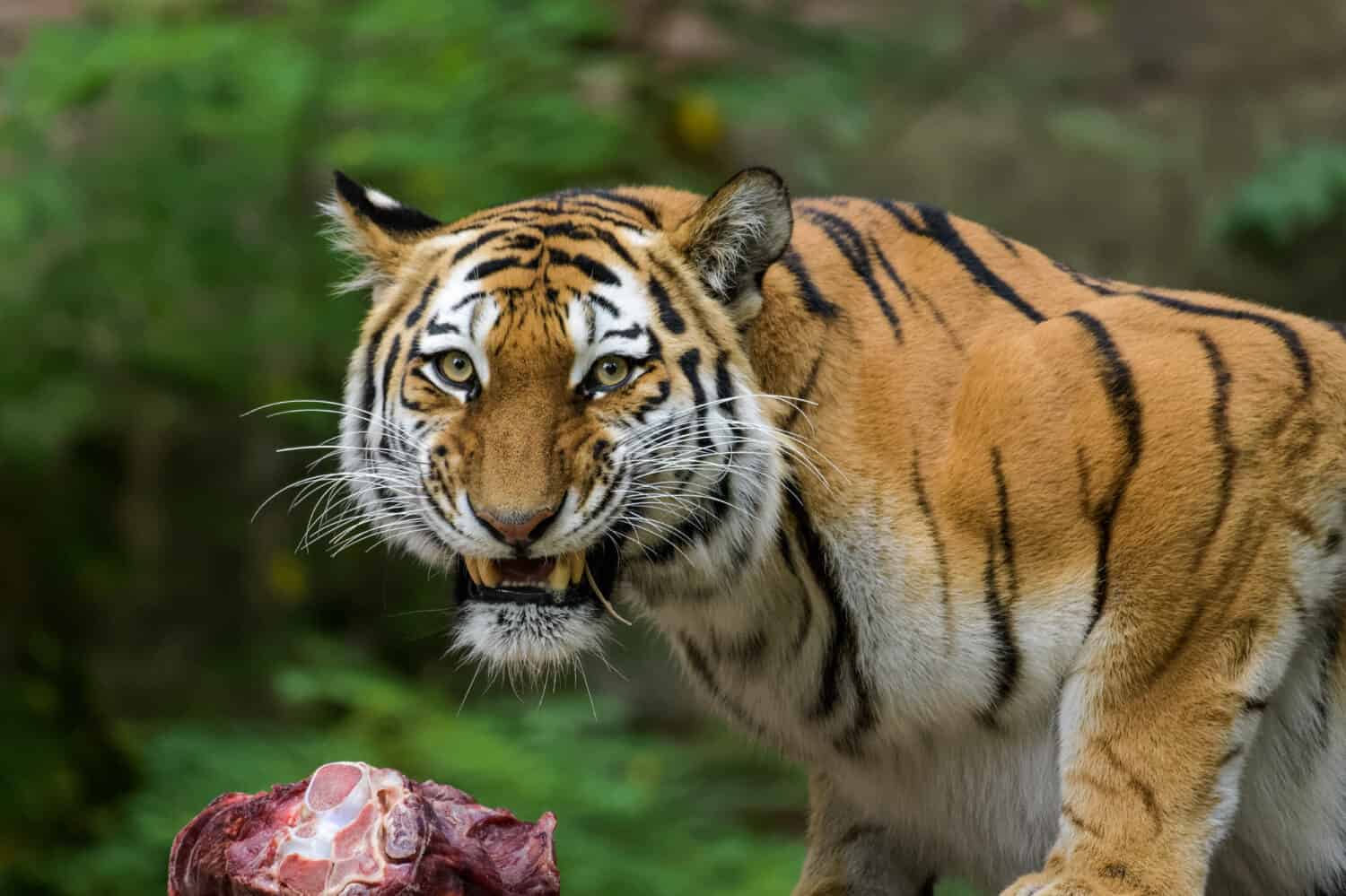
A Siberian tiger can eat up to 60 pounds of meat in one sitting.
©Thorsten Spoerlein/Shutterstock.com
Siberian tigers are quite large, so it isn’t surprising that they eat so much. In one sitting, a Siberian tiger can eat 20 to 60 pounds of meat, depending on how hungry it is. Most Siberian tiger hunts are not successful, and it requires a lot of patience and stalking to catch their prey. Their diet consists of animals such as boar, deer, and elk.
5. Siberian Tigers Are Solitary Creatures

Siberian tigers do not take kindly to the company of other tigers.
©Volodymyr Burdiak/Shutterstock.com
What many people may not know is that Siberian tigers are incredibly solitary animals. They are extremely territorial and do not like to be around other tigers. Their territories are marked by spraying, and some of their territories can cover hundreds of square miles. The only exception to this is female tigers who are feeding their young. However, once the cubs reach adulthood, they will eventually go off on their own. To mate, females will use a variety of sounds and meows to let the males know they are ready. These vocalizations allow both male and female Siberian tigers to communicate with each other and state their intentions while remaining solitary beings.
6. Siberian Tigers Have Their Own Unique Stripes
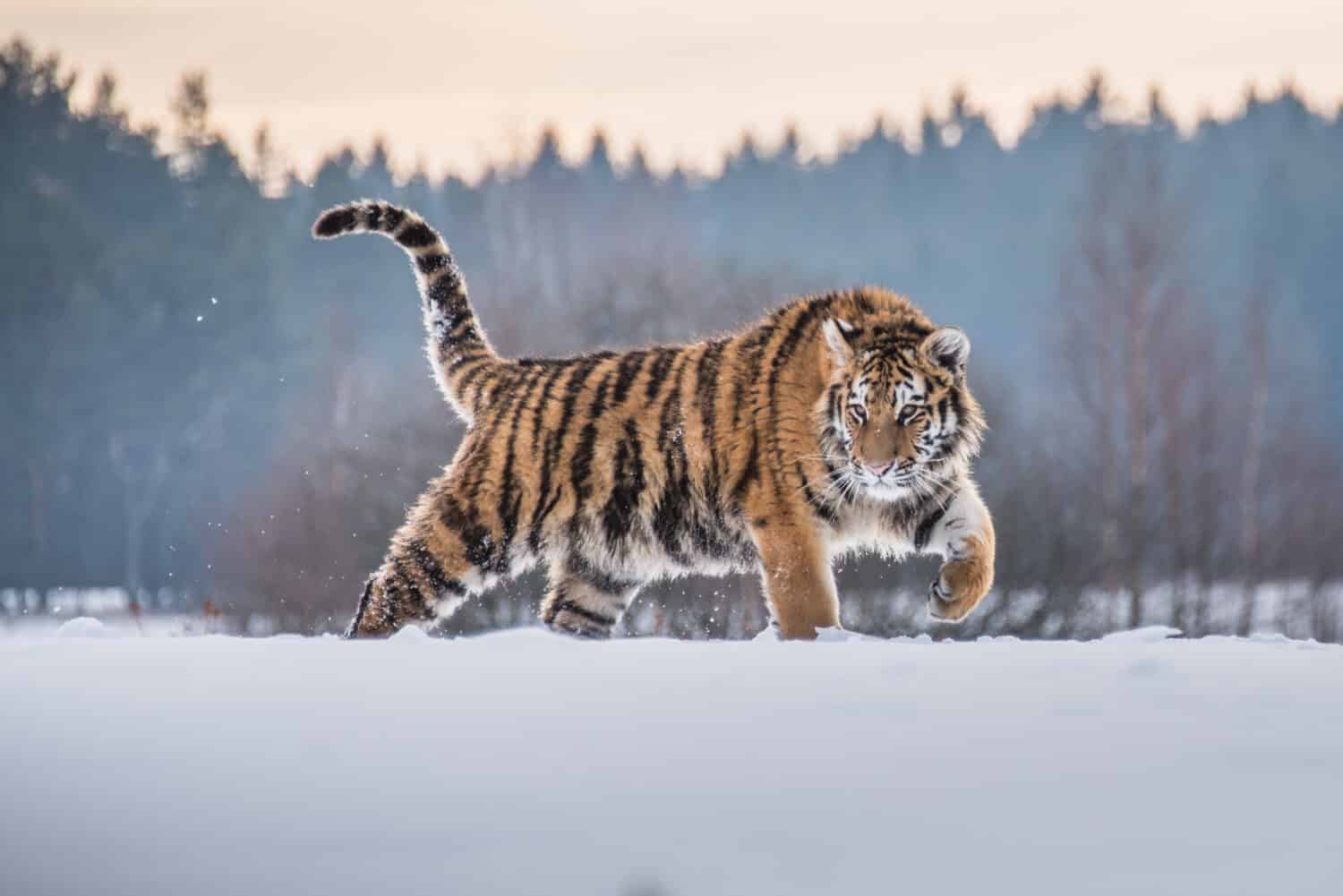
No two Siberian tigers have the same striped pattern on their fur.
©Vaclav Sebek/Shutterstock.com
Similar to human fingerprints, no two Siberian tigers have the same striped pattern on their fur. This means that individually, each tiger has its unique pattern. During the winter, their fur becomes lighter, and in addition to keeping the animals warm, it also serves to camouflage them when hunting. The winter coat usually has a more muted shade of color than the summer coat. Winter fur has a longer length as well, so the stripes appear wider with less defined outlines.
7. Siberian Tigers Can Live Up to 25 Years in Captivity
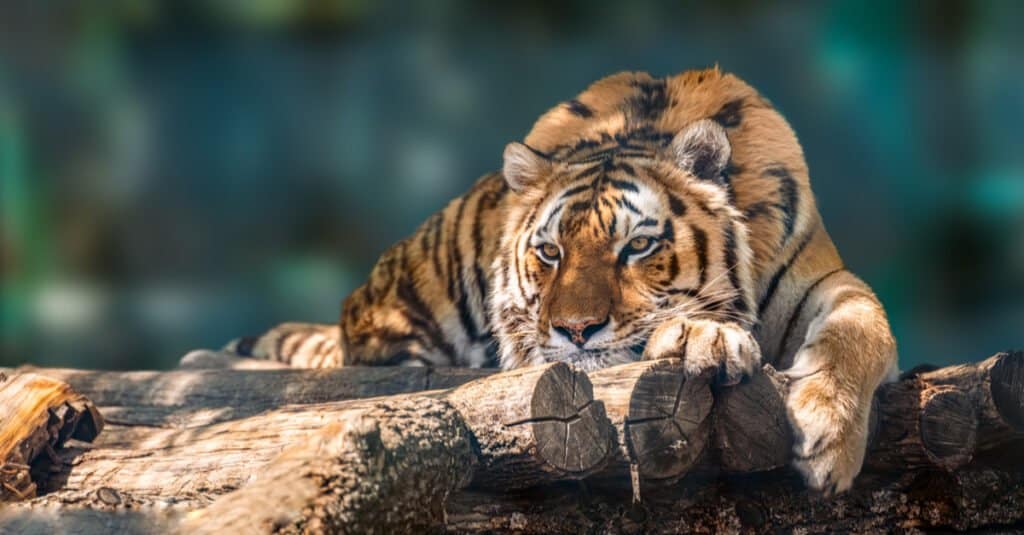
Siberian tigers live 16 to 18 years in the wild and over 20 years in captivity.
©iStock.com/Kathrine Andi
The Siberian Tiger lives an average of 16 to 18 years, similar to other tigers, although this is often shortened due to poaching and hunting. However, in captivity, some Siberian tigers can live over 20 years. Siberian tigers in captivity are meant to restore and preserve the small number of tigers left in the world and hopefully prevent them from becoming extinct through breeding programs.
8. They Have a Gestation Period of 3-4 Months
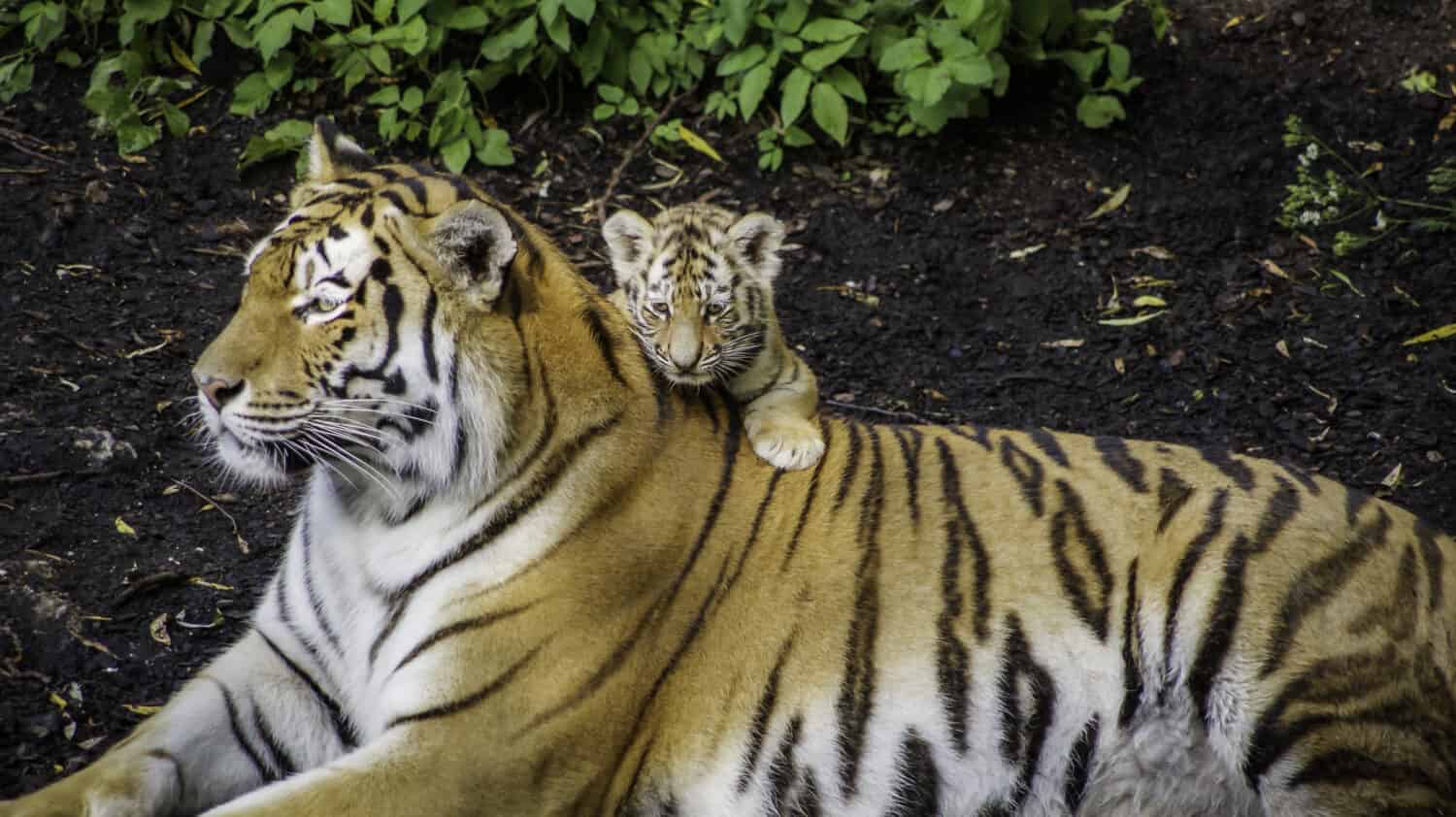
Female Siberian tigers give birth to 2 to 6 cubs every two years.
©Thes2680/Shutterstock.com
Female Siberian tigers have a gestation period of about 100 days or so — or three to four months — and only give birth once every two years. In a Siberian tiger litter, there can be anywhere from two to six cubs. It is crucial that the mother catches enough food for the cubs, or they might not survive. The cubs remain with their mother for about two to three years before leaving to begin their own lives.
9. Siberian Tigers Have Incredible Night Vision
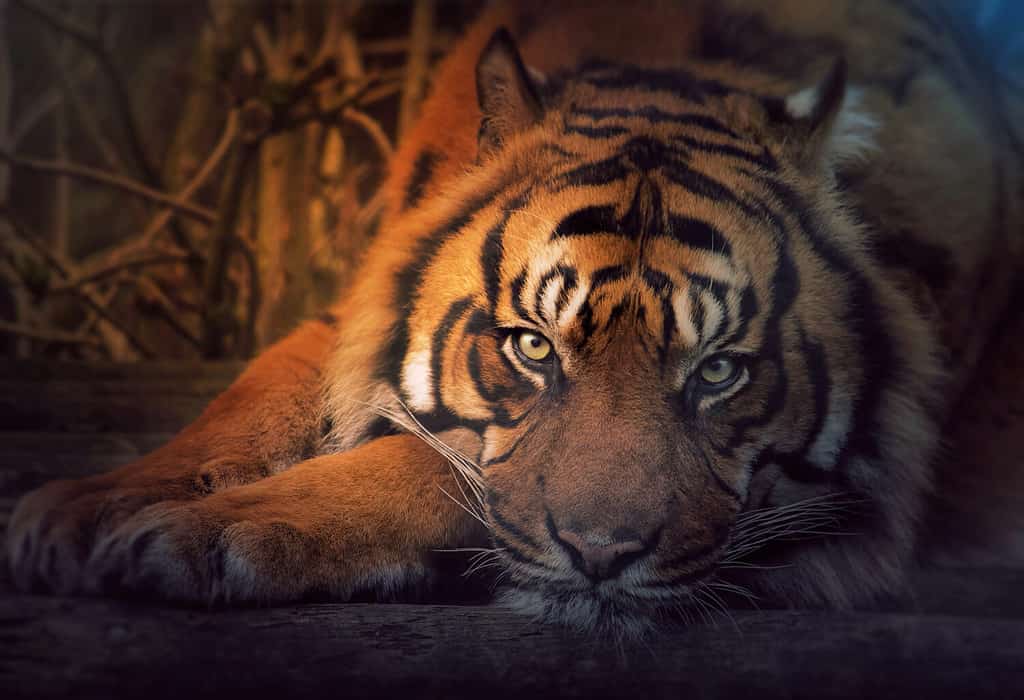
The tapetum lucidum at the back of the eye enables Siberian tigers to see at night.
©Zita Stankova/Shutterstock.com
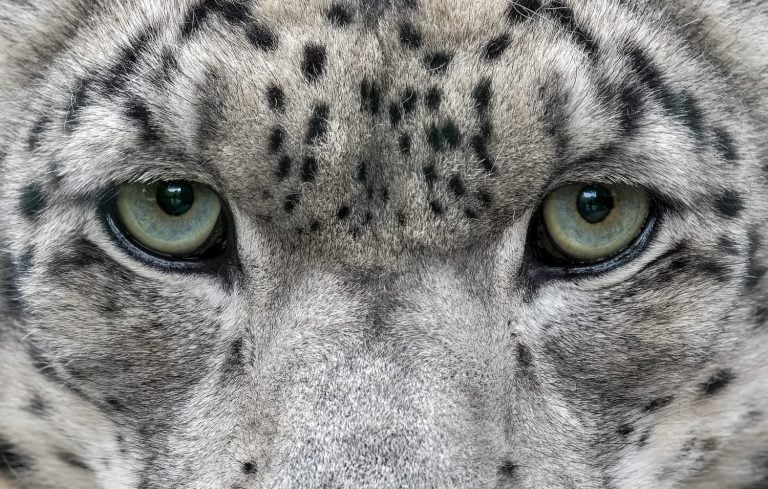
Since they usually hunt at night, Siberian tigers have incredible night vision, allowing them to stalk and wait for prey. Like many other nocturnal animals, Siberian tigers have a tapetum lucidum in their eyes, which enables them to see well in low-light situations. They also have binocular vision and can perceive a three-dimensional image of their surroundings, which aids them in hunting.
10. Siberian Tigers Can Reach 40mph
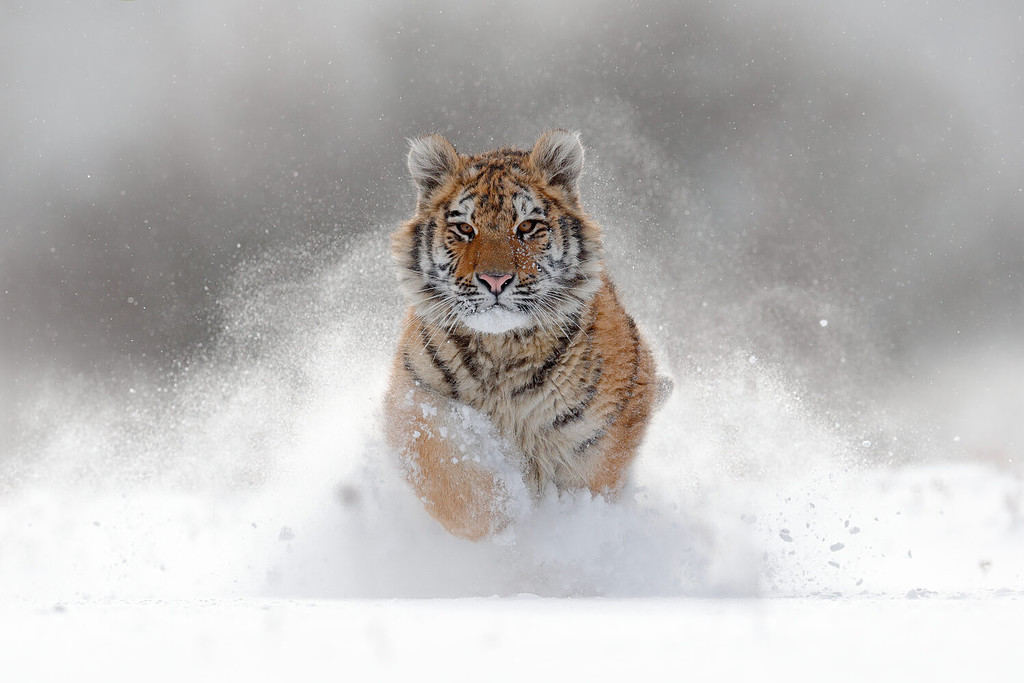
A Siberian tiger can reach speeds of 40 mph for short bursts.
©Ondrej Prosicky/Shutterstock.com
Considering how large the Siberian tiger is, it’s an incredible feat for it to run at such high speeds. Siberian Tigers can reach up to 40 mph, but it is incredibly difficult for them to maintain this speed for long. As a result, they rely more heavily on their eyesight and stalking skills when hunting at night to avoid needing to use their speed.