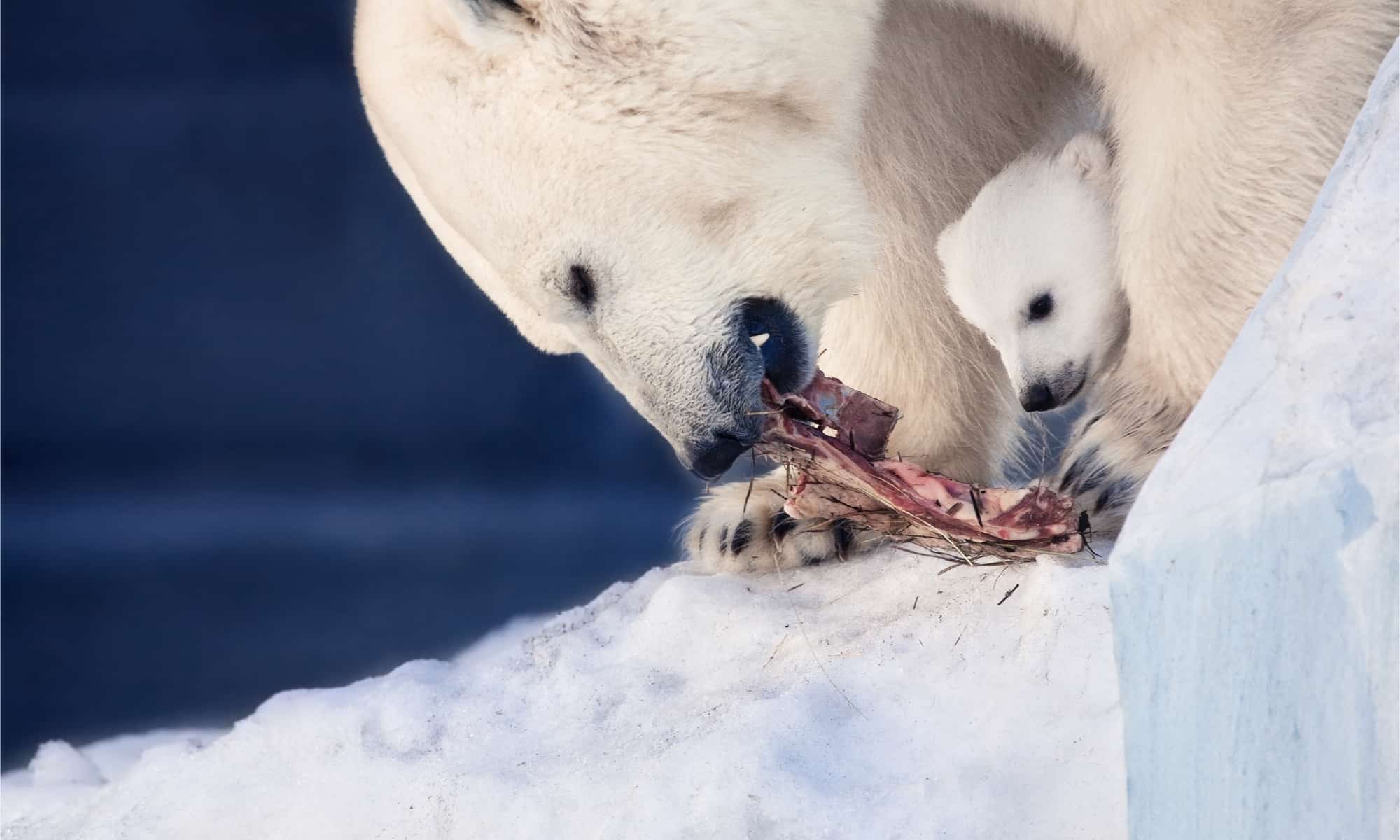

Polar bears are the largest bears in the world and are the number one predator in the Arctic. They are also the biggest land carnivores on the planet, being six to eight feet long and weighing up to 1,700 pounds for the largest males. Adult male polar bears are larger than females, and when standing on their hind legs, they measure over 10 feet. However, this raises the question: what do polar bears eat to become such massive land and sea predators?
About the Polar Bear Diet
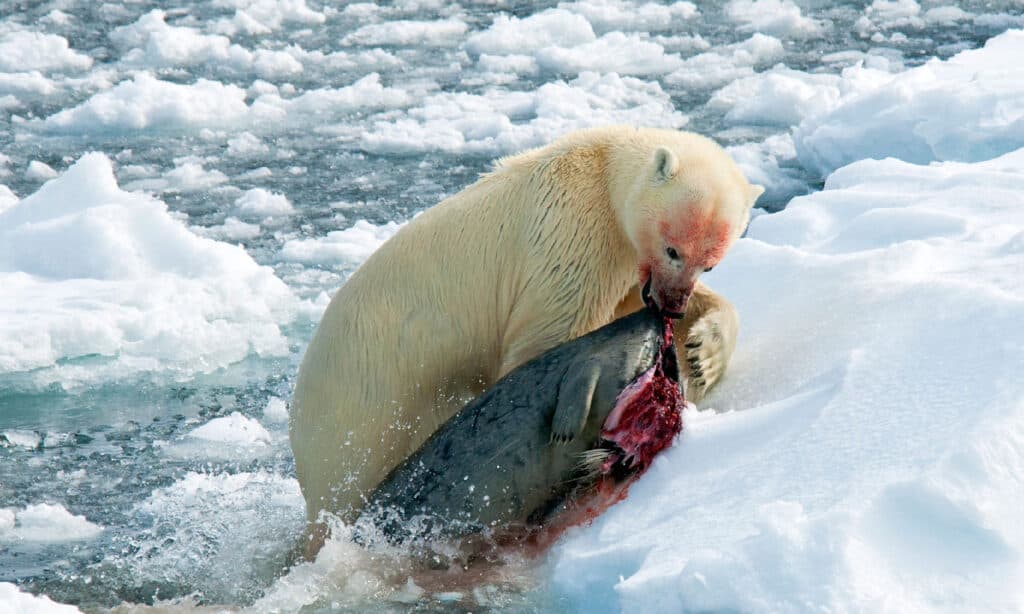
Polar bears eat a diet of mainly seals.
©iStock.com/AGAMI stock
Polar bears eat a diet that consists mainly of seals, but they also prey on the carcasses of larger marine prey, such as beluga whales. Polar bears are predominantly meat-eaters, but are known to be scavengers and will eat berries and seaweed if their food supply is low.
Seals are a high-energy food source and a favorite meal of many polar bears. Polar bears mainly eat ringed and bearded seals but may also gorge themselves on harp, hooded, and ribbon seals if nothing else is available. If the seal weighs 120 pounds or more, this meal can provide the polar bear with up to eight days’ worth of energy.
Complete List of Foods That Polar Bears Eat:
- Ringed seals
- Bearded seals
- Carcasses
- Narwhals
- Beluga whales
- Walrus
- Muskox
- Reindeer
- Small rodents
- Waterfowl
- Shellfish
- Fish
- Eggs
- Kelp
- Berries
- Human garbage
Due to climate change, the Arctic ice is melting faster. This slow destruction of their habitat leaves polar bears less time to hunt seals and marine prey during the spring when they are supposed to stock up on their fat reserves.
Because of their dwindling habitat, polar bears have been finding alternative food sources to compensate for the loss of hunting time. Consequently, scientists have discovered that in times of great scarcity, polar bears may resort to supplementing their food sources by eating other polar bears. These animals have also started eating grass and marine algae more frequently to survive.
How Do Polar Bears Hunt?
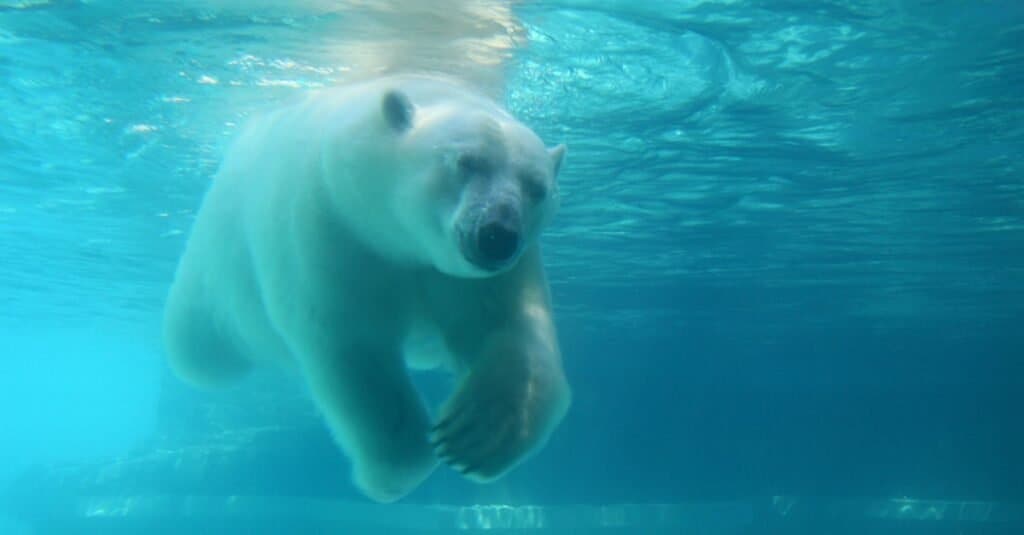
Polar bears can swim for long distances to get from one piece of ice to another, in between hunting their prey.
©Vladimir Gjorgiev/Shutterstock.com
Most polar bears play the waiting game when hunting for prey, specifically seals. In the fall, seals cut breathing holes into the ice using their sharp claws. Polar bears wait patiently next to breathing holes and attack the seal when it comes up to breathe.
This hunting method may seem random and opportunistic, but polar bears are incredibly intentional hunters, as they locate the seals with their powerful sense of smell. Waiting for seals to surface for air is then an easy way to catch their favorite food.
Female polar bears with pups are also known to stalk the birthing lairs of seals. Ringed seals have shelters that are caves under snowdrifts next to a hole in the ice. They give birth to their pups in these lairs during the spring. Polar bears wait outside these hollows and destroy the roof with their hind legs, exposing the seal and pups. Female polar bears with pups frequently use this hunting method as it takes less energy and provides them and their pups with the proper high-fat diet they need for healthy growth.
Do Polar Bears Hibernate?
Polar bears do not typically hibernate, but females enter a state of carnivore lethargy, which involves reduced activity and metabolic rate. Carnivore lethargy usually takes place from October or November until March or April. The female’s heart rate slows down to roughly 27 beats per minute during this period to conserve energy. Also, her body temperature can drop to 95°F, and she fasts during this time, resulting in her losing most or all of her fat stores.
Polar bears can enter carnivore lethargy and survive long periods without food due to their fat stores. These marine mammals have a thick layer of fat that keeps them warm and acts as a reserve food source. Polar bears have substantial appetites and can eat 100 pounds or more of seal blubber in one feed. If food is plentiful, they may sometimes only eat the seal fat.
Who Competes With Polar Bears for Food?
Due to climate change, there has been a decrease in ice during the summer season. When this happens, polar bears often eat marine mammal carcasses to make up for a loss of their food sources. For example, in Alaska, polar bears eat bowhead whale carcasses that have been subsistence-harvested.
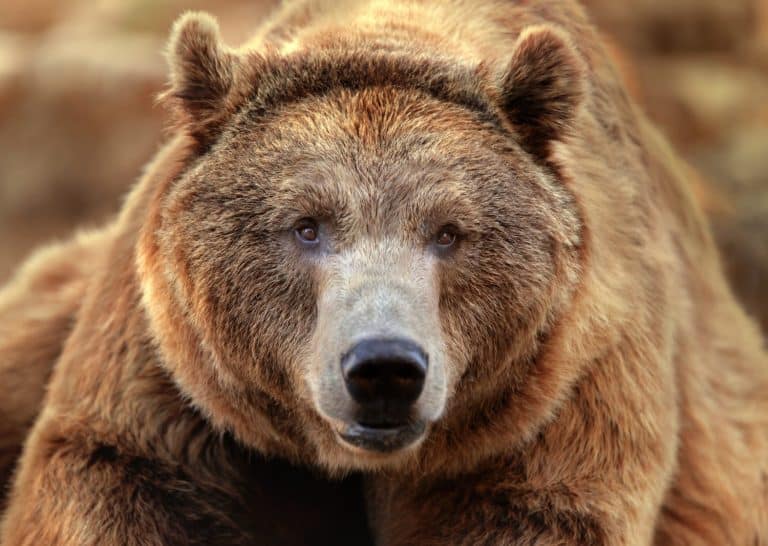
However, if polar bears do not have this option, they have to move onto the land to pursue other large prey and birds during the summer/fall open-water period. Polar bears then compete with grizzly bears for food.
What Do Polar Bear Cubs Eat?
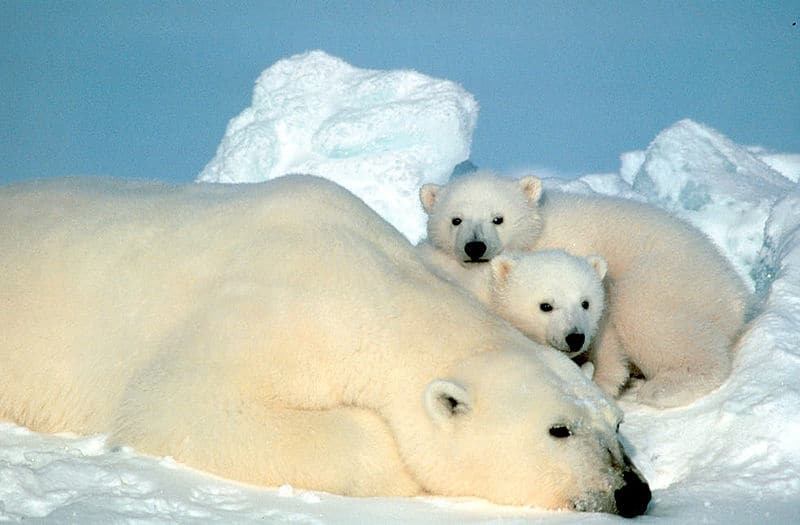
Polar bear cubs drink their mother’s milk for up to four months.
©Steve Amstrup, Public domain, via Wikimedia Commons – Original / License
Polar bear cubs drink their mother’s milk, which is rich in fat, for the first three to four months. Their first solid meal is generally around three to four months of age when their mother hunts on the open ice for the first time since giving birth. Polar bear cubs then eat portions of meat and seal blubber to supplement their diets.
The polar bear cubs learn to hunt by observing their mother and usually start trying to stalk their prey in their first year. Their first few hunts are typically unsuccessful, but they become better with practice. When polar bear cubs are two years old, they spend 7% of their time hunting and can catch a seal roughly once a week.
Are Polar Bears Dangerous to Humans?
Although polar bears are frighteningly massive, they are not as threatening to people as you might think. Because their habitat is not typically close to that of humans, polar bear attacks are very rare. The Wildlife Society Bulletin found only 73 confirmed attacks between 1870 and 2014, showing that they are a low-level risk to us.
However, attacks from polar bears have been rising, with hungry male bears often being the instigators. Due to climate change, a decrease in habitat size and food supply, polar bear attacks on humans have risen. Fortunately, these invasions into human territory and aggression are still sporadic.