
Quick Take
- Illegal trafficking and habitat loss are tigers’ greatest threats.
- Wild tigers are only found in around 7% of their historic range.
- India is currently home to over 70% of the world’s tiger population.
- Excluding cubs, there are an estimated 3,726-5,578 individuals left in the wild.
Tigers once roamed from Turkey to China and as far north as Russia and south to Indonesia. Today, they inhabit around 7% of their original ranges and are on the brink of extinction. These beautiful cats are integral to ecosystems around the world and are an important cultural symbol for many people. So why are tigers endangered? Read on to discover the main threats to tigers and the key reasons for their decline.
Major Threats
Tigers (Panthera tigris) are classified as Endangered by the International Union for Conservation of Nature (IUCN) Red List. Although the tiger species as a whole is listed as endangered, some subspecies are critically endangered, extinct in the wild, or extinct. Tigers are also listed as Critically Depleted by the IUCN’s Green Status assessment, which measures conservation efforts and recovery potential. Their overall recovery score is only 14%.
Tigers initially began to decline due to hunting and poaching. Owning a tiger trophy was a status symbol across much of the world, and hunting expeditions were incredibly common and hunting expeditions were incredibly common. Aside from a trophy, their pelts are beautiful and were often used as luxury rugs to indicate status and wealth. Tiger bones and other parts are also used in traditional medicine throughout Asia. For example, in China, tiger bone wine is a tonic believed to strengthen bones. Tigers are popular targets for black market poachers because of their high monetary value. Illegal trafficking in tigers and tiger parts is currently their most immediate threat.
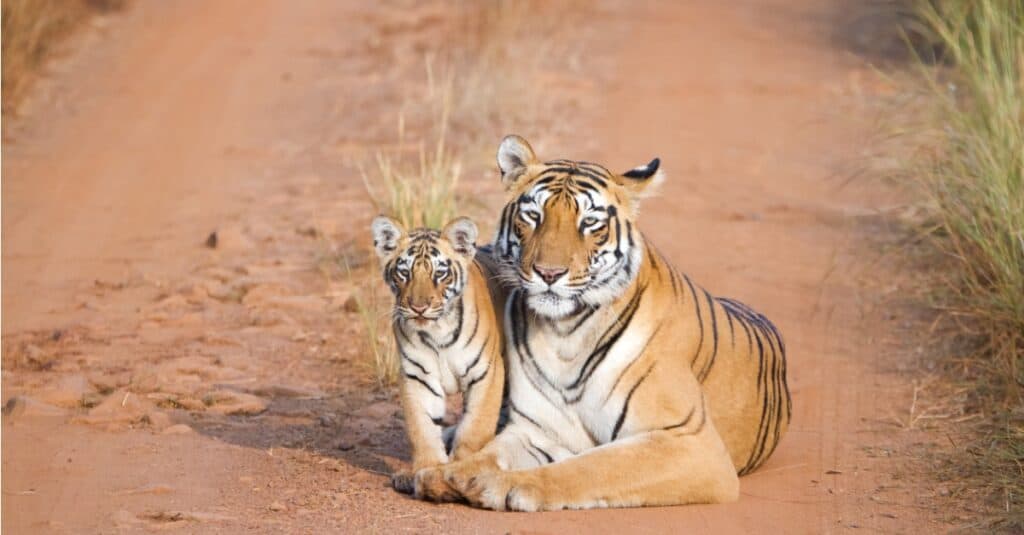
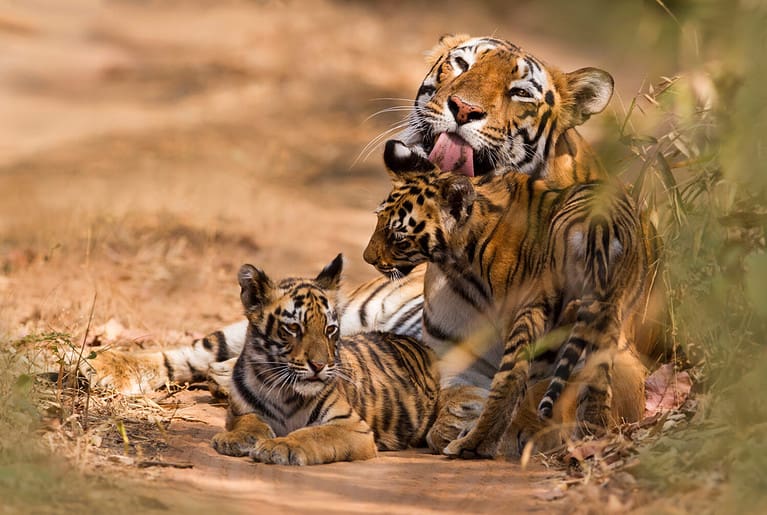
Tigers are threatened by poaching and habitat loss all over the world.
©iStock.com/Rajkumar Natarajan
Another critical threat is habitat loss. For example, the Amur tiger, also referred to as the Siberian tiger, is under threat of habitat loss as logging takes place in the Russian Far East. As human encroachment pushes into wild areas, tigers are inevitably forced out of much of their native range. Growing human populations, logging, agriculture, and infrastructure development such as roads and railways have devastated forests worldwide, isolating tiger populations and making it difficult for them to find mates and food.
Subspecies Facing Extinction
There are six extant and three extinct tiger subspecies, with an estimated 3,726–5,578 tigers left in the wild, not including cubs. The Bali, Caspian, and Javan tigers have already gone extinct. Take an in-depth look at the living tiger subspecies below.
Bengal Tiger
Bengal tigers (Panthera tigris tigris) are the most populous among all wild tigers. According to Indian authorities, the most recent assessment estimates that there are 3,682 Bengal tigers. These tigers can be found across the Indian subcontinent.
Indochinese Tiger
Indochinese tigers (Panthera tigris corbetti) live in Thailand, Myanmar, and Vietnam. They have faced steadily declining populations. Most estimates put their population at fewer than 250 individuals. However, their remote habitat makes precise estimates difficult.
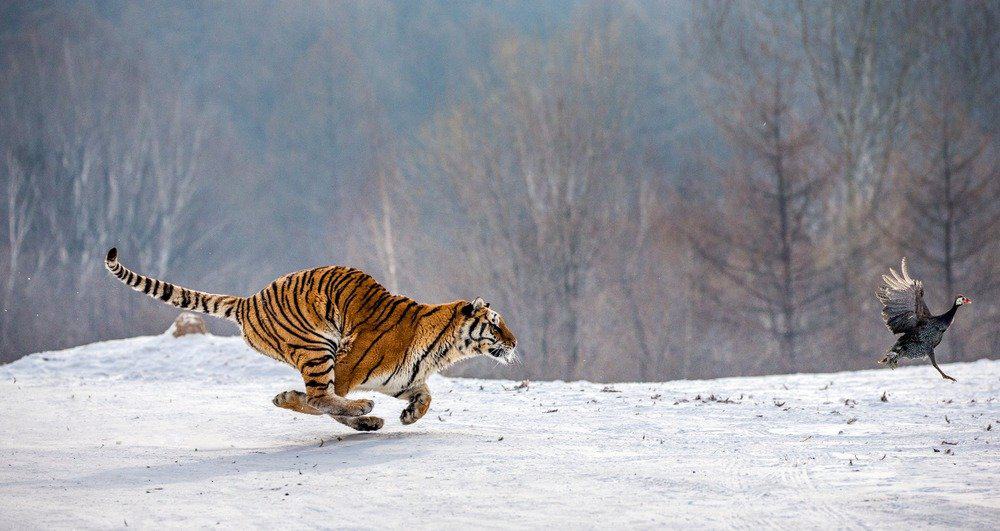
The Amur tiger primarily lives in the boreal forests of the Russian Far East.
©GUDKOV ANDREY/Shutterstock.com
South Chinese Tiger
The South China tiger (Panthera tigris amoyensis) is functionally extinct in the wild, with all of the known living individuals being located in Chinese zoos. These tigers were declared pests in the past century, resulting in their wholesale slaughter by hunters and poachers. There could be small populations remaining, but the last known sighting occurred in the early 1970s.
Siberian Tiger
Siberian tigers (Panthera tigris altaica) are the largest tiger species and live in northeast Russia and China, into North Korea. There are about 450 left in the wild. They are considered endangered, but their population is stable as of right now after actions taken by the Chinese and Russian governments.
Sumatran Tiger
Sumatran tigers (Panthera tigris sumatrae) inhabit the large Indonesian island of Sumatra. Although they are legally protected in Indonesia under Law No. 5 of 1990, these tigers are still being poached. They are considered critically endangered, with around 370 Sumatran tigers left in the wild.
Malayan Tiger
Malayan tigers (Panthera tigris jacksoni) live on the Malay peninsula. Poaching, deforestation, and prey loss are their primary threats. Experts believe fewer than 200 Malayan tigers remain. Malaysia has established include the Al-Sultan Abdullah Royal Tiger Reserve (ASARTR) to increase protected areas and aid recovery efforts.
Extinct Subspecies
Sadly, not all tiger species have made it into the 21st century. As noted above, there are three subspecies of tigers that are now extinct: the Bali, Caspian, and Javan tigers. Learn more about these extinct subspecies in the following sections.
Bali Tiger
The first tiger subspecies to become extinct in modern times is the Bali tiger (Panthera tigris balica). The Bali tiger inhabited the Indonesian island of Bali, colonizing the islands during the last ice age around 12,000 years ago. The last time they were recorded on the island was in 1930, but a small population likely remained until the late 30s. These tigers were declared extinct in 1937. They were hunted to extinction and left with nowhere to live as a result of habitat loss.

The Bali tiger was declared extinct in 1937.
Javan Tiger
The Javan tiger (Panthera tigris sondaica) was native to the Indonesian island of Java until it was believed to be extirpated by the early to mid-1980s. They were smaller than other subspecies but were reportedly incredibly strong. The Javan tiger suffered from hunting and massive habitat loss. In some places, people intentionally released poisoned prey to kill the tigers more quickly. Javan tigers were officially declared extinct in 2003, but the last documented sighting was in 1976. In 2019, there was a potential observation of a Javan tiger. Hair left at the scene was taken for DNA analysis, and researchers found that it closely matched that of a museum specimen of a Javan tiger collected in 1930. It is possible that the Javan tiger is still extant, but further testing and field studies are needed.
Caspian Tiger
The Caspian tiger was native to western Asia, including Afghanistan, Turkey, Iran, and surrounding areas. They were widely hunted but suffered the most from habitat destruction, as cotton farming devastated their essential reed-bed habitats along waterways. They likely went extinct in the 1970s, with their populations rapidly decreasing in their historic range over the course of a few decades. Caspian tigers were officially declared extinct in 2003.
How Many Tigers Are Left in the World?
Recent estimates suggest there are between 18,000 and 25,000 total tigers worldwide, including both wild and captive populations. Researchers estimate that there are 15,000 to 20,000 captive tigers worldwide. As mentioned earlier, excluding cubs, there are an estimated 3,726-5,578 individuals left in the wild.
Wild tigers are only found in around 7% of their historic range and have decreased in population drastically over the past 100 years. In the early 1900s, there were approximately 100,000 tigers in the wild. Today, only a fraction of that number remains. Overall, tiger populations have dropped by 95% globally in only 100 years.
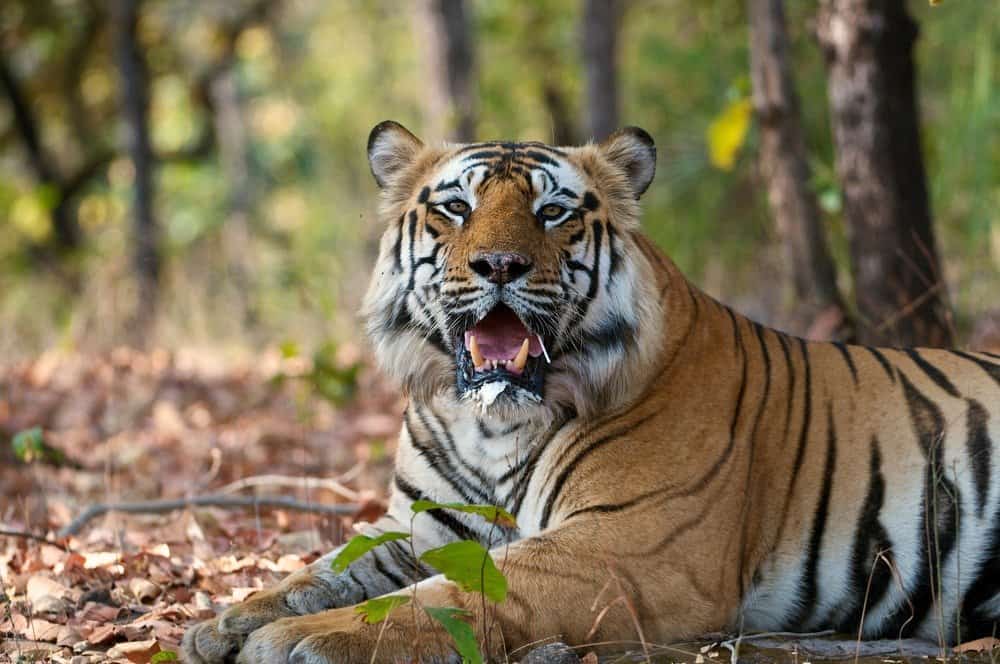
Tigers have gone from 100,000 to 5,500 or fewer animals living in the wild in only 100 years.
©Mary Angela Heys/Shutterstock.com
A Conservation Success Story
Thankfully, there is hope for tigers. Although they have experienced a 95% drop in their population, there seems to be some stability right now. The biggest success story for tigers is in India with the Bengal tiger. India is currently home to over 70% of the world’s tiger population. In 1973, the Government of India, under Prime Minister Indira Gandhi, funded reserves, researchers, anti-poaching squads, habitat restoration, and other initiatives, collectively known as Project Tiger.
Project Tiger includes mapping, research, and documentation of tigers and their habitats, as well as guidance on how humans can help preserve tigers in the wild. Since the program’s inception, Bengal tigers have seen an increase in their numbers, including tigers outside of protected areas in some regions. India has also enacted strong laws to protect tigers. Commercial tiger breeding and the trade of their parts and products are illegal. Breaking the law has severe penalties, including a minimum of 3 years imprisonment.