
Quick Take
- One of these turtles has a survival trick so bizarre it sounds made up, and the trick involves breathing through a body part you'd never expect. See the bizarre survival trick →
- These two turtles belong to the same family, yet they face a predator threat in completely opposite ways, and only one can actually hide inside its own shell. Explore shell defense differences →
- No two of one species share the same pattern, which makes each individual as visually unique as a fingerprint. See the unique patterns →
Painted turtles (Chrysemys) and box turtles (Terrapene) are similarly sized North American reptiles that belong to the pond turtle family Emydidae. There are three subspecies of painted turtles (a fourth subspecies was recently elevated to its own classification), and six subspecies of box turtles. While they are superficially similar, there are four key differences that set these turtles apart. Read on to learn more about painted turtles and box turtles.
Comparing the Painted Turtle vs. the Box Turtle
| Painted Turtle | Box Turtle | |
|---|---|---|
| Shell shape and structure | Smooth, oval, and slightly flattened carapace; plastron closes tightly against the upper shell but there is no hinge | Tall, rounded, domed carapace with a hinged plastron; raised, ridged growth rings in young turtles that become smooth with age |
| Color pattern | Dark olive green to black shell with red or yellow markings on the outer rim; yellow, orange, or red plastron; dark skin with vivid red and yellow markings on the head and limbs | Shells are typically brown with a yellow or orange pattern; brown to grey skin with red, orange, yellow, or white markings on the head and front legs |
| Habitat | Semi-aquatic; slow-moving streams, marshes, shallow ponds | Terrestrial; moderately moist woodlands |
| Winter survival techniques | Remains in freezing North American waters; breathes underwater with cloacal respiration | Stays on land during winter; burrows into soil and enters brumation (a type of hibernation) |
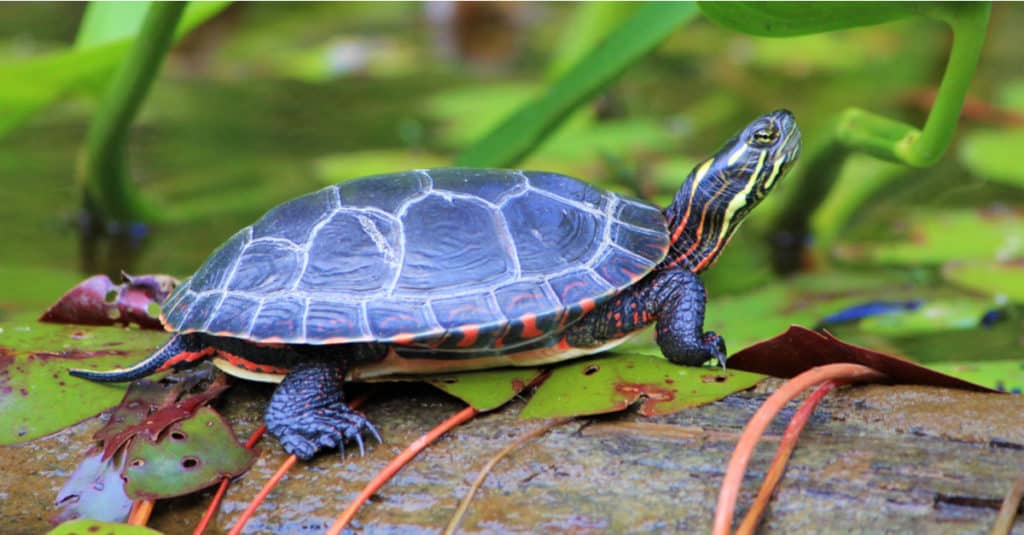
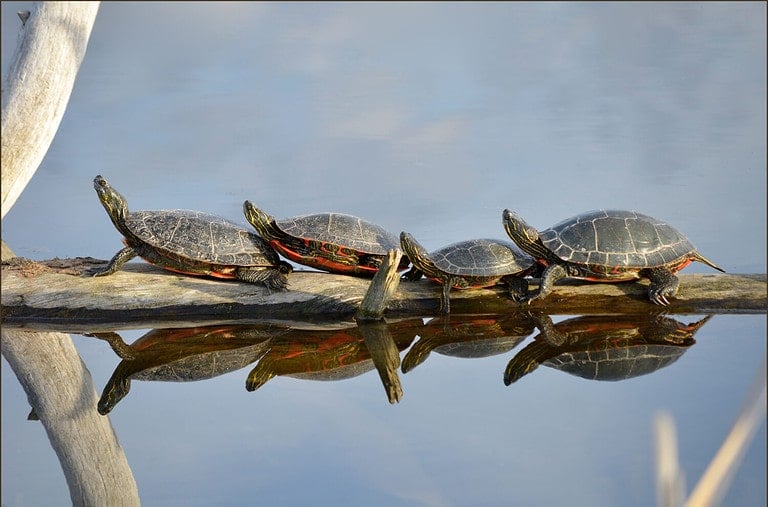
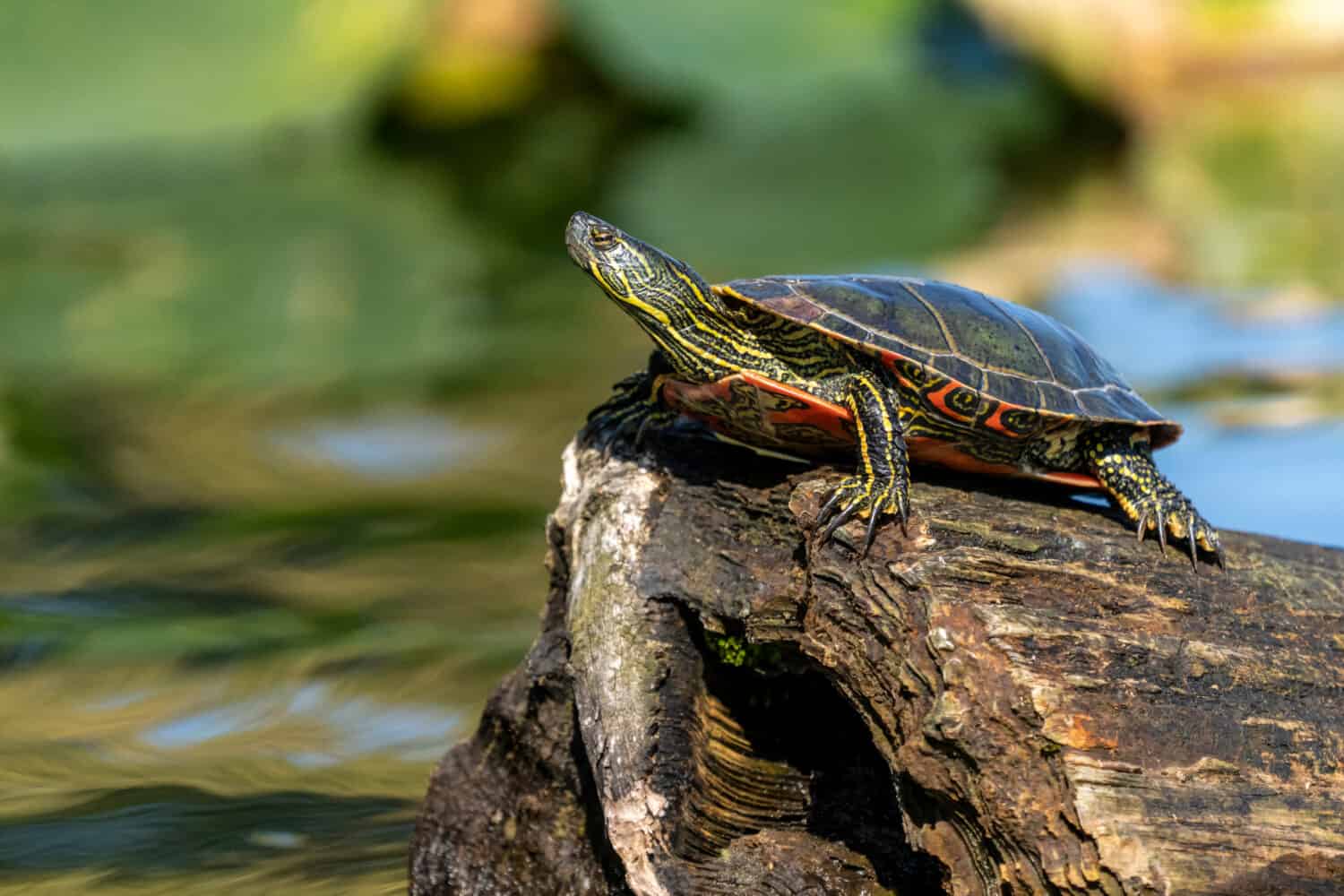
Painted turtles have yellow markings behind their eyes.
©Sketchart/Shutterstock.com
Painted Turtle vs. Box Turtle: Key Differences Explained
The key differences between a painted turtle and box turtle include their shell shapes and structures, color patterns, habitats, and wintering behaviors. Keep reading as we take an in-depth look into the lives of painted turtles and box turtles.
Shell Shape and Structure
Painted turtles have smooth, oval-shaped, and slightly flattened carapaces, or upper shells. Their plastrons (lower shells) close tightly against the upper shell, but there is no hinge structure. This means they cannot pull their bodies inside their shells to close themselves off from predators. Instead, they rely on speedy retreats into the water to escape threats.
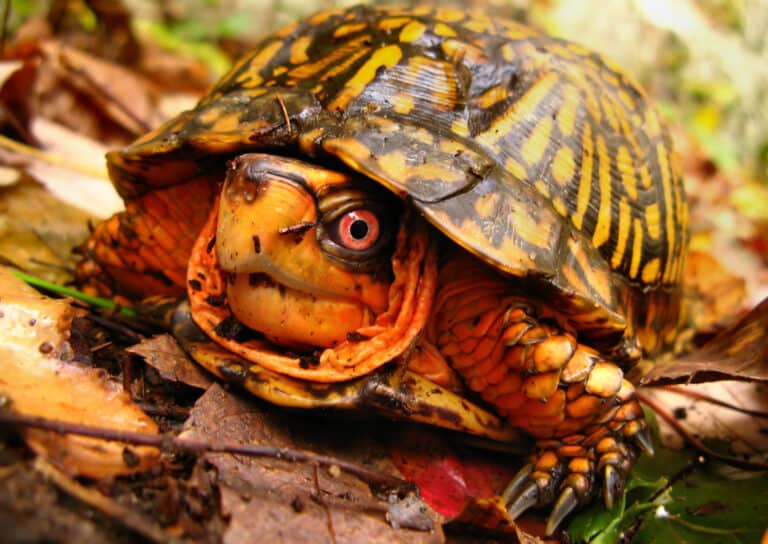
Box turtles have a tall, rounded, domed carapace. Young box turtles have raised growth rings with ridges, giving their shell a rough texture. However, their shells become smoother as they age and the ridges are worn down. Unlike painted turtles, box turtles have a hinged plastron. This movable hinge allows them to pull their head and legs inside their shells for protection, tightly closing it like a box.
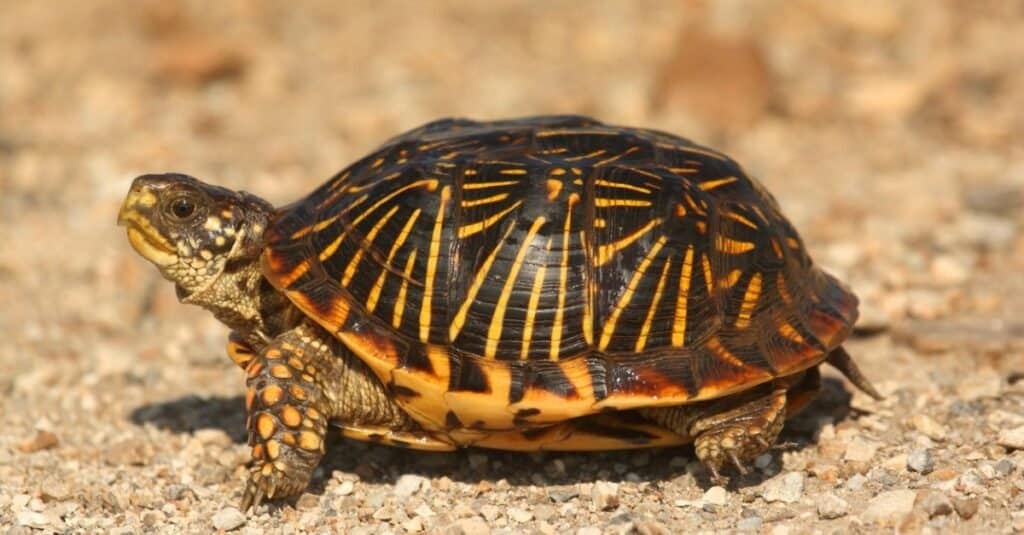
Box turtles have high, domed shells.
©iStock.com/SteveByland
Color Patterns
Painted turtles have dark olive green to black carapaces with red or yellow markings on the outer rim. The plastron is typically yellow, orange, or red. They have dark skin with vivid red and yellow markings. The head and neck typically have red and yellow stripes and there are yellow spots behind each eye. In some species, such as the western painted turtle, the legs are also streaked with thin yellow stripes.
Box turtles are not as colorful, but they have various patterns of lines, spots, and blotches. No two box turtles have the same pattern. Their shells are typically brown with a yellow or orange pattern. They have brown to grey skin with red, orange, yellow, or white markings on their head and front legs.
Habitat
Painted turtles are semi-aquatic. They spend part of their time in slow-moving streams, marshes, shallow ponds, and other wetland areas with abundant vegetation. When they are not in the water, they can often be found basking on rocks or logs in large groups. Most movement takes place in the water except when females travel on land to lay their eggs.
In contrast, box turtles are terrestrial. While they may cool off in shallow ponds and puddles, they travel on land through open woodlands to find food and mates. Females also travel on land to find a suitable place in a sunny area to dig their nests. Box turtles often hide under fallen logs, brush piles, and thick leaf litter.
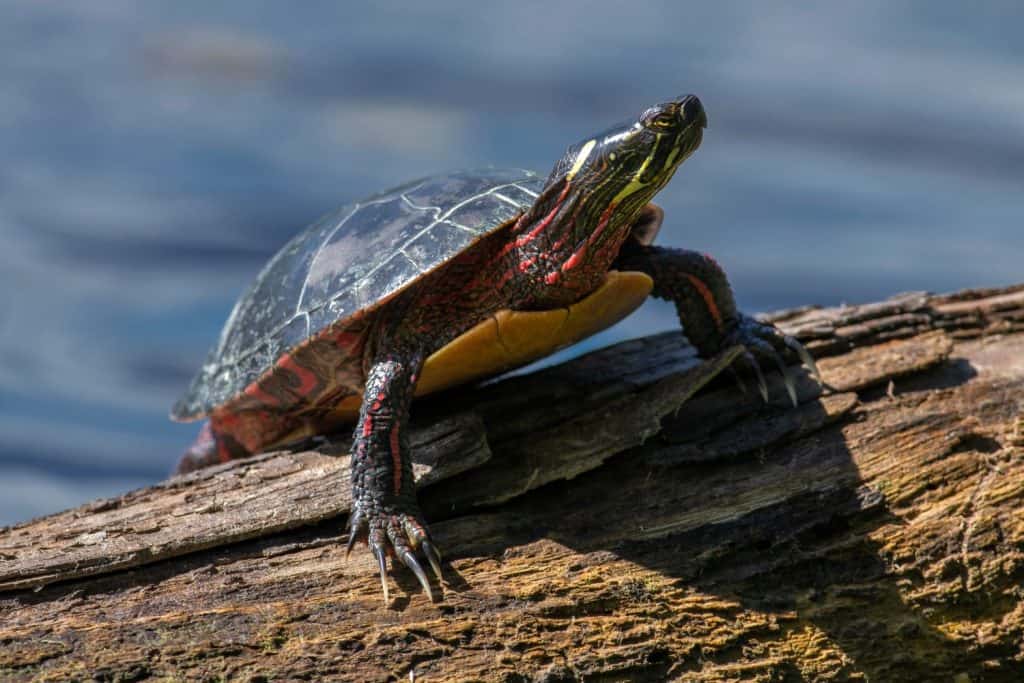
Painted turtles are semi-aquatic and can often be found basking on rocks or logs when not in the water.
©William Levesque/Shutterstock.com
Winter Survival Tactics
When the temperatures drop in the fall, painted turtles have a unique way of adapting to cold weather. If their favorite watering holes become covered by ice, these turtles can lower their body temperatures, too. They can also slow their metabolism by as much as 95%. However, even with these changes, they still need oxygen. When they can’t get to the surface for air, they get the limited oxygen they need through cloacal respiration, or through a vent in their rear ends.
Box turtles have also evolved to deal with bone-chilling weather. They brumate, which is entering a semi-dormant resting state, in burrows made from soft soil and leaf litter for an average of about 142 days. Their heart rates, breathing, and metabolisms drop to very low levels, and they live off stored fat.