
Quick Take
- One Texas turtle can weigh nearly 250 pounds, which makes its hiding spot all the more surprising.
- Some of these turtles are so rare they exist in just a handful of water bodies in a single Texas county.
- Not all Texas turtles live near fresh water. One species has a biological trick for surviving in salt water that most people don't know about.
- Three-toed box turtles have a lifespan record that rivals some of the oldest humans ever documented, and learning what makes them so extraordinary is well worth your time.
Texas is home to many different types of turtles that belong to the reptile order Testudines. From freshwater turtles living in rivers and lakes to terrapins found along the Gulf Coast and tortoises found in the arid thornscrub near the Mexican border, there are 28 turtle species in the state. Read on to learn more about these incredible reptiles, including how to identify them and where they can be found in Texas.
1. Alligator Snapping Turtle
The alligator snapping turtle (Macrochelys temminckii) is the largest freshwater turtle in the world and can live up to 70 years. Adult males can reach 29 inches in length and weigh nearly 250 pounds. It is black or dark brown, and its shell is thick with pronounced spikes. Its beak-like jaws are comparable to other snapping turtle species. Alligator snapping turtles prefer to be at the bottom of rivers, lakes, swamps, and bayous, waiting for anything that swims past their jaws. They are threatened in Texas, and you will mainly find them in the eastern half of the state near the Trinity and Sabine Rivers.
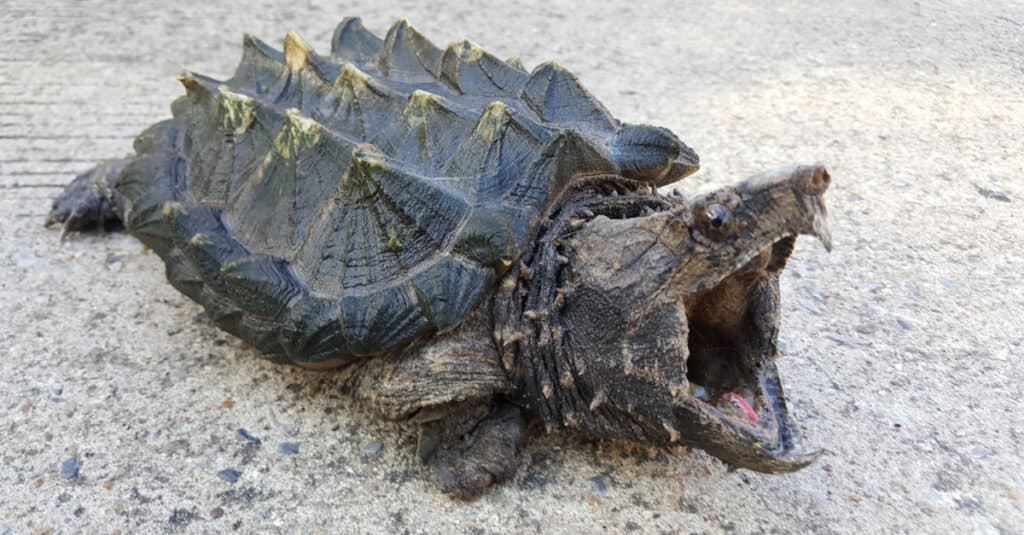
Alligator snapping turtles are in the eastern half of Texas, near the Trinity and Sabine rivers.
©Sista Vongjintanaruks/Shutterstock.com
2. Desert Box Turtle
The desert box turtle (Terrapene ornata luteola) has a black or brown flattened, dome-shaped shell with yellow or orange spots and stripes. It has a hinged lower shell (plastron) that allows it to pull inside the shell and close itself off in self-defense. This terrestrial species is suited to live in arid environments, and in Texas, you will find them in the Trans-Pecos regions in the southwestern and western part of the state. They generally measure 4.5 to 6 inches. You may also find them in open grasslands and meadows, where they will eat insects, fruit, and any kind of vegetation. Texas lists the desert box turtle as vulnerable.
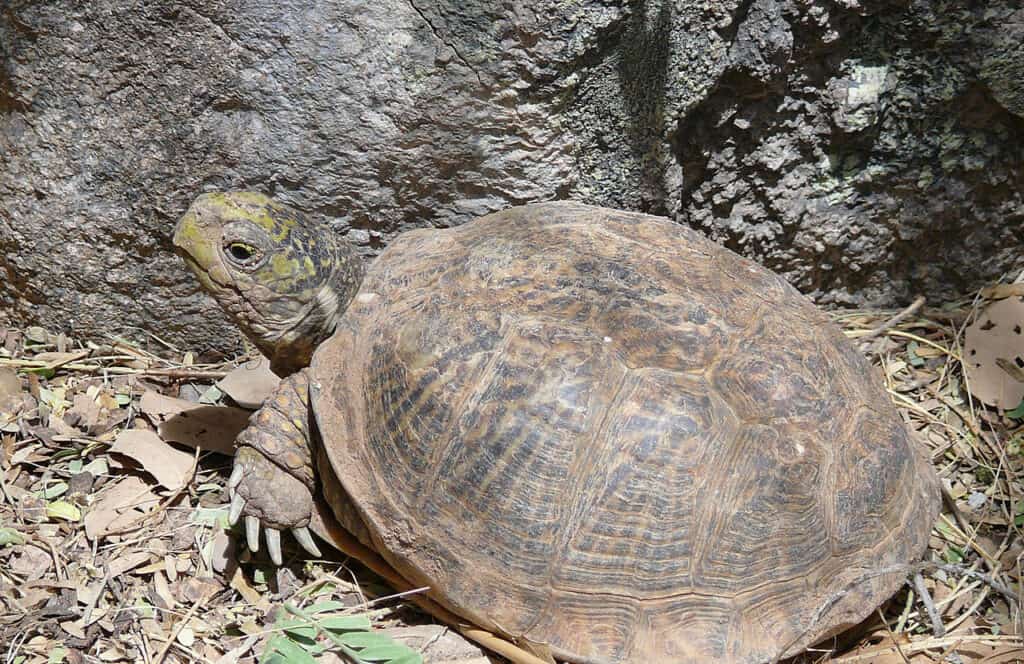
The desert box turtle lives in southwestern Texas.
3. Big Bend Mud Turtle
Big Bend mud turtles (Kinosternon hirtipes murrayi), also known as rough-footed or Chihuahuan mud turtles, have an olive or yellow-brown dome-like shell with a hinged plastron and a V-shaped head shield. They have large heads and fleshy barbels under the chin. These small turtles reach 7.5 inches in length. They are highly aquatic and prefer to stay on the bottom of lakes, marshes, rivers, and swamps with a muddy or sandy floor where they can burrow and forage for mollusks and invertebrates. This species is one of the rarest turtles in the U.S. and is found almost exclusively in a few bodies of water in Presidio County, Texas.

The rough-footed mud turtle is rare in the U.S. and is almost exclusively found in Presidio County, Texas.
©BioDiversityLibrary / Public Domain Mark 1.0 Universal – Original / License
4. Ornate Box Turtle
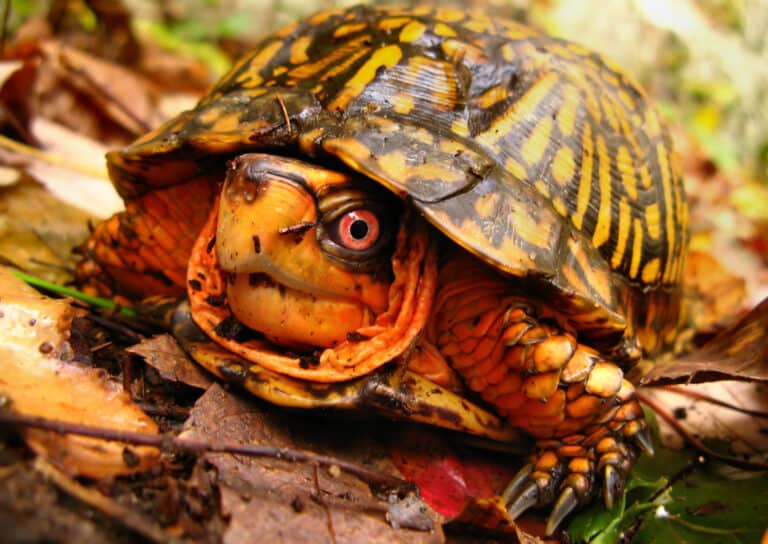
The ornate box turtle (Terrapene ornata ornata) is known for its starburst shell pattern. It has a dark brown or black flattened-dome shell with yellowish or cream-colored radiating lines. Like all box turtles, it has a hinged lower shell that allows it to pull itself inside for defense. Ornate box turtles live on land instead of water and inhabit open woodlands and grasslands in the central and eastern parts of the state. They forage for insects and vegetation during the day within a relatively small territory. These turtles are vulnerable in Texas due to their shrinking habitat.
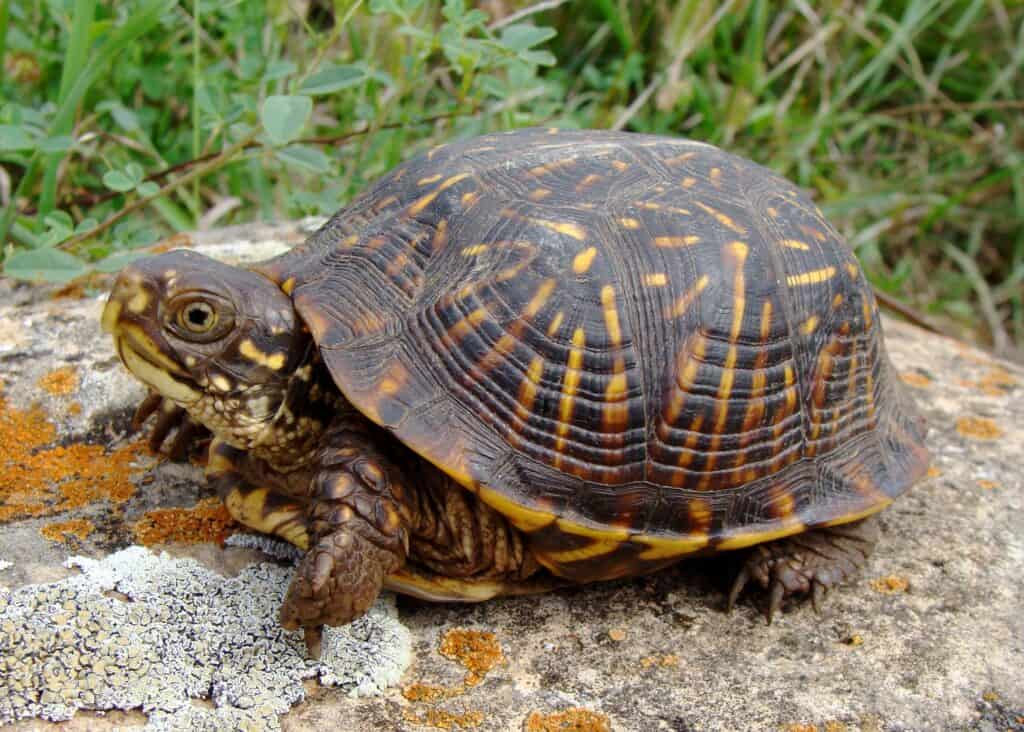
The ornate box turtle is found in the central and eastern parts of Texas.
©Matt Jeppson/Shutterstock.com
5. Big Bend Slider
Big bend sliders (Trachemys gaigeae) have an olive to dark brown shell with orange lines that may form ring-like patterns. Their skin is olive green with yellow, orange, and lime green stripes. They also have two distinguishing spots on each side of their heads. These turtles generally measure 4.7 to 8.6 inches. They are primarily aquatic, living in the Rio Grande and its waterways in western Texas. They can often be seen basking on exposed rocks or logs on sunny days. These turtles are mainly herbivores but will occasionally eat mollusks and invertebrates.

The Big Bend slider lives in West Texas near Big Bend.
©andreoneiros/Shutterstock.com
6. Three-Toed Box Turtle
As its name suggests, the three-toed box turtle (Terrapene carolina triunguis) has three claws (or toes) on its hind legs instead of four. It has an olive or brown high-domed shell with a hinged plastron so it can pull itself inside the shell. Adult males often have bright red or orange heads. This terrestrial turtle lives in woodlands and grasslands in Eastern Texas, where it forages for earthworms, invertebrates, and vegetation. The three-toed box turtle is between 5 and 7 inches, and there are records of them living for more than 100 years.
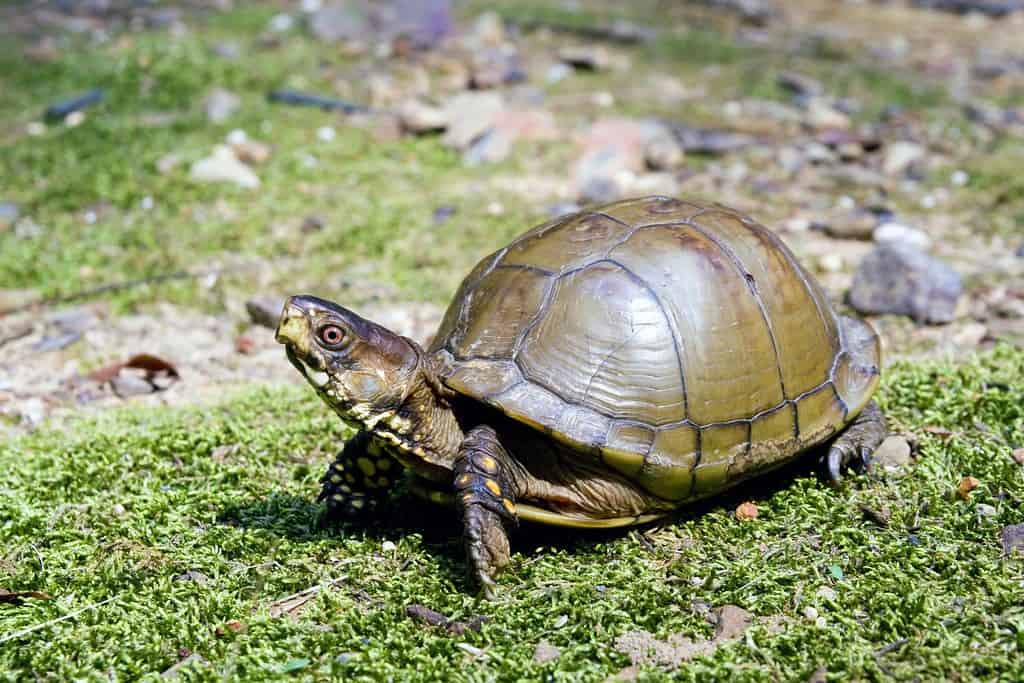
The three-toed box turtle typically has three toes on its back feet rather than the usual four.
©IrinaK/Shutterstock.com
7. Cagle’s Map Turtle
Cagle’s map turtle (Graptemys caglei), named after herpetologist Fred Cagle, has a brown or olive shell with yellow or cream spiral, map-like patterns. Its skin is dark brown to black and features white stripes. This semi-aquatic species is endemic to Texas and inhabits rivers of the Guadalupe River system. It prefers slow-moving water with plenty of vegetation, where it can feast on insects and aquatic vegetation. Males can reach up to around 5 inches long, while females can measure up to 8.3 inches.
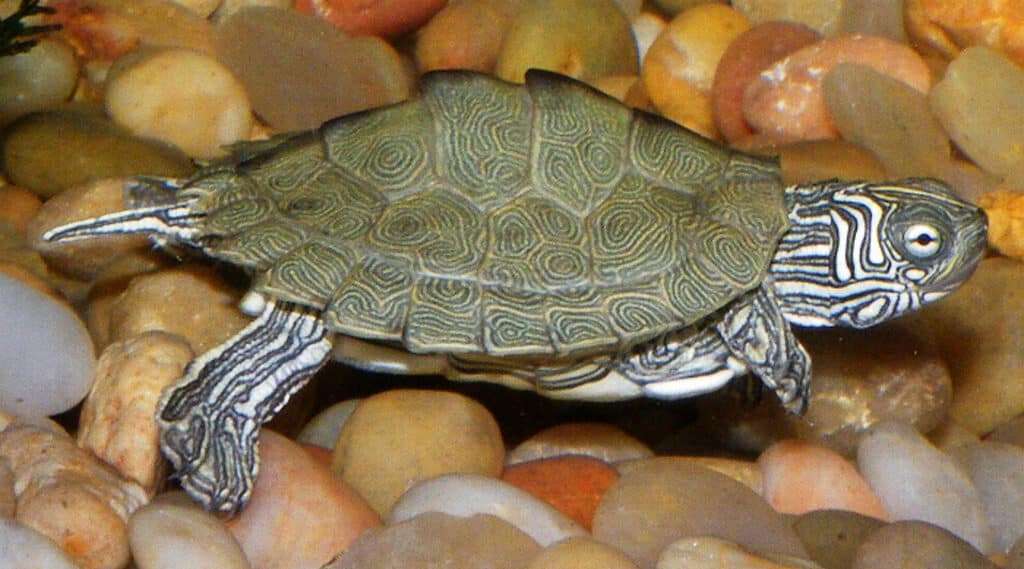
With intricate markings, the Cagle’s map turtle appears topographical.
8. Western Chicken Turtle
The western chicken turtle (Deirochelys reticularia miaria) has a long, striped neck and a dark oval-shaped shell with a faint yellow or orange net-like pattern. Adult turtles measure between 4 and 10 inches. This semi-aquatic species prefers sluggish water in marshes, ponds, and canals, where it can easily feed on fish and crustaceans. Western chicken turtles are a vulnerable species and in danger of losing their habitat, but you can still find them in the eastern and coastal plains of Texas.

Western chicken turtles live in marshes and ponds in the eastern and coastal plains.
©vagabond54/Shutterstock.com
9. Common Musk Turtle
Common musk turtles (Sternotherus odoratus), or “stinkpots,” are primarily aquatic. They have plain, dark shells with no distinctive markings except for two yellow lines on their neck. They also have small barbels under their chins. Their unusual nickname comes from the foul, musky odor they emit from scent glands on the edges of their shells. This species is only 3 to 5 inches long and prefers slow-moving water with soft bottoms, like marshes and bogs. These nocturnal omnivores are primarily found in East Texas.
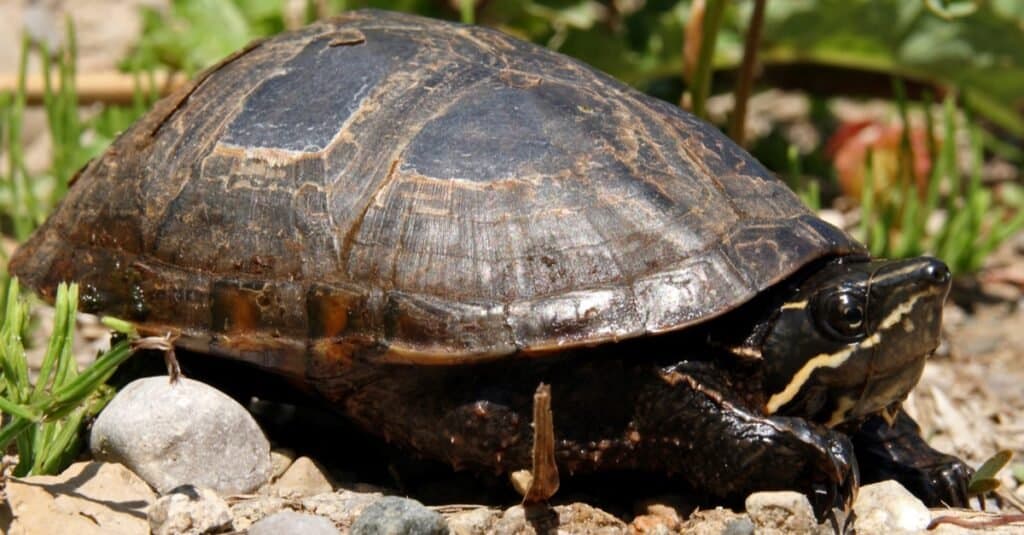
Common musk turtles inhabit regions of East Texas in marshes and bogs.
©Ryan M. Bolton/Shutterstock.com
10. Missouri River Cooter
The Missouri River cooter (Pseudemys concinna metteri) has a flat, dark-colored shell with curved yellow markings, yellow stripes on its head and neck, and an upside-down Y-shaped marking behind its eyes. They typically measure between 9 and 16 inches in length. This freshwater subspecies is semi-aquatic and prefers to be near rivers and streams, but may also venture into lakes and ponds. Missouri River cooters like to bask on logs near the river’s edge and dine on fruits, vegetables, and some insects. You will most often find them in East Texas.
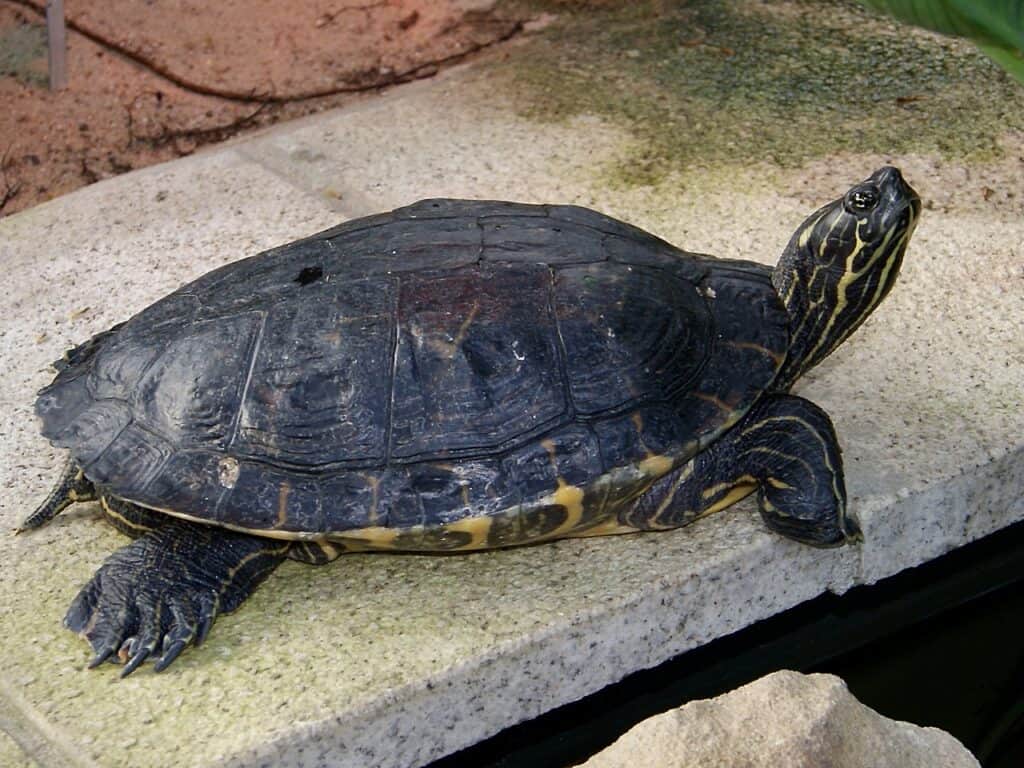
The Missouri River cooter basks on logs near East Texas rivers.
11. Common Snapping Turtle
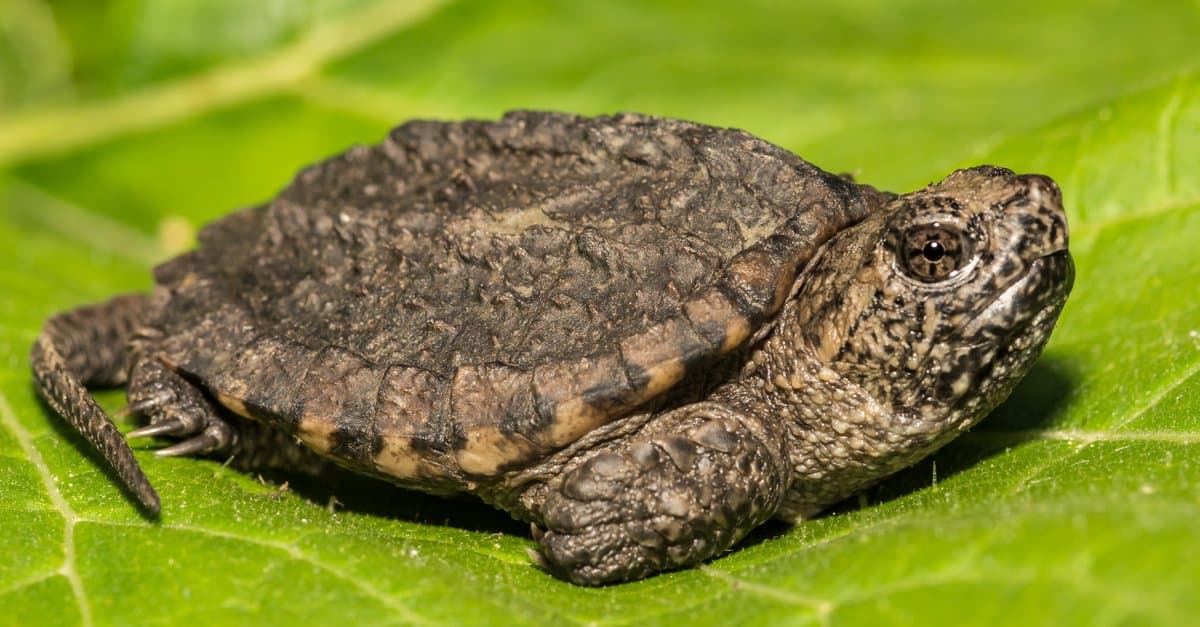
You can identify a common snapping turtle (Chelydra serpentina) by its large head, beak-like mouth, and its long legs, neck, and tail. Its shell is dark brown, olive, or black with three long ridges and a saw-toothed rear edge. Snapping turtles are freshwater turtles that are known for being aggressive and will hiss and bite when they feel threatened. You can find them in almost any fresh body of water in most Texas regions, but they are most commonly in the panhandle and east of the Pecos River. They generally measure between 8 and 14 inches and weigh in excess of 35 pounds. Captive specimens have been reported to weigh as much as 70 pounds.
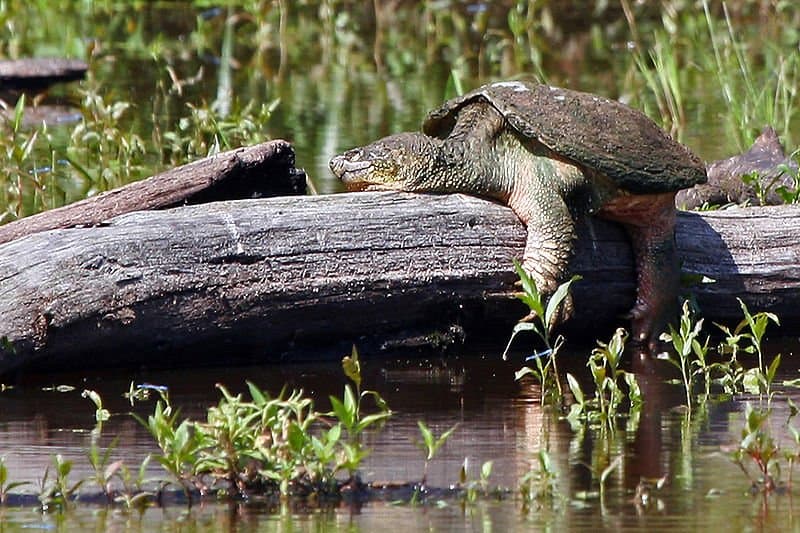
Snapping turtles are most commonly found in the panhandle and east of the Pecos River.
©https://www.flickr.com/people/sherseydc/, CC BY 2.0, via Wikimedia Commons – Original / License
12. Rio Grande Cooter
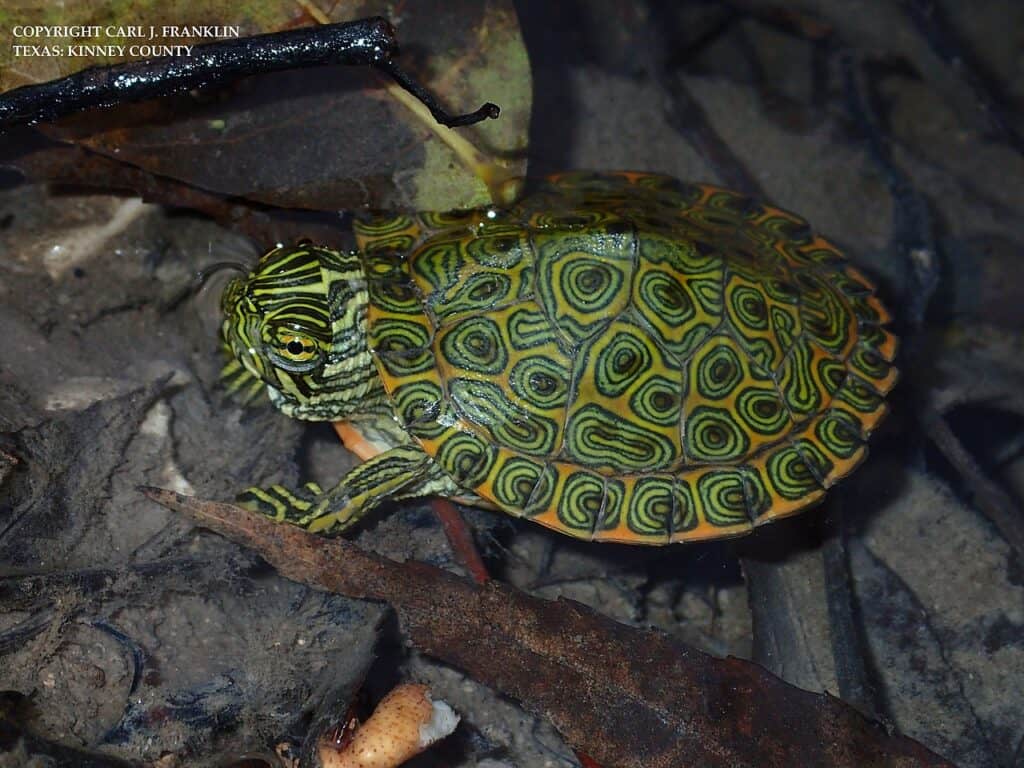
The Rio Grande cooter inhabits the border between Texas and Mexico.
The Rio Grande cooter (Pseudemys gorzugi) has an elongated oval shell with a serrated rear edge. The shell is green to brown overall with black and yellow curvilinear lines. Many individuals have red coloring along the edges of the carapace. Their skin is dark green with yellow stripes. Adult males reach 11 inches in length, while adult females can measure up to 14.6 inches. You can find this freshwater, mostly aquatic turtle in both still and flowing waters with plenty of vegetation in the Rio Grande and Rio Bravo watershed.
13. Guadalupe Spiny Softshell
The Guadalupe spiny softshell (Apalone spinifera guadalupensis) has a flat, smooth, leathery, round shell that ranges from a light brown to an olive-grey color. The exterior of the shell is covered in white spots, and adult males also have black rings surrounding each spot. Their skin is brownish or olive, and they may have black-bordered yellow stripes on the sides of their heads and necks. Adult males can reach about 9.5 inches, while adult females can reach up to around 14 inches. Like all spiny softshells, the Guadalupe has a long, tapered, pig-like snout, which they use to breathe while the rest of their body is submerged underwater. It lives in many types of aquatic habitats in the waterways of the Guadalupe, San Antonio, and Nueces Rivers in South-Central and Southeast Texas.
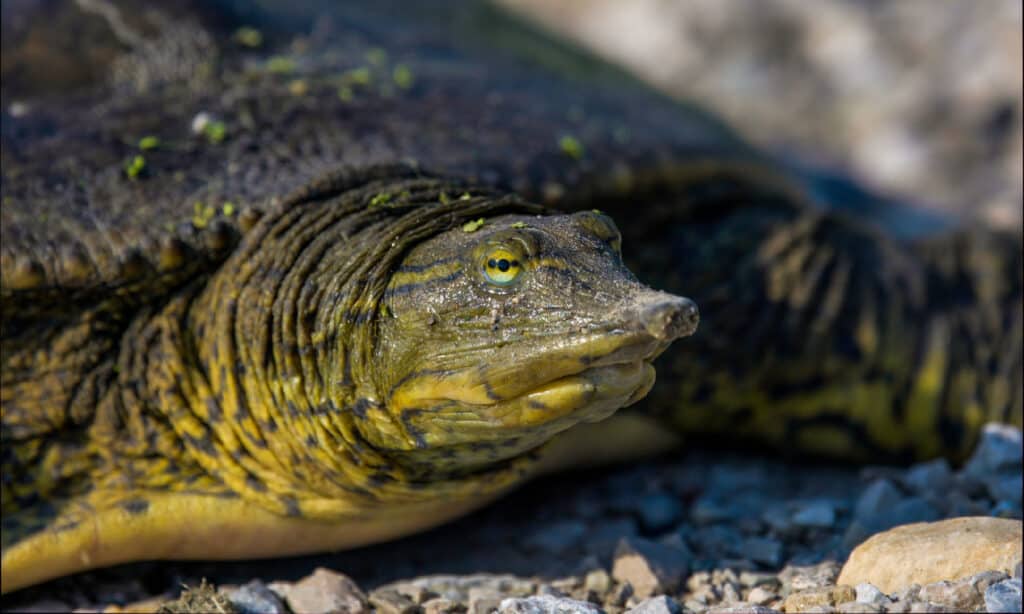
The softshell turtle has a long, tapered, pig-like snout that it uses to breathe while its body is submerged.
©iStock.com/Brian Reinke
14. Texas River Cooter
The Texas river cooter (Pseudemys texana) has a dark brown to black shell with yellow, reticulated lines. Its skin is dark green with yellow swirled patterns and an upside-down “Y” shape on its throat. You will find this cooter in rivers and streams, mainly in Central Texas, but as far north as the panhandle. These turtles like to bask near the water’s edge, sometimes in groups. Females measure up to 13 inches in length, while males can reach up to around 11 inches.
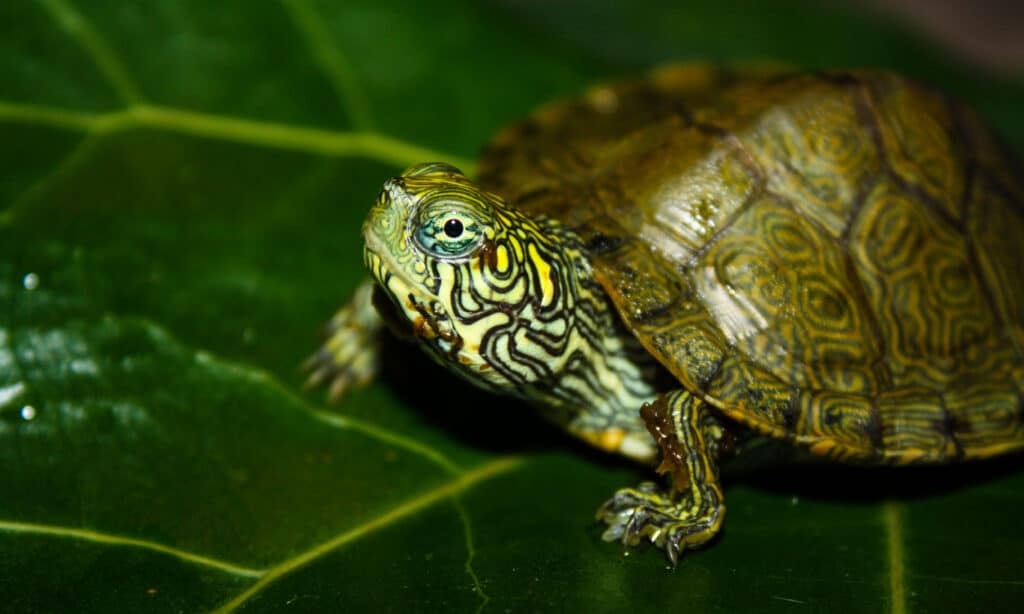
Endemic to Texas, the Texas river cooter is mainly in the central part of the state.
©Bildagentur Zoonar GmbH/Shutterstock.com
15. Midland Smooth Softshell
The midland smooth softshell turtle (Apalone mutica mutica) has a plain, flat, smooth, olive-grey or brown shell. Males and juveniles have darker dots or dashes, while adult females have a mottled appearance. These turtles have long necks and long, pig-like snouts so they can breathe while the rest of their body is underwater or buried in the sand. They inhabit the river systems of eastern and central-to-south-central Texas. Midland smooth softshell turtles are active during the day, feeding on insects, mollusks, and crayfish.
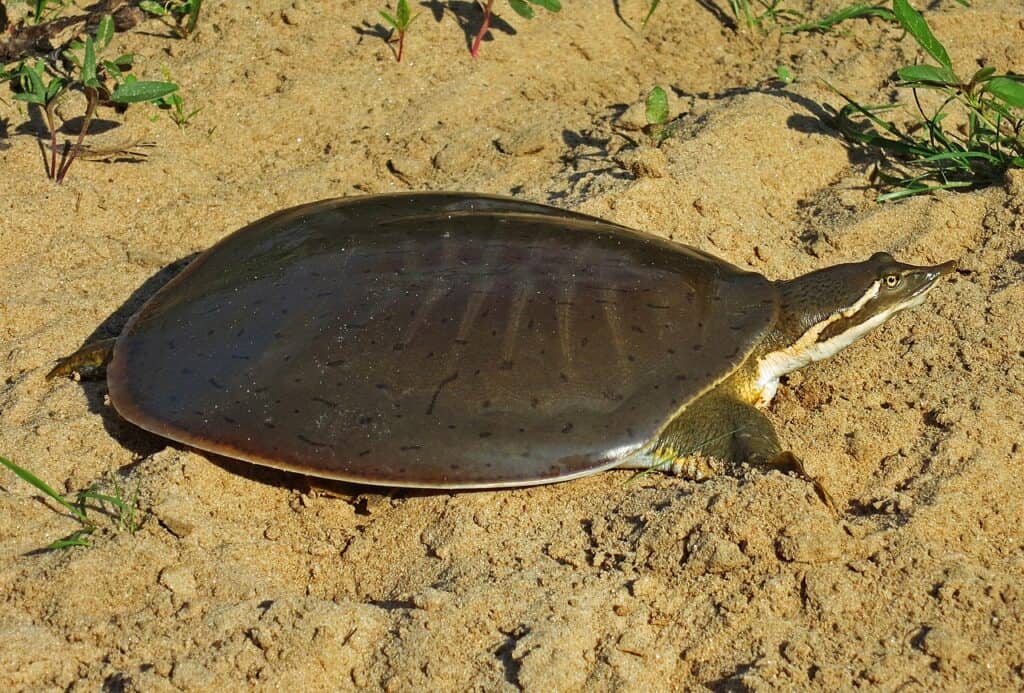
The midland smooth softshell inhabits most areas in Texas.
16. Mississippi Map Turtle
The Mississippi map turtle (Graptemys pseudogeographica kohnii) is the most common map turtle in Texas. Its shell is a dark, olive-brown color with a pattern similar to a map. Its skin is dark and covered with thin yellow lines. It has a bright yellow “L” or crescent shape behind each eye. This species is aquatic and never travels far from water. You will find this turtle in parts of Eastern Texas near stagnant water with lots of vegetation. Females can reach up to 10 inches in length, while males only reach about 5 inches.
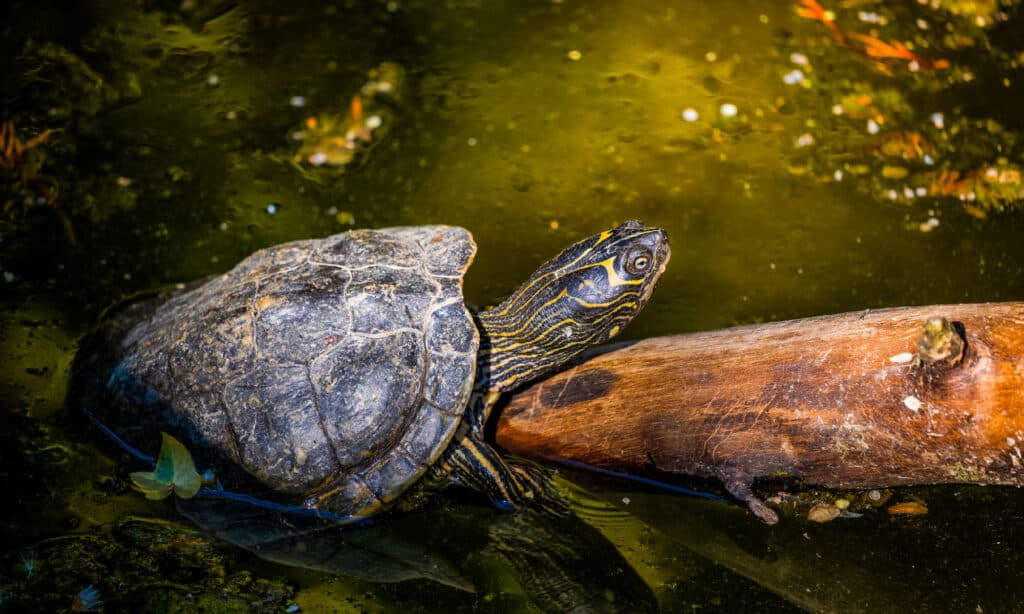
The Mississippi map turtle is the most common mud turtle in Texas.
©iStock.com/Artur Bogacki
17. Ouachita Map Turtle
Ouachita map turtles (Graptemys ouachitensis) have similar coloring and patterns to that of other map turtles. Their shells are olive-green to brown and they have a prominent ridge down the middle of their backs. They have dark skin with yellow lines and distinctive yellow spots behind their eyes. These map turtles live in the extreme northeastern parts of the state. They can be found in various types of waterways, from still to fast-flowing rivers with an abundance of aquatic vegetation. Adults females normally reach up to 10.3 inches in length, while males measure up to 5.5 inches.
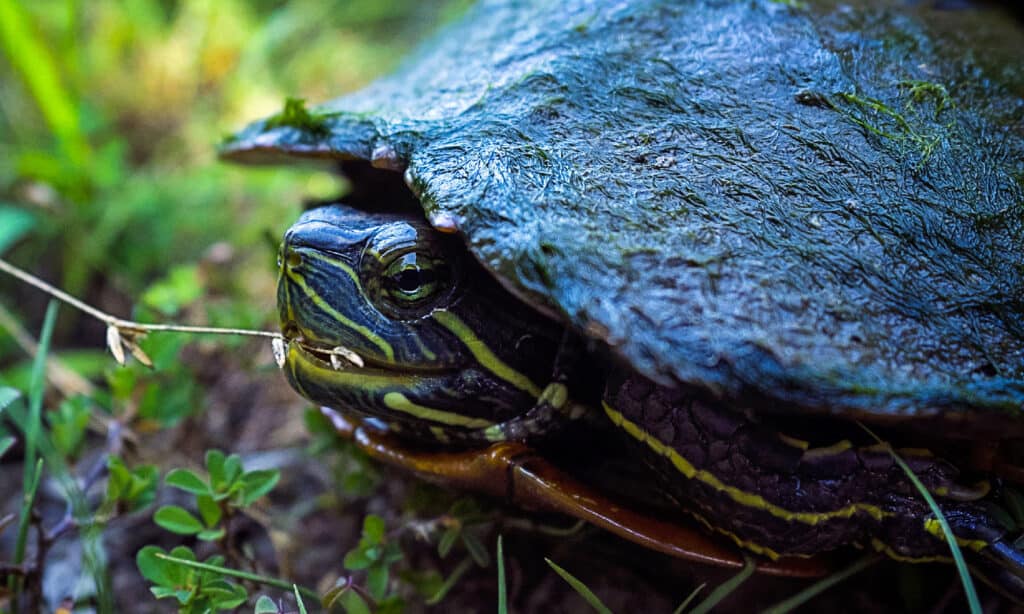
The Ouachita map turtle lives in northeastern Texas.
©Stephanie'screativeImages/Shutterstock.com
18. Razor-Backed Musk Turtle
The razor-backed musk turtle (Sternotherus carinatus) gets its name from the razor-like ridge down the center of its high-domed shell. Its shell and skin are variable shades of dark brown, grey, or green. It also has dark spots on its shell and two small barbels on its chin. Razor-backed musk turtles are mainly in eastern and central Texas, westward to the Brazos River drainage. They are fully aquatic and generally favor flowing rivers, streams, and other permanent bodies of water. These carnivores hide in low-wetland vegetation and feed on mollusks, snails, and fish. Adults reach about 4 to 6 inches in length.
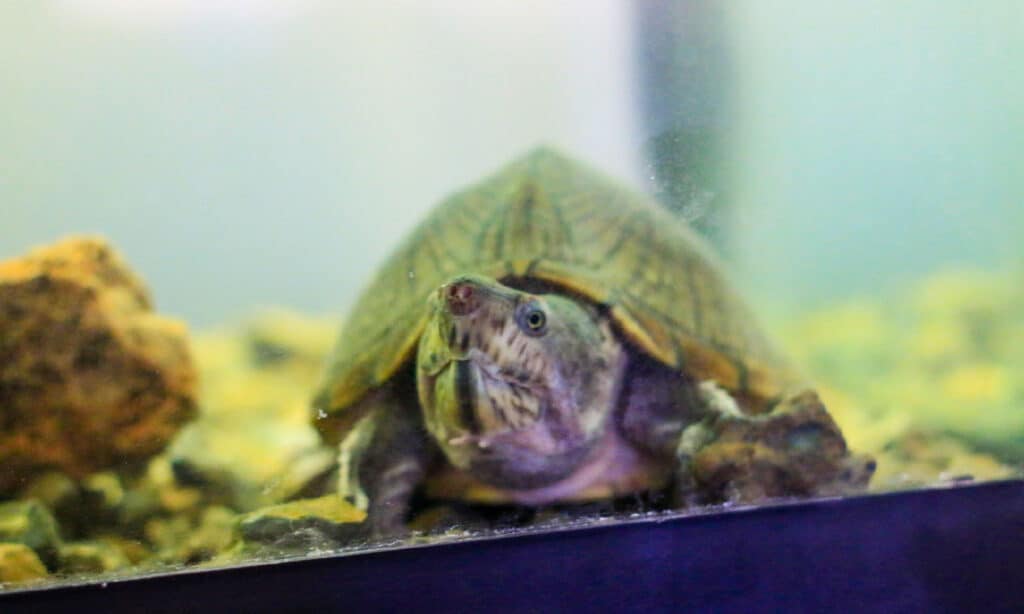
The razor-backed musk turtle is known for its distinctive high-domed shell with its sharp ridge.
©iStock.com/mynewturtle
19. Texas Map Turtle
The Texas map turtle (Graptemys versa) has olive skin with yellow stripes, a hook-like yellow mark behind its eyes, and three yellow or orange spots on its chin. Its shell is olive-green to brown with yellow or orange reticulated patterns. It has a prominent ridge down the middle of its first three scutes. You can only find these semi-aquatic turtles in the waterways of the Colorado River in Central Texas, where they feed on insects and aquatic vegetation. Adult males reach about 4.5 inches in length, while adult females grow to about 8.4 inches.
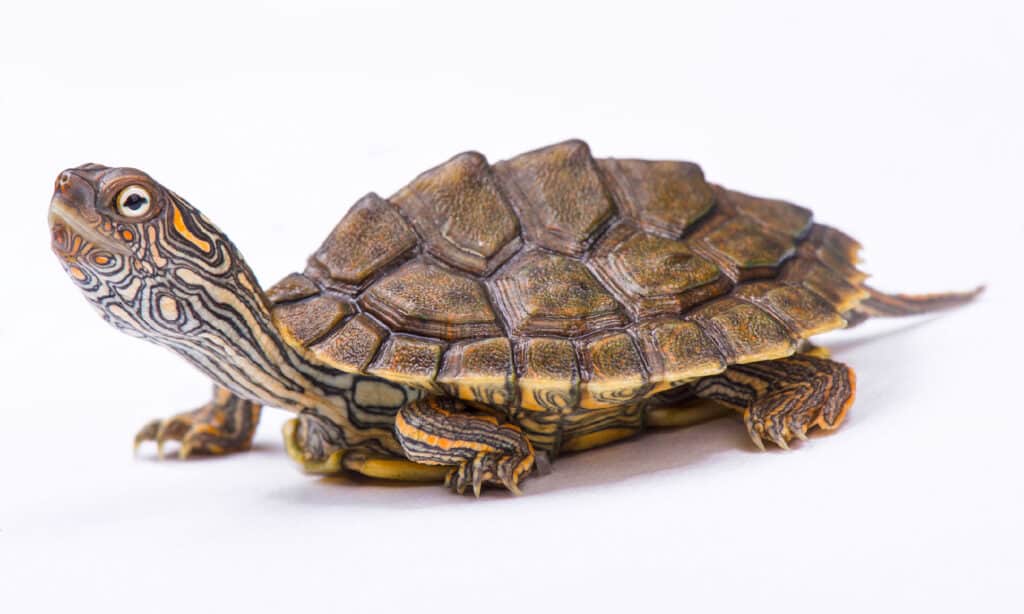
Texas map turtles inhabit the Colorado River and its associated waterways in Central Texas.
©iStock.com/reptiles4all
20. Red-Eared Slider
As its name suggests, the red-eared slider (Trachemys scripta elegans) has red patches behind its eyes. It has a dark green shell with yellow lines and dark green skin with pale yellow or lighter green markings. Red-eared sliders are semi-aquatic, preferring to live near slow-moving rivers, lakes, and swamps. You can find this species throughout most of Texas, except the western desert regions. Adult turtles can reach about 12 inches in length.
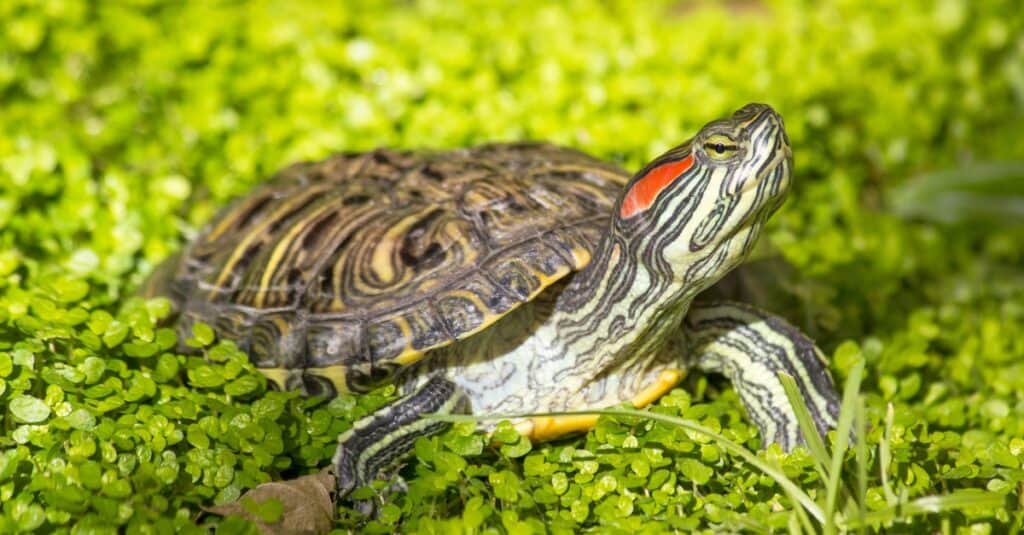
Red-eared sliders have red patches behind their eyes.
©xbrchx/Shutterstock.com
21. Eastern Mud Turtle
The eastern mud turtle (Kinosternon subrubrum) has a plain, smooth, domed, yellowish-brown shell. It has a double-hinged plastron so it can pull its body inside the shell when threatened. You can find them in eastern and central Texas near shallow water, like swamps and marshes. They are semi-aquatic and will explore further away from water sources, hiding under mud to feed on earthworms or to hibernate. Once in the water, they will eat fish and mollusks. They are small turtles, with adults measuring only 3 to 5 inches in length.

Eastern mud turtles live in swamps and marshes in East and Central Texas.
©Liz Weber/Shutterstock.com
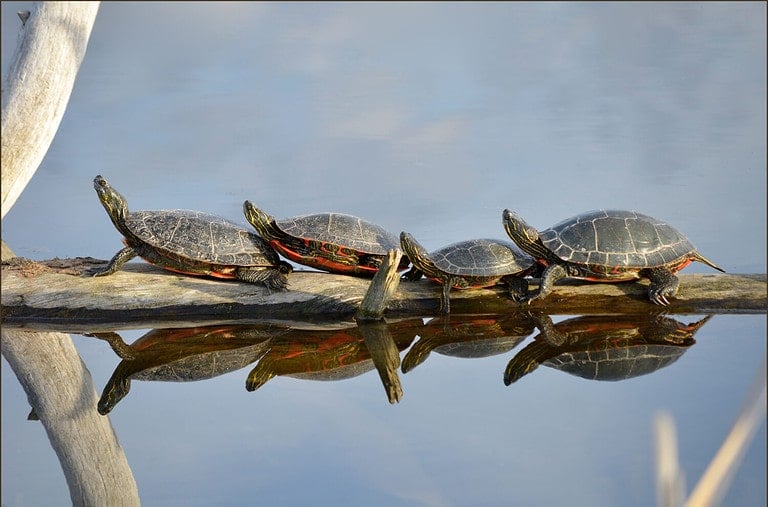
22. Southern Painted Turtle
The southern painted turtle (Chrysemys dorsalis) has a dark brown or black shell with a bright red, yellow, or orange line running down its center. Its skin is also dark with yellow and red markings. All painted turtles live in slow-moving freshwater rivers, ponds, and lakes. They live in the far northeastern corner of the state, in the Caddo Lake region. Painted turtles are mostly aquatic, preferring to bask near the water and eat frogs, mollusks, and vegetation. Adults typically reach 4–6 inches in length.
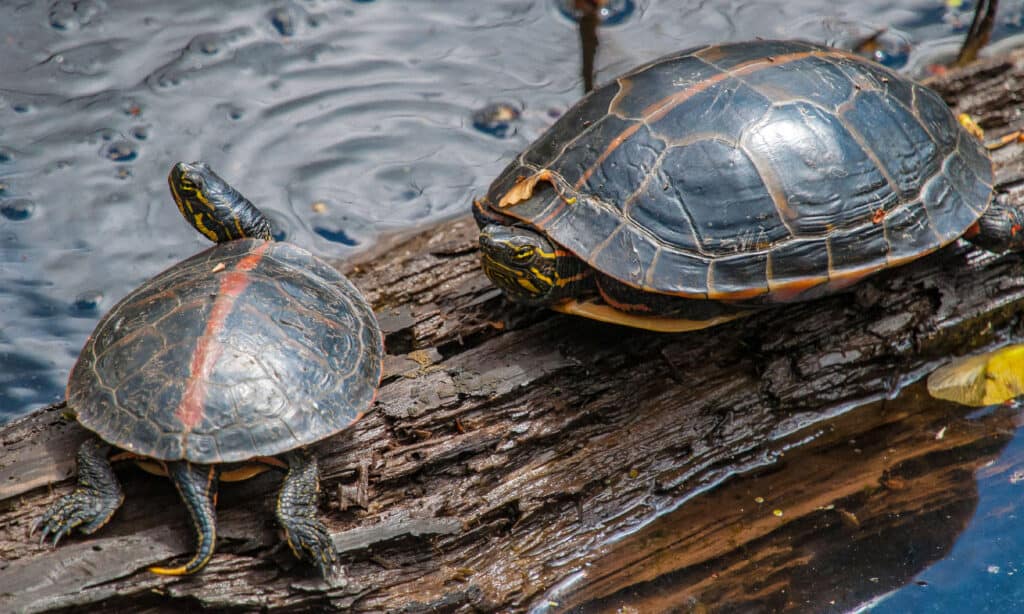
Southern painted turtles live in the Caddo Lake region of Texas.
©Mike Wilhelm/Shutterstock.com
23. Yellow Mud Turtle
Yellow mud turtles (Kinosternon flavescens) have an olive-brown, grey, tan, or yellowish-brown domed shell with dark-outlined scutes. They also have a double-hinged plastron so they can close themselves off when threatened. They typically measure from 4 to 6.5 inches in carapace length. Like other mud turtles, this species prefers lakes, swamps, rivers, or marshes with sandy or muddy bottoms. They are widespread throughout most of Texas, although they are rarely seen in the easternmost part of the state.
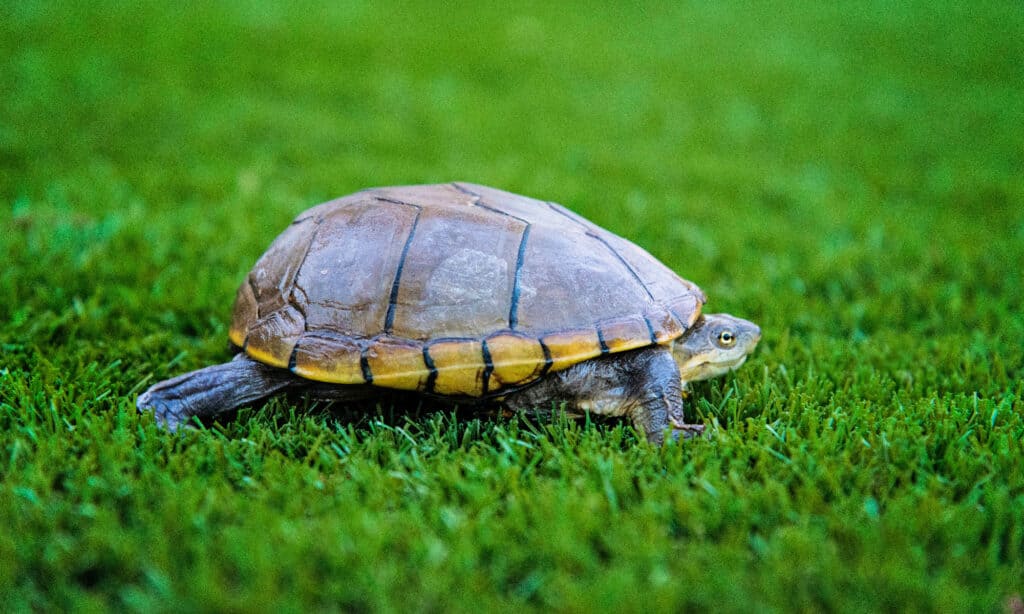
Yellow mud turtles are widespread throughout most of Texas.
©Kayla Blundell/Shutterstock.com
24. Texas Diamondback Terrapin
The Texas diamondback terrapin (Malaclemys terrapin littoralis) has light gray skin covered in black spots. It has a dark, heavily-grooved upper shell with a central ridge and a pale plastron. Males can reach 5.5 inches, but females can measure up to 9 inches. Unlike most turtles in Texas, the diamondback terrapin lives in brackish water. This turtle has heavily webbed feet with much larger back feet to swim in estuaries, tidal creeks, and saltwater marshes, where it feeds on crustaceans and shellfish. When these turtles have too much salt in their bodies, they can secrete the excess salt through specialized tear ducts. Texas diamondback terrapins are found from Louisiana to Corpus Christi Bay.
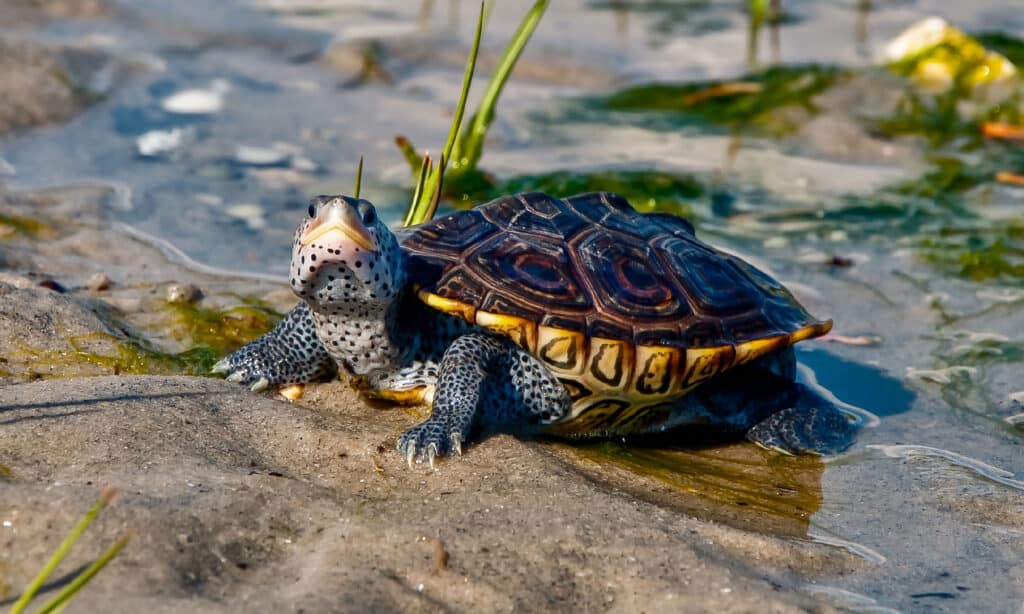
The Texas diamondback terrapin lives in brackish waters near the Gulf Coast.
©iStock.com/JasonOndreicka
25. Texas Tortoise
Texas tortoises (Gopherus berlandieri) have brown shells with yellowish-orange spots in the center of their “horned” scutes. This herbivore feeds primarily on grass and cacti. All tortoises live on land. The Texas tortoise inhabits the grasslands and thornscrub regions of southern Texas near the Mexico border. They are the smallest tortoises in North America, reaching a carapace length of only around 8.5 inches.
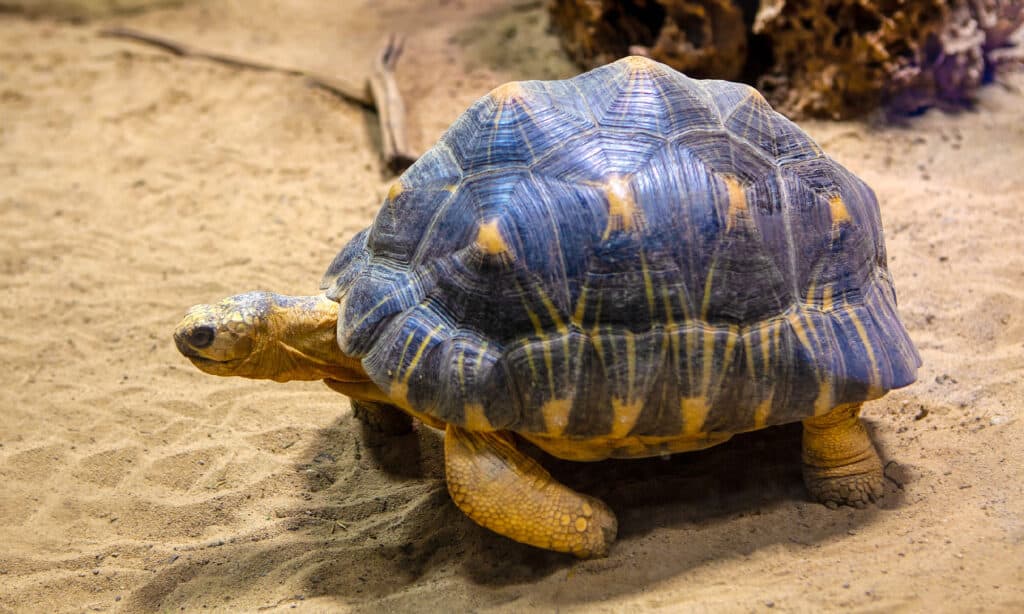
The Texas tortoise inhabits grasslands near the Mexico border.
©iStock.com/RussieseO
26. Mississippi Mud Turtle
The Mississippi mud turtle (Kinosternon subrubrum hippocrepis) is a mostly aquatic subspecies of the eastern mud turtle that can be found in in the eastern and southeastern parts of the state. It has a dark brown, grey, or olive-colored high-domed shell with a double-hinged bottom shell that can close like a box turtle’s. This turtle has a mottled grey or brown head and neck with pale-colored stripes. It prefers shallow, slow or stagnant bodies of water like swamps and marshes with abundant vegetation. These small turtles typically only reach up to 5 inches long.
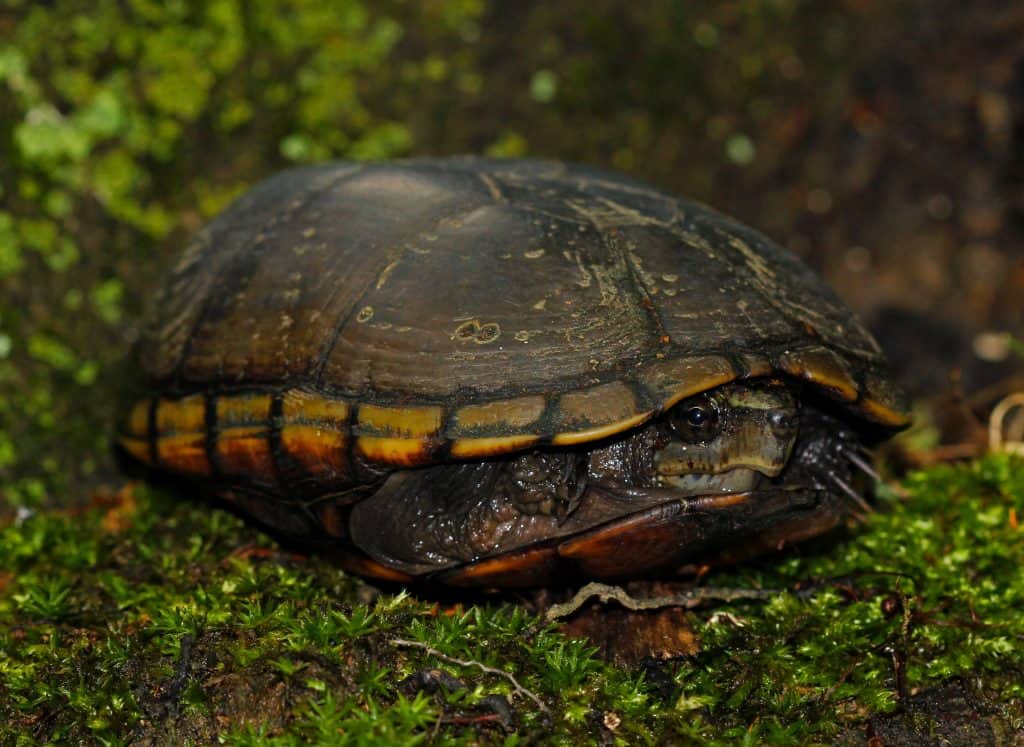
The Mississippi mud turtle only reaches a shell length of 3-5 inches.
27. Pallid Spiny Softshell Turtle
Like most softshell turtles, the pallid spiny softshell turtle (Apalone spinifera pallida) has a flat, leathery, shell. However, as their name indicates, these turtles tend to be lighter in color, or more washed out, than other subspecies. They can be olive, light brown, tan, or greyish-yellow. They may have spots, but these are not ringed in black. Yellow or light-colored stripes run down the sides of their heads and necks. They have long necks and elongated, pig-like snouts so they can breathe when underwater or buried in sediment. Females are much larger than males, reaching up to about 19 inches in length, while males reach up to 9.5 inches. They are found in rivers, lakes, and other bodies of water with soft, sandy or muddy bottoms in northern and eastern Texas.
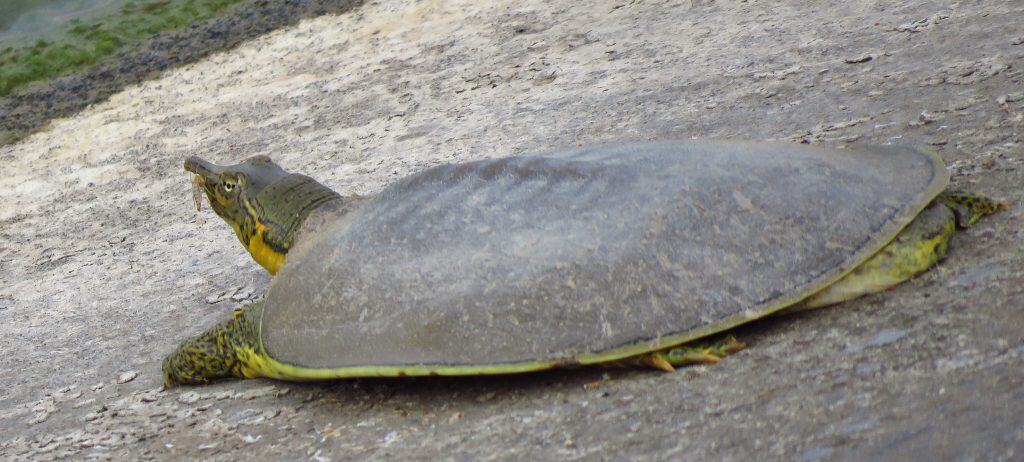
Pallid spiny softshell turtles are lighter in color than other softshell turtles.
28. Sabine Map Turtle
The Sabine map turtle (Graptemys sabinensis) was previously classified as a subspecies of the Ouachita map turtle, but modern taxonomic treatments generally view it as a separate species. The Sabine map turtle has a very small, narrow head compared to other map turtles. They also tend to be smaller, with males measuring up to 5 inches in length and females rarely exceeding 8 inches, depending on their habitat. Researchers have found these turtles grow larger in some river drainages than in others. Sabine map turtle shells are olive to dark brown or black with light colored, map-like markings and a central ridge. They have olive-brown to black skin with yellow stripes. They can be found in flowing riverine habitats in eastern Texas, where they generally feed on insects, mollusks, crayfish, and aquatic plants.
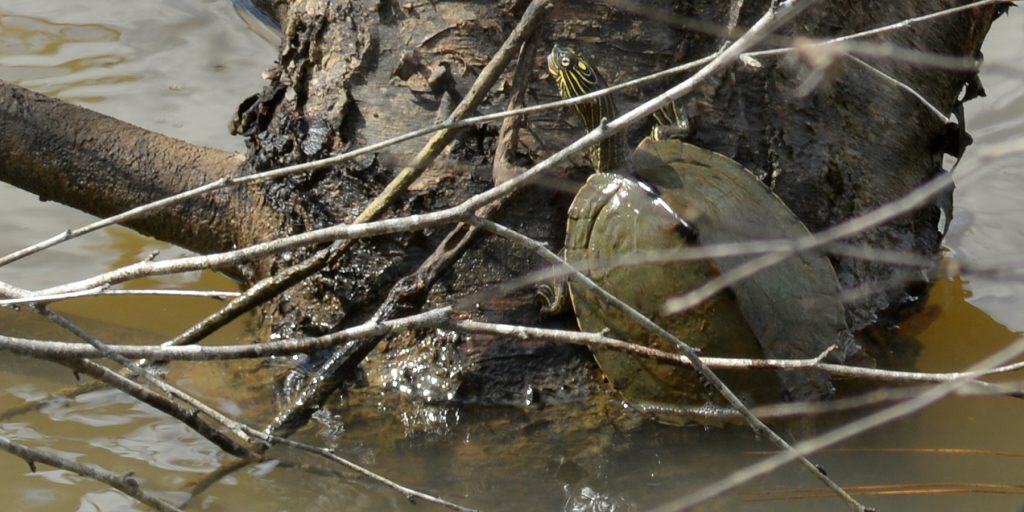
The Sabine map turtle is generally smaller with a smaller head than the Ouachita map turtle.