
Quick Take
- Box turtles belong to the pond turtle family, though their relationship with water isn't what you'd expect. See their land-dwelling nature →
- A nest's temperature secretly decides something permanent about every box turtle inside it. Discover how temperature decides sex →
- The gap between a box turtle's average lifespan and its maximum is almost unbelievable. Explore their remarkable lifespan →
- Every box turtle shell is as unique as a human fingerprint, and that uniqueness pulls double duty in the wild. See their unique shell patterns →
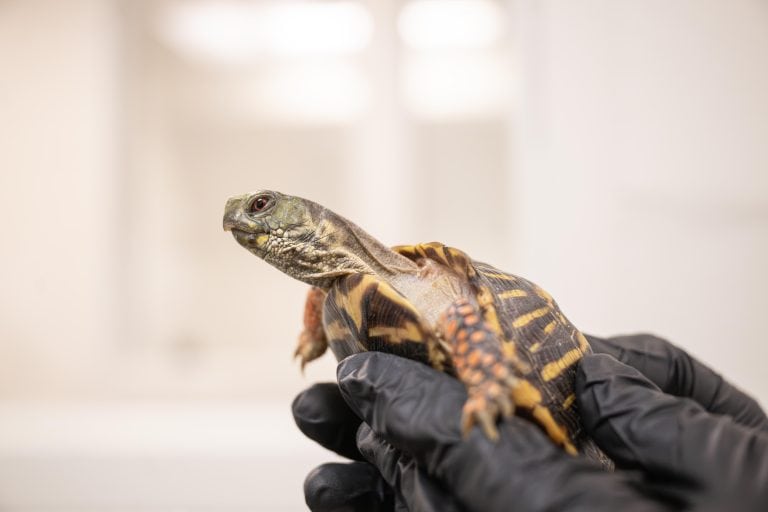
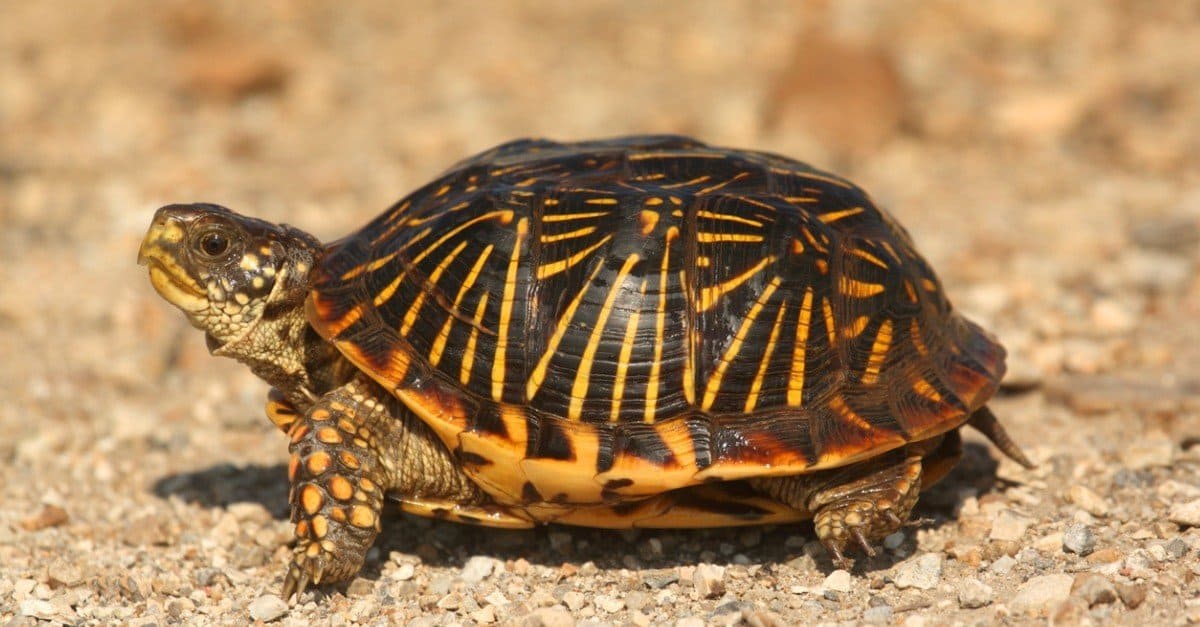
There are six living subspecies of the common box turtle (spp. Terrapene). They are generally identifiable by their high domed shells with various color patterns of yellow, orange, red, or olive. If you want to learn more about the habits, habitats, and hidden secrets of these incredible reptiles, this article is for you. Read on to learn 10 incredible facts about box turtles.
1. Box Turtles Brumate Like Other Reptiles
Like other reptiles, box turtles brumate during the winter. This is a period of inactivity when they slow their heart rate, breathing, body temperature, and metabolism and live off stored fat. A box turtle will make a surprisingly shallow burrow to rest in. They usually start burrowing in October or November when low temperatures drop below 60°F. Then they emerge around April when temperatures begin to warm up in the spring.
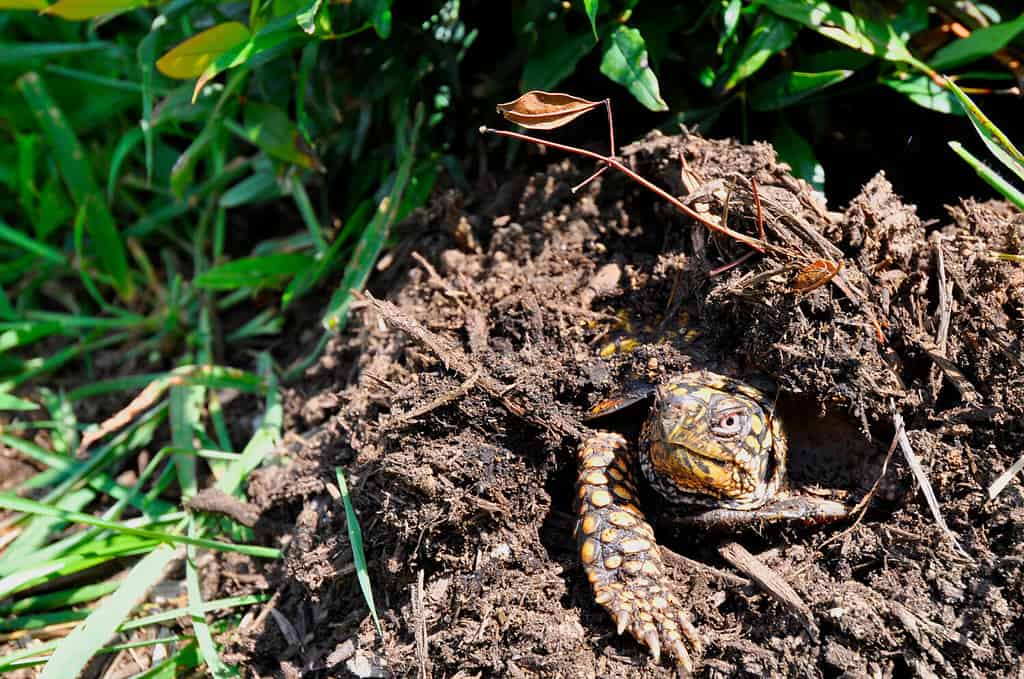
Box turtles emerge from brumation when temperatures begin to warm in the spring.
©Keri Delaney/Shutterstock.com
2. They Think Inside the Box
While thinking outside the box might be great for some, box turtles take the opposite approach. They earned their name by their ability to draw their head and limbs completely inside their shells. When they seal themselves off, it’s almost as if they were in a box. A plastral hinge, which is a door hinge-like structure on their bottom shell, allows box turtles to seal themselves inside their shell. They pull the plastron up tightly against the carapace, or upper shell.
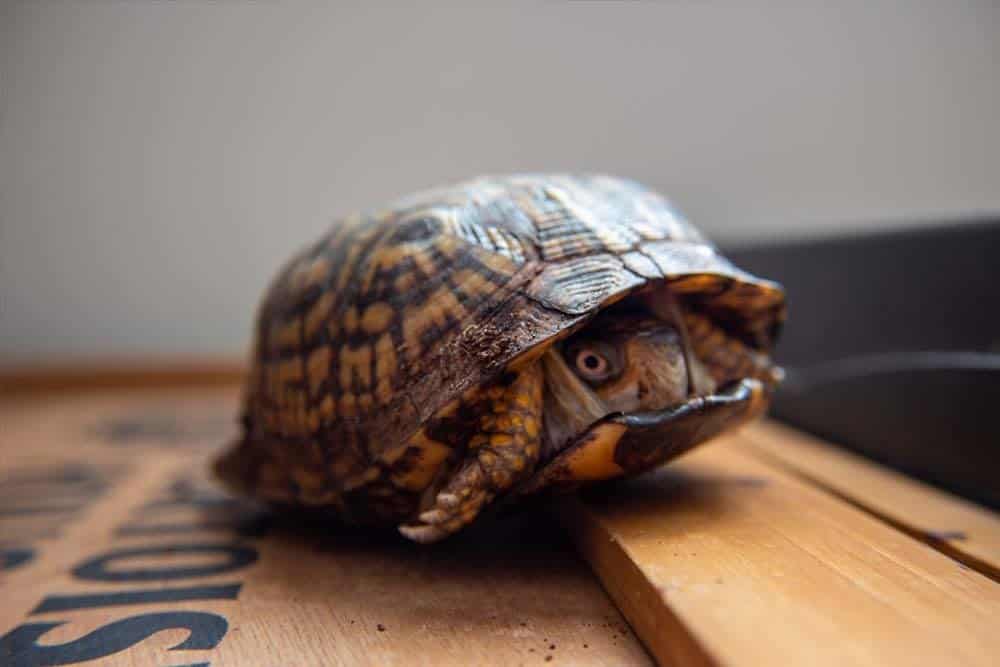
Box turtles can pull their head and limbs inside the shell and close it tightly for protection.
©Jessica Baldwin/Shutterstock.com
3. They Can Live Over 100 Years
Box turtles generally live 25 to 35 years. However, according to the Smithsonian, Eastern box turtles have been known to live to be over 100 years old.
Eastern box turtles can reach over 100 years old.
©Ray Hennessy/Shutterstock.com
4. Box Turtles Have Temperature Sex Determination
Like many other reptile species, box turtles have temperature sex determination. This means that the sex of the turtles is determined by the incubation temperature of the eggs. Eggs incubated at colder temperatures produce male turtles, while eggs incubated at warmer temperatures produce female turtles. Fluctuating temperatures typically result in a mix of males and females. The exact temperatures vary depending on species and habitat.
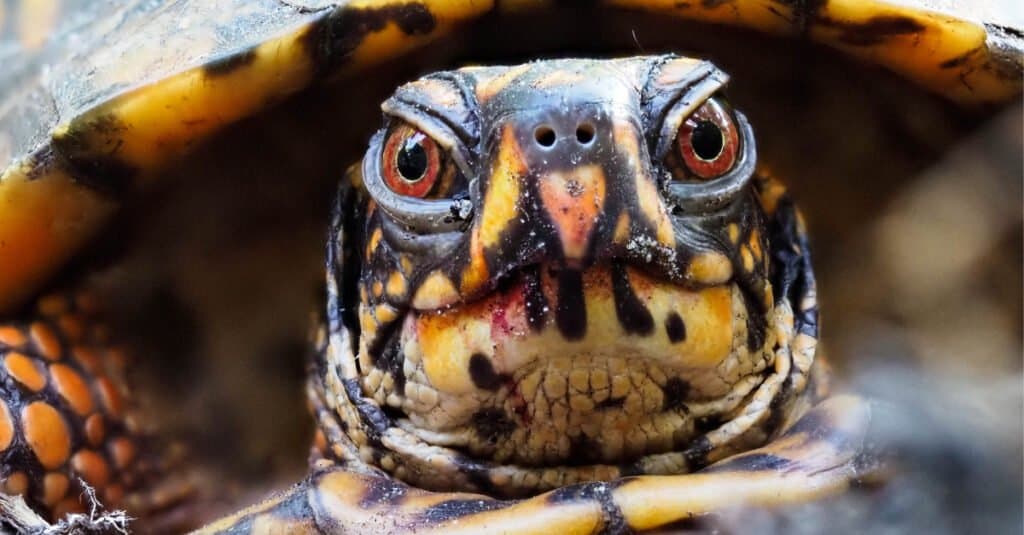
Eggs that are incubated at colder temperatures result in male box turtles.
©iStock.com/Alan Doucet
5. They’re Widely Distributed and Protected
Box turtles are one of the most widely distributed turtle species throughout North America, but they are also vulnerable to population decline. They can be found in 30-35 U.S. states, roughly from Maine down to Florida and west to Texas and the Great Plains. Box turtles can also be found in Mexico. Collecting wild box turtles is illegal or heavily regulated without special permits in most U.S. states where they naturally occur.
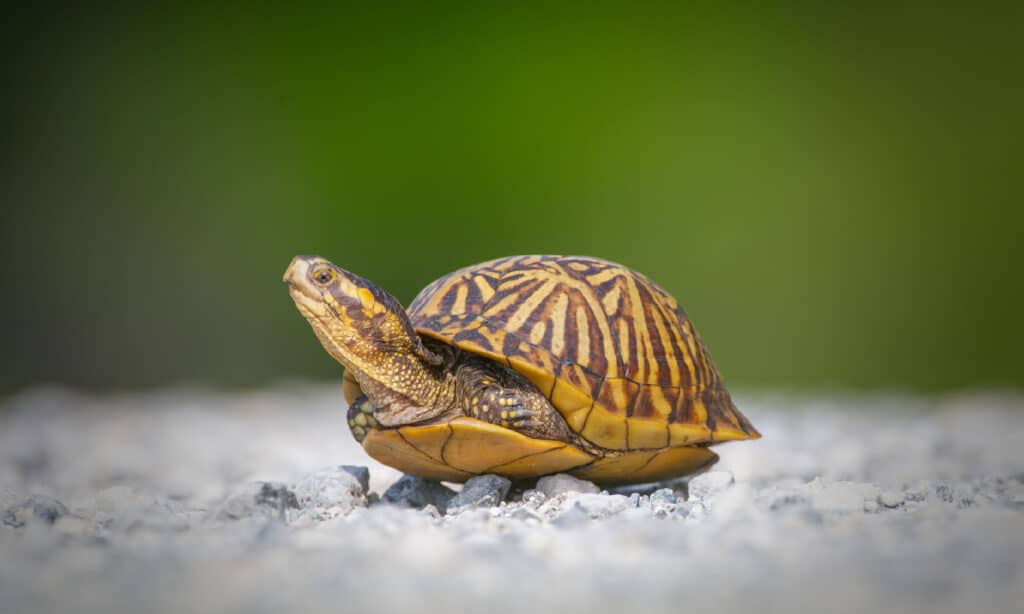
Box turtles are native to North America.
©iStock.com/Dan Rieck
6. Each Box Turtle Has a Unique Shell Design
Every box turtle shell has a unique color pattern of lines, streaks, spots, and blotches. Similar to our fingerprints, no two box turtle shells are alike. Their yellow, orange, and brown markings help the turtles camouflage themselves in the sunlight and shadows of the forest floors and grasslands.
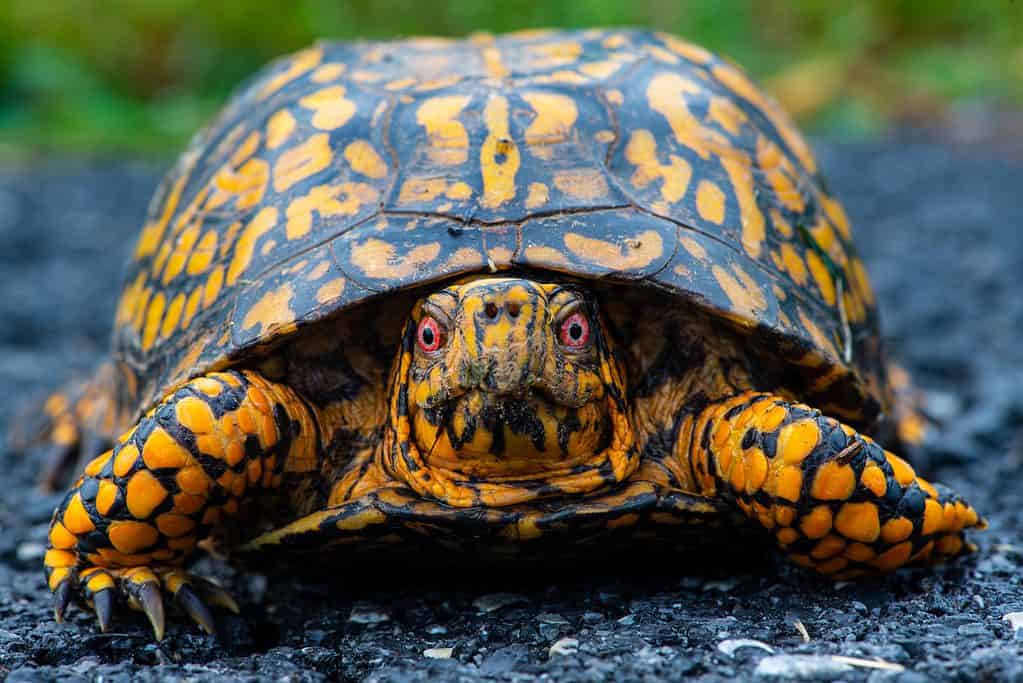
No two box turtle shells are alike.
©RenEgAdeRooStEr/Shutterstock.com
7. Box Turtles Are Terrestrial
Even though they belong to the American pond turtle family (Emydidae), with the exception of the aquatic Coahuilan box turtle of Mexico, box turtles are terrestrial. They spend most of their lives in grasslands, meadows, forests, and wetlands. Box turtles are not good swimmers, but they often soak in shallow puddles or streams to stay hydrated and cool.
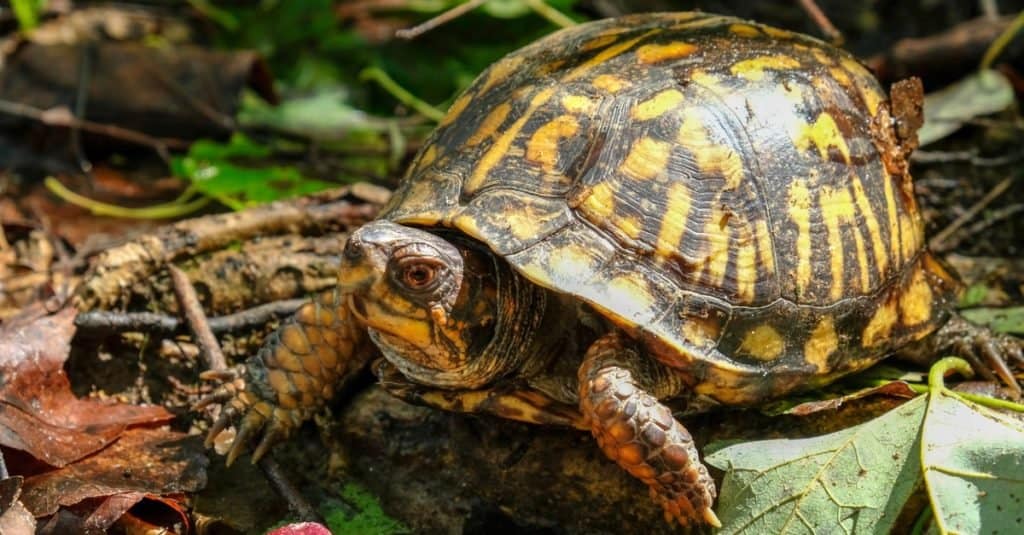
Box turtles are terrestrial and spend their lives on land.
©samray/Shutterstock.com
8. Box Turtles Have Different Diets Depending on Age
Box turtles are omnivorous, eating both plants and animal protein. When box turtles are young, they grow quickly, so they require more protein. Young box turtles often prey on insects, worms, and slugs. As they age, box turtles switch to a more vegetarian lifestyle. Adults prefer eating fruits, grasses, mushrooms, and vegetables. However, if food is scarce, an adult box turtle might eat insects and other invertebrates.
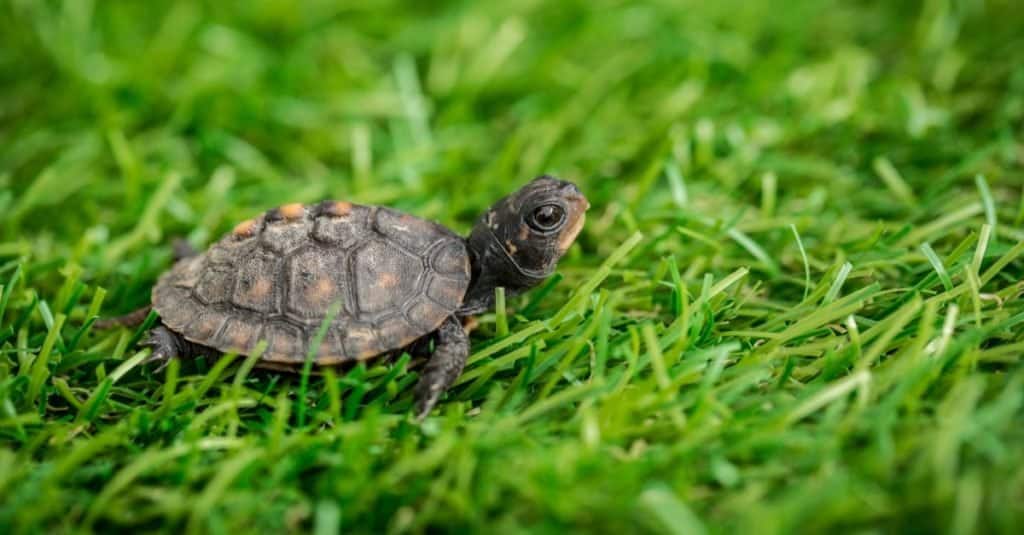
Baby box turtles eat more animal protein to help them grow.
©Karen Culp/Shutterstock.com
9. A Box Turtle Has a Small Home Range
Throughout their lives, box turtles remain in a very small home range. Their home range may span from less than 2 acres to as much as 26 acres, depending on the box turtle species and the turtle’s environment. For example, woodland box turtles have a home range of smaller than 2 acres, but three-toed box turtles have a home range of 5 to 26 acres.
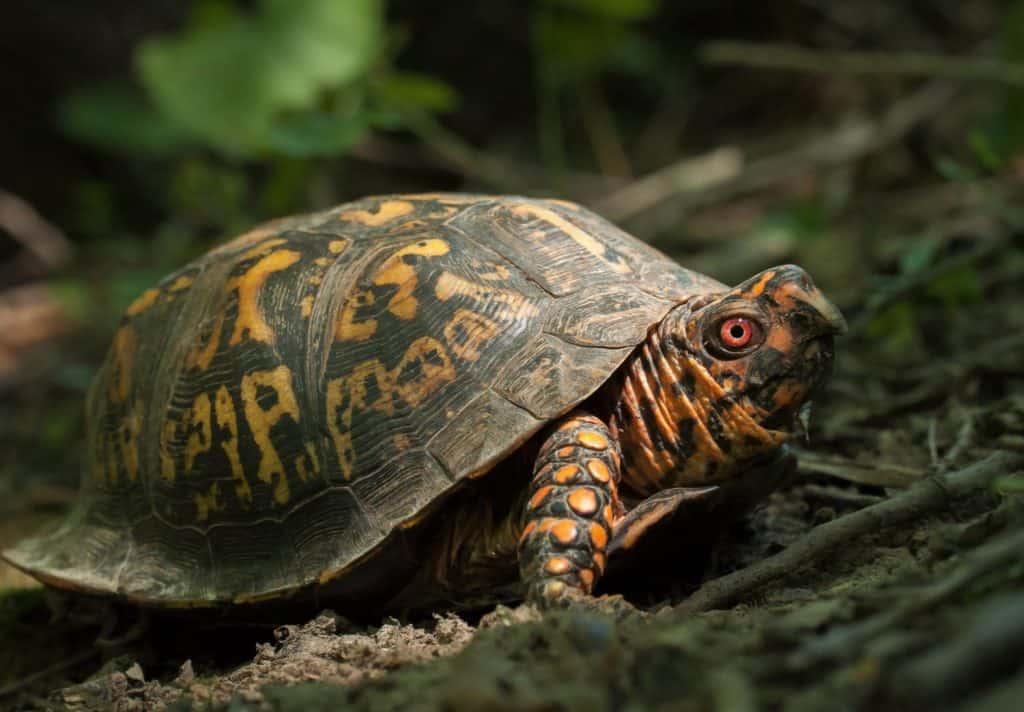
Box turtles spend their whole lives in an area that is typically less than 26 acres.
©Mike Wilhelm/Shutterstock.com
10. Males Are More Colorful Than Females
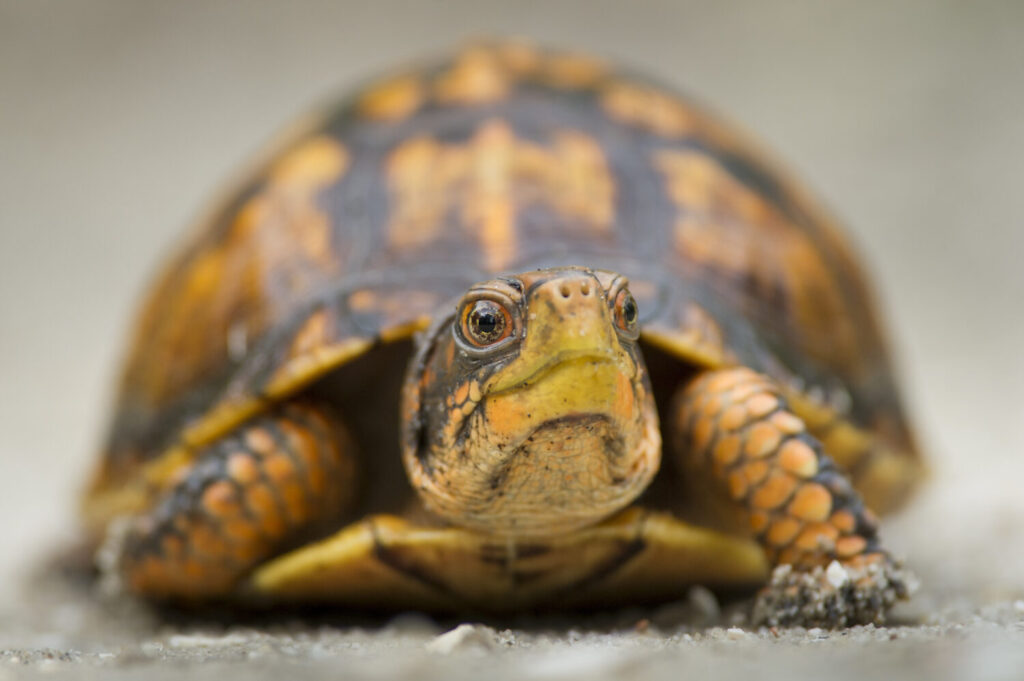
It’s usually easy to tell the male box turtles apart from the females. Not only do the males grow slightly larger, but they also tend to be more colorful. For instance, male eastern box turtles have vibrantly colored heads and limbs, higher contrast color patterns on their shells, and bright reddish-orange eyes. Three-toed box turtle males often have bright red, orange, yellow, and white scales on their faces, heads, and front legs, as well as red eyes. Ornate box turtle males and Yucatán box turtle males also have brighter coloration and vivid red eyes.
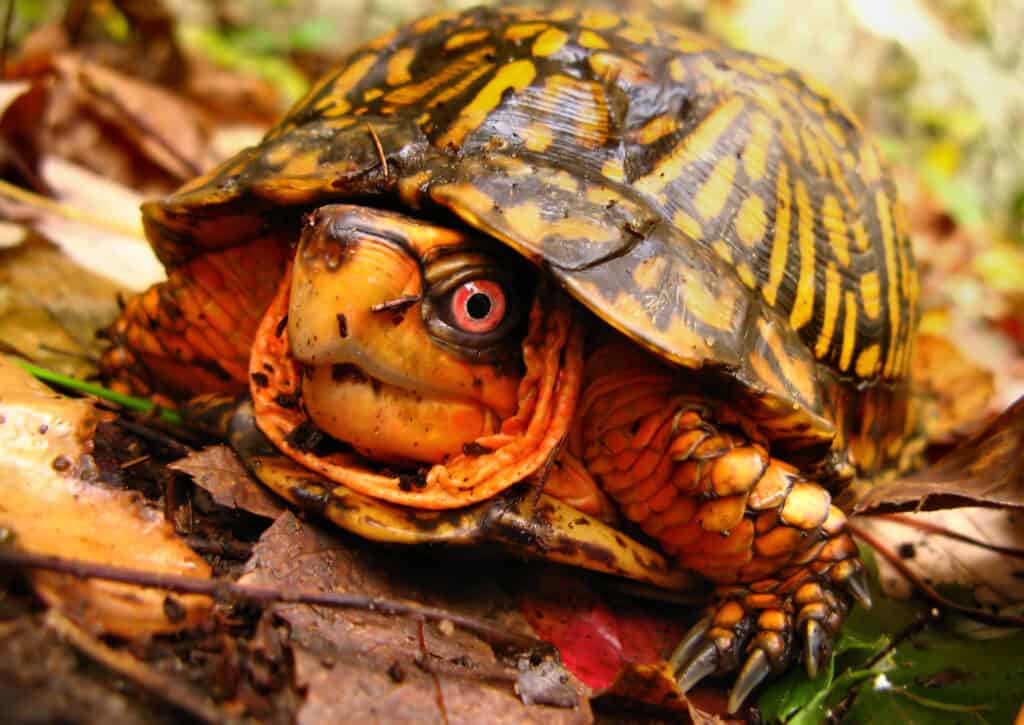
Male box turtles are more colorful than their female counterparts.
©outdoorsports44/Shutterstock.com