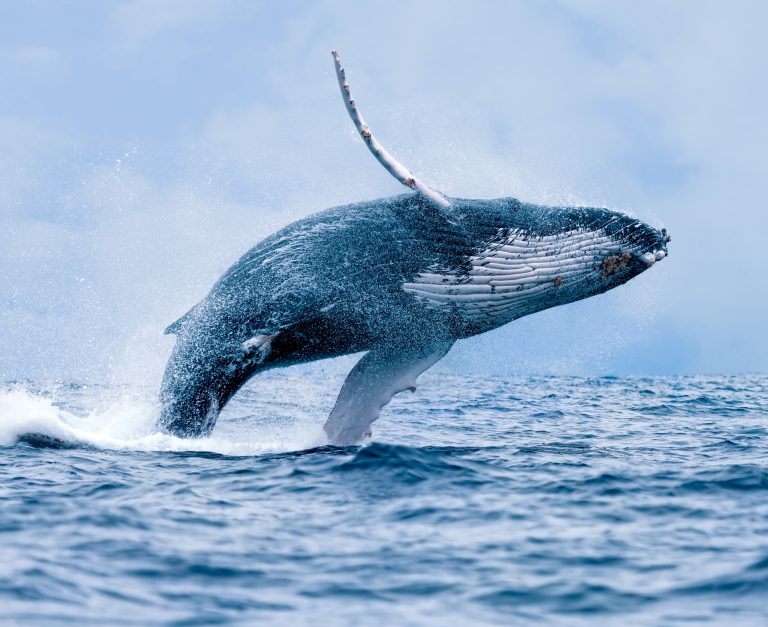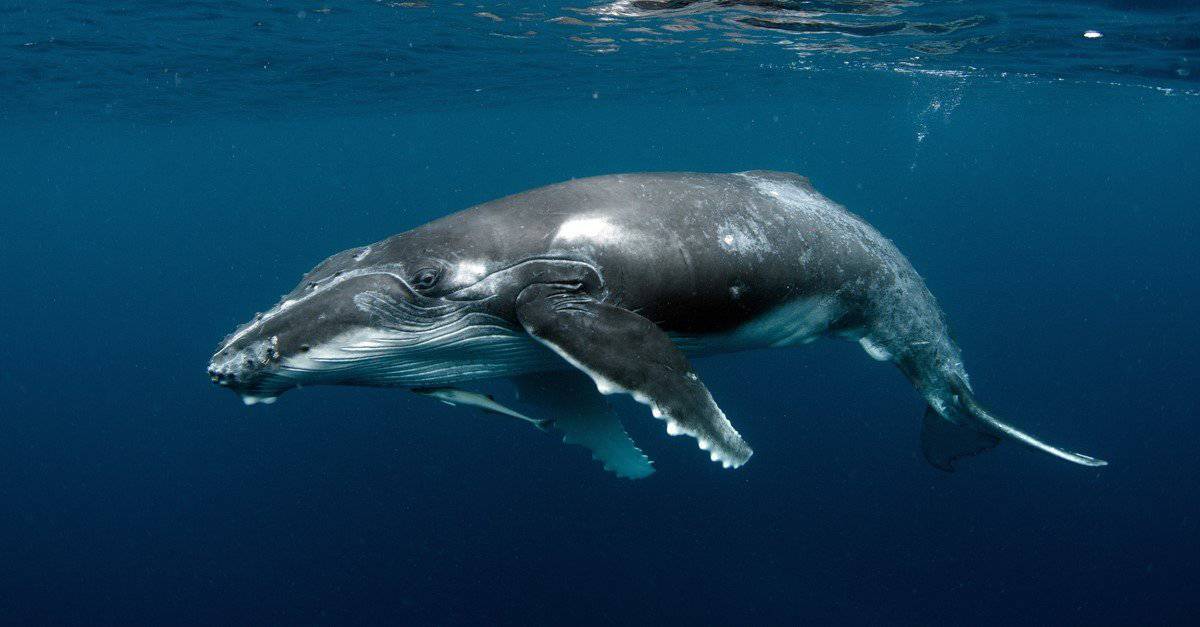

Whales are large marine mammals. They are warm-blooded, breathe air through lungs, and give birth to live young, which they nurse with milk. Whales are categorized into two main groups: baleen whales (Mysticeti) and toothed whales (Odontoceti). Baleen whales filter feed using baleen plates instead of teeth. Toothed whales actively hunt prey using their teeth. Baleen whales are generally longer-lived than toothed whales. This difference in longevity is likely due to a combination of factors, including size, diet, and genetic adaptations for DNA repair. Dive in to discover the long and short of a whale’s lifespan.
Baleen Whale Lifespan
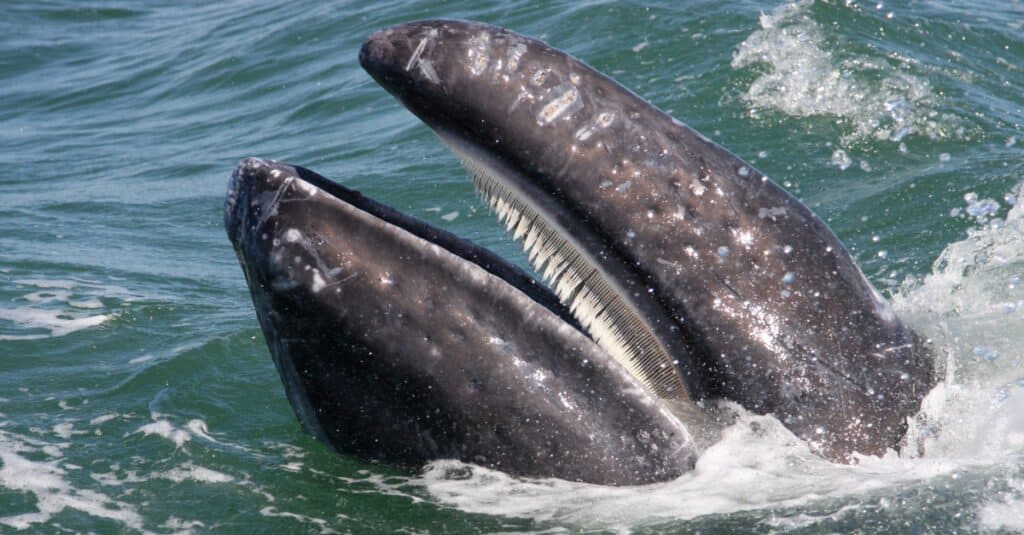
Baleen whales, like this gray whale, tend to live longer than toothed whales.
©jo Crebbin/Shutterstock.com
Though the life expectancy of a baleen whale is dependent on its species, overall baleen whales live longer than toothed whales, with the majority living between 20 and 80 years. The lifespan of baleen whales is influenced by a combination of biological, environmental, and human-related factors. These include species-specific lifespans and individual health. Environmental factors include habitat quality, food availability, and climate change. Human activities like whaling, pollution, and boat traffic also significantly shorten whale lifespans.
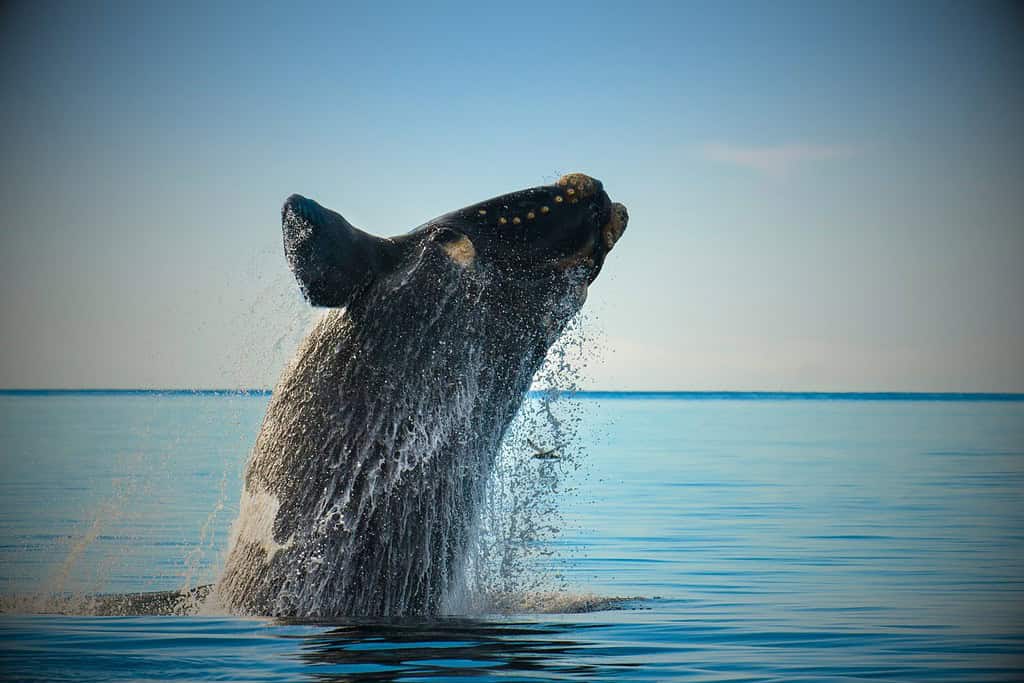
The North Atlantic right whale has a shortened life expectancy as a result of human activity.
©Tharuka Photographer/Shutterstock.com
Some baleen whales, like the bowhead whale (Balaena mysticetus), can live for over 200 years. Blue whales tend to live between 80 and 90 years. North Atlantic right whales (Eubalaena glacialis) could live to be over 100 years old, but their current median lifespan is around 22 years, as a result of human activity.
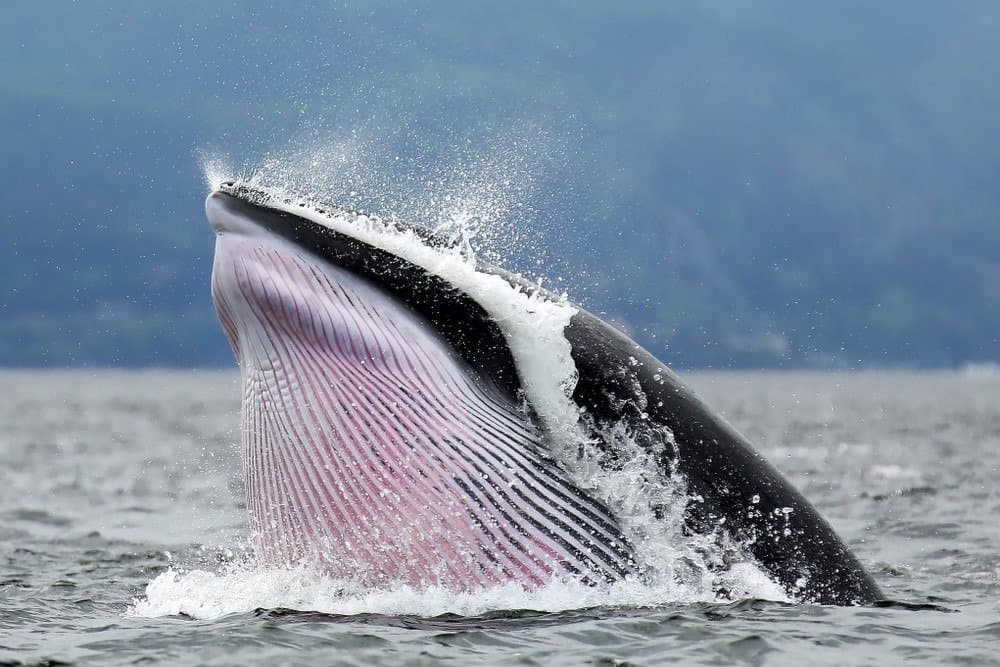
Minke whales have the shortest natural lifespan.
©Annie Leblanc/Shutterstock.com
The minke whale (Balaenoptera acutorostrata), has the shortest lifespan of all baleen whales, with an average life expectancy of 40-50 years, and some individuals living up to 60 years. Although North Atlantic right whales have a significantly shorter life expectancy, their natural lifespan is much longer. Research indicates that without human interference, the North Atlantic right whale could potentially live for a century or more, possibly even up to 130 years.
Toothed Whale Lifespan

Bottlenose dolphins are toothed whales.
©Elena Larina/Shutterstock.com
Toothed whales are a diverse group of marine mammals that includes dolphins, porpoises, and larger whales like sperm whales. They exhibit a wide range of lifespans. Like baleen whales, the life expectancy of toothed whales depends on the species. Smaller species generally have a shorter life expectancy, while larger species exhibit significantly longer lifespans.
Of the approximately 75 toothed whale species, sperm whales have the longest lifespan. Sperm whales have the longest lifespan among toothed whales, living between 60 and 70 years. However, this is still significantly shorter than the lifespan of the longest-lived baleen whales.
Native to shallow, coastal waters of the Northern Hemisphere, the harbor porpoise (Phocoena phocoena) has a relatively short lifespan, averaging 20-24 years in the wild.
Larger whales tend to live longer than smaller ones. Baleen whales, as a group, tend to be significantly larger than toothed whales. Research suggests a correlation between lower body temperature and longer lifespans in mammals, including whales. Baleen whales, such as the bowhead whale, live in cold, Arctic waters and have a lower average body temperature compared to some toothed whales, like the short-finned pilot whale, which favors tropical and temperate oceans.
Toothed whales are active predators that hunt larger prey, while baleen whales are filter feeders that consume vast quantities of small organisms like krill and plankton. The difference in their diet and the risks associated with hunting larger, more active prey might also be contributing factors.
While these are some of the potential factors that contribute to observed differences in baleen whale and toothed whale lifespans, the longevity of whales, particularly baleen whales, is an active area of research, with much still to be understood.