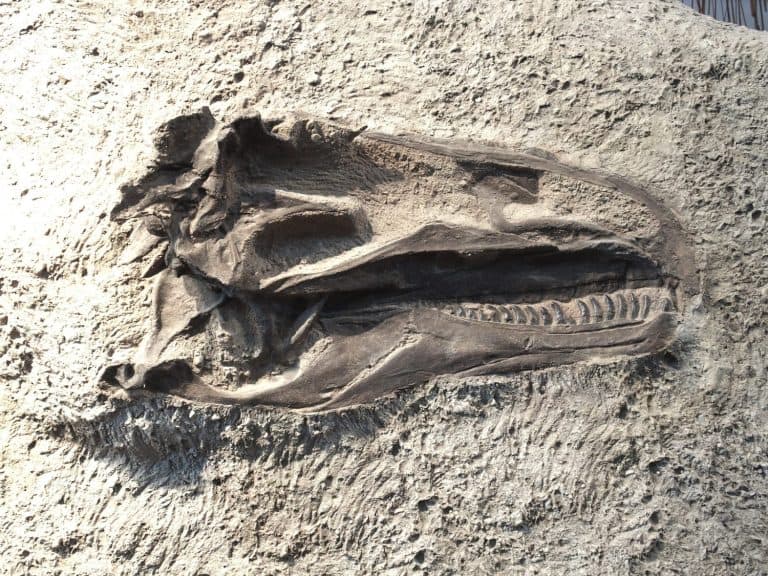
Euoplocephalus was a plant-eating dinosaur with heavy body armour and a clubbed tail. Although Euoplocephalus walked the Earth at the same time as ferocious predators such as Tyrannosaurus rex, this tank-like dinosaur had evolved protection against most carnivores. We know a lot about Euoplocephalus, a member of the Ankylosauridae family, thanks to the extensive fossil evidence of the species discovered in North America.
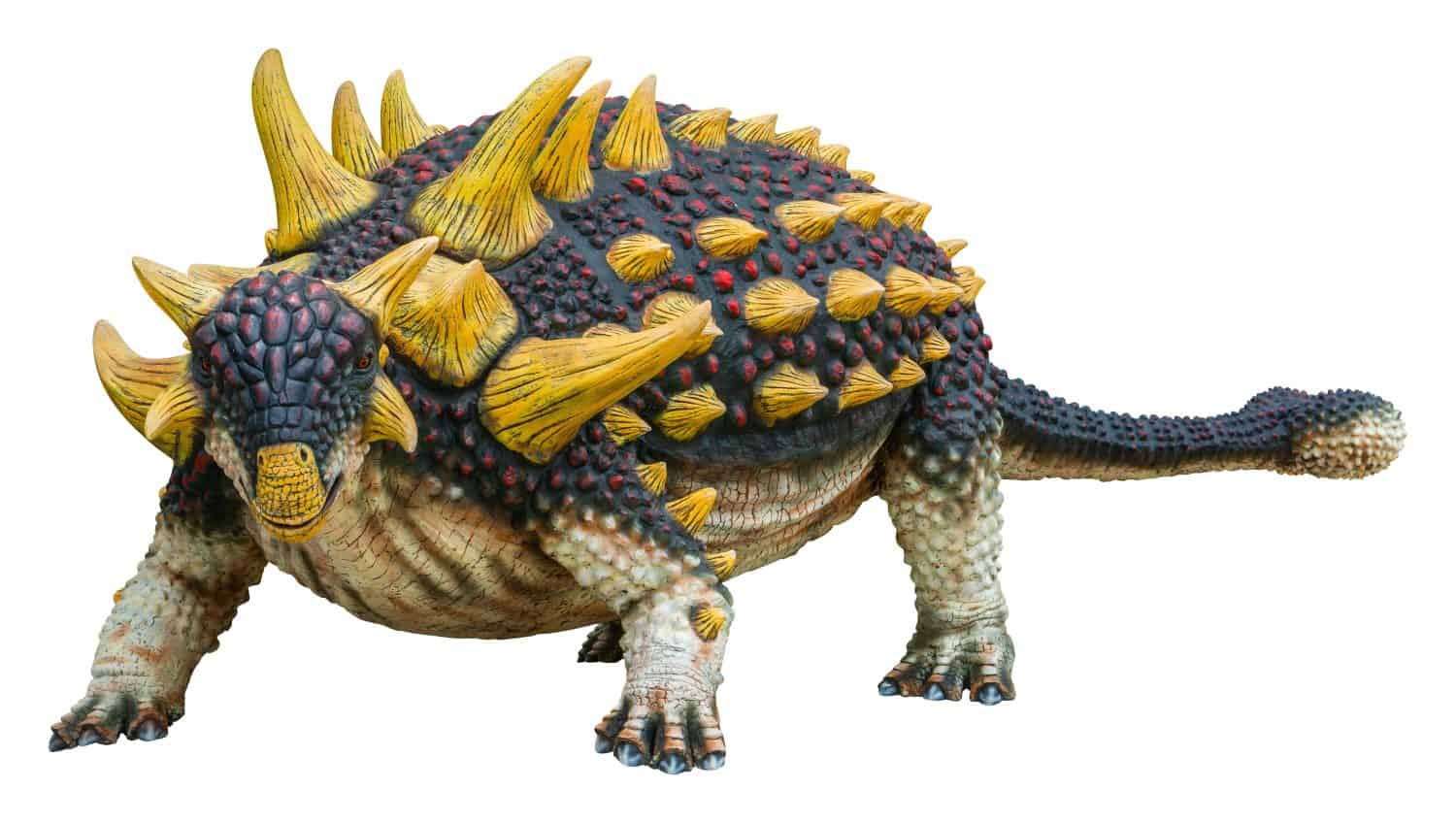
The herbivore, Euoplocephalus, lived during the Late Cretaceous Period.
©YuRi Photolife/Shutterstock.com
When and Where Did Euoplocephalus Live?
Euoplocephalus roamed in diverse habitats in what is today the American West and western Canada. Scientists have discovered about 40 nearly complete fossils of Euoplocephalus tutus throughout western North America, including around 15 intact skulls.
Euoplocephalus lived during the Late Cretaceous Period, which spanned from approximately 100 million to 66 million years ago. The Cretaceous Period was the last period of the Mesozoic Era, also known as the age of the dinosaurs. After the Late Cretaceous Period came the Cenozoic Era, which we are currently living in.
The Earth was much warmer during the Late Cretaceous Period than it is today. Flowering plants had evolved, and animals lived everywhere, including near the poles, which were not covered in ice. In North America, forests similar to those we know today began to emerge. Euoplocephalus would have walked in forests of trees, including pines, oaks, hickories, and magnolias.
What Did Euoplocephalus Look Like?
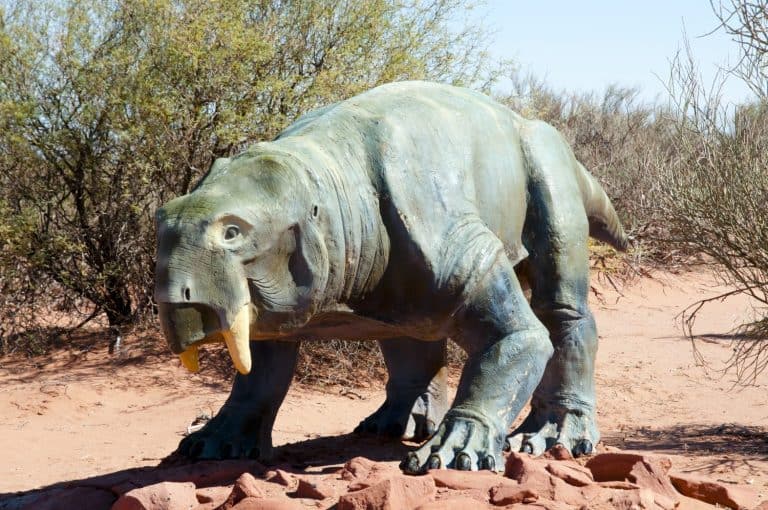
Thanks to the extensive fossil record, we have a pretty good idea of what Euoplocephalus looked like. Euoplocephalus was about 4 feet tall and weighed around 2 tons, around the same size as a rhino. It was one of the largest ankylosaurids, although not as big as Ankylosaurus, the largest and most famous member of the ankylosaurids.
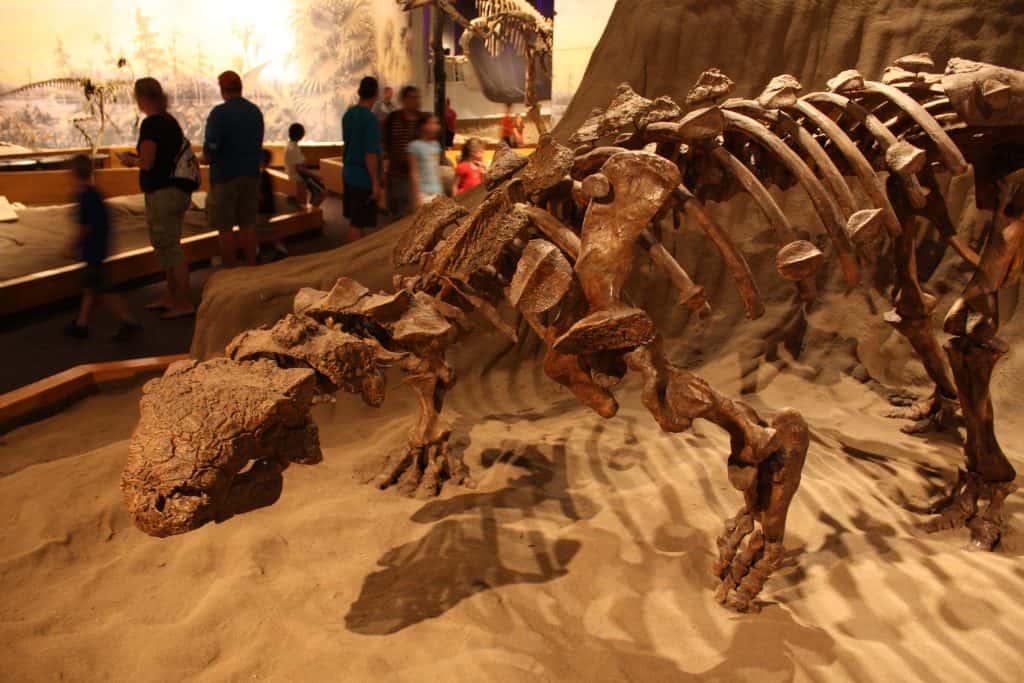
Paleontologists have discovered fossils of Euoplocephalus in the western U.S. and Canada.
© IJReid, CC BY 4.0, via Wikimedia Commons – Original / License
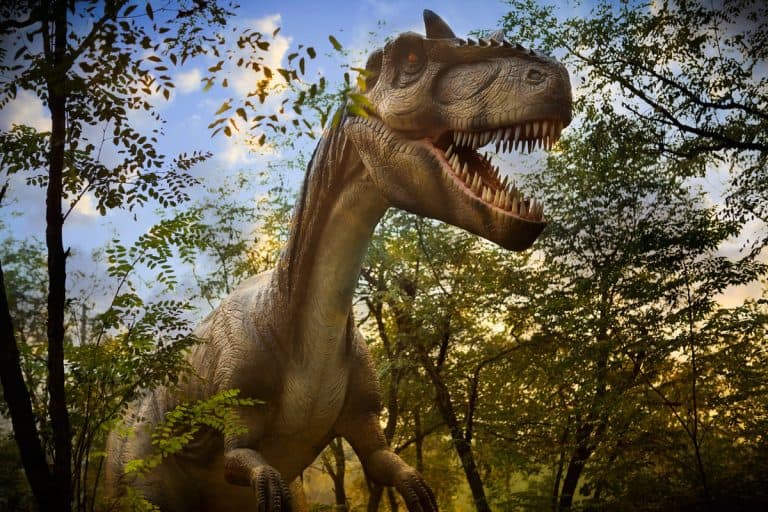
Like all species in the Ankylosauridae family, Euoplocephalus was heavily armored. Its entire body and head were covered in armored plates, spikes, and a clubbed tail. Although covered in armor, the plates were not fused together. The armor was made up of collagen and layers of bone, which allowed Euoplocephalus some agility despite its heavy protection. It also had a large clubbed tail, which it used to swing as a weapon for defense and when fighting rivals of its own species.
What Did Euoplocephalus Eat? Did Anything Eat Euoplocephalus?
Paleontologists know from its teeth, jaw, and gut that Euoplocephalus was an herbivore. The plants available at the time would have been ferns, conifers, cycads, and also the newly evolved flowering plants. Scientists believe that Euoplocephalus made its home in woodland habitats or wetlands. Because its legs were short and stubby and its head was close to the ground, it probably ate low or ground-level vegetation.Some theorize Euoplocephalus may have dug in the earth for tubers and roots as well.
Although many large predators lurked at the time, Euoplocephalus was probably safe from most of them. Its thick armor and dangerous tail could have kept predators like T. rex away. Euoplocephalus was also able to crouch in a defensive stance similar to an armadillo, leaving only its bony plates exposed. While scientists have theorized that if a large predator could flip Euoplocephalus on its back, it would be vulnerable due to its soft and unarmored stomach. Like many animals today, juvenile Euoplocephalus and their eggs would have been much more vulnerable to attacks than fully grown adults.
Behavior: A Solitary Dinosaur
Euoplocephalus fossils have been found alone and not in groups, as you would expect from herd animals. Euoplocephalus probably lived a solitary existence and did not form groups, unlike some other dinosaur herbivores. We can assume that Euoplocephalus laid eggs, similar to other dinosaurs. However, fossil eggs or nests of Euoplocephalus have never been found.
We don’t have much information on how Euoplocephalus mated. Some scientists speculate that Euoplocephalus used its impressive tail as a competitive show against other males. We also don’t know if Euoplocephalus mothers made nests for their eggs, stayed with their eggs until they hatched, or cared for their young after hatching. Because some dinosaurs laid soft-shelled eggs, like modern reptiles, little evidence has remained of many dinosaur eggs. Soft-shelled eggs are less likely to fossilize, leaving behind no record. Without finding nesting sites or fossilized eggs, it is very difficult for paleontologists to piece together much about Euoplocephalus’s reproductive behavior.
When Did Euoplocephalus Become Extinct?
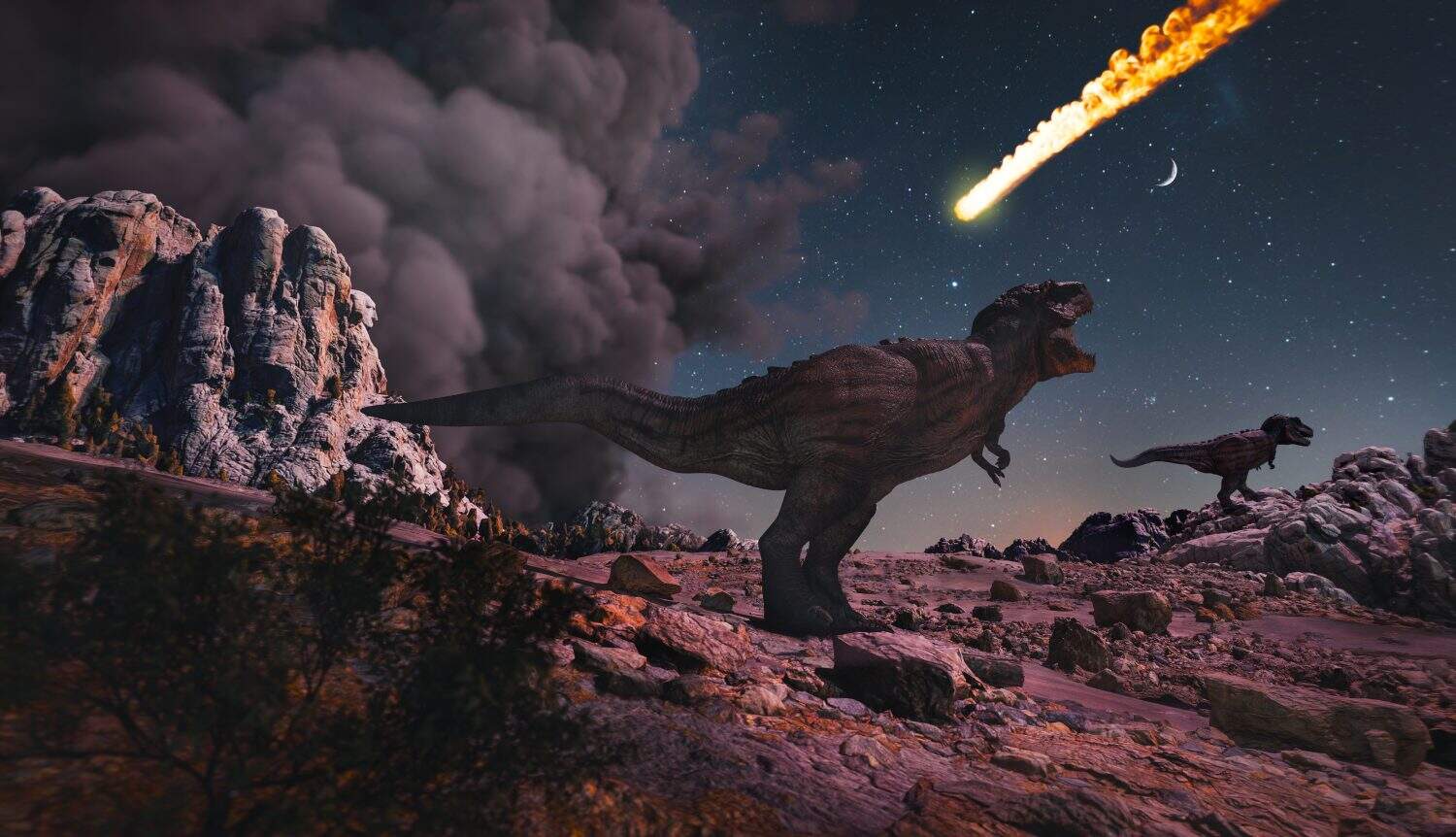
Euoplocephalus died out when a huge asteroid hit Earth, causing a mass extinction event.
©Mikael Damkier/Shutterstock.com
Euoplocephalus lived in the Late Cretaceous Period, which ended about 66 million years ago. Nearly all large vertebrates died off during the mass extinction event, which wiped out millions of species from the planet. It was one of five great mass extinctions on Earth, occurring when an 8-mile-wide asteroid crashed into the Yucatán Peninsula in Mexico. Over 900 miles of land around the site were instantly scorched, while a cloud of debris blackened the skies, preventing sunlight from reaching plants. With nothing to eat, the dinosaurs died out as global temperatures plummeted.