
Quick Take
- Newborn elephants are similar to human babies in that they often chew and suck on random objects, like other elephants’ tusks.
- Chewing on tusks or trunks is a common behavior and helps form social bonds with other elephants.
- Elephants raise their young as a group, called allomothering, and this helps to build a strong community bond.
Pacifiers are essential for parents with newborns, as they help calm the baby. However, humans aren’t the only ones who use objects for comfort. Baby elephants also chew or suck on various objects as they explore their environment. One such object is their parents’ tusks. This YouTube Short by @CuteTings shows a baby elephant chewing on its parents’ tusks, and it’s an adorable sight. Read here to learn more about baby elephants!
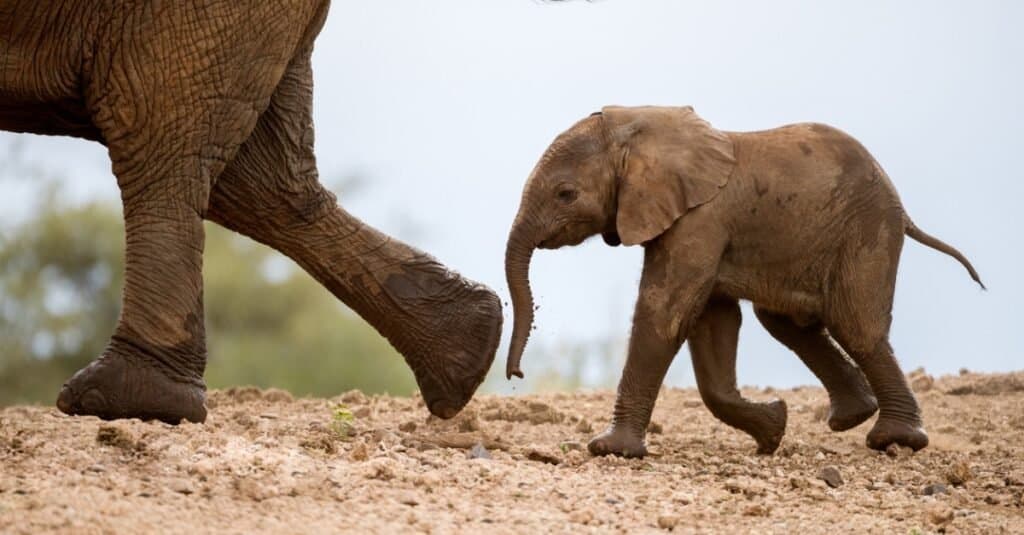
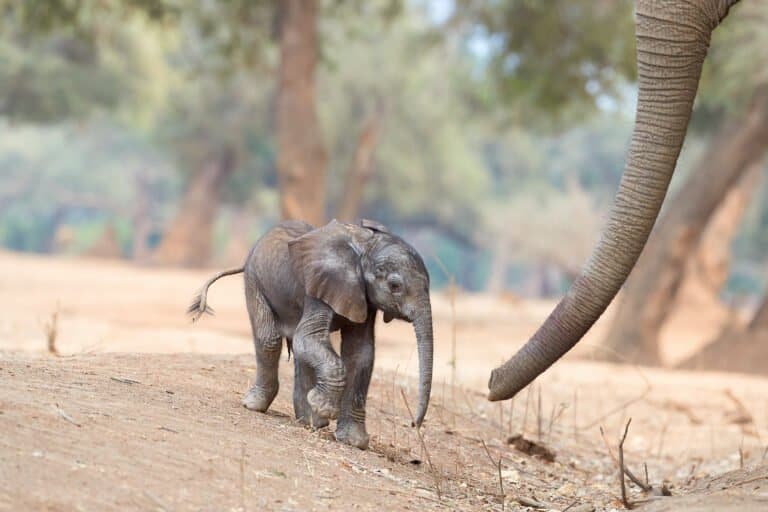
Baby elephants typically stay with their herds for 10 to 16 years; females usually remain with the herd for life, while males leave at adolescence, around 12 to 15 years old.
©iStock.com/Udo Kieslich
Why Baby Elephants Chew on Tusks
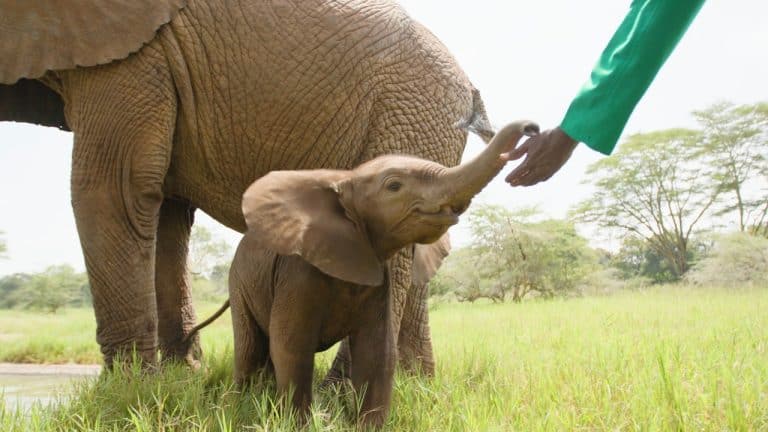
Just like human babies, baby elephants are curious and want to learn more about the amazing world around them. Of all their senses, learning about taste and texture is extremely important for baby elephants. The best way for newborn elephants to become familiar with their surroundings is through experience and exploration. This is most likely one of the reasons the baby elephant in the video is chewing on a tusk. It gets to explore its texture and shape while also learning about social interactions. In addition to tusks, baby elephants often put their own trunks in their mouths. Because they lack coordination, they frequently swing their trunks around and sometimes trip over them. Just as human babies may suck their thumbs, baby elephants often put their trunks in their mouths.
Another reason the baby elephant is chewing the tusk is that this behavior is instinctive. All newborn mammals nurse for feeding, and it is natural for them to suck or chew on objects outside of feeding. Just as humans give pacifiers to babies, elephants use tusks for comfort. If their attention isn’t focused on their own trunk, they might chew on another elephant’s tusk or trunk. This physical contact with other elephants is important for a calf’s social development. Touch provides reassurance and a sense of safety, helping to strengthen bonds within the herd.

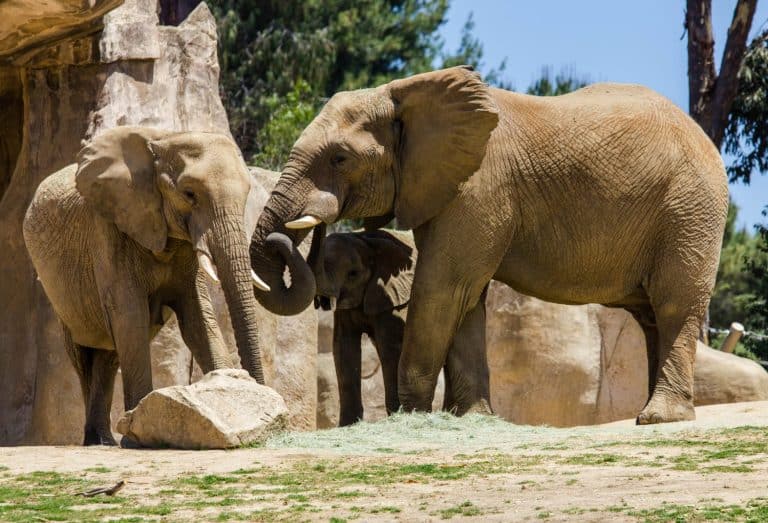
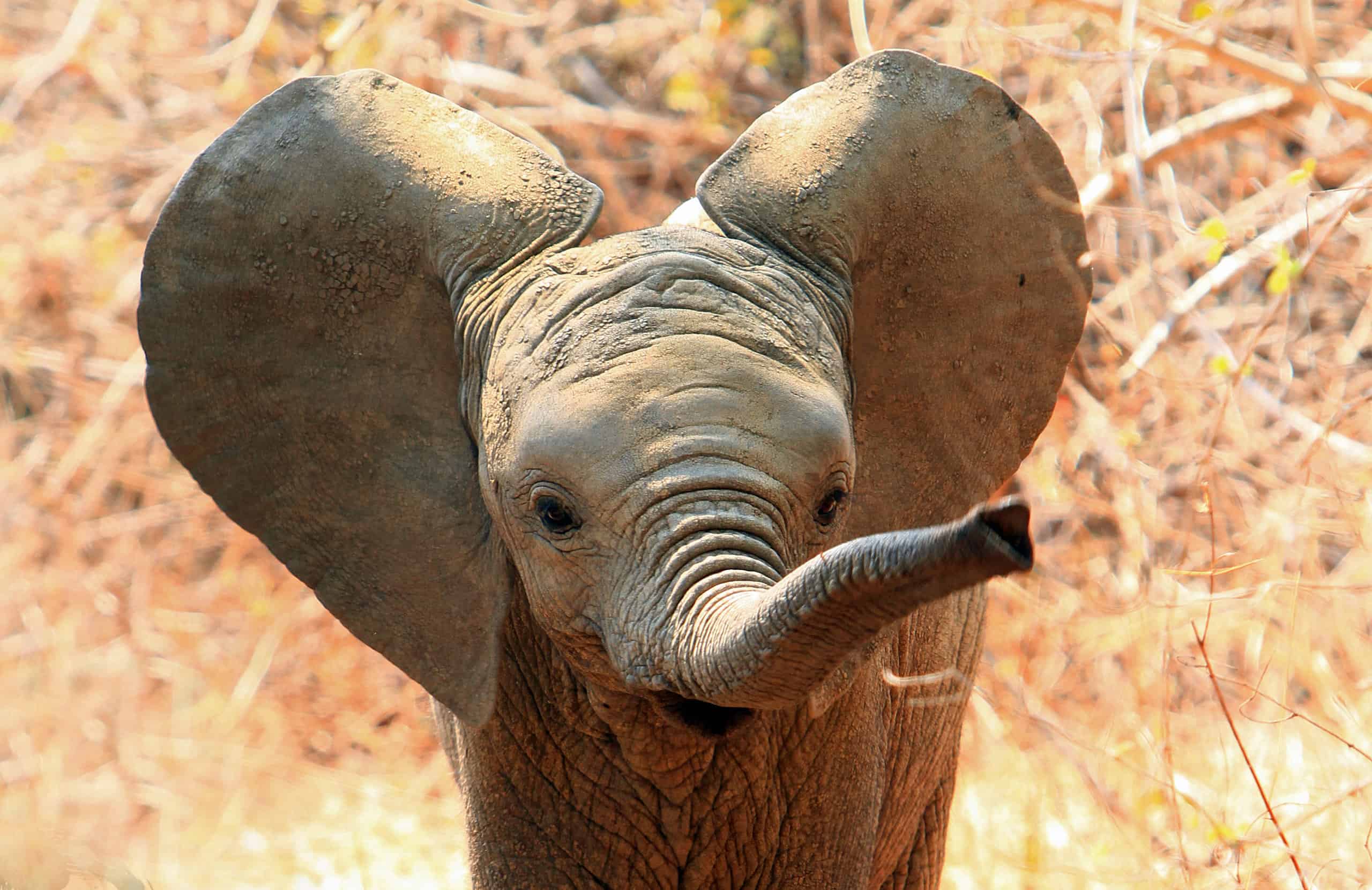
Elephants are matriarchal, meaning that the leader of the herd is female, and the core group is made up of females and their young.
©albertodelgadolopez/Shutterstock.com
About Baby Elephants
Baby elephants are extremely adorable. Their lack of coordination means they often stumble and run back to their mothers for comfort. Elephants stay with their mothers and herd for many years—females often remain for life, while males typically leave at around 12 to 15 years old. This is one of the longest childhoods in the animal kingdom outside of humans. As newborns, they drink their mother’s milk for about five years, but begin eating vegetation alongside it at around six months old. Elephant herds raise calves through a community effort known as allomothering, where other females help protect and discipline the young, each playing a motherly role. This creates strong, lasting bonds within the herd, leading to heartwarming moments like the one shown in the video above.