
Quick Take
- These worms eat whale bones without a mouth, stomach, or digestive tract, and the mechanism they use instead is stranger than you'd expect. Meet these mouthless worms →
- Without this single eyeless creature, the ocean floor would look completely different, and the difference would not be a small one. See their environmental role →
- The worms finish the job and then face a brutal all-or-nothing fate that has nothing to do with predators. See their all-or-nothing fate →
- Even after two decades of study, scientists still can't fully explain how Osedax actually gets fed. Explore the feeding mystery →
The bottom of the ocean is a dark and mysterious place. The creatures that live thousands of feet below the surface only add to the mystery. Some of these animals are still largely unknown, and researchers are continually learning more about them.
One such creature discovered just two decades ago is an eyeless worm known as the Osedax. This aquatic animal eats whale bones in the deep ocean, acting as an environmental engineer that helps clean the sea. Without the Osedax, the ocean would be a far dirtier place, filled with whale debris of incredible proportions.
Osedax Worms Break Down Whale Bones in the Deep Ocean
Each year, thousands of whales die for a variety of reasons. As they decompose, they float for a period due to gas buildup and bacteria in the body. However, once the gas is depleted and scavengers begin feeding on the carcass, the whale sinks below the surface. This is known as whale fall.
Whales will continue their descent until they reach the ocean floor. The reason there are not massive piles of whale bones littering the ocean is due to Osedax worms. The tiny engineers break down bones until nothing is left.
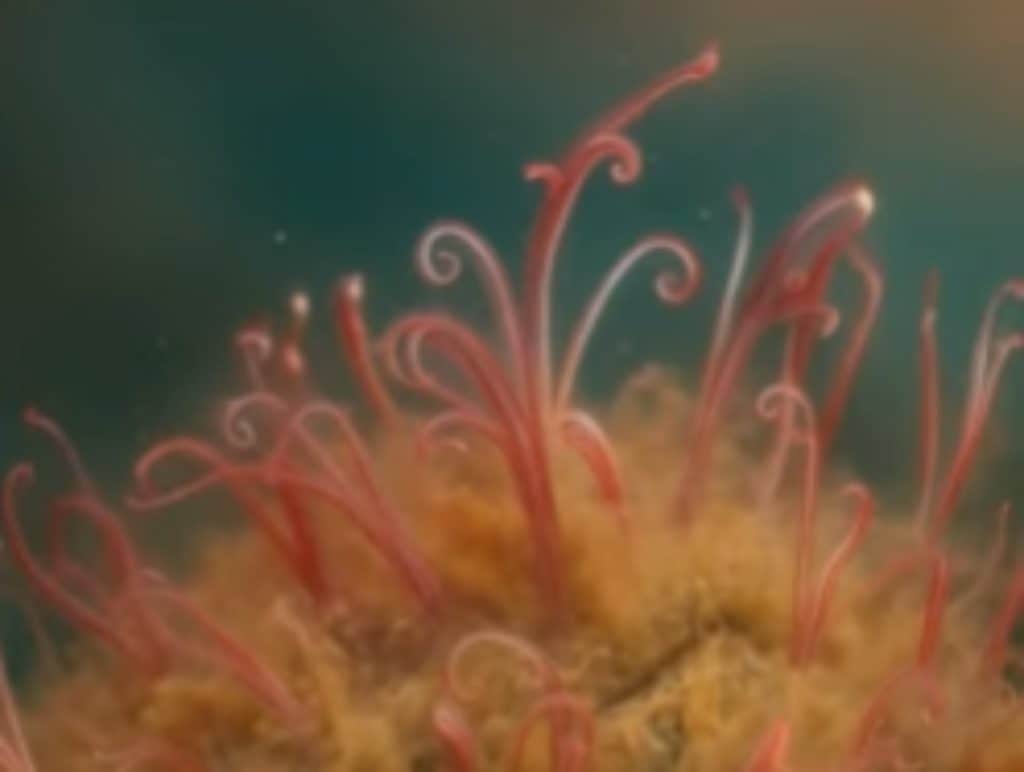
Osedax worms break down whale bones once they reach the ocean floor.
©aik's muse /YouTube – Original
Interestingly, Osedax drill into whale bones rather than chew through them because they lack mouths. They also lack a digestive tract, so they need alternative methods to absorb nutrients.
Also known as “zombie worms,” Osedax worms have been breaking down whale bones for at least 30 million years, which explains why ocean floors aren’t covered in bones.
How Osedax Worms Break Down Whale Bones
Osedax worms do not have a mouth, digestive tract, or anus, all of which are traditionally used to break down and expel food once energy and calories are expelled. Yet, even with these limitations, Osedax can still break down entire whale skeletons.
To begin the process, the Osedax worm needs to anchor itself into the bone. This occurs as the female Osedax produces its acid-containing roots. The acid breaks down bone until collagen and lipids are released, feeding the bacteria living within the roots.
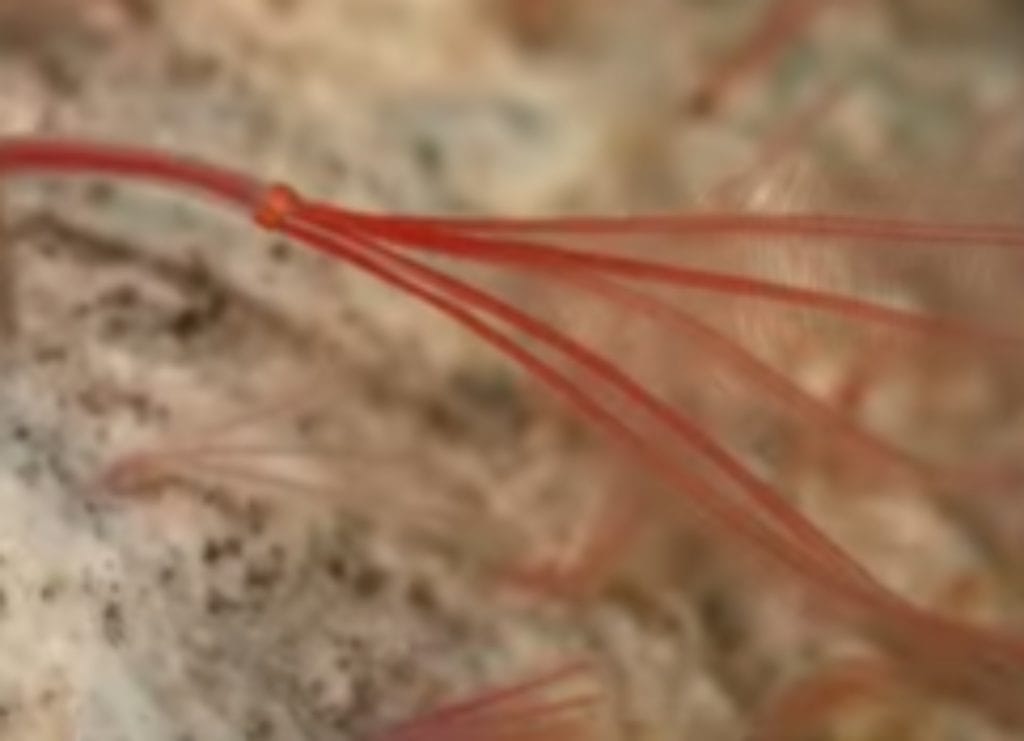
Osedax worms bore holes into whale bones with their roots, using symbiotic bacteria to obtain nutrients from them.
©aik's muse /YouTube – Original
These symbiotic bacteria absorb nutrients for the Osedax. Exactly how Osedax receives the fats and proteins has yet to be determined by scientists.
This process is repeated over and over again, over the course of years. It only ends when the Osedax has turned the whale skeleton to dust, and there are no further nutrients to be mined from the bones.
What Happens to Osedax Worms Once the Whale Bones are Disintegrated?
It can take a decade or more for Osedax worms to break down the entire skeletal structure of a whale. During that time, they have plenty to survive on. Once the job is complete and the whale bones are no more, where does the Osedax go?
What happens to the worms is largely dependent on what is happening on the ocean floor around them. If there happens to be another whale skeleton nearby, the Osedax worms can simply move on to their next meal.
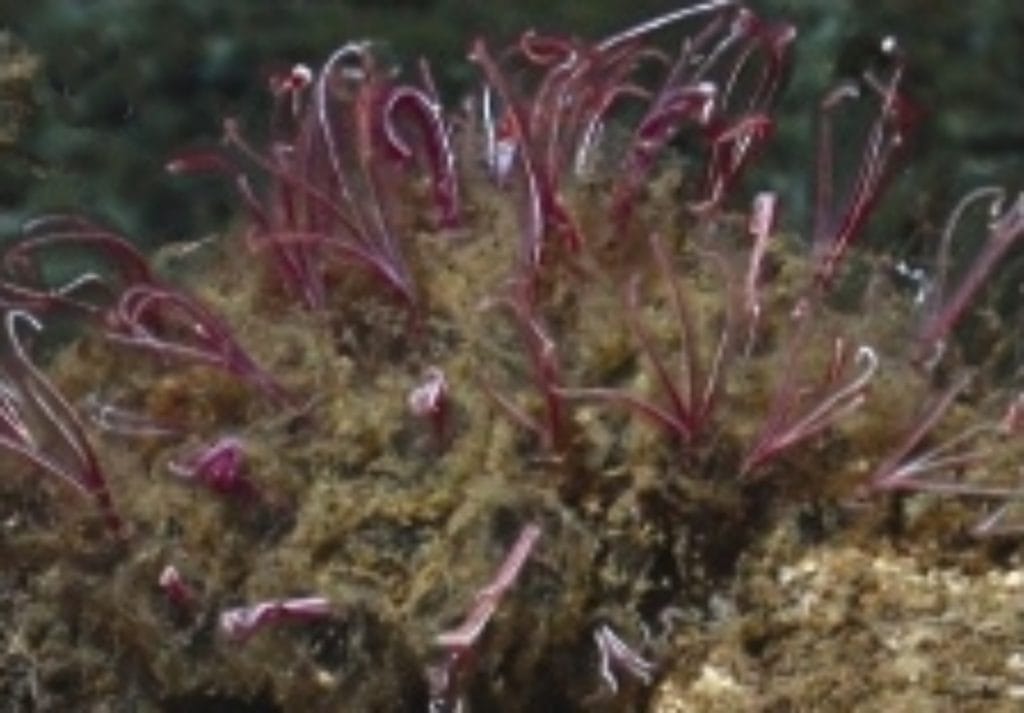
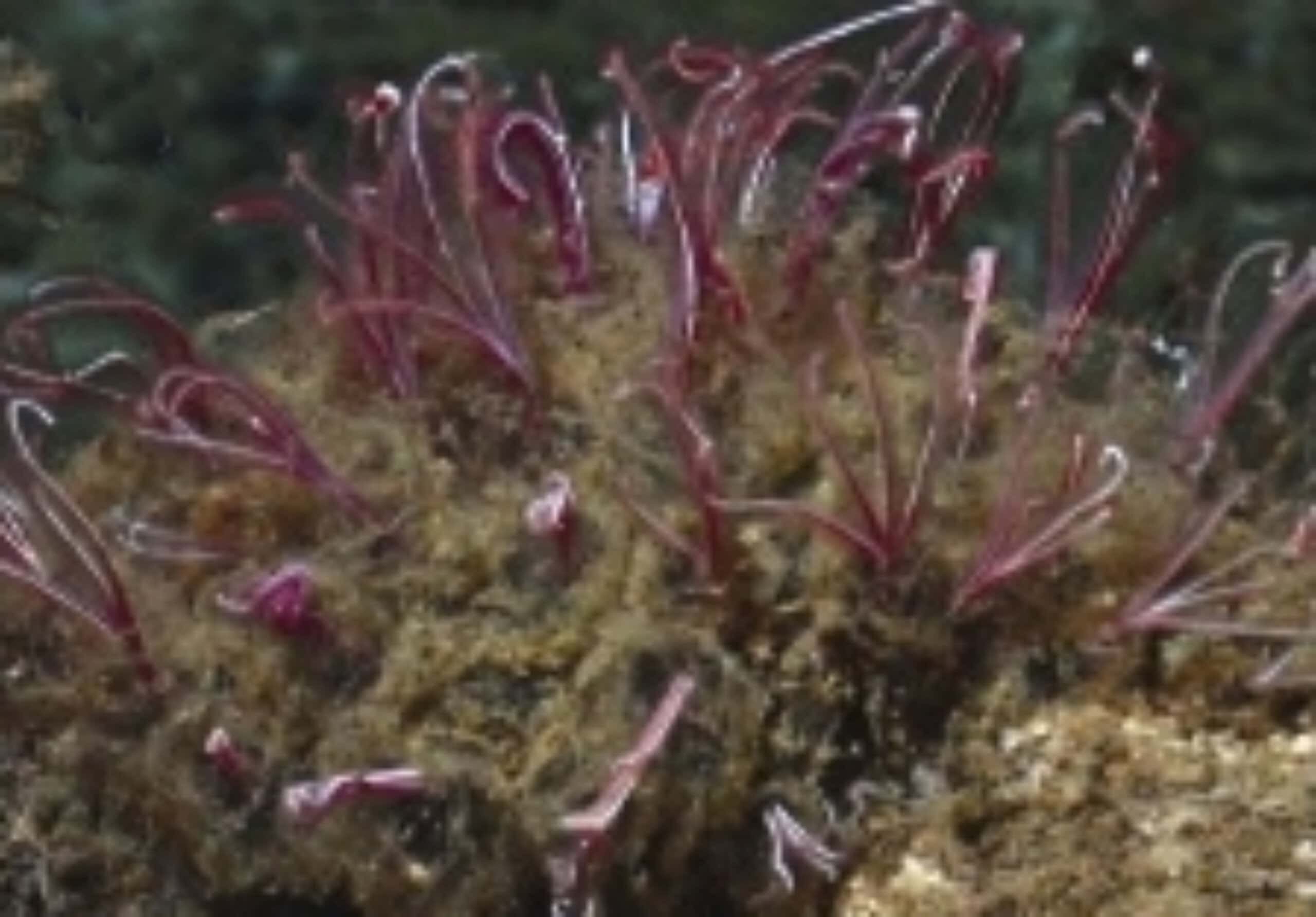
Once Osedax worms finish breaking down a whale skeleton, they need to find another skeleton or they die.
©Robert C. Vrijenhoek, Shannon B. Johnson & Greg W. Rouse, CC BY 2.0 , via Wikimedia Commons – Original / License
However, if there are no other bones available to consume, the Osedax population that inhabited the whale skeleton will begin to die off. With no food source, thousands of Osedax worms will perish.
Some Osedax larvae will never find a skeleton. These passive drifters may hatch only to find that no whale bones are available. But those who find bones will contribute to cleaning up the ocean floor one whale fall at a time.