
Quick Take
- A whale skull accidentally hauled up from Australia's deep sea floor came with a surprising bonus that scientists weren't even looking for. Meet the zombie worms →
- Up to 95 percent of Australia's marine life has never been seen, and the creatures already discovered are stranger than anything Hollywood invented. See the full scale →
- Scientists naming new species after pop culture isn't just a quirky habit. There's a calculated reason behind it that matters far beyond social media. Why naming matters →
- One newly discovered deep-sea octopus can reshape its entire body into two completely different forms, and its hunting strategy is even weirder than that. Discover the shape-shifting octopus →
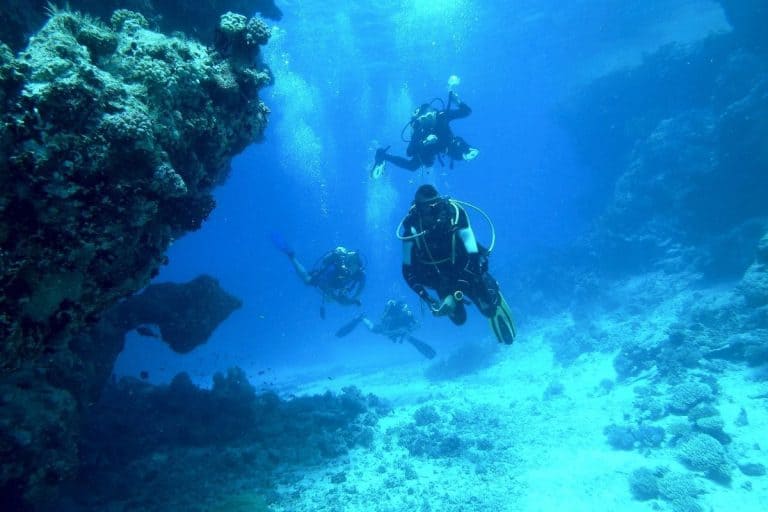
The world’s oceans are filled with never-ending surprises. Some shock. Some awe. And some are still waiting to be discovered. After all, oceans cover about 71 percent of the Earth’s surface, and the average depth is just over 12,000 feet. The deepest parts, in an area called the Challenger Deep in the Mariana Trench, exceed 35,000 feet. These depths cannot be explored without specialized submersibles that can withstand the pressure found there.
The creatures that live in those places have remained a mystery—until now. Specially-designed research ships, complete with remotely operated equipment, are bringing those species to light. One such vehicle is the research vessel (RV) Investigator belonging to CSIRO, Australia’s national science agency. Built as a specialized research ship, the RV Investigator has been helping scientists and researchers explore the ocean’s greatest depths since its debut in 2014. It is capable of mapping the seafloor at any ocean depth and can send specialized sampling equipment to depths of more than 16,400 feet (5,000 meters).
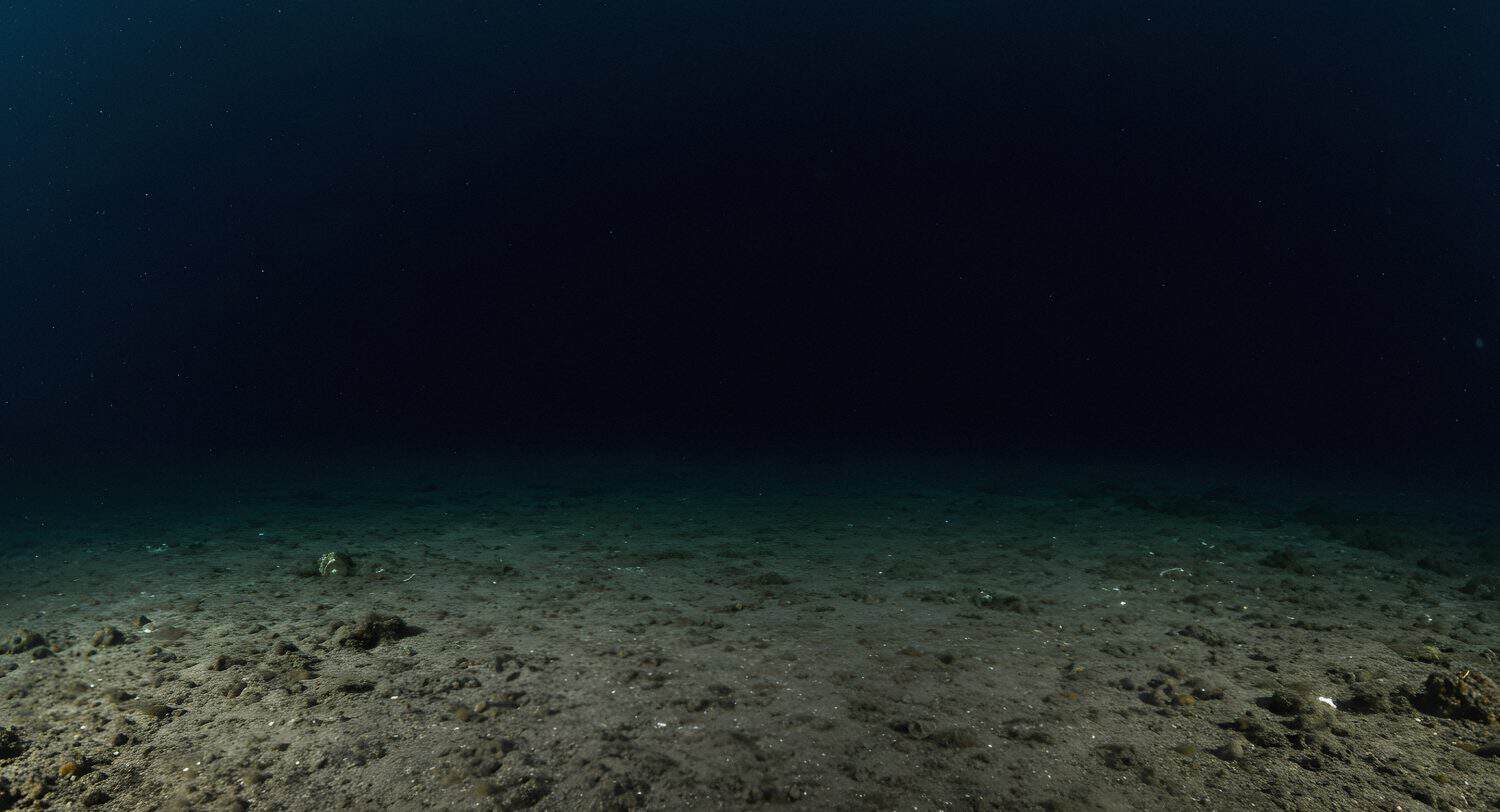
The average depth of all the world’s oceans is about 12,000 feet.
©Yetugraphic/Shutterstock.com
The ship collects data and specimens during its deep-sea explorations and has played a central role in identifying hundreds of new species in Australia’s waters and around the globe.
Australia’s Mysterious Ocean Depths
Since RV Investigator began collecting data and samples around the continent, 33,000 marine species have been recorded in Australia’s oceans. An additional 17,000 marine species have been collected but not yet catalogued. In RV Investigator’s first 12 years, a whopping 179 species new to science have been described.
That sounds like a lot, but Australian scientists note that the oceans surrounding Australia have not been researched as extensively as other ocean environments. In fact, much of Australia’s surrounding waters remain relatively unexplored, especially the deepest depths. Scientists estimate that up to 95 percent of Australia’s marine life has yet to be discovered. Nevertheless, several intriguing discoveries have been made off the Australian coast.
Most Intriguing RV Investigator Discoveries
Here are a few of the most memorably named recent RV Investigator discoveries.
Game of Thrones Shrimp (Greyjoyella mundugala)
This tiny shrimp-like crustacean was discovered off the Australian coast about 13,120 feet (four kilometers) below the ocean’s surface. Measuring just 2.5 millimeters (0.0984 inches) long, it was one of the deepest new species collected by RV Investigator. It was found in deep-sea sediment.

The popular television series Game of Thrones was the inspiration for one RV Investigator discovery.
©New vision/Shutterstock.com
The first part of this new species’ name – the genus name – is a nod to the Greyjoy family from Game of Thrones. The species name – the second part – honors an Indigenous Australian mythological figure, Mundugala.
Whalefall Zombie Worm (Osedax waadjum)
Some discoveries are completely accidental. When scientists hauled up one of RV Investigator’s collection samples during a 2017 sampling from the deep sea floor off Australia’s coast, they found a pilot whale skull and bones inside. It was the first whale fall (the remains of a whale that died and settled at the bottom of the ocean) that scientists had collected in the deep sea around Australia.
Upon close inspection of the whale remains, scientists discovered at least nine new worm species living inside the bones. One was a new species of bone-eating worm. These bone-eating worms are commonly known as zombie worms because of their diet. “Osedax” is Latin for bone (os) + devouring (edax).
Carnarvon Flapjack Octopus (Opisthoteuthis carnarvonensis)
This octopus lives exclusively in the deep sea. It is a new member of the “dumbo” octopus species, of which there are about 50 species worldwide and 15 in Australia’s waters. This new species grows to about 1.5 inches (4 centimeters) and has the unusual ability to change its shape. It can flatten its body to resemble a pancake or pull itself into a dome-like shape that looks like an umbrella. Its ability to resemble a flapjack is what earned this tiny octopus its name.
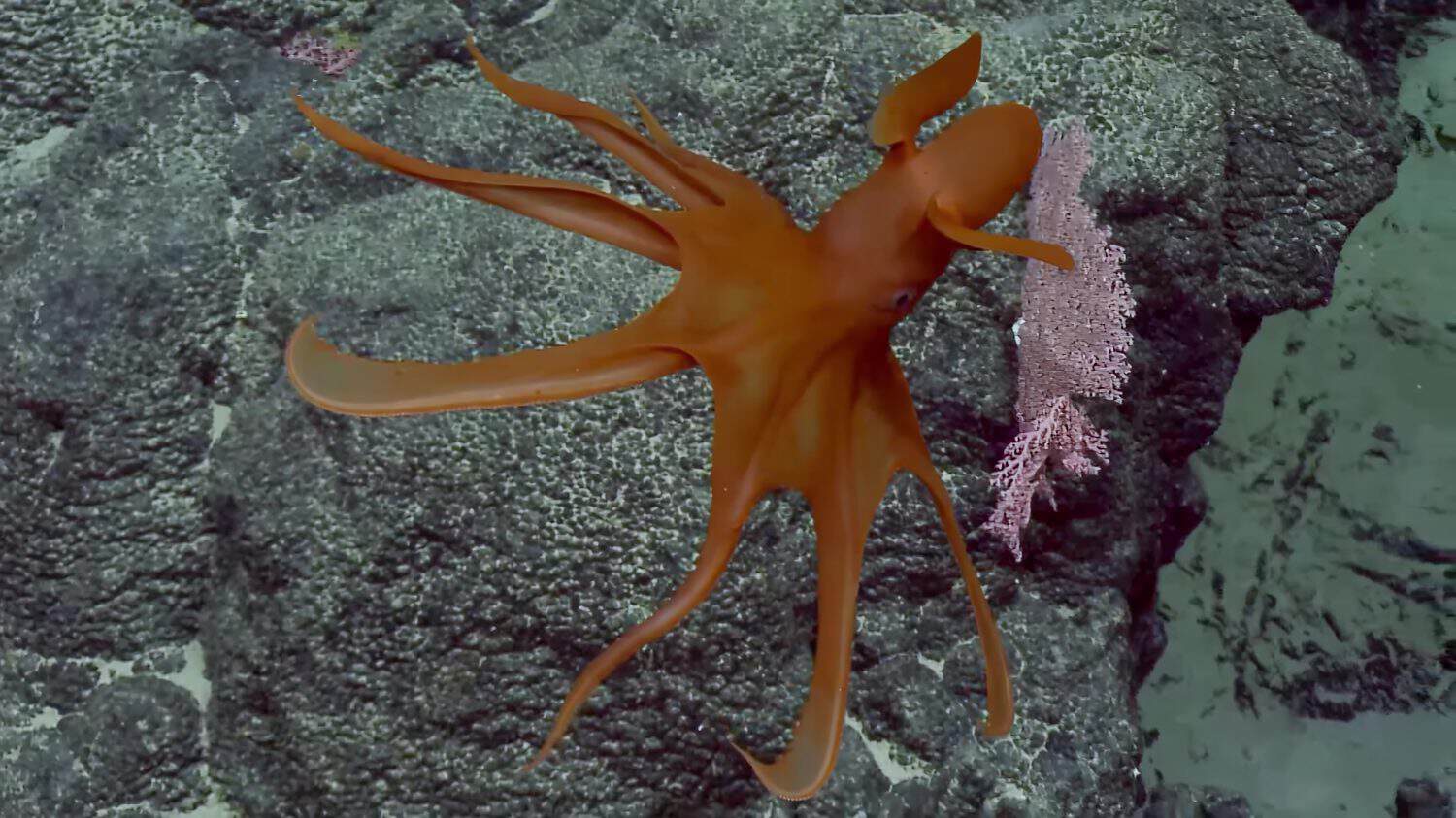
There are about 50 species of dumbo octopuses found in the world’s oceans, like this one discovered in the deep Mariana Trench.
©Gallwis/Shutterstock.com
Flapjack octopuses have big eyes relative to their body size. This allows them to detect prey in the deepest depths where natural light doesn’t penetrate. They use their tentacles to capture worms and tiny crustaceans.
What’s in a Name?
When a scientist discovers a new species, they have the honor of naming their find. But they can’t pick any old word combination. There are specific rules that they need to follow. Still, scientists do have some latitude. Sometimes the name they choose honors an important person. Other times, they draw inspiration from current events or pop culture. Other names may represent an unusual aspect of a new find.
The appeal of naming new discoveries in this way is that it often attracts the attention of people who are not focused on science. This helps the new discovery get much more visibility than it would otherwise.
The extra visibility has a more important purpose than just going viral on social media. When the general population becomes captivated by a new species discovery, they are also introduced to the importance of environmental and species conservation. Understanding what actually lives in the world’s oceans—far beyond what the human eye can see—serves as a catalyst for boosting interest in preserving those environments.