
Beavers are famous for their sturdy, well-built dams and lodges, which provide shelter and protect their food supply over winter. However, beavers aren’t the only semi-aquatic rodents with building engineering skills. Muskrats also build lodges, which are actually quite a bit different from beaver construction, if you know what you are looking for.
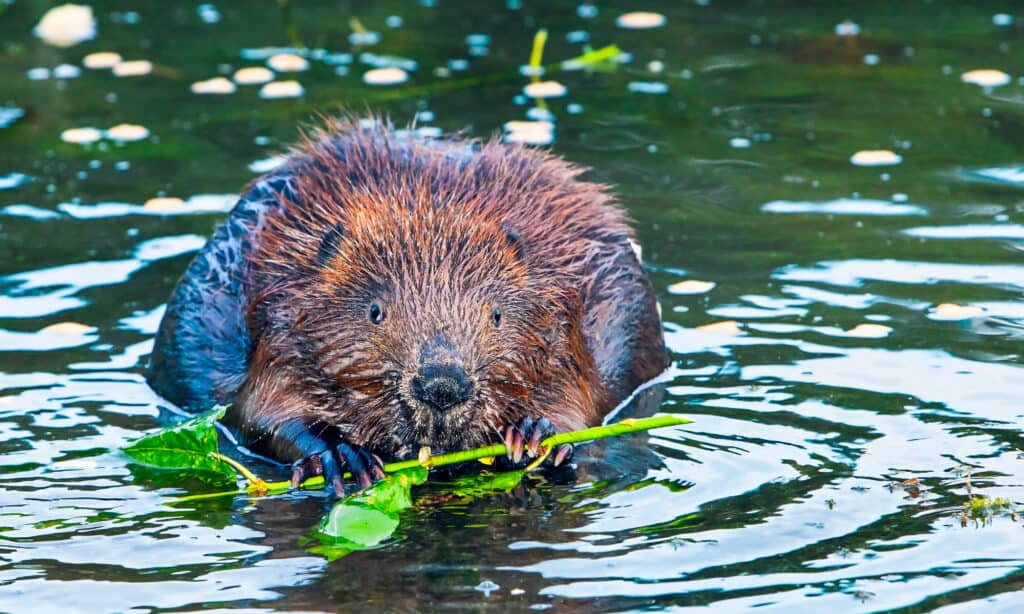
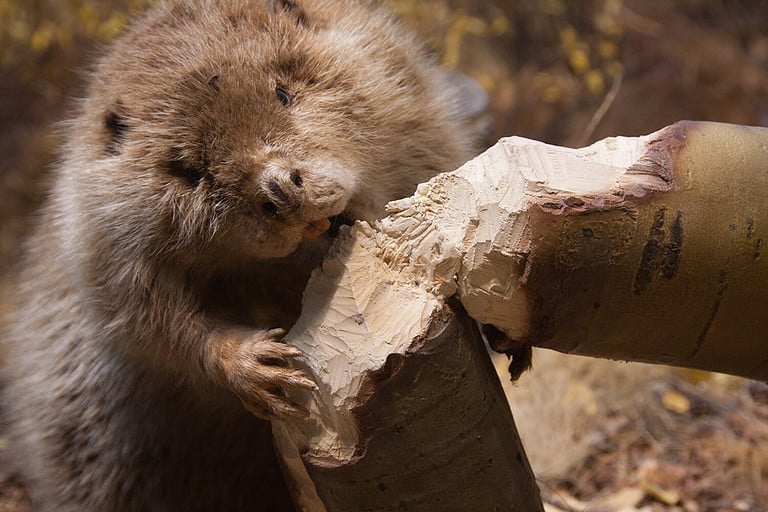
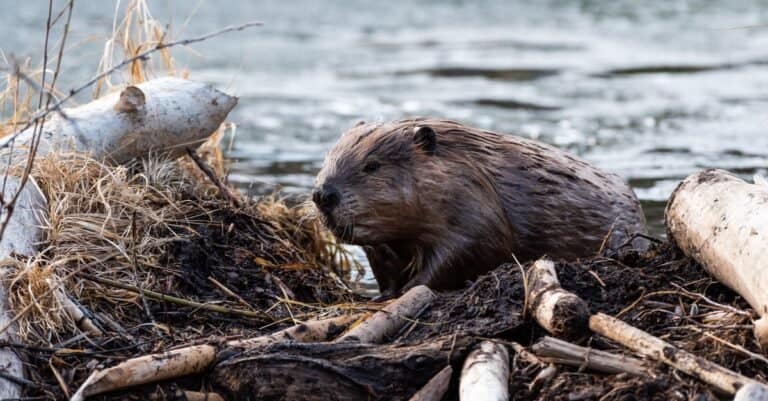
Beavers eat soft vegetation, trees, and woody plants.
©SERGEI BRIK/Shutterstock.com
Beavers vs. Muskrats
Beaver homes are larger than muskrat lodges because beavers are much larger animals. Both are rodents, but American beavers (Castor canadensis) are the largest rodents in North America, and the second-largest rodent in the world. The only rodent that is larger is the capybara. Beavers average around 35 to 65 pounds, but have been known to weigh up to 100 pounds. They can reach 39 to 47 inches long. Muskrats (Ondatra zibethicus), on the other hand, weigh much less at only 2 to 5 pounds on average and are around only 16 to 27 inches in length. Aside from size, you can tell a muskrat from a beaver by its tail. Muskrat tails are longer and narrower, while beavers have wide, paddle-shaped tails.
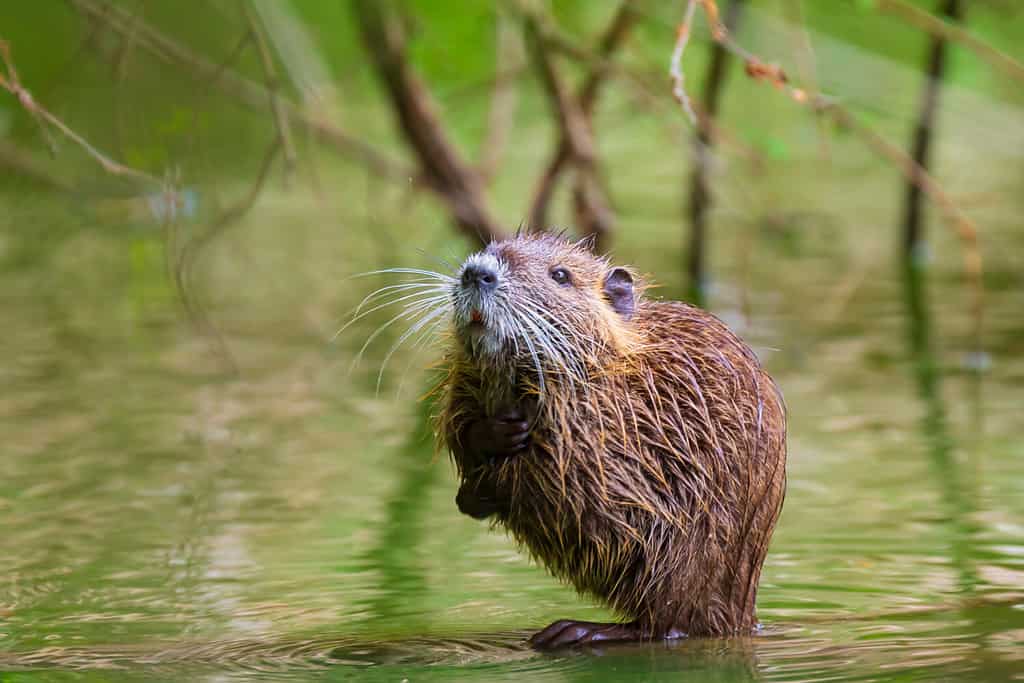
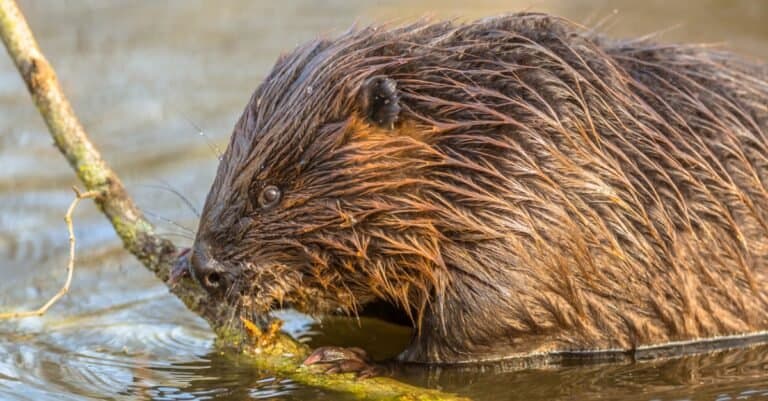
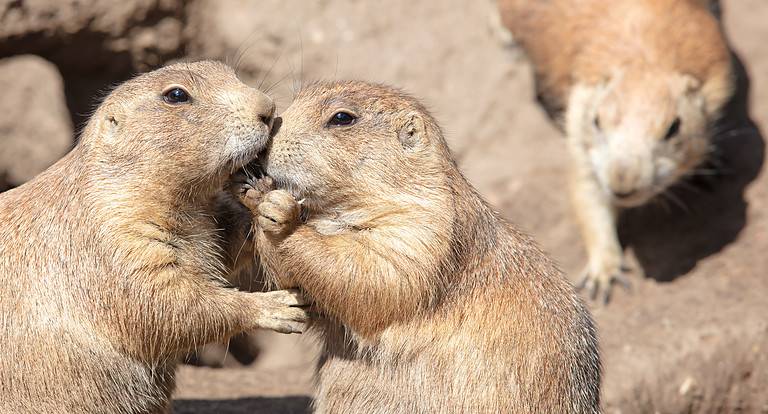
Muskrats look similar to beavers but are not closely related, and are also much smaller.
©SanderMeertinsPhotography/Shutterstock.com
Beavers and muskrats seem similar in appearance and behavior, but they are not actually closely related and are not in the same families. Beavers belong to the Castoridae family, while muskrats are in the Cricetidae family. Despite not being closely related, they have many similarities. Scientists believe that these similarities developed over many years through convergent evolution. Convergent evolution is when two different species produce similar traits over time as they adapt to similar environments.
Beaver Dam vs. Muskrat Lodge
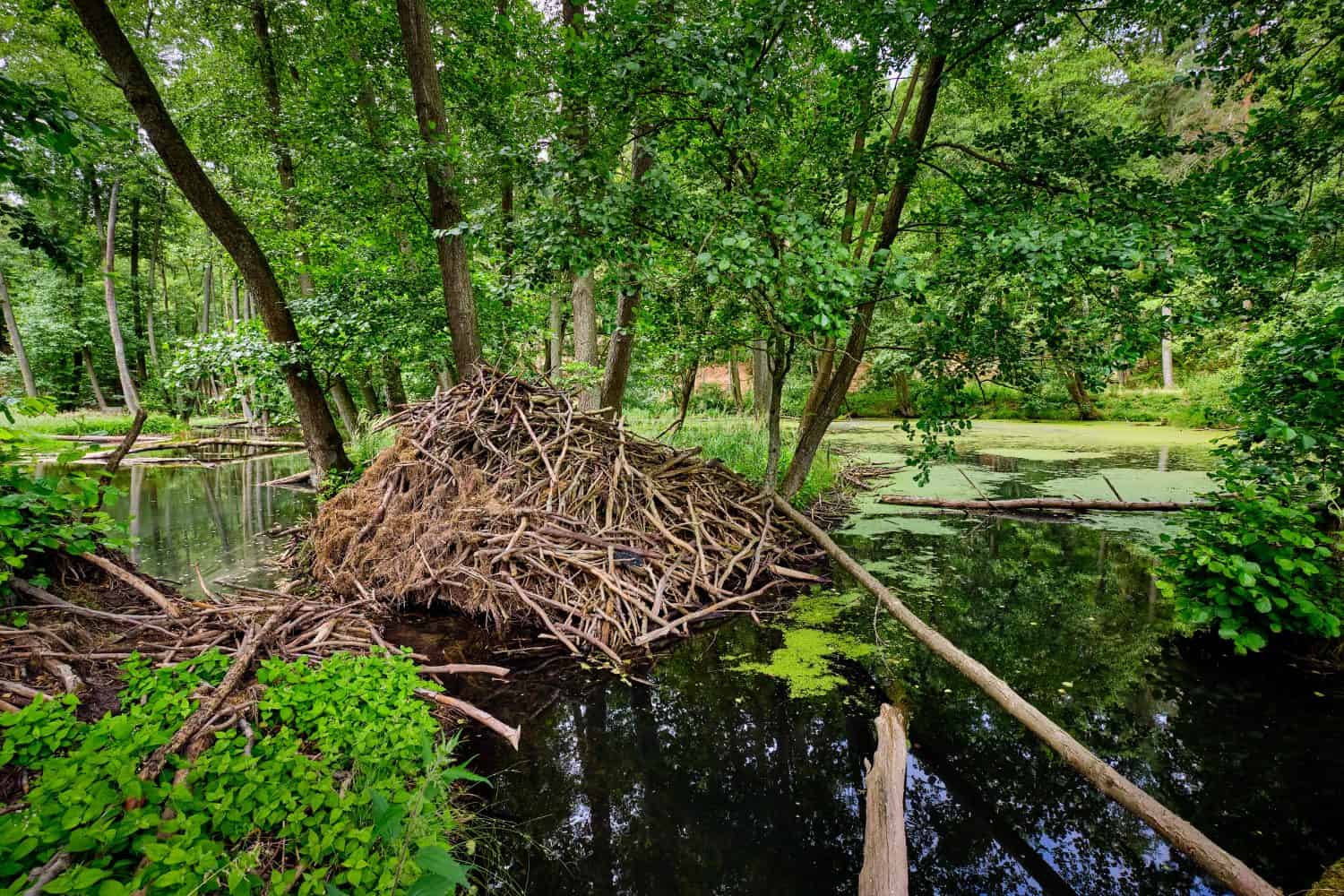
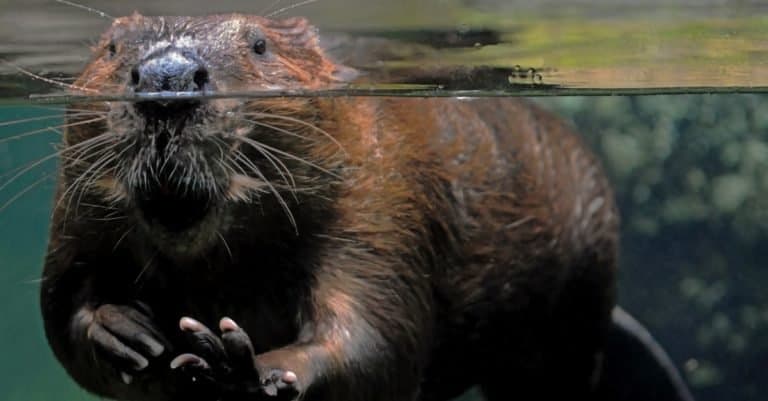
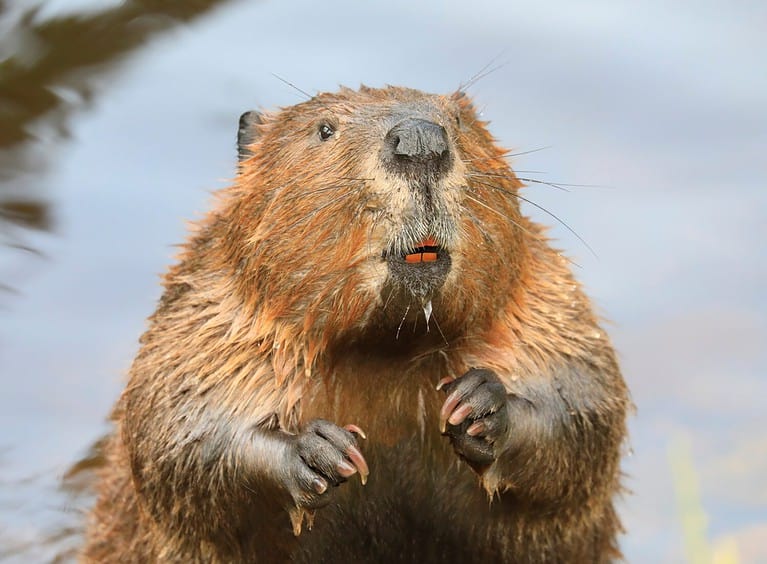
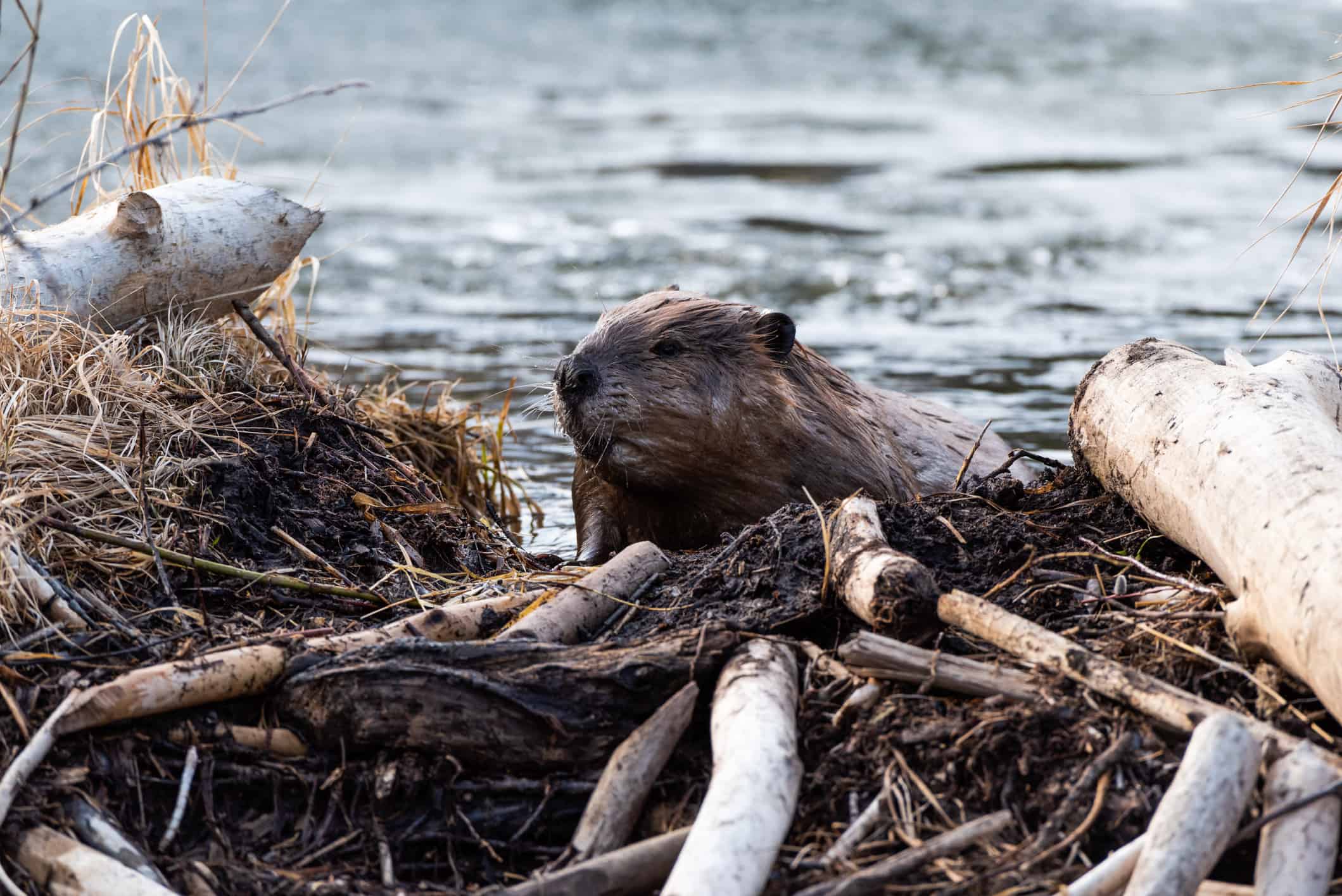
Beaver lodges have underwater entrances.
©ebenart/Shutterstock.com
If you spot a structure along the water’s edge, you may wonder if you’re looking at the work of a muskrat or a beaver. There are some tell-tale signs that point to which animal’s handiwork you are admiring.
Only Beavers Build a Dam
A beaver builds a dam in running water to create a deep, still pond in which to build their shelter. In the still waters, beavers will build a lodge that is somewhat similar to a muskrat’s lodge. Muskrats build lodges, but they don’t build dams.
Size Differences
A beaver’s lodge is larger than a muskrat lodge. Beaver lodges are dome-shaped structures that can reach over six feet in height. Beaver lodges are used for raising their young in the summer. In the winter, the entire colony will live inside the lodge. Muskrats also build dome-shaped structures, but they are much smaller than beaver lodges.
Building Supplies
Another big difference between beaver dams and muskrat lodges is in the materials they use. Beavers gnaw on trees and form their dams and lodges out of logs, large sticks, and branches. They also use mud to hold everything together. Muskrats, on the other hand, use vegetation such as cattails and grasses. They may also use mud to pack their materials together.
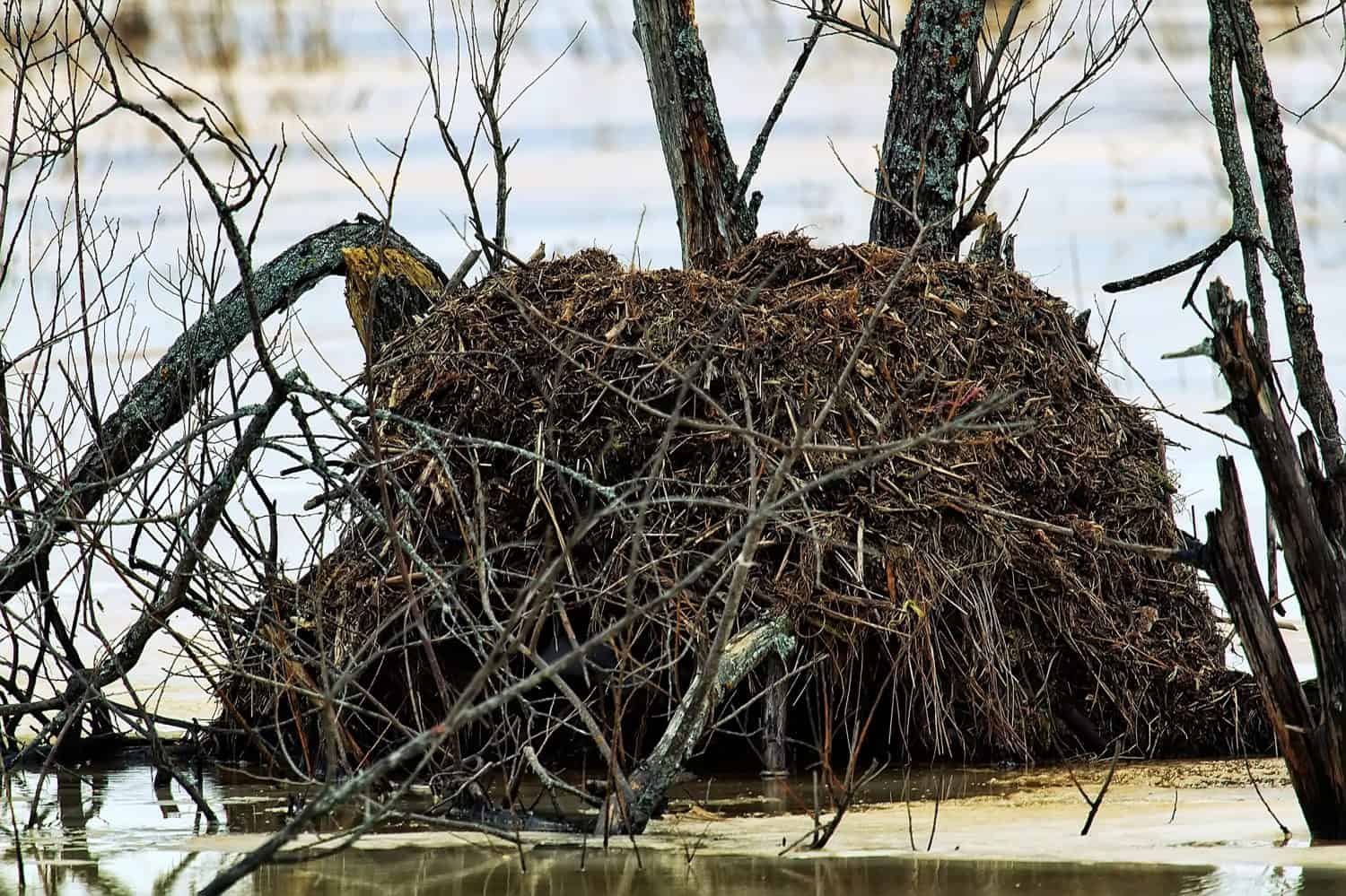
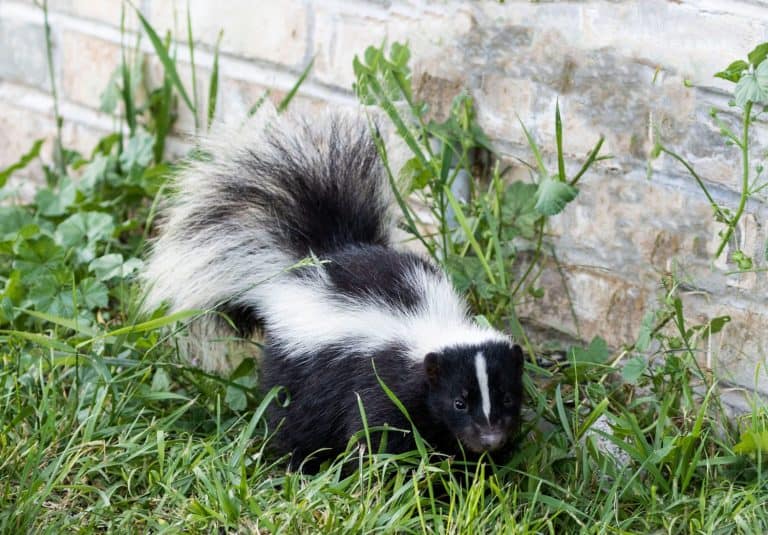
Muskrat lodges are smaller than beaver lodges and are also not as long-lasting.
©Maximillian cabinet/Shutterstock.com
Sturdiness
Beaver lodges and dams are known for their long-lasting sturdiness. Beavers build strong dams to raise the water level in their pond so they are protected from on-land predators and also can get to their food source by remaining underwater. They have another benefit by creating a deep pond in which the water doesn’t freeze all the way to the bottom. Beaver lodges may last for many years, but a muskrat lodge is less sturdy and doesn’t often last more than six months. It only takes flooding or extreme weather to wash a muskrat lodge away.
Beaver Lodges Are More Complex Structures Than Muskrat Lodges
Beaver lodges are somewhat complex and contain separate dens. They usually have an interior platform that sits above the water level. Additionally, they typically have two underwater entrances, a hole for ventilation, a feeding den, and a den where they can rest. The beavers also keep logs in an underwater cache, which feeds them through winter. They can get to this cache by swimming and bring their food back to eat in their dens.
Muskrat lodges, in contrast, are smaller, lack underwater food caches, and typically have only one dry chamber above the water level. Muskrats also make temporary shelters, different from their primary home, called push-ups. Push-ups are temporary shelters formed when muskrats push plant materials through holes in thin ice, creating a hidden resting spot where they can eat away from their main den.
Key Takeaways
Both muskrats and beavers construct their homes in streams, lakes, and ponds. If you see a well-formed, dome-shaped structure made of branches, twigs, and mud, it is likely a beaver lodge. A smaller structure made of cattails or grasses is probably a muskrat lodge.