
Beavers are semiaquatic rodents that reside in the Northern Hemisphere, thriving in freshwater ecosystems. As you can see in this YouTube video, beavers work together to build strong, resilient dams. But how, exactly, do they build such powerful structures? Here’s everything you should know about beaver dams.
What Is a Beaver Dam?
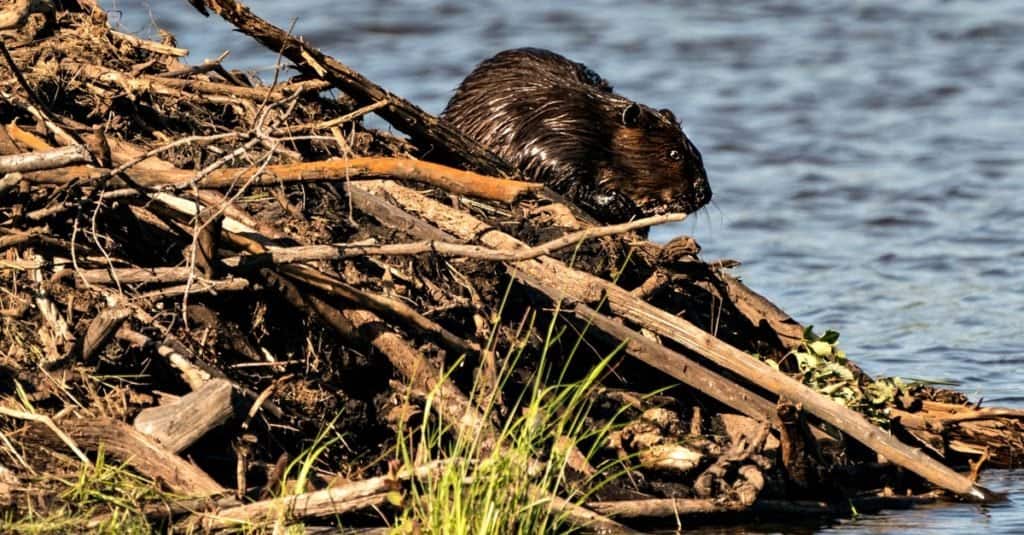
Beavers are the second-largest rodents in the world.
©Rejean Bedard/Shutterstock.com
A beaver dam is a collection of logs, branches, mud, and other materials that stretches across a body of freshwater, like a river or stream. These dams help trap sediment, filter pollutants, and block or slow the flow of water.
Beaver dams also create still ponds that are safe from predators and other threats. Within these deep ponds, beavers construct lodges or dens where they live and protect their young.
Why Do Beavers Build Dams?
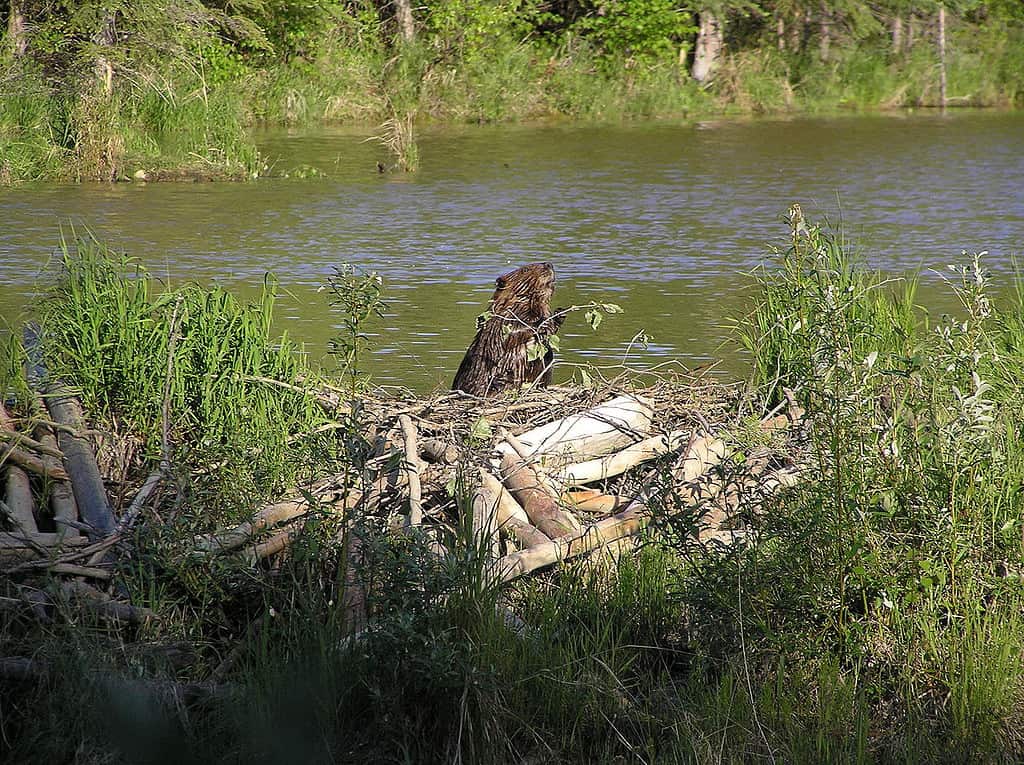
Beavers are highly territorial creatures.
©User: Marcin Klapczynski / CC BY-SA 3.0, from Wikimedia Commons, the free media repository – Original / License
Beavers build dams for a variety of reasons. As mentioned above, the structure creates a deep-water pond that helps the animal avoid predators. Within this pond, beavers also build dens or lodges out of sticks and mud. Not to be confused with dams themselves, these lodges are dome-shaped homes for the animals and their young. Beavers carve out small underwater entrances for easy access and escape routes from predators.
Not only do beaver dams protect beavers themselves, but they also contribute to the habitat of other wildlife. For one, the structures reduce flooding and erosion. Think of them as a speedbump in the water.
Dams stretch across bodies of freshwater, manipulating water levels and acting as natural filtration systems. By filtering sediment and pollutants, dams improve the overall water quality downstream.
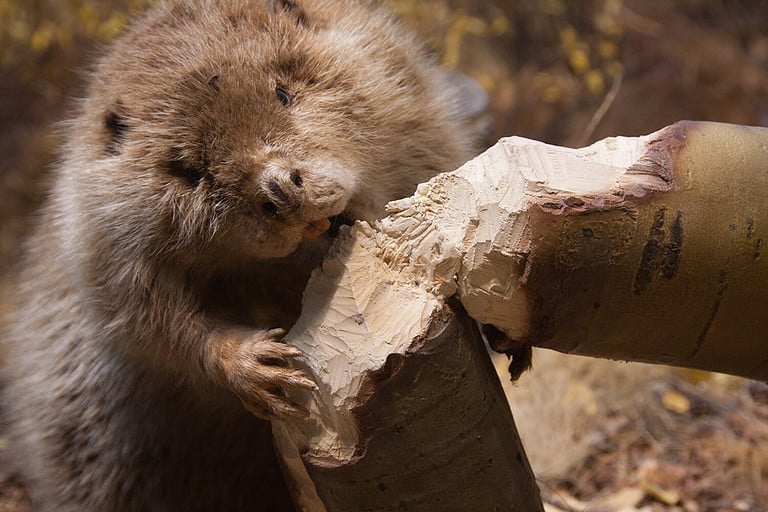
Beavers also build dams out of instinct. This behavior comes naturally to them, so even those raised in captivity will attempt to do so. In fact, the animals have long and prominent front teeth adapted for cutting trees and branches. This helps them construct dams and collect food.
How Do Beavers Build Dams?
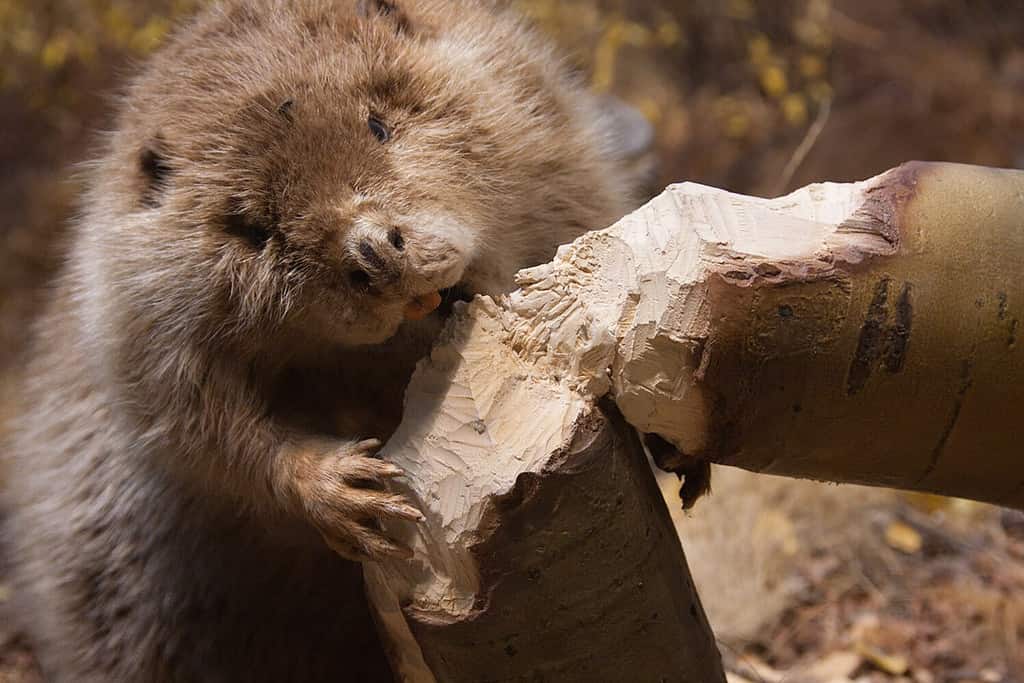
Beavers are known for their strong teeth.
©Procy/Shutterstock.com
The first step in building a beaver dam is selecting the right location. Beavers turn to environmental cues when deciding where to build their dams, as they often follow the sound of running water. Once they find their ideal spot to establish their dams, they begin to collect construction materials.
Beavers might look like small, weak creatures, but they’re actually quite strong. You have likely noticed their two prominent, buck-like front teeth. The animals have powerful jaws and incisors that help them chew through trees and branches to use for dams. As they gather objects like branches, logs, mud, stones, leaves, and other vegetation into a stream or river, they begin to assemble their framework. They construct the foundation of the dam by interlocking the hard materials and sealing it with mud and other vegetation.
Of course, building a dam is not a one-and-done type of project. Beavers must continuously maintain their dams by sealing any leaks and rebuilding any damaged parts. Though these dams are strong, sometimes, natural disasters (like heavy winds and floods) can destroy their foundations.
How Strong Are Beaver Dams?
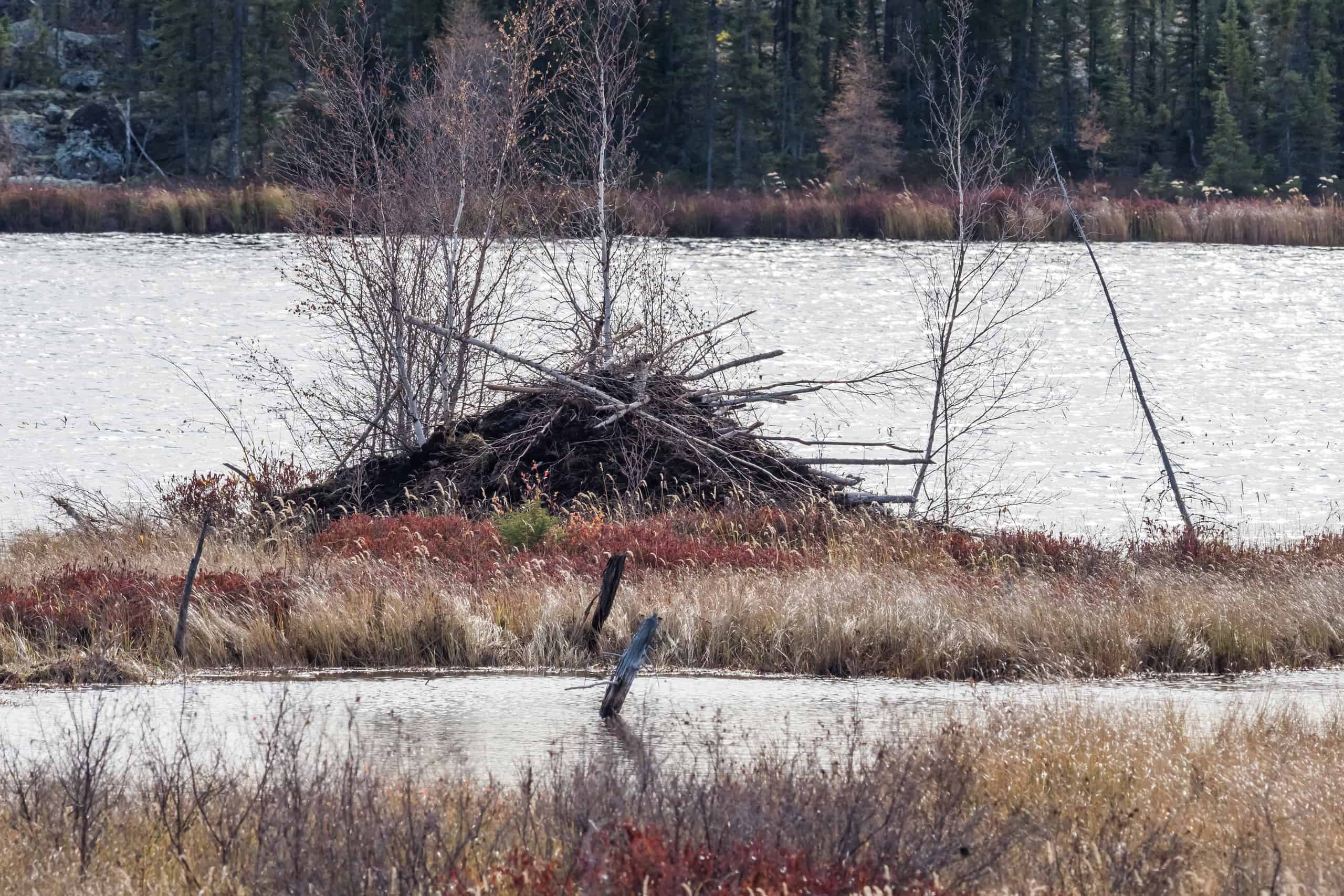
Beaver dams help slow erosion and reduce flooding.
©Norikko/Shutterstock.com
Beavers rely on their dams’ resilience for survival. Though they might not look it, beaver dams are extremely strong structures. In fact, with the proper upkeep, they can last for years, withstanding intense water pressure and extreme weather.
The interlocked branches, logs, and other materials contribute to the dam’s resilience. That, coupled with mud and vegetation as sealants, helps the dam stay put during storms or threatening events.
Additionally, beaver dams are slightly arched, which increases their overall stability. Beavers also place stones at the base of the dam to hold down the fort, so to speak. In other words, they are resourceful, intelligent creatures and natural-born builders. They know exactly how to build the most stable and durable structures for their colonies.