
Quick Take
- Bees have a physical adaptation built for this behavior, and it is hidden at the end of their legs. See their leg adaptation →
- Why bees form these living chains is still debated, though scientists have proposed several explanations.” Explore the real reasons →
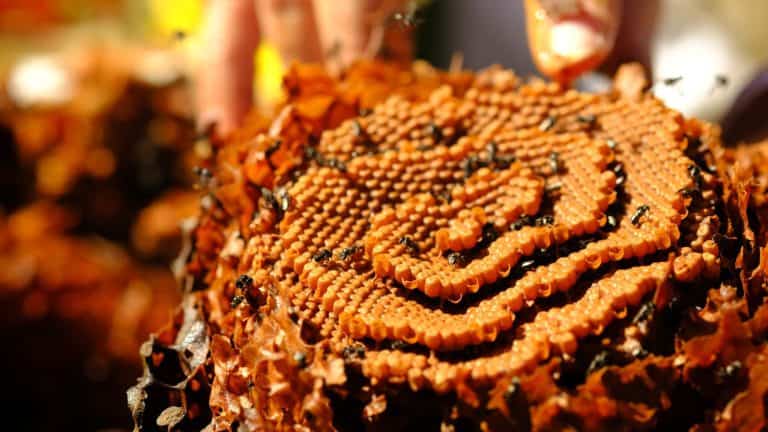
- Building honeycomb into open space presents a problem most insects can't solve, but bees have a surprisingly cooperative workaround. See how bees scaffold comb →
- Honey bee colonies don't just cooperate. They function in a way that reframes what we think of as individual behavior.
Bees are some of the most important insects on our planet. While we know them for being great pollinators, they also exhibit many other unique behaviors. One example is festooning! This Instagram post by @katehinkens shows bees engaging in this behavior, which looks like they’re holding hands. Read on to learn more.
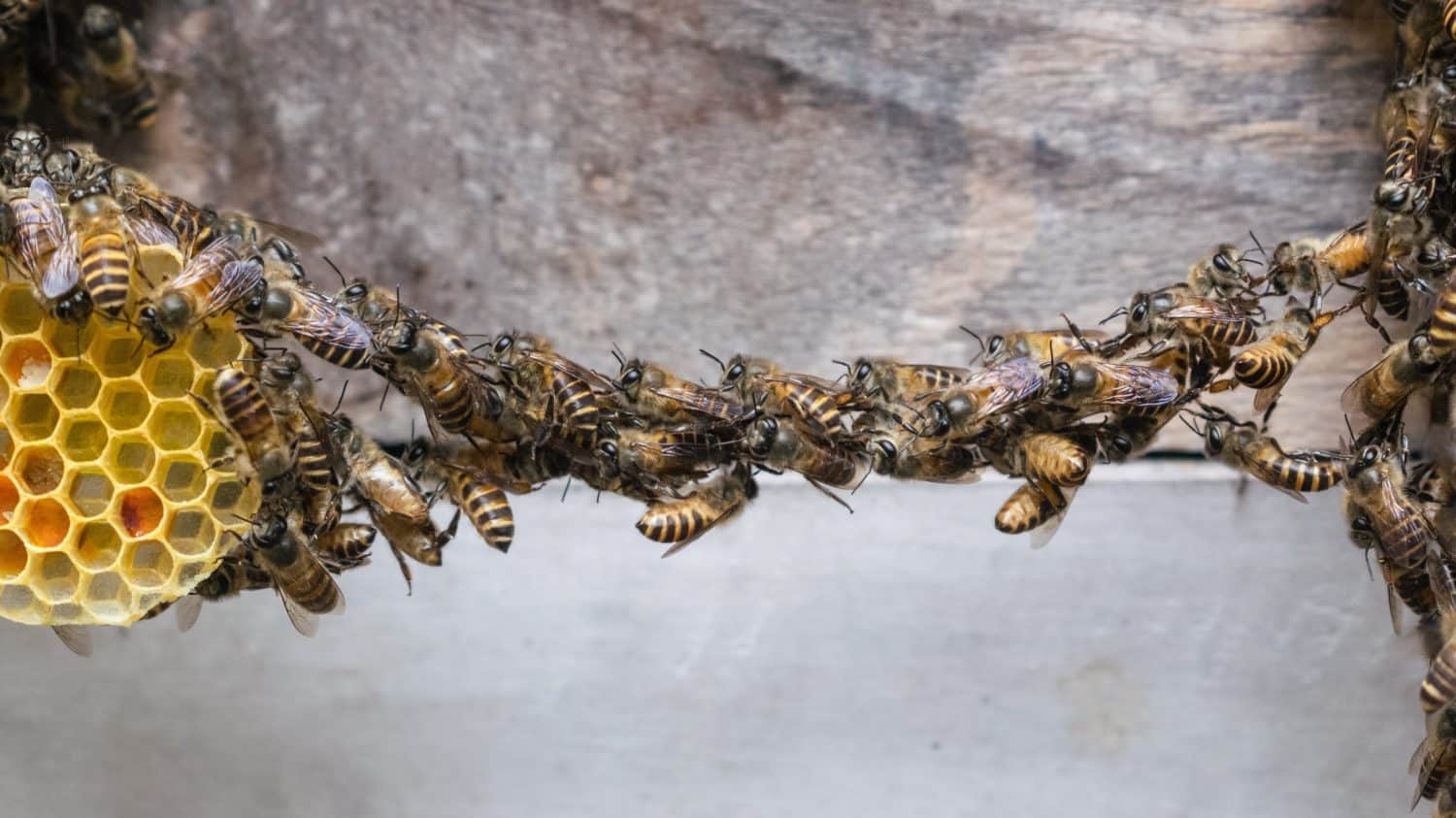
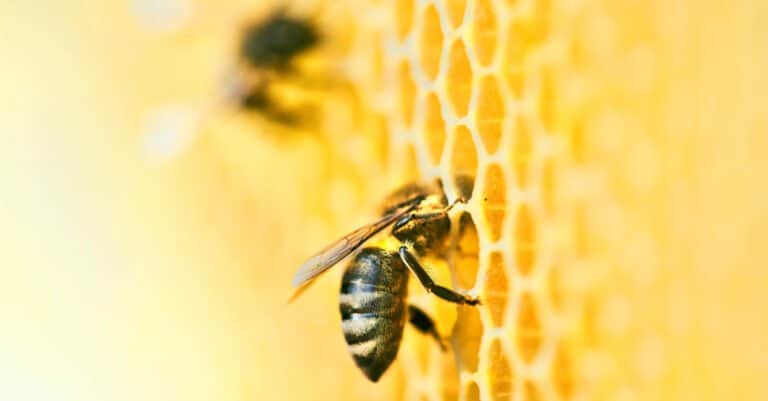
Bees do not form bridges to walk across, but instead to help build honeycomb.
©Mangalam S Bhargava/Shutterstock.com
What is Bee Festooning?
In the video above, bees appear to be holding each other’s legs to form a bridge of sorts. While it may seem like a strange, one-off behavior, it’s actually a more common sight than you might think. This is called bee festooning, and it’s one of the best examples of how cooperative honey bees are with each other. To do this, the bees link their legs together, creating a living chain that can stretch over empty spaces. They don’t do this through strength alone; they are actually adapted for this behavior. Honey bees have small hooks at the end of their legs that they use to latch onto one another. While the exact reason bees do this is unknown, the most widely accepted explanation relates to building honeycomb. Since honey bees must extend their waxy homes into open spaces, a festoon can act like scaffolding. However, other explanations have also been proposed.
There are a few other proposed reasons why honey bees festoon. One is to measure space. The chain helps to measure distance while laying out comb. Another reason is to orient the comb in the correct manner. Similarly, the bees can act as a balance to ensure construction proceeds correctly. All of this highlights how coordinated honey bees are as a colony. Rather than simply receiving a job and working alone, they are constantly collaborating as a hive. This is because bee colonies often work more like a single organism. These bridges are just one example of the many ways bees work together for the benefit of the hive.