
Quick Take
- The U.S. government deliberately stocked American rivers with carp, but the ecological fallout that followed was anything but intentional. See the stocking history →
- Koi and common carp are far closer than most people realize, and the single factor that separates them will reframe how you see both fish. Explore what separates them →
- A female carp's reproductive capacity is staggering enough to explain why controlling their populations borders on impossible. See their reproductive capacity →
- Those serene koi in a backyard pond can become one of the most destructive forces in a local waterway if one thing goes wrong. Understand the ecological risks →
Koi (Cyprinus rubrofuscus) is the Japanese word for carp (Cyprinus carpio). During the 19th century, people began capturing vibrantly colored carp in Japan. Years of breeding produced the ornamentally colored fish we now call koi. Along with different colors, these fish have also changed how they spawn and survive. How do koi fish and common carp compare? Continue reading to discover the differences between carp and koi.
Are Carp Native to North America?
The introduction of carp to North America occurred in three distinct waves. In the early 1800s, common carp arrived in small numbers with private individuals, primarily settlers.
In 1877, as a solution to overfishing and as a source of cheap food, the U.S. government began stocking lakes and rivers across the country.
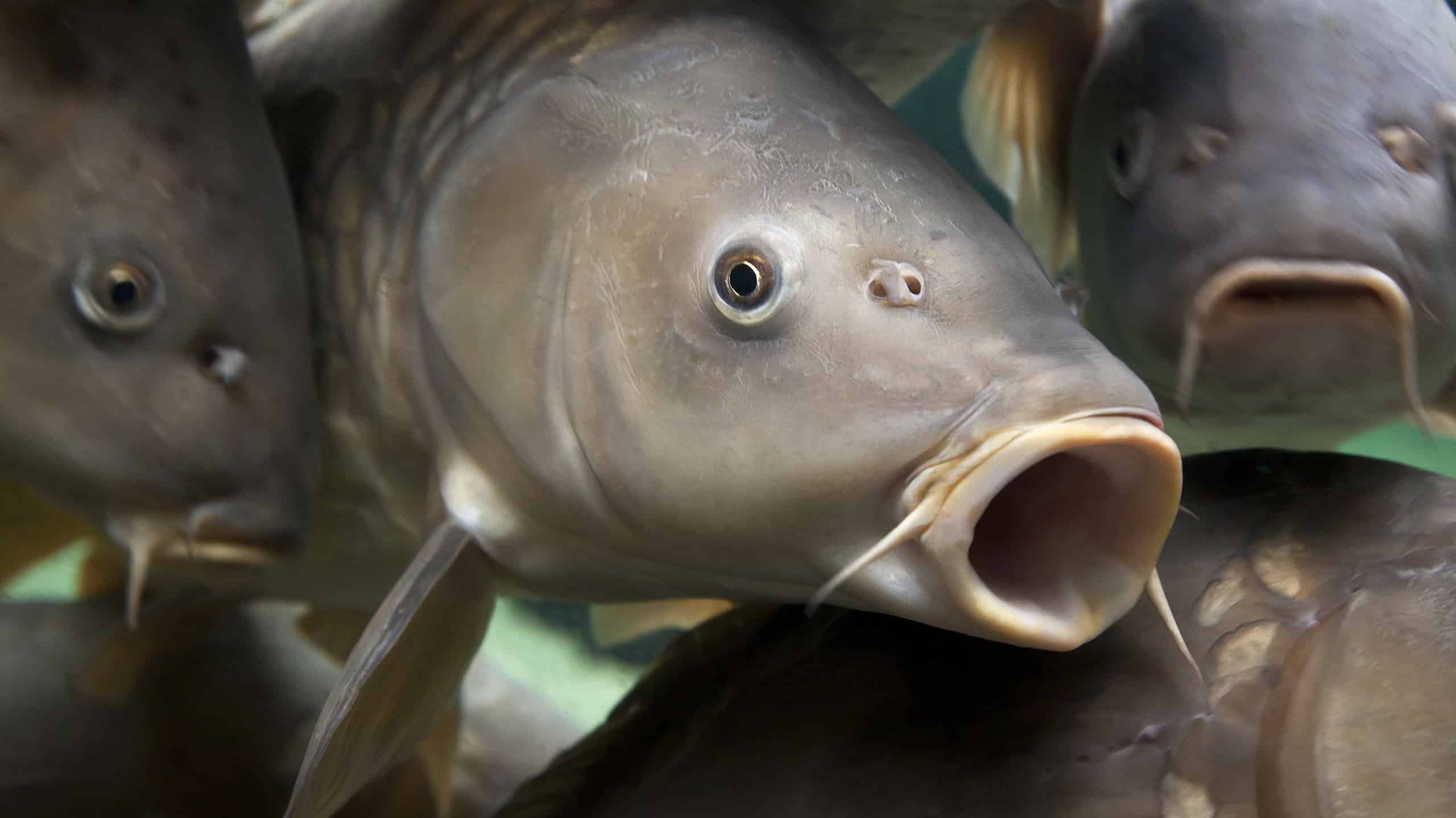
The common carp is native to Eurasia.
©Jane Rix/Shutterstock.com
A century later, during the 1970s, a third wave occurred when various Asian carp species, including silver, bighead, and grass carp, were imported by Southern fish farms and wastewater treatment facilities to naturally control algae and weeds.
However, major river flooding in the 1990s allowed these Asian carp to escape into the Mississippi River basin, where they have rapidly spread and have become a highly destructive invasive species.
Carp vs. Koi: Key Differences Explained
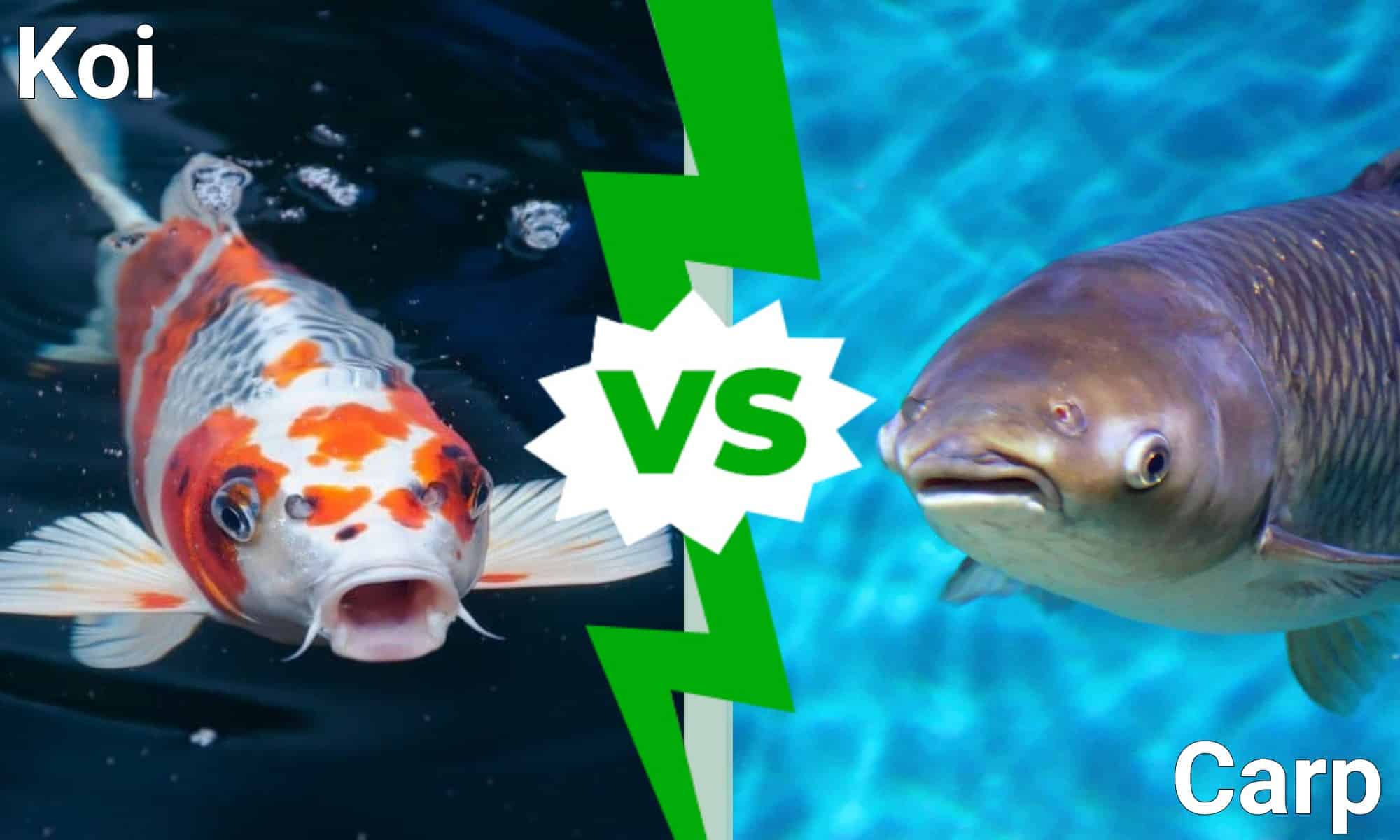
The key differences between carp and koi are their appearance, life cycle, ecological impact, and range and distribution. Common carp have brown gold bodies, whereas koi can have exotic color patterns. Common carp are typically found in the wild, while koi are popular as ornamental pets.
Koi are carp that have been selectively bred over centuries. Wild carp travel long distances, often several miles, to find the perfect spawning grounds; koi, however, are typically kept in small ornamental ponds and have a limited space over which they may travel.
Carp vs. Koi: Appearance
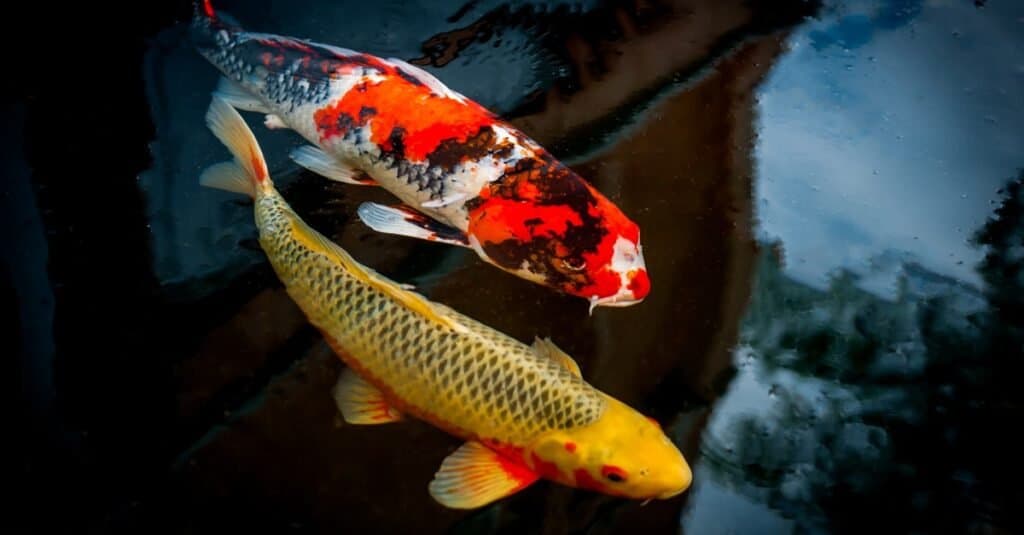
Koi fish are an ornamental fish species.
©tonirichsag1411/Shutterstock.com
Fully mature carp have a dark brown or gold color. Their fins have a reddish-orange hue. They have scales that cover their entire body and barbels (whiskers) on each side of the mouth.
Common carp don’t possess a true spine, but they do have a dorsal fin with spines. They also have a triangular head and a blunt snout.
Common carp have brownish-gold bodies, whereas koi display a variety of exotic color patterns. Some of the most popular color combinations include orange, white, silver, bright gold, and black. They have a deep body and two barbels on each side of their upper jaw. They also have a serrated dorsal fin.
Carp vs. Koi: Life Cycle
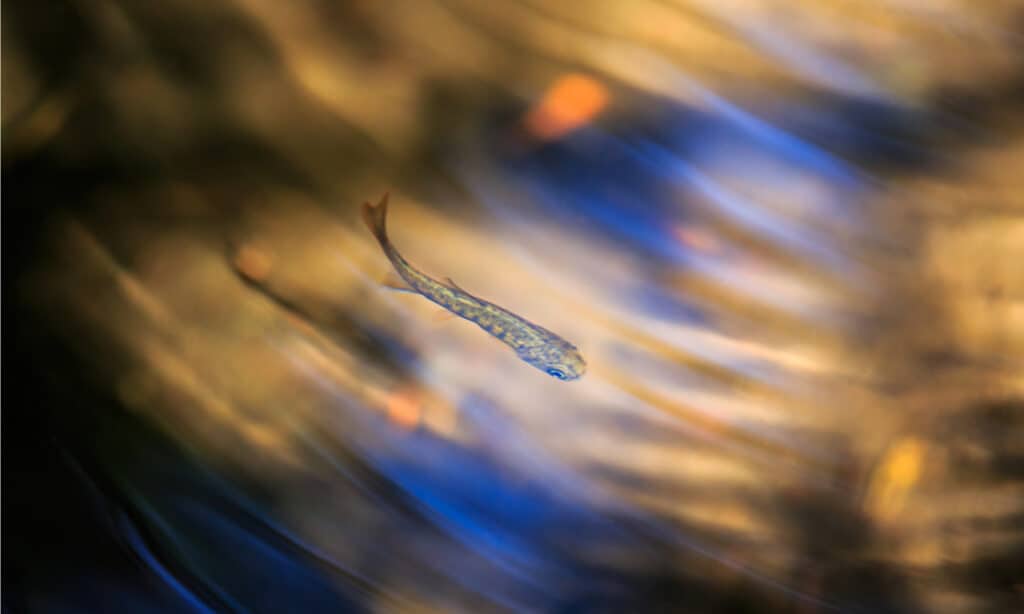
Koi fry stay near the water’s surface.
©Kevin Cass/Shutterstock.com
Common carp are considered fully mature once they reach a length of 12 inches and are two to three years old. When they fully mature, both sexes migrate into shallow wetlands, where they will spawn in the springtime.
Females can carry up to 3 million eggs at a time. When the eggs are released, they’re immediately fertilized. The fertilized eggs cling to aquatic vegetation. It only takes one week for the eggs to develop and hatch.
Since each female can produce several hundred fry, it’s easy for carp populations to become untenable. However, common carp can only thrive in areas that lack native predators.
Koi eggs hatch in early spring when water temperatures are around 64°F. The fry are susceptible to bacteria and parasites, so researchers are exploring aloe vera as a treatment.
The koi fry stay near the water’s surface before entering the next stage of their life cycle, called Nishikigoi. During this stage, they develop a more silvery color and grow scales on their backs.
Lifespan
As the Nishikigoi mature, they may develop into different varieties, such as Sanke or Kohaku, which are distinguished by their color patterns. Koi can commonly live 25 to 35 years in captivity, and with exceptional care, many can exceed 50 years. An adult ornamental koi will typically grow to between 20 and 26 inches in length, though its final size depends greatly on its genetics. Wild carp have a similar lifespan, but in North America, wild carp can grow quite large depending on the species, with maximum weights ranging from 60 pounds for standard common carp to over 100 pounds for invasive Asian carp varieties.’ with ‘with maximum weights up to 60 pounds for standard common carp and up to 110 pounds for some invasive Asian carp species.
Carp vs. Koi: Ecological Impact
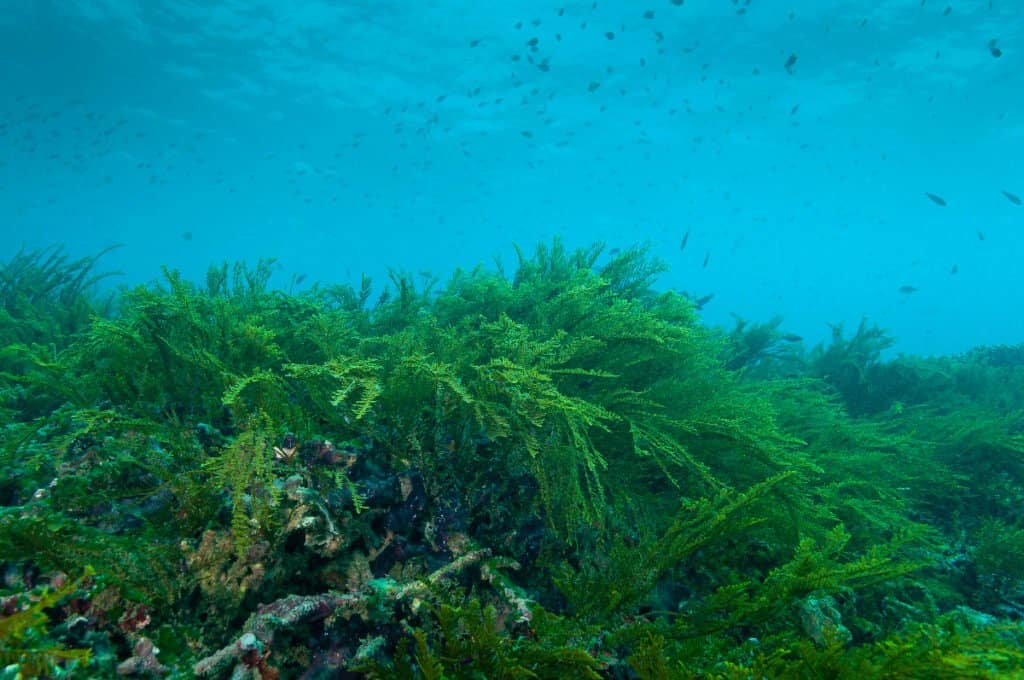
Excessive algal blooms make it difficult for other aquatic plants to thrive.
©Jesus Cobaleda/Shutterstock.com
Common carp are considered an invasive species in North America and negatively affect the environment. As bottom-feeders, they uproot native aquatic vegetation and stir up heavy sediment from the riverbed while searching for food.
This constant disruption muddies the water, which blocks sunlight from reaching underwater plants and prevents them from growing. The loss of vegetation destroys critical spawning grounds and shelter for native fish and waterfowl.
Asian Carp also outcompete local species for vital food resources like plankton and macroinvertebrates, drastically altering the food web and reducing overall biodiversity. When koi escape or are released into the wild, they similarly threaten their environment.