
In much of the eastern United States, it’s not uncommon to spot a snake slithering through the leaves, crossing a trail, or hiding near your shed. But knowing whether that snake is venomous or harmless can make all the difference when deciding to relocate the serpent or let it stay.
While many snakes are easy to distinguish, some species are a little harder to identify.
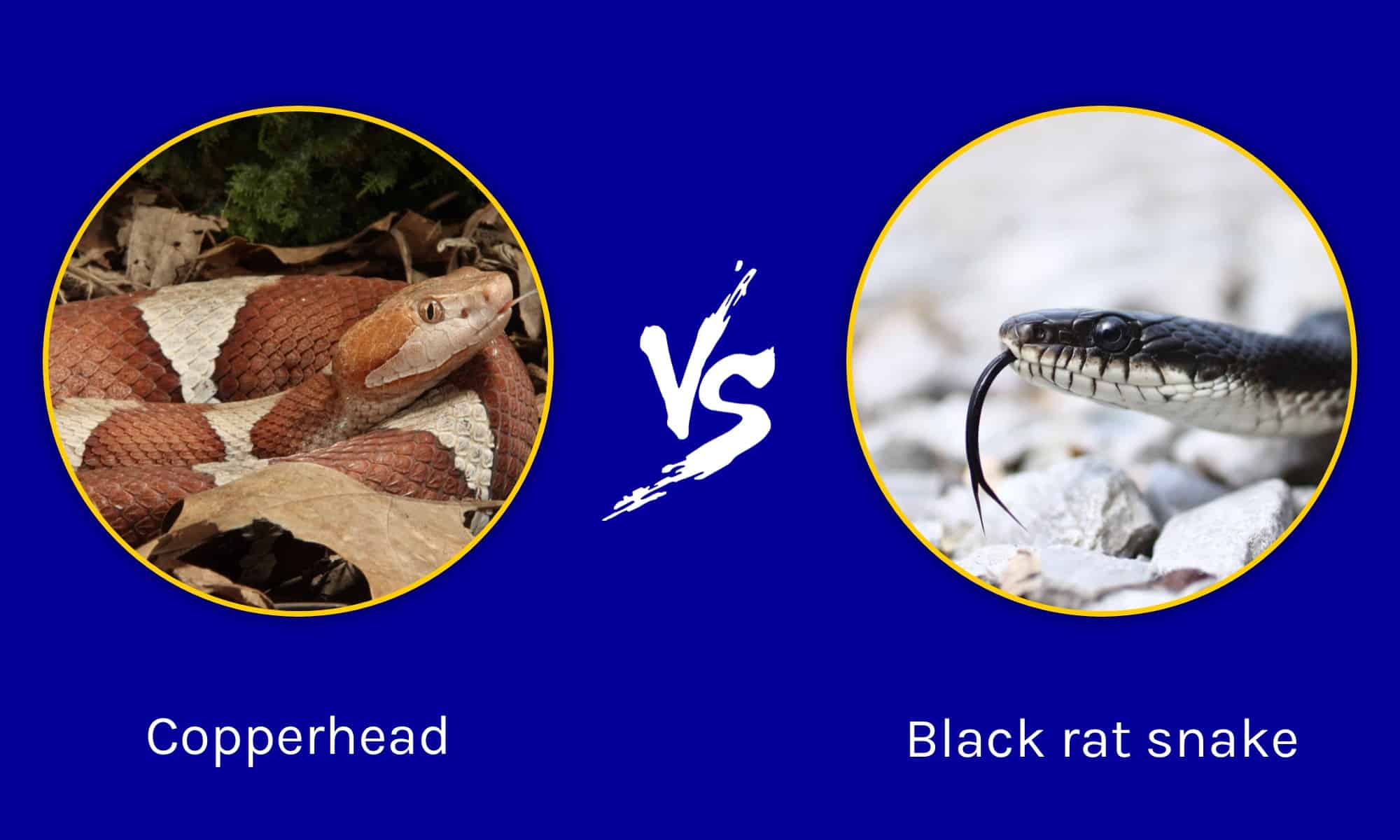
For many homeowners and citizens living in an area with snake activity, it’s important to understand the key markings and behaviors of local serpents. Two of the most common species that people often encounter in the central and eastern states are copperheads and black rat snakes.
On the surface, telling the two apart may seem simple, but each species has unique characteristics that everyone should be aware of. Here is a quick overview of the key differences between the two snakes.
| Trait | Copperhead | Black Rat Snake |
| Size | 2-3 feet in length | 4-6 feet in length |
| Color/Pattern | Coppery-brown with hourglass bands | Shiny black with a faint white underbelly |
| Venomous? | Yes (mild venom) | No |
| Behavior | Shy, strikes when threatened | Docile, prefers to flee |
| Habitat | Forests, rocky hills, and wood edges | Forests, farmlands, and barns |
| Range | Eastern and central U.S. | Eastern and central U.S. |
| Diet | Rodents, frogs, and insects | Rodents, birds, and eggs |
| Predators | Birds of prey, kingsnakes, and mammals | Hawks, foxes, and large snakes |
| Role in Ecosystem | Mid-level predator | Rodent control specialist |
Copperhead

Copperheads are experts at blending in with their surroundings making it hard to spot them while hiking.
©Creeping Things/Shutterstock.com
Copperheads are one of the most commonly encountered venomous snakes in the region, often spending most of their time in wooded areas. Because these creatures are experts at camouflage, it’s easy to accidentally step on them. While they may seem intimidating due to their venomous bite, they actually play a crucial role in the local ecosystem.
Size and Appearance
Typically, copperhead snakes grow to about 2 to 3 feet in length, with thick muscular bodies and keeled scales. They also have distinctive features, including copper-colored heads shaped like spades and darker hourglass bands on their bodies.
Where Do Copperhead Snakes Live
Although copperheads can live in a variety of habitats, they prefer forests, rocky hillsides, and woodland edges. They mainly rely on their stealth and ambush attacks to hunt, so they tend to spend most of their time in environments with good cover.
Unfortunately, seeking out places to hide also means they often bunker down near sheds and woodpiles, bringing them into contact with humans.
Feeding Behavior
Thanks to their incredible ability to disappear, copperheads can patiently wait for their prey to pass by. When an animal gets too close, the snake will strike quickly and inject venom to subdue the target.
Most of the copperhead’s diet consists of small mammals, amphibians, insects, and occasionally birds.
Temperament
Contrary to popular belief, not all venomous snakes are aggressive. In fact, copperheads usually remain motionless when they encounter a predator or human, hoping to avoid detection. The exception is those moments when they feel threatened or cornered. Sadly, since their camouflage is so effective, many people don’t realize the snake is there until it’s too late. Oftentimes, before a defensive strike, copperheads will vibrate their tail as a warning.
Natural Enemies
Although their venom is potent enough to stop prey, it doesn’t deter a wide range of predators from attacking. The most common predator copperheads have to contend with is the kingsnake, which is immune to its venom. Other copperhead snake predators include hawks, owls, raccoons, and opossums.
Are Copperheads a Threat to Humans?
While it’s true copperheads are responsible for the most venomous snakebites in the United States, it’s generally not from aggressive behavior. Instead, the encounters are mostly accidental, and the strikes are out of self-defense.
In the event you or someone you’re with is bitten by a copperhead, it’s important not to panic. Copperhead venom is considered mild compared to other North American venomous snakes, and fatalities from copperhead bites are exceedingly rare. However, it can still cause swelling, pain, and tissue damage if not treated promptly.
Black Rat Snake

Black rat snakes are one of the largest native snake species in North America.
©jadimages/Shutterstock.com
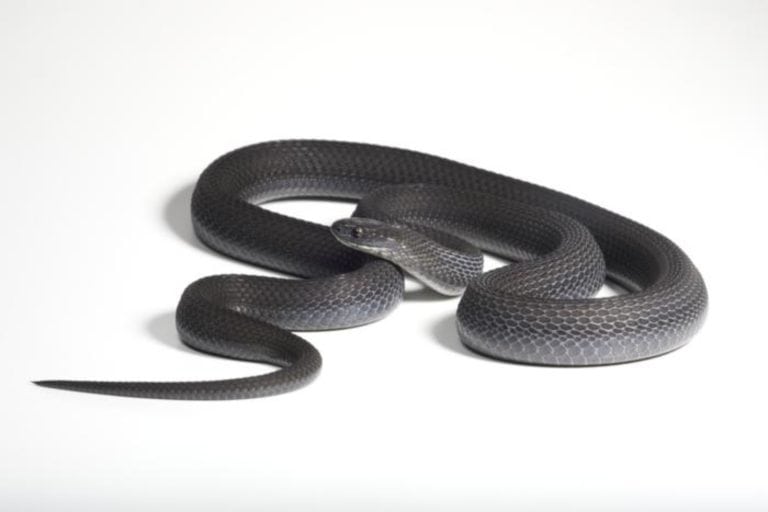
Black rat snakes are one of the most easily recognized snakes in the central and eastern parts of the United States. However, their jet-black scales and impressive length can be startling if you’ve never seen one in person. The good news is that these serpents are harmless constrictors that play an important role in controlling rodent populations.
Size and Appearance
Black rat snakes are significantly longer than copperheads, often reaching 4 to 6 feet in length. Some even reach lengths of 7 feet, making them one of the longest snakes in North America.
Although adults are shiny black with a lighter underbelly, juvenile black rat snakes are patterned with dark blotches that fade as they age. Unlike the signature triangle shape of the copperhead, these snakes have an oval-shaped head.
Where They Live
These serpents are one of the most adaptable in the country, with the ability to thrive in forests, farmlands, wetlands, and even residential areas. Since they’re skilled climbers, black rat snakes are commonly found in odd locations like trees, barns, attics, and rafters.
Their presence may stir a primal instinct to run or scream, but it’s actually a good thing. These snakes are one of the most effective methods for controlling rodent populations and rarely pose a danger to humans.
Feeding Behavior
One of the main differences between copperheads and black rat snakes is the way they hunt. While copperheads use venom, black rat snakes rely on constriction to capture and suffocate their prey.
Typically, their diet consists mostly of rats and mice, but they also eat birds, bird eggs, small mammals, and amphibians. On occasion, they’ve been known to raid chicken coops in search of their next meal.
Temperament
This species is generally calm and will usually try to escape when approached by a human. If escape is not possible, they may puff up, vibrate their tail, or emit a musky odor as a defense. Biting is a last resort and is rarely harmful to people.
Natural Enemies
Because of their large size, adult black rat snakes have few natural predators, but they do have them. Their natural predators are birds of prey, coyotes, foxes, and larger snakes. Their ability to climb also helps these snakes avoid conflict, making predation rare.
Are Black Rat Snakes a Threat to Humans?
Many humans panic when they see black rat snakes and, unfortunately, kill them. However, this snake species is completely non-venomous and rarely shows aggression toward people.
They actually play an important ecological role by controlling rodent populations near human dwellings. Many farmers welcome these snakes as a natural way to protect their crops from rodents.
Why Identification Matters
Misidentifying a snake can lead to unnecessary fear or, worse, unnecessary harm to a non-venomous species. While copperheads and black rat snakes may cross paths in the same environments, they play very different roles in the ecosystem.
Recognizing the differences in size, pattern, behavior, and habitat not only helps you stay safe but also helps protect beneficial species in local ecosystems.
Copperheads, while venomous, are rarely aggressive without cause. Black rat snakes, on the other hand, are completely harmless to humans and serve as natural pest control.
Whether you’re hiking, gardening, or working outdoors, being able to tell these snakes apart empowers you to make smarter, safer choices while giving the animals the space they need.