





K
Species Profile

King Snake

Lampropeltis

Bold bands. Big appetite. No venom.
BikerPhoto/Shutterstock.com

King Snake Distribution

Click a location to explore more animals from that region

Loading map...
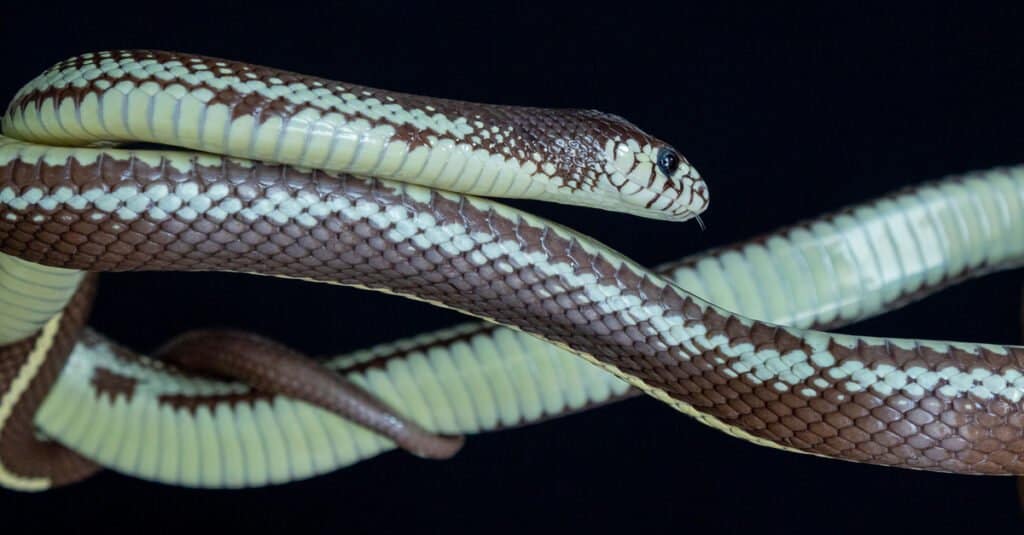
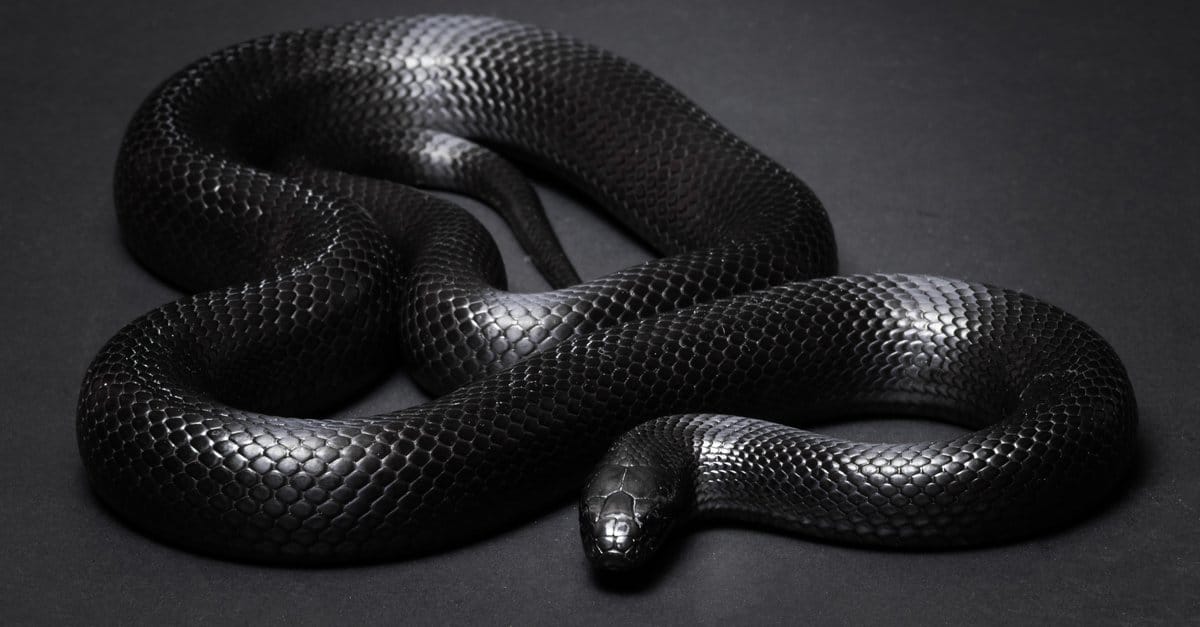
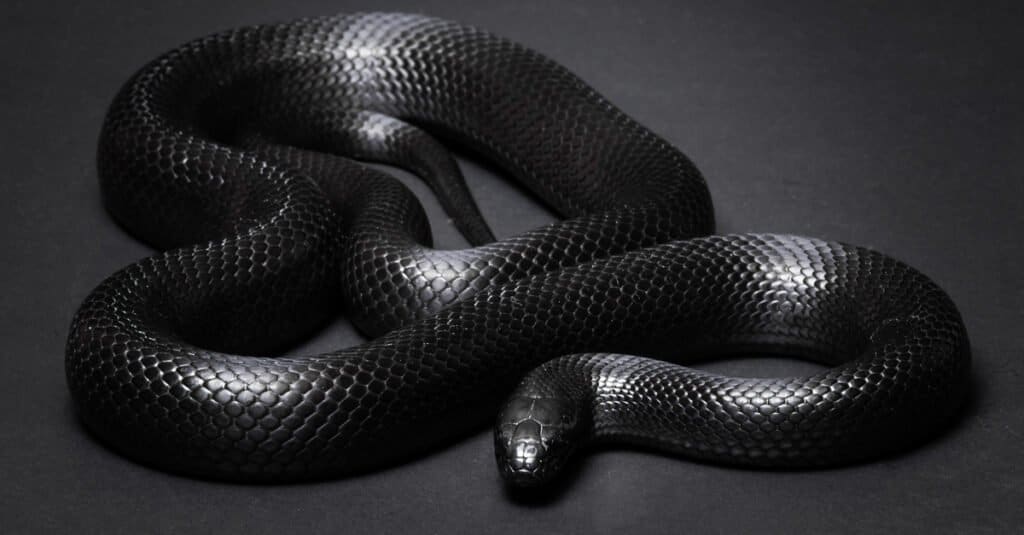
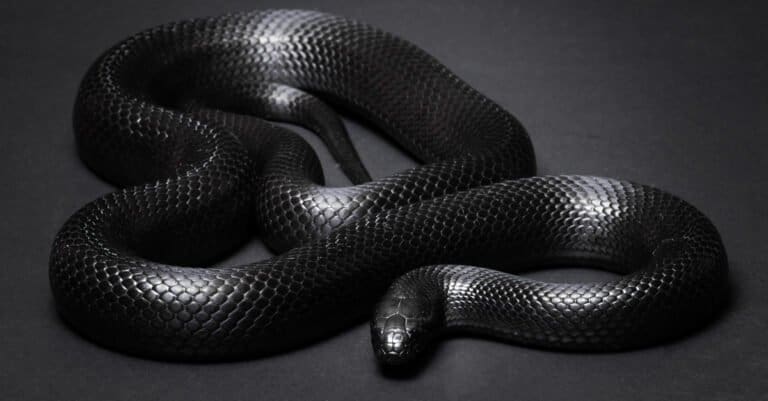
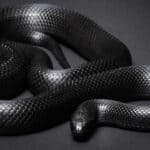
mexican black king snake on black background

At a Glance

Genus Overview This page covers the King Snake genus as a group. Stats below are general traits shared across the genus.
Also Known As King snake, Chain snake
Diet Carnivore
Activity Diurnal+
Lifespan 8 years
Weight 1.8 lbs
Status Not Evaluated
Did You Know?

Genus name *Lampropeltis* comes from Greek for "shiny shield," nodding to their glossy, smooth scales.

Scientific Classification

Genus Overview "King Snake" is not a single species but represents an entire genus containing multiple species.

Kingsnakes (Lampropeltis) are nonvenomous constricting colubrid snakes native mainly to North America. They are known for varied, often high-contrast banded/striped patterns and for preying on a wide range of vertebrates, including other snakes.

Kingdom
Animalia
Phylum
Chordata
Class
Reptilia
Order
Squamata
Family
Colubridae
Genus
Lampropeltis

Distinguishing Features

  • Nonvenomous constrictors (kill prey by constriction rather than venom)
  • Often glossy scales with bold bands, rings, or stripes (highly variable by species/population)
  • Generalist diet; many species are ophiophagous (eat other snakes), which underlies the common name “king”
  • Typically medium-sized colubrids with relatively small, non-triangular heads

Physical Measurements

Males and females differ in size

Length
3 ft 7 in (1 ft 2 in – 6 ft 11 in)
3 ft 11 in (1 ft 8 in – 6 ft 11 in)
Weight
1 lbs (0 lbs – 4 lbs)
2 lbs (0 lbs – 6 lbs)
Tail Length
7 in (2 in – 1 ft 4 in)
Top Speed
4 mph
slithering

Appearance

Skin Type Dry, smooth, glossy scales (typically unkeeled) with broad ventral scutes; head scales large and symmetrical; coloration and sheen vary with locality and age.
Distinctive Features
  • Measurements (smallest to largest across genus): roughly ~30-210+ cm total length, depending on species and population.
  • Body form: moderately stout to slender, with a distinct neck and tapering tail; proportions vary among species.
  • Head: usually slightly wider than neck; round pupils; nonvenomous colubrid dentition.
  • Lifespan range across genus: commonly ~10-20 years; 20+ years documented in long-lived captives for some species.
  • Behavior: primarily terrestrial, but some species climb well; activity can be diurnal, crepuscular, or nocturnal depending on season and temperature.
  • Ecology: habitat generalists overall-woodlands, grasslands, deserts, scrub, riparian zones, and suburban edges-yet many species show strong regional habitat preferences.
  • Defense: may musk, vibrate tail, flatten body, or bluff-strike; some display bright banding as warning-like signaling.
  • Feeding: generalist predators; often include rodents, lizards, birds/eggs, amphibians, and other snakes (ophiophagy).
  • Constriction: kills prey by constriction; powerful for body size across most species.
  • Venom resistance: some kingsnakes show partial resistance to certain snake venoms, but it varies and is not absolute.
  • Reproduction: egg-laying (oviparous); clutch size and timing vary with latitude and species; young often more vividly patterned.
  • Seasonality: brumation/overwintering common in cooler regions; activity season longer in warmer climates.

Sexual Dimorphism

Sexual dimorphism is usually subtle. Females often average slightly larger-bodied, while males typically have proportionally longer tails and more evident post-cloacal bulging; the degree of difference varies among species and populations.

  • Proportionally longer tail length beyond the cloaca on average.
  • More noticeable hemipenal/post-cloacal bulge, especially in adults.
  • May be slightly slimmer-bodied than same-length females in some species.
  • Often attain greater overall body mass and sometimes longer total length.
  • Typically shorter tail proportion relative to body length.
  • May appear more robust when gravid during the breeding season.

Did You Know?

Genus name *Lampropeltis* comes from Greek for "shiny shield," nodding to their glossy, smooth scales.

Across the genus, adults range roughly about 0.6 m to about 2.1 m in total length.

They're generalist predators: many eat rodents, lizards, birds/eggs, amphibians-and other snakes, sometimes including venomous species.

Several kingsnakes show regional color-pattern forms (bands, stripes, speckles), and patterns can vary dramatically even within a species.

All kingsnakes are egg-layers (oviparous); clutch sizes vary by species but commonly fall in the single digits to teens.

Some kingsnakes provide classic "warning-color lookalikes" in parts of the southern U.S., where banded patterns can resemble coral snakes-leading to frequent misidentification.

In captivity, many species commonly live ~15-25+ years; shorter lifespans are more typical in the wild due to predation, disease, and habitat pressures.

Unique Adaptations

  • Broad dietary tolerance: jaws, teeth, and feeding behavior suited for taking prey of many shapes (elongate snakes, bulky rodents, eggs).
  • Robust constriction ability for a colubrid: muscular bodies allow effective restraint of relatively large prey compared with body size (varies by species).
  • High-contrast patterning with local adaptation: bands/stripes/speckles can function in camouflage (broken outlines in grass/leaf litter) and, regionally, in resemblance to more dangerous snakes.
  • Smooth, glossy scales reduce friction for moving through leaf litter, burrows, and tight rock crevices-useful across diverse habitats.
  • Physiological tolerance to varied climates: from cooler temperate regions to arid deserts, with seasonal timing of activity and reproduction adjusted to local conditions.

Interesting Behaviors

  • Constrict-and-swallow feeding: they typically seize prey and use body coils to restrain it, then swallow head-first; prey choice ranges widely across the genus.
  • Ophiophagy (snake-eating) is common but variable: some populations/species eat snakes often, while others focus more on rodents or lizards depending on local availability.
  • Activity patterns vary by region and season: many are crepuscular/nocturnal in hot weather, but may be diurnal in cooler seasons or climates.
  • Defensive displays: when threatened, many will flatten the body, musk, hide the head, or vibrate the tail in dry leaves-behaviors that can mimic rattlesnakes acoustically.
  • Seasonal brumation in temperate zones: northern/desert populations often reduce activity in cold months, emerging to breed in spring/early summer.
  • Habitat flexibility: genus-level patterns include use of forests, grasslands, deserts, scrub, agricultural edges, rocky outcrops, and sometimes suburbs; habitat use differs strongly among species.

Cultural Significance

Kingsnakes (Lampropeltis) are valued for eating rodents and other snakes, lowering pests and snake encounters. Their bright patterns made them popular in the pet trade and education, but banded kingsnakes are often mistaken for coral snakes. 'Kingsnake' and 'shiny shield' shape their story.

Myths & Legends

"King of snakes" folk belief (American frontier and rural tradition): kingsnakes were said to rule or dominate other snakes because they can kill and eat them, including venomous species-an idea echoed in their common name.

In U.S. coral-snake areas, people use the rhyme "Red on yellow, kill a fellow; red on black, friend of Jack" to tell dangerous coral snakes from harmless look-alikes, though it is not always reliable.

In many Indigenous North American stories, snakes are powerful, changing beings linked to earth, water, rain, healing, or danger; kingsnakes (Lampropeltis) often take on this snake power in local tales.

Early American and Mexican naturalists wrote about kingsnakes (Lampropeltis) eating other snakes. These stories made them famous as the "snake that eats snakes" in regional tales and field lore.

Conservation Status

NE Not Evaluated (genus-level; IUCN assessments are primarily at the species level)

Has not yet been evaluated against the criteria.

Population Unknown

Protected Under

  • Species-level status varies; many jurisdictions regulate native snake take/collection under state/provincial wildlife laws, with stricter protection for some localized taxa.
  • Mexico: wildlife protections and permitting for native reptiles may apply under federal frameworks (e.g., LGVS and NOM-059 listings), depending on the species/locality.
  • Many populations occur within protected areas (national/state parks, wildlife refuges), where habitat protection and collecting restrictions can reduce local pressures.

You might be looking for:

Common kingsnake / Eastern kingsnake

34%

Lampropeltis getula

Widespread kingsnake species complex in the southeastern and parts of the central/western USA; often black with white/yellow chain-like bands.

California kingsnake

22%

Lampropeltis californiae

Popular in the pet trade; typically bold black-and-white banding/striping; native to the western USA and Baja California.

View Profile

Milk snake

20%

Lampropeltis triangulum

A Lampropeltis species commonly called “milk snake”; red/black/white or red/black/yellow triads in many populations.

View Profile

Desert kingsnake

12%

Lampropeltis splendida

Southwestern US/northern Mexico; variable patterning, often yellow-on-dark speckling/banding.

View Profile

Speckled kingsnake

12%

Lampropeltis holbrooki

Central USA; dark body with many light speckles; sometimes treated within the L. getula complex historically.

View Profile

Life Cycle

Birth 10 hatchlings
Lifespan 8 years

Lifespan

In the Wild
4–15 years
In Captivity
8–30 years

Reproduction

Mating System Polygynandry
Social Structure Solitary
Breeding Pattern Seasonal
Fertilization Internal Fertilization
Birth Type Internal_fertilization

Across Lampropeltis, adults are largely solitary and form no lasting pair bonds. During spring-early summer breeding, males search widely, may combat or trail pheromones, and both sexes can mate with multiple partners; females oviposit and provide no parental care.

Behavior & Ecology

Social Aggregation Group: 1
Activity Diurnal, Nocturnal, Crepuscular, Cathemeral
Diet Carnivore Other snakes (ophiophagy) is common across the genus, though many species/populations rely heavily on small mammals when available.
Seasonal Hibernates

Temperament

Generally secretive and avoidance-oriented; most interactions are brief and non-social.
Defensive responses vary by species and individual: fleeing, musking, biting, tail-vibrating.
Some species/populations are more tolerant of handling; others remain high-strung and reactive.
Opportunistic predatory boldness is common; individuals may actively pursue prey including other snakes.

Communication

hissing
Chemical communication via tongue-flicking to detect prey, mates, and predators.
Pheromone trails and skin secretions used in mate location and courtship tracking.
Tactile contact during courtship (body alignment, rubbing) and male-male competition in some species.
Defensive body postures (coiling, head triangulation) and tail vibration to deter predators.
Cloacal musking/odor release as a chemical deterrent; intensity varies among individuals.
Sensitivity to substrate vibrations and nearby movement for threat detection and orientation.

Habitat

Biomes:
Temperate Forest Temperate Grassland Mediterranean Desert Hot Desert Cold Tropical Dry Forest Savanna Temperate Rainforest Freshwater Wetland Alpine +5
Terrain:
Mountainous Hilly Plateau Plains Valley Coastal Island Riverine Rocky Sandy Muddy Karst Volcanic +7
Elevation: Up to 10498 ft 8 in

Ecological Role

Broad-diet mesopredators (and frequent snake specialists) in North American terrestrial ecosystems, linking small-vertebrate prey communities to higher-level predators.

suppression of rodent populations (potential agricultural/household pest control) regulation of reptile and amphibian prey populations, including other snakes occasional predation on venomous snakes, potentially reducing local encounter rates nutrient/energy transfer within food webs (as both predator and prey for raptors, carnivorous mammals, and larger snakes)

Diet Details

Main Prey:
Small mammals Snakes Lizard Amphibians Bird nestlings Bird eggs Reptile eggs Small turtles and turtle eggs/hatchlings +2

Human Interaction

Domestication Status

Semi domesticated

Kingsnakes (Lampropeltis) are not truly domesticated, but many species have been kept and bred in captivity for decades, making stable pet lines and many color and pattern types. They often live near people, are sometimes killed by mistake, and are collected for the pet trade—now more captive-bred, but collection plus habitat loss can harm wild populations.

Danger Level

Low
  • Nonvenomous bites causing minor punctures/lacerations; higher risk if handled roughly or during feeding response
  • Musking (foul-smelling defensive secretion) and mild scratches/abrasions from struggling
  • Zoonotic risk typical of reptiles (e.g., Salmonella) if hygiene is poor
  • Misidentification leading to unsafe handling of other, venomous snakes in the same regions (indirect risk)

As a Pet

Suitable as Pet

Legality: Kingsnakes (Lampropeltis) are usually legal as pets in many U.S. areas and parts of Canada/Mexico, especially if captive-bred. Laws vary: permits, rules against taking from the wild, transport limits, and local rules may apply.

Care Level: Easy

Purchase Cost: $40 - $1,200
Lifetime Cost: $1,500 - $7,000

Economic Value

Uses:
Pet trade (captive-bred animals and morphs) Education and outreach (zoos, nature centers, classrooms) Ecological services (rodent/pest control; trophic balance) Research and conservation (field studies, husbandry knowledge)
Products:
  • live captive-bred kingsnakes (various Lampropeltis species/localities)
  • selectively bred color/pattern morphs (market varies by species)
  • educational programming and exhibits featuring kingsnakes
  • husbandry supplies and services indirectly supported by ownership (enclosures, feeders, veterinary care)

Relationships

Related Species 10

Common kingsnake Lampropeltis getula Shared Genus
California kingsnake
California kingsnake Lampropeltis californiae Shared Genus
Milk snake
Milk snake Lampropeltis triangulum Shared Genus
Scarlet kingsnake
Scarlet kingsnake Lampropeltis elapsoides Shared Genus
California mountain kingsnake Lampropeltis zonata Shared Genus
Mountain kingsnake Lampropeltis pyromelana Shared Genus
Gray-banded kingsnake Lampropeltis alterna Shared Genus
Corn snake
Corn snake Pantherophis guttatus Shared Family
Gopher snake / bullsnake complex
Gopher snake / bullsnake complex Pituophis catenifer Shared Family
Racers
Racers Coluber constrictor Shared Family

Types of King Snake

12

Explore 12 recognized types of king snake

Common kingsnake Lampropeltis getula
California kingsnake
California kingsnake Lampropeltis californiae
Black kingsnake
Black kingsnake Lampropeltis nigra
Speckled kingsnake
Speckled kingsnake Lampropeltis holbrooki
Desert kingsnake
Desert kingsnake Lampropeltis splendida
Gray-banded kingsnake Lampropeltis alterna
Milk snake (milksnakes) Lampropeltis triangulum
Scarlet kingsnake
Scarlet kingsnake Lampropeltis elapsoides
California mountain kingsnake Lampropeltis zonata
Mountain kingsnake Lampropeltis pyromelana
Mexican kingsnake Lampropeltis mexicana
St. Louis (Ruthven's) kingsnake Lampropeltis ruthveni

“King Snakes eat other types of snakes.”

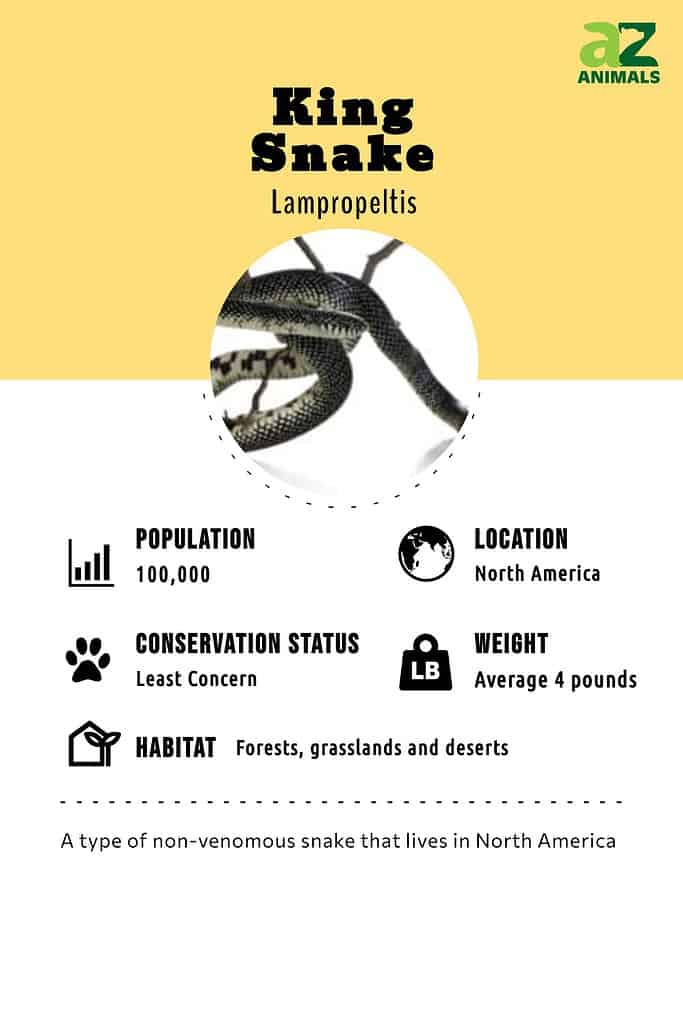
King snakes can climb trees and swim. They are carnivores eating rodents, birds, birds’ eggs, lizards, and other snakes. These snakes are not venomous; instead, they squeeze their prey to death. Their lifespan is 10 to 15 years.
King Snake Infographic

4 King Snake Amazing Facts

  • They are not harmed by the venom of other snakes
  • Its lifespan is 10 to 15 years
  • Due to their scale pattern, they are sometimes called a chain snake
  • They release a musk odor to deter predators

Where to Find Them
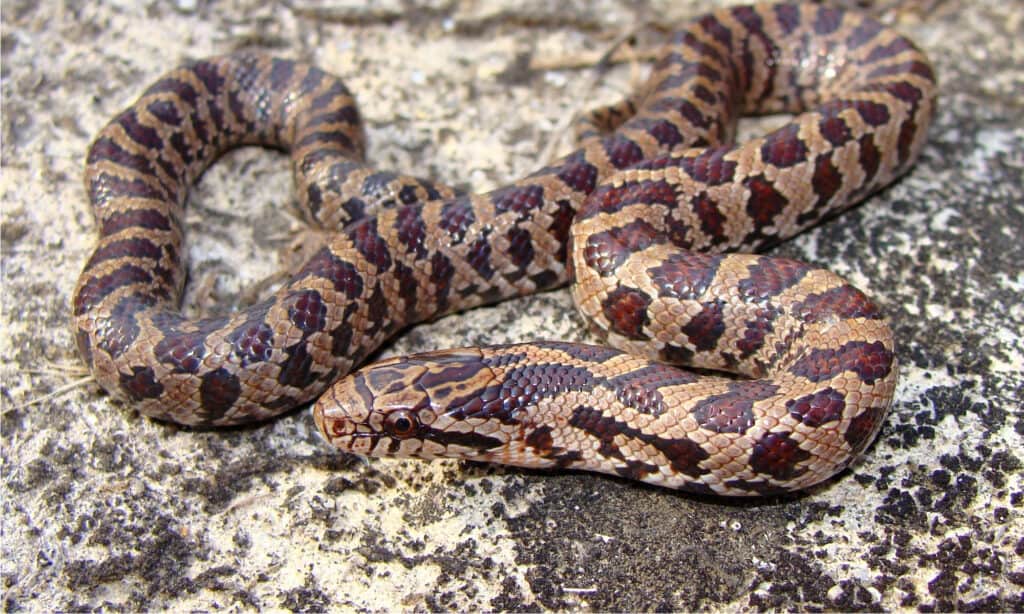
Prairie Kingsnake

Prairie Kingsnake

King snakes live in North America, specifically in the eastern, western, and southern parts of the United States. Different species of king snakes live in different sections of the United States, and some live in Mexico.

The habitat of this snake differs among species as well. Some of them live in forests and grasslands near bodies of water, while others live in a desert habitat. In a forest or grassland habitat, these snakes hide in hollow trees or beneath piles of leaves and sticks. Alternatively, in the desert, they can be found under rocks or in tight crevices.

These snakes are active in the spring and summer. Their breeding season goes from March to May, and their eggs hatch late in the summer season.

Species
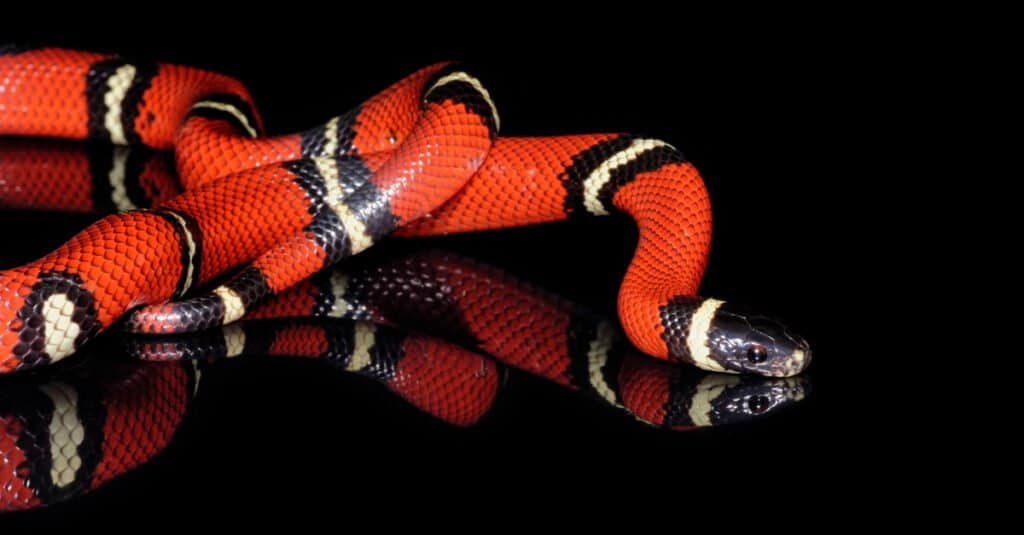
Most beautiful animal – Scarlet kingsnake

Scarlet king snakes are native to the southeastern USA and are between 20-28 inches long on average.

There are six species of king snake, and they all belong to the Colubridae family. Though some of these snakes have a similar appearance, they live in different places.

  • Common king snake or Eastern king snake (Lampropeltis getula)-This species of king snake lives on the eastern coast of the United States from Pennsylvania to Florida. Though they usually grow to a length ranging from 36 to 48 inches, the longest Eastern king snake on record is 82 inches.
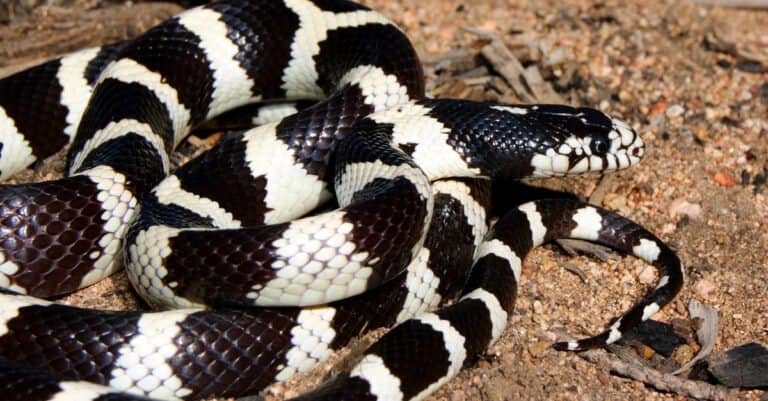
  • California king snake (Lampropeltis californae)-These king snakes live in cliff areas, wetlands, and grassland areas of California. It is less colorful than other species of king snake with its black or brown scales featuring white bands.
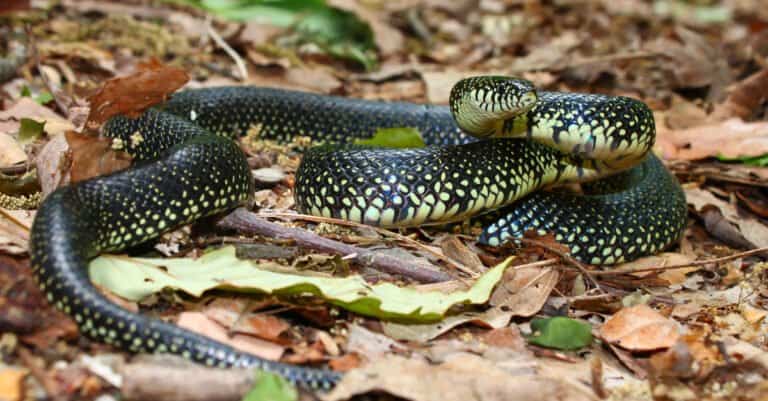
  • Speckled king snake (Lampropeltis holbrooki)-This species lives in the middle and southern portion of the United States and into Mexico. Its territory includes Iowa, Kansas, Louisiana, Missouri, and Texas. Some can even be found as far south as Mexico. It’s named for its black body covered in yellow spots, or speckles.
  • Desert king snake (Lampropeltis splendida)-As its name indicates, this snake has a desert habitat. It lives in the southern part of the United States including Texas and New Mexico and its territory extends into Mexico. This species is shy and known to ‘play dead’ when confronted by a human.
  • Black king snake or Eastern black king snake (Lampropeltis nigra)-It lives in the southern part of the United States including the states of Kentucky, Tennessee, Alabama, Louisiana, and the northern part of Georgia. Its dark scales set it apart from the more colorful species of king snake.
  • Scarlet king snake (Lampropeltis elapsoides)-This species is especially colorful with its bands of black, red, white, and yellow. It lives in the eastern and southeastern portions of the United States. This is the smallest species of king snake, usually measuring no more than 20 inches long. However, the largest scarlet kingsnake ever recorded was 28 inches long.

Scientific Name
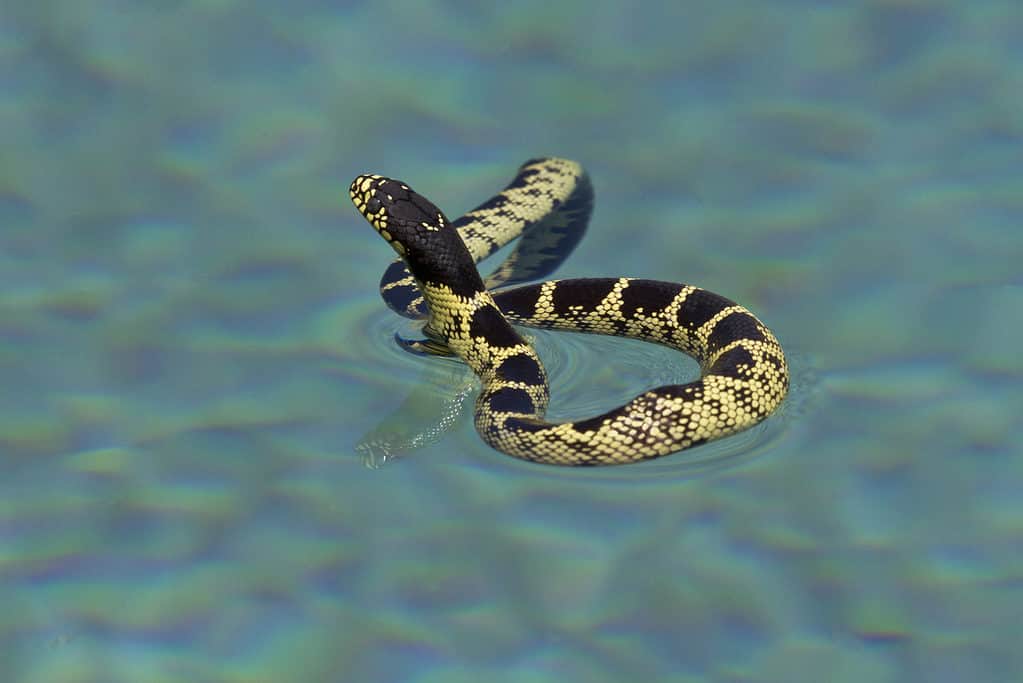
Common king snake

Common kingsnake swimming in water in Tucson, Arizona.

Lampropeltis getula is the scientific name for the common or Eastern king snake. It’s in the Colubridae family and the class Reptilia. The Greek word Lampropeltis means shiny, while getula refers to its bands of scales.

The species of king snake are:

  • Lampropeltis getula
  • Lampropeltis californae
  • Lampropeltis holbrooki
  • Lampropeltis splendida
  • Lampropeltis nigra
  • Lampropeltis elapsoides

Population and Conservation Status
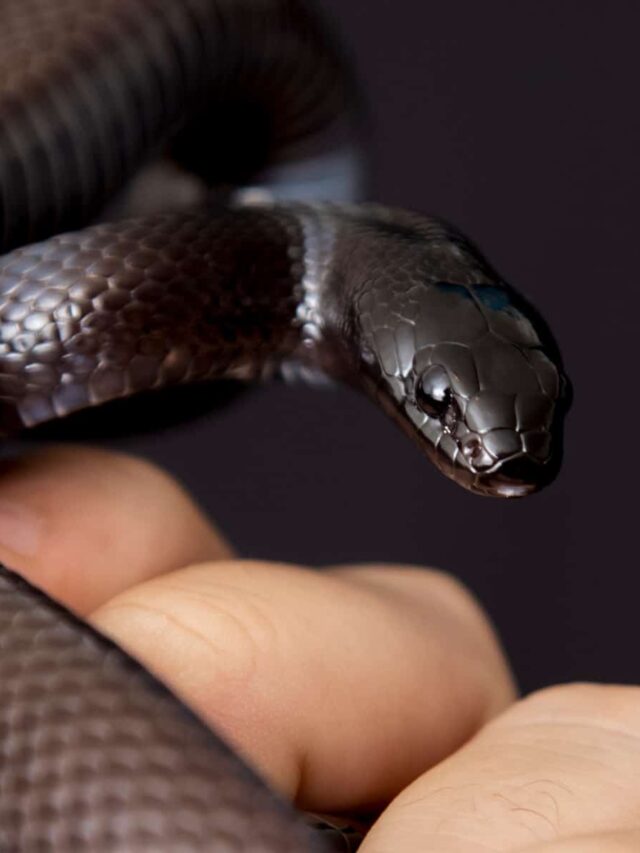
cropped-the-mexican-black-kingsnake-is-part-of-the-larger-colubrid-family-of-picture-id1304920522.jpg
The black king snake lives in Mexico.

The population of the Eastern or common king snake is unknown. But biologists believe its population exceeds 100,000 mature adults. The IUCN Red List of Threatened Species reports its conservation status as Least Concern with a population that is stable.

Appearance and Description
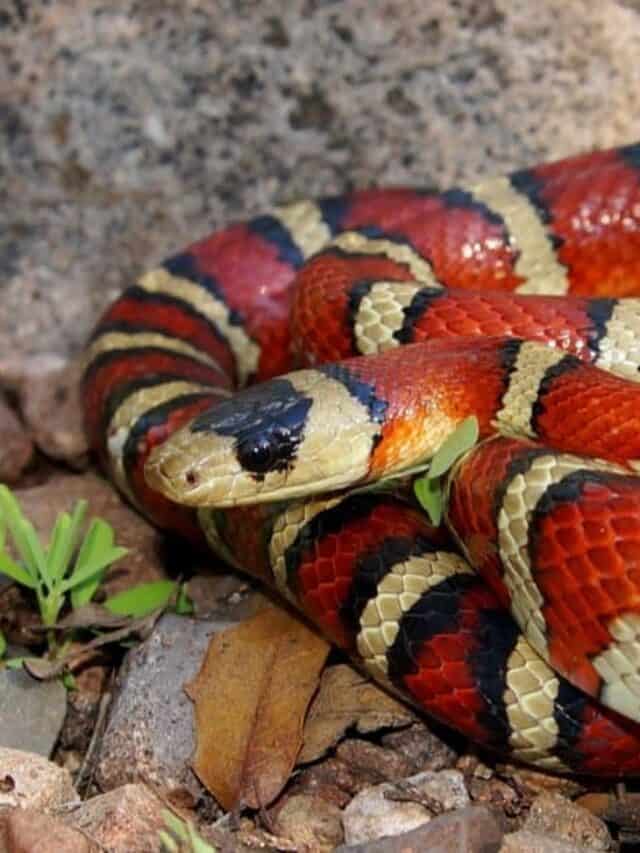
kingsnake curled up in grass
Kingsnakes are commonly mistaken for coral snakes because of their color.

An Eastern king snake has black or brown scales with 30 narrow vertical bands of yellow or white on its back. Its underbelly is yellow with zig-zagging patterns of black scales.
This species of king snake is very different in appearance from the scarlet king snake. The scarlet king snake has alternating bands of bright red, black, white, and yellow.

The typical size of the Eastern king snake is 36 to 48 inches in length. They weigh up to four pounds. The longest king snake recorded is up to 7 feet!

How to Identify Eastern King Snakes

  • A black or brown background of scales
  • 30 narrow bands of yellow or white horizontal scales
  • A yellow or white underbelly with zig-zagging black scales

Evolution and Origins
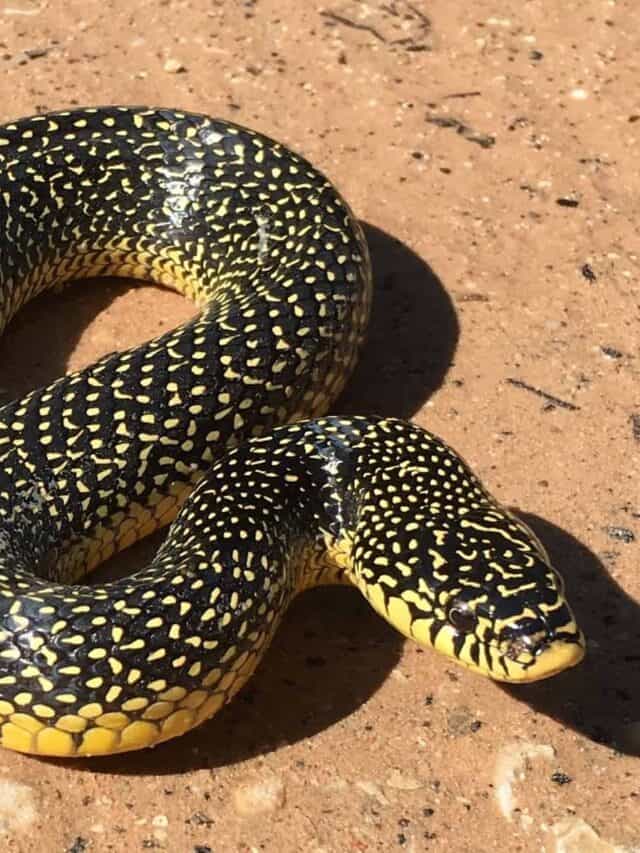
Speckled Kingsnake
Speckled Kingsnake

The earliest known ancestor of snakes was a nighttime hunter that possessed small hindlegs with ankles and toes. Recent research suggests that snakes originated on land, not in the ocean, during the middle Early Cretaceous period (around 128.5 million years ago) located in Laurasia. By analyzing the fossils, genetics, and anatomy of 73 species of snakes and lizards (both living and extinct), researchers were able to gain a better sense of what the initial snake was like.

It is believed that the original snake had two small hind legs and preyed on larger animals than lizards of the time. It was not able to coil around larger creatures like modern boa constrictors can. The snake was thought to be active at night, but 50-45 million years ago, this changed when the Colubroidea family of snakes emerged, and they mostly operate during the day. This may have been advantageous due to cooler night temperatures limiting nighttime activity, contributing to their success.

Snakes have an astonishing variety, with over 3,400 living species living in diverse habitats such as on land, in water, and in trees. Research indicates that snakes have been able to survive and thrive in many different kinds of habitats thanks to their exceptional capacity for dispersing over long distances. Scientists have estimated that snakes can travel up to 42,500 square miles, which is approximately 4.5 times farther than lizards. Furthermore, they have managed to inhabit environments that are typically impassable for terrestrial animals and have managed to colonize aquatic habitats multiple times throughout their evolution.

Snakes have come a long way since their initial ancestors and continue to be fascinating species to study. Their ability to adapt to different environments allows them to remain one of the most successful animals on Earth today.

King Snake Pictures
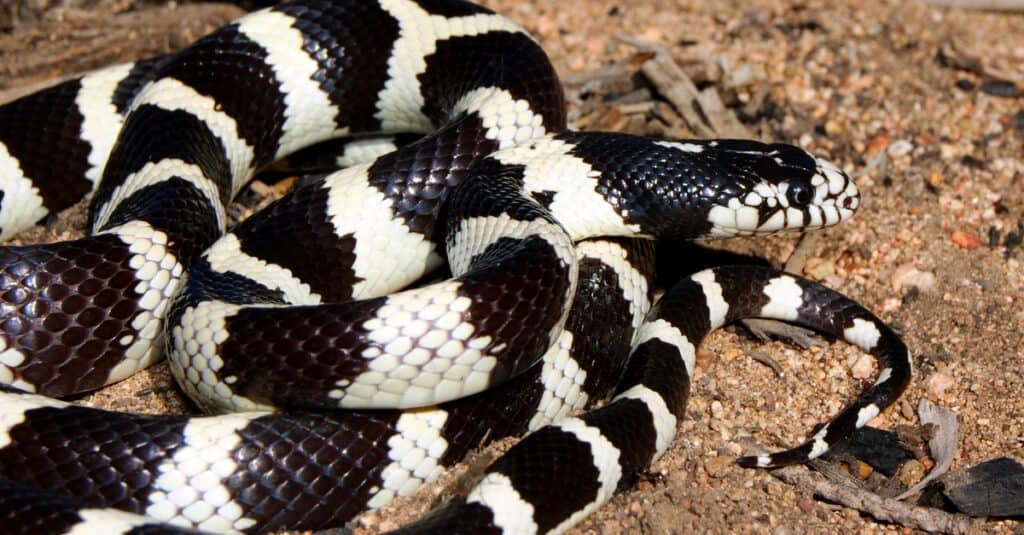
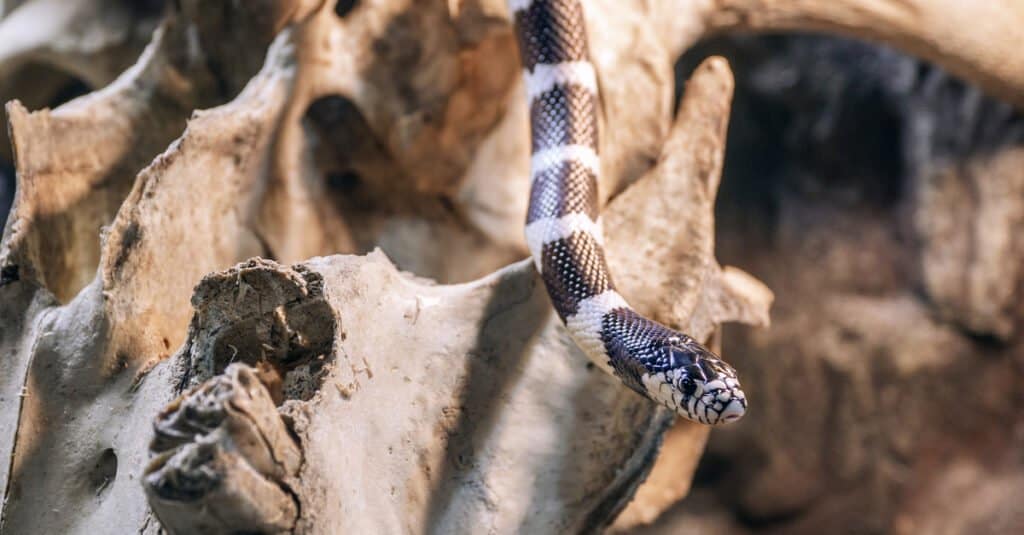
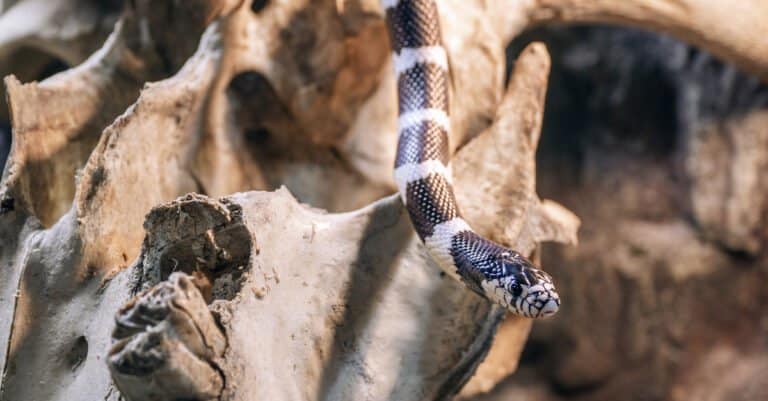
black and white king snake

King snakes are listed on the IUCN Red List of Threatened Species as Least Concern.

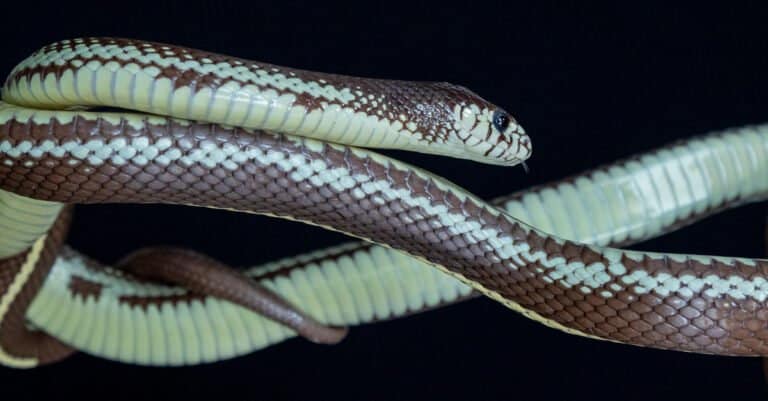
green and brown california king snake

The California kingsnake (Lampropeltis californiae) is a nonvenomous snake that naturally appears in aberrant patterns and even colors.

California King Snake on a branch

California King Snakes live in cliff areas, wetlands, and grassland areas of California.

How Dangerous Are They?

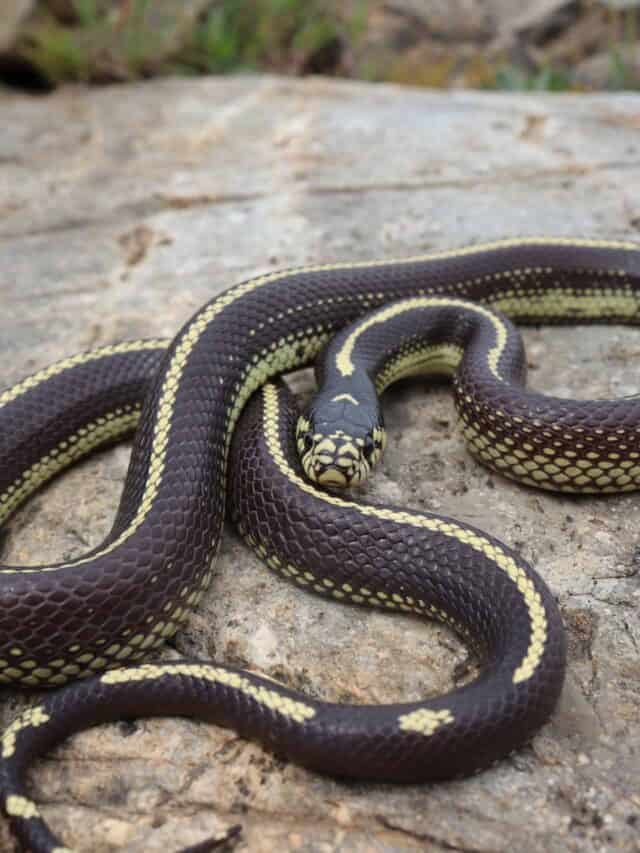
Striped Color Phase California Kingsnake (Lampropeltis californiae)
The Striped Color Phase is one of the many California kingsnake color morphs.

King snakes are not venomous. They are shy snakes that would rather slither beneath a gathering of leaves or a rock than confront a threat. In fact, one species of king snake called the desert king snake plays dead when threatened by a human. This means it remains still on the ground until the human moves away and the snake can escape to safety.

Despite having a shy temperament, a king snake may bite a human if it feels threatened. Though this snake isn’t venomous, its bite can be painful. If someone gets a bite from a king snake, the first thing to do is wash the area with soap and warm water. Then, put first-aid ointment on it. If there’s pain, putting ice on the area can offer relief.

Remember, there’s always the potential for infection, so if a rash appears in the bite area, it’s best to see a doctor.

Behavior and Humans
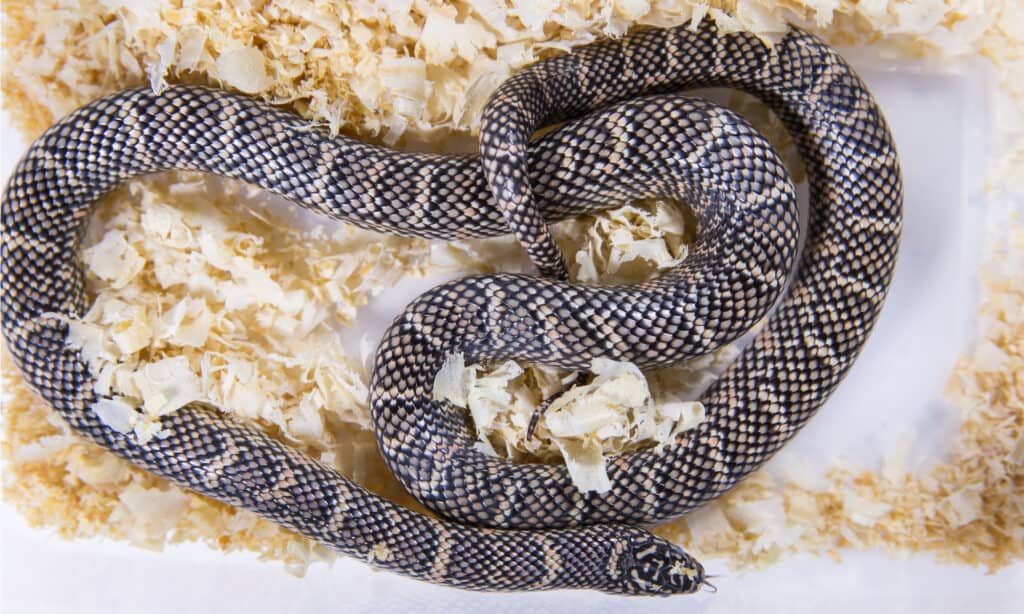
Apalachicola Kingsnake

Lampropeltis getula meansi, commonly known as Apalachicola Kingsnake

King snakes are shy and prefer to remain hidden in their habitat. These snakes are not considered pests. In fact, the opposite is true!

They eat rodents which keeps the population of mice and moles under control. So, if a homeowner sees a king snake in their garden or on their property, this reptile should be left alone to hunt rodents.

Similar Animals

39 Types of King Snakes

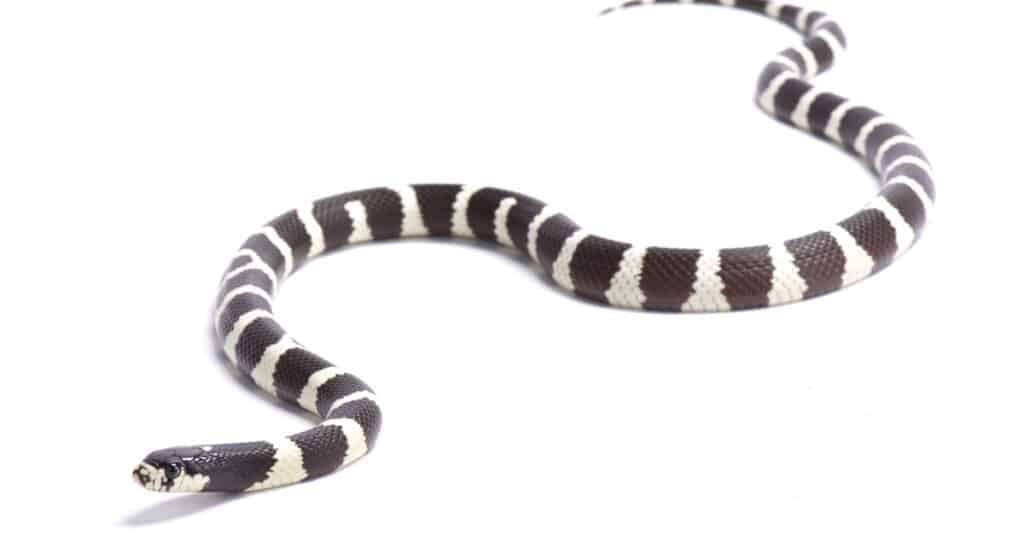
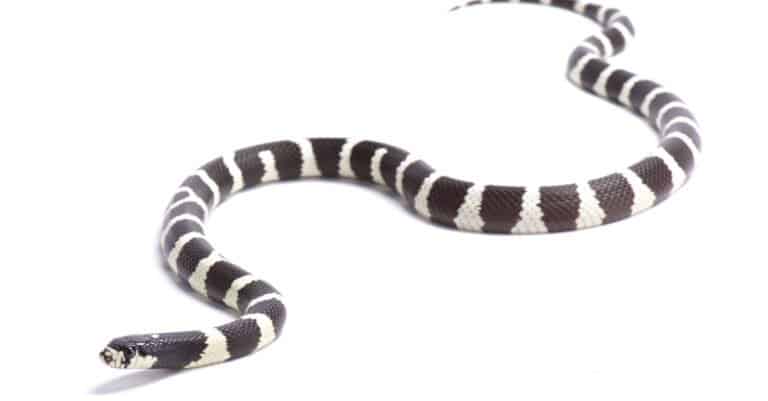
California king snake isolated on white background

California king snakes can measure up to 60 inches.

39 Species of King Snakes
Guatemalan milk snake, Lampropeltis abnorma (Bocourt, 1886)
Gray-banded kingsnake, Lampropeltis alterna (A. E. Brown, 1901)
Mexican milk snake, Lampropeltis annulata Kennicott, 1860
California kingsnake, Lampropeltis californiae (Blainville, 1835)
Prairie kingsnake, Lampropeltis calligaster (Harlan, 1827)
Santa Catalina Island kingsnake, Lampropeltis catalinensis (Van Denburgh & Slevin, 1921)
Scarlet kingsnake or scarlet milk snake, Lampropeltis elapsoides (Holbrook, 1838)
Short-tailed snake, Lampropeltis extenuata (R.E. Brown, 1890)
Central Plains milk snake, Lampropeltis gentilis (Baird & Girard, 1853)
Common kingsnake, Lampropeltis getula (Linnaeus, 1766)
Brooks’ kingsnake, L. g. brooksi Barbour, 1919
Florida kingsnake, L. g. floridana (Blanchard, 1919)
Eastern kingsnake, L. g. getula (Linnaeus, 1766)
Apalachicola Lowlands kingsnake, L. g. meansi Krysko & Judd, 2006
Mexican black kingsnake, L. g. nigrita Zweifel & Norris, 1955
Greer’s kingsnake, Lampropeltis greeri (Webb, 1961)
Speckled kingsnake, Lampropeltis holbrooki Stejneger, 1902
Madrean mountain kingsnake, Lampropeltis knoblochi Taylor, 1940
Nuevo León kingsnake, Lampropeltis leonis (Günther, 1893)
Mexican kingsnake, Lampropeltis mexicana (Garman, 1884)
Ecuadorian milk snake, Lampropeltis micropholis Cope, 1860
Black kingsnake, Lampropeltis nigra (Yarrow, 1882)
South Florida mole kingsnake, Lampropeltis occipitolineata Price, 1987
Central American milk snake, Lampropeltis polyzona Cope, 1860
Arizona mountain kingsnake, Lampropeltis pyromelana (Cope, 1866)
Utah mountain kingsnake, L. p. infralabialis W. Tanner, 1953
Arizona mountain kingsnake, L. p. pyromelana (Cope, 1866)
Mole kingsnake, Lampropeltis rhombomaculata (Holbrook, 1840)
Ruthven’s kingsnake, Lampropeltis ruthveni (Blanchard, 1920)
Desert kingsnake, Lampropeltis splendida (Baird & Girard, 1853)
Milk snake, Lampropeltis triangulum (Lacépède, 1789)
Lampropeltis webbi Bryson, Dixon & Lazcano, 2005
California mountain kingsnake, Lampropeltis zonata (Lockington, 1876 ex Blainville, 1835)
San Pedro kingsnake, L. z. agalma (Van Denburgh & Slevin, 1923)
Todos Santos Island kingsnake, L. z. herrerae (Van Denburgh & Slevin, 1923)
Sierra Nevada mountain kingsnake, L. z. multicincta (Yarrow, 1882)
Coast Ranges mountain kingsnake, L. z. multifasciata (Bocourt, 1886)
San Bernardino mountain kingsnake, L. z. parvirubra Zweifel, 1952
San Diego mountain kingsnake, L. z. pulchra Zweifel, 1952
Saint Helena mountain kingsnake, L. z. zonata (Lockington, 1876 ex Blainville, 1835)
View all 103 animals that start with K

Sources

  1. https://mdc.mo.gov/discover-nature/field-guide/speckled-kingsnake / Accessed February 21, 2022
  2. https://en.wikipedia.org/wiki/California_kingsnake / Accessed February 21, 2022
  3. https://kysnakes.ca.uky.edu/snake/lampropeltis-getula-nigra / Accessed February 21, 2022
  4. https://www.floridamuseum.ufl.edu/florida-snake-id/snake/scarlet-kingsnake/ / Accessed February 21, 2022
  5. https://www.tn.gov/twra/wildlife/reptiles/snakes/common-kingsnake.html / Accessed February 21, 2022
  6. https://www.beardsleyzoo.org/eastern-kingsnake.html / Accessed February 21, 2022
  7. https://www.iucnredlist.org/species/67662588/67662645 Jump to top / Accessed February 21, 2022
Ashley Haugen

About the Author

Ashley Haugen

Ashley Haugen is the editor of A-Z Animals. She's a lifelong animal lover with an affinity for dogs, cows and chickens. When she's not immersed in A-Z-Animals.com (her favorite editorial job of her 25-year career), she can be found on the hiking trails of Middle Tennessee or hanging out with her family, both human and furry.
Connect:

Thank you for reading! Have some feedback for us?


King Snake FAQs (Frequently Asked Questions)

King snakes are nonvenomous while cottonmouths have venom. Both snakes are relatively equal in length, but king snakes tend to be darker while cottonmouths are brownish with diamond-like patterning.