
The study of color vision can be traced back to the 17th century. Isaac Newton identified the colors in our visible spectrum, which led to breakthroughs in optics, chemistry, and physics. Modern color vision researchers have attempted to use mice to study the cones in their retinas to see how those cones affect light processing. Cones are the part of the eye that makes color vision possible. In combination with rods, cones detect light’s wavelengths and allow us to perceive color.
Yet, even though we share 97.5% of our DNA with mice, zebrafish may hold the key when it comes to color blindness research. Recent research using zebrafish (Danio rerio) has allowed researchers to understand the evolutionary benefits of developing color vision and the processes that may cause color blindness. In a study from the University of Tokyo, researchers were able to genetically modify zebrafish’s color vision, leading to exciting possibilities for humans.
Why Zebrafish?
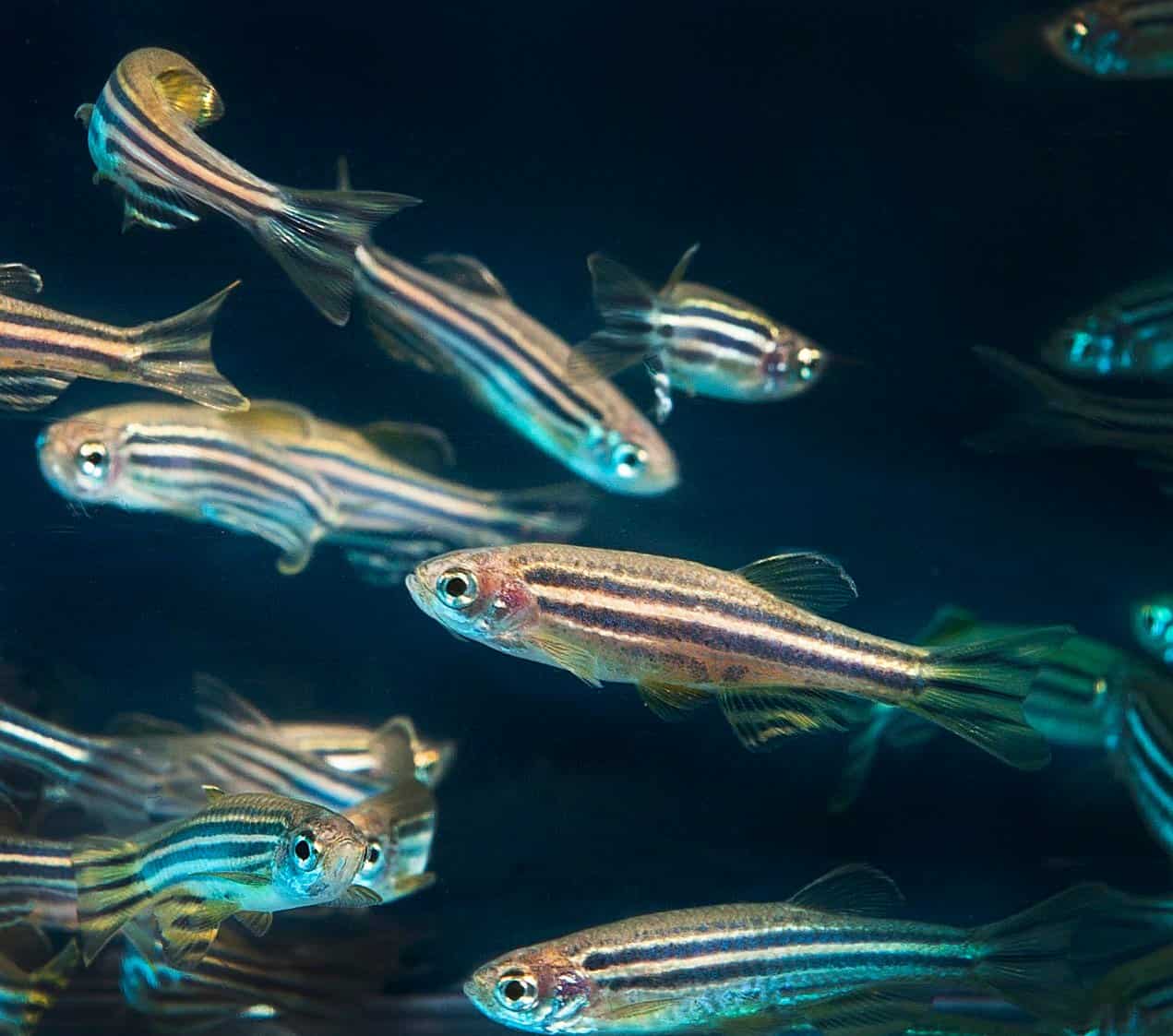
Zebrafish are consistently used in medical research for many reasons. Zebrafish share 70% of their genes with humans. Additionally, because 84% of human disease genes have a zebrafish counterpart, researchers can compare the physiological response of zebrafish to a disease with that of humans. Their entire genome has been sequenced, meaning researchers can easily identify irregularities in their genetic makeup or create mutations to study genetic functions. Zebrafish are also transparent, allowing researchers to observe their internal structures as they evolve and develop.
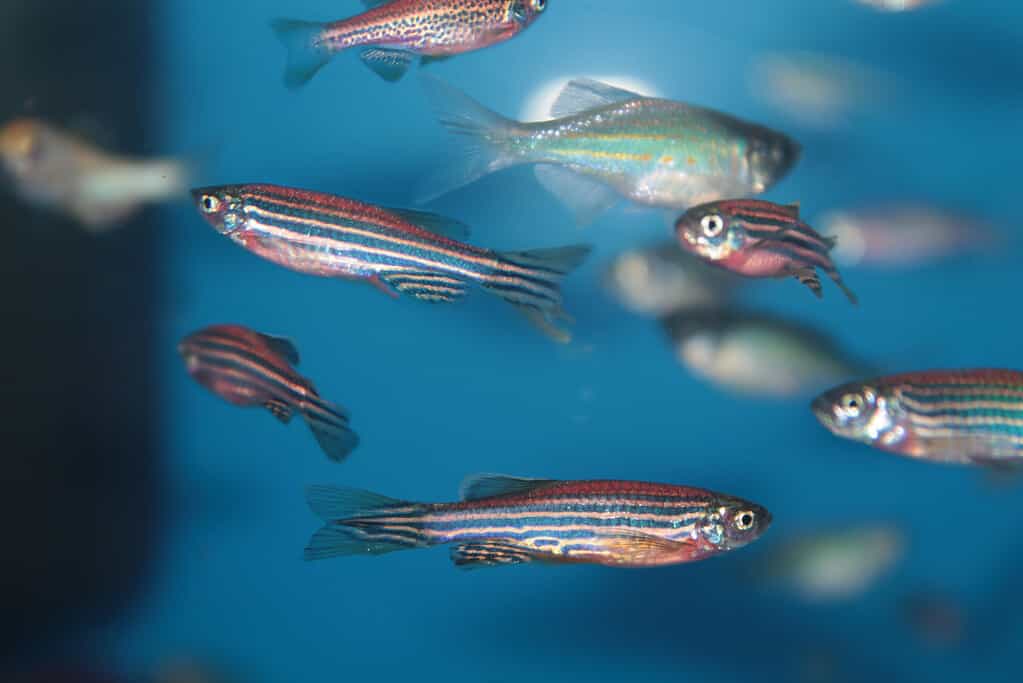
Zebrafish share 70% of their DNA with humans.
©kazakovmaksim/iStock via Getty Images
When it comes to vision research, zebrafish eyes are very similar in structure to human eyes. Both use rods and cones to process external stimuli. This stimulus is then relayed via the nervous system to the brain by a chain reaction of electrical charges. They can also see a variety of color combinations, similar to humans. Zebrafish can even regrow retinal cells, which has prompted scientists to analyze the zebrafish’s regenerative abilities to figure out how to treat certain diseases in humans. However, mice do not have the same number of cones as humans, and the cones are not evenly distributed. This limits mice’s ability to differentiate between blue and green, making zebrafish better candidates for color vision research.
How Do Genes Affect Eyesight?
Genome sequencing allows researchers to analyze how color vision genes evolved. Gene editing tools can show them how those genes are regulated. Researchers identified three types of genes that are present in species with four color vision proteins. Color sensitivity is controlled by the activity of the following genes: six6b, six7, and foxq2. In the study, the zebrafish were genetically modified to reduce the activity of those genes.
In cone cells that can distinguish blue light, scientists found that six6b and six7 activate foxq2. Yet, by blocking the normal activity of the regulatory gene foxq2, the fish’s eyes developed with none of the blue-sensitive cone cells found in healthy zebrafish. Previous research blocked their ability to see both blue and green light. This resulted in difficulties in locating food, stressing how crucial full-spectrum vision is for survival.
By activating and deactivating the foxq2 gene in zebrafish, researchers made a breakthrough in understanding color blindness. Scientists explain that discovering how color vision is possible may one day be useful in curing color blindness in humans.