
Quick Take
- Bumblebees kept picking the right signal even after the reward disappeared, and the reason why is unsettling in what it tells us about what we call intelligence. See how bees persisted →
- These bees solved a problem they never evolved to face, and that fact raises an uncomfortable question about where their ability actually comes from. Explore bee temporal ability →
- A brain the size of a poppy seed mastered something most humans would struggle to learn under the same conditions. Discover what this reveals →
- Scientists designed a test with one hidden rule change, and the bees' response to it rewrote how researchers think about insect memory. See the hidden rule change →
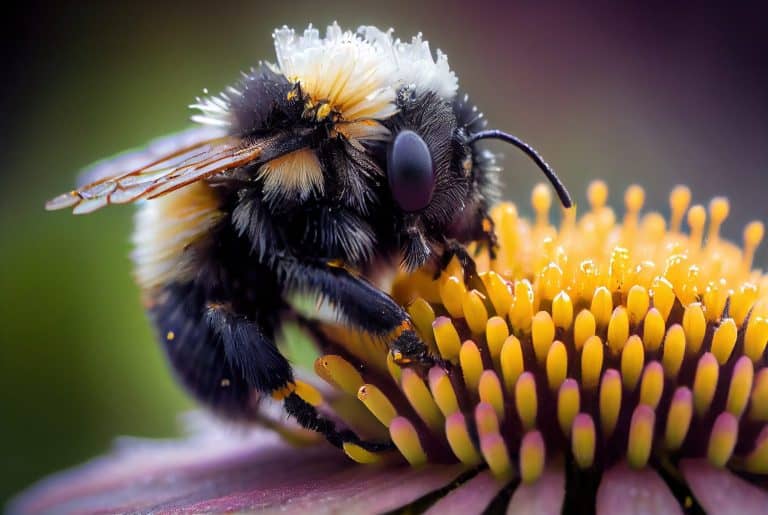
Bumblebees aren’t typically associated with Morse code. Yet, researchers at Queen Mary University of London have discovered that these insects, each with a brain scarcely larger than a poppy seed, can distinguish between long and short signals, much like decoding a basic code through light flashes.
Bumblebees Face an Unfamiliar Challenge
The experiment centered on Bombus terrestris, the common buff-tailed bumblebee. Scientists set up a test where each bee had to choose between light flashes of different durations. In some trials, the bees would see a long flash lasting five seconds, while other times it would be just one second. In a second set, the contrasts were 2.5 seconds versus 0.5 seconds. Each time, only one duration was linked to a sweet sugar reward. The other led to a solution laced with quinine, a substance bees instinctively avoid.
Reward, Repetition, and Real Comprehension
Bumblebees quickly caught on. Researchers measured success by the bee’s ability to consistently pick the “winning” duration. Once a bee correctly selected the rewarding flash 15 times in 20 attempts, the rules changed. The sugary reward vanished. Even when no treat awaited them, bees continued to pick the correct signal more often than random chance would allow. This pattern meant the bees were not just guessing, they genuinely understood and remembered the difference between long and short flashes. Their recognition persisted without the promise of immediate reward.
The Design Behind the Discovery
The testing setup was meticulous. On one side of the device was a habitat box housing the bees. On the other, three chambers were arranged for the actual tests. Here, bees encountered the distinct flashes and made their skillful choices, all closely observed by the researchers.
Challenging Assumptions About Bee Intelligence
The results surprised the scientists. In the natural world, bumblebees never encounter flashing lights signaling the way to food. This behavior isn’t something they evolved to recognize. Why, then, are they so good at it? The researchers suggest this may point to a more general ability in bumblebees: the capacity for temporal processing, tracking time and change, perhaps tied to following the movement of objects or the underlying structure of their nerve cells.
What began as a simple question about light led to a challenge that would befuddle most humans. Yet, the bumblebee, with all its tiny complexity, effortlessly solved it. Sometimes, intelligence reveals itself in places we least expect, carried by wings barely heavier than air.