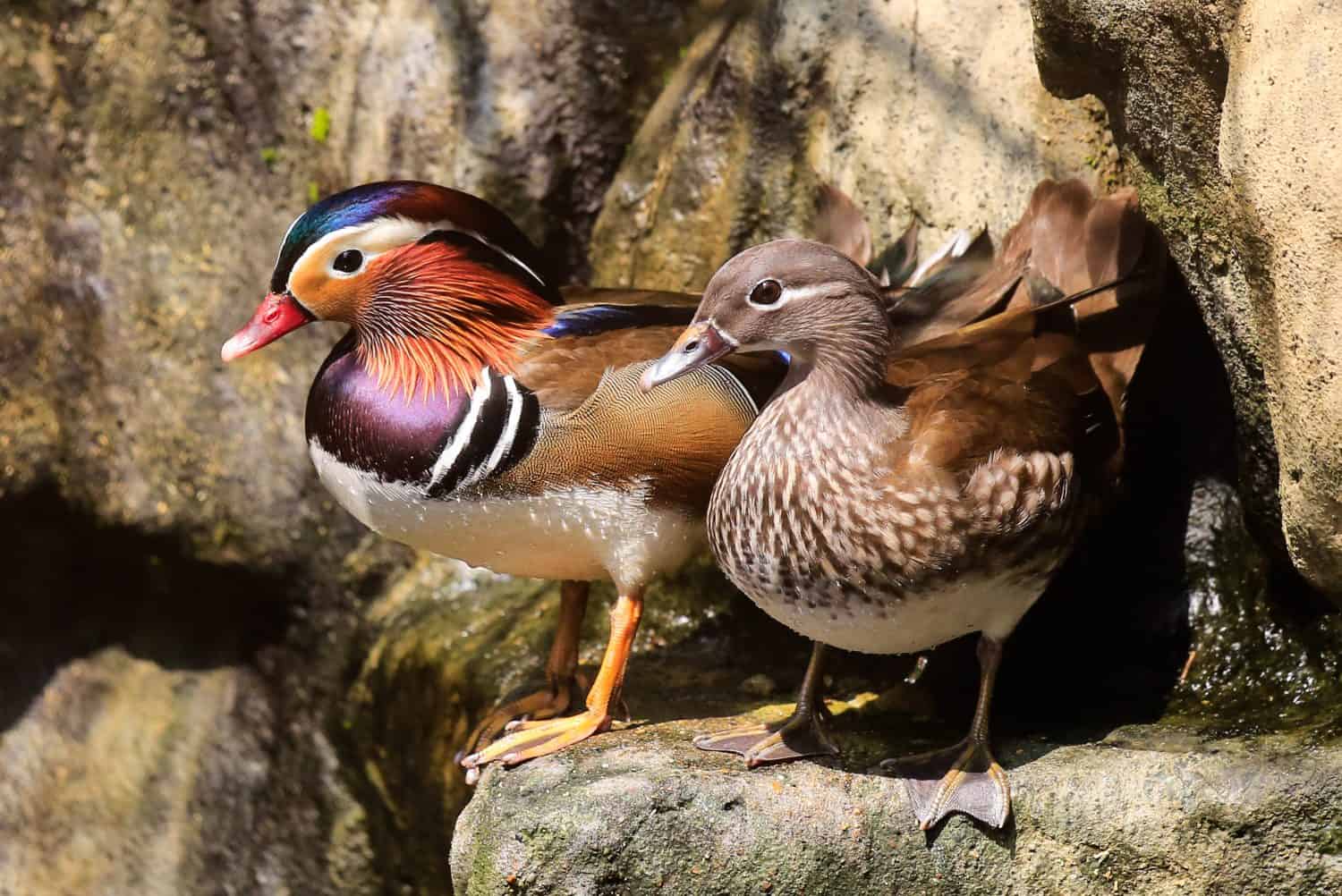

Duck is the name for numerous waterfowl species in the family Anatidae. They are part of the same family as swans and geese, but have smaller frames and shorter necks. They can be found in both freshwater and saltwater. Sometimes, ducks are mistaken for similarly looking waterfowl like loons, coots, or grebes. The word Duck has its roots in the Old English word “dūce,” which means diver. A fitting name for this water-dwelling bird.
Unlike some birds, ducks are a sexually dimorphic species. Male ducks are called drakes, and females, hens. Head to any local pond or watering hole and you’re sure to find a smattering of ducks, but it’s important to understand the key differences between male (drake) and female (hen) ducks.
Size

Female ducks are smaller than males, who often weigh a bit more and grow longer.
©Artic_photo/Shutterstock.com
Considering their sexually dimorphic appearance, drakes and hens look quite different once you know what you’re looking for. Duck sizes and shapes depend on the species. Some types, like Muscovy ducks, can reach a whopping 15 pounds. That said, duck weights usually range from 1.6 to 3.5 pounds, with their length ranging between 20 and 26 inches long.
Both female (hens) and male ducks (drakes) weigh about the same, between 1.6 and 3.5 pounds, but male ducks usually grow taller. They also sport larger heads and thicker necks. Whereas females range between 20 and 23 inches in length, males are more likely to reach up to 26 inches (sometimes even 30 inches).
Shape
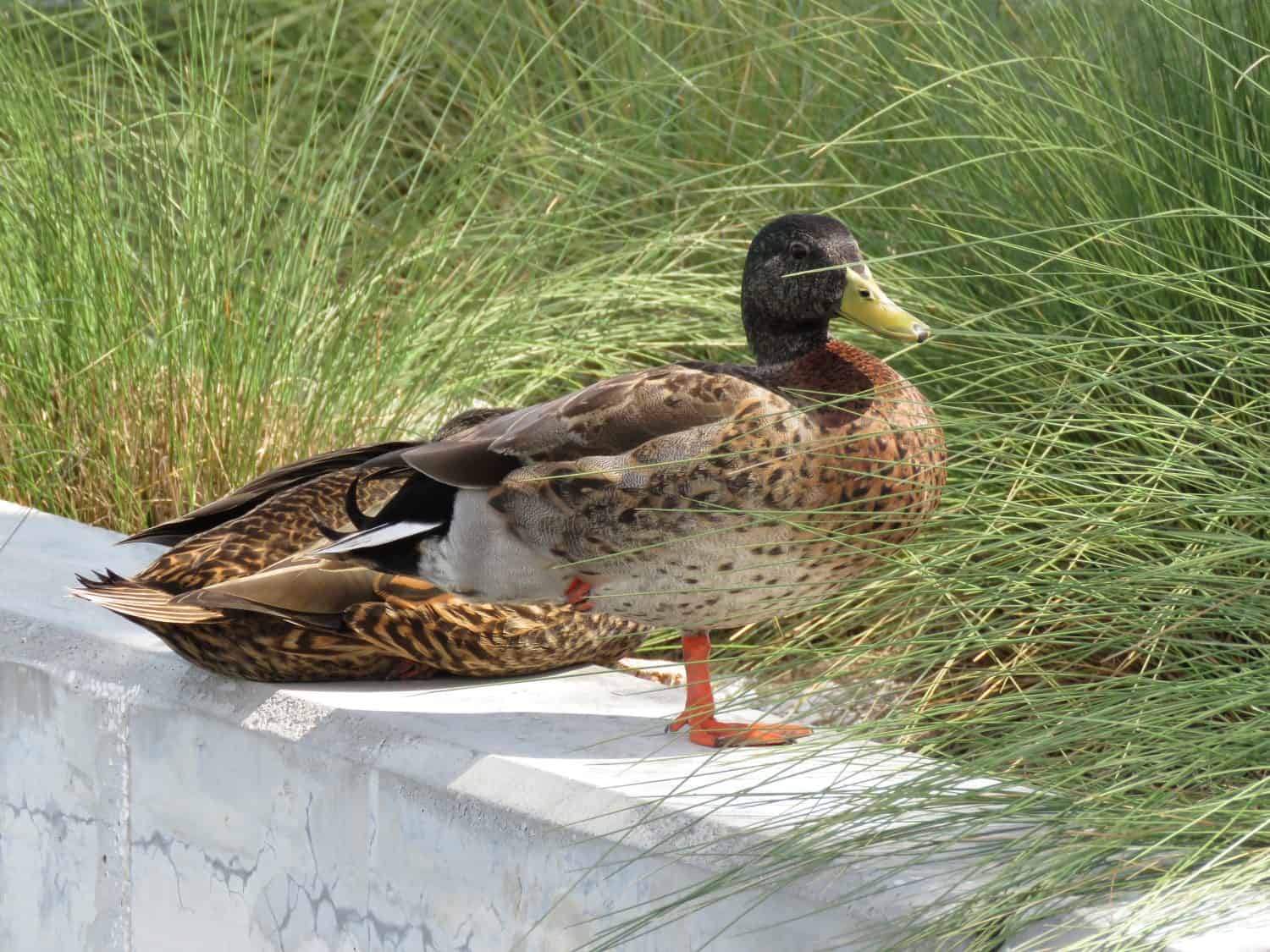
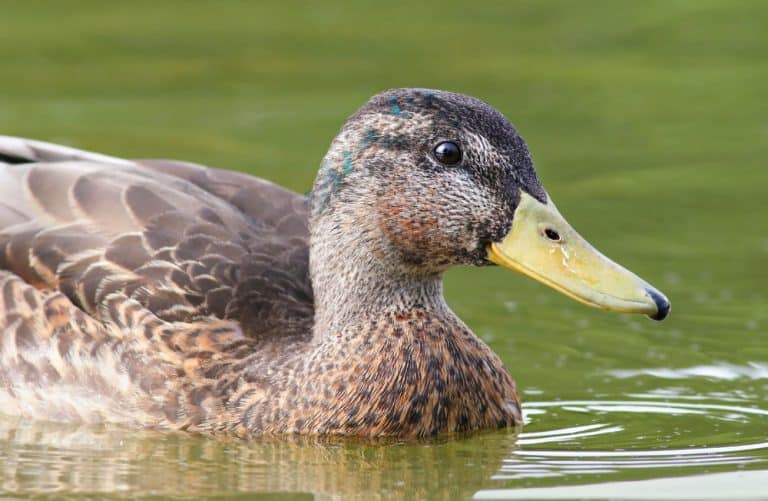
Females have distinctly curved bills that often get speckles when they reach egg-laying age, whereas males retain bare, wide, and flat bills their whole lives.
©Kris Patrick/Shutterstock.com
One of the biggest clues about duck gender can be found in their bill shape. As early as two to three weeks old, ducks begin showing distinct bills. Drakes have flat, wide, and straight bills. Females, on the other hand, have more curvy, pointy, and thin bills with a distinct ridge down the middle. When hens (females) reach egg-laying age, they often develop further changes to their bills due to hormones. A freckled bill is a sure sign of a female duck because males keep unadorned bills their entire lives.
Understanding the difference between male and female ducks when they are young is incredibly difficult. Ducklings look the same regardless of gender. There is a process called vent sexing to determine gender; however, it should only be performed by a trained professional.
Color and Feathers
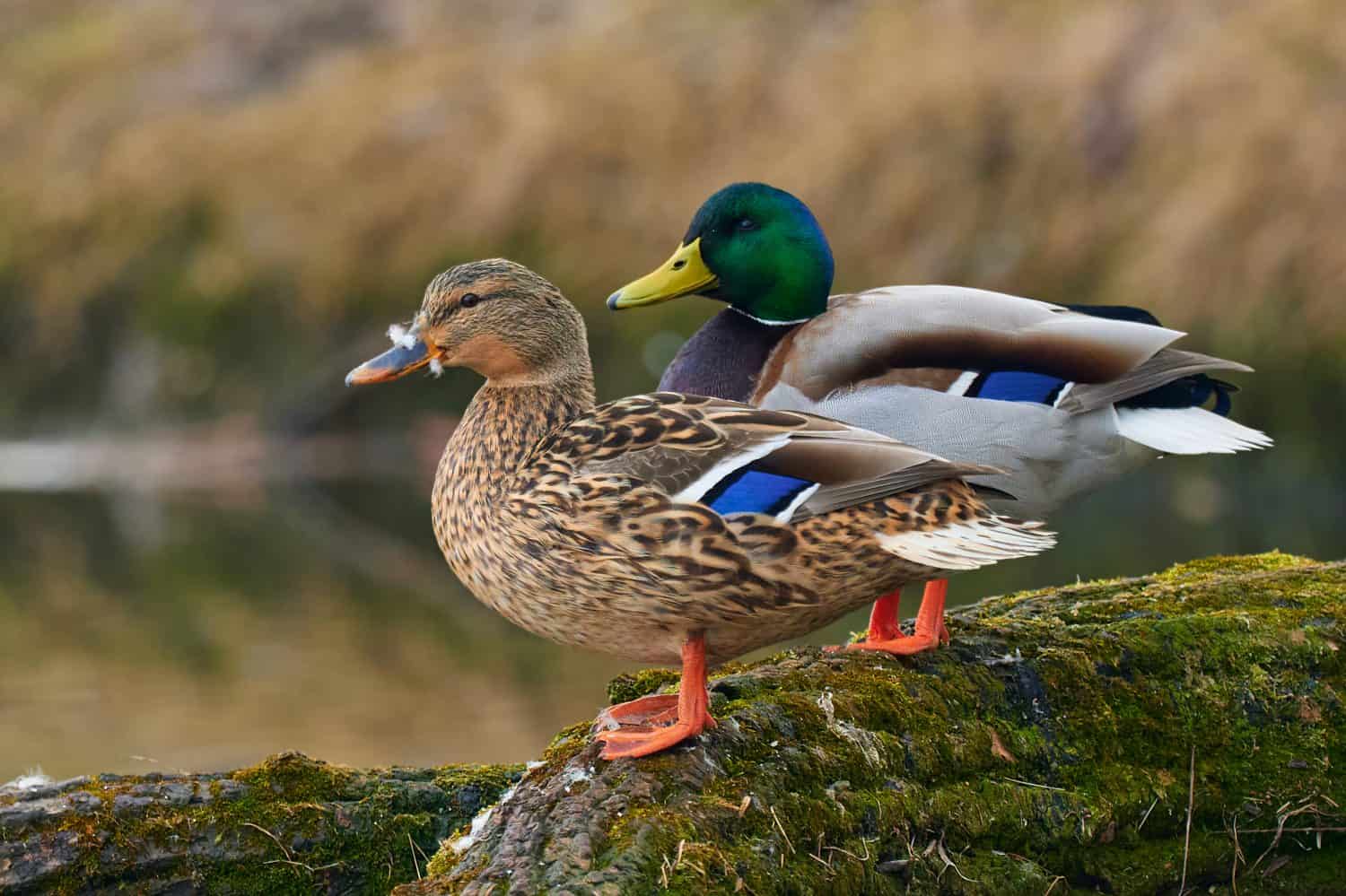
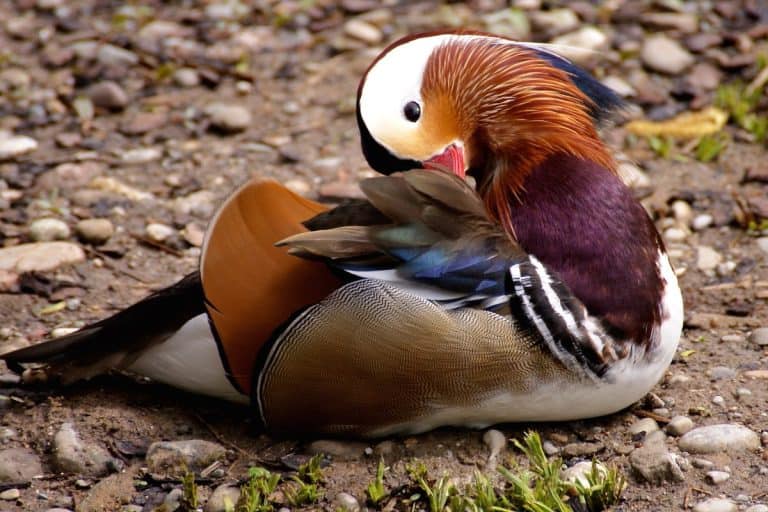
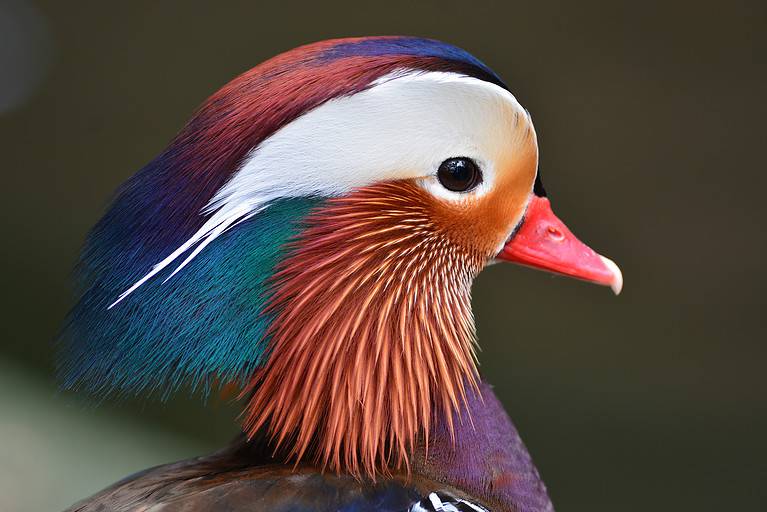
Male ducks have more flashy coats compared to females, which often have brown and earthy plumages. Also, males sport two distinct curly tail feathers, which are far rarer in females.
©Robert Adami/Shutterstock.com
Like most sexually dimorphic creatures, male ducks are pretty flashy-looking compared to females. To attract potential mates, drakes feature extravagant coloring. It can be green, purple, brown, or even white, depending on the type of duck. Females, on the other hand, feature coloring that’s more dull and earth-toned, often in shades of brown, gray, and, more rarely, orange.
While ducklings, both males and females, will have a monotone and fuzzy feather consistency. After about three months, however, males develop their distinct plumage, along with one or two curly tail feathers. This is a telltale sign of their gender, even though males molt once a year (shedding and regrowing their feathers). Females, on rare occasions, will grow curly tail feathers but usually if they live in an all-female flock. Also, females (hens) usually mature more quickly than males, with their wings losing their duckling appearance sooner.
Behavior
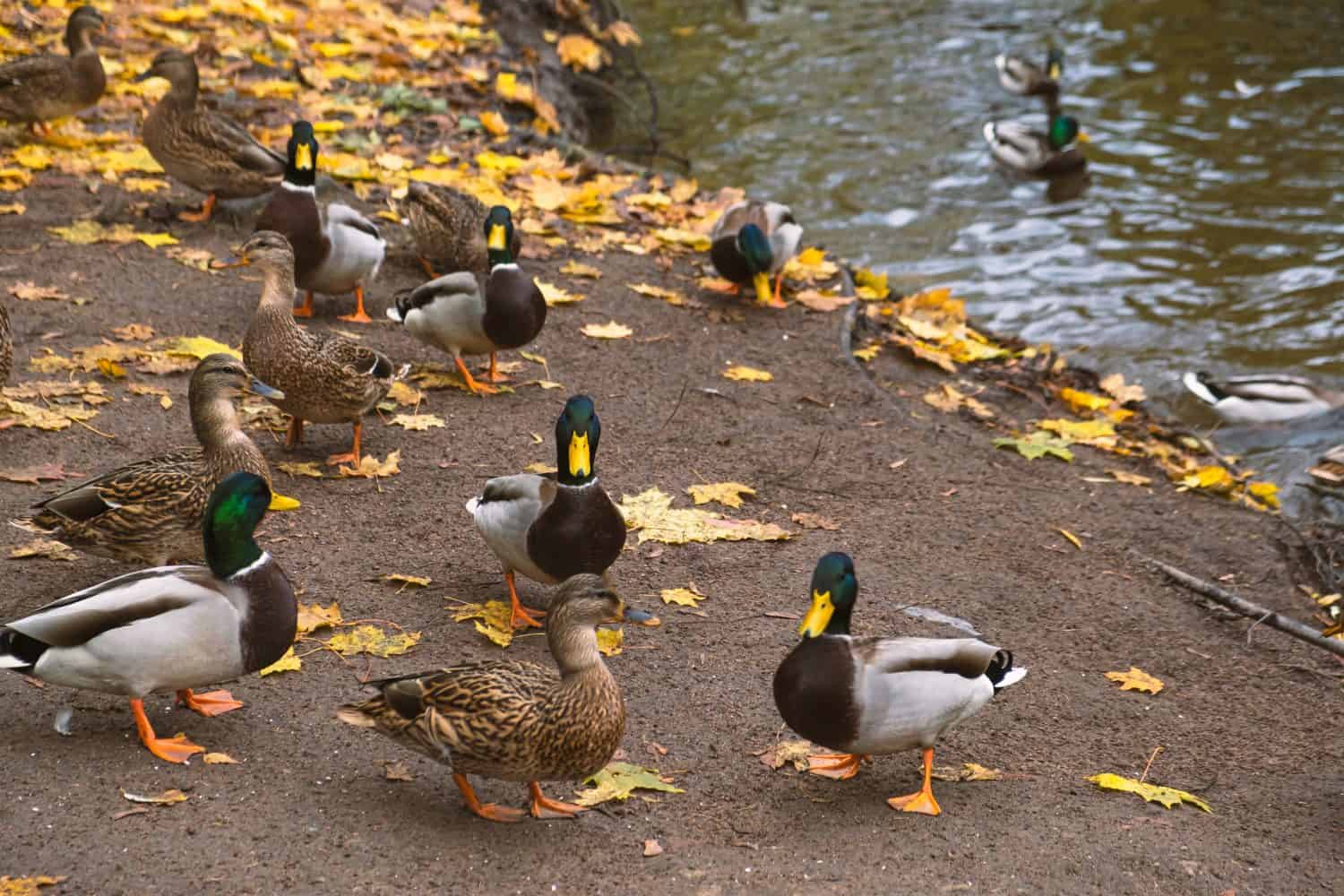
Male ducks are calm in both behavior and vocalization until it comes time for mating season, when they get more aggressive.
©Nataliia Chubakova/Shutterstock.com
One of the best ways to tell female and male ducks apart is by their behavior. During most of the year, female ducks are more active, whereas males are pretty chill. When mating season arrives, however, the roles reverse. Drakes become aggressive and territorial, and aren’t above fighting other males for female attention. They lose all sense, barging through other males and ducklings alike to get a shot at a female.
Drakes will also do little dances to get female attention, be it shaking their tail feathers, bobbing their heads, flicking water, or even nipping at hens. When a male and female pair up, they will often bob their heads as a form of flirting, and the females will flatten their bodies. Once the deed is done, females lay eggs. Most nesting ducks lay one egg per day or every other day. After a clutch, or a full set of eggs, is laid, females will nurture them until they hatch.
Another great way to figure out the difference between male and female ducks is the calls they make, but it may require separating them to hear the subtle differences. Whereas males almost whisper when they quack, females are more obvious. The hens have louder, varied vocalizations, especially when they are stimulated in some way. Hens make the characteristic “quack-quack” sound that people associate with ducks.