Did you know that doing your regular fall yard work could inadvertently lead to destroying local wildlife? One of the most common autumn chores involves raking up leaves—perhaps jumping in the pile and raking them again—then bagging them up and tossing them out with the rest of the garbage.. While this may make your front yard look cleaner, it’s actually detrimental to the wildlife that use the area for insulation and protection from predators—not to mention the animals hiding in the leaves that you just tossed out!
A new study published in the Science of the Total Environment journal found that homeowners are accidentally disposing of vital parts of our ecosystem with the leaves. Consider this your excuse to stop doing this one major fall chore.
Species Affected By Raking Leaves
Several types of insects are affected by raking and throwing away fall leaves. For example, leaf removal led to a 45 percent decrease in moths aa nd butterflies, 24 percent decrease in beetles, and up to 67 percent decrease in spiders.
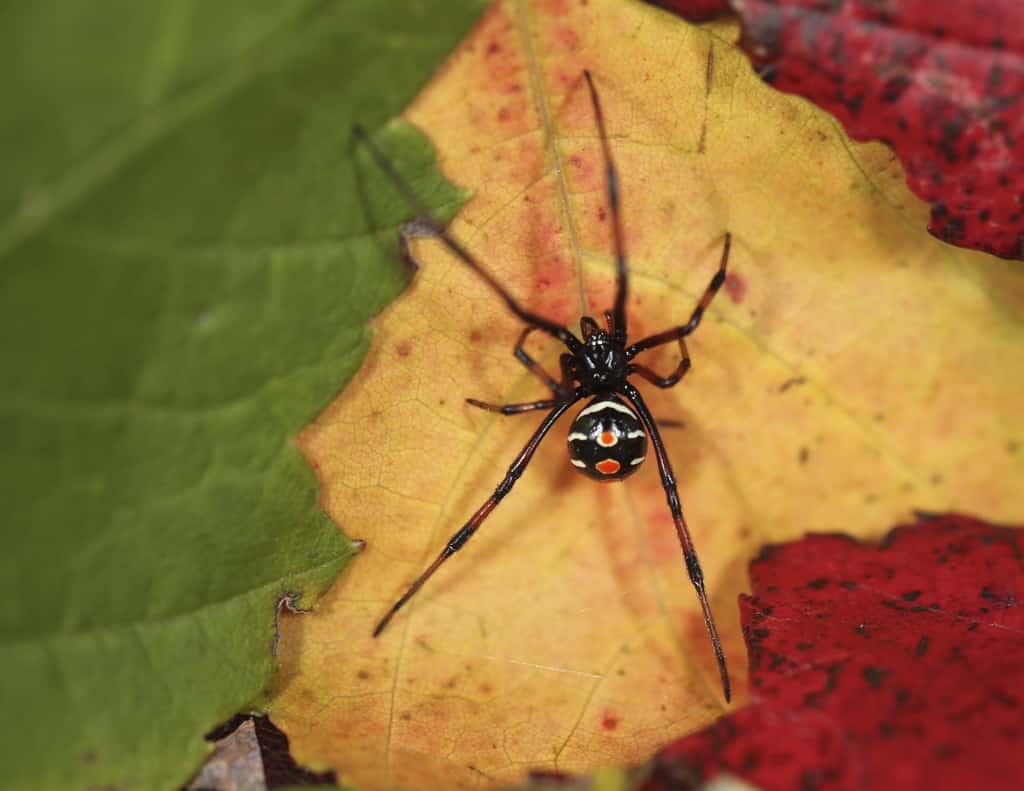
Raking and bagging up leaves can reduce the spider population by up to 67 percent.
©iStock.com/NajaShots
For moths and butterflies in particular, the study documented over 100 species from 21 families that use yards as overwinter habitats. Removing the leaves not only decreased the number of these moths and butterflies in the spring, but also changed the diversity and composition of their communities.
According to the National Wildlife Federation (NWF), firefly larvae spend their autumn days in leaves and logs on the ground, so throwing them away could reduce the number of glowworms you see in the summer. Similarly, salamanders live in the damp area under the leaves, which helps insulate the soil and protect the salamanders over winter. Roly polies and other insects and invertebrates eat fallen leaves and turn them into natural fertilizer. This demonstrates how important it is to protect your fall leaves.
About the Study
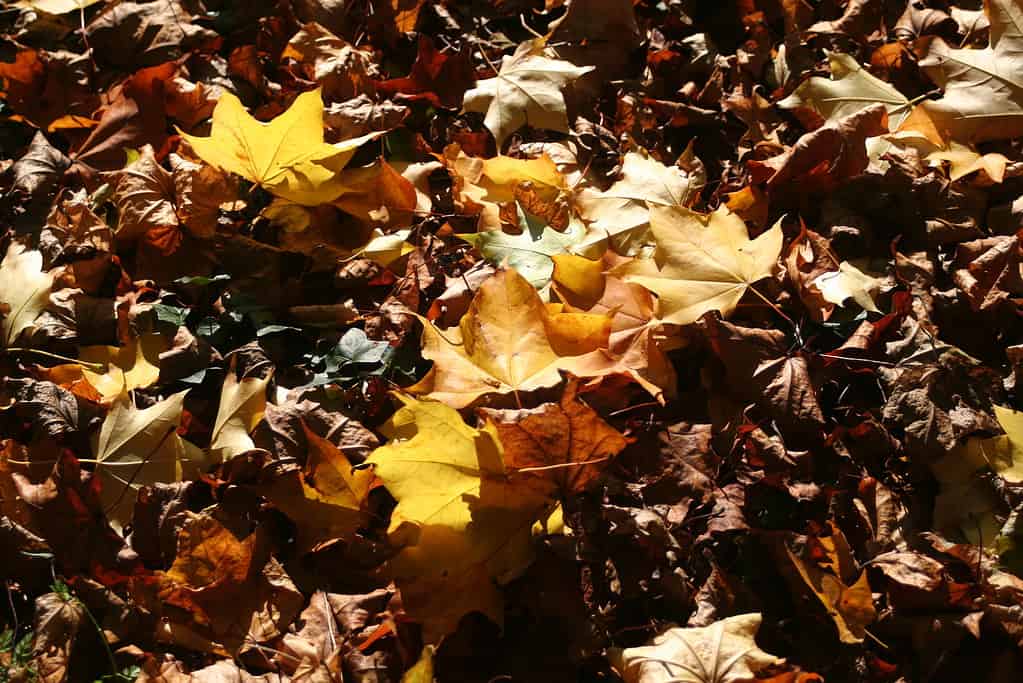
If you don’t want leaves all over your yard, you can sweep them into a brush pile.
Researchers spent two years documenting yards in Maryland, where they found an abundant and diverse community of arthropods that overwinter in yards and under leaves. In the spring, almost 2,000 individual insects, spiders, and other arthropods emerged from a square meter of ground in a yard, which suggests the importance of the leaves protecting these creatures in the fall and winter.
Overall, the study found that removing leaves from your yard in the fall results in a 17 percent reduction in the arthropod community in the spring. Although different creatures were more or less sensitive to leaf removal, researchers found no positive effects of leaf removal on any arthropod order examined.
According to the study, “As these taxa [studied] support critical ecosystem functions, such as pollination, pest regulation, and nourishment of higher trophic levels like birds, retaining rather than removing leaves may be an important sustainable landscaping strategy for conserving species and maintaining ecosystem services.”
How to Make Your Yard Safer for Wildlife

Planting a tree can help protect wildlife in your yard.
©NMTD MEDIA/Shutterstock.com
If you want to do more to support living organisms in your yard, you can plant trees or add other types of shelter where animals can live, cool down in the summer, and raise their young. You can also let parts of your yard grow long to provide shade.
Other ways to help include planting native plants in your yard, which provide essential food sources; leaving dead trees, branches, and logs in your yard for shelter; and creating a brush pile with sticks or leaves, which small mammals and reptiles will appreciate.
National Leave the Leaves Month
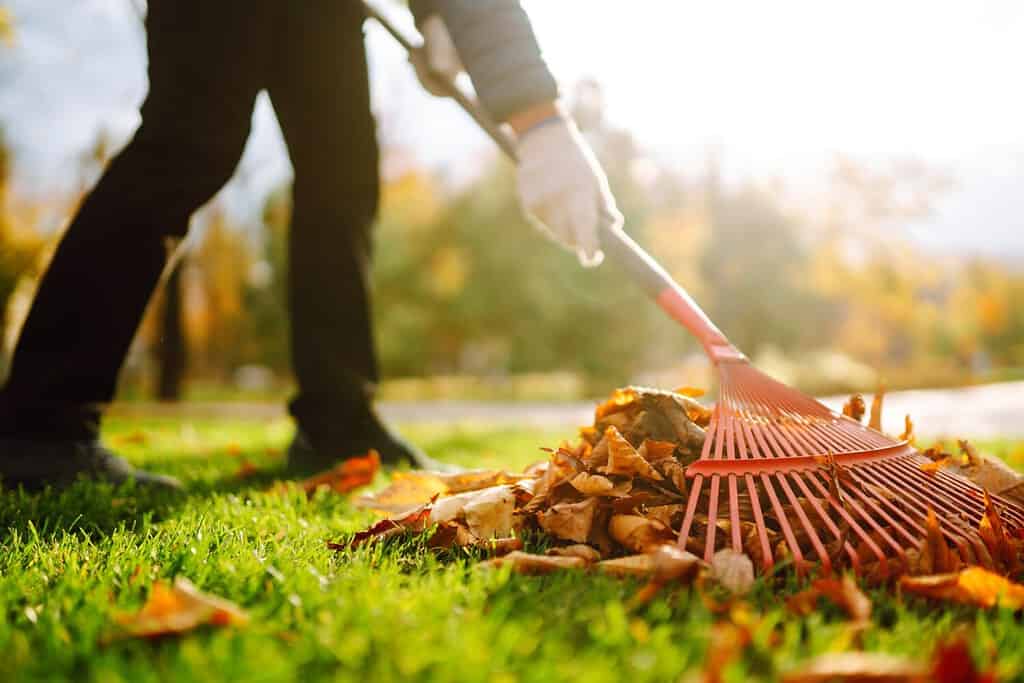
You can rake leaves off the sidewalk and use them as natural mulch in your garden.
©maxbelchenko/Shutterstock.com
October is National Leave the Leaves Month, according to the NWF, which is a time to spread awareness about the wildlife that may be damaged by removing leaves from your yard. According to the NWF, Americans dispose of over 35 million tons of yard waste in one year alone — “waste” that could actually be valuable habitats for wildlife. To participate, take the Leave the Leaves Pledge to commit to doing less fall work for the sake of wildlife; get your garden certified as a Certified Wildlife Habitat with places to provide food, cover, and more for wildlife; and help spread awareness about the importance of not raking your leaves this season.
And if you are worried about your yard, the NWF recommends raking the leaves from sidewalks, driveways, or turfgrass to use elsewhere in the garden. “We recommend raking leaves and using them as a natural mulch in your garden beds, aiming for a leaf layer that is 3-5 inches thick,” the NWF said on its website. “This will serve as a wildlife habitat and weed suppressant, while also composting down into nutrients for your plants!”