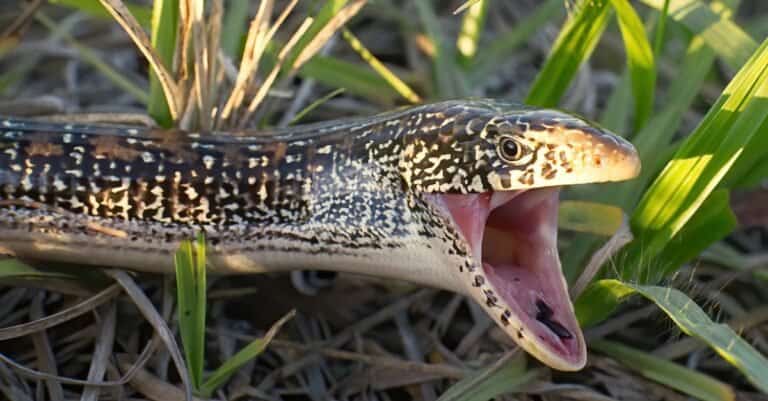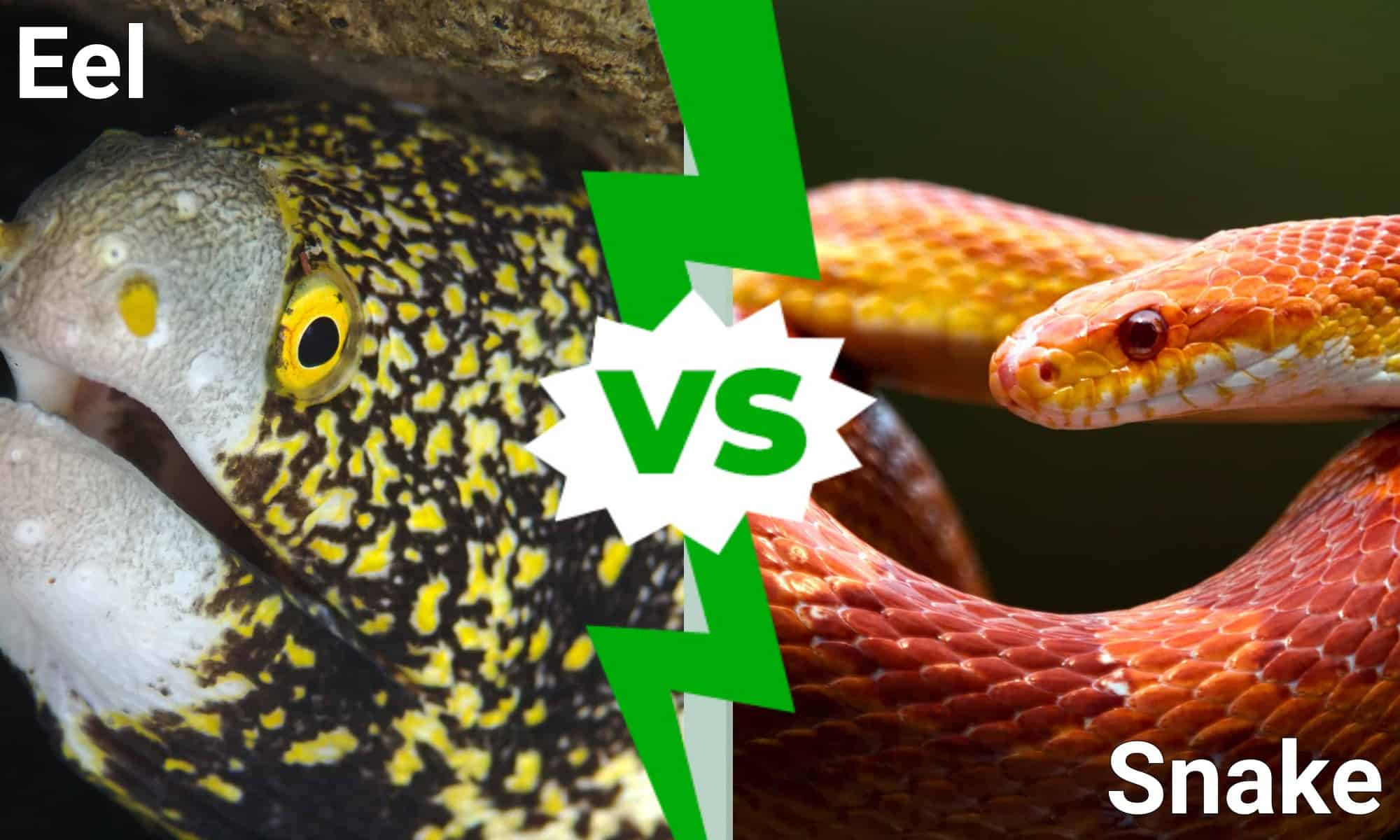

Quick Take
- Eels look reptilian, but their true biological classification will genuinely surprise you. See their true classification →
- There's one surface-level feature that instantly separates an eel from a snake, yet most people never notice it. Spot the key difference →
- Some snakes live almost entirely underwater, which makes the wrong identification in a river more likely than you'd think. Explore aquatic snake habitats →
- An eel's reproductive journey ends in a way that makes a salmon's look tame by comparison. Discover the eel's journey →
You’re standing in a river when something long and slimy slithers across your leg. At a glance, you think it’s an eel. But then you start wondering: could it be a snake? After all, both eels and snakes have long sinuous bodies. Although eels and snakes have similar body shapes, they are entirely unrelated and belong to different biological classes. Eels are classified as fish, while snakes are reptiles. The key differences between eels and snakes include their classification, size, habitat, appearance, and reproductive cycle.
Eel vs. Snake: Classification
Eels are ray-finned fish belonging to the order Anguilliformes. There are hundreds of different eel species. One of the most popular ones is the American eel (Anguilla rostrata). Eels are highly adaptable and can be found in a wide variety of habitats, ranging from freshwater rivers and lakes to the deepest of ocean depths.
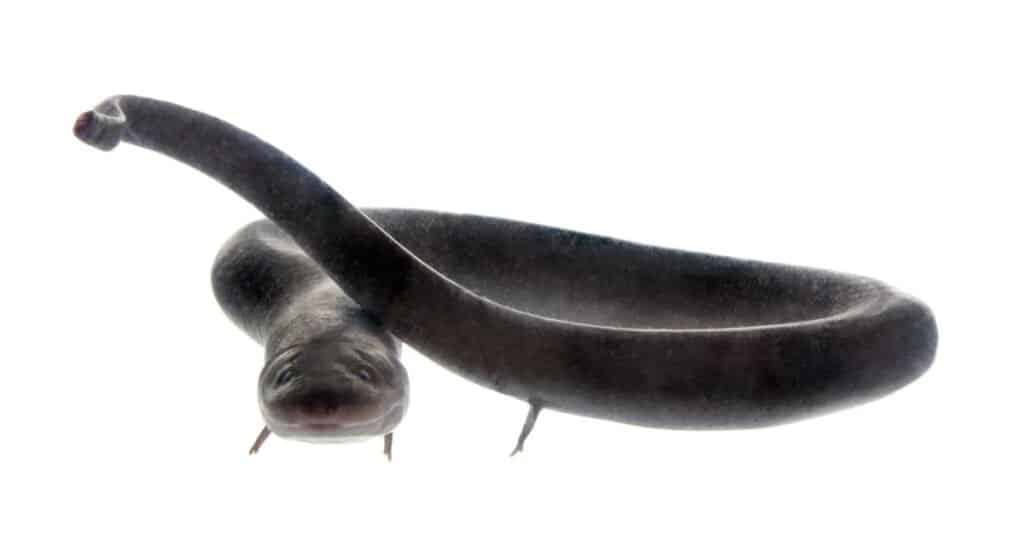
Eels are ray-finned fish belonging to the order Anguilliformes.
©Rosa Jay/Shutterstock.com
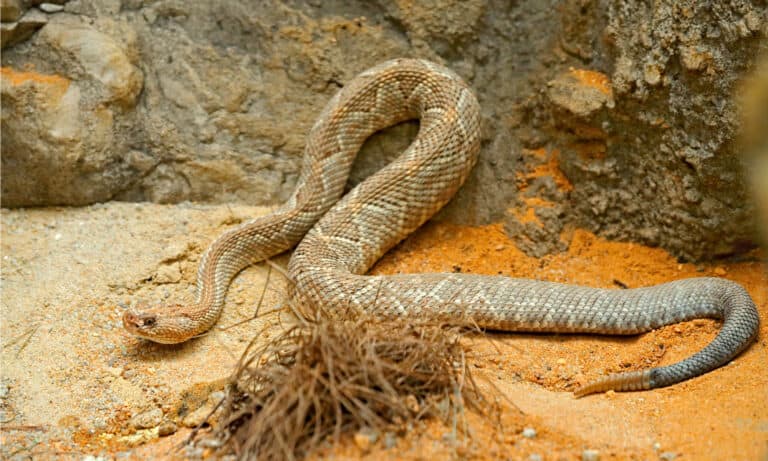
Snakes are limbless, carnivorous reptiles found on every continent except Antarctica. There are approximately 3,900 snake species, contained in the suborder Serpentes. These animals are characterized by their scaly skin, which protects them from dry environments. Of the nearly 4,000 species of snakes worldwide, between 300 and 400 are considered aquatic or semi-aquatic.

all snakes, including aquatic snakes, are contained in the suborder Serpentes.
Eel vs. Snake: Size
Adult eels can reach up to 6 feet in length, although two to three feet is more typical. Male eels are smaller than females because a female eel’s reproductive success is directly related to her size.
The majority of true eel species are considered small to medium-sized; however, certain species, such as giant moray eels (Gymnothorax javanicus), can reach 13 feet in length and weigh over 55 pounds.
The heaviest eel species, however, is the European conger eel (Conger conger), which can reach lengths of up to 10 feet and weigh up to 200 pounds.
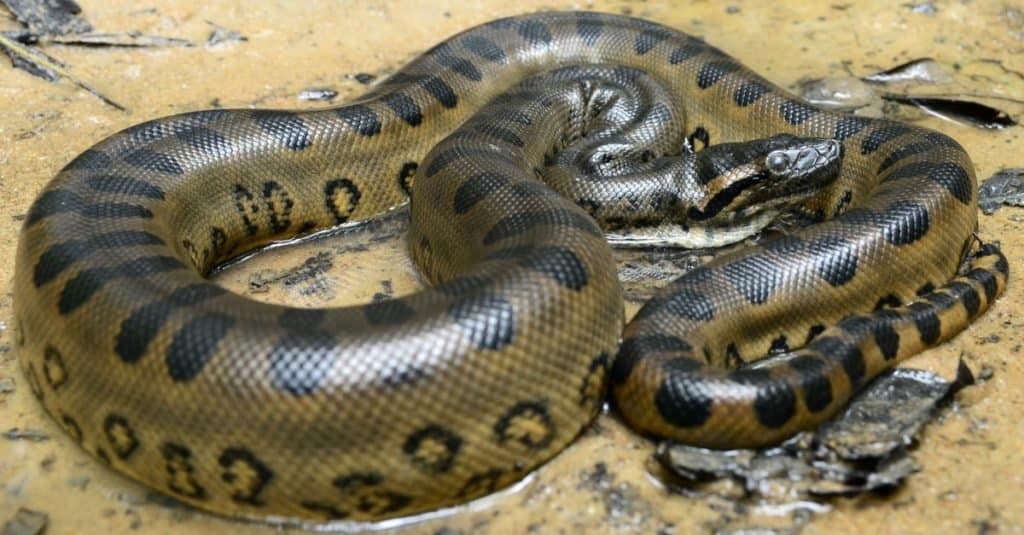
Giant snakes, like this green anaconda, can weigh over 300 pounds.
©Patrick K. Campbell/Shutterstock.com
Snakes also have a large size range. The longest recorded snake specimen was a reticulated python (Malayopython reticulatus) from Southeast Asia. This verified specimen officially measured 25 feet 2 inches long, making it the longest snake ever recorded in captivity.
However, the heaviest recorded snake was a South American green anaconda (Eunectes murinus), with verified specimens reaching up to about 17 feet in length and weighing up to 215-250 pounds. Unverified reports of larger sizes exist but are not scientifically confirmed.
Eel vs. Snake: Identification
Eels lack visible scales, but they feature thick skin coated in a heavy layer of protective slime, alongside true jaws and small pectoral fins.
Typical coloration for an American eel includes olive to green and brown on the back. They usually have yellow-green coloring on their sides and a gray-white belly. Once they’re sexually mature, an adult eel will leave freshwater to go to the ocean and spawn. After spawning, they transform into silver eels. Silver eels have a black top and a silver belly.
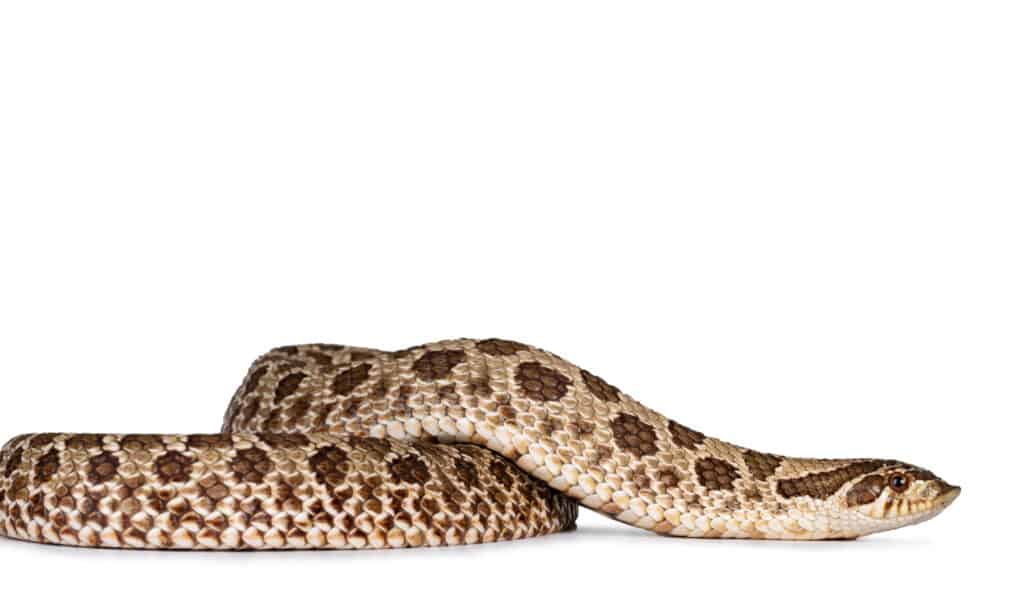
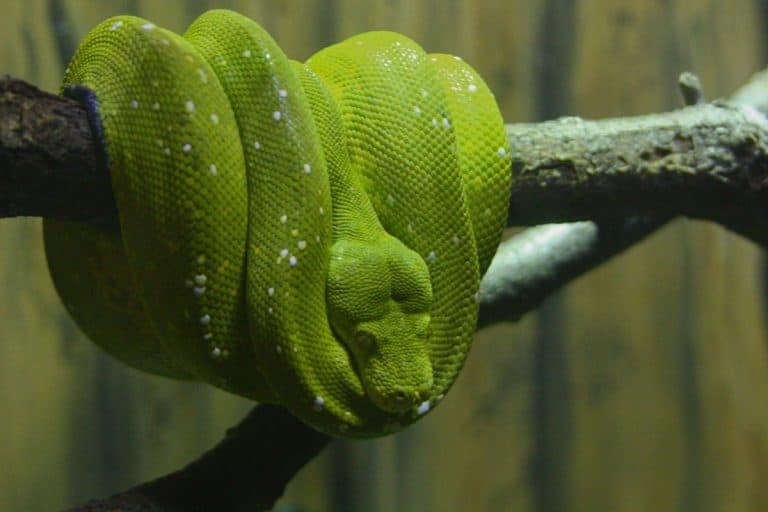
A snake’s scales protect them from dry environments.
©Nynke van Holten/Shutterstock.com
Snakes are entirely covered in scales. Unlike fish scales, which attach to the skin, snake scales are part of the skin. The shape and arrangement of the scales are usually consistent within a given snake species. That’s why scales can be one of the easiest ways to identify a snake.
Different areas of the snake’s body have different types of scales. The dorsal scale rows along their mid-body are most helpful for identification. The dorsal scales can be either smooth or granular.
Eel vs. Snake: Habitat
Eels are found in both saltwater and freshwater habitats, but the majority of eels live in the sea. Some eel species can be found living in the deep waters on the Continental Shelf. Other eels can be found in the ocean’s shallow waters, where they burrow into sandy bottoms. They also live around rocks, where they can hide in various crevices.
Many eels are catadromous, meaning they spend most of their adult lives in freshwater streams and rivers. When they are ready to spawn, they return to the ocean where they were born.
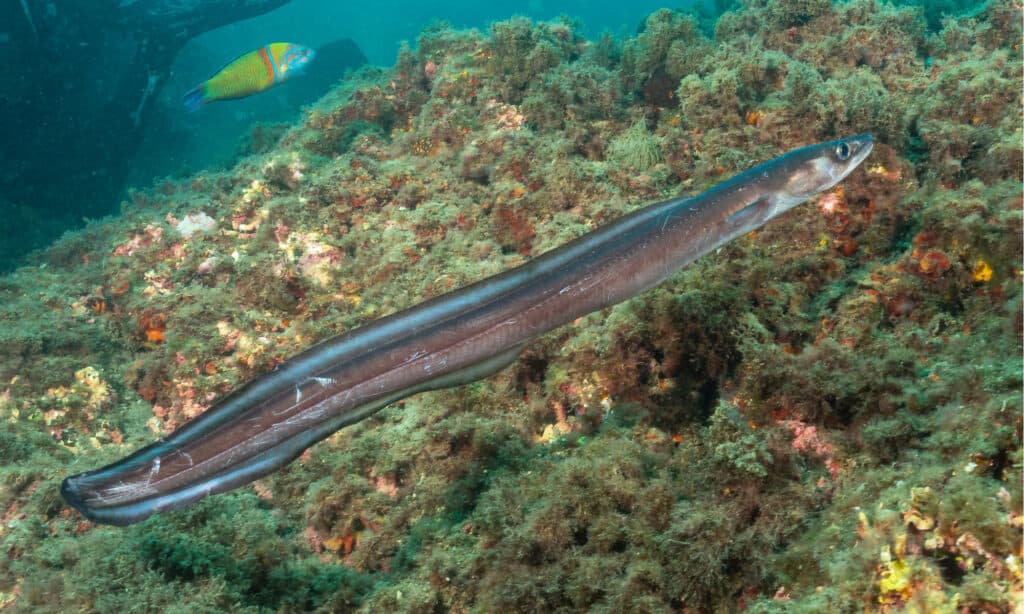
Eels like swimming around rocks and in crevices.
©Jesus Cobaleda/Shutterstock.com
A snake’s habitat varies by species. There are aquatic snakes that live most of their lives underwater. A snake’s habitat varies by species. They can be found throughout Southeast Asia, Papua New Guinea, northern Australia, and Indonesia. Terrestrial snakes live in forests, mountains, deserts, and man-made habitats. They are experts at camouflage, easily blending in with their surroundings.
Eel vs. Snake: Reproductive Cycle
Most eels begin life as larvae called leptocephali. The tiny eel larvae drift along the surface waters of the sea.
The larvae transform into glass eels, a translucent stage that all true eels pass through as juveniles, before becoming elvers. Elvers are adolescent eels that have begun to develop dark camouflage pigmentation.
Although most eels remain in the sea for most of their lives, freshwater eels travel upstream to freshwater habitats. When freshwater eels reach sexual maturity, they return to the ocean to spawn and die.
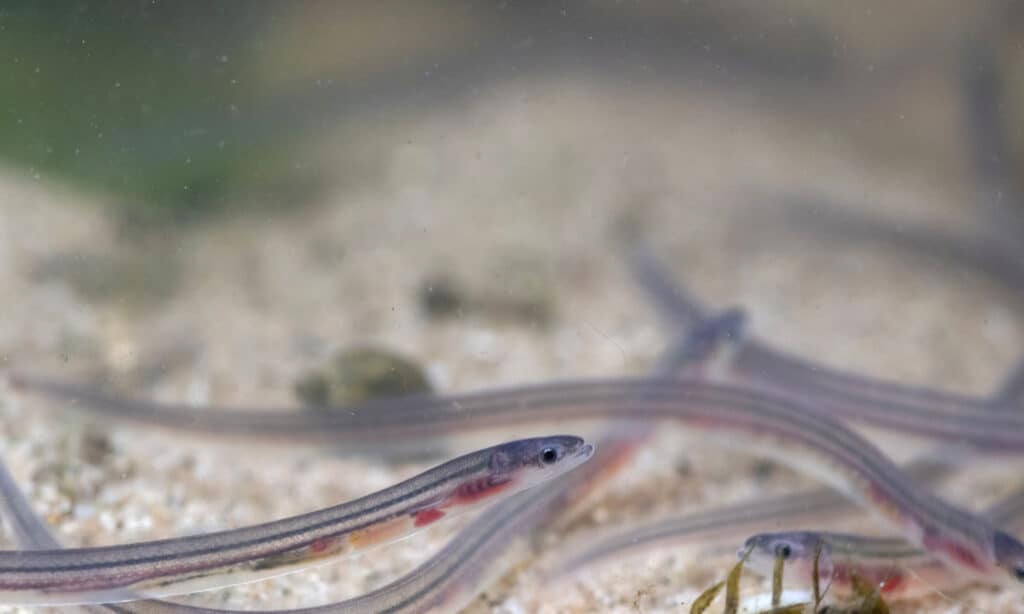
Before the development of pigment, young eels are called glass eels because they are transparent.
©jack perks/Shutterstock.com
A snake’s breeding cycle depends on its species.
For snakes, the onset of mating is triggered by rising temperatures. Snakes that live in cooler climates usually have annual or biennial reproductive patterns. They mate in the spring or early summer and lay their eggs by the end of summer.
After finding a safe, warm spot in which to lay her clutch, such as under logs, in rotting vegetation, or underground, the vast majority of egg-laying snake species abandon their eggs and leave them to hatch on their own.