
Quick Take
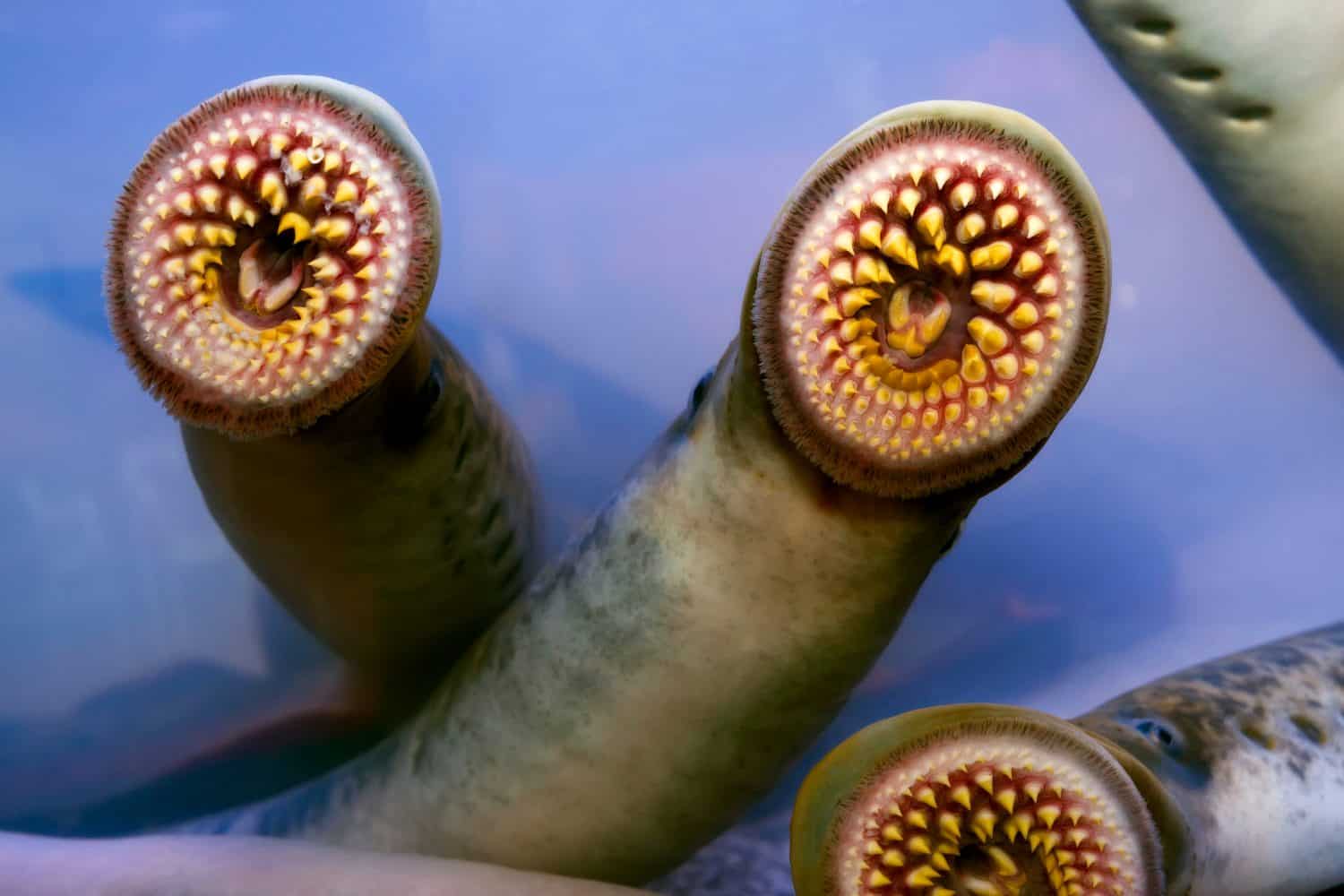
- A fish with a terrifying ring of teeth somehow earned the nickname 'vegan Dracula,' and the reason behind it is stranger than you'd expect. Meet 'vegan Dracula' →
- What looks like one known species in Australian labs may actually be hiding a much bigger secret about how many lamprey species truly exist. Explore the hidden species →
- These creatures have been invisible to conservationists for decades, and their obscurity is not because they're rare but because of one peculiar behavior. Learn why they're overlooked →
Scientists in Australia are discovering that there is a lot that we do not know about the so-called vegan Dracula lampreys. They have been discovered far outside their recorded range, and there may even be more species than previously recognized. We explore how these ancient creatures may have been hiding in plain sight and discuss the research funding aimed at saving them.
Continue reading
Lampreys – the Ancient Species
Lampreys (also called lamprey eels) belong to the order Petromyzontiformes. They lack bones and jaws, but have an elongated body and a toothed, funnel-like, sucking mouth. Some species are carnivorous and feed by boring into the bodies of other fish (or sometimes mammals), consuming their flesh and blood. Other species do not feed at all as adults. Lampreys live mostly in coastal and fresh waters and are found in most temperate regions. However, their populations are under threat from river habitat loss, overfishing, and pollution.
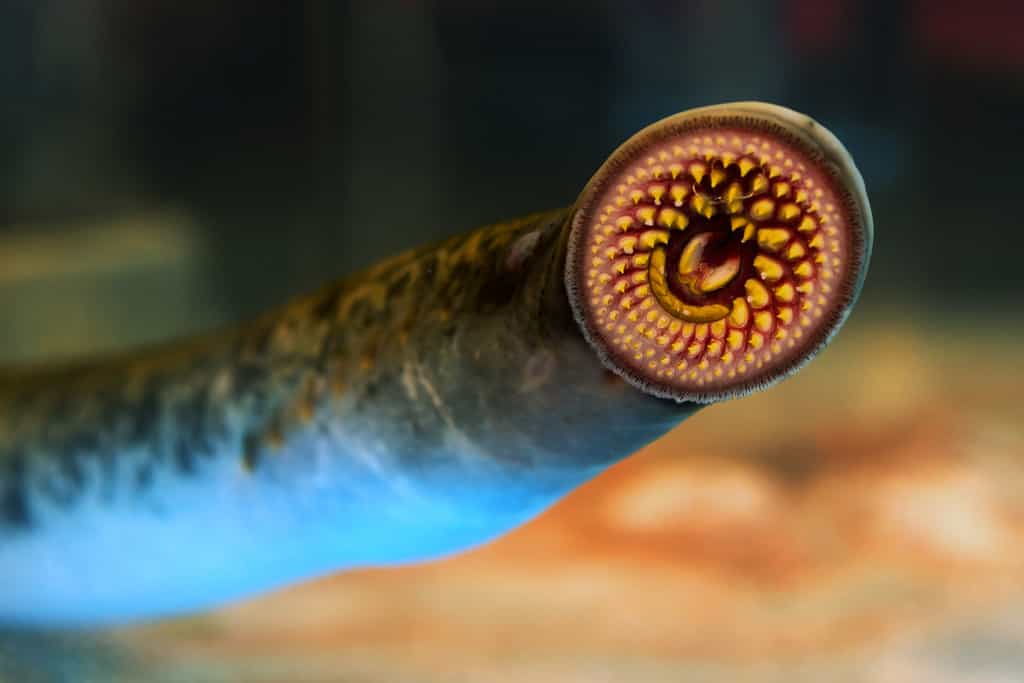
Lampreys are ancient creatures.
©Gena Melendrez/Shutterstock.com
They may be simple creatures, but they are highly significant from an evolutionary perspective. In fact, experts consider them to be the prototype vertebrate. At first glance, they appear to be just cartilaginous fish with sucker-like mouths. Genetic analysis, however, reveals that they are also between 550–450 million years old! This ancient DNA has helped scientists study human health and diseases, providing insight into what vertebrate DNA originally looked like.
Introducing the Australian Brook Lamprey
The Australian brook lamprey (Mordacia praecox) can grow up to 6 inches long. It is a freshwater species with a thin, eel-like body and two low dorsal fins on the back half. These lampreys are dark blue on their backs and light gray underneath, with small eyes on the tops of their heads. Despite their impressive ring of teeth, these fish are non-parasitic, which has led to them being dubbed the “vegan Dracula.”
This species spends its entire life in freshwater. They spend their first three to four years—most of their lives—as eyeless larvae on the floors of creeks, where they feed by filtering microscopic algae from the water. Once they metamorphose into adulthood, they never eat again. Instead, they focus on spawning to create the next generation. Eight months later, they die.
Where Were the Lampreys Discovered?
A News Release from Griffith University, in Queensland, describes how these lampreys were found by Dr. Carpenter-Bundhoo of the Australian Rivers Institute. He is an aquatic ecologist who has been awarded $90,116 under the Protecting Queensland’s Threatened Species Applied Research Grant Program, delivered by the Queensland Government’s Department of the Environment, Tourism, Science and Innovation (DETSI).
He was studying the impacts of the Black Summer bushfires on local ecology in 2022, using an electrofishing technique on K’gari (formerly known as Fraser Island), the world’s largest sand island, located about 155 miles north of Brisbane, the capital of Queensland.
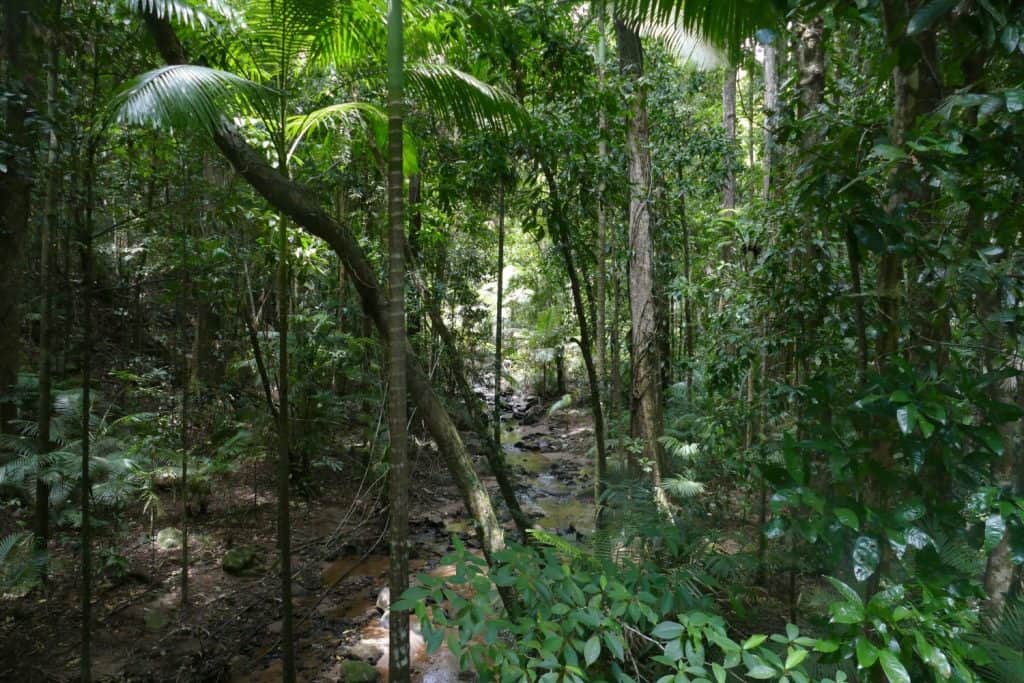
Lampreys are found in Queensland’s rivers.
©El Paco 33/Shutterstock.com
This means the lampreys were found 870 miles north of their previously documented range. Before this discovery, they had only been found in streams near the border of New South Wales and Victoria. This makes the Australian brook lamprey the only lamprey species in the world known to live in truly tropical waters.
Could There Be More Lamprey Species?
There are around 50 recognized lamprey species, three of which are found in Australia. The Australian brook lamprey is among the smallest. However, there are potentially two other undescribed lamprey species in the Griffith University laboratories. This would increase the number of Australian species to five, with three of them residing in Queensland. This has yet to be confirmed.
Australian brook lampreys may have gone undetected because they are not easy to find. They tend to bury themselves in sand at the bottom of streams, making it difficult for authorities to locate and protect them. At one point, they were thought to be extinct in their original range, but now it seems Queensland may be their last stronghold.
Further Research is Needed
The discovery of the Australian brook lamprey far outside its recorded range, along with the possibility of two additional species, may just be the beginning. Thanks to funding from a Protecting Threatened Species Grant from the Queensland Government, further research can continue. Experts plan to sample remote and difficult-to-access locations to better understand the lamprey’s true geographic range and population numbers.
This work will also help experts protect the species by raising awareness and creating opportunities for conservation. Queensland is poised to be recognized as a biodiversity hotspot for these ancient and fascinating creatures.